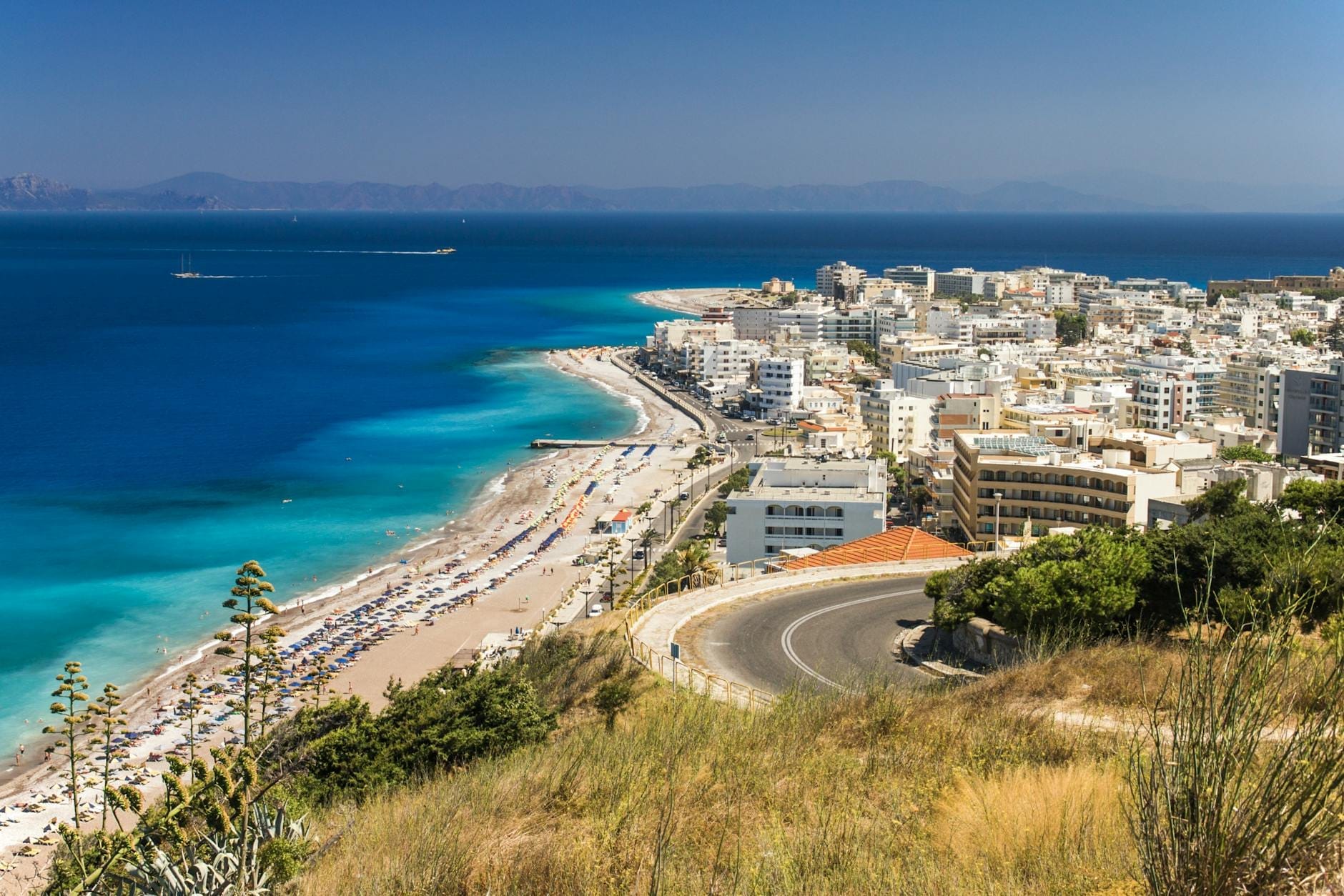
Rhodes New Town, known locally as Neohori, is the modern northern face of Rhodes City. Built up from the 16th century onward and shaped significantly by Italian urban planners, it blends broad coastal avenues with café-lined squares, art deco municipal buildings, and a relaxed residential rhythm that the walled Old Town simply cannot offer.
Rhodes New Town is where the island's everyday life actually happens: morning coffee at pavement cafés, evening strolls along the waterfront, and the kind of unhurried Greek street scene that disappears the moment you step through the medieval gates. It is modern without being generic, and far more interesting than most visitors expect.
Orientation: Where New Town Sits on the Map
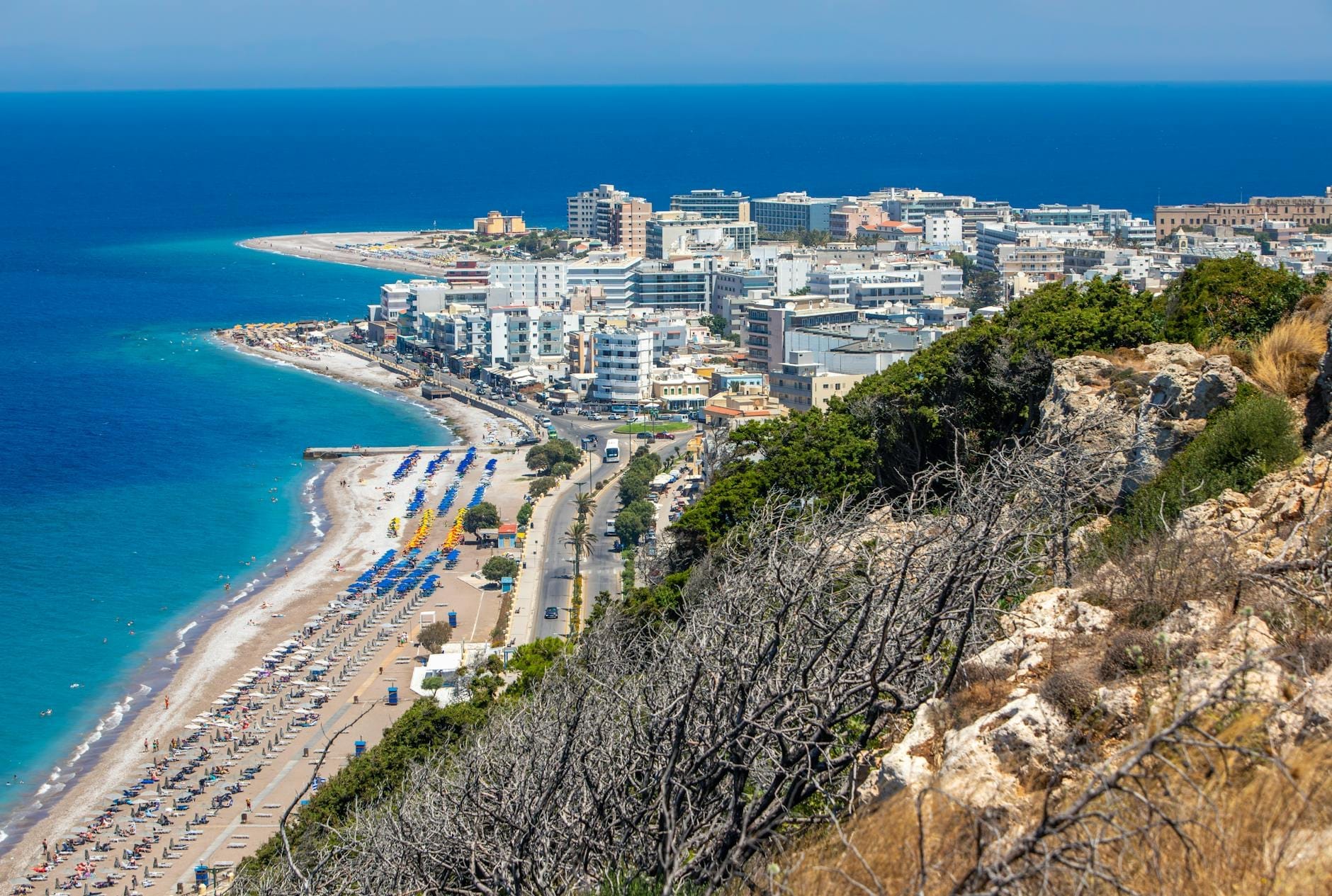
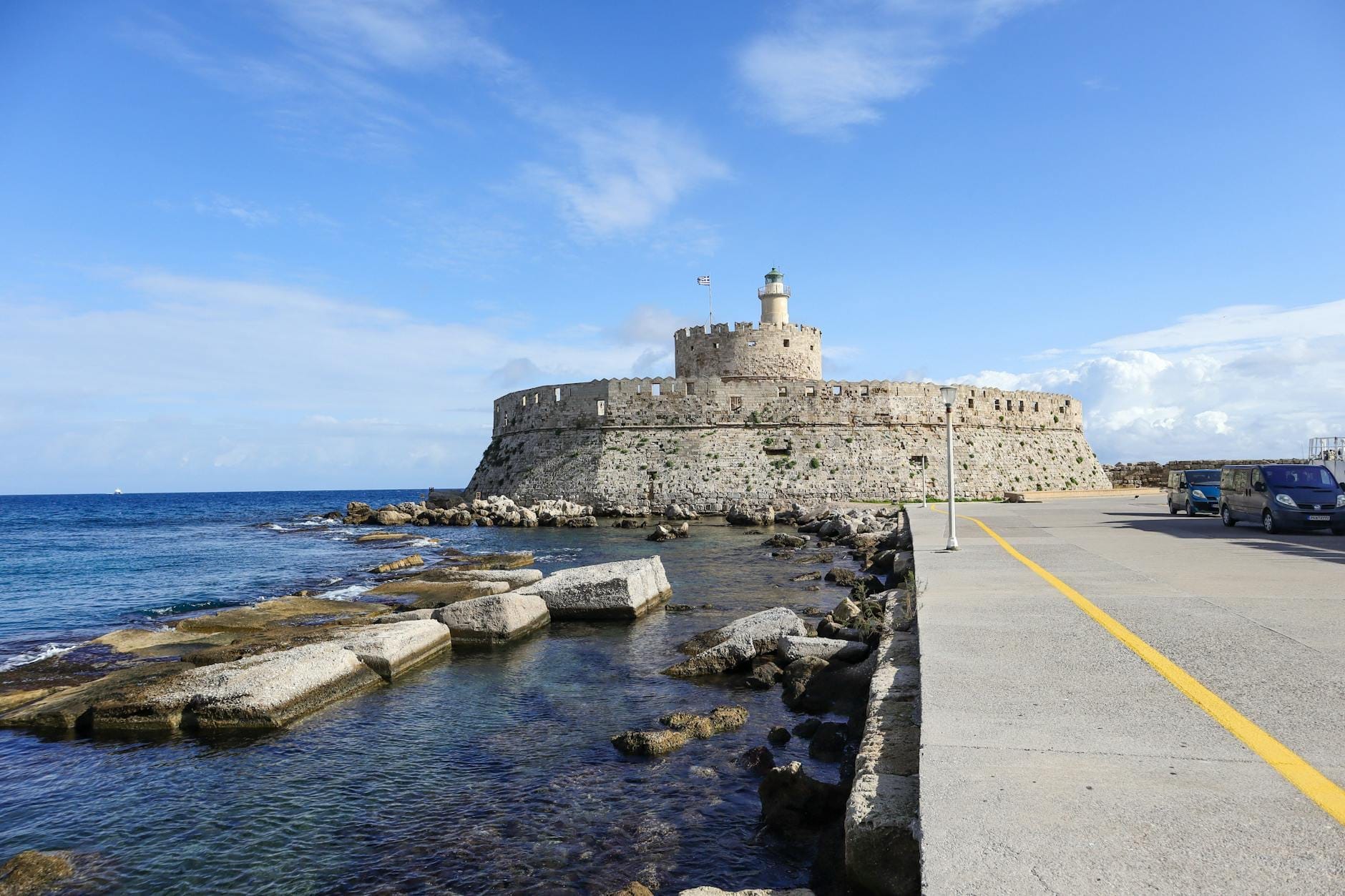
Rhodes New Town occupies the northern tip of Rhodes City, wrapping around the exterior of the UNESCO-listed Medieval Old Town walls. Think of it as a crescent pressed against the north and northwest face of the walled city, with the Aegean Sea on three sides. To the east, the coastline curves past Mandraki Harbour and the landmark fortress of Saint Nicholas before opening onto Elli Beach at the island's northernmost point. To the west, the shore faces toward the Turkish coast and drops down through the Kritika district toward the resort strip of Ixia.
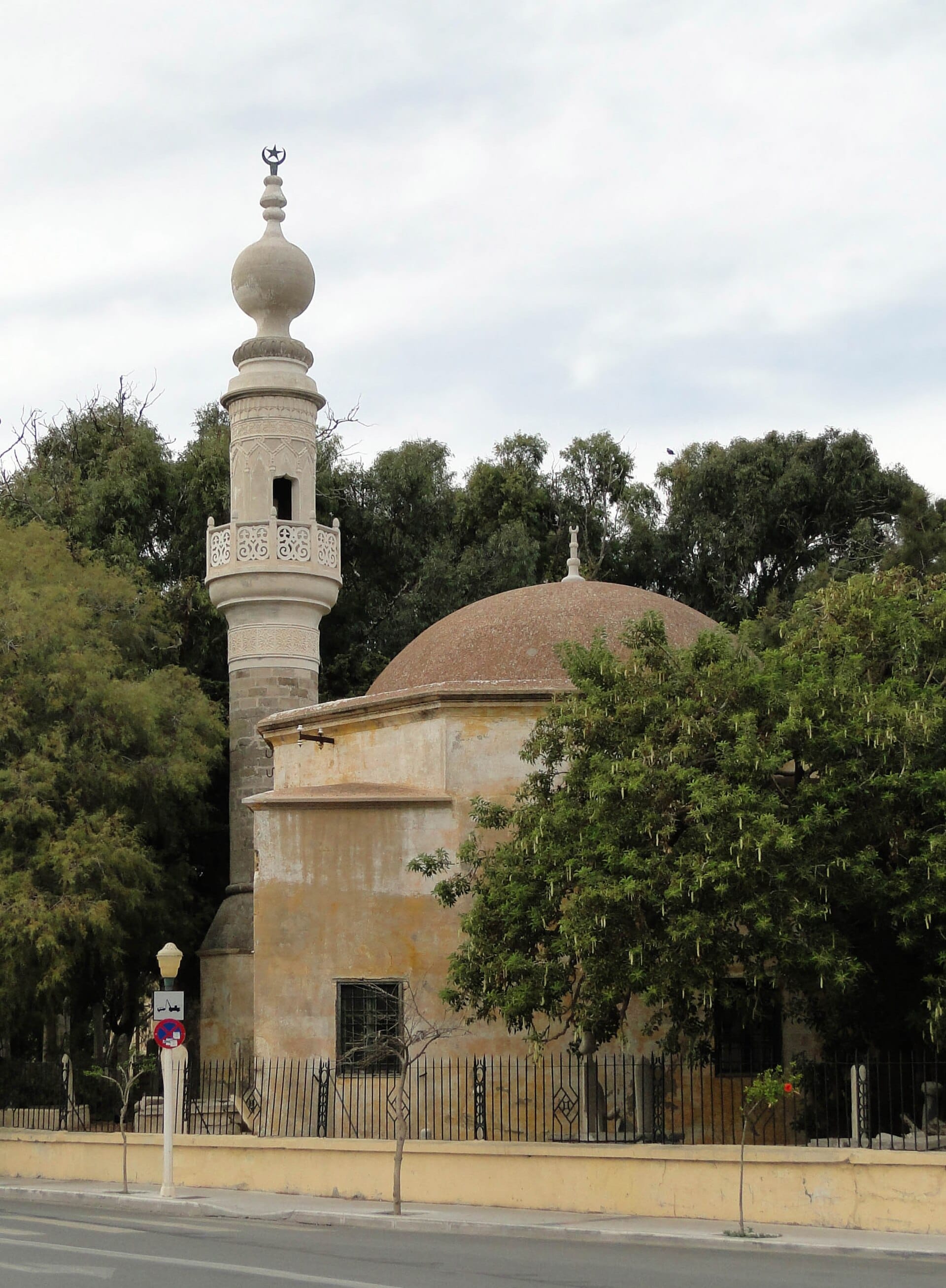
The clearest boundary to the south is the Old Town wall itself, pierced by gates that connect the two halves of the city. The Gate of Freedom, facing Mandraki Harbour, is the most-used crossing point. To the southwest, New Town tapers into the Marasia district and then into the Kritika neighborhood, a quiet coastal strip of low houses originally built for Muslim refugees who arrived from Crete in the early 20th century.
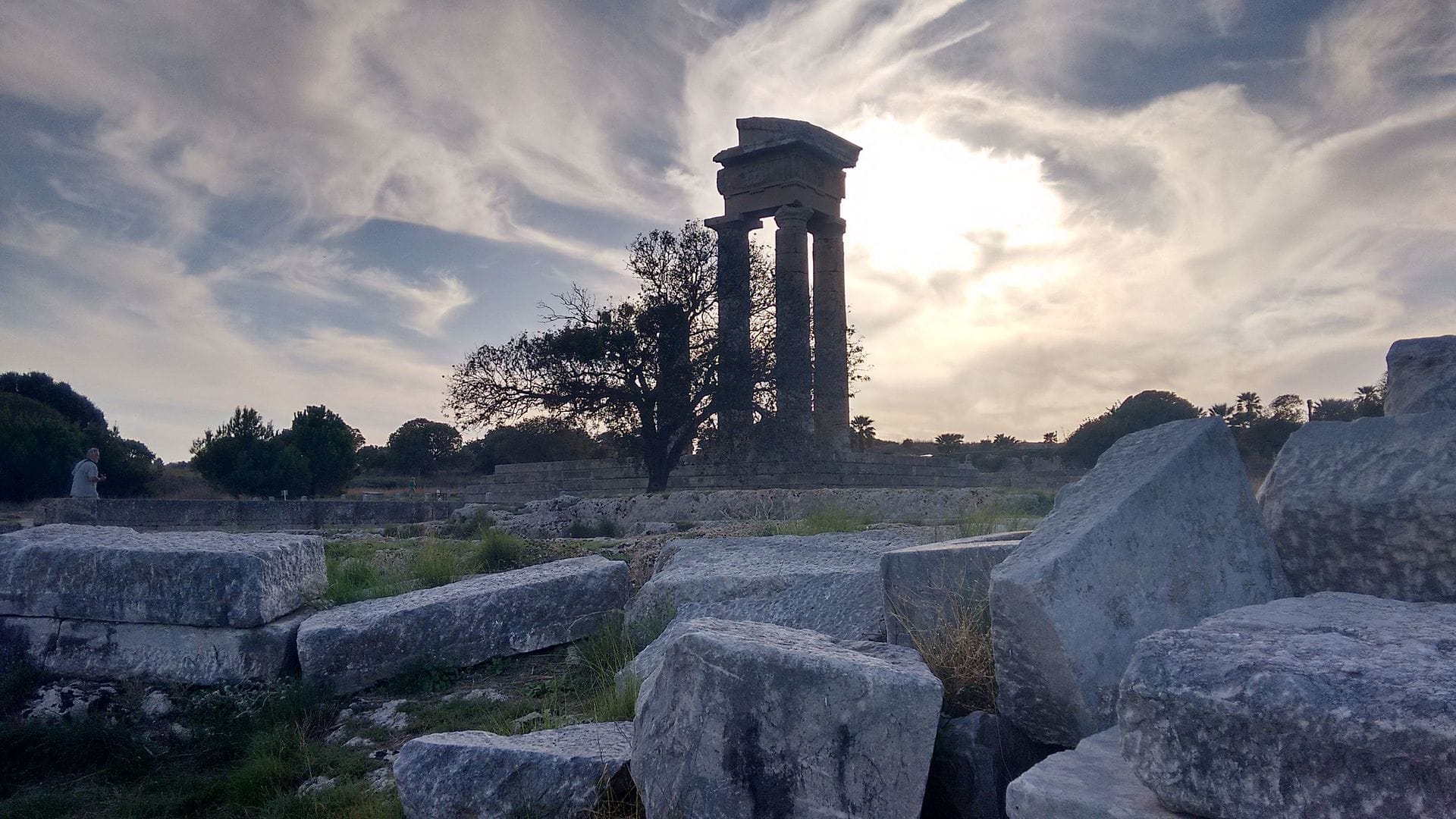
Further inland and slightly elevated, the hill known as Monte Smith anchors the southern edge of New Town's hinterland. The Acropolis of Rhodes sits on its summit and provides the clearest mental anchor point for anyone trying to understand how the modern city sits in relation to its ancient past. From that hilltop, the entire layout of New Town, the harbour, and the Old Town walls becomes immediately legible.
Character and Atmosphere
The Italian occupation of Rhodes between 1912 and 1943 left its most visible mark here. While the Ottomans shaped the Old Town's minarets and hammams, the Italians redesigned the New Town with neoclassical municipal buildings, wide palm-lined boulevards, a grand theatre, and an administrative quarter that still gives the area a distinctly Mediterranean-European feel. The Governor's Palace, the courthouse, and the post office buildings around Kyprου Square are the clearest examples: solid, symmetrical, built to project authority.
At street level, New Town moves to a different pace from the tourist-heavy Old Town. In the early morning, before nine, the neighbourhood belongs to its residents. Café owners set out chairs, delivery trucks idle outside bakeries, and locals on motorbikes navigate the grid of one-way streets with practised ease. The Aegean breeze comes in off the water consistently enough that even on the hottest July afternoons, the coastal promenades feel several degrees cooler than the interior streets of the walled city.
By midday in peak season (July and August), the tourist footprint grows significantly along the Mandraki waterfront and around Elli Beach. Sunbeds appear, excursion boats load passengers, and the strip between the harbour and the casino fills with people in a way that can feel overwhelming. The residential streets even two blocks back from the water, however, retain a quieter character throughout the day.
After dark, New Town develops a genuinely local evening scene. Greeks eat late, and the restaurant and bar strip that runs inland from Mandraki comes alive properly after nine. This is not the concentrated nightlife zone of Faliraki to the south, which caters almost exclusively to package tourists; New Town after dark has a more mixed crowd and a less aggressive energy.
💡 Local tip
If you want to experience New Town's most authentic daily rhythm, walk the Kritika coastal path in the early evening. Locals use it for their volta (the traditional Greek evening stroll), and it is one of the few stretches of Rhodes City waterfront that feels genuinely unhurried.
What to See and Do
The area's highest-profile natural attraction is Elli Beach, the long sandy stretch that curves along the northeastern tip of the island. It is central, walkable from most New Town hotels, and backed by the kind of café and sunbed infrastructure that makes it convenient rather than peaceful. In midsummer it fills early; by late afternoon it empties somewhat as day-trippers move on. The water is clean and the shallow entry makes it good for families.
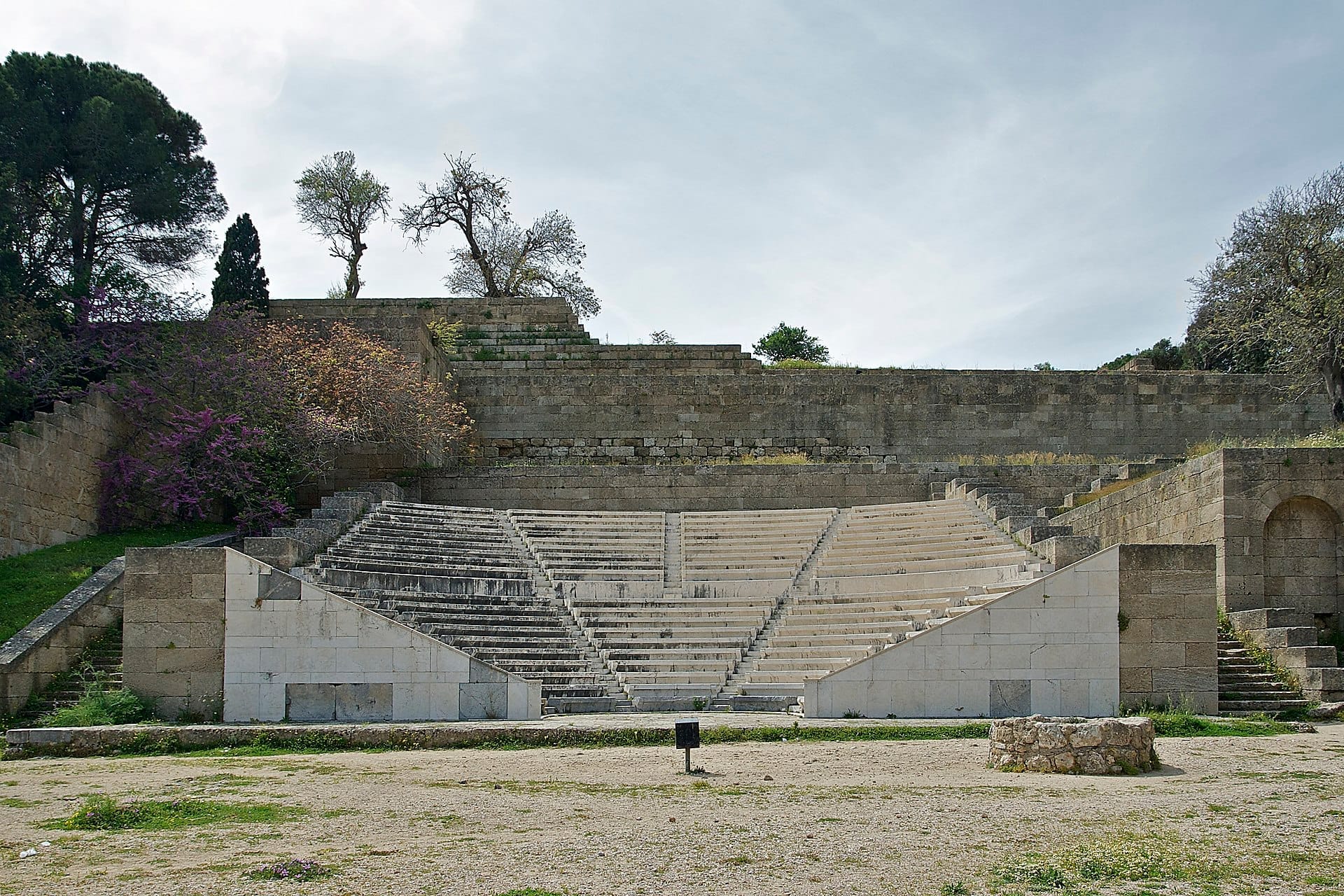
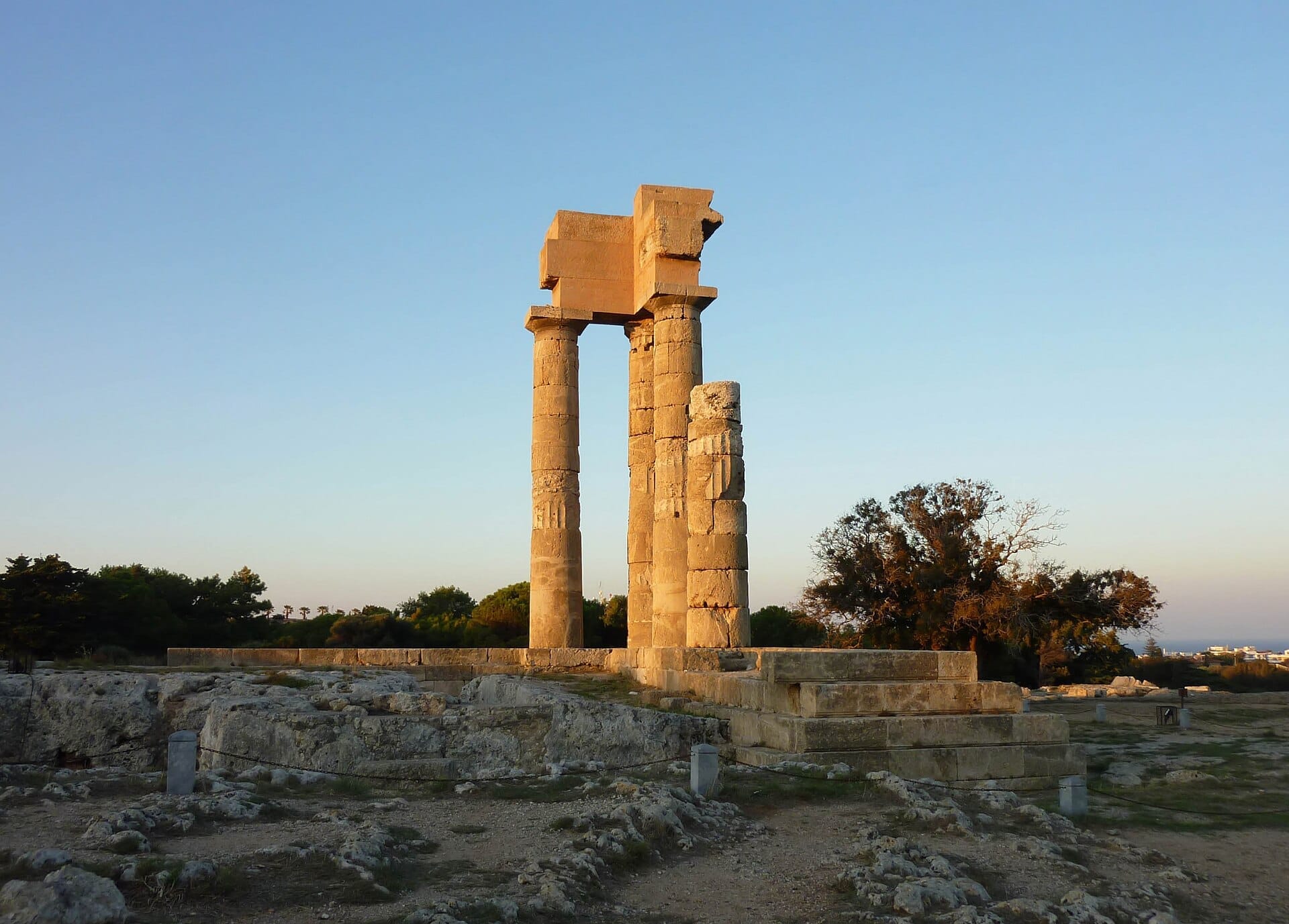
The more rewarding cultural excursion from New Town is the walk up to Monte Smith and the Acropolis of Rhodes, which includes a partially restored ancient stadium, a small theatre, and the columns of the Temple of Apollo. The site is rarely crowded, admission is free, and the views across New Town to the Aegean and toward the Turkish coast are exceptional. Bus number 5 connects Monte Smith to the New Town centre, but the walk up is only around 20-25 minutes and passes through pleasant residential streets.
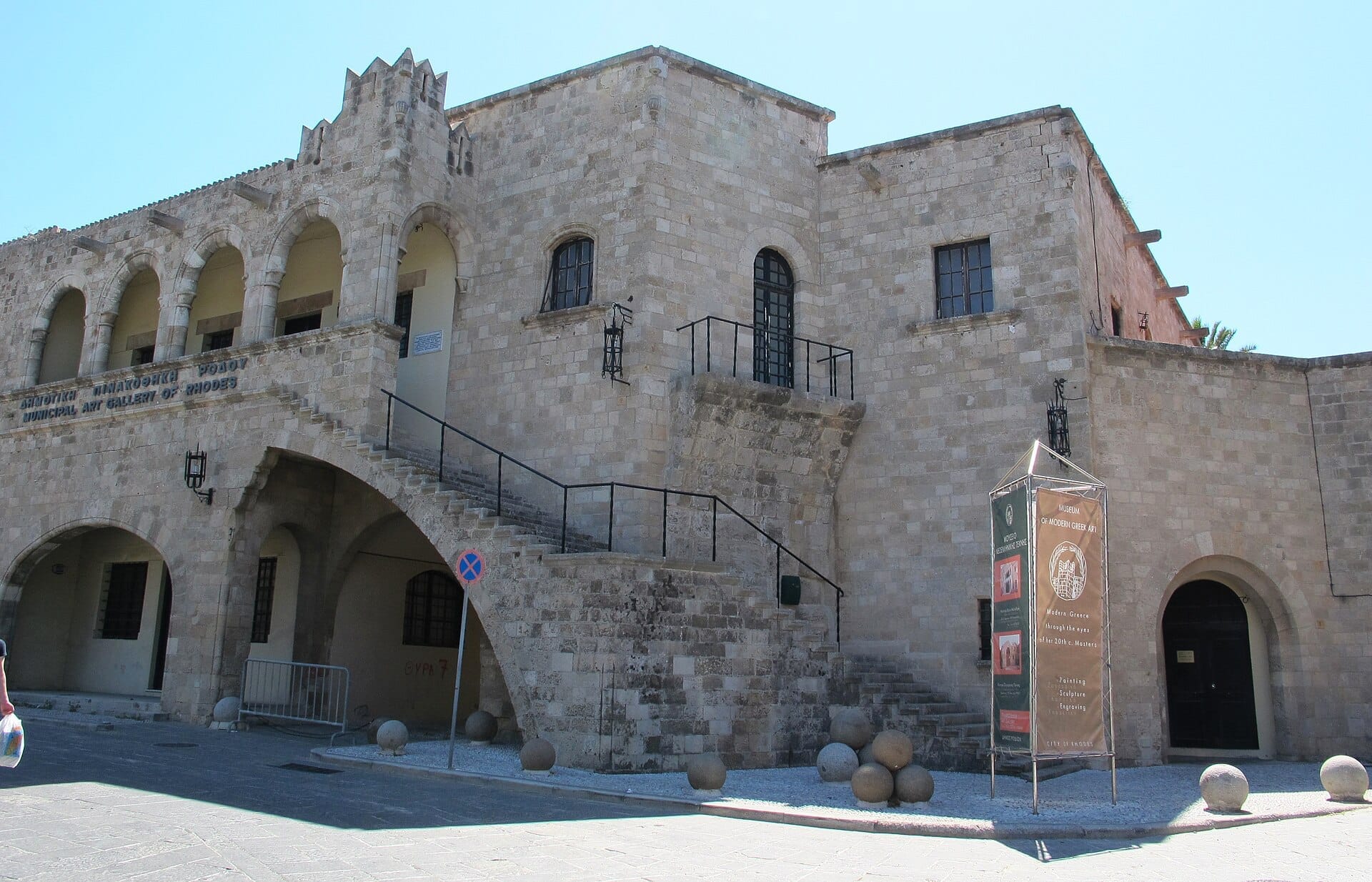
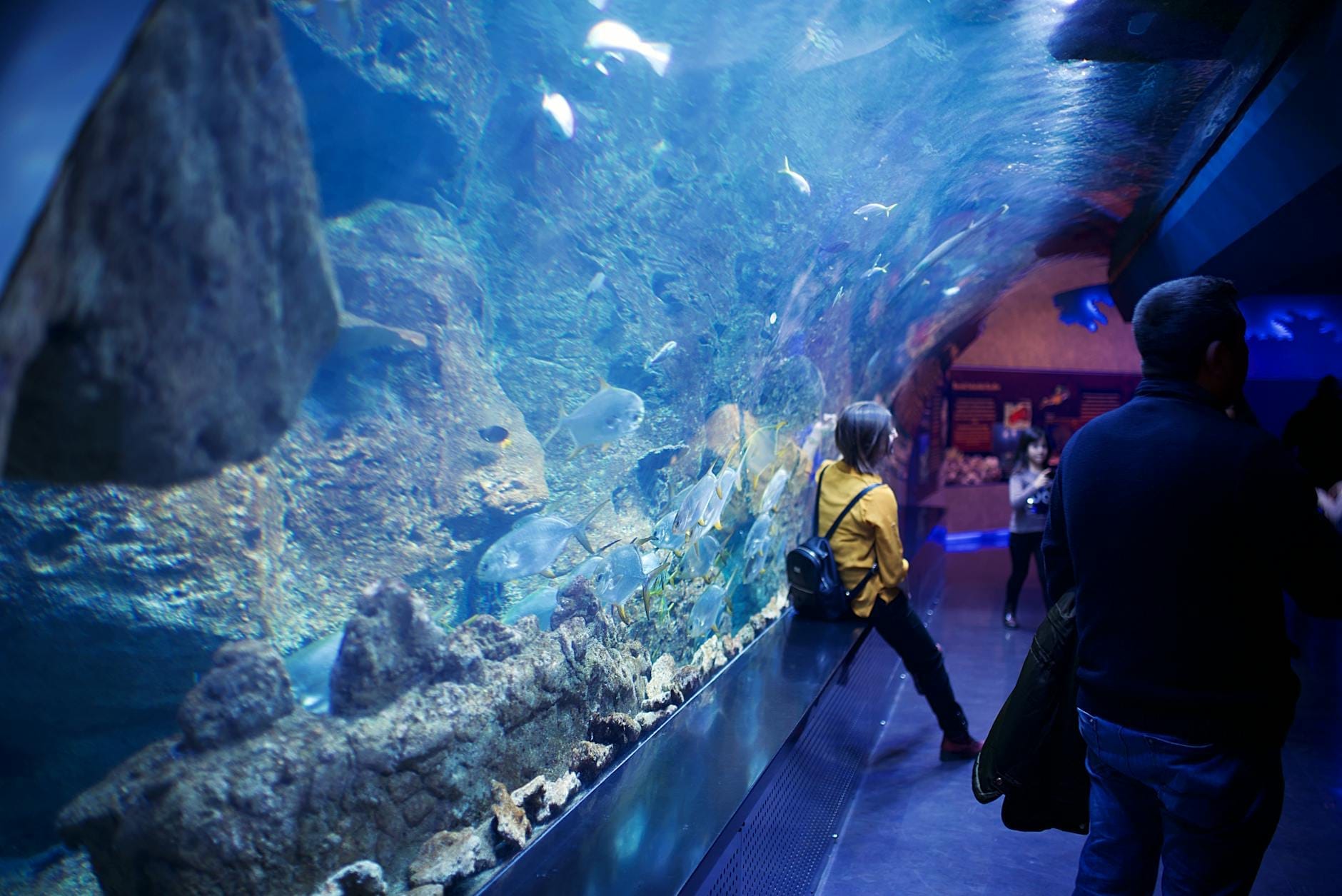
At the northern tip of the waterfront, the Rhodes Aquarium sits inside a striking Italian-era building and provides a well-organised introduction to Aegean marine life. It is particularly good for a morning visit before the heat peaks, and worthwhile if you are travelling with children. Nearby, the Modern Greek Art Museum holds one of the most significant collections of 20th-century Greek art outside Athens, and it is consistently overlooked by visitors who spend their entire stay in the Old Town.
Acropolis of Rhodes at Monte Smith: ancient stadium, Temple of Apollo, panoramic views
Elli Beach: central, sandy, well-serviced, best before 11am or after 5pm in summer
Rhodes Aquarium: Aegean marine life in a distinctive Italian-built facility
Modern Greek Art Museum: strong permanent collection, regularly changing exhibitions
Kritika district: quiet coastal walk through a historically distinct neighbourhood
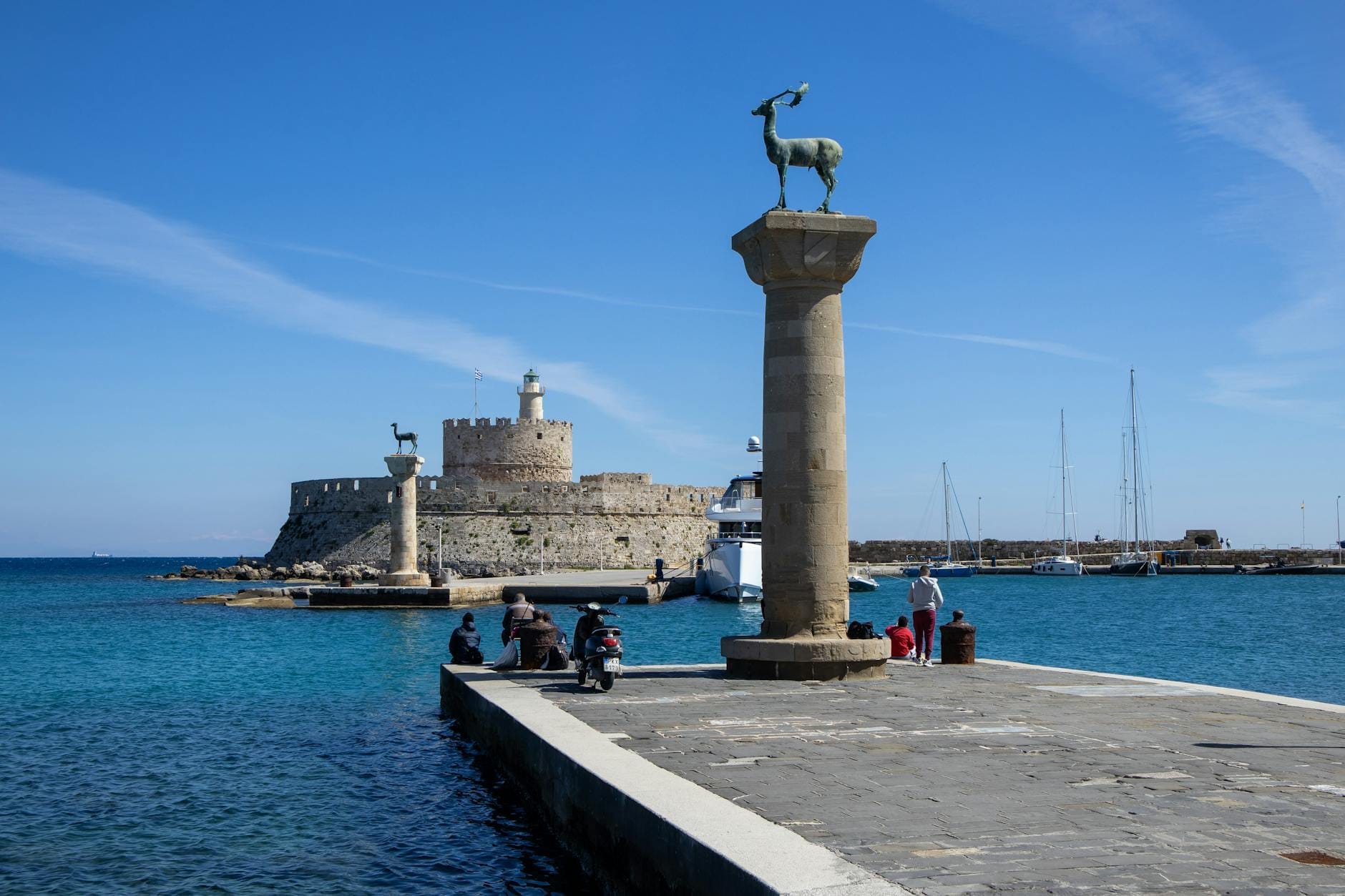
Mandraki Harbour waterfront: windmills, the site of the Colossus, Fort of St Nicholas across the water
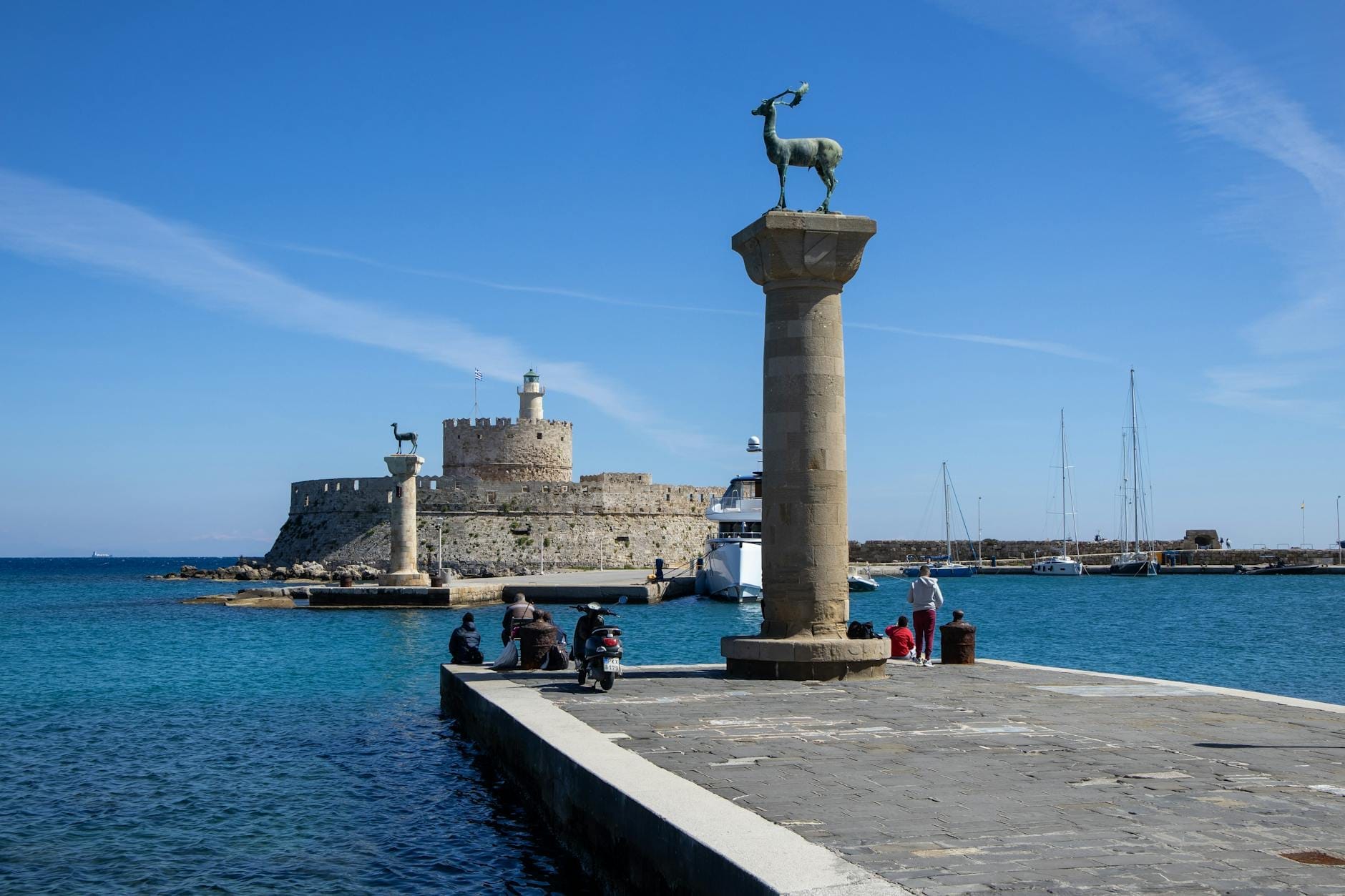
Mandraki Harbour itself, which borders New Town on the east, is worth an hour of your time even if you are not taking a boat trip. The three restored medieval windmills, the bronze deer statues (the symbols of Rhodes) flanking the harbour entrance, and the sight of Fort of St Nicholas across the water create one of the more photogenic waterfronts in the Greek islands. The site attributed to the Colossus of Rhodes is here too, though there is nothing physically to see beyond the deer statues and a stretch of water.
Eating and Drinking
New Town's food scene is more varied and generally better value than the heavily tourist-oriented restaurants inside the Old Town walls. The main concentration of restaurants runs along and around the streets behind Mandraki Harbour, with a secondary cluster near the central market building (a circular Italian-built structure modelled loosely on the Knights' architecture). Prices here tend to be moderate: expect to pay 12-20 euros per person for a full meal with a carafe of house wine at a mid-range taverna.
The food on offer reflects standard Greek island cooking: grilled fish, octopus, lamb dishes, moussaka, and an abundance of meze. For guidance on what to actually order and where to find the best local specialties, the full guide to eating in Rhodes covers the island's culinary traditions in much more detail. In New Town specifically, look for restaurants that display their fish by weight at the entrance, a reliable sign that the catch is genuinely fresh rather than frozen.
For morning coffee and breakfast, the pavement cafés around the main squares in New Town are considerably cheaper than anything you will find in tourist-facing Old Town establishments. A Greek coffee, a tiropita (cheese pie), and a glass of water typically costs under three euros at a neighbourhood café. The same order can cost double or more on the cobblestones of the walled city.
The waterfront strip along Elli Beach has the expected range of beach bars and fast-casual spots: good for a cold drink and a snack, less good for a serious meal. The central market area is worth visiting in the morning for its fresh produce section even if you are not self-catering: the stalls give a clear picture of what is genuinely in season, and the surrounding cafés do solid breakfasts at honest prices.
⚠️ What to skip
The row of restaurants immediately facing Mandraki Harbour is heavily tourist-oriented, with pricing to match. Walk one or two streets back from the water and you will find the same quality of cooking at noticeably lower prices with a more local clientele.
Getting There and Around
Rhodes International Airport Diagoras (RHO) is approximately 14 kilometres southwest of New Town. A taxi takes around 20 minutes in normal traffic and costs in the region of 25-30 euros (verify current rates as these change seasonally). The public bus connection is significantly cheaper at around 2.50-3 euros and takes 25-30 minutes, depositing you at the main bus terminal near Mandraki Harbour. For full details on arriving and navigating the island, the Rhodes airport guide covers all transfer options.
Within Rhodes City, New Town is extremely walkable. Elli Beach at the northern tip, Mandraki Harbour on the east side, and the entrance to the Old Town via the Gate of Freedom are all within comfortable walking distance of each other, roughly 10-15 minutes between any two points. The walk from New Town into the heart of the walled Old Town takes around 20 minutes at an easy pace. Local buses connect the main New Town streets to the port and to outlying areas. Bus number 5 is the most useful for reaching the Monte Smith Acropolis. For exploring further afield, hiring a car is practical since New Town has far easier parking than the Old Town.
Taxis are available throughout New Town and can be hailed on the street or found at ranks near Mandraki and the main square. For day trips to destinations like Lindos or the interior of the island, the main island bus service (KTEL Rodou) departs from the Eastern Bus Terminal near the port area, just a short walk from New Town.
ℹ️ Good to know
Rhodes has no metro or tram system. The island relies entirely on buses, taxis, and private vehicles. If you plan to explore beyond Rhodes City, check current bus schedules at the terminal or online before planning your day, as frequency varies significantly by route and season.
Where to Stay
New Town is one of the most practical bases on the island for most travellers. Hotels here range from budget guesthouses and mid-range three-star properties to upmarket seafront hotels along the Elli Beach strip. The area immediately around Elli Beach and the northern waterfront has the highest concentration of accommodation and the most direct sea views, but also carries more noise from beach bars and late-evening foot traffic in summer. For a fuller breakdown of where to stay across the island, the Rhodes accommodation guide compares all the main options.
For couples or travellers who want a quiet night's sleep alongside easy access to both the Old Town and the beach, the streets two or three blocks back from the waterfront (roughly in the direction of Monte Smith) are the sweet spot. You get genuine neighbourhood character, walking distance to all the major sights, and the Elli Beach waterfront in one direction and the Old Town gates in the other. These streets also tend to offer better value than the premium seafront addresses.
Families with children tend to find New Town particularly convenient: the beach is flat and accessible, the streets are wider and easier with prams or young children than the cobblestones of the medieval quarter, and there are several child-friendly attractions within walking distance. The Rhodes with kids guide has more on making the most of the island with younger travellers.
Honest Assessment: Is New Town Worth Your Time?
New Town will never be the headline reason anyone visits Rhodes. The medieval walled city, the clifftop drama of Lindos, the beaches further down the coast: those are the obvious draws. But New Town is not competing with them. It is the practical, liveable part of Rhodes City that makes a stay in the urban north of the island genuinely comfortable rather than merely atmospheric.
The honest drawback is the tourist strip along Mandraki and Elli Beach in peak summer. From roughly mid-July through August, the northern waterfront is congested, prices at waterfront venues are inflated, and the beach itself is packed by mid-morning. If you are visiting in this window, set your expectations accordingly for those specific areas. The rest of New Town, and the island more broadly, is significantly more manageable.
For travellers visiting in May, June, September, or October, New Town is genuinely excellent: the weather is warm without being punishing, the accommodation prices drop considerably, and the neighbourhood returns to something closer to its year-round character. The best time to visit Rhodes guide breaks down all the seasonal trade-offs in detail.
TL;DR
Rhodes New Town (Neohori) is the modern northern section of Rhodes City, built up from the 16th century and shaped by Italian urban planning in the early 20th century.
Key attractions include Elli Beach, the Acropolis of Rhodes at Monte Smith, the Rhodes Aquarium, the Modern Greek Art Museum, and the Mandraki Harbour waterfront.
It is the most practical base for most visitors: walkable to the Old Town, well-served by taxis and buses, with far easier parking and broader accommodation choice than the medieval quarter.
The tourist strip along Mandraki and Elli Beach is heavily commercialised in peak summer; walk two streets back from the water and the character changes considerably.
Best suited to: first-time visitors to Rhodes wanting a central base, families with young children, travellers who want beach access combined with easy Old Town access, and anyone visiting in shoulder season (May-June or September-October).
Anthony Quinn Bay is one of the most photographed coves on the Greek island of Rhodes, but most visitors know only half the story. Here is the full history of how a Hollywood film, a failed land deal, and emerald-clear water turned a small pebble cove into one of Greece's most recognisable spots.
Rhodes has over 220 km of coastline stretching from rocky northern coves to sweeping southern sandbanks. This guide covers the best beaches in Rhodes, from the iconic bay below the Acropolis of Lindos to the wild windsurfing isthmus at Prasonisi.
Rhodes rewards visitors year-round, but timing your trip correctly means the difference between a peaceful escape and a sweaty queue. This guide breaks down every season honestly, with temperature ranges, crowd levels, pricing patterns, and clear recommendations for different travel styles.
One of the Seven Wonders of the Ancient World, the Colossus of Rhodes was a 33-metre bronze statue that stood near Mandraki Harbour around 280 BCE. Nothing physical survives, but the story, the site, and the surrounding attractions make this one of Rhodes' most fascinating stops. Here is everything you need to know.
Rhodes is an excellent base for exploring the wider Dodecanese and the island's own interior. From the spectacularly beautiful island of Symi to the ancient Acropolis of Lindos and the lush Valley of the Butterflies, these are the day trips that reward the effort of leaving your sunbed.
Rhodes is a large island covering over 1,400 km², and getting around it requires some planning. This guide covers every transport option available, from public buses and taxis to car hire and scooters, with real fares, route logistics, and honest advice on what actually works.
Rhodes is one of Greece's most complete travel destinations, combining a UNESCO-listed medieval city, diverse beaches, and layers of ancient history. But peak-season crowds and tourist-trap pricing are real concerns. Here's everything you need to know before booking.
For over two centuries, the Knights of Rhodes — formally the Order of the Knights of St. John — transformed a Greek island into the most formidable Christian stronghold in the eastern Mediterranean. This guide covers their origins, military achievements, the fall of the city, and exactly what survives today for you to explore.
Rhodes delivers genuine luxury across the full spectrum: UNESCO-listed medieval hotels, clifftop adults-only resorts, Michelin-quality dining, and private boat charters to deserted coves. This guide covers where to stay, eat, and spend your money wisely on the Greek island that consistently punches above its weight.
Everything you need to know about arriving at Rhodes International Airport 'Diagoras' (RHO). From bus routes and taxi fares to pre-booked private transfers, this guide covers all your options for reaching Rhodes Town and the rest of the island quickly and without stress.
Rhodes sits at the perfect crossroads of the Aegean for exploring by sea. This guide covers the best boat trips available, from full-day Symi cruises and Lindos sea excursions to catamaran sailings and snorkelling stops at stunning coastal bays.
Renting a car in Rhodes unlocks the island's best beaches, hilltop villages, and ancient ruins that buses simply can't reach. This guide covers licensing requirements, realistic pricing, parking rules, seasonal booking strategy, and what to watch out for on local roads.
Rhodes rewards those on a budget with an extraordinary range of free experiences. From wandering ancient and medieval streets to swimming in turquoise bays, here are 20 genuinely free ways to get the most from the island.
Rhodes rewards those who look past the headline sites. From a frescoed Byzantine monastery in the pine-covered interior to a crowd-free medieval castle with sea views, these are the places that show you a different side of the island.
Rhodes rewards couples with an exceptional mix of dramatic scenery, ancient history, and unhurried beaches. Whether you are planning a honeymoon, anniversary, or simply a getaway together, this guide covers the most romantic experiences the island offers.
October is one of the smartest months to visit Rhodes, Greece. The summer heat breaks, the crowds thin out dramatically, and the sea stays warm enough for swimming well into the month. This guide covers weather, prices, what's open, and how to make the most of the island in autumn.
Rhodes in summer is spectacular and intense in equal measure. This guide covers everything from scorching July temperatures and peak-season crowds to the quieter southern beaches and the best strategies for enjoying Greece's largest Dodecanese island without the misery.
Three days in Rhodes is enough to cover the medieval Old Town, the Acropolis of Lindos, ancient Kamiros, and a handful of excellent beaches — if you plan it right. This itinerary sequences the island's highlights by geography, not just popularity, so you spend less time driving and more time exploring.
A week in Rhodes is enough to cover its UNESCO medieval core, the clifftop drama of Lindos, a ferry to Symi, and some of the Aegean's best beaches without ever feeling rushed. This day-by-day itinerary is built around realistic travel times, crowd patterns, and practical logistics so you can spend less time planning and more time actually enjoying the island.
Rhodes Medieval Old Town is one of Europe's most intact medieval cities, a UNESCO World Heritage Site enclosed by 4 km of walls and layered with 700 years of history. This guide covers everything from the Palace of the Grand Masters to the Ottoman quarter, with practical entry info, crowd patterns, and honest recommendations.
Rhodes after dark covers a wider range than most visitors expect. Whether you want high-energy clubs on Orfanidou Street, open-air beach parties near Kallithea, or a quiet glass of wine inside the medieval walls, this guide covers every scene with practical details on venues, timing, and what to avoid.
Rhodes Old Town is one of Europe's most intact medieval cities and a UNESCO World Heritage site. This self-guided walking tour covers the essential route, every major landmark, honest crowd warnings, and practical details so you can explore at your own pace without wasting a step.
Rhodes is one of Greece's most rewarding destinations, and it doesn't have to drain your wallet. This guide breaks down realistic daily budgets, the best free and low-cost attractions, smart transport choices, and the seasonal timing that cuts costs by nearly half.
Rhodes is one of the most photogenic islands in the Mediterranean, stacking medieval architecture, turquoise bays, and ancient ruins into a remarkably compact space. This guide covers the 20 best photography locations on the island, from iconic landmarks to lesser-known viewpoints.
Choosing between Greek islands is harder than it looks. This guide breaks down how Rhodes compares to Santorini, Crete, Kos, and Mykonos across beaches, history, cost, and crowd levels — so you can book with confidence.
Rhodes is one of Greece's top destinations for windsurfing and kitesurfing, driven by reliable Meltemi winds and a string of well-organized schools on the northwest coast. This guide covers every spot, lesson price, seasonal window, and insider tip you need to plan your trip.
Rhodes punches well above its weight for family travel. Whether your kids are after slides and splash pools, wildlife encounters, or exploring real medieval castles, the island delivers. This guide covers the best family-friendly activities across beaches, nature, history, and pure entertainment.
Rhodes is one of Greece's most layered destinations, where a UNESCO-listed medieval city sits minutes from clear Aegean water. This guide covers the best things to do in Rhodes across history, beaches, food, and day trips, with honest takes on what's worth your time and what isn't.
Rhodes has a distinct culinary identity rooted in chickpeas, wild greens, handmade pasta, and cumin-heavy stews. This guide covers the essential local dishes, seasonal specialities, what to drink, and where to find the food worth seeking out.
Rhodes has one of the strongest food cultures in Greece, built on fresh Aegean seafood, sun-ripened local produce, and centuries of Mediterranean culinary tradition. This guide covers where to eat across the island, from the medieval alleyways of the Old Town to the clifftop village of Lindos, with honest assessments, realistic prices, and practical booking advice.
Choosing where to stay in Rhodes shapes your entire trip. This guide breaks down every major area honestly, from UNESCO-listed Old Town to family-friendly Pefkos, with specific hotel recommendations and seasonal tips to help you book with confidence.