Rhodes vs Other Greek Islands: Which Should You Visit?
Choosing between Greek islands is harder than it looks. This guide breaks down how Rhodes compares to Santorini, Crete, Kos, and Mykonos across beaches, history, cost, and crowd levels — so you can book with confidence.
Plan and book this trip
Tools from our partner Travelpayouts help you compare flights and hotels. If you book through them, we may earn a commission at no extra cost to you.
Flights
Hotels map
TL;DR
- Rhodes is the best all-rounder: medieval history, decent beaches, reliable sun, and a wide range of accommodation — all on one island.
- The UNESCO-listed Rhodes Old Town is Europe's oldest continuously inhabited medieval town — no other Greek island matches it for historical depth.
- Santorini beats Rhodes for romance and photography; Crete beats it for sheer size and variety; Kos beats it for long flat sandy beaches and lower prices.
- Rhodes suits 4-7 day trips best. Pair it with another island or Athens for longer stays.
- Shoulder seasons (May-June and September-October) offer the best balance of good weather and manageable crowds — see when to visit Rhodes for a full breakdown.
Why Compare Rhodes at All?
Greece has over 6,000 islands, around 230 of which are inhabited. Most travelers visiting the Greek islands for the first time narrow their shortlist to five or six options and then stall. Rhodes rarely tops the Instagram-famous rankings — that spot goes to Santorini or Mykonos — but it consistently outperforms expectations once travelers arrive. Understanding exactly where it fits relative to its rivals helps you decide whether it belongs on your itinerary at all.
Rhodes is the fourth-largest island in Greece and the largest of the Dodecanese group, covering 1,401 km². It sits just 20 km from the Turkish coast, which makes it geographically remote from Athens (roughly 400 km) but extremely well connected by air. Rhodes International Airport Diagoras (RHO) receives direct flights from across Europe, making it one of the most accessible islands in the Aegean. That alone sets the tone for the comparison: Rhodes is a practical choice as well as a rewarding one.
Rhodes vs Santorini: History and Scenery Against Each Other
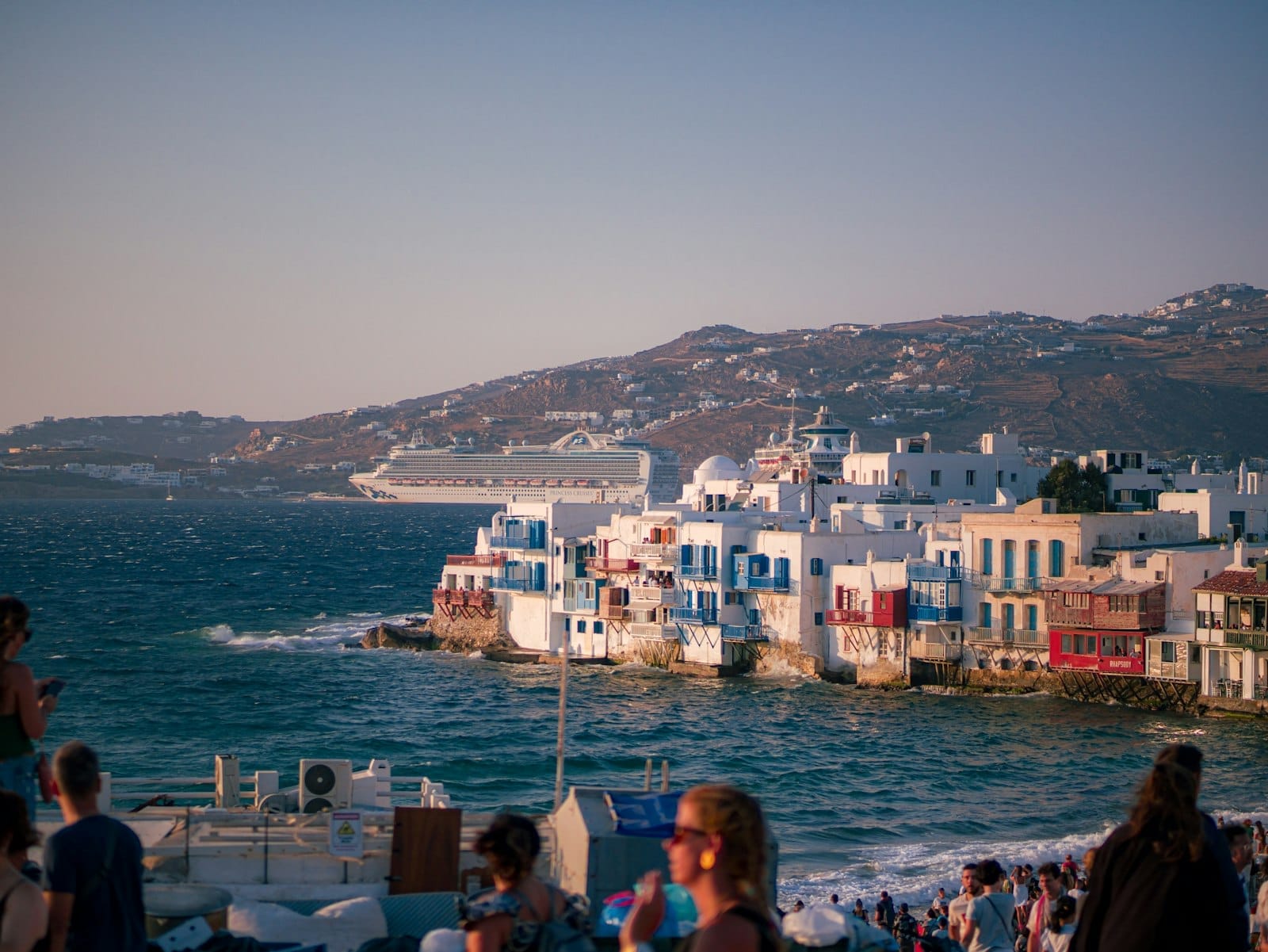
Santorini is the most photographed island in Greece. The caldera views from Oia and Fira are genuinely spectacular, and no other island replicates that volcanic drama. If your main goal is a romantic getaway focused on sunsets, wine, and cliff-edge hotels, Santorini delivers in a way Rhodes simply does not.
But Santorini comes with real trade-offs. Beaches are either black volcanic sand (striking but not for everyone) or pebbled, and swimming conditions are not particularly family-friendly. Prices sit significantly higher than Rhodes: a mid-range hotel in Oia during peak season can run three to four times what an equivalent room costs in Rhodes Old Town. Cruise ship tourism also floods the island between May and October, meaning Fira can feel overwhelmed by midday.
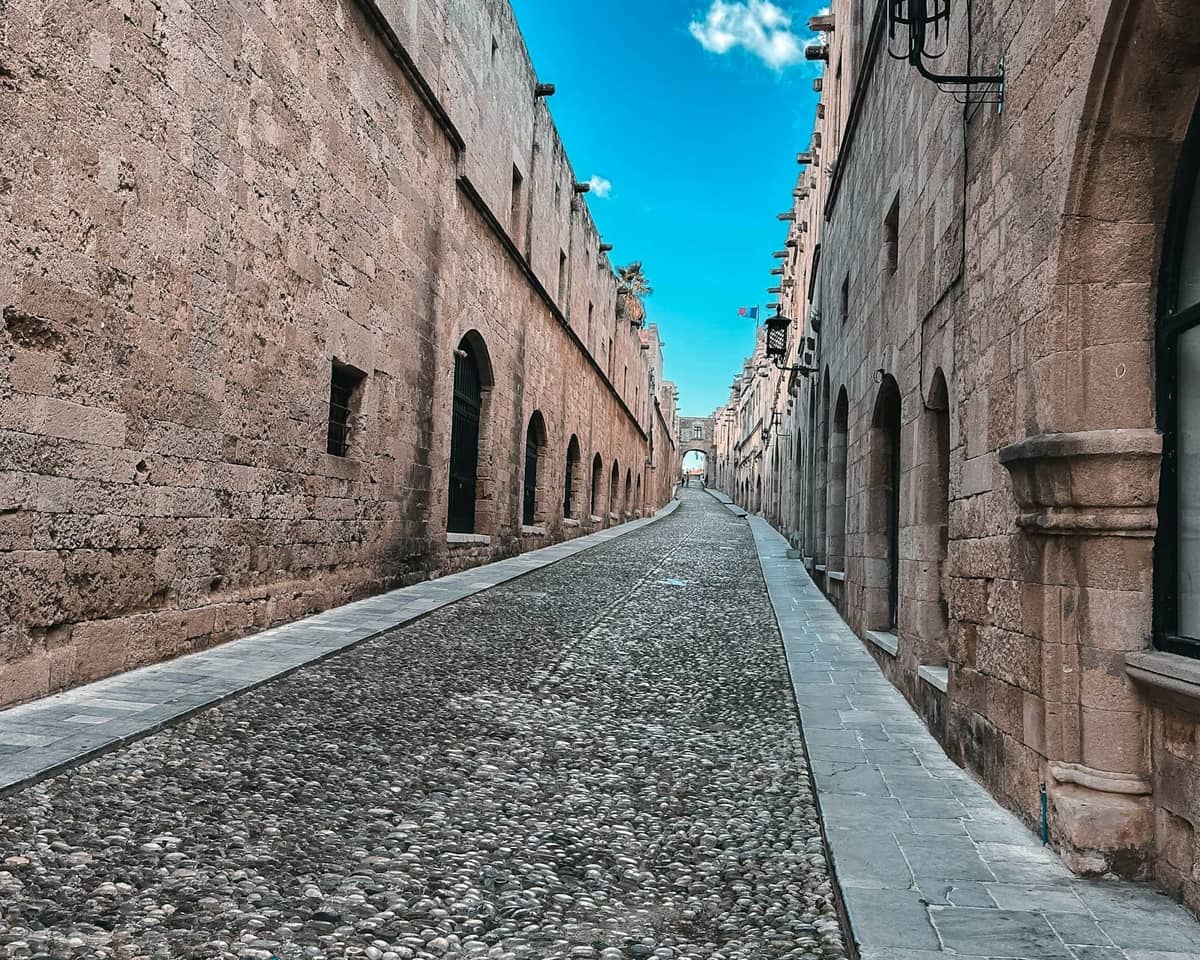
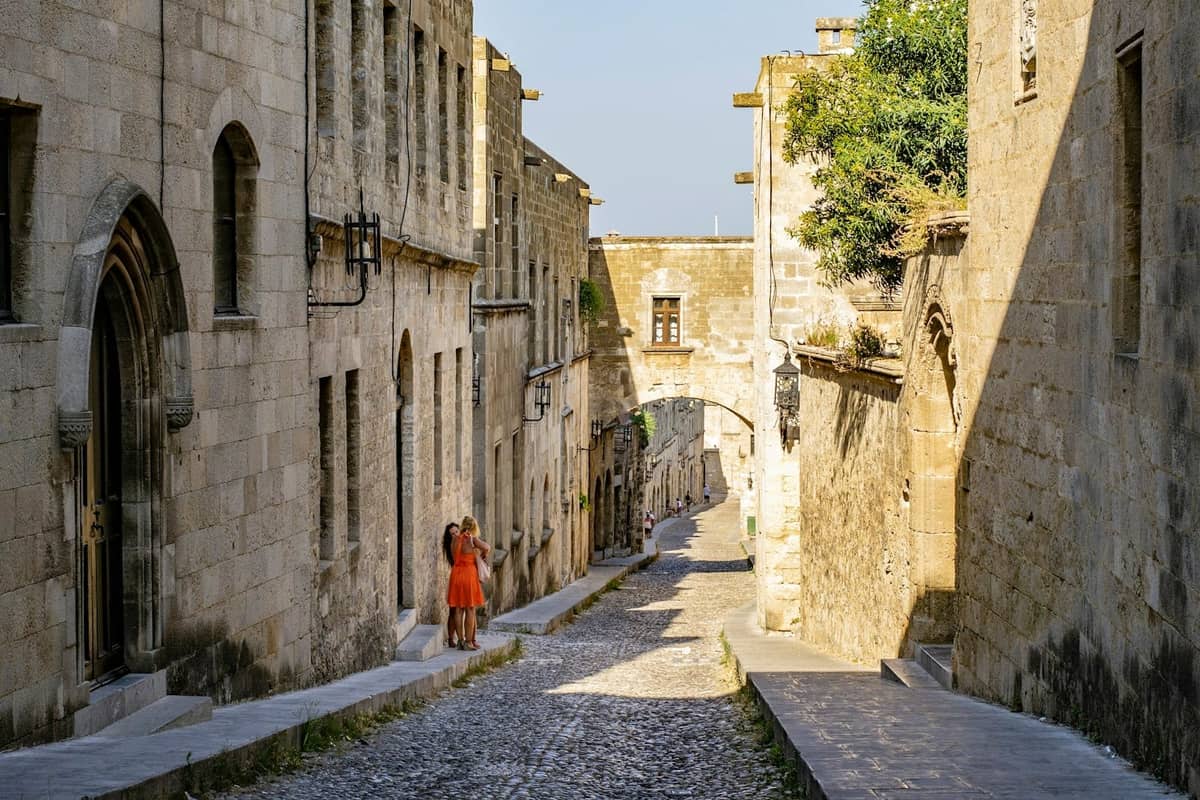
Rhodes offers something Santorini essentially cannot: layered history you can walk through. The Palace of the Grand Master, the Street of the Knights, Byzantine churches, Ottoman mosques, and Italian-era civic buildings all coexist inside a single walled city. That kind of cultural density is rare anywhere in the Mediterranean, let alone on a Greek island.
💡 Local tip
Choose Santorini if romance and iconic scenery are your top priority. Choose Rhodes if you want history, better beaches, and significantly better value for money.
Rhodes vs Crete: The Big Island Question
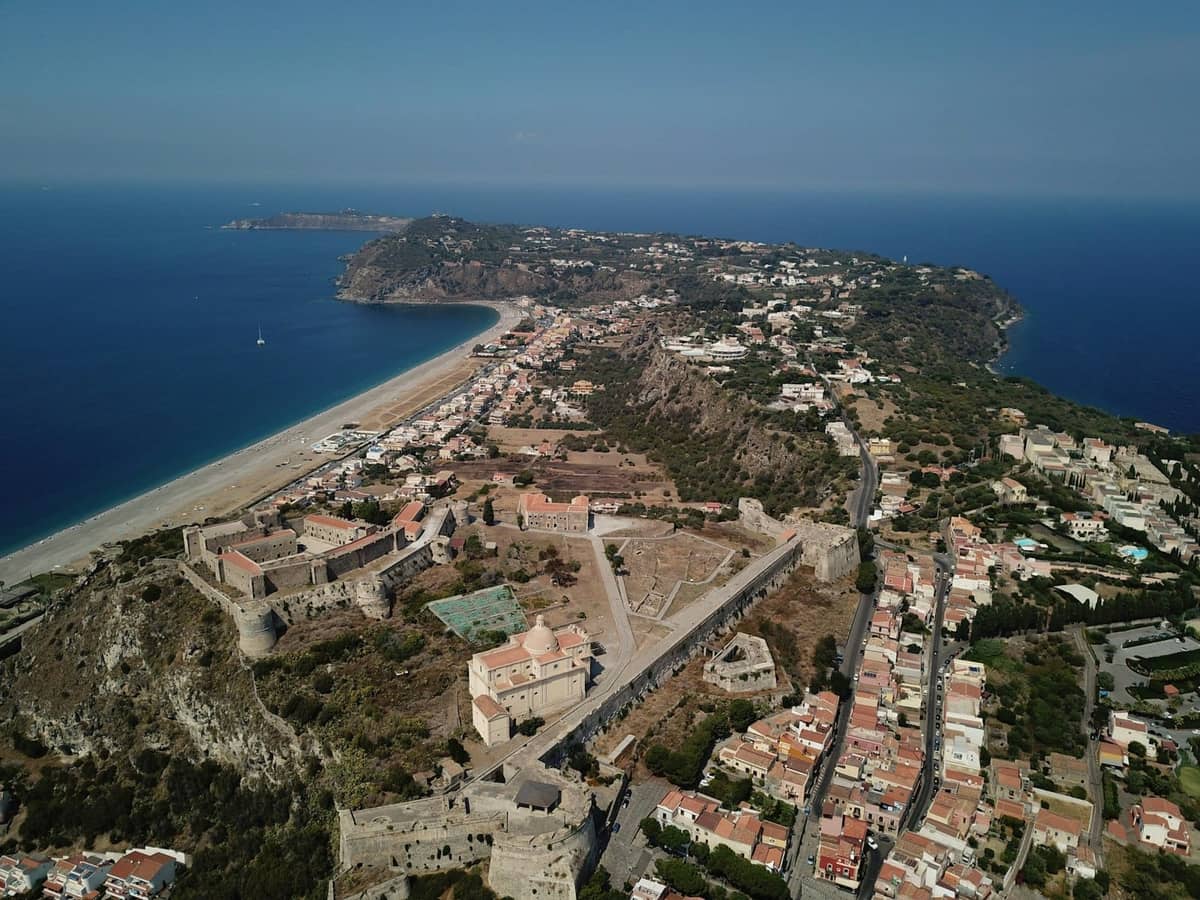
Crete is approximately eight times larger than Rhodes and operates almost like a separate country. It has its own distinct dialect, cuisine, music traditions, and a level of cultural independence that takes weeks to fully appreciate. For travelers with two weeks or more, Crete offers more raw variety than Rhodes: the Samaria Gorge, the Minoan ruins at Knossos, the Venetian harbour at Chania, remote mountain villages, and a south coast that still feels genuinely undiscovered in places.
For a 4-7 day trip, though, Crete's size works against it. You'll spend a meaningful portion of your time in transit between the north and south coasts, or between Heraklion and Chania. Rhodes, being compact, lets you see the medieval city, Lindos, a couple of beaches, and the island's interior comfortably in a week without feeling rushed.
On the history front, Rhodes competes well despite the size difference. While Crete has Minoan archaeology, Rhodes has its own ancient sites, including the Acropolis of Lindos with 4th-century temples of Athena and Zeus, and the ruins of ancient Kamiros. The medieval walled city also predates most comparable sites in Europe. Rhodes Old Town's medieval layers include Byzantine, Ottoman, and Italian architectural phases that tell a more internationally complex story than most Greek sites.
ℹ️ Good to know
Rhodes Old Town is Europe's oldest continuously inhabited medieval town, with medieval origins dating to 1309 AD. Its UNESCO World Heritage status is well-earned — this is not marketing language.
Rhodes vs Kos: The Closest Competitor
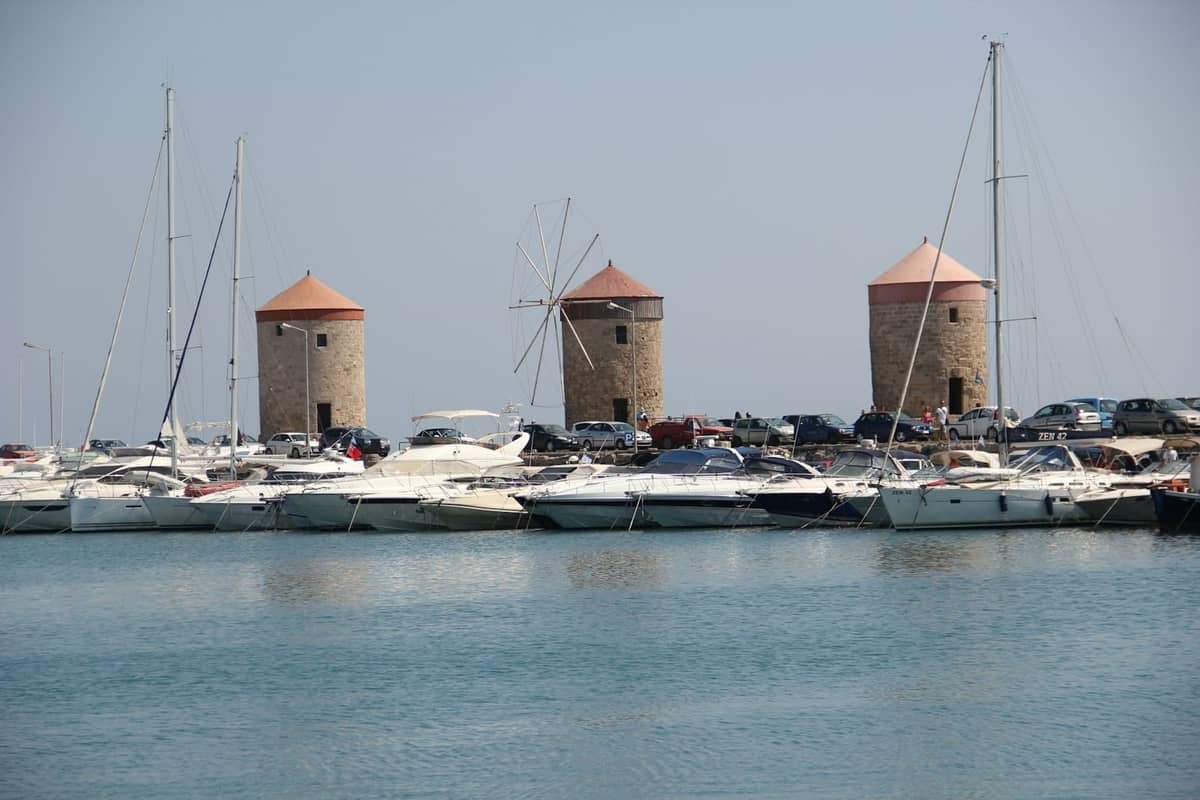
Kos is the most direct comparison to Rhodes because it sits in the same island group, has a similar climate, and targets a broadly similar traveler demographic. The differences, however, are real enough to matter.
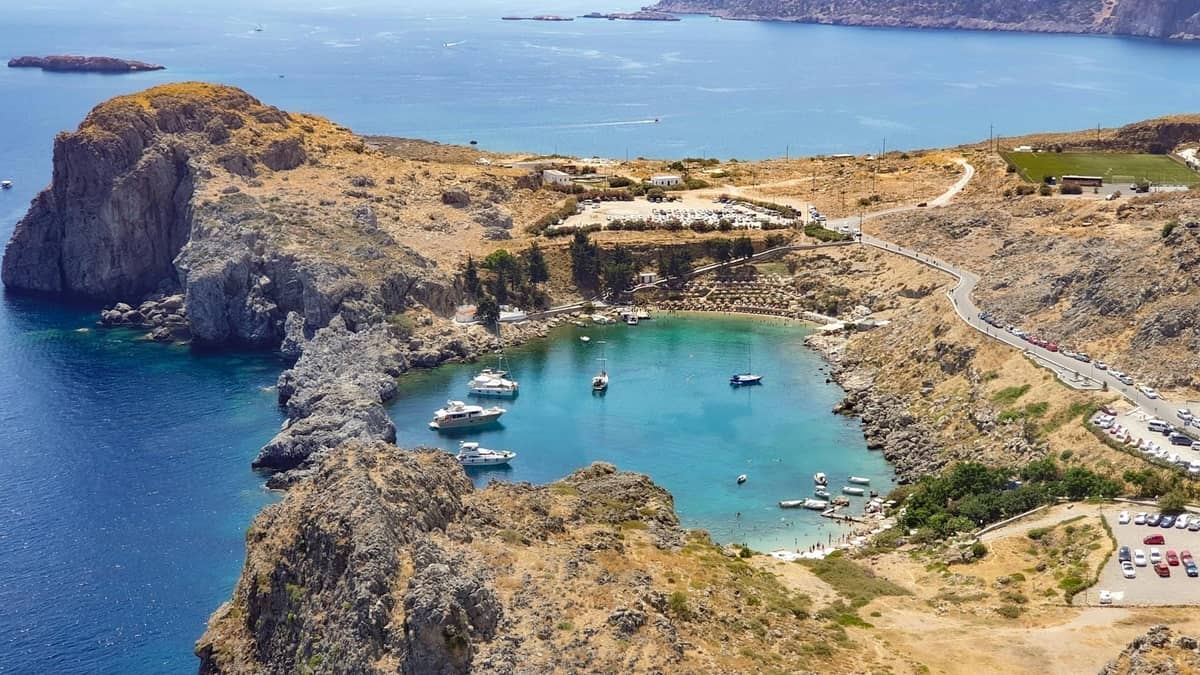
- Beaches Kos generally has longer, flatter sandy stretches and a more relaxed resort feel. Rhodes has more varied beach landscapes: coves, bays, and mixed sand-and-pebble shorelines. Tsambika Beach on Rhodes is excellent for families (long, shallow, sandy), while Prasonisi at the southern tip draws windsurfers and kitesurfers from across Europe.
- History and culture Rhodes wins decisively. Kos has Hippocrates connections and some Roman ruins, but nothing that competes with a UNESCO-listed medieval walled city.
- Price Kos is generally slightly cheaper than Rhodes for accommodation and dining, though the gap has narrowed in recent years.
- Nightlife Kos has a well-known party scene, particularly around Kardamena. Rhodes has its own nightlife in the New Town, but it's less concentrated.
- Size and logistics Rhodes is significantly larger (1,400 km² vs around 290 km² for Kos), which means more driving but also more diversity in landscapes and experiences.
For travelers primarily after a beach holiday with some ancient history and easy logistics, Kos is a legitimate alternative. For travelers who want a more complete destination — history, beaches, food culture, diverse landscapes — Rhodes is the stronger choice. Both islands are also well-placed for day trips to nearby islands including Symi, which is one of the most attractive smaller islands in the Dodecanese.
Rhodes vs Mykonos: Different Audiences Entirely
Mykonos and Rhodes attract different travelers, and the comparison is less about which is better and more about which fits you. Mykonos is Greece's flagship party island: internationally famous beach clubs, luxury fashion boutiques, celebrity-favored hotels, and prices to match. A cocktail at a beach club in Mykonos regularly costs three to four times what the same drink costs in Rhodes.
If you're planning a bachelorette trip, a luxury summer party break, or you specifically want the social scene that Mykonos has built over decades, Rhodes will feel understated by comparison. But if you want value, history, authentic local neighborhoods, and beaches that don't require a reservation, Rhodes is the more sensible option by a wide margin. Rhodes does have a nightlife scene worth exploring — the New Town area gets lively in summer — but it operates at a different scale and cost level.
⚠️ What to skip
Mykonos in peak season (July-August) is genuinely expensive and extremely crowded. Budget travelers or those expecting a relaxed, authentic Greek experience will be disappointed. Rhodes in the same period is busy, but not to that extent.
What Rhodes Does Better Than Any of Them
The honest answer to 'Rhodes vs other Greek islands' is that Rhodes is the strongest all-rounder in the Aegean. It has the best medieval history of any Greek island, reliably good beaches, a range of accommodation from budget hostels to upscale resorts, and infrastructure that handles large numbers of tourists without completely losing its character. The range of things to do in Rhodes covers enough ground to fill a full week without repeating yourself.
- Medieval Old Town: UNESCO-listed, Europe's oldest continuously inhabited medieval city, with the Palace of the Grand Master, the Street of the Knights, working mosques, Byzantine churches, and a hammam
- Beach variety: from the family-friendly sands of Tsambika to the wind-sport hub at Prasonisi and the dramatic bay at Lindos
- Accessibility: direct flights from most major European cities, no ferry required to reach the main attractions
- Food: better local restaurant culture than Mykonos or Santorini, with legitimate Greek tavernas in the Old Town and surrounding villages
- Day trip options: Symi, Kos, and Turkish coastal towns like Marmaris are all reachable within an hour by boat
Rhodes also works well in shoulder season in a way that islands like Mykonos and Santorini do not. Many businesses on those islands close entirely outside June-September. Rhodes has a longer active season, with October in Rhodes still warm enough for swimming and significantly quieter than summer. For anyone traveling outside peak dates, that flexibility is valuable.
✨ Pro tip
If you're combining islands on a longer trip, pair Rhodes with Santorini for contrast: Rhodes for history and value, Santorini for scenery and romance. Flying between the two takes under an hour and covers two very different Greek island experiences.
Practical Comparison: Budget, Travel Time, and Trip Length
Cost matters. Rhodes sits in the mid-range for Greek island pricing: more expensive than Kos or lesser-known Dodecanese islands, cheaper than Mykonos and Santorini. A mid-range dinner for two with wine typically runs around 40-60 EUR. A 3-star hotel in or near the Old Town costs roughly 80-150 EUR per night in peak season, with budget options available from around 50 EUR. Luxury resorts on the east coast push well above 300 EUR per night.
Getting around is straightforward without being seamless. KTEL buses cover main routes including the city to Lindos, but services thin out in rural areas. Renting a car unlocks the island properly and is recommended for anyone wanting to explore beyond the main resorts. See the full Rhodes car hire guide for current rates and practical advice. For a 4-5 day trip, you can cover the main highlights without a car; for 7 days or more, a car makes a significant difference.
- Best for 3-4 days Old Town, Lindos, one or two beaches. Stick to public transport or taxis.
- Best for 5-7 days Add Kamiros, Valley of the Butterflies, Prasonisi, and a day trip to Symi. Hire a car for at least 2-3 days.
- Best for 10-14 days Combine with Athens or another island. Rhodes alone doesn't require more than 7 full days unless you're genuinely slow-traveling.
FAQ
Is Rhodes better than Santorini for a family holiday?
For families, Rhodes is the stronger choice. It has better beaches for children (particularly Tsambika, with shallow and calm water), more affordable accommodation, and a wider range of activities beyond scenery and restaurants. Santorini's volcanic beaches and steep cliffside terrain are less practical with young children.
Is Rhodes cheaper than Mykonos?
Significantly so. Mykonos operates at luxury pricing across most categories — hotels, beach clubs, restaurants, and transfers. Rhodes offers a much wider range of price points, with budget, mid-range, and luxury options all genuinely available. For most travelers, Rhodes costs 30-50% less than Mykonos for a comparable stay.
How does Rhodes compare to Crete for history?
Crete has Minoan archaeology (Knossos, around 2700 BC) which predates anything on Rhodes. But Rhodes has a UNESCO World Heritage medieval city that is denser and more accessible than most of Crete's ancient sites, plus the Acropolis of Lindos and ruins of ancient Kamiros. For medieval history specifically, Rhodes is unmatched in Greece.
Can you combine Rhodes with another Greek island?
Yes, and it's a popular option. Symi is a short ferry ride away and makes a great day trip or overnight. Kos is also reachable by ferry. For flight connections, Santorini, Athens, and Thessaloniki all have direct links from Rhodes Airport. A common 10-12 day itinerary pairs Rhodes (5-6 days) with Athens (2-3 days) and Santorini (2-3 days).
When is the best time to visit Rhodes compared to other islands?
May-June and September-October are the best months for Rhodes: warm enough to swim, fewer crowds than July-August, and most businesses fully open. This shoulder season advantage is more pronounced on Rhodes than on Santorini or Mykonos, where the tourist infrastructure scales down sharply outside peak summer.