Best Things to Do in Rhodes: The Definitive Guide
Rhodes is one of Greece's most layered destinations, where a UNESCO-listed medieval city sits minutes from clear Aegean water. This guide covers the best things to do in Rhodes across history, beaches, food, and day trips, with honest takes on what's worth your time and what isn't.
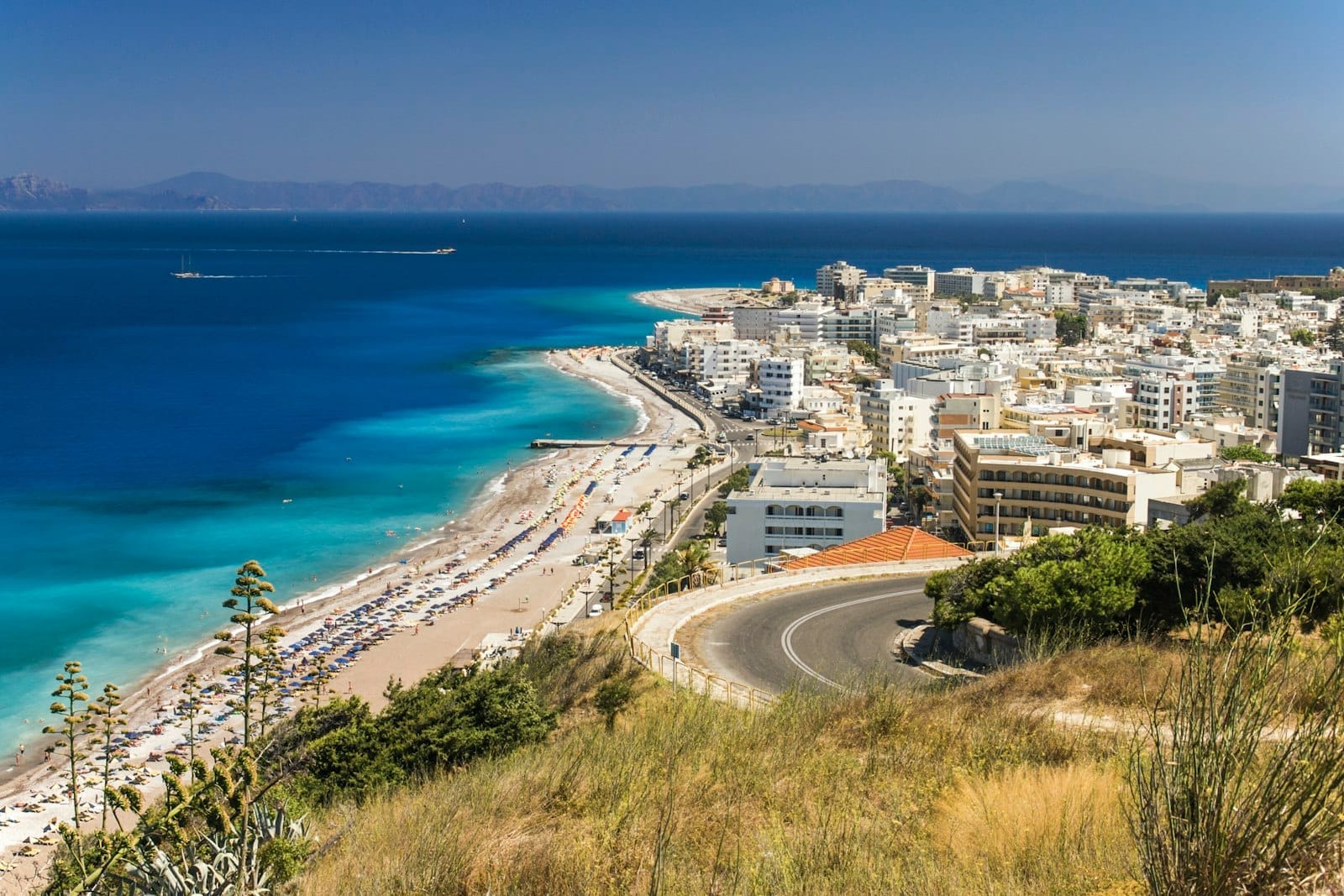
Plan and book this trip
Tools from our partner Travelpayouts help you compare flights and hotels. If you book through them, we may earn a commission at no extra cost to you.
Flights
Hotels map
TL;DR
- Rhodes Old Town is the world's oldest continually inhabited medieval city and the island's single greatest attraction. Start there. See our Rhodes Old Town guide for full detail.
- Lindos Acropolis rewards early morning visits before the heat and tour groups arrive. Allow at least half a day for the village and beach combined.
- May, June, September, and October offer the best balance of warm weather and manageable crowds. July and August are peak season with prices to match.
- Rhodes punches well above its size for history, beaches, and food. Read whether Rhodes is worth visiting if you're still deciding.
- Some well-known attractions, like the Old Town walls walk, are genuinely underwhelming for the effort. This guide tells you which to skip and why.
Rhodes Old Town: The Medieval Core Worth a Full Day
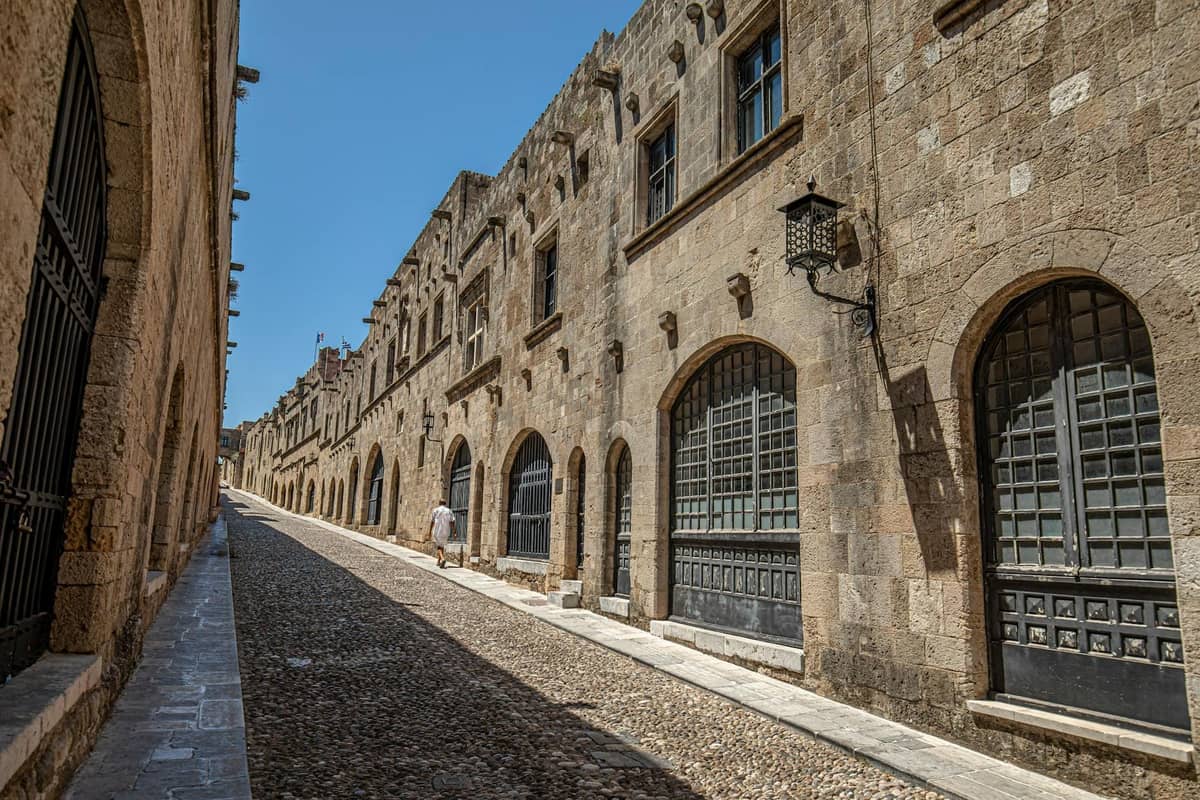
The UNESCO-listed Rhodes Old Town is the island's defining experience. Enclosed within walls built by the Knights of St John in the 14th and 15th centuries, it is Europe's best-preserved inhabited medieval city and one of the best-preserved in the world. Walking through the gate from the new town and onto cobbled streets that have existed since the Crusades produces a genuine sense of historical weight that most Greek destinations simply cannot offer.
The Street of the Knights is the showpiece: a 600-metre cobbled lane flanked by the inns of the different langue (national chapters) of the Knights Hospitaller. It leads directly to the Palace of the Grand Master, which functions today as a museum. The interior mosaics, many relocated from the island of Kos during the Italian occupation period, are exceptional. The Palace is closed on Mondays, so plan accordingly. Entry fee applies and is worth every cent.
💡 Local tip
Arrive at the Old Town before 9am or after 6pm if you visit in July or August. The narrow streets funnel heat and crowds simultaneously in midday hours. The atmosphere after sunset, when most day-trippers have left, is genuinely different from the daytime experience.
The circuit of the medieval walls costs €12 to walk. Most guides recommend it; in practice, the views are modest and the path itself offers little context without a guide. Skip it unless you have a particular interest in military architecture. The time is better spent exploring the Kollakio (Knights' Quarter) and the Hora below it, where the Ottoman-era mosques, hammams, and souks add another historical layer on top of the medieval one.
For a structured approach to the Old Town's best routes, the Rhodes Old Town walking tour guide breaks the district into manageable sections with estimated times. The Archaeological Museum of Rhodes in the old Hospital of the Knights is another strong stop, particularly for those interested in the island's pre-medieval layers.
Lindos: Acropolis, Beach, and Village in One
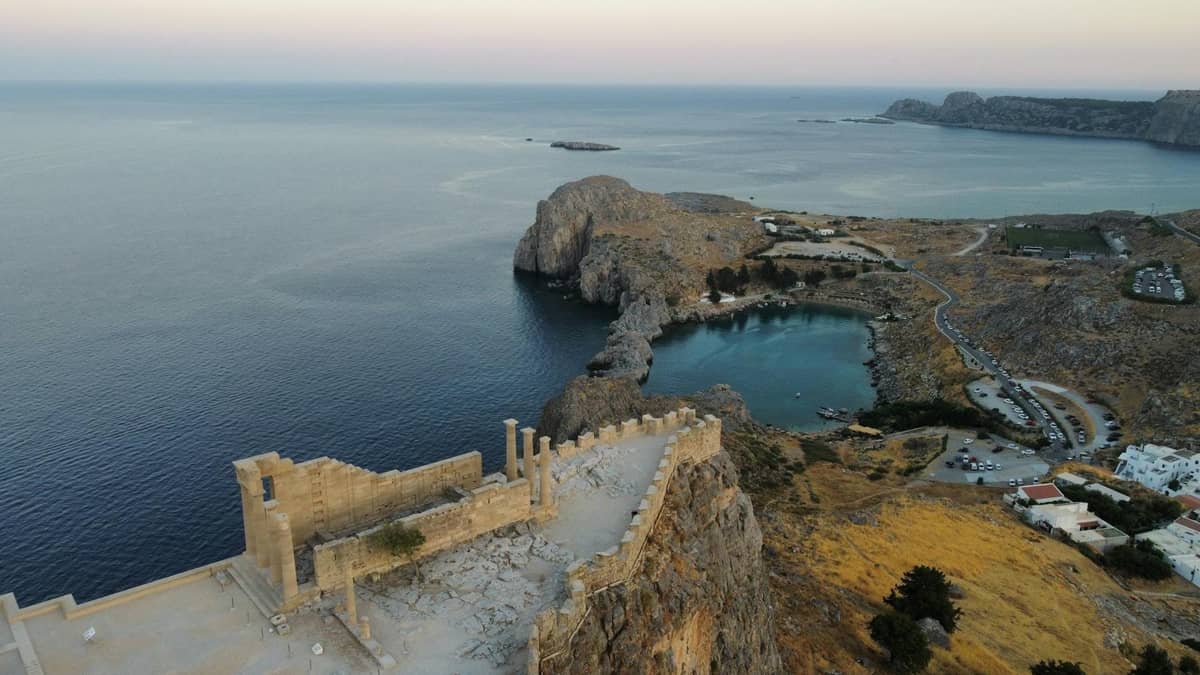
About 55 kilometres south of Rhodes city, Lindos is the island's second anchor. The Acropolis of Lindos sits at 116 metres above the sea on a sheer rock promontory, and it's among the most photographed sites in all of Greece. What makes it genuinely interesting beyond the photographs is the compression of history: the site contains a Doric Temple of Athena from the 4th century BC, a Hellenistic stoa, Byzantine remains, a Knights Hospitaller castle, and a small mosque, all layered within the same small fortified area.
The ascent is steep. You can walk the path in about 15-20 minutes, or hire a donkey for a few euros. Both options become uncomfortable in the midday heat of summer, so a pre-10am start is strongly recommended. The views from the top across Lindos Bay and St Paul's Bay below are exceptional in morning light. Bring water and wear covered shoes rather than sandals on the uneven stone paths.
⚠️ What to skip
Lindos village is heavily commercialised and gets extremely crowded from late June through August. The whitewashed houses and rooftop terraces are photogenic, but the restaurants on the main square tend to be tourist-priced with average food. Walk one street back from the main tourist flow to find better options.
Below the acropolis, St Paul's Bay is a small, almost circular cove with shallow, calm water. It's far less crowded than the main Lindos Beach and far more scenic. The bay is named after the Apostle Paul, who is said to have sheltered here during a storm. It's a short walk from the village centre.
Beaches Worth the Trip
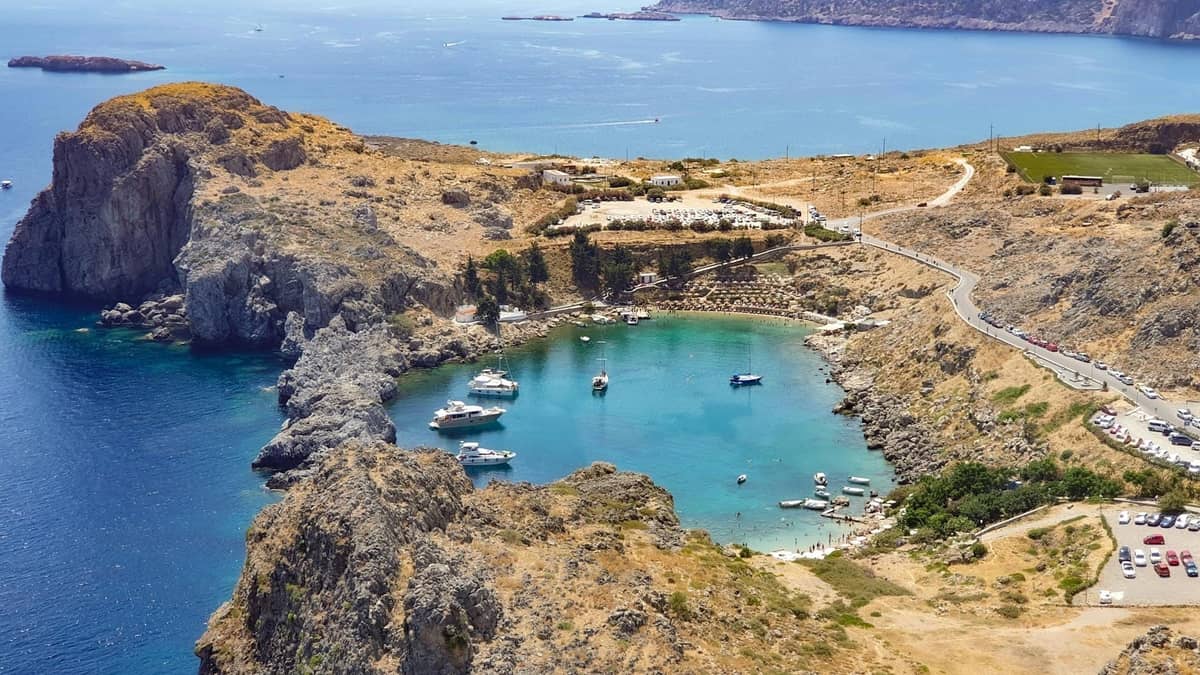
Rhodes has over 40 beaches across its 220 kilometres of coastline, and quality varies considerably. The best beaches in Rhodes range from organised resort strips to almost deserted rocky coves. A few are genuinely exceptional.
- Anthony Quinn Bay (Vagies Bay) Crystal-clear water ideal for snorkelling, with a dramatic rocky backdrop. Access involves a steep, uneven path, making it unsuitable for families with young children or anyone with mobility issues. The name honours the actor who filmed The Guns of Navarone nearby and reportedly fell in love with the location. Best visited on weekday mornings before the tour boats arrive.
- Tsambika Beach A wide arc of fine golden sand about 26 km south of Rhodes city. Shallow entry and calm water make it one of the better choices for families. Can get crowded in peak season. Accessible by car or bus.
- Prasonisi Beach At the southern tip of the island, a sandbar connects Rhodes to the islet of Prasonisi when sea levels permit. The east side is calm; the west side is exposed and draws windsurfers and kitesurfers from across Europe. One of the most genuinely distinctive beach settings on the island.
- Elli Beach The main town beach in Rhodes New Town, walkable from the Old Town gates. Not the most scenic beach on the island, but convenient for a morning swim before sightseeing. Clean and well-serviced.
- Kallithea Springs Technically a thermal spa complex rather than a beach, the restored Art Deco Italian-built pavilions at Kallithea make it one of the most distinctive swimming spots on the island. The surrounding rocky coves are good for snorkelling.
✨ Pro tip
If you're visiting Rhodes in July or August, arrive at any beach before 10am to secure a good spot. Popular beaches like Tsambika fill up fast, and hiring a sun lounger from a beach bar (typically €8-15 per pair) is often the only way to secure shade by mid-morning.
Historical and Cultural Attractions Beyond the Old Town
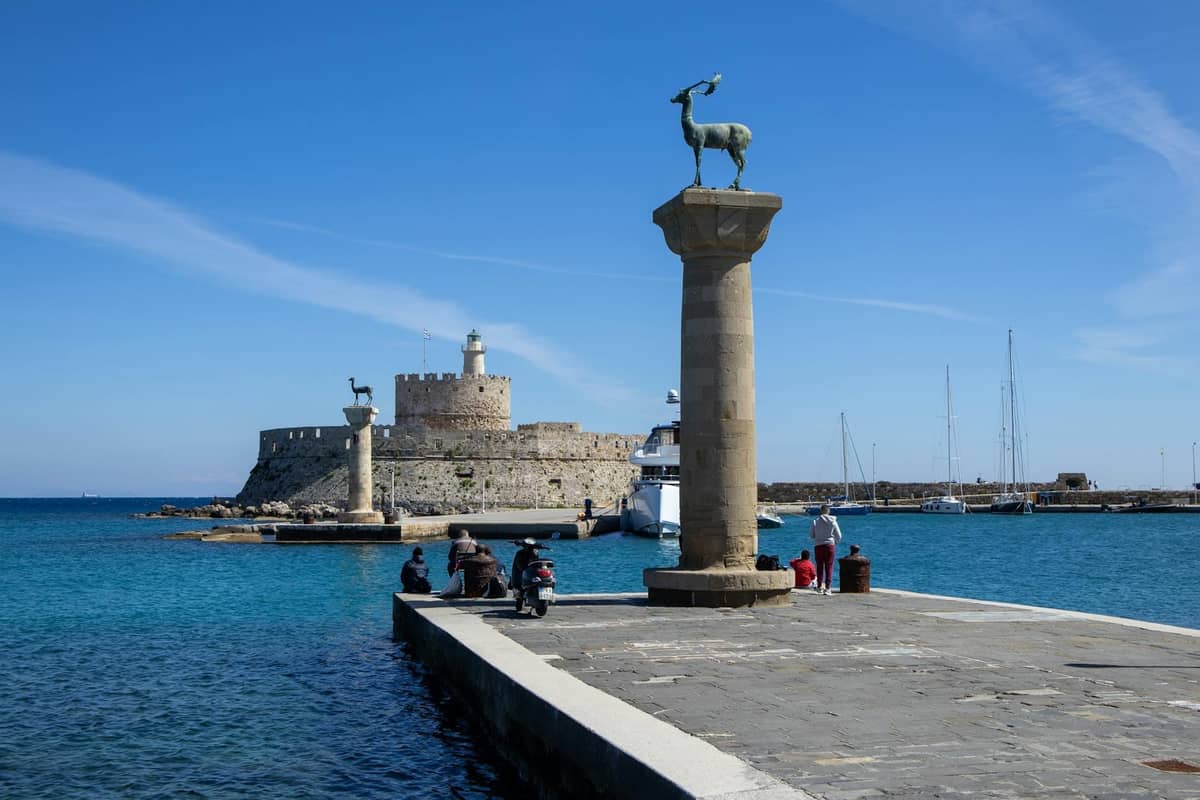
Rhodes has over 3,000 years of layered history, and the Old Town, while exceptional, is only one chapter. The Colossus of Rhodes site at Mandraki Harbour is where the ancient giant bronze statue of the sun god Helios is believed to have stood. The statue itself was destroyed by an earthquake around 226 BC and is long gone, but the location connects visitors to one of the Seven Wonders of the Ancient World. Modern bronze deer statues now mark the harbour entrance.
The Valley of the Butterflies (Petaloudes) is about 25 km southwest of Rhodes city and sees tens of thousands of Jersey tiger moths congregate in a densely wooded valley from June through August. The setting, a shaded ravine with wooden walkways crossing small streams, is pleasant year-round, but the moths are only present in summer. Avoid making sudden loud noises: the moths flutter en masse when startled, which exhausts them and shortens their lifespan. Some tour guides used to encourage clapping specifically to provoke this reaction. Responsible visitors don't.
For a full picture of Rhodes' Crusader past, the Knights of Rhodes history guide provides essential context. Inland, the Seven Springs (Epta Piges) is a woodland area with a small lake accessible through a narrow 180-metre tunnel fed by spring water. It's popular with families and easily combined with a Lindos day trip as it sits roughly halfway along the east coast road.
- Mandraki Harbour: Walk the waterfront where the ancient Colossus reportedly stood. The Fort of St Nicholas at the harbour entrance is visible from the promenade.
- Rodini Park: A public park on the edge of Rhodes city with peacocks, a small deer enclosure, and Roman-era tombs cut into the hillside. Free entry and genuinely undervisited.
- Profitis Ilias: The island's second-highest peak at 798 metres. A forested plateau with two Italian-built guesthouses from the 1920s and cool temperatures even in summer. Good for a break from coastal heat.
- Asklipio Castle: A Knights' castle in the island's south, less visited than Kritinia but with better-preserved frescoed chapels in the adjacent Byzantine church.
- Kritinia Castle: A ruined hilltop fortress on the west coast with panoramic views toward the islands of Chalki and Alimia. No entry fee; the views alone justify the detour.
Day Trips and Getting Off the Island
Rhodes is well-positioned for island-hopping. Symi, the closest major day-trip destination, is about 45 minutes by fast ferry from Rhodes port. The island's neoclassical harbour town, Gialos, is one of the most photographed in the Dodecanese, with colourful tiered houses rising from the water. The day trip works well: most visitors take a morning ferry, explore Gialos and the monastery at Panormitis, and return by late afternoon. See the day trips from Rhodes guide for full ferry logistics and other island options.
Within Rhodes itself, a boat trip from Rhodes along the northeast coast covers Anthony Quinn Bay, Kallithea Springs, and several otherwise-inaccessible coves in a single day. Most full-day trips include a grilled lunch on board and multiple swimming stops. Book through operators at Mandraki Harbour or via reputable online booking platforms. Prices vary by operator but typically fall in the range of €40-70 per person for a full day.
Practical Tips for Visiting Rhodes
Getting around efficiently requires planning. Public buses (KTEL) connect Rhodes city to Lindos, Faliraki, and most major resorts, but schedules become infrequent outside peak season and are limited to main routes. For the west coast, inland villages like Archangelos, or flexibility on timing, renting a car is genuinely worth it. See the Rhodes car hire guide for advice on costs, booking timing, and which roads require a higher-clearance vehicle.
The currency is the Euro. Tipping is not mandatory but 5-10% in restaurants and for taxi drivers is considered polite when the service warrants it. When visiting churches, monasteries, or religious sites, cover shoulders and knees regardless of the heat. Most sites will have scarves or wraps available for loan at the entrance, but bringing your own is faster. Tap water is safe in Rhodes city but heavily chlorinated; most visitors prefer bottled. The emergency number throughout Greece is 112.
ℹ️ Good to know
Rhodes International Airport (RHO), officially named Diagoras Airport, is 14 km southwest of Rhodes city. Public buses run into the city centre in around 25-30 minutes and typically cost around €2.50-3. A taxi takes about 20 minutes and usually costs around €25-30. Car rental desks are available at the terminal and are worth booking in advance during summer months when availability is tight.
FAQ
What is the best time to visit Rhodes?
May, June, September, and October offer the best conditions: warm enough to swim, cooler than peak summer, and with noticeably fewer crowds and lower prices. July and August are the busiest and hottest months, with temperatures regularly reaching 35°C. If you're visiting for sightseeing rather than beach time, April and early October are excellent. Rhodes receives over 300 days of sunshine annually, so even shoulder-season visits are reliably warm.
How many days do you need in Rhodes?
A minimum of three days covers the Old Town, Lindos, and one or two beaches without feeling rushed. Five to seven days allows you to add day trips to Symi, explore the inland villages, visit the Valley of the Butterflies, and take a boat trip along the coast. A week is ideal for a thorough visit without resorting to an exhausting itinerary.
Is Rhodes worth visiting beyond the Old Town?
Yes. The Old Town is exceptional, but Rhodes has significant depth outside it: a remarkable Acropolis at Lindos, distinctive beaches at both ends of the island, well-preserved Crusader castles in the interior, and enough natural variety, from forested mountains to arid southern capes, to fill a full week without repetition. Rhodes is also a strong base for reaching smaller Dodecanese islands that have no direct international flights.
Is the Colossus of Rhodes still standing?
No. The Colossus of Rhodes, one of the Seven Wonders of the Ancient World, was a giant bronze statue of the sun god Helios that stood at the entrance to Mandraki Harbour. It was destroyed by an earthquake around 226 BC, roughly 54 years after its construction, and was never rebuilt. Its precise location is debated by historians. Bronze deer statues now stand at the harbour entrance as a reference to the site.
What are the most overrated things to do in Rhodes?
The Old Town walls walk is frequently cited but delivers modest views for €3 and about 90 minutes of effort. Faliraki was once the island's nightlife centre and now appeals more to package-holiday visitors than travellers looking for local character. The waterpark at Faliraki works well for families with children but is otherwise unremarkable. Spending half a day in Lindos village without visiting the Acropolis is also a common mistake: the village itself is attractive but small, and the Acropolis is the reason to make the 55 km journey.