Seven Springs (Epta Piges): Rhodes' Wild Inland Oasis
Seven Springs, known in Greek as Epta Piges, is a forested valley 27 km from Rhodes Town where seven natural springs feed a 1930s Italian-built tunnel and artificial lake. It is one of the few inland attractions on Rhodes that genuinely rewards the detour, offering cool shade, running water, and a narrow 186-metre underground passage that most visitors will never forget.
Quick Facts
- Location
- ~27 km from Rhodes Town, ~5 km inland from Kolymbia on the road to Archangelos
- Getting There
- KTEL bus toward Kolymbia/Archangelos; car or taxi from Rhodes Town (~35–40 min drive)
- Time Needed
- 1.5 to 3 hours depending on trails taken
- Cost
- Free entry. On-site taverna charges standard restaurant prices.
- Best for
- Families, nature lovers, and anyone escaping summer heat inland
- Official website
- 7springs.gr
What Epta Piges Actually Is
Epta Piges, which translates directly from Greek as Seven Springs, is a protected natural area and recreational site in the island's central-east interior. Seven freshwater springs converge here in a wooded valley thick with plane trees, pine, and bamboo groves, creating a genuinely cool microclimate even during the height of a Rhodes summer. The sound of running water, rare on this sun-baked island, is the first thing you notice as you leave the car park and start walking.
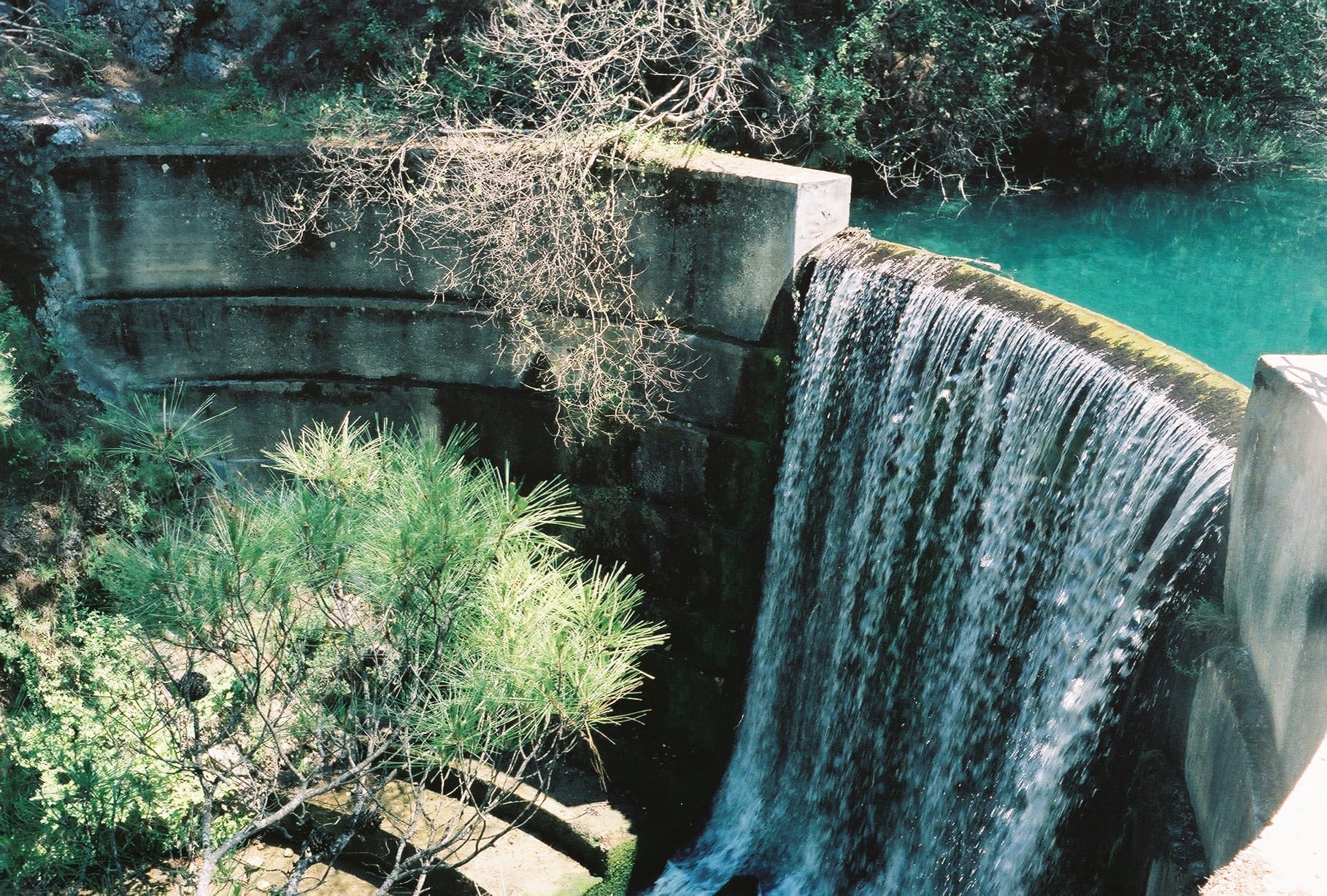
The site sits within the Natura 2000 network, recognising its ecological value as one of the few permanent freshwater habitats on Rhodes. Alongside the natural springs and forest, there is an artificial lake built in the 1930s during the Italian occupation, reached either by a woodland path or through a narrow 186-metre underground tunnel. The contrast between the two routes is part of what makes Epta Piges so memorable.
💡 Local tip
Arrive before 10:30 am in July and August. By mid-morning, tour buses begin arriving and the narrow tunnel entrance creates queues. Early arrivals get the valley largely to themselves.
The Tunnel: The Heart of the Visit
The 186-metre water tunnel is the feature that separates Epta Piges from every other picnic site on Rhodes. It was engineered in the 20th century to carry spring water to the reservoir at the far end. Walking through it is a genuine physical experience: the ceiling drops to head height in places, the floor is uneven and permanently wet underfoot, and the darkness is total within the first twenty metres.
There is an air shaft and an emergency exit roughly halfway through, but you will not see either until you are almost on top of them. The temperature inside drops noticeably, which is welcome in summer but feels sharp in shoulder season. Bring a torch or use your phone light; the curves in the path mean you genuinely cannot see the exit until you are close to it. Some visitors find this disorienting. Children under about eight tend to either love it or refuse to continue.
At the tunnel exit, you emerge beside the artificial lake, a calm, green-hued reservoir with overgrown banks and a rather peaceful, slightly forgotten atmosphere. The lake is not set up for swimming and there is no infrastructure at this end beyond a rough clearing. Most visitors photograph it briefly and then take the woodland path back to the main site. That path runs along the stream through dense shade and is considerably more pleasant on a hot day than you might expect from Rhodes.
⚠️ What to skip
The tunnel floor is permanently wet and slippery. Flip-flops are a poor choice. Closed shoes with grip are strongly recommended for anyone entering the passage.
Tickets & tours
Hand-picked options from our booking partner. Prices are indicative; availability and final rates are confirmed when you complete your booking.
Lindos 7 springs oasis and Acropolis tour from Rhodes
From 28 €Instant confirmationFree cancellationSunset catamaran cruise with dinner in Rhodes
From 70 €Instant confirmationFree cancellation3-Hour All Inclusive Sun and Sea Swimming Cruise in Rhodes
From 55 €Instant confirmationFree cancellationRhodes Sunset Cruise with Greek BBQ and Unlimited Drinks
From 65 €Instant confirmationFree cancellation
The Valley, the Paths, and the Peacocks
The area around the springs themselves is partly managed and partly wild. Wooden footbridges cross small channels, ducks move through the rushes, and peacocks wander the grounds with the slightly proprietorial air of animals who have been here longer than the tourists. The peacocks are not penned; they roam freely through the tree cover and occasionally settle on the restaurant terrace. Photographers will find early morning light working well through the canopy.
Beyond the immediate springs area, there are walking trails that climb further into the pine forest. These are less developed and less frequented, and some sections involve uneven terrain that qualifies as moderately strenuous. If you want more than thirty minutes of activity, the forest trails extend the visit considerably and offer the kind of quiet that is hard to find on the east coast of Rhodes in summer.
The surrounding landscape fits naturally with a broader exploration of the island's interior. The road through here connects to villages like Archipoli and continues toward the mountain areas near Profitis Ilias, making Epta Piges a logical stop on a longer inland loop rather than a standalone destination.
Historical and Ecological Context
The infrastructure at Epta Piges is a direct product of the Italian occupation of the Dodecanese, which lasted from 1912 until 1943. Italian authorities invested significantly in the island's water management and agricultural development, and the reservoir and tunnel here were part of a broader irrigation network. The construction date of 1931 places it in the middle of the fascist-era building programme that also produced the New Town's rationalist architecture, although the engineering at Epta Piges is entirely functional rather than monumental.
The Natura 2000 designation reflects the site's importance as a rare freshwater wetland habitat in an otherwise arid island context. Rhodes sits in a Mediterranean climate with dry summers, and the east coast in particular offers little natural shade or water for most of the year. This makes the spring-fed valley genuinely unusual in its local ecology. Visitors interested in the broader landscape of the island should also consider the Valley of the Butterflies, another protected natural area on the western side of the island.
Taverna Epta Piges: On-Site Dining
Taverna Epta Piges has been operated by the Peta family since 1945, which gives it a longevity unusual even by Greek village standards. The restaurant sits under the plane trees with a terrace overlooking the stream. The menu covers Greek standards: grilled meats, salads, local wine. The setting is genuinely pleasant, particularly outside of peak hours when the crowd thins and the sound of water reasserts itself.
It is worth knowing that this is the only food option at the site. If you are arriving during a busy midday slot in summer, the taverna can be stretched. Coming earlier or later, outside of the 12–3 pm tour bus window, makes the whole experience more relaxed.
Practical Information and Getting There
Epta Piges sits approximately 27 km from Rhodes Town on the east coast road, about 5 km inland from Kolymbia. By car, the drive takes roughly 35 to 40 minutes from Rhodes Town and parking at the site is substantial, with both paved and unpaved areas. Entry to the site is free and it is accessible year-round, though the taverna and full facilities are primarily a warm-season operation.
KTEL buses run along the east coast toward Archangelos and Lindos; ask the driver for the Kolymbia stop and then arrange onward transport, as the inland road to the springs is not on a standard bus route. A taxi or rental car makes the logistics considerably simpler, especially if you plan to combine the visit with the coastal road south toward Lindos or other interior stops.
Epta Piges works well as part of a day route combining the east coast and interior. A natural itinerary might include the springs in the morning, a coastal stop at Tsambika Beach before the midday heat peaks, and then continuing south toward Lindos in the afternoon.
ℹ️ Good to know
There are no formal opening hours published for the site itself, as access to the valley and springs is open. The tunnel and restaurant do operate seasonally; confirm locally if visiting outside May to October.
Accessibility at Epta Piges is mixed. The approach paths and restaurant terrace are manageable on foot, but the tunnel is not suitable for wheelchairs or pushchairs, and the woodland trails involve uneven ground. Visitors who cannot use the tunnel can still access the lake via the longer woodland path, which is rougher but navigable with care.
Who might want to skip this: visitors whose time on Rhodes is limited to two days or fewer will likely find the 55 km round trip a significant commitment. The site is genuinely rewarding but requires a half-day and some tolerance for crowds at peak hours. Anyone coming primarily for beaches should know that Epta Piges is a cool, shaded inland experience, not a coastal one.
Insider Tips
- Walk the tunnel in one direction and return via the forest path along the stream. The path is more scenic and the contrast between the two routes is part of what makes the visit interesting.
- The peacocks are most active and visible in the morning before the site fills up. If you want a clean photograph without tourists in frame, the first hour after opening is your window.
- Carry a torch rather than relying solely on your phone light. The tunnel has enough curves that phone screens can be difficult to hold at the right angle while walking on a wet floor.
- The taverna is significantly quieter before noon and after 3 pm. The middle of the day in July and August brings tour group lunches that can overwhelm the outdoor seating.
- If you have a car, the drive inland from Kolymbia through Archipoli toward the mountain villages is one of the most scenic routes on the island and rarely driven by tourists. Epta Piges sits at the start of this road.
Who Is Seven Springs (Epta Piges) For?
- Families with children who will enjoy the tunnel, the peacocks, and the stream-side paths
- Visitors seeking relief from the coast during a hot July or August afternoon
- Photographers interested in forest light, water, and wildlife rather than architecture
- Hikers and walkers who want to explore Rhodes beyond its beaches
- Anyone on a multi-day itinerary with time to combine the springs with east coast driving
Nearby Attractions
Combine your visit with:
- Asklipio Castle
Built in 1479 by the Knights Hospitaller on the edge of a limestone ridge above a quiet village, the Castle of Asklipio is one of Rhodes's least-visited medieval fortresses. Free to enter, open at all hours, and commanding views across the southern coastline, it rewards travellers willing to venture beyond Lindos.
- Kritinia Castle
Perched on a rocky hilltop 131 metres above the western coastline of Rhodes, Kritinia Castle is a medieval fortress built by the Knights of Saint John in 1472. The ruins are freely accessible, the views stretch across the Aegean toward Turkey, and the surrounding silence makes it one of the island's more atmospheric stops for history-minded travellers.
- Monastery of Fountoukli
The Monastery of Fountoukli, officially known as Agios Nikolaos Fountoukli, is a 14th-century Byzantine church tucked into the forested hills of the island's interior. With original frescoes, a distinctive four-conch architectural plan, and almost no crowds, it rewards travelers willing to venture beyond the coastline.
- Profitis Ilias
At 798 metres, Profitis Ilias is the third-highest peak on Rhodes, draped in dense pine and cypress forest. It offers a striking contrast to the island's coastal attractions: cool shade, Italian-era architecture, quiet hiking trails, and a hilltop chapel with wide views across the Aegean.