Is Rhodes Worth Visiting? An Honest Assessment
Rhodes is one of Greece's most complete travel destinations, combining a UNESCO-listed medieval city, diverse beaches, and layers of ancient history. But peak-season crowds and tourist-trap pricing are real concerns. Here's everything you need to know before booking.

Plan and book this trip
Tools from our partner Travelpayouts help you compare flights and hotels. If you book through them, we may earn a commission at no extra cost to you.
Flights
Hotels map
TL;DR
- Rhodes is absolutely worth visiting if history, beaches, and diverse culture appeal to you — it genuinely delivers on all three.
- The UNESCO-listed Rhodes Old Town is one of Europe's best-preserved medieval cities, and alone justifies the trip for history lovers.
- July and August bring intense heat (up to 35°C) and serious crowds; May, June, and September are the sweet spots for visiting.
- Rhodes suits couples, families, solo travellers, and history enthusiasts — but party-seekers expecting a Mykonos vibe will need to recalibrate expectations.
- Budget travellers can manage well with careful planning — see our Rhodes on a budget guide for specific strategies.
What Makes Rhodes Stand Out Among Greek Islands
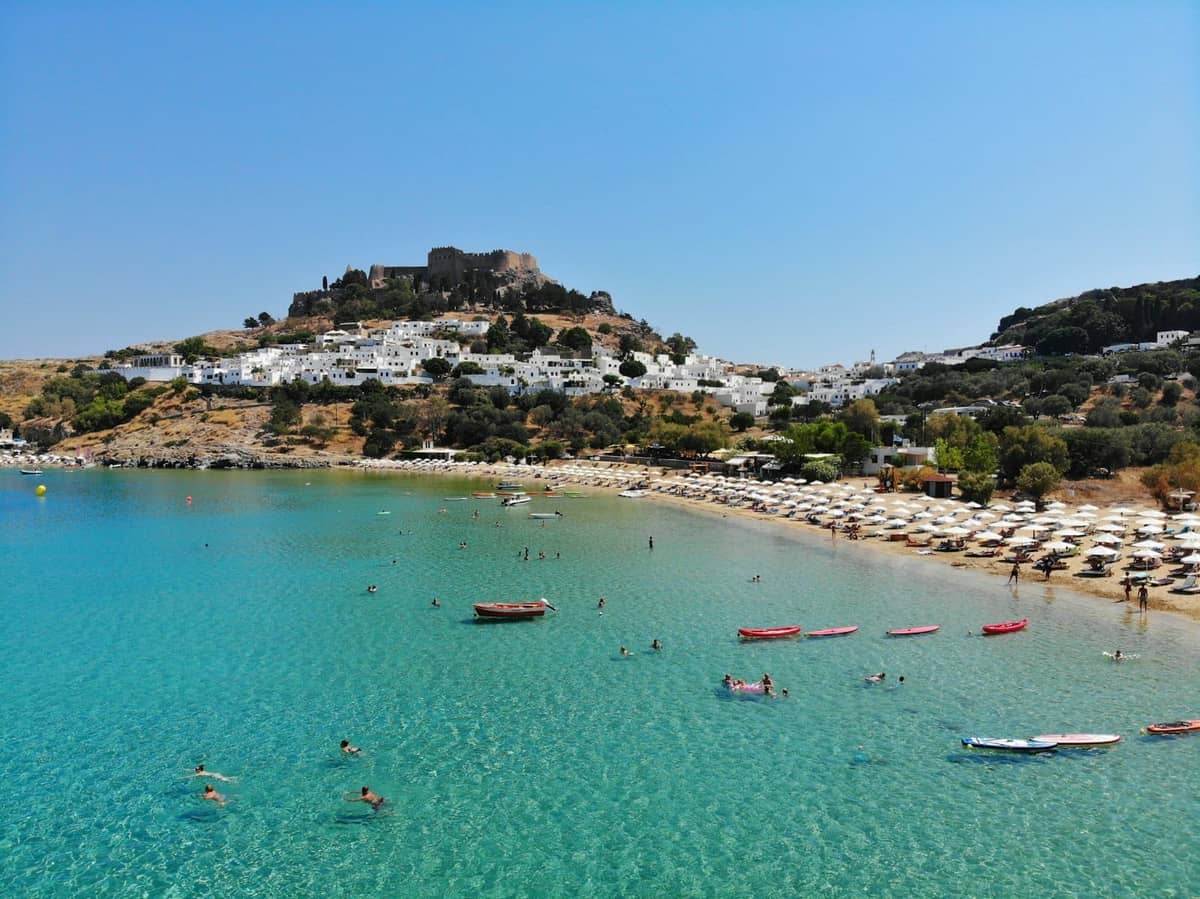
Rhodes is not a one-trick destination. Most Greek islands offer either great beaches or significant history. Rhodes delivers both, plus a layered cultural identity that few Mediterranean islands can match. The island has been shaped by ancient Greeks, Romans, Byzantines, the Knights of St. John, Ottomans, and Italians — and all of them left something visible. That accumulation is what separates Rhodes from Corfu, Santorini, or Crete when it comes to genuine depth. For a fuller picture of how it stacks up, the Rhodes vs other Greek islands comparison is worth reading before you decide.
The medieval Old Town is the centrepiece. Enclosed by a 4 km-long wall built by the Order of St John of Jerusalem from 1309 to 1523, it is a functioning neighbourhood where people live, eat, and shop inside what is essentially a living museum. The Palace of the Grand Master, the Street of the Knights, and the Archaeological Museum are all within walking distance of each other. Entry to the Palace museum costs around €8; walking the walls costs around €3. The exteriors and cobblestone streets are free to explore at any hour.
Beyond the Old Town, the island stretches 77 km from north to south with a varied landscape: fertile valleys, pine-covered hills reaching 1,215 m at Mount Attavyros, cliff-backed coves, and long sandy beaches. This isn't a small island you exhaust in two days.
ℹ️ Good to know
Rhodes is the largest island in the Dodecanese chain and the fourth-largest in Greece, covering 1,401 km². With a resident population of around 125,000, it has genuine year-round infrastructure rather than the seasonal skeleton services common on smaller islands.
The Beaches: What's Actually Good and What's Overhyped
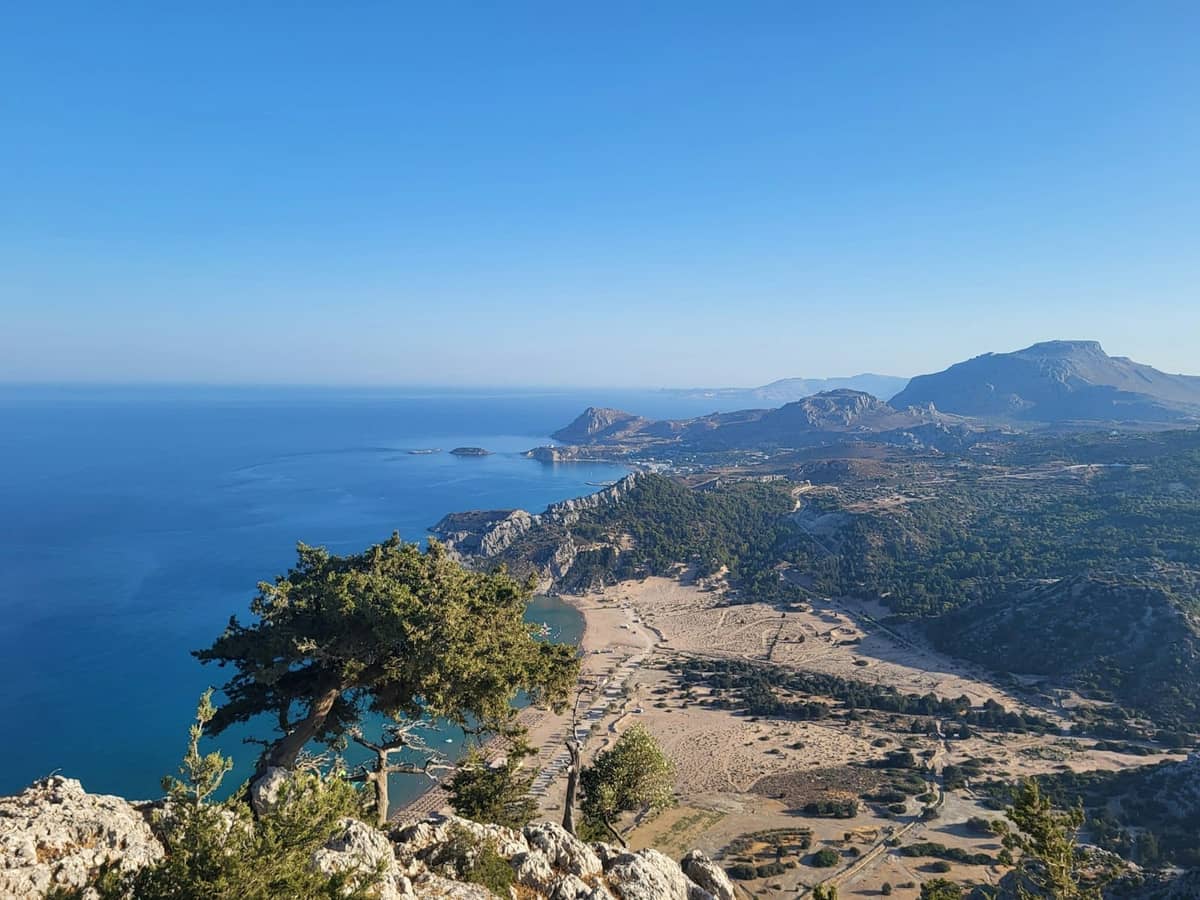
Rhodes has well over 60 named beaches. Quality varies enormously. The standouts are on the east coast, where calmer, clearer water benefits from the island's orientation. Tsambika Beach is consistently ranked among the best in the Dodecanese — fine sand, shallow entry, and good facilities — but it fills quickly in July and August. Anthony Quinn Bay (officially Vagies Bay) is smaller and rockier, better for snorkelling than sunbathing, and its fame now brings queues in high season.
The west coast beaches near Ixia and Ialyssos tend to be windier, which makes them less appealing for swimming but ideal for water sports. The area is one of Europe's better windsurfing destinations; see the Rhodes windsurfing and kitesurfing guide if that's a priority. At the island's southern tip, Prasonisi Beach is unique: a sandbar connecting a small peninsula to the mainland, with flat water on one side and waves on the other.
⚠️ What to skip
Elli Beach in Rhodes City is convenient and popular but is a pebble and concrete lido beach rather than a sandy stretch. It's fine for a quick swim but don't plan your holiday around it. If great sand is a priority, budget for transport to the east coast beaches.
History and Culture: The Real Reason to Come
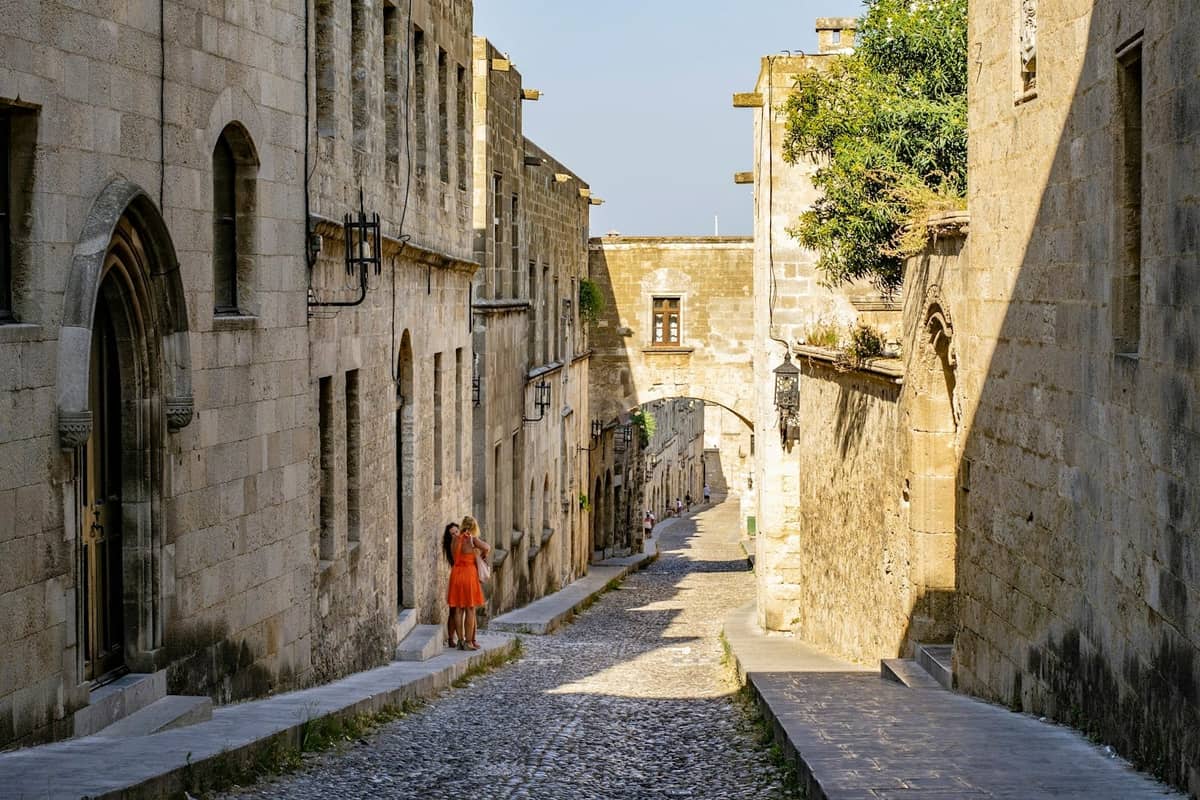
The medieval Old Town is a UNESCO World Heritage Site and earns that status honestly. Unlike some protected historic centres that feel preserved but sterile, the Old Town of Rhodes is genuinely inhabited and commercially active. The Knight's Quarter around the Street of the Knights is the most architecturally intact medieval street in existence, with the inns of each national tongue of the Knights Hospitaller still standing in their original form.
The Colossus of Rhodes — one of the Seven Wonders of the Ancient World — once stood somewhere at the harbour entrance, though its exact location remains debated and nothing physical remains. The Colossus of Rhodes guide separates fact from centuries of mythology. The ancient acropolis above the new town, with the partially reconstructed Temple of Apollo columns, offers a credible ancient Greek complement to the medieval Old Town.
Away from the city, the island holds further historical interest. The Acropolis of Lindos sits on a 116 m cliff above the village of Lindos, with Doric temple remains and sweeping views. It takes around 90 minutes from Rhodes city by bus (roughly €3-5 each way) or a shorter ride if you hire a car. The village below is genuinely charming but heavily touristed, with prices to match.
- Palace of the Grand Master The centrepiece of the medieval city. Museum entry around €8; the courtyard and exterior are free to view. Plan 1-2 hours inside.
- Medieval City Walls Walk Around €3 to walk the walls circuit. Offers elevated views over the Old Town and harbour. Not suitable for anyone with mobility difficulties.
- Acropolis of Lindos Entry around €12. The cliff-top setting is spectacular; arrive before 10am or after 4pm to avoid the worst of the heat and crowds.
- Valley of the Butterflies A forested gorge that hosts thousands of Jersey tiger moths from June to September. Entry around €5. Quieter and genuinely unusual.
- Seven Springs (Epta Piges) A wooded area with a lake and a narrow tunnel walk. Free entry to the grounds. Popular with families and a good half-day option.
Honest Assessment: The Downsides of Rhodes
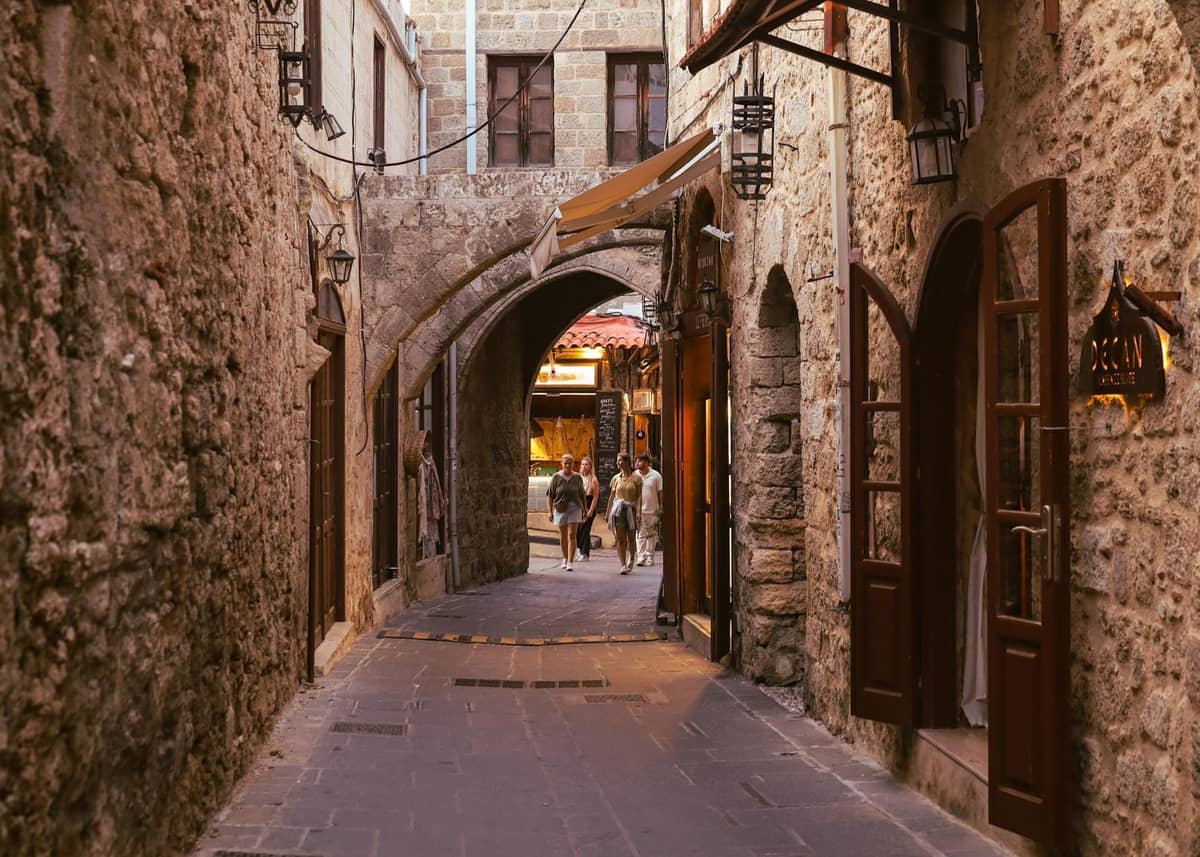
Rhodes is not without real drawbacks, and being honest about them saves you a bad trip. Peak season — roughly mid-July through late August — pushes the Old Town into uncomfortable territory. The main commercial street through the Old Town (Sokratous Street) becomes a slow-moving river of tour groups and souvenir shops. Restaurant prices in visible tourist zones carry a premium of around 30-40% over what locals pay further into the backstreets. The heat in August regularly exceeds 35°C, which makes sightseeing genuinely exhausting.
Faliraki, about 15 km south of Rhodes city, built a reputation in the early 2000s as a destination for heavy drinking tourism. That image has faded significantly, but the resort still caters primarily to package holidaymakers and lacks the character of the Old Town or the village feel of Lindos. It's a reasonable base if your priority is a beach hotel with pool, but don't expect much cultural depth.
Getting around without a car requires patience. The public bus network (KTEL) connects major points including Lindos and the airport, but frequencies drop outside peak hours and routes don't cover the island's western interior. Renting a car unlocks the island properly, including the western coast villages and mountain roads that most tourists never reach.
✨ Pro tip
If you're visiting in July or August, book accommodation inside the Old Town walls. Yes, it costs more, but waking up inside the medieval city before the day-trippers arrive gives you 2-3 hours of near-empty streets each morning. That experience is impossible to replicate otherwise.
When to Go: Season-by-Season Breakdown
The honest answer is that May, June, and September are the best months to visit Rhodes. Temperatures sit between 22-28°C, the sea is warm enough to swim comfortably from late May onwards, and crowds are manageable. October is also underrated for a cultural or walking trip — the Rhodes in October guide covers what's open, what isn't, and why the light for photography is exceptional. Most beaches and tavernas stay open through October, though some beach clubs close after mid-September.
- May to June: Best balance of weather, prices, and crowd levels. Sea temperature reaches around 22-24°C by June.
- July to August: Peak heat (30-35°C), peak prices, and peak crowds. Book everything months in advance. The Old Town is overwhelming midday.
- September: Often the single best month. Summer heat softens, sea is at its warmest (26-28°C), and crowds thin noticeably after the first week.
- October to November: Good for history and walking. Some beach infrastructure closes. Occasional rain from late October.
- December to April: Off-season. Most coastal resorts shut down. The Old Town and city stay active, and prices drop sharply. Not a beach holiday, but viable for a long weekend city break.
Practical Logistics: Getting There, Getting Around, and Costs
Rhodes International Airport Diagoras (RHO) is 14 km southwest of the city centre. A public bus to the city centre takes around 25-30 minutes and costs approximately €2.50-3. Taxis take about 20 minutes and cost around €25-30. Rhodes airport guide covers all transfer options in detail, including car hire pickup logistics.
For getting around the island, a hire car gives you maximum flexibility and is the practical choice for anyone wanting to explore beyond the main tourist corridor. Prices in shoulder season start from around €30-40 per day for a small car. The Rhodes car hire guide covers what to watch for in rental contracts, fuel costs, and which roads require an off-road vehicle. Boat trips open up the island further, including day excursions to Symi Island, about 45 minutes away by ferry.
Budget expectations: a mid-range couple should anticipate around €150-200 per day covering accommodation, food, entry fees, and local transport in peak season. Shoulder season drops that by roughly 20-30%. Eating one meal per day away from the tourist strip and using public buses instead of taxis makes a significant difference to the total. The euro is the currency; card payments are widely accepted in hotels and most restaurants, but carry cash for smaller tavernas and village shops.
💡 Local tip
The Tourist Police in Rhodes (separate from regular police) handle complaints about overcharging, taxi disputes, and travel problems. They operate seasonally and are based near the Old Town. The EU emergency number 112 covers all services island-wide.
FAQ
Is Rhodes worth visiting for just 3 days?
Three days is enough to see the Old Town thoroughly and visit Lindos, with time for one or two beaches. It's a tight schedule but worthwhile. A 5-7 day trip gives you room to explore the island's interior and quieter coastal spots without rushing.
Is Rhodes expensive compared to other Greek islands?
Rhodes sits in the mid-range for Greek islands. It's cheaper than Mykonos and Santorini, broadly comparable to Corfu, and more expensive than the smaller Dodecanese islands. Eating and drinking away from the main tourist zones brings costs down noticeably.
Is Rhodes good for families with young children?
Yes. The island has calm, shallow beaches suitable for children, a waterpark at Faliraki, the Seven Springs nature area, and plenty of open space in the Old Town for exploration. The medieval walls and palace also genuinely capture children's imaginations. See the dedicated Rhodes with kids guide for specific recommendations.
Is the Rhodes Old Town safe to walk around at night?
The Old Town is generally safe at night. The main streets have restaurants and foot traffic until late. Quieter backstreet areas are peaceful rather than threatening, though the uneven cobblestones require sensible footwear. Normal urban awareness applies.
How does Rhodes compare to Crete for a Greek island holiday?
Rhodes has a more compact, walkable historic core with arguably better-preserved medieval architecture. Crete is much larger with more diverse landscapes and a stronger local culinary identity. Rhodes works well for a focused week-long trip; Crete rewards longer stays. Both have excellent beaches, but for a single medieval city experience, Rhodes edges ahead.