Prasonisi Beach: Rhodes' Southernmost Cape Where Two Seas Collide
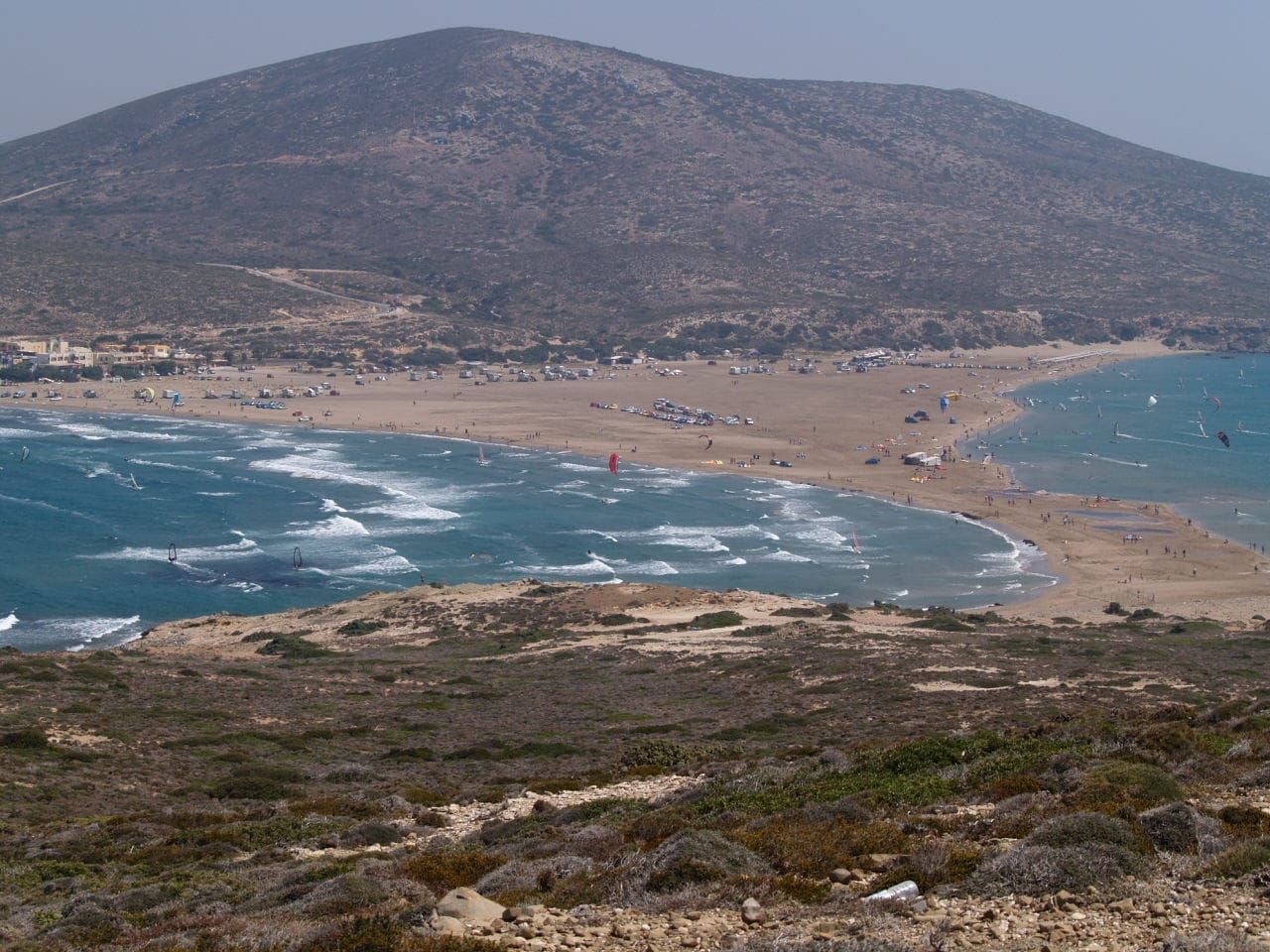
At the very tip of Rhodes, Prasonisi is a natural tombolo that splits into two completely different beaches. The Aegean side churns with wind-driven waves, drawing windsurfers from across Europe. The Mediterranean side stays flat and calm enough for children. In summer the two are connected by a sandy strip you can walk across. In winter, rising water turns Prasonisi back into an island.
Quick Facts
- Location
- Southern tip of Rhodes, ~92 km from Rhodes Town
- Getting There
- Car or scooter only; no direct public bus service to the cape
- Time Needed
- Half day minimum; full day for windsurfers
- Cost
- Free entry; windsurfing rental and lessons available on-site at extra cost
- Best for
- Windsurfers, nature lovers, families seeking calm water, photographers
What Makes Prasonisi Unusual
Prasonisi (Πρασονήσι, meaning 'green island' in Greek) sits at the absolute southern tip of Rhodes, at coordinates 35°52′57″N 27°44′58″E. It is a tombolo, a narrow sandy strip that connects a small headland to the main island. What makes it genuinely distinctive is that this strip divides two different bodies of water: the Aegean Sea on the east side and the Mediterranean Sea on the west. Stand on the narrow connecting path at the right time of year and you can see rough, wind-chopped water on one side and almost mirror-flat sea on the other, sometimes within a few metres of each other.
The name refers to the small cape at the end of the tombolo, which does have a slightly scrubby, greenish character compared to the bare limestone cliffs elsewhere on Rhodes' southern coast. A lighthouse marks the very tip. The surrounding settlement is minimal: a handful of motels, a few restaurants, and small shops catering almost entirely to the watersports crowd.
ℹ️ Good to know
Seasonal transformation: In summer (roughly May through September), lower water levels expose the full sandy tombolo, connecting Prasonisi to Rhodes. In winter, higher water levels submerge the strip and Prasonisi becomes a true island. If you are visiting outside the main tourist season, confirm road and beach access conditions before making the 92 km drive.
The Two Beaches: Night and Day Difference
The Aegean Side: For Wind and Waves
The eastern, Aegean-facing beach is where the wind hits without mercy from May through September. Gusts regularly exceed 30 knots during the afternoon, and the surface chop builds quickly. This is the side that has made Prasonisi one of the most reliable windsurfing and kitesurfing destinations in Greece, drawing intermediate and advanced riders from across Europe throughout the summer months. Windsurfing schools and rental centers operate directly on this beach during the season, offering equipment hire and tuition.
If you are not there to windsurf or kitesurf, the Aegean side is less comfortable for a casual beach day. The wind throws sand, the waves are strong enough to knock over young children, and finding a sheltered spot to lay a towel is genuinely difficult in the afternoon. Early morning, before the thermal winds build around 10–11am, is the one window when this side feels peaceful. The light at that hour is also exceptional for photography, with the lighthouse catching the low sun against a dark blue sea.
Prasonisi features prominently in guides covering windsurfing and kitesurfing in Rhodes, and for good reason: the consistent thermal winds and shallow water near shore make it one of the island's top spots for the sport.
The Mediterranean Side: Flat, Warm, Family-Ready
Cross to the western, Mediterranean-facing side and the contrast is immediate. The water here is noticeably calmer, protected by the orientation of the cape from the prevailing northerly and northeasterly winds that dominate the Aegean side. On most days from June through August the surface is nearly flat. The sand is fine and golden, the water shallow and warm, and the overall atmosphere is unhurried. Families with young children tend to congregate here, and it is the side that suits anyone who simply wants to swim without being knocked around.
Even on the Mediterranean side, afternoons in high summer can bring a light cross-breeze, which actually makes the heat more bearable. The water clarity is excellent on this side, with good visibility to the sandy bottom. There are no facilities in the water here and no marked swimming zones, so parents should keep an eye on children.
Tickets & tours
Hand-picked options from our booking partner. Prices are indicative; availability and final rates are confirmed when you complete your booking.
Sunset catamaran cruise with dinner in Rhodes
From 70 €Instant confirmationFree cancellation3-Hour All Inclusive Sun and Sea Swimming Cruise in Rhodes
From 55 €Instant confirmationFree cancellationRhodes Sunset Cruise with Greek BBQ and Unlimited Drinks
From 65 €Instant confirmationFree cancellationPalace of the Grand Master Ticket and Audio Tour by App
From 30 €Instant confirmation
Getting to Prasonisi
Prasonisi is approximately approximately 92 km from Rhodes Town, roughly 40 kilometres south of Lindos. The drive takes around 90 minutes to two hours from Rhodes Town depending on the route and traffic through inland villages. The roads are paved and in generally good condition for most of the route, though the final approach narrows. There is no regular public bus service that goes all the way to Prasonisi. Reaching it independently requires a rental car or scooter.
If you are planning to drive, see the practical breakdown in the Rhodes car hire guide for current rental costs and what to watch for on southern Rhodes roads. A scooter is feasible in dry summer conditions but a car gives more comfort on a long drive with beach gear.
⚠️ What to skip
No public transport: The southern tip of Rhodes has no KTEL bus route that reaches Prasonisi directly. Organised day trips from Rhodes Town and Lindos do exist through local tour operators, but independent access requires private transport. Verify tour availability locally if you do not plan to drive.
When to Visit and What to Expect
The peak window for windsurfers runs from late May through September, when thermal winds are most consistent. For those who prefer calm water and a quieter atmosphere, late May, early June, and September are the best options: the Mediterranean side is comfortable, the summer crowds have not yet peaked or have begun to thin, and temperatures are 25–30°C rather than the 35°C-plus heat of July and August.
July and August bring the heaviest footfall. The small car park fills early, the handful of restaurants can get crowded at lunch, and the beach itself, while large, loses some of its dramatic emptiness. That said, Prasonisi never reaches the density of more developed beach resorts on the island. By mid-morning the Aegean side is a forest of colourful sails, which is visually impressive even if you are not participating.
Visiting outside June through September is possible but requires different expectations. The connecting sandy strip may be partially or fully submerged, making Prasonisi a true island and limiting beach access. Some facilities close entirely after October. The landscape takes on a rawer, windswept character that certain visitors find more appealing than the summer version.
For a broader view of how Rhodes behaves across different months, the guide to the best time to visit Rhodes covers seasonal differences across the whole island, including the south.
Practical Walkthrough
From the small car park area near the settlement, the beach and tombolo are a short walk. In summer, the sand strip connecting to the cape is walkable on foot, and a dirt track means some vehicles have historically driven onto the beach area, though this is not officially encouraged. Walk out along the tombolo and you can switch sides easily, observing the water conditions on both faces of the cape within a few steps of each other.
The lighthouse at the southern tip is the natural end point of any walk here. It is not an elaborate structure, but the position is genuinely striking: open water in multiple directions, the Aegean and Mediterranean framing either side, and on clear days a sense of being at the edge of a very large island. Allow 10–15 minutes each way from the main beach area.
For photography, the tombolo is best in the early morning when the light comes from the east across the Aegean side. Late afternoon light on the Mediterranean side is also attractive. Midday in summer produces harsh shadows and strong haze. The contrast between the two sea conditions, especially when both are visible in a single frame, makes for distinctive images.
Prasonisi's remote location and natural landscape make it one of the more photogenic spots in the south of the island. For composition ideas across Rhodes more broadly, the Rhodes photography guide includes notes on the island's southern coastline.
💡 Local tip
Bring everything you need. The small settlement has a few shops and restaurants, but selection is limited and prices reflect the remote location. Pack water, sun protection, and snacks for a full day. The sun here is intense from June through August, and there is very little natural shade on either beach.
Accessibility and Practical Notes
The beaches are sandy rather than rocky, which helps with general access, but there are no formal wheelchair facilities, no paved paths to the water's edge, and the wind can create difficult conditions for anyone with mobility challenges. The Mediterranean side is the more accessible of the two in practical terms, given its calmer water and more sheltered orientation.
Windsurfing rental and instruction is available on the Aegean side during the summer season, with schools that cater to different skill levels. If you are a complete beginner, the exposed conditions at Prasonisi are challenging; many operators recommend starting at a more sheltered location before progressing here. The Coastguard for the area can be reached on (22410) 28888 in an emergency.
Prasonisi does not suit visitors looking for beach clubs, sunbeds, cocktail service, or the social atmosphere of the island's northern and eastern resort beaches. It is a raw, wind-driven location with minimal infrastructure. That is precisely its appeal for those who seek it out, and precisely why others should manage expectations before making the long drive south.
If you are looking to combine the trip south with other stops along the way, Tsambika Beach sits on the eastern coast roughly midway between Rhodes Town and the far south, and works well as a stop on the return journey.
Insider Tips
- Arrive before 9:30am on the Aegean side if you want to photograph the beach before the wind builds and the kite and windsurf rigs crowd the shoreline. By 11am in summer the beach is transformed.
- The Mediterranean side stays noticeably cooler in the late afternoon due to the angle of the cape. If you have been on the Aegean side all morning, crossing over for the last swim of the day is a worthwhile switch.
- The drive south through the interior of Rhodes passes through quiet agricultural villages with almost no tourist infrastructure. Fuel up before leaving the Lindos area; petrol stations thin out considerably further south.
- In September the kite and windsurf schools often run discounted late-season lessons as groups thin out. If learning is part of the plan, this is when you get more instructor attention and shorter queues for equipment.
- The tombolo changes width depending on the tide and season. Early in the morning after a windy night, the sand strip can be narrower and the crossing wetter underfoot. Check the conditions before committing to driving any vehicle onto the beach area.
Who Is Prasonisi Beach For?
- Windsurfers and kitesurfers seeking consistent thermal winds in a reliable setting
- Families who want a calm, shallow beach on the Mediterranean side with no crowds
- Drivers and road-trippers exploring the quieter southern half of Rhodes
- Photographers looking for dramatic natural contrasts: two seas, one cape, morning light
- Travellers who want a genuine natural landscape rather than a developed resort beach