Where to Stay in Rhodes: Best Areas & Hotels
Choosing where to stay in Rhodes shapes your entire trip. This guide breaks down every major area honestly, from UNESCO-listed Old Town to family-friendly Pefkos, with specific hotel recommendations and seasonal tips to help you book with confidence.
Plan and book this trip
Tools from our partner Travelpayouts help you compare flights and hotels. If you book through them, we may earn a commission at no extra cost to you.
Flights
Hotels map
TL;DR
- Rhodes Old Town suits history lovers and couples; it has no beach but extraordinary atmosphere and walkable access to the Palace of the Grand Master and medieval streets.
- Lindos is the island's most photogenic village but gets severely overcrowded July-August; prices are high and parking is non-existent.
- Ixia and Ialyssos on the west coast offer the best value large resorts, reliable sea breezes, and easy airport access (roughly 10 km from Rhodes International).
- Faliraki is the party hub; Pefkos and Kolymbia are the quiet family alternatives. See the full things to do in Rhodes guide to match your area choice to your itinerary.
- High season (July-August) rates run €150-400 per night across categories. May, June, September, and October offer the same areas at noticeably lower prices and thinner crowds.
How to Choose the Right Area in Rhodes
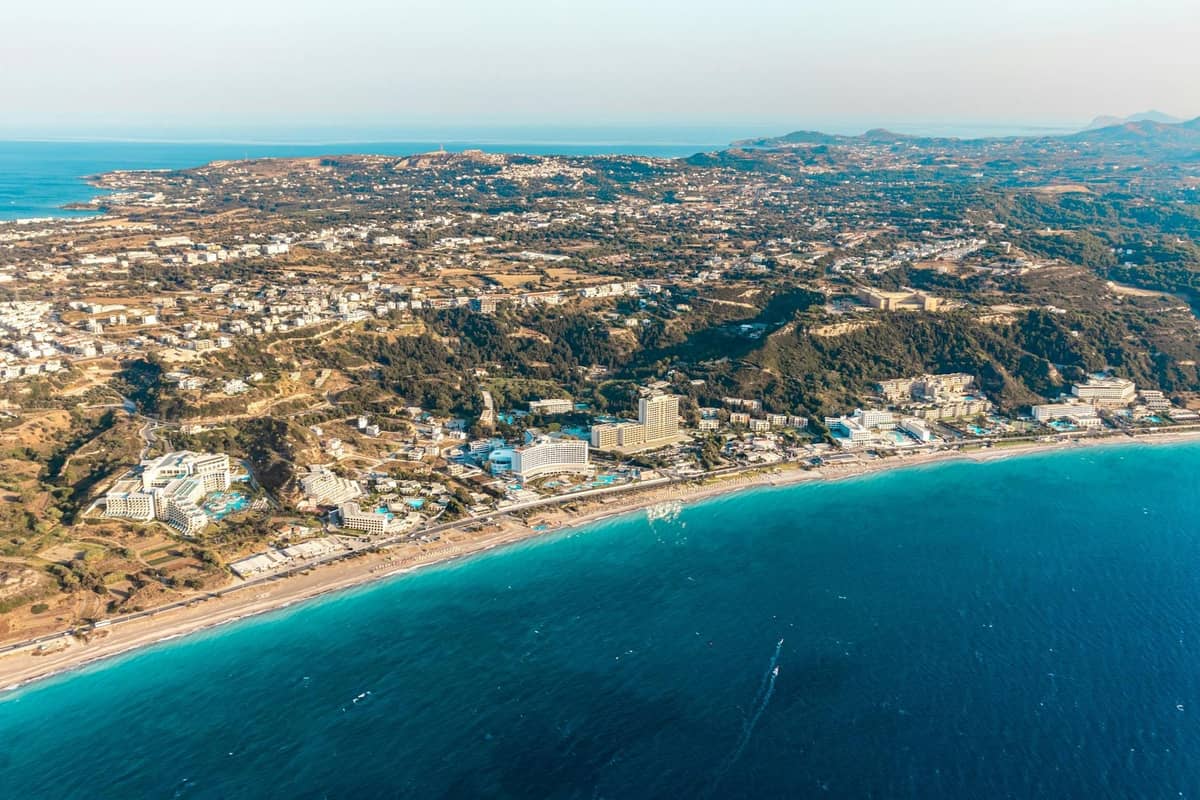
Rhodes is a large island, roughly 1,400 km<sup>2</sup> in total area, and the distance from Rhodes city in the north to Lindos on the southeast coast is about 50 km. That sounds manageable until you factor in summer traffic on the coastal road, which can turn a 55-minute drive into 90 minutes on a peak August afternoon. Where you base yourself genuinely determines what kind of holiday you have.
The island divides broadly into four zones: the city of Rhodes (Old and New Town combined), the east coast resorts stretching south toward Lindos, the west coast resorts around Ixia and Ialyssos, and the quiet southern villages. Each suits a different traveler. There is no single best answer, but there are several wrong answers depending on your priorities.
⚠️ What to skip
Old Town has no beach. This surprises more visitors than you might expect. The medieval walls end at the sea, but the nearest swimmable beach (Elli Beach) is a 15-20 minute walk into New Town. If beach access is your daily priority, base yourself elsewhere and visit Old Town on day trips.
Rhodes Old Town and New Town
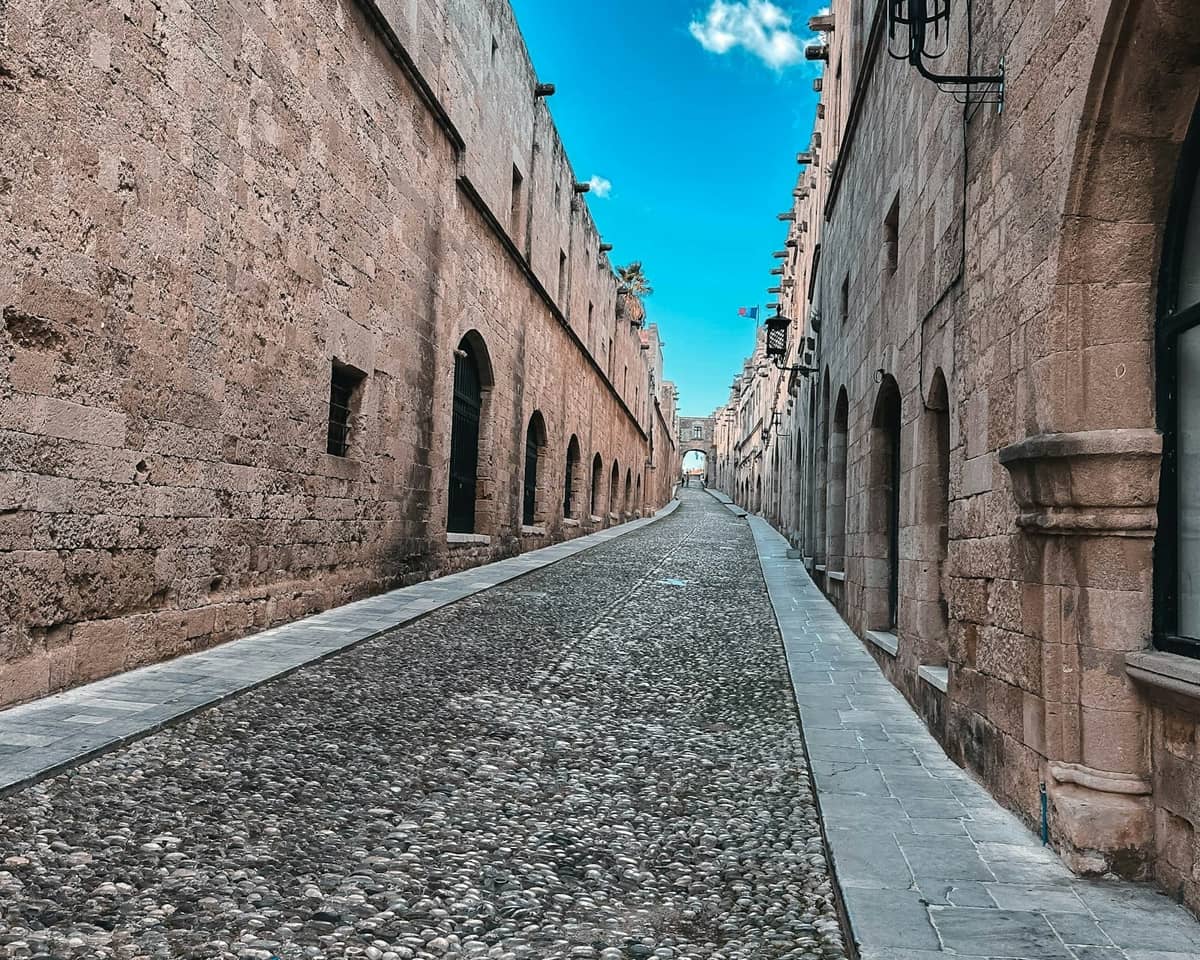
The UNESCO-listed Medieval City of Rhodes is one of the best-preserved medieval towns in Europe. Staying inside or immediately adjacent to the walls puts you within walking distance of the Street of the Knights, the Archaeological Museum of Rhodes, and dozens of Byzantine churches and Ottoman mosques. Evenings inside the walls, once the day-trippers leave around 6pm, have a genuinely different atmosphere: quieter cobblestone alleys, candlelit restaurants, and a real sense of the city's layered history.
Hotels inside Old Town tend to be boutique properties converted from medieval buildings. Kókkini Porta Rossa is the most consistently praised: a 15th-century building with individually designed suites, organic breakfasts served on stone terraces, and rates starting around €250 per night in high season. It is not budget accommodation, but you are paying for something genuinely irreplaceable. Rooms can be small by modern resort standards, air conditioning is sometimes an afterthought, and noise from the streets can be an issue in summer.
New Town, immediately north of the walls, was developed during the Italian occupation period and has a strikingly different character: wider avenues, Art Deco architecture, and a more functional modern city feel. Elli Beach runs along the northeastern tip and is the main city beach, popular with locals as well as tourists. New Town hotels cover a wider price range and tend to have more standard amenities. For travelers who want the Old Town experience by day but a proper hotel room at night, New Town is a sensible compromise.
- Best for History lovers, couples, solo travelers, those on shorter stays who want cultural depth over beach time
- Not ideal for Families with young children (cobblestones, no pool, no beach on doorstep), anyone who needs to drive daily (parking inside Old Town is prohibited)
- Price range Budget guesthouses from €60-80/night; mid-range €100-180; boutique from €200-400 in July-August
- Nearest beach Elli Beach, 15-20 min walk from Old Town gates; good for a swim but not a resort beach experience
Lindos: Beautiful, But Know What You're Getting Into
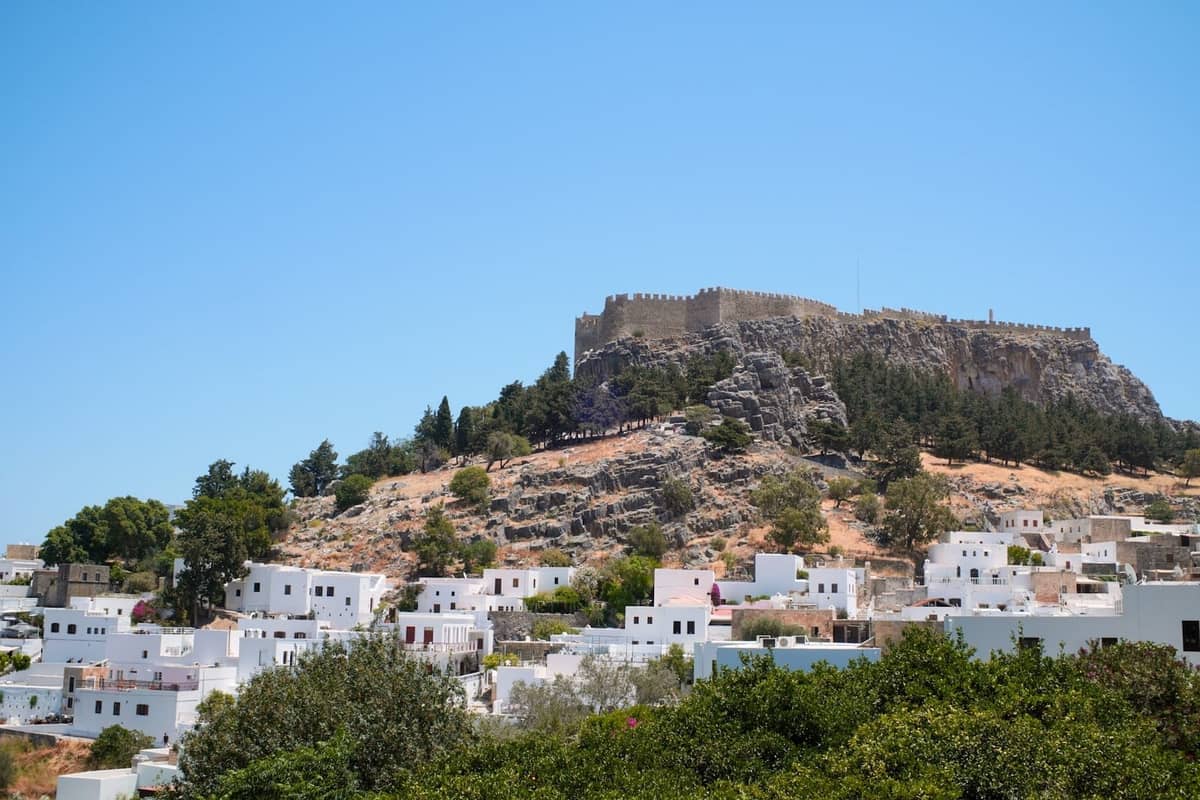
Lindos sits about 55 km south of Rhodes city on the east coast. The village is built on and around a dramatic headland topped by the Acropolis of Lindos, with whitewashed cubic houses, donkey-narrow paths, and a working harbor below. The main beach, Lindos Beach, curves in a protected bay with clear, calm water. On paper it is perfect. In practice, Lindos in July-August is wall-to-wall tourists, and the village's physical limitations mean it cannot absorb the numbers gracefully.
Cars are banned from the village center. You park at the designated lot (a 10-15 minute walk from the main square, with a shuttle option) and carry your luggage in on foot, or hire a donkey if your hotel requires it. Accommodation inside the village tends to be small converted captain's houses, often without lifts and with steep internal stairs. Lindos Blu and similar resort hotels are actually located just outside the village proper, on the coastal road, and offer a more conventional luxury experience. Noema Lindos, centrally located with Acropolis views, suits travelers who want genuine village immersion.
💡 Local tip
Book Lindos accommodation for May, June, or September rather than peak summer. The Acropolis is dramatically less crowded, Saint Paul's Bay (around the southern headland, a short walk) is practically empty on weekday mornings, and you'll pay 20-40% less for the same rooms.
Ixia and Ialyssos: The Best Value on the West Coast
The west coast strip running south from Rhodes city through Ixia into Ialyssos is the island's main large-resort corridor. Ixia and Ialyssos are effectively one continuous development, about 4-10 km from the city center. The beaches here face west, which means afternoon sun rather than morning, and a near-constant breeze off the Aegean. That wind makes this the island's prime windsurfing territory, and several dedicated schools operate along the coast.
For most package holiday travelers, this strip delivers exactly what a Greek resort should: large hotels with pools and restaurants, reliable beach access, easy transfers from Rhodes International Airport (roughly 10 km south of Ixia), and bus connections into the city center every 30-40 minutes. The beaches are pebbly and windier than the east coast equivalents, which is a genuine drawback for families with small children who want calm, sandy swimming. However, for adults who plan to combine beach days with city exploration, the location is hard to beat.
✨ Pro tip
If you're staying in Ixia or Ialyssos, the public bus into Rhodes Old Town costs around €1.80 and takes 20-30 minutes. Running a rental car the entire trip is unnecessary unless you plan multiple day trips across the island. Check the KTEL Rhodes bus schedule at the main terminal in New Town for current timetables.
Faliraki, Kallithea, Pefkos, and the East Coast Resorts
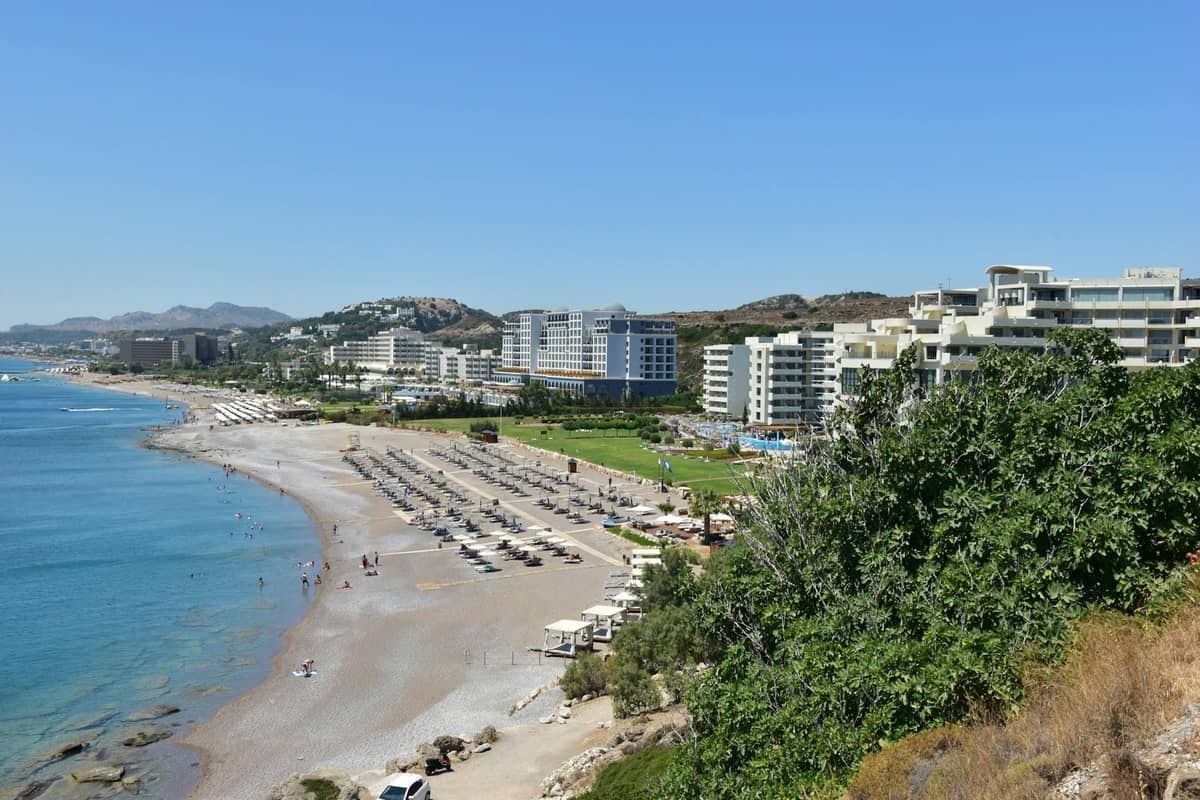
The east coast runs southeast from Rhodes city through a succession of distinct resort towns. Faliraki, about 15 km from the city, is the island's most famous (or infamous) party resort. Long sandy beaches, the Faliraki Water Park, an active bar strip, and a distinctly young crowd define the area. It has improved its reputation considerably since its early-2000s peak for disorder, but it remains the island's highest-energy nightlife zone. If that matches your travel style, the beach itself is genuinely good and hotels offer strong value.
About 5 km south of Faliraki, Kallithea has a different character entirely: the restored Art Deco Kallithea Springs complex sits here, with sheltered coves ideal for snorkeling. Several upmarket hotels occupy the low hills above the coast, including Elysium Resort and Spa, a beachfront property with consistently strong reviews for service and facilities.
Further south, Pefkos and Lardos offer the quietest east coast experience north of Lindos. Pefkos Beach is a small, sheltered bay lined with pine trees that give the village its name. Accommodation here skews toward smaller family-run hotels, self-catering apartments, and a handful of mid-range resorts. This is the correct choice for travelers who want a calm, low-key base with easy day-trip access to Lindos (about 5 km north).
- Faliraki: Best beach on the east coast, active nightlife, water park; not suited to travelers seeking quiet
- Kallithea: Upscale, good snorkeling, Art Deco spa complex; fewer dining options than Faliraki or Lindos
- Pefkos: Quiet, pine-shaded, family-oriented; limited nightlife and evening entertainment
- Kolymbia: Grid-plan resort village with eucalyptus-lined avenue; popular with Northern European package groups, easy access to Seven Springs
Practical Tips for Booking and Budgeting
Rhodes has two genuine seasons: high season running from late June through August, and shoulder season covering May, June, September, and October. The best time to visit Rhodes for accommodation value is September, when temperatures remain above 25°C, the sea is at its warmest, and prices drop by 20-35% compared to July-August peaks. Most hotels and resorts remain open through October, though some smaller properties close by mid-October.
Getting around the island significantly affects which base makes sense. Renting a car in Rhodes costs around €35-65 per day in high season for a small vehicle, and is genuinely useful if you plan to explore the interior, visit the Valley of the Butterflies, or drive the west coast to Kritinia. However, if your plan is beach and city, a car is an expensive inconvenience in Old Town (no parking) and largely unnecessary in Ixia or Faliraki (buses serve both).
ℹ️ Good to know
Rhodes operates on Eastern European Time (UTC+2 in winter, UTC+3 in summer (EEST during DST)). The currency is Euro (EUR). Electricity is standard EU Type C/F, 230V. English is widely spoken in all major resort areas and the city of Rhodes. Tap water is technically safe but heavily chlorinated in summer; most visitors prefer bottled.
For travelers building a longer itinerary, consider splitting your stay: two or three nights in Rhodes Old Town for the history and atmosphere, then relocating to a resort base for the beach portion. The 7-day Rhodes itinerary covers exactly this split-base approach in detail, including how to time day trips to Lindos and the island's southern villages without the car-dependent logistics becoming exhausting.
FAQ
Is it better to stay in Rhodes Old Town or New Town?
Old Town wins for atmosphere, history, and evening ambiance once day-trippers leave. New Town wins for practicality: better hotel amenities, direct beach access at Elli Beach, easier parking, and a wider price range. Couples and solo travelers typically prefer Old Town; families and those prioritizing beach access usually prefer New Town or nearby Ixia.
Where should I stay in Rhodes for the best beaches?
The east coast between Faliraki and Lindos has the island's best sandy beaches with calmer, warmer water. Faliraki Beach is the longest and most developed. Pefkos is quieter and equally pleasant. Tsambika Beach, between Kolymbia and Archangelos, is widely considered the island's finest sandy beach. The west coast (Ixia, Ialyssos) has beaches but they are pebbly and windier.
How far is Lindos from Rhodes city, and is it worth staying there?
Lindos is approximately 55 km south of Rhodes city, a 50-90 minute drive depending on traffic. It is worth staying there for at least one or two nights if you value scenery and romance over modern resort amenities. The village has no cars, no beach clubs, and limited nightlife. For a longer stay, most visitors find it too restrictive; it works best as an overnight or as a day trip from a northern base.
When is the cheapest time to book hotels in Rhodes?
Shoulder season (May, early June, September, October) consistently offers the best value, with rates 20-40% below July-August peaks. October is particularly underrated: temperatures average around 22-25°C, the sea remains warm, and nearly all hotels are still open. For the specific value case, the guide to Rhodes in October covers what remains open and what closes.
Is Faliraki suitable for families, or is it just a party resort?
Faliraki genuinely works for families, though the southern end of the resort strip (toward Kallithea) is calmer than the main bar zone near the northern beach. The Faliraki Water Park is a legitimate family draw. Families with young children wanting a quieter base should instead consider Pefkos, Kolymbia, or the resort hotels in Ixia, all of which have sandy or mixed beaches and far less nightlife noise.