Rhodes Aquarium (Hydrobiological Station): A Genuine Underwater Detour
Occupying a striking Art Deco building at the northernmost point of Rhodes Town, the Rhodes Aquarium is one of Greece's oldest marine research stations. Its basement cave-like tanks display Aegean and Mediterranean species in an atmosphere that feels more like a natural history museum than a modern aquarium. A compact but rewarding stop, especially on a hot afternoon.
Quick Facts
- Location
- northernmost tip of Rhodes Town, northernmost tip of Rhodes Town (New Town)
- Getting There
- 20-25 min walk from Rhodes Old Town along the seafront promenade; accessible by local bus or short taxi ride
- Time Needed
- 45 minutes to 1.5 hours
- Cost
- Admission fee applies; exact prices not confirmed — check on arrival or via HCMR
- Best for
- Families with children, architecture enthusiasts, anyone seeking shade on a hot day
- Official website
- www.hcmr.gr/en/aquaria
What the Rhodes Aquarium Actually Is
The Rhodes Aquarium, officially known as the Hydrobiological Station of Rhodes (Υδροβιολογικός Σταθμός Ρόδου), sits at the very tip of the Cape of Rhodes, where the Aegean Sea meets the Mediterranean. It is one of the oldest marine research institutions in Greece, and that dual identity, part working science facility, part public attraction, shapes everything about the experience.
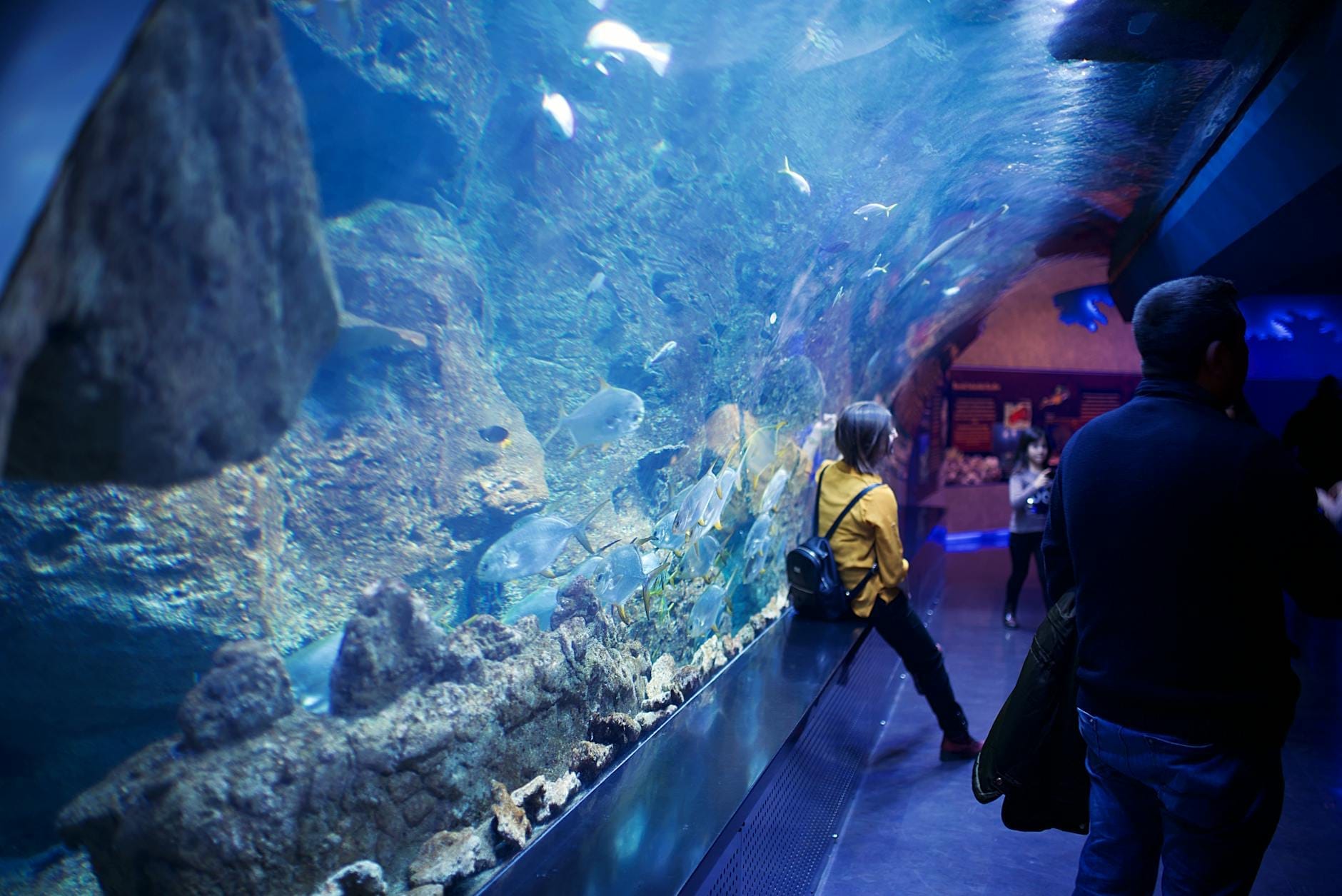
This is not a large-scale modern aquarium with whale sharks and dramatic overhead tanks. It is a compact, atmospheric space with an 80,000-litre basement tank system designed to resemble an underwater cave, housing species native to Greek and wider Mediterranean waters. For visitors who arrive expecting something similar to a major European aquarium, recalibrating expectations is worthwhile. For those who approach it on its own terms, the atmosphere is genuinely distinctive.
💡 Local tip
The aquarium is best combined with a walk along the New Town seafront promenade. Arrive in the late morning or early afternoon when cruise crowds are concentrated in the Old Town, and you will have the lower cave galleries largely to yourself.
History: From Fascist-Era Research Station to Greek Marine Institute
The building was constructed between 1934 and 1935 during the Italian occupation of the Dodecanese, designed by architect Armando Bernabiti in the Art Deco style that defines much of Rhodes New Town's built fabric. It opened in 1936 under the name Reale Istituto di Ricerche Biologiche di Rodi, functioning as a biological research centre under Italian colonial administration. The architecture reflects that era's interest in monumental civic building: the facade is bold, sculptural, and immediately recognizable from the seafront.
After Greek sovereignty was restored to the Dodecanese in 1947, the station was renamed the Hydrobiological Station of Rhodes in 1963. The public exhibition component was added between 1971 and 1972. Today the facility is administered by the Hellenic Centre for Marine Research (HCMR), which also operates the better-known broader network of marine research in Greece. The research functions of the station continue alongside public access, meaning the building retains a purposeful, working quality rather than feeling like a pure tourist venue.
That history matters when you visit. The stone corridors, the low ceilings, the particular smell of salt water in an enclosed space — these are not design choices made for atmosphere. They are the product of a building that has been doing the same work for nearly 90 years, and the accumulated authenticity is palpable in a way that newer facilities rarely achieve.
Tickets & tours
Hand-picked options from our booking partner. Prices are indicative; availability and final rates are confirmed when you complete your booking.
Sunset catamaran cruise with dinner in Rhodes
From 70 €Instant confirmationFree cancellation3-Hour All Inclusive Sun and Sea Swimming Cruise in Rhodes
From 55 €Instant confirmationFree cancellationRhodes Sunset Cruise with Greek BBQ and Unlimited Drinks
From 65 €Instant confirmationFree cancellationHigh-Speed Boat Trip to Rhodes Town from Kolympia Harbour
From 40 €Instant confirmationFree cancellation
The Architecture: Art Deco at the Water's Edge
The aquarium building is one of several significant Italian-period structures in Rhodes New Town that are worth examining on their own terms. Bernabiti's design draws on the Art Deco marine aesthetic: clean horizontal lines, relief carvings of sea creatures on the exterior, and a scale that feels authoritative without being overwhelming. The decorative details on the facade, octopuses, fish, and wave motifs rendered in stone, reward a slow look before you enter.
The location is deliberately chosen. Standing at the northernmost point of the island, the building is flanked by sea on multiple sides. In the early morning light, the white-and-ochre stone picks up a warm tone that makes it one of the better subjects for photography along the Rhodes Town coastline. By midday the light is harsh, which is one reason to visit the interior at that point rather than linger outside.
Inside: The Cave Tank and What Lives There
The main draw is the basement level, where the exhibition tanks are set into the walls of a simulated cave environment. The 80,000-litre central tank and the surrounding display pools hold species you might encounter while snorkelling or diving in Greek waters: moray eels, groupers, sea turtles, rays, various reef fish, and invertebrates including sea anemones, starfish, and urchins. The focus is regional rather than global, which gives the collection coherence.
The cave atmosphere is genuinely effective. Natural light is minimal down here, the stone walls are cool to the touch even in August, and the sound of circulating water fills the space. Children tend to press close to the tank glass and stay there for longer than in brightly lit, high-stimulus aquariums. Adults who find neon-and-acrylic commercial aquariums overstimulating often respond well to the lower-key sensory environment here.
The upper level houses display cases with preserved specimens, models, and explanatory material about marine biology and the research conducted at the station. The interpretation is informative rather than interactive, leaning toward the museum end of the spectrum. This section is less engaging for very young children but adds genuine context for anyone interested in the science.
ℹ️ Good to know
The preserved specimen displays upstairs are in Greek and English, and the quality of the scientific information reflects the station's research background. If you are interested in Aegean marine ecology rather than just the live tanks, allow extra time for this level.
When to Visit and How It Changes Through the Day
Opening hours shift significantly by season. Summer opening hours are later; confirm current schedule via HCMR, making it viable as a late-afternoon visit once beach heat has peaked. From November 1 through March 31, closing time moves to 16:30 (some listings indicate 16:00 for winter). Confirming hours on arrival or directly with HCMR is advisable if your schedule is tight.
The early morning slot, around 09:00 to 10:30, is the quietest. Tour groups from the cruise ships that dock at Mandraki typically arrive in the Old Town first and work their way north, meaning the aquarium sees its peak foot traffic between 11:00 and 14:00. Late afternoon, from about 16:00 onward in summer, is a second good window: school groups have left, the heat outside has eased, and the light on the building facade shifts to a warmer tone for photography.
In July and August the basement level provides meaningful relief from the heat, which is not a trivial consideration when temperatures routinely reach 33-35°C outside. If you are planning a full day that includes the Palace of the Grand Master and the Street of the Knights in the morning, the aquarium makes a logical midday stop before continuing along the northern seafront.
Getting There and Practical Details
The aquarium is at the northern tip of Rhodes Town, a roughly 20 to 25 minute walk from the northern gate of the Old Town along the seafront promenade. The walk itself is pleasant: you pass Mandraki Harbour and Elli Beach before the building comes into view at the cape. Local buses and taxis serve the area if the walk is not practical.
Accessibility for visitors with mobility limitations is not fully documented. The basement cave level involves stairs, and no specific wheelchair provision has been confirmed in available information. If this is a concern, it is worth calling ahead or contacting HCMR directly before visiting.
Ticket prices are not confirmed in current public sources. Expect a modest entry fee consistent with similar Greek municipal or research institution attractions. There is no large gift shop or food facility on site, so plan accordingly if visiting with children.
⚠️ What to skip
The aquarium is a relatively small attraction. Visitors who arrive expecting a full half-day experience comparable to major European aquariums may feel it does not justify a long trip from the south of the island. It works best as part of a broader Rhodes New Town walk rather than as a standalone destination.
Photography and What Works Here
The building exterior is best photographed in the first two hours after opening, before the sun climbs high enough to flatten the facade's sculptural details. The carved sea-life reliefs catch raking early light particularly well. For the wider Rhodes photography itinerary, the aquarium building combines well with a pre-dawn or golden-hour walk along the Elli Beach promenade to the north.
Inside, the low light of the cave level makes phone cameras struggle unless you have a recent model with strong low-light capability. A dedicated camera with a wide aperture lens or a night mode setting will produce better results. Flash photography is generally discouraged around the tanks and is unlikely to yield useful images anyway given the reflective glass.
Insider Tips
- The walk from the Old Town to the aquarium along the eastern seafront, past Mandraki and around the cape, takes about 25 minutes and passes several worthwhile stops. Do not take a taxi unless pressed for time — the approach on foot gives context to the building's dramatic position.
- The basement cave level stays noticeably cool even in peak summer. If you are spending a full day outside in July or August, the aquarium is a legitimate and pleasant way to escape the midday heat without retreating to your hotel.
- The exterior facade deserves five to ten minutes of attention before you buy a ticket. The Italian-period Art Deco stone carvings of marine life are unusual in Greek island architecture and are easy to miss if you walk straight to the entrance.
- The upper floor displays on marine research are often skipped by visitors heading straight for the live tanks. The preserved specimens and ecological explanations here are genuinely informative if you are interested in what lives in the waters you have been swimming in.
- The aquarium closes earlier in winter; check current hours via HCMR. If you are visiting Rhodes in the shoulder or off-season, check current hours before building an itinerary around it.
Who Is Rhodes Aquarium For?
- Families with children aged 4 to 12 who want a manageable, shaded indoor activity
- Architecture and history enthusiasts interested in the Italian colonial period in Rhodes
- Anyone spending a full day in Rhodes New Town and looking for a natural endpoint at the northern cape
- Visitors interested in Aegean marine life beyond what they see while snorkelling
- Travellers seeking relief from peak summer heat without cutting a day short
Nearby Attractions
Other things to see while in Rhodes New Town:
- Acropolis of Rhodes
Perched on Monte Smith hill 3 km southwest of the city center, the Acropolis of Rhodes is an open-air archaeological site dating to the 5th century BC. It holds the partially reconstructed Temple of Apollo, a 210-meter Hellenistic stadium, an odeon, and broad views over the Aegean. Entry is free, crowds are light, and the site rewards visitors with a genuinely atmospheric sense of ancient Rhodes that the medieval Old Town cannot offer.
- Ancient Stadium of Rhodes
The Ancient Stadium of Rhodes sits on Monte Smith Hill, part of the larger Acropolis of Rhodes complex. Dating to the 3rd century BC, this restored Hellenistic track once hosted the Haleion Games in honor of Helios. Entry is free, the views are exceptional, and the site is far less crowded than the medieval attractions in the city below.
- Colossus of Rhodes (Historical Site)
One of the Seven Wonders of the Ancient World, the Colossus of Rhodes was a 33-metre bronze statue of the sun god Helios, built to celebrate a famous military victory. No physical trace survives today, but understanding its story transforms how you see the harbour, the city, and Rhodes itself.
- Elli Beach
Elli Beach stretches 400 metres along the northern tip of Rhodes Town, sitting between Mandraki Harbour and the Rhodes Aquarium. With free entry, water sports, beach bars, and clear Aegean water, it serves as the island's urban beach hub. It is not a desert island escape, but for convenience and character, few beaches in the city come close.