Getting Around Rhodes: The Complete Transport Guide
Rhodes is a large island covering over 1,400 km², and getting around it requires some planning. This guide covers every transport option available, from public buses and taxis to car hire and scooters, with real fares, route logistics, and honest advice on what actually works.
Plan and book this trip
Tools from our partner Travelpayouts help you compare flights and hotels. If you book through them, we may earn a commission at no extra cost to you.
Flights
Hotels map
TL;DR
- Rhodes has no metro or rail network. Buses, taxis, and rental vehicles are your three main options.
- Two bus networks cover the island: RODA (blue-white, west coast and city) and KTEL (orange-green, east coast including Lindos and Faliraki).
- Renting a car or scooter is the most flexible option for exploring beyond the main tourist corridors.
- The Old Town is pedestrian-only. Vehicles must be parked outside the walls and the area explored on foot.
- Airport transfers to Rhodes city centre cost around €25-30 by taxi or €2.50 by bus. See the Rhodes airport guide for full arrival logistics.
Understanding the Island's Layout First
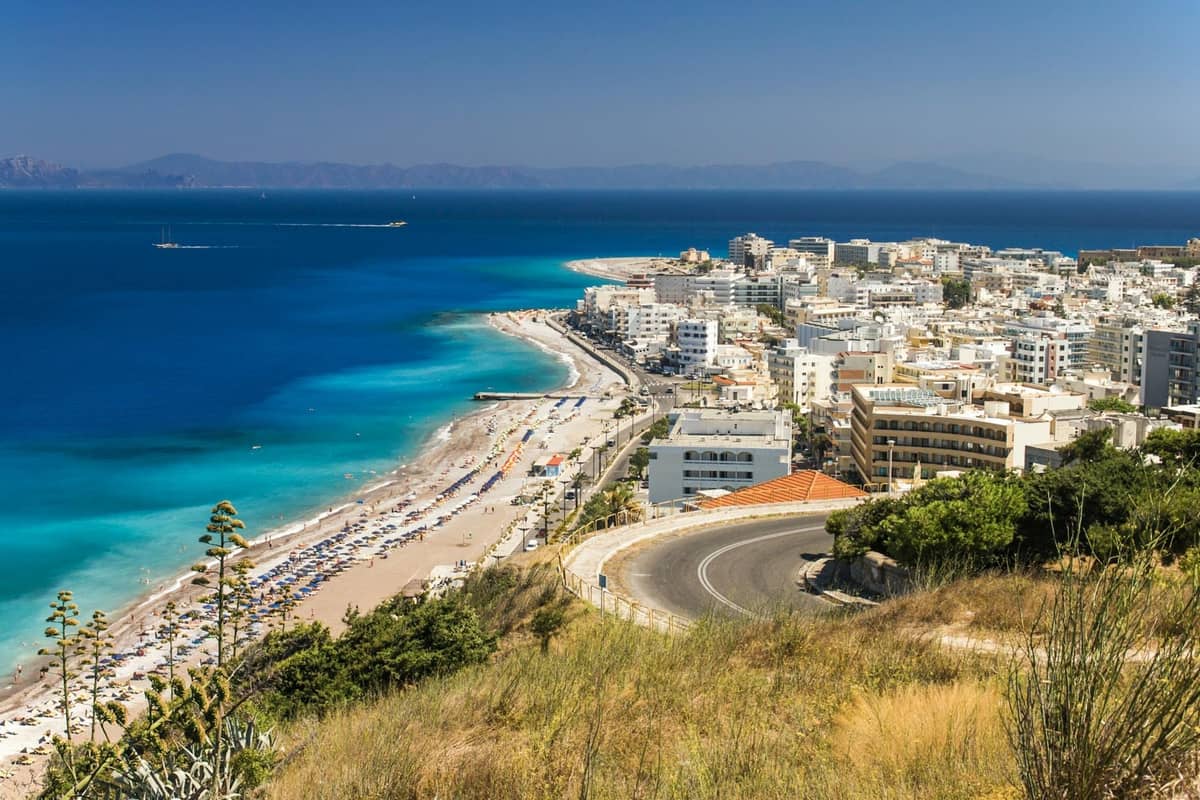
Rhodes is bigger than most first-time visitors expect. The island stretches about 79.7 km from north to south and covers over 1,400 km². The city of Rhodes sits at the northern tip, and most tourist infrastructure radiates outward from there. This matters for transport because virtually every bus route starts or ends at Rhodes Town, meaning cross-island journeys (say, from the airport to a resort on the east coast) almost always require passing through the city. Plan accordingly.
The main tourist clusters are: Rhodes city (including the UNESCO-listed Old Town and the modern New Town), the east coast resorts stretching from Faliraki down to Lindos, and the west coast strip through Ixia and Ialyssos near the airport. The further south you go, the less frequent the bus connections.
ℹ️ Good to know
Greek time zones shift seasonally. Rhodes operates on Eastern European Time (UTC+2 in winter, UTC+3 in summer). Bus timetables and taxi availability change significantly between peak season (June-September) and the quieter shoulder and off months.
Public Buses: RODA and KTEL
Rhodes has two separate bus operators, and knowing which one you need saves confusion at the station. Both depart from the main bus terminal in the New Town, located near Mandraki Harbour and the New Market. This is the island's central transport hub.
- RODA (blue and white buses) Covers the west coast, airport, and local city routes. If you're heading to Ixia, Ialyssos, or catching a bus to Diagoras Airport, this is your operator. Website: rodabus.gr.
- KTEL (orange and green buses) Handles the east coast and longer routes, including Faliraki, Tsambika, Archangelos, and Lindos. Also serves the Valley of the Butterflies and other inland destinations. Timetables available at ktelrodou.gr.
Fares are reasonable by European standards. City routes within Rhodes Town run around €1.20-1.80. Longer routes to Faliraki or the airport cost approximately €2.50. The journey to Lindos by bus takes around 90 minutes and costs in the region of €5-6 each way. Tickets can be bought directly from the driver or at kiosks at the main station. There are no multi-day passes or tourist cards for public buses.
⚠️ What to skip
Bus frequency drops sharply on weekends and during the off-season (October to April). If you're visiting outside peak summer, always check current timetables at the official sites rather than assuming the schedule you found online is current. The last bus back from Lindos typically runs in the early evening, even in summer.
The airport bus stop is located outside the Arrivals exit, to the left, under a covered shelter. The ride into Rhodes Town takes 25-30 minutes in normal traffic, though it can stretch longer during summer peak hours. Budget around 50 minutes if you have a connection to make.
Taxis: When They Make Sense
Taxis in Rhodes are cream-colored and metered. The main ranks are at Mandraki Harbour, the bus terminal, the airport, and the port. For late-night travel, early morning airport runs, or any destination with no direct bus link, taxis are the practical choice. In peak season (July and August especially), booking ahead is genuinely advisable. Showing up at a rank at 11pm hoping for a cab is not a reliable strategy.
- Airport to Rhodes Town centre: approximately €25-30, around 20 minutes.
- Rhodes Town to Faliraki: roughly €20-25.
- Rhodes Town to Lindos: expect €60-75 for the full trip, around 55 minutes. This is a significant expense if you're travelling solo.
- Tipping: 5-10% is appreciated but not obligatory. Round up the fare for short trips.
Ride-hailing apps like Uber do not operate in Rhodes. The Beat app has had limited availability in some Greek cities, but do not rely on it for Rhodes. Stick to official metered taxis from designated ranks or book through your accommodation. Unofficial drivers offering fixed-price rides at tourist hotspots are not regulated and should be avoided.
Car Hire: The Best Option for Real Exploration
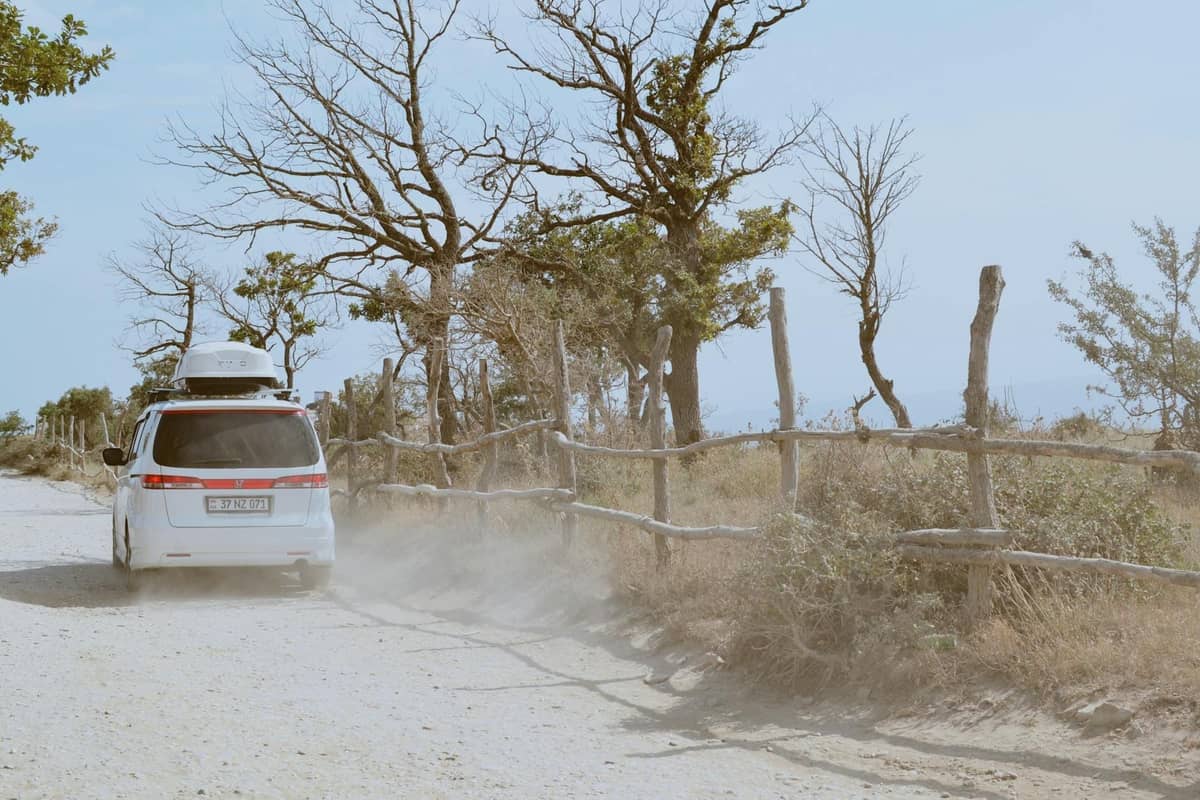
If you want to explore beyond the standard tourist trail, renting a car is worth every cent. Buses serve the main routes efficiently, but reaching places like Kritinia Castle, the Monastery of Fountoukli, or the windsurfing beaches at Prasonisi on the southern tip requires your own wheels. The island's road network is in good condition on main routes, though mountain roads in the interior can be narrow and winding.
Rental agencies are available at the airport, the port, and throughout Rhodes New Town. Booking in advance during summer is strongly recommended. Prices vary considerably by season and agency, but budget rentals start around €35-50 per day in shoulder season and can climb above €70 in peak July-August. An international driving licence is not required for EU citizens, but non-EU visitors should carry one. For full details on costs and what to look for in a rental agreement, the Rhodes car hire guide covers the specifics.
✨ Pro tip
Parking in Rhodes Old Town is simply not possible. The entire medieval city is pedestrian-only. There are paid parking areas just outside the walls, particularly near the port and along the moat road. If you're staying inside the Old Town, arrange parking through your accommodation before you arrive.
Scooters, ATVs, and Cycling
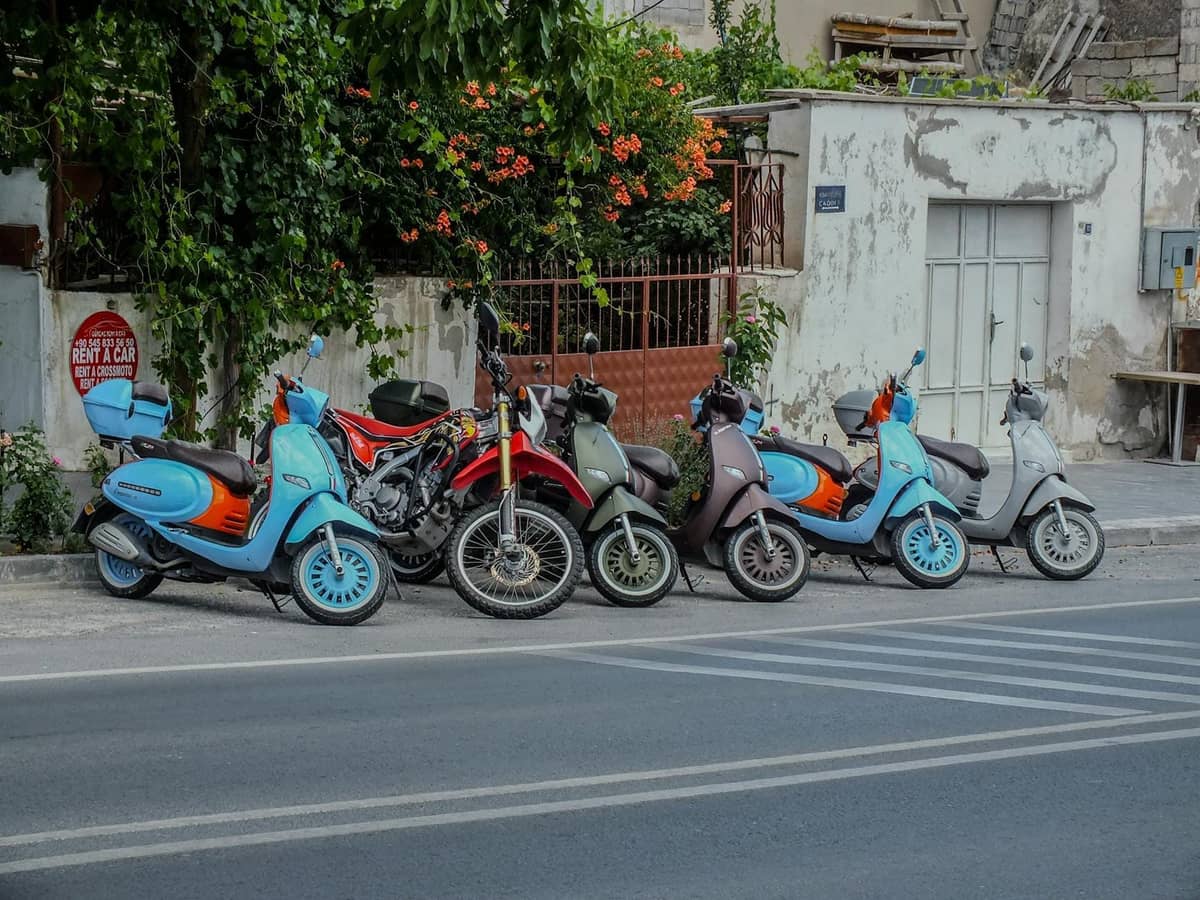
Scooters and small ATVs are widely available to rent in Rhodes Town, Faliraki, and Lindos. For shorter distances and day trips along the coast, a scooter is a genuinely practical choice. However, the roads to major attractions like the Acropolis of Lindos involve gradients and traffic that demand confidence on two wheels. A valid driving licence appropriate for the vehicle category is legally required, though enforcement varies.
Cycling as a primary transport mode is challenging on the main island. Hills, summer heat (regularly 30-35°C from June through August), and fast-moving traffic on arterial roads make it uncomfortable rather than enjoyable. E-bike rental has become available in Rhodes Town and the Old Town area, which is a more realistic option for short city-level exploration. Dedicated cycle lanes are limited.
Ferries and Boat Transport
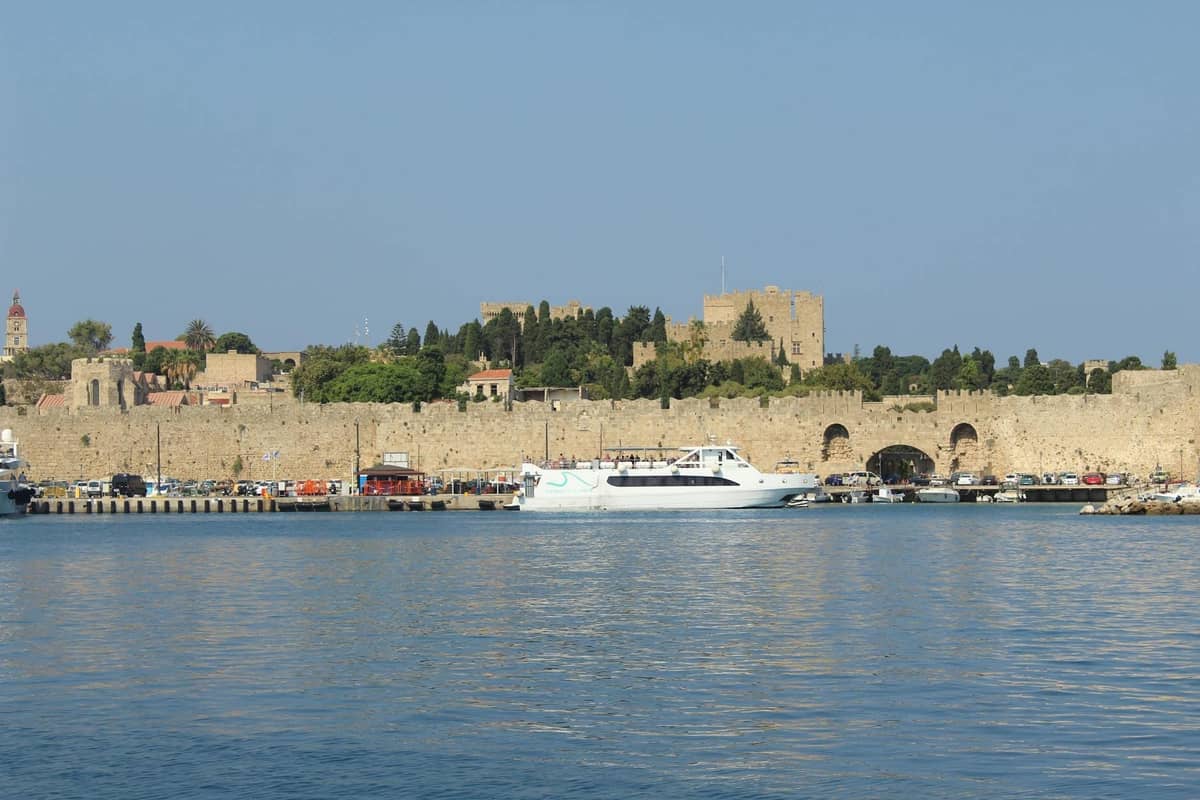
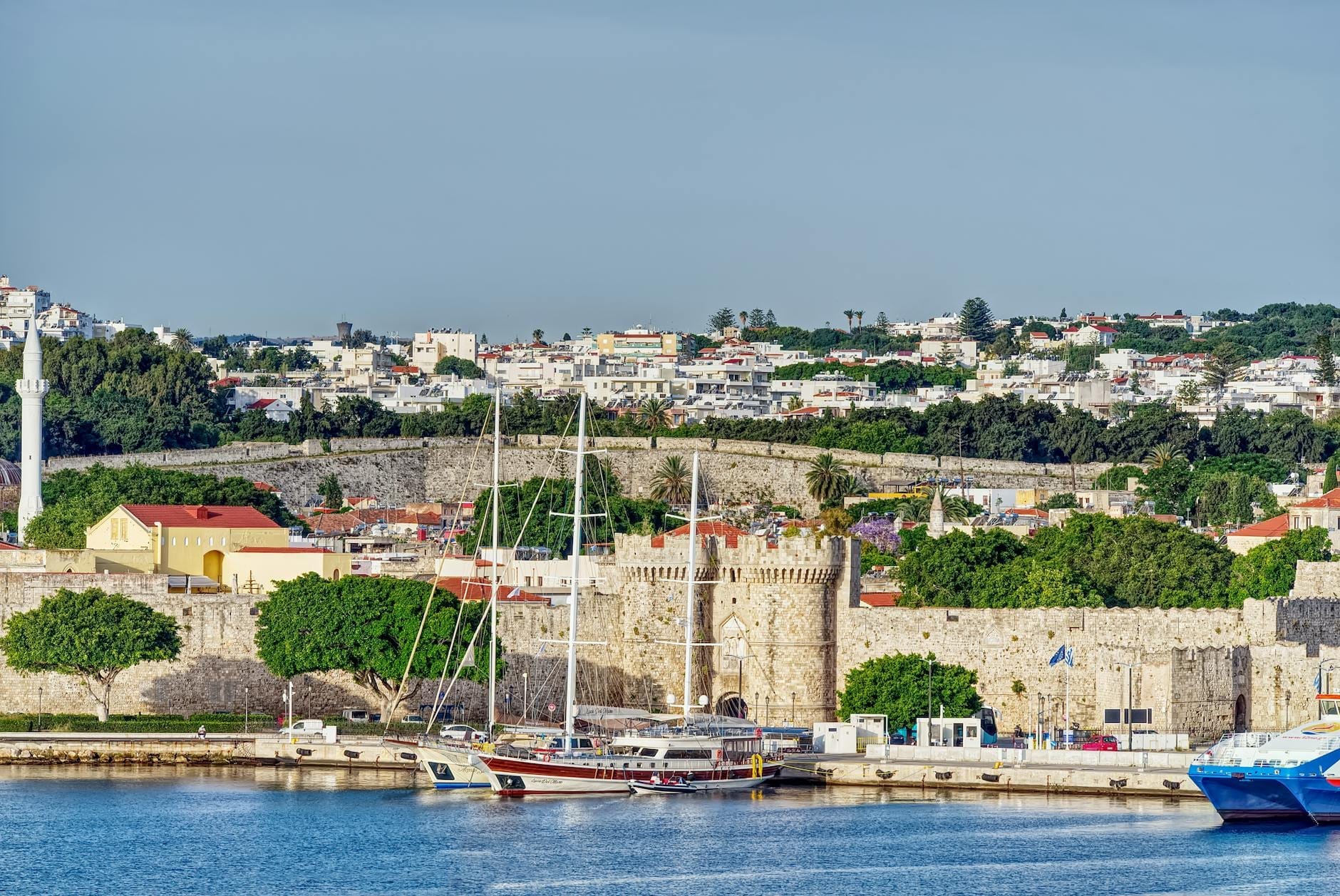
Rhodes Port handles connections to other Greek islands and the Turkish coast. Regular ferries run to Athens (Piraeus), Crete, Kos, and a number of Dodecanese islands. Day trips to nearby Symi Island are among the most popular excursions from Rhodes, and several operators run boats daily from Mandraki Harbour and the main port. The crossing to Symi takes around 50 minutes by fast boat.
For those interested in organised boat excursions around the island's coastline, coves, and neighbouring islands, the Rhodes boat trips guide outlines the main options, operators, and what to expect in terms of cost and scheduling.
💡 Local tip
The port and Mandraki Harbour serve different types of vessels. Large international ferries and cruise ships use the commercial port to the south. Excursion boats, smaller ferries to Symi, and day-trip operators mainly depart from Mandraki. Check your ticket carefully to confirm the correct departure point.
Practical Transport Tips by Season
- June to September (Peak Season) Buses run frequently but stations are chaotic, especially in Rhodes Town. Queues for popular routes like Lindos can be long. Taxis are in high demand in evenings. Book transfers in advance for early morning flights.
- May and October (Shoulder Season) The best time to visit for transport ease. Fewer crowds, reasonable schedules, and car hire prices are noticeably lower. Some boat excursions reduce frequency or stop entirely in late October.
- November to April (Off-Season) Bus frequency drops significantly. Some resort areas become largely inaccessible by public transport. A rental car is almost essential if you want to move around freely outside Rhodes Town.
If you're planning a longer stay and want to build an efficient itinerary around transport realities, the 7-day Rhodes itinerary accounts for which days and routes work best with public transport versus when you'll want a rental.
FAQ
Is there a direct bus from Rhodes Airport to Lindos?
No. There is no direct bus from the airport to Lindos. You need to take the bus or taxi into Rhodes Town first, then change to the KTEL east coast service for Lindos. This can add 30-40 minutes to your journey compared to a direct taxi, which costs around €65-75 and takes roughly 55 minutes.
Can you get around Rhodes without a car?
Yes, for most standard tourist destinations. Rhodes Town, Faliraki, and Lindos are all accessible by bus. However, for the interior villages, the far south, and beaches off the main routes, public transport is limited or non-existent. A rental car or scooter significantly expands what you can reach.
Do taxis in Rhodes use meters?
Yes, official taxis are metered. Always insist on the meter being activated at the start of your journey. A printed official price list also exists for specific fixed routes (like airport transfers), so you can cross-reference. Unlicensed drivers who approach tourists at the port or airport do not use meters.
How long does the bus from Rhodes Town to Lindos take?
Around 90 minutes each way on the KTEL east coast service. Departures are from the main bus terminal near Mandraki Harbour. The last return bus from Lindos typically runs in the early evening during summer; check current KTEL timetables at ktelrodou.gr before you go.
Is Uber available in Rhodes?
No. Uber does not operate on Rhodes. Taxis are the closest equivalent for on-demand point-to-point transport. Use official taxi ranks at the airport, port, Mandraki Harbour, or the main bus station, or book through your hotel.