Governor's Palace (Palazzo del Governatore): Rhodes' Forgotten Italian Landmark
The Governor's Palace, known in Italian as the Palazzo del Governatore, is one of the most architecturally impressive remnants of the Italian occupation of Rhodes. Standing in the New Town near the seafront, this two-storey building blends Venetian, Gothic, and local Aegean masonry traditions into a quietly commanding facade that most visitors walk past without realising its significance.
Quick Facts
- Location
- Rhodes New Town, near the seafront road, Rhodes Town
- Getting There
- 15-20 minute walk from Rhodes Old Town; accessible on foot from Mandraki Harbour
- Time Needed
- 20-40 minutes for exterior exploration; longer if visiting during a public event
- Cost
- Free to view exterior; interior access depends on administrative opening (no set tourist admission)
- Best for
- Architecture enthusiasts, history buffs, and travellers exploring the Italian-era New Town
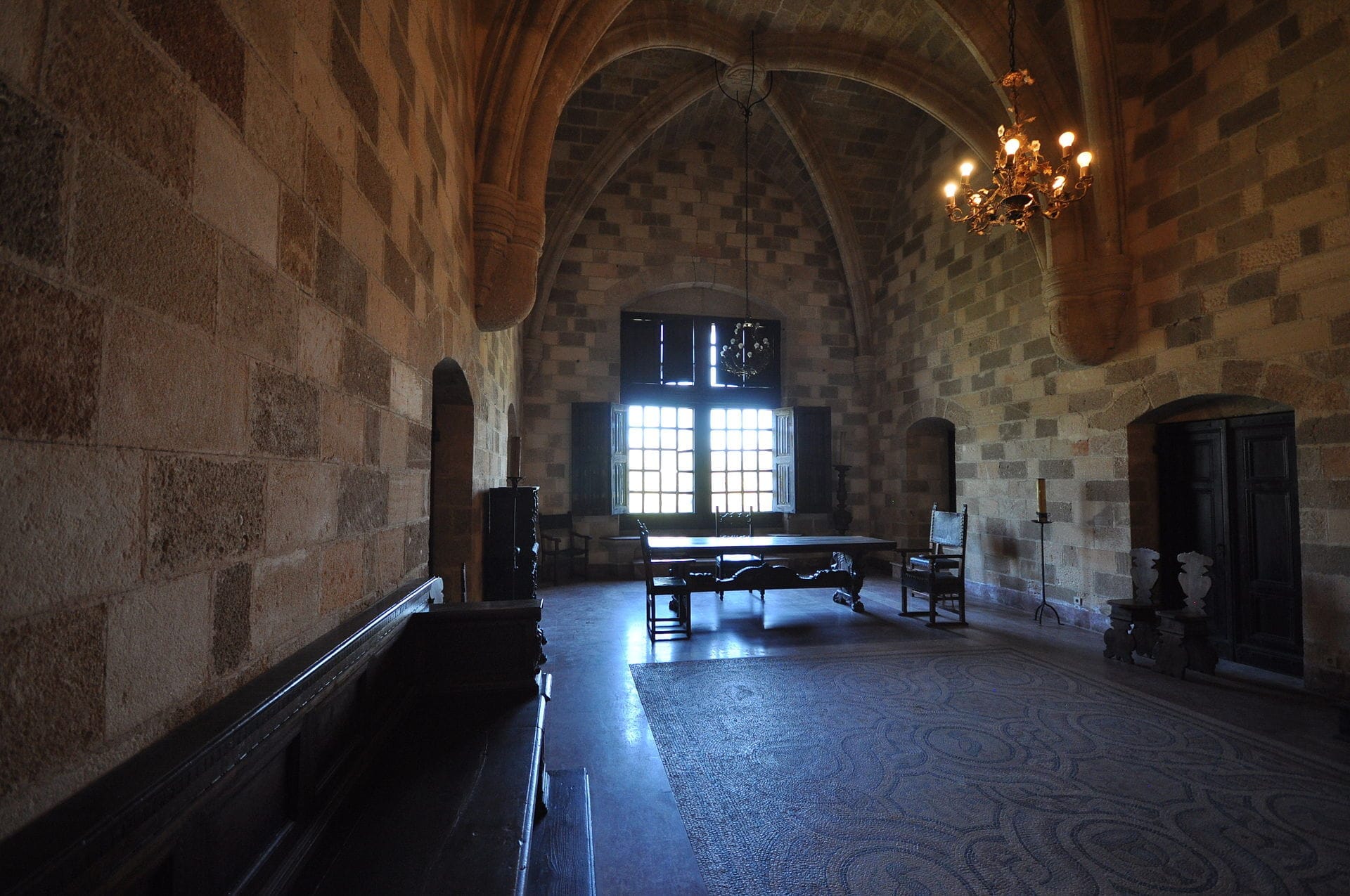
What Is the Governor's Palace?
The Governor's Palace, officially the Palazzo del Governatore, is a major architectural artifact of the Italian period in Rhodes, which lasted from 1912 to 1943. Today it functions as the Prefecture of the Dodecanese, which means it is an active administrative building rather than a dedicated tourist attraction. That distinction matters: the interior is not reliably open to casual visitors, and there are no set tourist hours or admission fees. What you can always access, however, is the exterior, and that alone rewards the detour.
The building was designed by Italian architect Florestano di Fausto, who was responsible for many of the New Town's most prominent structures during the Italian colonial period. Di Fausto favoured an eclectic approach that drew on multiple Mediterranean traditions simultaneously, and the Governor's Palace demonstrates this clearly: Venetian Gothic arched windows, pink and white stonework cut in the local isodomic masonry style, a two-storey form with a flat roof, and an arcade facing the sea that gives the building an open, civic presence.
ℹ️ Good to know
The Governor's Palace is not a conventional museum with posted hours. Interior access is limited to administrative functions and occasional public events. Plan to spend most of your time on the exterior and surrounding area.
Architecture and Historical Context
To understand the Governor's Palace properly, you need to understand what Italy was trying to do in Rhodes after taking the island from the Ottoman Empire in 1912. The Italians were not simply administering a territory; they were engaged in a deliberate project of cultural and architectural projection. The Dodecanese islands were to become a showcase of Italian imperial ambition in the Aegean, and the physical landscape of Rhodes Town was remade to reflect that vision.
Di Fausto's design for the Governor's Palace drew conscious parallels with the Palazzo Ducale (Palace of the Doges) in Venice, a reference that served an obvious symbolic purpose: it placed Rhodes within a lineage of Italian Mediterranean dominance stretching back to the Venetian Republic. The Gothic arched windows and the arcade facing the seafront echo Venetian civic architecture, while the stone colouring, a warm mix of white and pink, gives the building a distinctly Aegean character that prevents it from looking entirely transplanted.
This blend of imported and local architectural language is characteristic of the broader Italian-era New Town, which is worth exploring as a coherent urban zone. For a deeper understanding of how all these layers, Greek, Ottoman, Italian, and medieval, sit alongside each other in Rhodes Town, the Rhodes Medieval Old Town guide provides essential context before you venture into the New Town's Italian quarter.
Tickets & tours
Hand-picked options from our booking partner. Prices are indicative; availability and final rates are confirmed when you complete your booking.
Sunset catamaran cruise with dinner in Rhodes
From 70 €Instant confirmationFree cancellation3-Hour All Inclusive Sun and Sea Swimming Cruise in Rhodes
From 55 €Instant confirmationFree cancellationRhodes Sunset Cruise with Greek BBQ and Unlimited Drinks
From 65 €Instant confirmationFree cancellationPalace of the Grand Master Ticket and Audio Tour by App
From 30 €Instant confirmation
The Exterior: What You Actually See
Standing in front of the Governor's Palace, the first thing that strikes you is the scale. The building is not enormous by European governmental standards, but in the context of the surrounding New Town streetscape, it commands attention. The ground-floor arcade creates a shaded colonnade along the seafront-facing side, and the stonework shows a careful attention to texture: smooth dressed stone alternates with slightly rougher courses in a way that catches light differently across the day.
In the morning, when the sun is still low and coming from the east, the pink tones in the stone are at their warmest. The facade picks up a soft amber glow that photographs well and gives the building an almost theatrical quality. By midday, the light flattens and the building reads more starkly white. Late afternoon, with the sun dropping toward the west, brings out shadows in the Gothic window arches that make the carved stonework easier to read in detail. If you are visiting primarily for photography, early morning or the hour before sunset are the most rewarding times.
The Governor's Palace sits within easy walking distance of several other Italian-era landmarks in the New Town. Mandraki Harbour, a few minutes on foot, is the clearest example of the Italian urban planning project, with its characteristic windmills, the Fort of St Nicholas, and a seafront promenade that still has the proportions Di Fausto and his contemporaries designed.
Visiting in Practice: Access and Expectations
It is important to set the right expectations before visiting. The Governor's Palace is a working government building. The interior, used for its administrative functions, is not accessible on a drop-in basis. There are no posted tourist opening hours, no ticket booth, and no guided tour infrastructure. Visitors who arrive expecting a museum experience may leave disappointed.
What you can do is walk the full exterior perimeter, examine the arcade, look closely at the stonework and window detailing, and take time with the overall composition of the building in its urban setting. On weekday mornings, when the building is open for administrative business, it is sometimes possible to enter the ground-floor foyer area, though this is not guaranteed and depends on the day and staff. If you want to try, a polite inquiry at the entrance during working hours is the most straightforward approach.
⚠️ What to skip
Do not assume the Governor's Palace is open for tourists on arrival. Interior access is not reliably available. Treat it as an architectural exterior visit with the possibility of more, rather than a confirmed indoor experience.
How It Fits Into a New Town Walking Route
The Governor's Palace works best as part of a broader exploration of Rhodes New Town rather than as a standalone destination. The Italian-era New Town forms a coherent architectural zone that extends from the harbour area northward, and a morning walk that takes in the Governor's Palace alongside the Fort of St Nicholas and the seafront promenade at Mandraki gives you a much stronger sense of how deliberately the Italians reshaped this part of the city.
From the Governor's Palace, it is also a short walk to the northern tip of the island and Elli Beach, a popular stretch of sandy shoreline with clear water. Combining an architectural walk through the Italian quarter with a swim at Elli Beach makes for a well-rounded half-day in the New Town without needing any transport.
If you are working through a longer itinerary, the Old Town is a ten to fifteen minute walk south, and the contrast between the planned rationalism of the Italian New Town and the layered medieval streets of the UNESCO-listed walled city is genuinely striking. A Rhodes Old Town walking tour can be done in the same day, giving you coverage of both historic layers of the city.
Who Should Skip This Attraction
Travellers with very limited time in Rhodes and a primary interest in beaches, ancient Greek history, or the medieval Knights' quarter may find the Governor's Palace a low-priority stop. Its appeal is specific: it rewards visitors who are interested in colonial architecture, Italian Mediterranean history, or urban design as a form of political expression. If none of those subjects hold much interest for you, the exterior viewing will likely feel underwhelming after a few minutes.
Families with young children, or visitors primarily chasing interactive experiences, will not find much to hold attention here beyond a brief stop. The lack of interior access, interpretive signage, or visitor infrastructure means the building communicates mainly to those who already bring some knowledge of its context to the visit.
Photography and Practical Notes
The Governor's Palace is freely photographable from public space, and the combination of stonework tones, Gothic arches, and seafront setting gives it genuine photogenic qualities. A wide lens or standard focal length works best for capturing the full facade and arcade together. Getting low and shooting upward toward the arched windows brings out the verticality of the Gothic detailing. There are no restrictions on exterior photography.
For travellers building a more comprehensive photography itinerary across the island, the Rhodes photography guide covers the best light conditions and vantage points across both the New Town and Old Town zones, which helps you sequence your visits to make the most of available light.
The area around the building is walkable and flat, making it accessible for visitors with mobility considerations. The seafront promenade nearby is wide and paved. There are cafes and restaurants within a few minutes' walk in either direction along the harbour front, making it easy to combine a visit with a coffee stop before or after.
Insider Tips
- Visit on a weekday morning if you want any chance of entering the ground-floor administrative area. Weekends and afternoons are less likely to offer even limited interior access.
- The pink stonework photographs warmest in the first two hours after sunrise. The building faces roughly northwest toward the sea, so morning light catches the facade at a flattering angle.
- Most visitors arrive via the main seafront road and see only the front arcade. Walk around to the side and rear of the building to get a fuller sense of the architectural composition and the scale of the structure.
- The Governor's Palace is one of several di Fausto-designed buildings still standing in Rhodes New Town. Spotting the others, including structures along the harbour and the market area, turns the walk into a self-guided architectural trail.
- If you are in Rhodes in summer and the building is being used for an evening public event or cultural function, this is typically your best chance of seeing the interior. Check with the local tourism office or look for posted notices near the building.
Who Is Governor's Palace For?
- Architecture and design enthusiasts interested in Italian colonial-era Mediterranean buildings
- History travellers tracing the Italian occupation period of the Dodecanese (1912-1943)
- Photographers seeking strong light and texture combinations along the New Town seafront
- Urban explorers building a self-guided walking route through the New Town
- Travellers combining an Old Town visit with a half-day exploring the Italian-era quarter
Nearby Attractions
Other things to see while in Rhodes New Town:
- Acropolis of Rhodes
Perched on Monte Smith hill 3 km southwest of the city center, the Acropolis of Rhodes is an open-air archaeological site dating to the 5th century BC. It holds the partially reconstructed Temple of Apollo, a 210-meter Hellenistic stadium, an odeon, and broad views over the Aegean. Entry is free, crowds are light, and the site rewards visitors with a genuinely atmospheric sense of ancient Rhodes that the medieval Old Town cannot offer.
- Ancient Stadium of Rhodes
The Ancient Stadium of Rhodes sits on Monte Smith Hill, part of the larger Acropolis of Rhodes complex. Dating to the 3rd century BC, this restored Hellenistic track once hosted the Haleion Games in honor of Helios. Entry is free, the views are exceptional, and the site is far less crowded than the medieval attractions in the city below.
- Colossus of Rhodes (Historical Site)
One of the Seven Wonders of the Ancient World, the Colossus of Rhodes was a 33-metre bronze statue of the sun god Helios, built to celebrate a famous military victory. No physical trace survives today, but understanding its story transforms how you see the harbour, the city, and Rhodes itself.
- Elli Beach
Elli Beach stretches 400 metres along the northern tip of Rhodes Town, sitting between Mandraki Harbour and the Rhodes Aquarium. With free entry, water sports, beach bars, and clear Aegean water, it serves as the island's urban beach hub. It is not a desert island escape, but for convenience and character, few beaches in the city come close.