Anthony Quinn and Rhodes: The Story Behind Anthony Quinn Bay
Anthony Quinn Bay is one of the most photographed coves on the Greek island of Rhodes, but most visitors know only half the story. Here is the full history of how a Hollywood film, a failed land deal, and emerald-clear water turned a small pebble cove into one of Greece's most recognisable spots.
Plan and book this trip
Tools from our partner Travelpayouts help you compare flights and hotels. If you book through them, we may earn a commission at no extra cost to you.
Flights
Hotels map
TL;DR
- Anthony Quinn Bay was originally called Vagies Bay and was renamed after the actor filmed 'The Guns of Navarone' (1961) on Rhodes.
- Quinn tried to purchase the bay to build a private club for artists but was never successful. He did not own it.
- The cove sits about 4-5 km south of Faliraki and 15 km south of Rhodes Town, making it an easy half-day stop.
- It is small, pebbly, and has rocky entry points. Not ideal for young children or anyone expecting a sandy family beach.
- Arrive before 10 a.m. in July and August. The cove fills quickly and there are very few sun loungers.
Who Was Anthony Quinn and Why Does Rhodes Carry His Name?
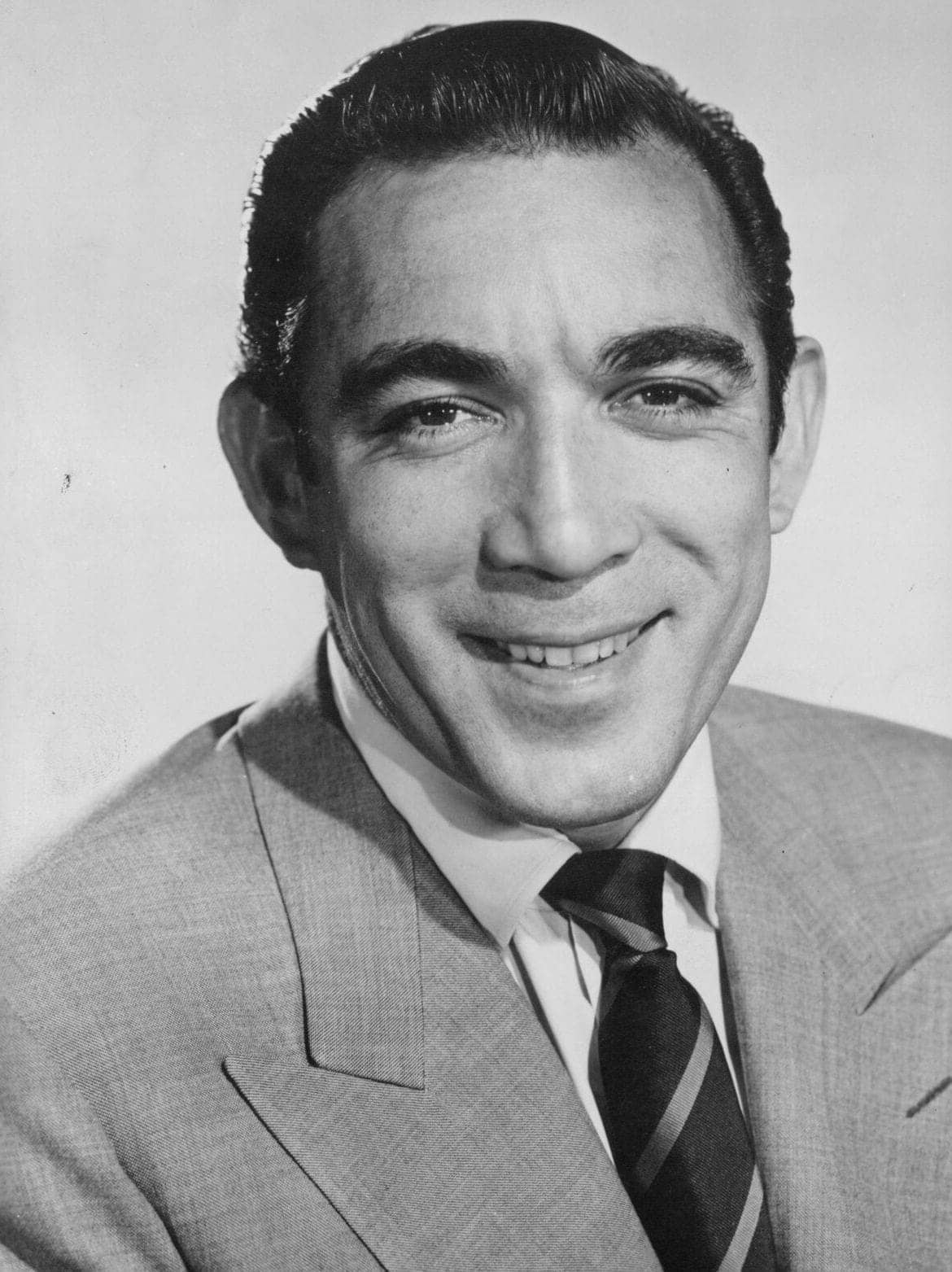
Anthony Quinn (1915-2001) was one of Hollywood's most distinctive actors, a Mexican-American performer who won two Academy Awards and appeared in over 200 films across five decades. He is best remembered internationally for his role in 'Zorba the Greek' (1964); he did not appear in 'Lawrence of Arabia' (1962), but it was an earlier production that brought him to Rhodes and created the connection that still draws visitors today.
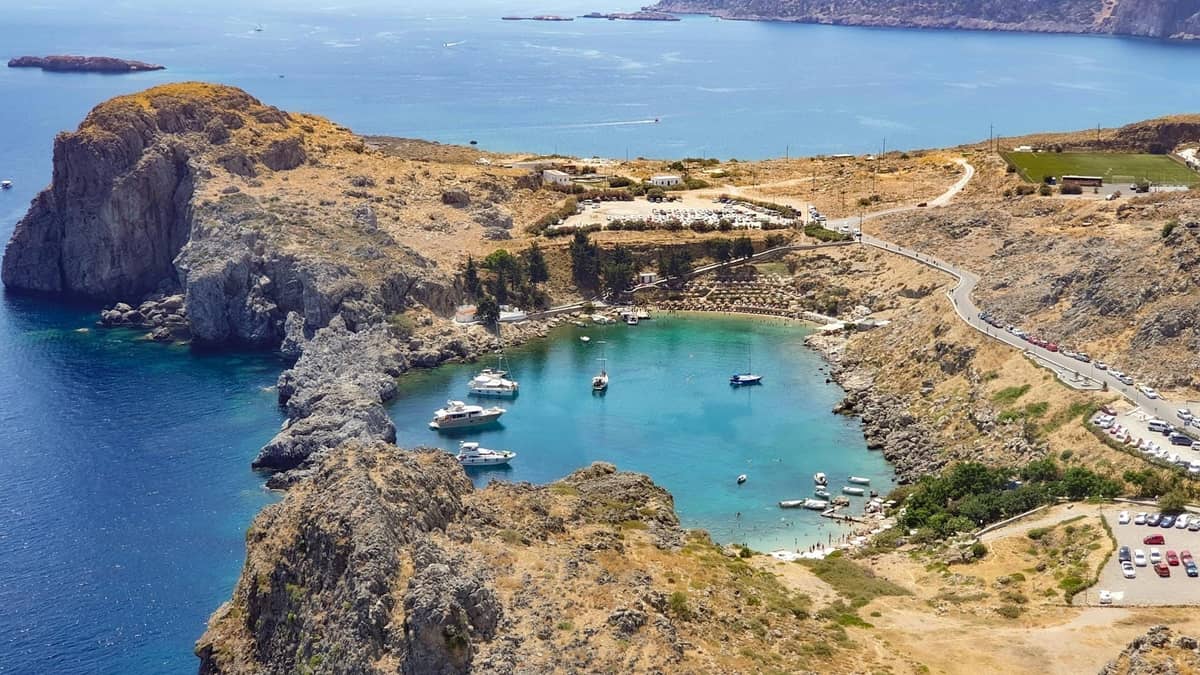
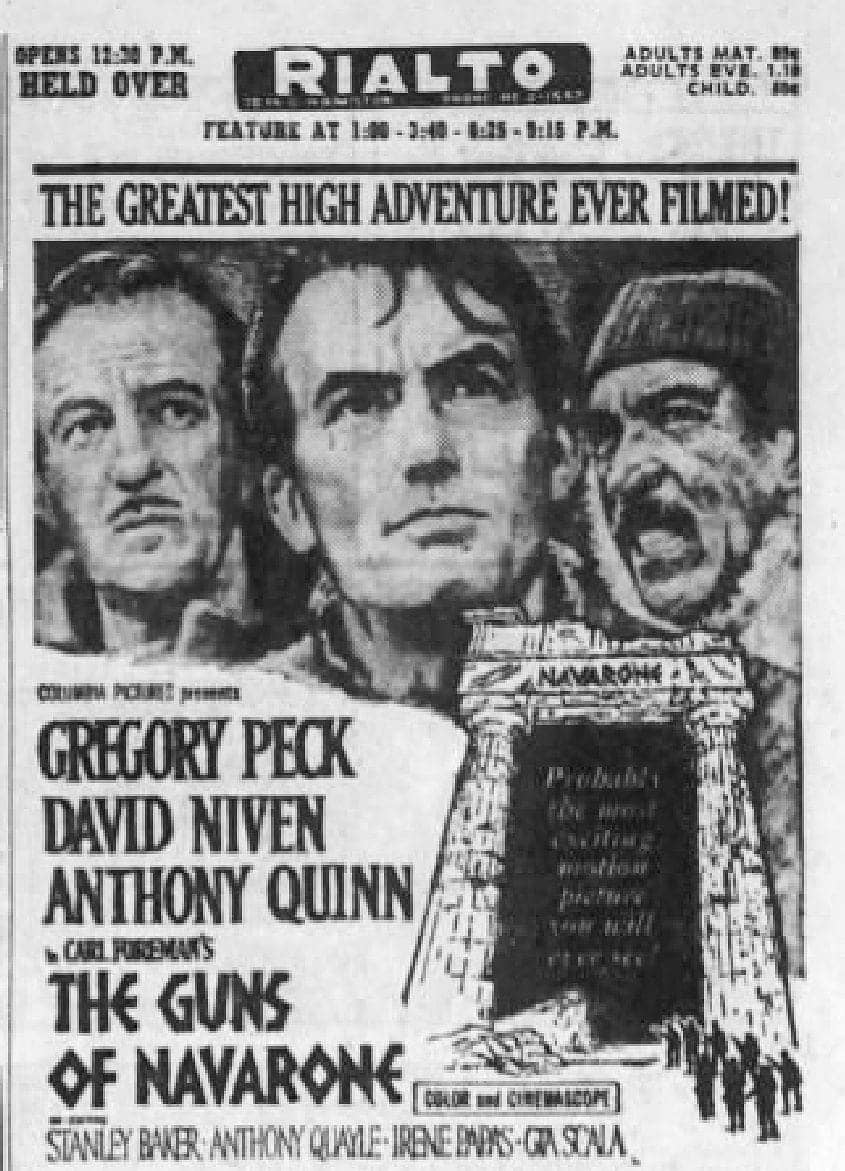
In 1961, Quinn filmed 'The Guns of Navarone' on Rhodes, a war epic directed by J. Lee Thompson and co-starring Gregory Peck and David Niven. The film used the island's dramatic coastline extensively, and the small cove then known as Vagies Bay served as a key location. Quinn spent considerable time on the island during production and reportedly fell deeply in love with the place, its light, its people, and its pace.
ℹ️ Good to know
Quinn also painted seriously throughout his life and had a strong affinity for the Mediterranean landscape. His time in Rhodes aligned with that artistic sensibility, which is part of why the island left such a lasting impression on him.
The Bay Purchase Story: What Actually Happened
The most persistent myth about Anthony Quinn Bay is that Quinn was gifted the land, or that he purchased it outright and donated it back to Greece. Neither version is accurate. According to documented accounts, Quinn attempted to buy the bay after filming concluded. His plan was to develop it as a retreat or club for artists and creatives, a kind of Mediterranean haven for people working in film, painting, and related fields. The Greek government declined to sell. The land remained in state hands and Quinn's bid came to nothing.
Despite never owning it, Quinn's connection to the cove became so embedded in local culture that the municipality eventually renamed it in his honour. The renaming formalised what locals were already calling it informally for years. Quinn returned to Rhodes on multiple occasions after 1961, deepening his ties to the island, and the name stuck permanently.
⚠️ What to skip
Do not repeat the claim that Quinn was 'given' the bay or that he owned it at any point. This circulates widely online and is incorrect. He attempted to purchase it and was refused.
What Anthony Quinn Bay Actually Looks Like
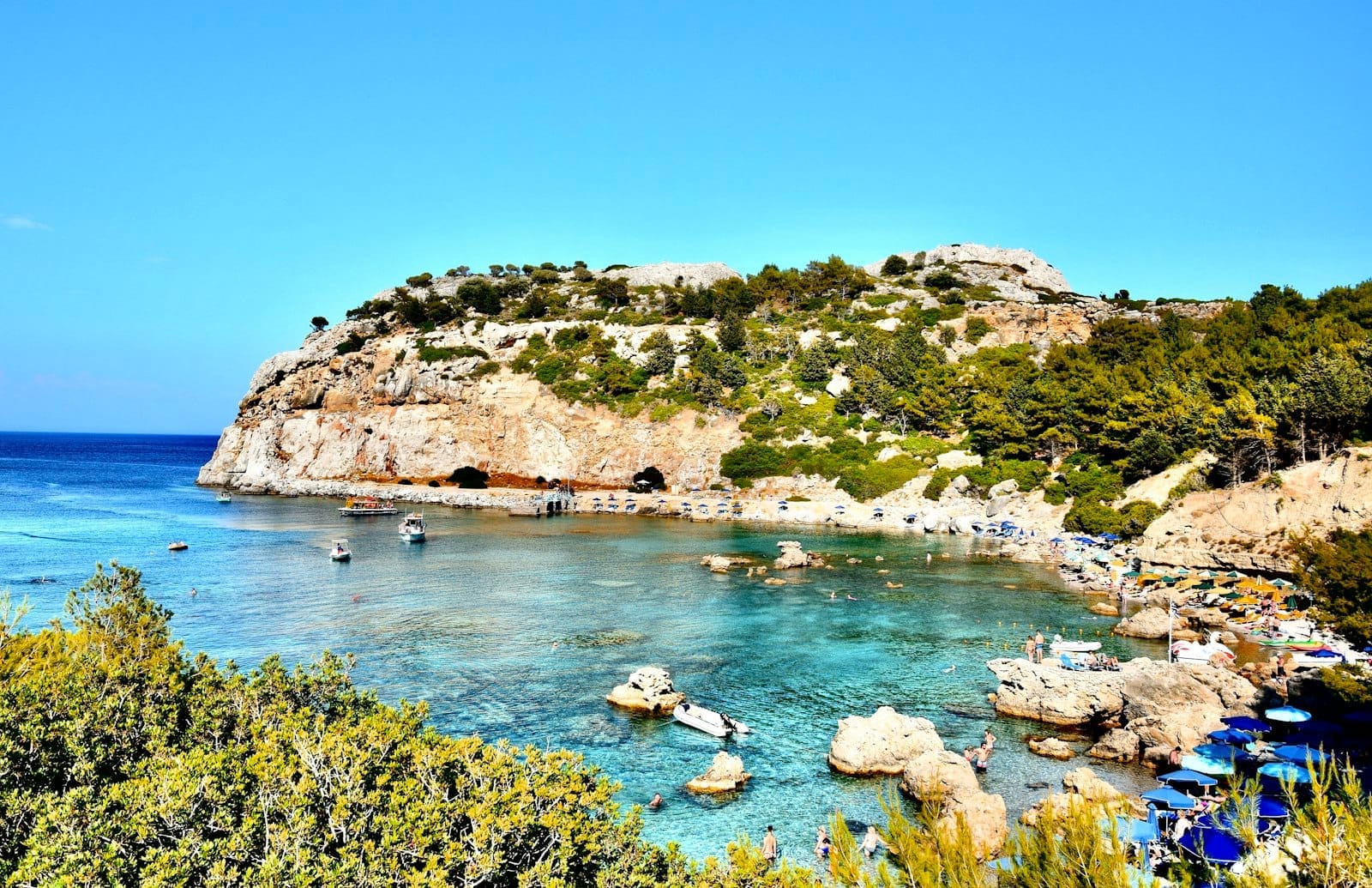
Set your expectations correctly before you arrive. Anthony Quinn Bay is a compact cove framed by rocky cliffs and low pine-covered hills. The water is exceptional, a layered mix of turquoise, green, and deep blue that photographs remarkably well, and genuinely looks that colour in real life. The clarity is outstanding, which is what makes it popular with snorkellers.
The beach itself is a mix of small pebbles and coarse sand, not the fine white sand you find at some other Rhodes beaches. There are rocks both at the water's edge and beneath the surface, so entry requires care. Footwear for the water is strongly recommended. This also means the bay is not well-suited to young children who need a gentle sand entry, or to anyone with limited mobility.
- Water quality Among the clearest on the east coast of Rhodes. Excellent for snorkelling around the rocky edges where fish are visible.
- Beach surface Pebble and coarse sand mix. Bring a mat or thick towel. Water shoes are genuinely useful here.
- Size Small. On a busy August day it can feel crowded with 50-60 people. There is not much room to spread out.
- Facilities A small number of sun lounger and umbrella rentals are available, but they go fast. There is a canteen near the top of the access path selling cold drinks and snacks.
- Shade Limited natural shade on the beach itself. The cliffs provide some shadow in late afternoon on the western side.
How to Get There and When to Go
The bay sits roughly 4-5 km south of Faliraki and 15 km south of Rhodes Town on the east coast. The most practical way to reach it is by rental car or scooter, which takes around 5-7 minutes from Faliraki's centre. If you are based in Rhodes Town, budget around 20-25 minutes driving south along the coastal road. For car hire logistics, the Rhodes car hire guide covers the main options and what to watch out for.
There is no dedicated public bus stop at the bay, but local buses running between Rhodes Town and Faliraki or Lindos pass the area. The nearest stop is a short walk away. If you are combining Anthony Quinn Bay with a visit to Lindos further south, it makes sense to stop here on the way back when the light is softer and the crowds have thinned slightly.
✨ Pro tip
The single best time to visit is between 8 a.m. and 10 a.m. in July and August. The water is still, the light is golden rather than harsh, and the cove is quiet enough to enjoy. By 11 a.m. it is noticeably more crowded. In September and October, timing matters less because overall visitor numbers drop sharply.
- July-August: arrive before 10 a.m. or after 5 p.m. to avoid peak crowds
- May-June and September-October: more relaxed; water is warm from June onwards
- Parking is limited near the access path. In high season, arrive early or expect to walk from a nearby layby
- The path down to the beach is short but uneven. Comfortable shoes help
- Ladiko Beach is a short walk along the coast and offers a slightly larger alternative with similar water quality
Anthony Quinn Bay in Context: Where It Fits on a Rhodes Trip
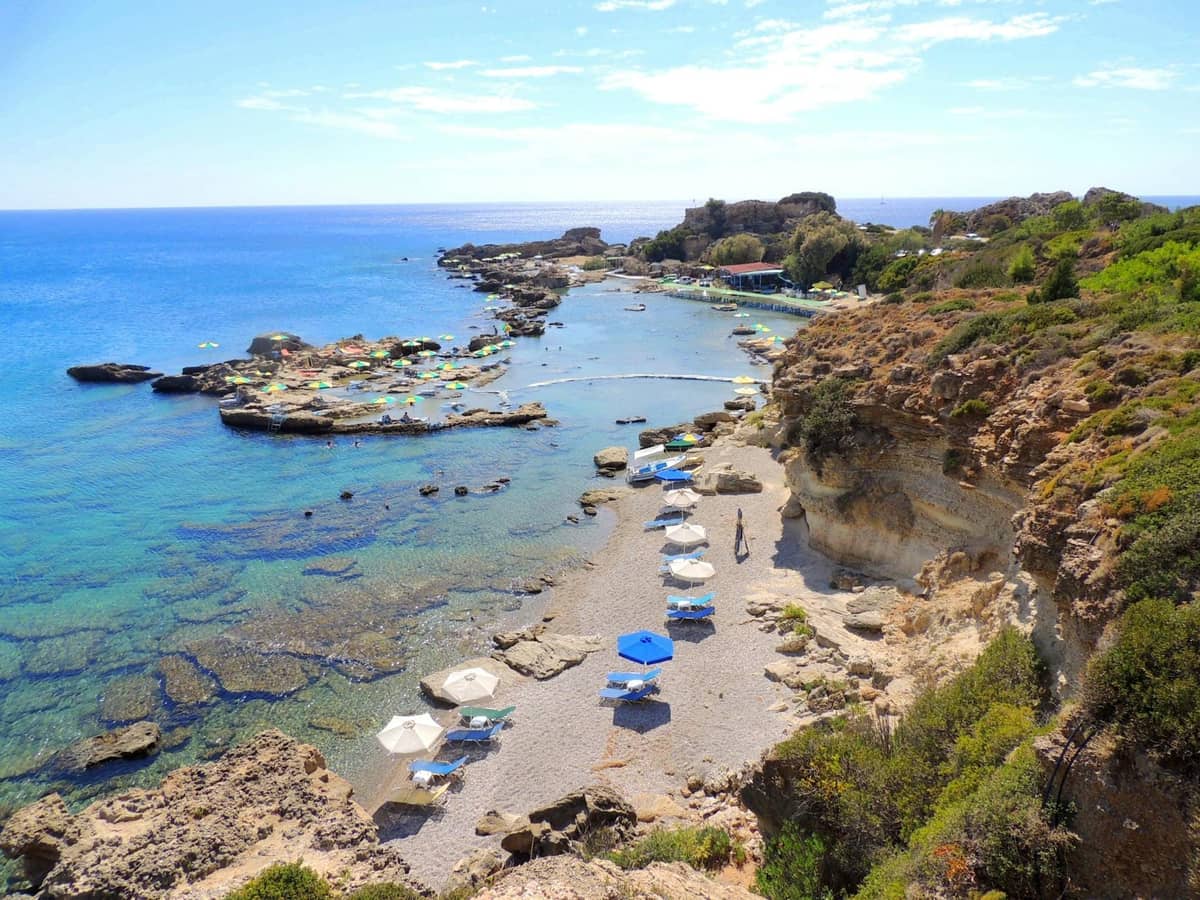
Anthony Quinn Bay works best as part of a larger day rather than a standalone destination, given its small size. The most natural combination is pairing it with Faliraki to the north or pushing further south toward Lindos and the Acropolis of Lindos. If you are building a multi-day itinerary, a 3-day Rhodes itinerary can show you how to integrate the east coast efficiently.
For photographers, this cove is one of the more rewarding spots on the island. The framing of cliff against water, combined with the colour gradient of the sea, makes it a strong subject. The Rhodes photography guide includes specific advice on shooting the bay, including which angles and times of day produce the best results.
If beaches are your priority on this trip, Anthony Quinn Bay is worth seeing for the water quality and the scenery, but it is not the place to spend a full day. For longer stretches of beach with more space, Tsambika Beach to the south and Elli Beach near Rhodes Town both offer more room and better facilities. The best beaches in Rhodes guide compares them across different criteria.
The Broader Appeal of Rhodes Beyond the Bay
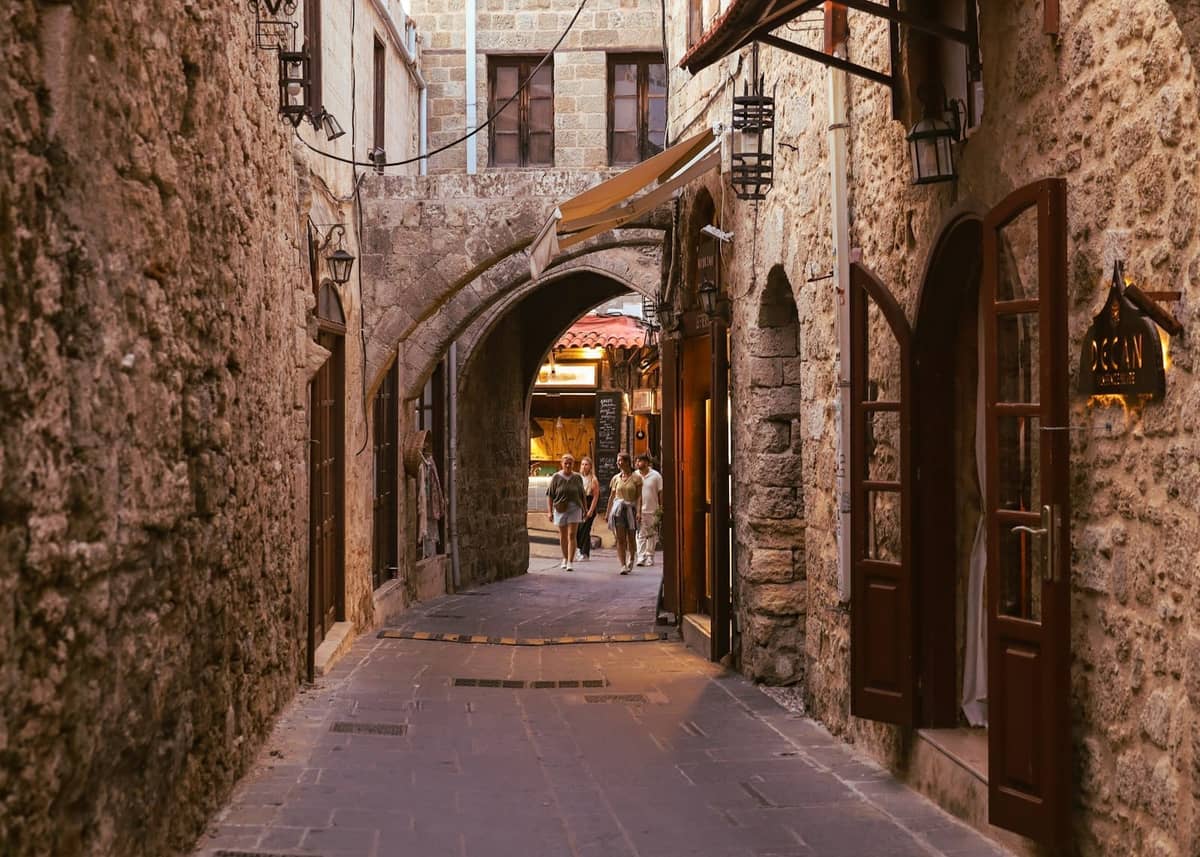
The fame of Anthony Quinn Bay reflects something true about Rhodes as a destination: it has a way of creating lasting attachments, not just for tourists but for people who spend real time here. Greece, and Rhodes specifically, has been drawing travellers and creatives for well over a century. The island's combination of ancient history, including the legendary site of the Colossus of Rhodes and the intact medieval walls of the Old Town, with genuinely beautiful coastline is unusual even by Greek island standards.
Quinn's story adds a Hollywood footnote to a place that has been accumulating stories for millennia. The island's history runs from ancient Greek city-states through Knights Hospitaller rule to Ottoman occupation and Italian colonial administration before joining modern Greece in 1947. For anyone who wants to understand that layered past, the Rhodes Medieval Old Town guide provides the historical depth that a single beach visit cannot.
FAQ
Did Anthony Quinn own Anthony Quinn Bay?
No. Quinn tried to purchase the bay after filming 'The Guns of Navarone' there in 1961, with the intention of building a club for artists. The Greek government declined to sell. He never owned the land. The bay was renamed in his honour despite the failed purchase, reflecting his strong connection to Rhodes.
What film was Anthony Quinn making in Rhodes?
'The Guns of Navarone' (1961), directed by J. Lee Thompson. The war film also starred Gregory Peck and David Niven. The Rhodes coastline, including the cove that now bears Quinn's name, was used as a filming location.
Is Anthony Quinn Bay good for snorkelling?
Yes, it is one of the better snorkelling spots on the east coast of Rhodes. The water is exceptionally clear, and the rocky edges of the cove have fish and marine life. Bring water shoes as the entry is rocky and the seabed is uneven.
Is Anthony Quinn Bay suitable for children?
Not the best choice for young children or non-swimmers. The beach is pebbly, and there are sharp rocks both at the waterline and just below the surface. Families with small children would be better served by sandier beaches with gentler entries, such as Tsambika Beach or Pefkos Beach further south.
How far is Anthony Quinn Bay from Rhodes Town?
About 15 km south of Rhodes Town, roughly 20-25 minutes by car along the east coast road. It is approximately 4-5 km south of Faliraki, which is the nearest larger resort area. There is no direct bus service to the bay itself.