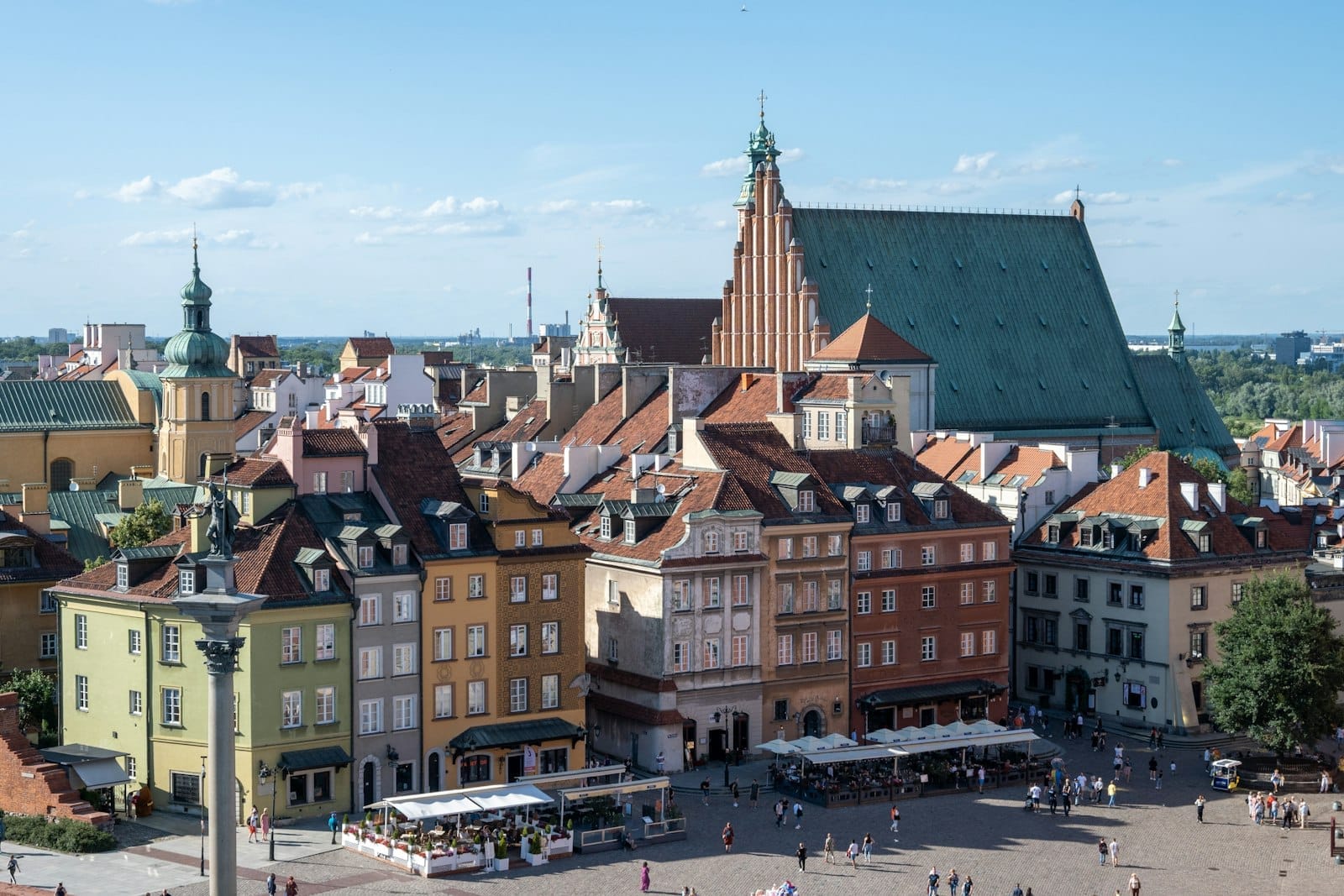
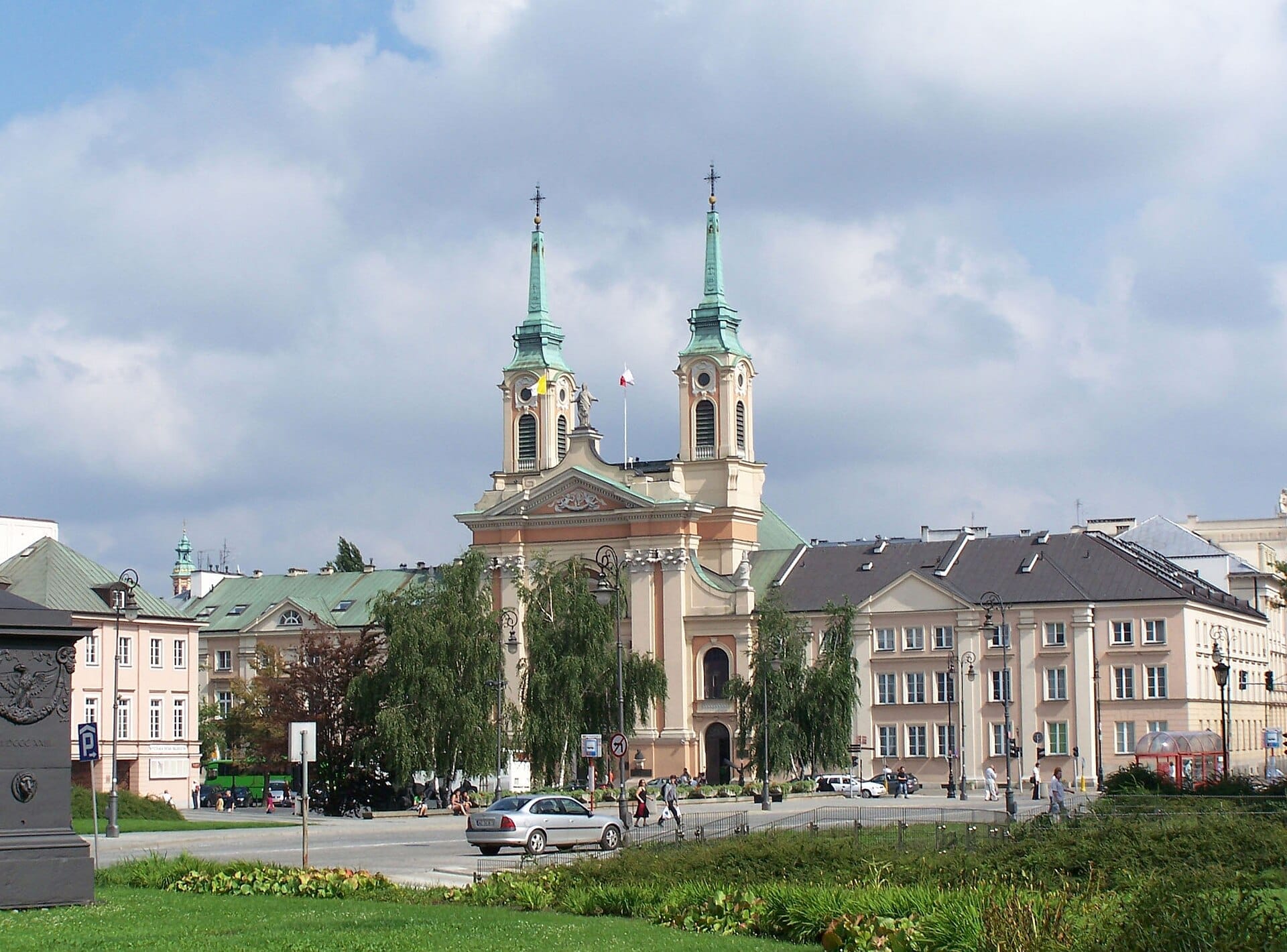
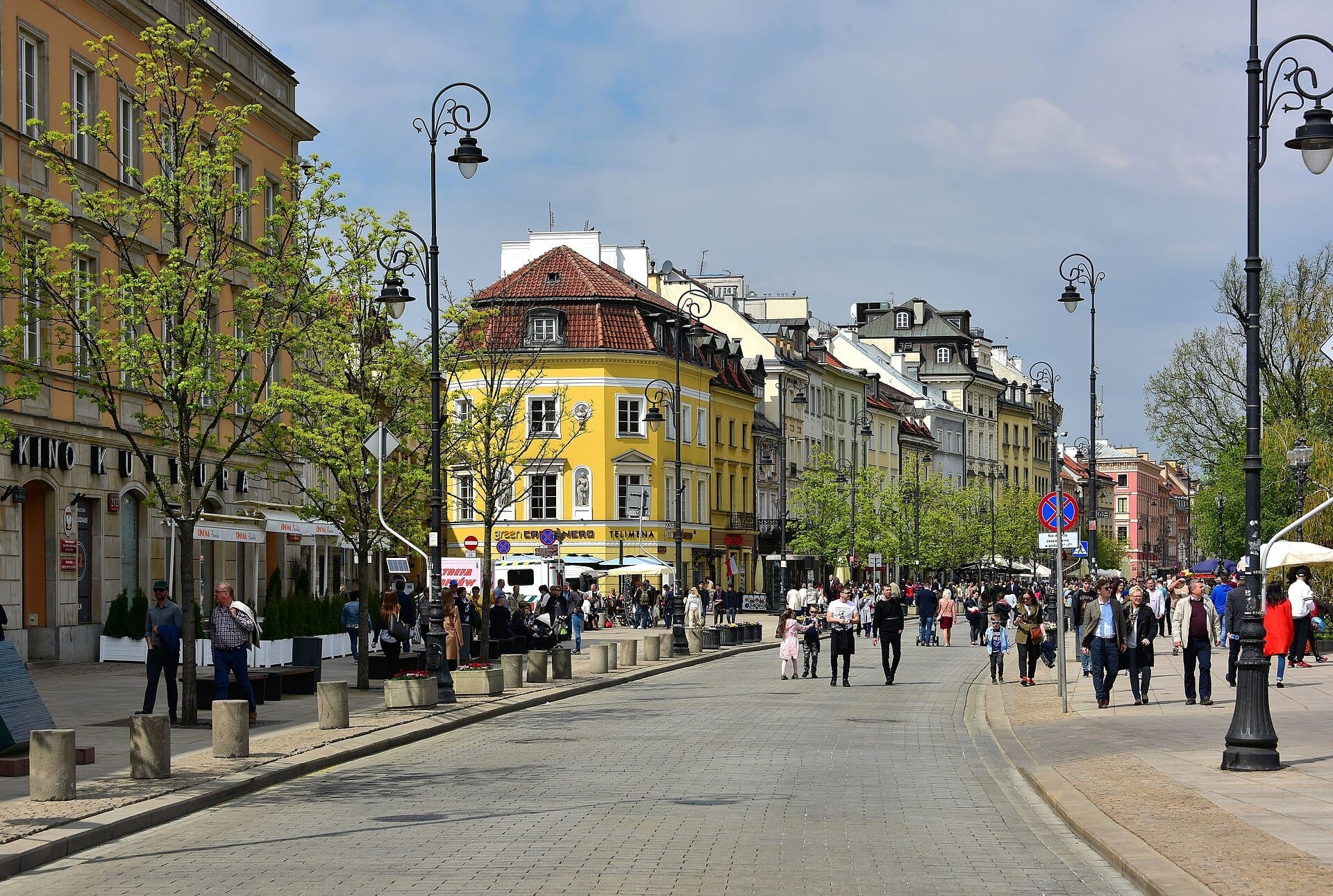
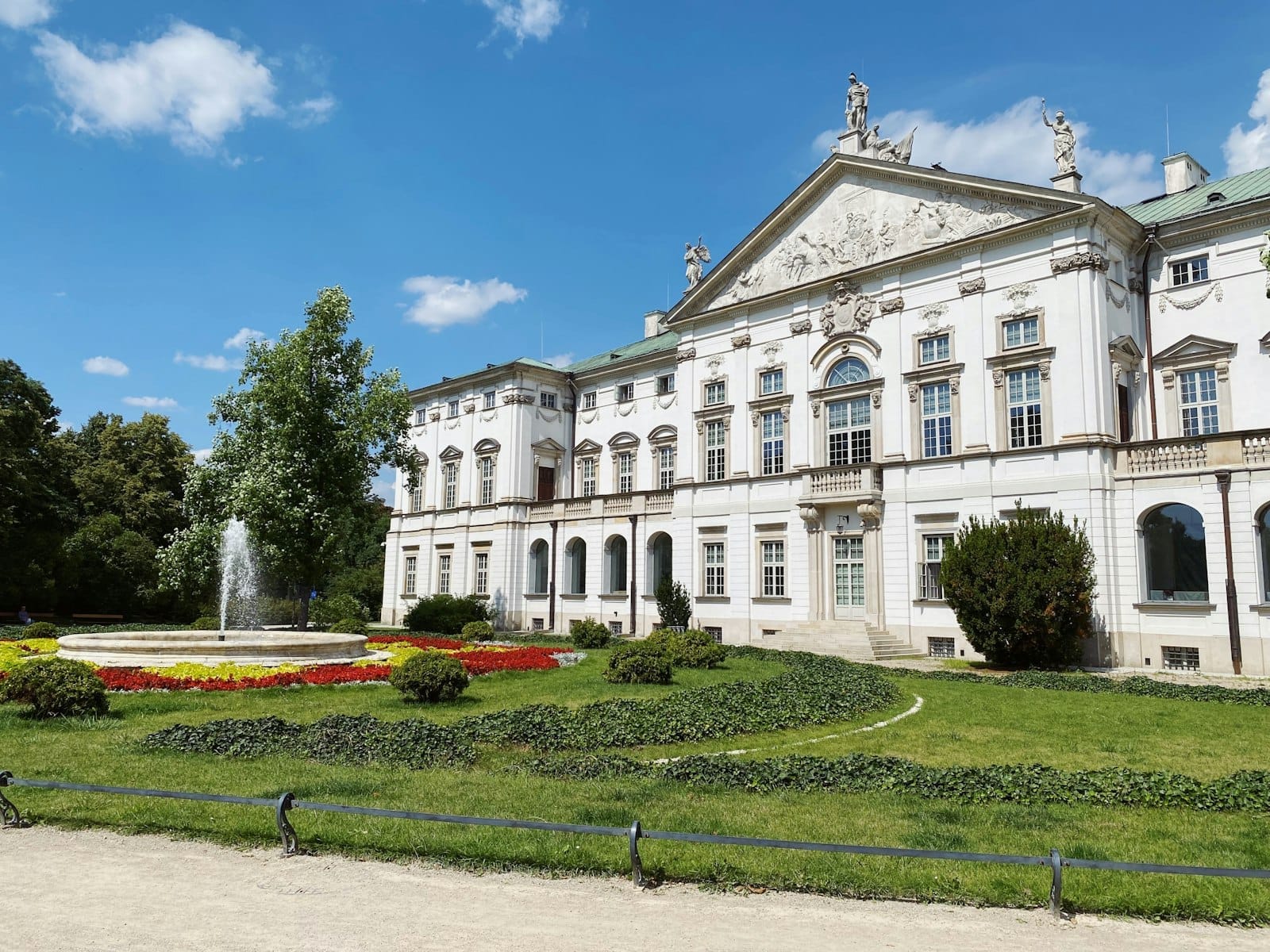
Warsaw's Old Town (Stare Miasto) is the city's historic core: a compact, UNESCO-listed district of reconstructed medieval streets, Gothic churches, and colourful market square townhouses rebuilt from near-total wartime destruction. It anchors the western bank of the Vistula and serves as the starting point for understanding Warsaw's past and present.
Warsaw's Old Town is one of Europe's most remarkable acts of collective will: a medieval urban core destroyed almost completely in 1944 and rebuilt stone by stone over the following decades, earning UNESCO World Heritage status in 1980 not for its age but for the extraordinary fidelity of its reconstruction. Today Stare Miasto is dense with churches, museums, and pavement cafes filling the same street plan that Polish townspeople have walked for seven centuries.
Orientation
Stare Miasto sits within Warsaw's central district, Śródmieście, perched on an escarpment above the Vistula River. The neighbourhood is small and walkable: from Castle Square at the southern entrance to the Barbican at its northern boundary takes roughly ten minutes on foot. The area is enclosed on three sides by the remnants of the medieval city walls, with Podwale Street tracing the outer ring, and opens to the east toward the river through a gap in the escarpment.
The Old Town's principal streets run north from Plac Zamkowy (Castle Square) through the market square toward the Barbican. Bounding streets include Mostowa and Grodzka to the north and east, while Aleja Solidarności and the lower riverside road define the southern and eastern perimeter. Just beyond the Barbican to the north lies the New Town (Nowe Miasto), which despite its name dates from the late 14th century and shares a similar reconstructed character. To the south, a short walk along the Royal Route leads into the livelier, less touristic streets of Śródmieście.
For a broader map of how Old Town connects to the rest of Warsaw, the Warsaw walking tour guide traces the Royal Route from Castle Square all the way south through Nowy Świat to Łazienki Park, giving the Old Town useful context as the starting point of the city's main ceremonial axis.
Character & Atmosphere
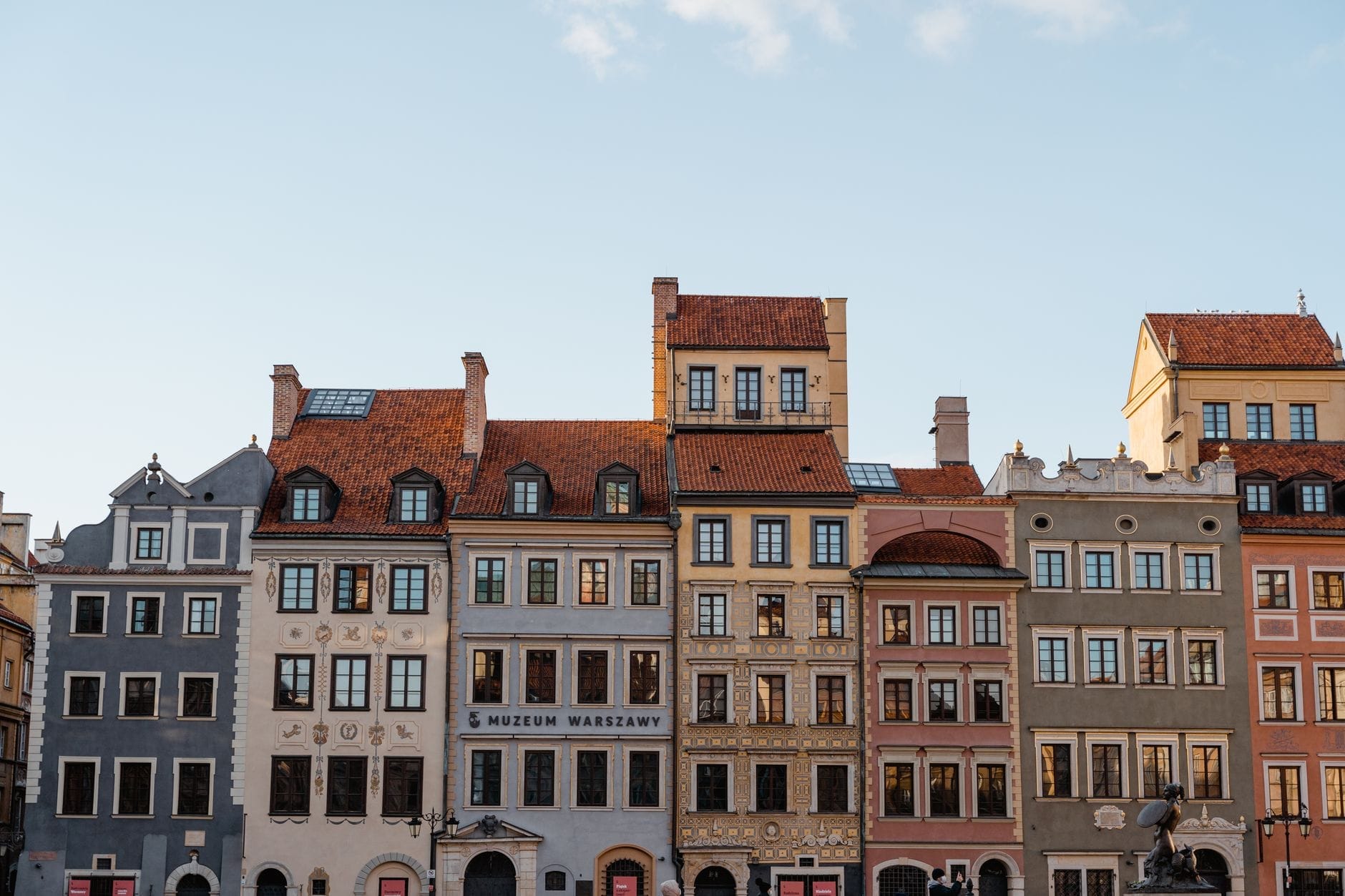
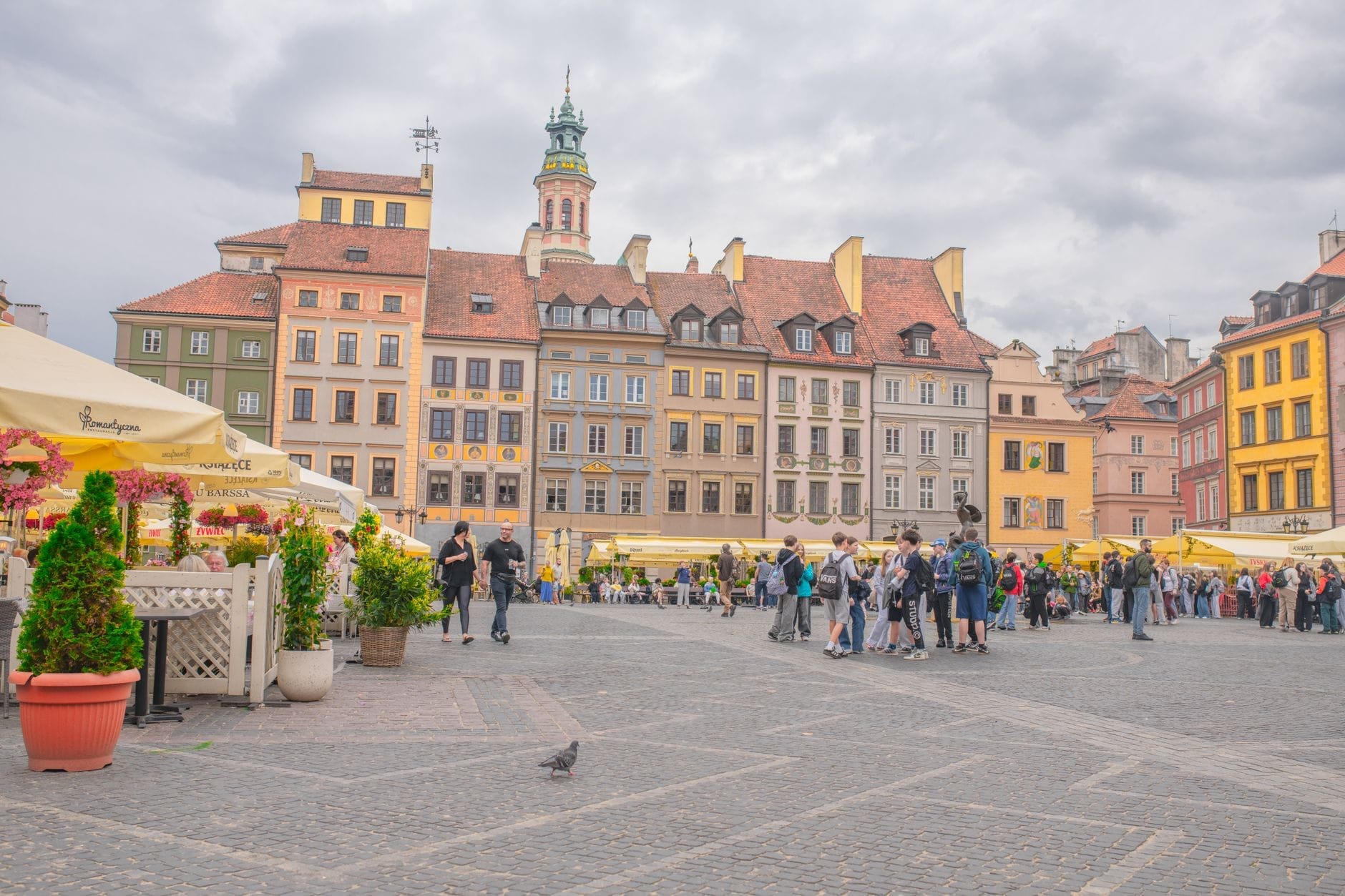
Early mornings in the Old Town belong almost entirely to locals and a handful of early-rising visitors. The cobblestones of Rynek Starego Miasta are wet from overnight cleaning, restaurant tables are still folded against the walls of the arcaded townhouses, and the light falls at a low angle across the painted facades in shades of ochre, terracotta, and pale blue. It is at this hour that the scale of the place registers most clearly: the market square is not especially large, and the streets feeding into it are narrow enough that a single horse-drawn cart would once have filled them.
By mid-morning the character shifts. Tour groups move through Castle Square in a steady stream from spring through autumn, and the market square fills with outdoor seating, portrait artists, and souvenir stalls. The tourist infrastructure is unapologetically present: menus in a dozen languages, amber and linen shops aimed squarely at visitors, and horse-drawn carriages waiting near Sigismund's Column. This is not a neighbourhood where people quietly go about their daily errands. It is a destination, and it functions openly as one.
Evenings bring a different kind of energy. The day-trip crowds thin after dinner, the lighting on the painted facades turns warm and golden, and the market square acquires a genuinely pleasant atmosphere: outdoor diners, the occasional street musician, and visitors who have stayed long enough to stop rushing. In winter, when snow settles on the cobblestones and Christmas market stalls line the square, the Old Town has a quality that no other part of Warsaw can match. But even in high summer, if you walk the narrower streets between the main square and the city walls after 8pm, you will find corners that feel unexpectedly quiet.
💡 Local tip
To avoid the thickest crowds, visit Castle Square and the market square before 10am or after 6pm. Many of the smaller streets between Podwale and the market square see far fewer visitors than the main axis and are worth exploring any time of day.
What to See & Do
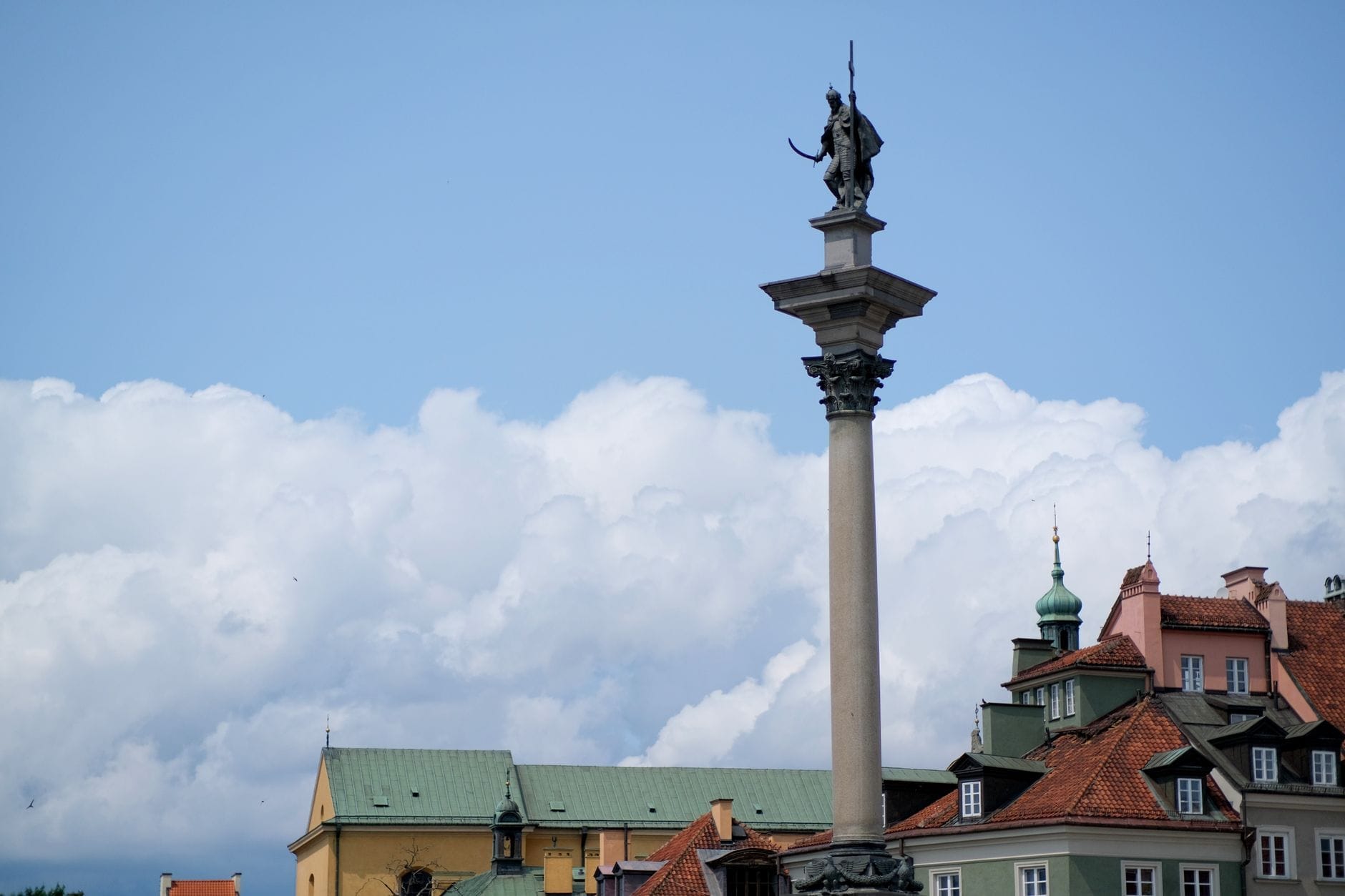
The south entrance to Old Town is Old Town Market Square (Rynek Starego Miasta), but the logical starting point for any visit is Castle Square (Plac Zamkowy), where the city's landmark column stands before the Royal Castle. Sigismund's Column was erected in 1644 to honour King Sigismund III Vasa, who moved the royal capital from Kraków to Warsaw in 1596. It was deliberately blown up by German forces in 1944 and rebuilt in 1948 using fragments of the original shaft, making it one of the earliest symbols of Warsaw's determination to reconstruct itself.
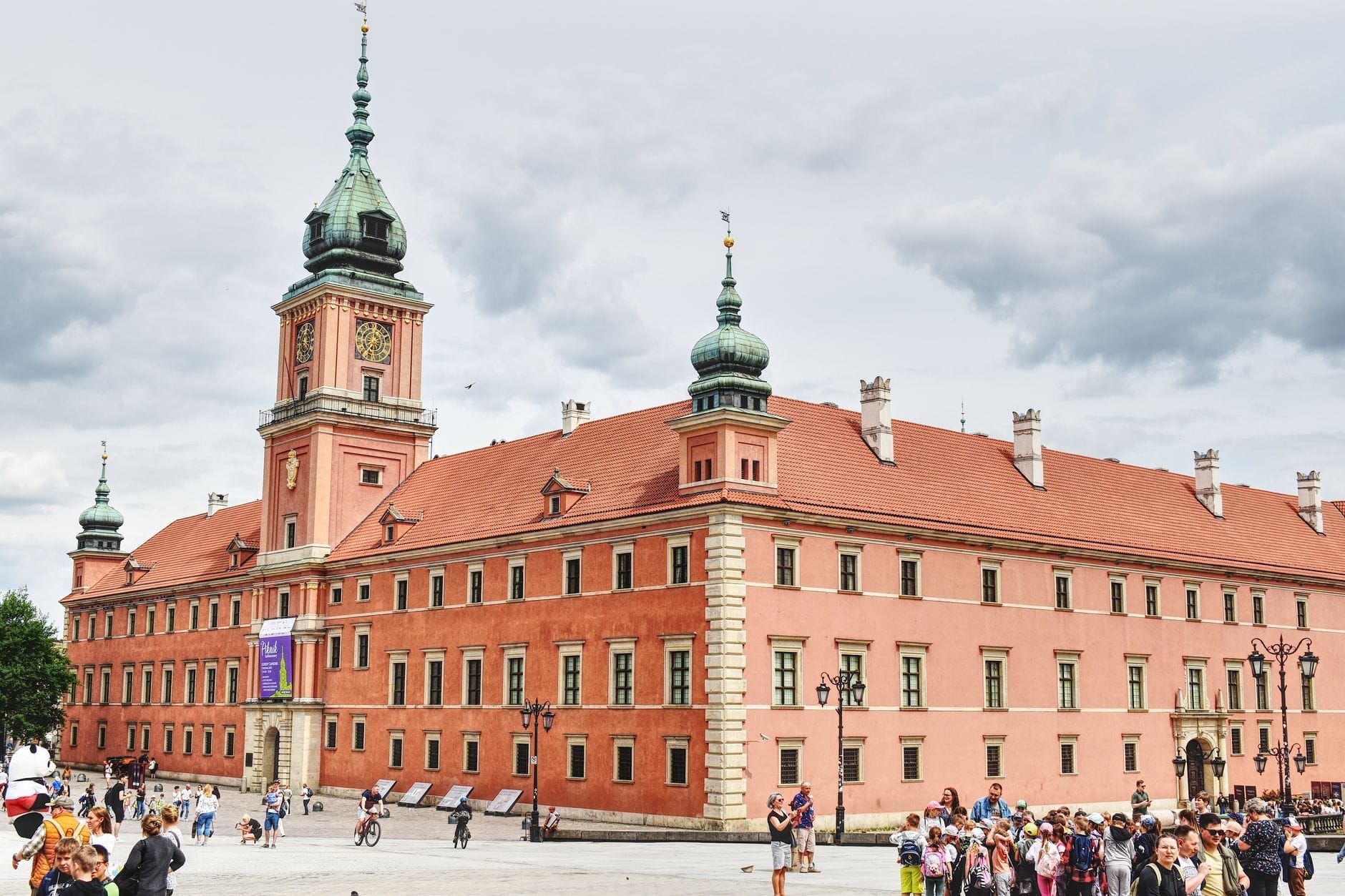
The Royal Castle faces the square on its eastern side. The building was systematically demolished by German troops after the 1944 Warsaw Uprising, and its reconstruction between the 1970s and 1984 was funded largely through private donations from Polish citizens, a fact that gives it a particular emotional weight. Inside, the state apartments, royal chambers, and art collection are substantial enough to fill two to three hours. The Canaletto Room, displaying 18th-century vedute paintings of Warsaw's pre-war streetscapes, has an added poignancy: those paintings became direct reference material for the postwar reconstruction.
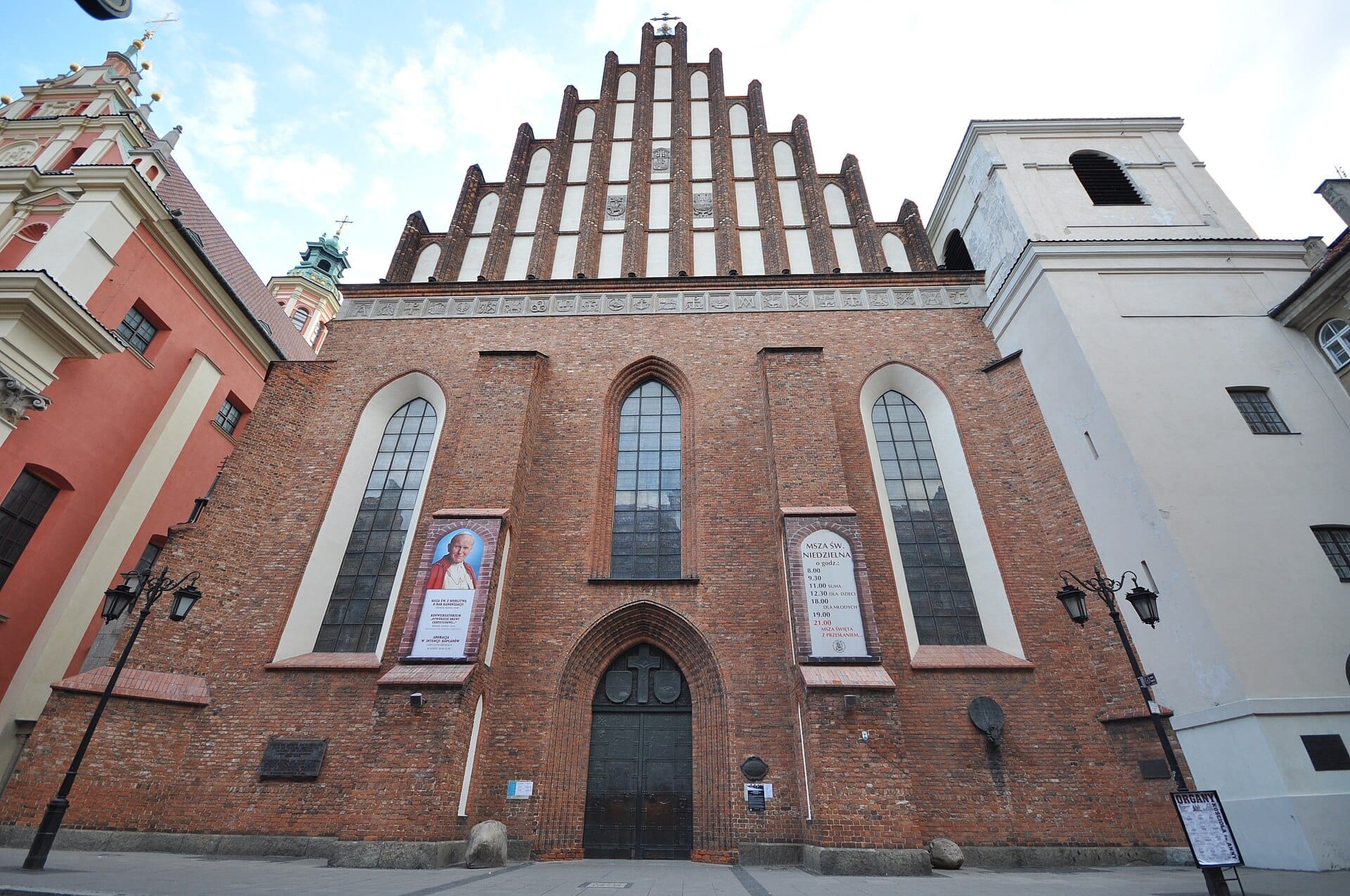
Walking north from Castle Square along Świętojańska Street brings you to St John's Archcathedral, Warsaw's oldest church, with origins in the 14th century. Like virtually every structure in the Old Town, the current building is a postwar reconstruction, but the interior contains genuine historic elements salvaged from the rubble, including the tombs of several Mazovian dukes. Continue north and the street opens onto the Old Town Market Square, where the Museum of Warsaw occupies a run of townhouses along the north side. The museum traces the city's history from its medieval origins through the wartime destruction and into the communist period, with an especially affecting room dedicated to the architectural salvage and reconstruction process.
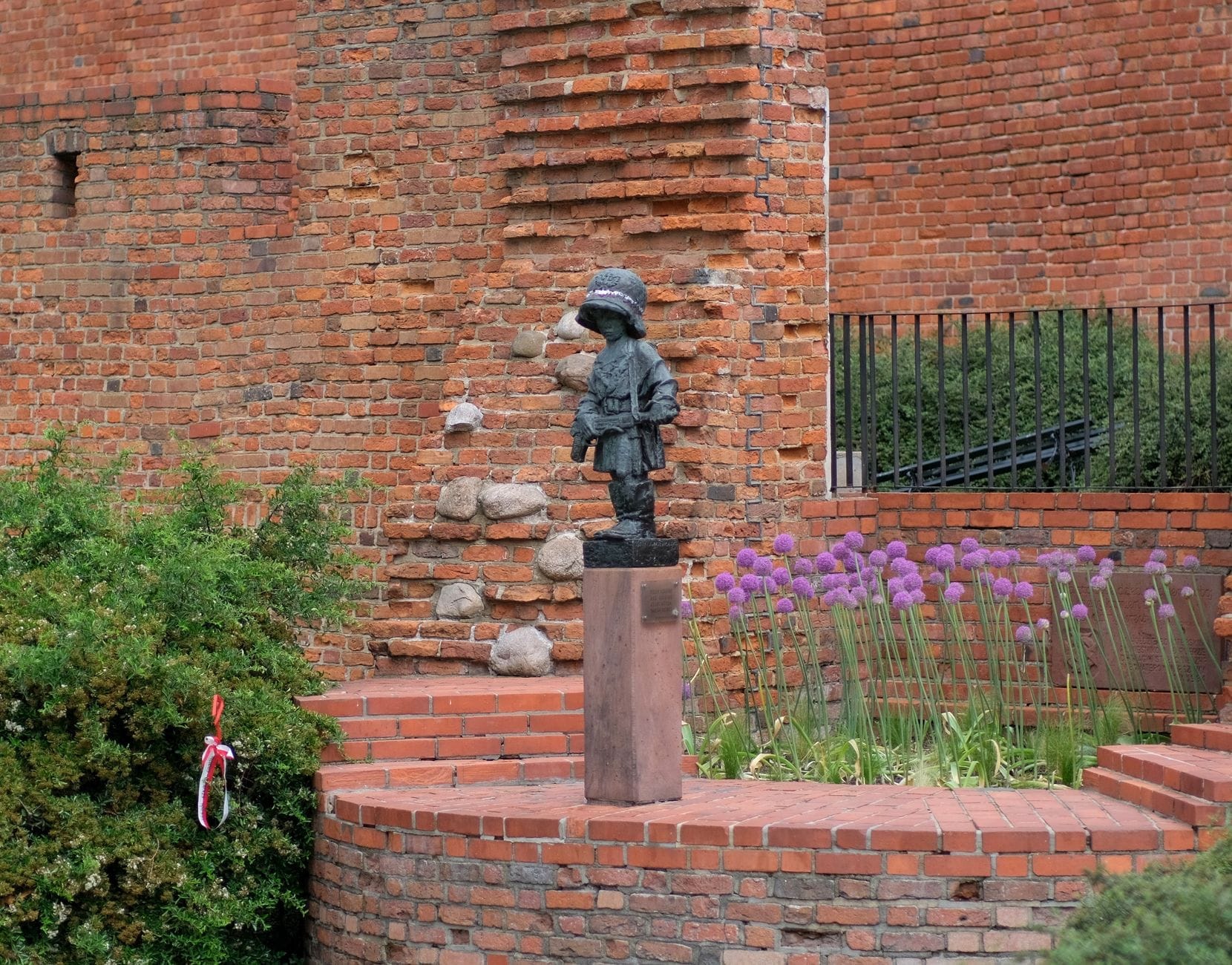
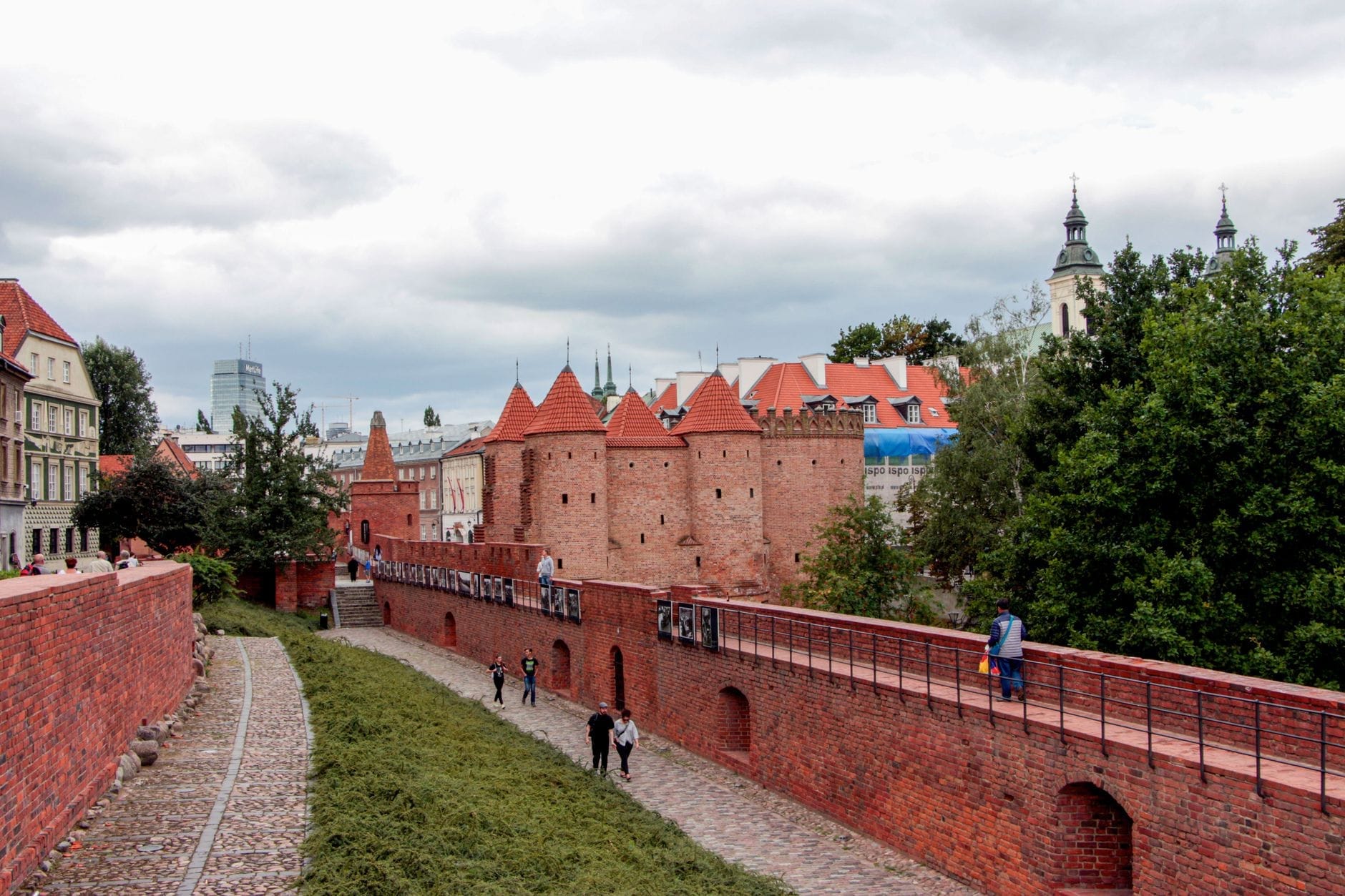
The northern limit of the Old Town is marked by the Warsaw Barbican, a 16th-century Gothic-Renaissance fortification that survived the war in partial form and was reconstructed in the 1950s. Beyond it, the city walls continue around the perimeter. Walking the outer circuit along Podwale gives a clear sense of the Old Town's compact footprint and passes several defensive towers still embedded in the wall fabric.
Royal Castle and its state apartments: allow 2-3 hours
Old Town Market Square: the Warsaw Mermaid (Syrenka) statue stands at its centre
St John's Archcathedral: Warsaw's oldest church, reconstructed after wartime destruction
Museum of Warsaw: strong on reconstruction history and pre-war city life
Warsaw Barbican and city wall circuit: the best-preserved stretch of the fortifications
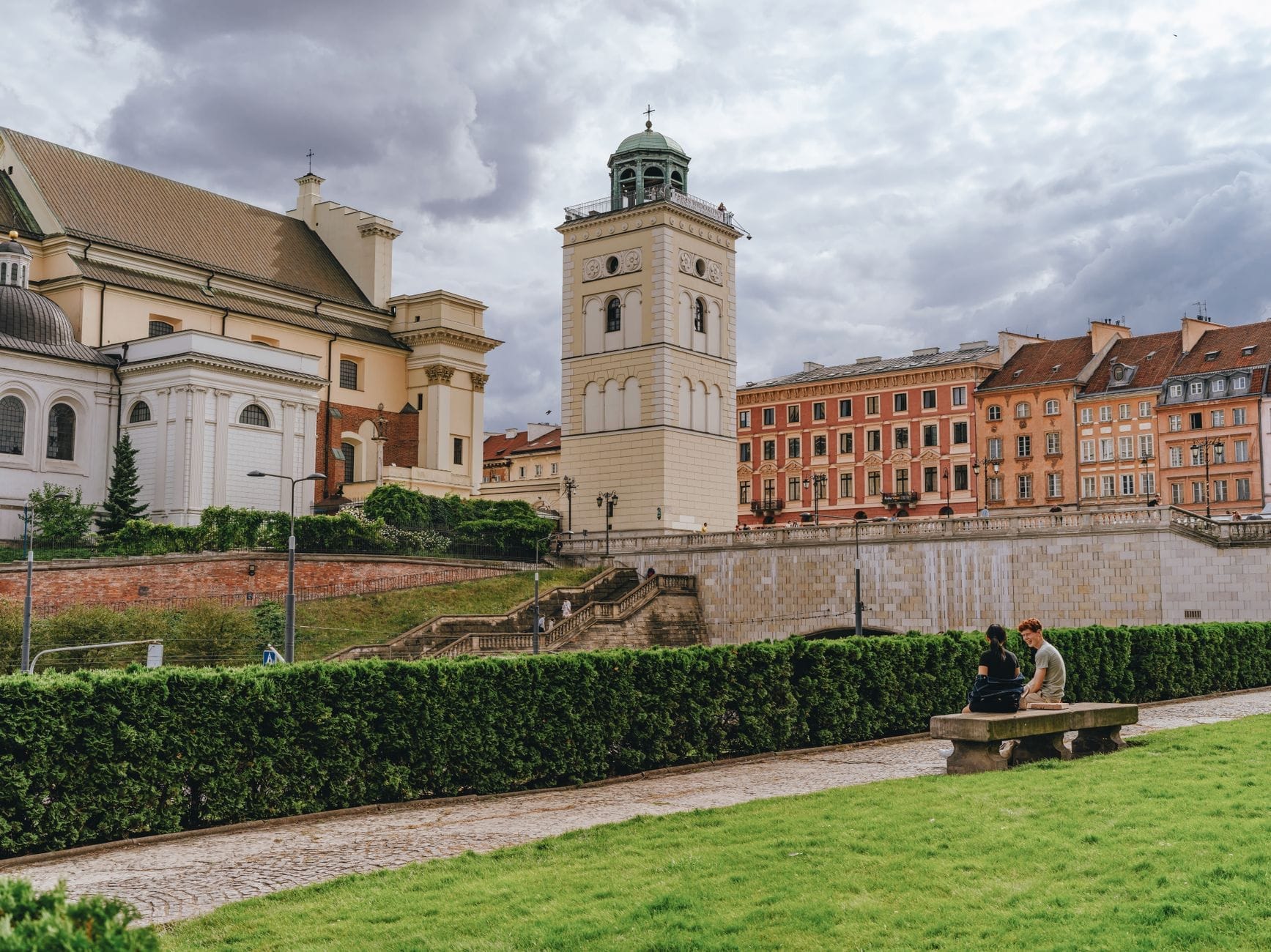
St Anne's Church, just outside the Old Town on Krakowskie Przedmieście: the tower offers one of Warsaw's best panoramic views
ℹ️ Good to know
The Royal Castle is closed on Mondays. Many smaller Old Town museums operate reduced hours outside the main tourist season (October to April). Check individual opening hours before planning a visit around a specific attraction.
Eating & Drinking
The Old Town's food scene is frank about its audience. The restaurants lining the market square and the main pedestrian streets offer Polish classics like żurek (sour rye soup), bigos (hunter's stew), and pierogi at prices that run noticeably higher than equivalent quality elsewhere in Warsaw. The trade-off is obvious: you are paying for the setting, and on a warm evening with the square lit up and half of Warsaw apparently strolling past, that trade-off is not unreasonable.
Quality is uneven. The most prominent terrace restaurants catering to tour groups tend toward generous portions and safe, familiar presentations of Polish food. Better results, for roughly similar prices, come from the smaller restaurants tucked into the side streets between the market square and the city walls, where the menus are shorter and the cooking tends to be more considered. For traditional Polish food at honest prices, you are better served by walking ten minutes south into Śródmieście, but if you want to eat in the Old Town itself, choosing a restaurant away from the market square's prime tourist positions makes a practical difference.
Coffee and cake culture is well represented. Several cafes occupy the ground floors of the reconstructed townhouses around the market square and along Świętojańska and Nowomiejska streets, serving decent espresso alongside Polish pastries and szarlotka (apple cake). In the early afternoon these spots fill with visitors taking a break from sightseeing. Craft beer and cocktail bars exist in the neighbourhood, though the Old Town is not Warsaw's nightlife centre: for that, the area around Plac Zbawiciela and the streets of Śródmieście are more relevant.
⚠️ What to skip
Restaurants immediately facing the Old Town Market Square sometimes use aggressive menu-at-the-door tactics and can seat you before clearly stating prices. Check the menu carefully before sitting down, and confirm whether service charges are included, as practices vary.
Getting There & Around
The Old Town has no metro station within its boundaries. The nearest metro stop is Ratusz Arsenał on Line M1, roughly a 10 to 15 minute walk west through the Saxon Garden area. From Ratusz Arsenał, walking east along Aleja Solidarności and then north brings you to Castle Square. It is a straightforward route, largely flat.
Bus connections are more direct. The Plac Zamkowy stop serves several bus lines that connect the Old Town to central Warsaw and beyond. The Stare Miasto stop near the eastern edge of the neighbourhood and the Plac Krasińskich stop on the northern (Barbican) side cover the remaining access points. For a broader picture of getting around Warsaw by public transport, the getting around Warsaw guide covers the full network including trams, buses, metro, and suburban rail.
Within the Old Town, everything is on foot. The cobblestone streets are not ideal for wheeled luggage or pushchairs, particularly on the steeper lanes descending toward the river. Ride-hailing services (Bolt and Uber both operate in Warsaw) can drop you at the edges of the pedestrian zone at Castle Square or near the Barbican, but cannot enter the core streets. Taxis and ride-shares wait in small designated areas near Castle Square.
Old Town connects naturally to several adjacent areas on foot. Walking south from Castle Square along Krakowskie Przedmieście takes you through Warsaw's most elegant ceremonial street toward the university and downtown. A five-minute walk east from the Barbican leads to the edge of Muranów, where the Jewish Quarter and the POLIN Museum of the History of Polish Jews are located.
Where to Stay
Accommodation within the Old Town itself is limited and skews toward boutique hotels and upmarket apartments in the reconstructed townhouses. Staying here puts you steps from the Royal Castle and market square, which has genuine appeal for first-time visitors who want to walk out of their door and immediately be inside the historic city. The trade-off is price and noise: the area around the market square can be loud until late on weekends, and accommodation costs in the Old Town tend to be among the higher brackets in Warsaw.
Most visitors find better value by staying in the southern part of Śródmieście, around Nowy Świat or near the Palace of Culture, and treating the Old Town as a half-day destination. The walk from the lower part of Krakowskie Przedmieście to Castle Square takes under 15 minutes, so proximity is not a critical factor. For a full overview of where different traveller types are best placed, the where to stay in Warsaw guide compares all the main neighbourhoods including Old Town, Śródmieście, and the Vistula riverfront area.
The best accommodation location within the Old Town is on the quieter streets off the market square, particularly the lanes running west toward Podwale, which are pedestrian-only and see less foot traffic in the late evening. Rooms facing the market square directly will be noisier on weekend nights from roughly May through September.
History: Why the Old Town Looks Like It Does
Understanding what you are looking at in Warsaw's Old Town requires a short account of what happened here in 1944. After the Warsaw Uprising was suppressed in October of that year, German forces systematically demolished the city block by block. The Old Town, which had already been heavily fought over and bombed, was largely razed. By the war's end, roughly 85 to 90 percent of the buildings had been destroyed.
The reconstruction decision was both practical and symbolic. Polish authorities and architects chose to rebuild the Old Town not as a modernised version of itself but as a faithful recreation of its 17th and 18th century appearance, using surviving fragments, historical records, architectural drawings, and the Canaletto vedute paintings of Warsaw as reference material. The project took several decades and required extraordinary levels of craftsmanship and historical research. When UNESCO added the Old Town to its World Heritage List in 1980, it was specifically recognising this reconstruction as a significant human achievement in itself, distinct from the usual criterion of original historical fabric.
This history is not incidental to a visit: it is the visit. Walking through streets that look 300 years old but were built 50 years ago requires a different frame of appreciation than touring a genuinely ancient city. The Warsaw WW2 history guide provides essential context for understanding the destruction and rebuilding of the city as a whole, and the Warsaw Uprising Museum in Wola district tells the story of 1944 in detail that the Old Town itself cannot fully convey.
TL;DR
Warsaw's Old Town is a UNESCO World Heritage Site recognised for the fidelity of its postwar reconstruction, not its original medieval fabric — understanding this distinction is key to appreciating what you are seeing.
Best for: first-time visitors to Warsaw, travellers interested in WWII history and reconstruction, anyone spending at least two days in the city who wants to understand its historic core.
Main drawbacks: significant tourist crowds from spring to autumn, higher restaurant prices than the rest of Warsaw, and a character that is openly oriented toward visitors rather than local daily life.
Pair with: a walk south along Krakowskie Przedmieście toward the Royal Route, or northwest into Muranów to visit the POLIN Museum — both within easy walking distance.
Practical note: the nearest metro is Ratusz Arsenał (Line M1), about 10-15 minutes on foot; cobblestone streets make the area challenging with wheeled luggage.
Warsaw rewards a focused two-day visit more than most European capitals. This itinerary moves logically through the city's historic core, its most important museums, and its green escapes, so you leave with a real sense of the place rather than a blur of landmarks.
Warsaw's churches survived destruction, occupation, and reconstruction to remain among the most compelling religious buildings in Central Europe. This guide covers the best churches in Warsaw, from the Baroque grandeur of Holy Cross to the Gothic revival of St. John's Archcathedral and the military heritage of the Field Cathedral.
Warsaw is one of Central Europe's strongest museum cities. From world-class history museums built on the sites of WWII atrocities to interactive science centers and glowing neon archives, these are the best museums in Warsaw worth your time and zloty.
Warsaw rewards visitors year-round, but the experience shifts dramatically depending on when you arrive. This guide breaks down every season, from sun-drenched summer riverfront life to snow-dusted Christmas markets, helping you choose the right moment for your priorities and budget.
Warsaw is the beating heart of Chopin's world. This guide covers the key sites, live concert options, musical benches, and practical tips for tracing Fryderyk Chopin's legacy across the Polish capital, from the world's largest Chopin collection to free Sunday recitals in a royal park.
Warsaw preserves one of Central Europe's most complete collections of Stalinist and socialist realist architecture. This guide covers the key landmarks, the history behind them, practical visiting tips, and the common myths that distort what communist-era Warsaw actually looks like.
Warsaw has one of Central Europe's most integrated public transport networks, covering the entire city with metro, trams, buses, and suburban trains on a single ticket system. This guide breaks down every option, from Warsaw Chopin Airport transfers to night buses, with current fares and practical advice.
Warsaw divides opinion more than almost any European capital. This guide cuts through the noise with an honest look at what the city does well, where it falls short, how much it costs, and what kind of traveler will love it most.
Warsaw rewards visitors who look beyond its postwar facade. This guide covers the best things to do in Warsaw, Poland, from UNESCO-listed Old Town and world-class history museums to riverfront beaches and the city's creative Praga district, with clear advice on what's worth your time and money.
Three days is the sweet spot for Warsaw: enough time to walk the Royal Route, absorb the city's layered wartime history, cross the river into Praga, and still catch a sunset from the Vistula Boulevards. This itinerary structures the city's best attractions into three logical days so you don't waste a single hour backtracking.
Warsaw transforms each November into one of Central Europe's most atmospheric Christmas destinations, with free outdoor markets, a stunning Old Town backdrop, mulled wine, and festive activities spread across multiple city locations. This guide covers the best market spots, seasonal attractions, and everything you need to plan a perfect winter visit.
Warsaw rewards those who look past the postcard attractions. From a glowing neon archive in Praga to a rooftop garden above the Vistula, these lesser-known spots reveal the city's real character. This guide covers the neighborhoods, history sites, and local haunts that most visitors walk straight past.
Summer transforms Warsaw into an outdoor city, with free concerts in royal parks, sandy riverfront beaches, and long evenings spent at café terraces. This guide covers the best attractions and experiences across June, July, and August, from cultural landmarks to the places where locals actually spend their warmest months.
Winter in Warsaw generally runs from December through February, with temperatures hovering around freezing and short days that rarely exceed eight hours of daylight. But the city rewards cold-weather visitors with fewer crowds, atmospheric snowy streets, a thriving indoor cultural scene, and festive seasonal traditions that locals genuinely love.
Warsaw was once one of the great centers of Jewish life in Europe. This guide covers the history of the Jewish ghetto, the key memorials and museums, the only surviving prewar synagogue, and how to build a meaningful route through the Muranów district and beyond.
Warsaw's nightlife compares well with other European capitals. From Soviet-era neon-lit bars in Praga to rooftop cocktail lounges above the city skyline, the Polish capital offers a diverse after-dark scene that rewards those willing to explore beyond the Old Town.
Warsaw costs 30-50% less than most Western European capitals, yet delivers world-class museums, remarkable history, and excellent food. This guide breaks down exactly what to spend, where to save, and how to avoid the tourist-price traps that inflate budgets unnecessarily.
Warsaw is one of the greenest capital cities in Europe, with parks ranging from 18th-century royal landscapes to sandy Vistula riverbanks. This guide covers the best parks and green spaces in Warsaw, whether you want Chopin concerts on a Sunday afternoon, a long cycle through meadows, or a rooftop garden with river views.
Warsaw's shopping scene is far more interesting than a row of international malls. The city mixes beautifully restored market halls, independent boutique streets, flea markets, and food halls into a retail landscape that rewards explorers. This guide covers the best places to shop, browse, and eat your way through Warsaw.
The Warsaw to Kraków corridor is one of Poland's most traveled routes. This guide covers every realistic option, from PKP Intercity high-speed trains to FlixBus overnight departures, with clear price comparisons, booking strategy, and timing advice.
Warsaw rewards walkers more than almost any European capital. This guide covers the best self-guided walking routes, the apps that make them better, seasonal timing, and the context you need to actually understand what you're looking at.
Warsaw surprises families with a wide range of activities beyond its famous museums. From interactive science centers and a storied zoo to royal parks and riverside beaches, here is a practical guide to the best family experiences the Polish capital offers.
Warsaw suffered one of the most devastating urban destructions of the Second World War. This guide covers every major WW2 site and museum in the city, explains the crucial difference between the two Warsaw uprisings, and gives you practical logistics for visiting each location.
Warsaw's food scene runs deeper than Old Town tourist menus. This guide covers the essential Polish dishes to try, where to find them, how much to pay, and which spots locals rate over the obvious tourist traps — from budget milk bars to modern bistros.
Warsaw's food scene runs deeper than pierogi and bigos. With about 10 Bib Gourmand restaurants in Warsaw in the 2026 MICHELIN Guide Poland and a growing wave of creative chefs redefining Polish cuisine, the city rewards anyone willing to eat beyond the Old Town tourist strip. This guide covers where to eat in Warsaw at every budget, neighborhood, and time of day.
Choosing where to stay in Warsaw shapes your entire trip. This guide breaks down every major neighborhood by atmosphere, transport links, price level, and who it suits best — so you can book with confidence.