Self-Guided Walking Tour of Warsaw: The Complete Route Guide
Warsaw rewards walkers more than almost any European capital. This guide covers the best self-guided walking routes, the apps that make them better, seasonal timing, and the context you need to actually understand what you're looking at.
Plan and book this trip
Tools from our partner Travelpayouts help you compare flights and hotels. If you book through them, we may earn a commission at no extra cost to you.
Flights
Hotels map
TL;DR
- The core Old Town loop takes 2 to 3 hours and is free to walk; interior entries (Royal Castle, Warsaw Uprising Museum) require separate tickets.
- Warsaw's Old Town is a UNESCO World Heritage Site, but almost nothing you see is original: the buildings were reconstructed after roughly 85–90% of the city was destroyed in WWII. Learn more in our Warsaw WWII history guide.
- Apps like Questo, GPSmyCity, SmartGuide, and the free Miejska Ścieżka extend your walk with GPS audio and interactive puzzles.
- Morning starts (before 10:00) keep you ahead of tour groups at Castle Square and the Old Town Market Square.
- Beyond the Old Town, themed routes covering Jewish heritage and communist-era landmarks reward extra walking time.
Why Walk Warsaw Rather Than Take a Tour
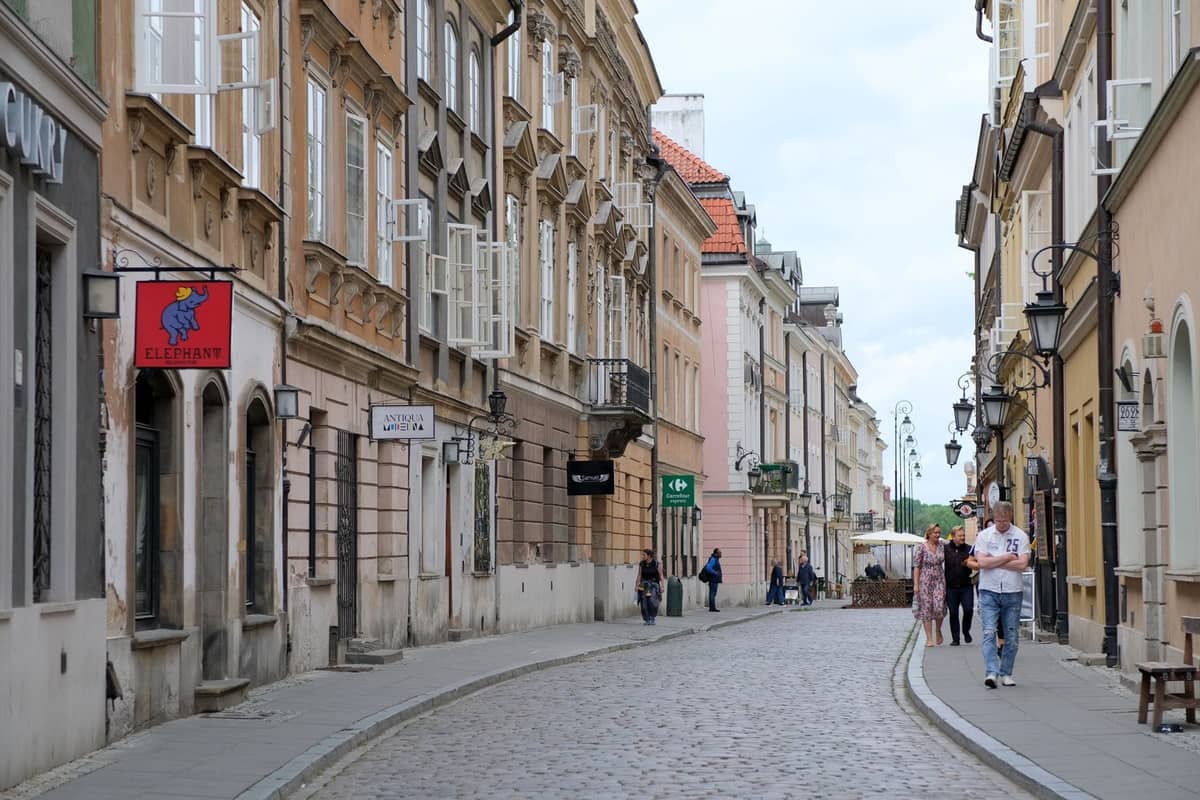
Warsaw is compact enough to cover the core sights on foot in a single day, but layered enough that even a slow two-hour walk through the Old Town produces more questions than answers without some background. The city sits on the Warsaw Plain at roughly 76 to 116 meters above sea level, which means gentle terrain throughout the historic core. There are no steep hills to navigate between the Royal Castle and Nowy Świat, and the Royal Route connecting the Old Town to the Łazienki Park area is essentially flat.
A self-guided walking tour of Warsaw also gives you something a coach tour cannot: the freedom to stop at the Barbican for ten minutes or forty. The Old Town Market Square looks completely different at 08:30 (quiet, pigeons, coffee from the early cafes) versus 13:00 (tour groups, noise, souvenir pressure). That timing difference matters more in Warsaw than in most cities because the main sites are tightly clustered and crowds compound quickly.
ℹ️ Good to know
Warsaw's Old Town (Stare Miasto) was designated a UNESCO World Heritage Site specifically as an outstanding example of near-total postwar reconstruction. The buildings you see follow the original street plan and facades, but the physical fabric dates primarily from the late 1940s and 1950s. This is not a flaw — it is the story.
The Core Old Town Route: Stops, Order, and Timing
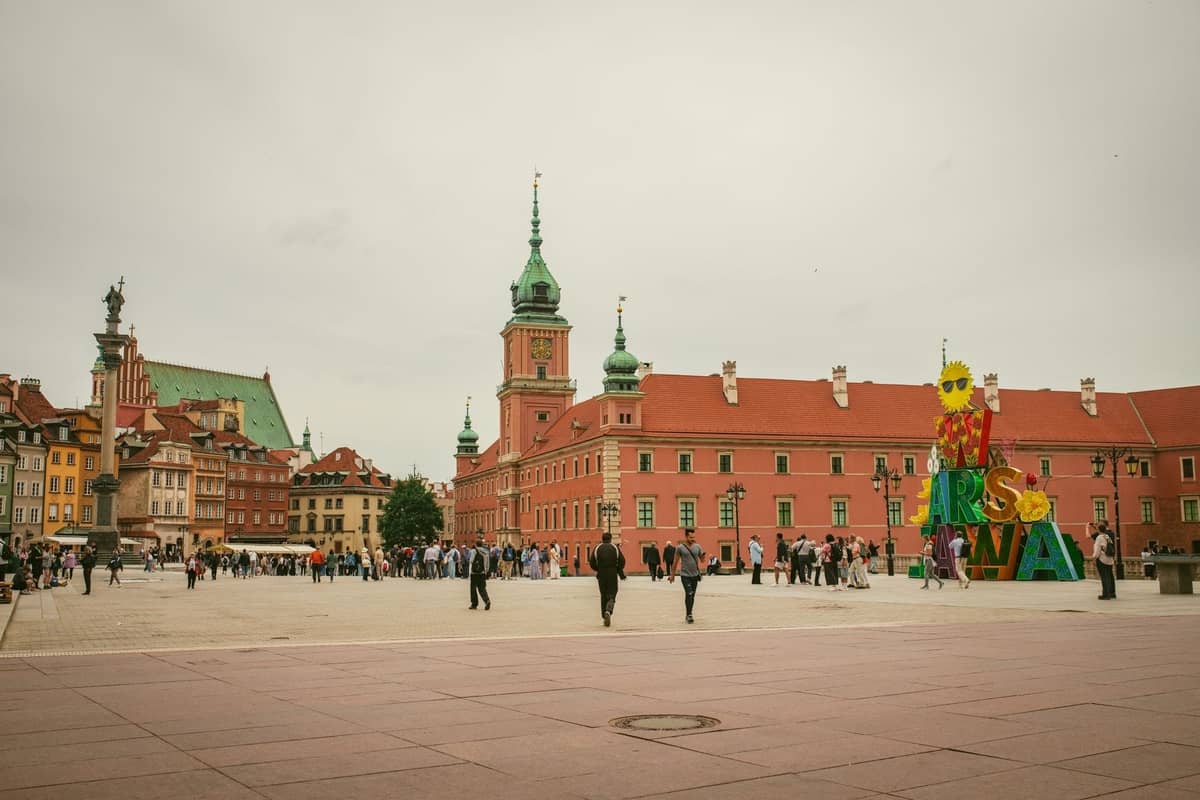
The standard Old Town loop starts at Castle Square (Plac Zamkowy) at the southern end of the Old Town. From there, the route is intuitive and signed. If you are pairing the walk with a museum visit, the Warsaw Uprising Museum is west of the centre and is best reached separately by tram or metro rather than as the opening stop of the Old Town route.
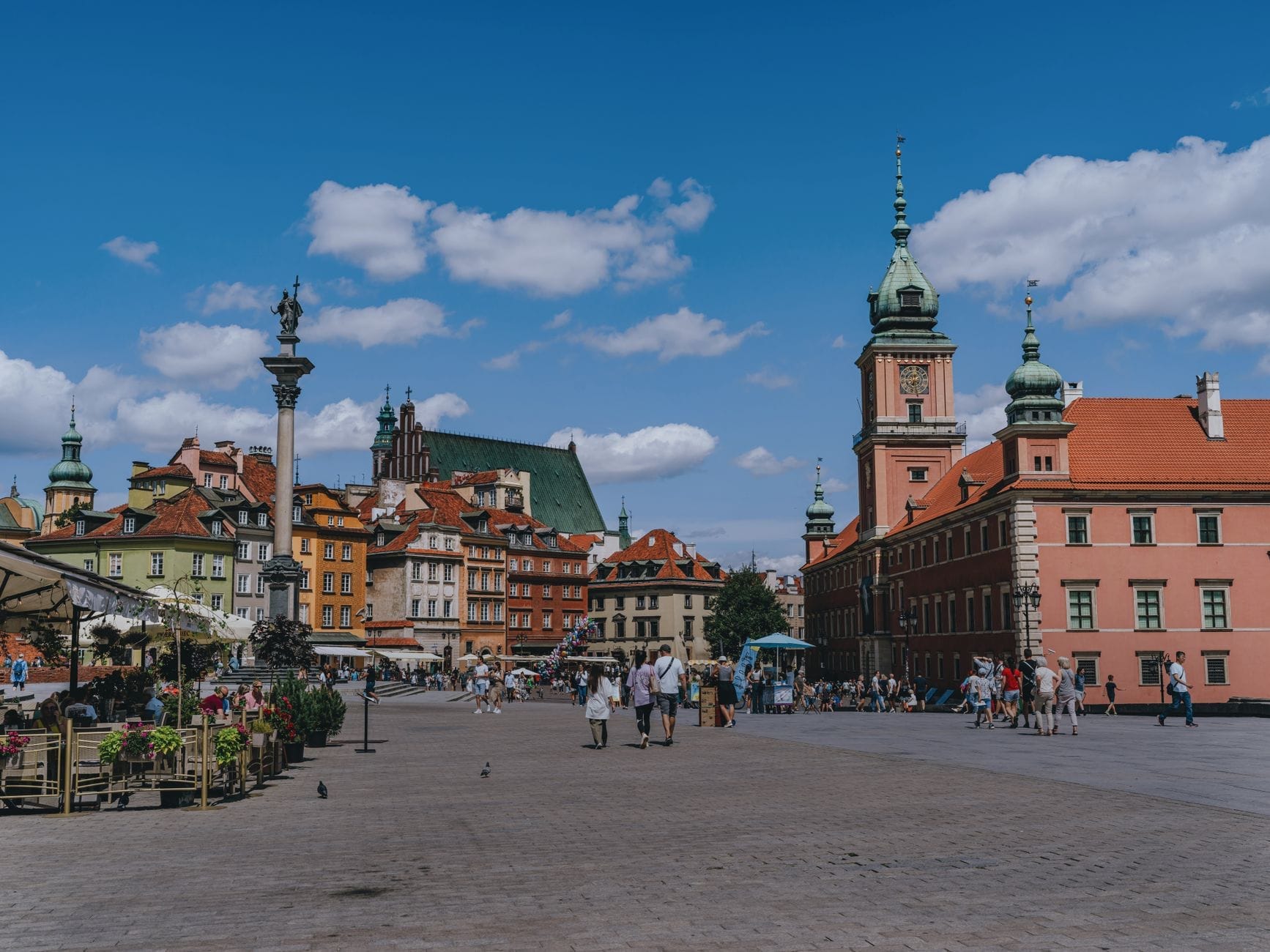
- Castle Square (Plac Zamkowy) The gateway to the Old Town. Sigismund's Column stands at the center — a 17th-century monument that became one of the first things rebuilt after WWII as a symbolic act. The Royal Castle on the square's east side requires a separate ticket; budget 1.5 to 2 hours inside if you plan to enter.
- Warsaw Barbican (Barbakan) A 16th-century fortified gatehouse connecting New Town and Old Town. Walk through it rather than around — the passage is short but atmospheric, and the outer moat area gives a clear sense of the original defensive perimeter.
- Old Town Market Square (Rynek Starego Miasta) The reconstructed heart of medieval Warsaw. The Warsaw Mermaid (Syrenka) statue at the center is the city's symbol. The coloured burgher houses around the square are faithful postwar recreations based on Bernardo Bellotto's 18th-century paintings. Café prices here run about 30–50% higher than two streets away — worth knowing if you're on a budget.
- St John's Archcathedral The oldest church in Warsaw, originally Gothic, rebuilt in simplified neo-Gothic form after 1944. The interior holds royal tombs and is quieter than the square outside.
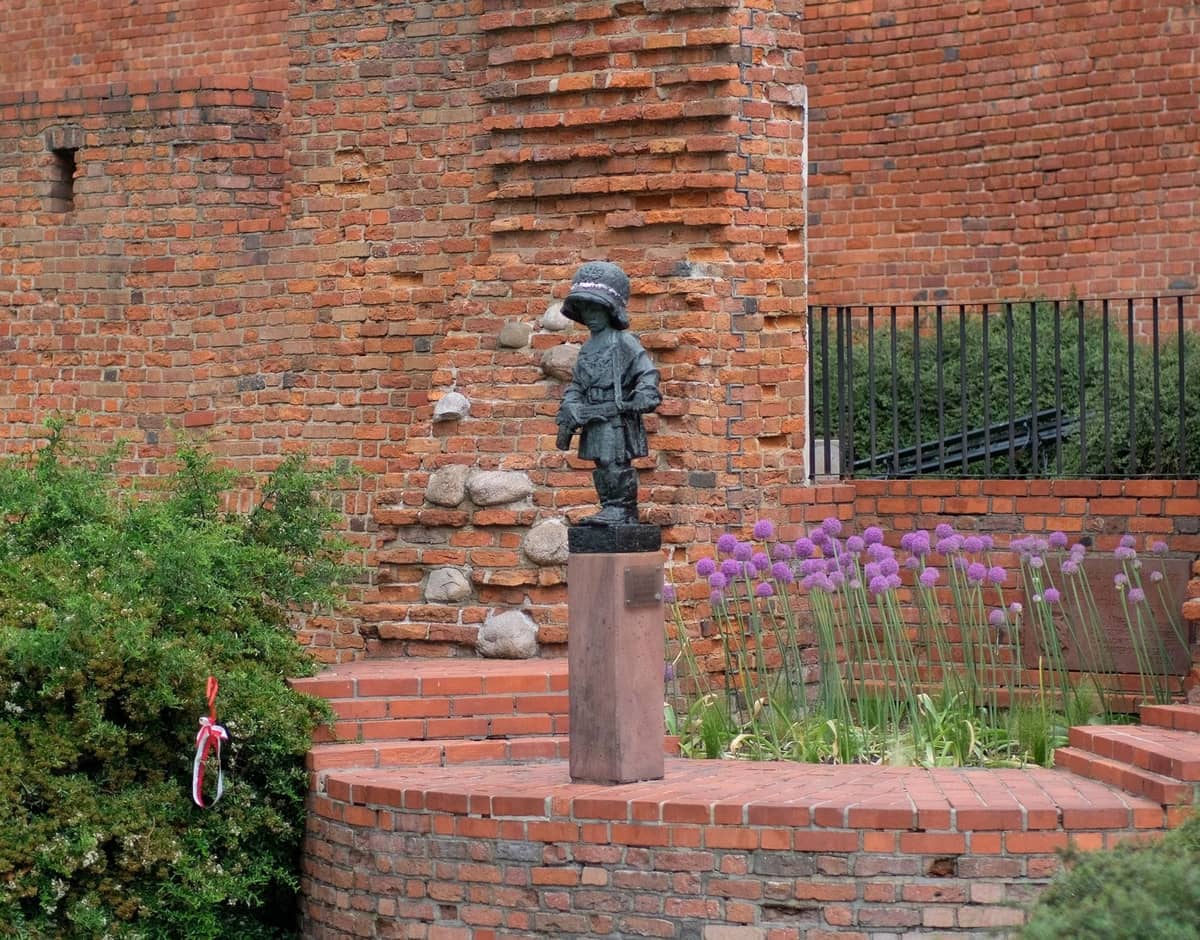
- Monument to the Little Insurgent A small bronze figure of a child soldier wearing an oversized helmet, tucked against the Old Town walls. One of the most affecting stops on the route and easy to miss if you don't know where to look.
- St Anne's Church and Viewpoint Just outside the Old Town proper, on Krakowskie Przedmieście. The church tower offers one of the best elevated views over Castle Square and the Old Town roofline. Climb it if it's open — the fee is modest and the perspective repays the stairs.
From St Anne's, you transition naturally onto Krakowskie Przedmieście, Warsaw's grandest boulevard, lined with palaces, churches, and university buildings. This is the start of the Royal Route, which continues south down Nowy Świat toward Łazienki Park. The full Royal Route is around 4 km one way — pleasant to walk end to end or easy to shorten with a tram or bus back from any point.
💡 Local tip
Start the Old Town section no later than 09:30 in summer. By 11:00, the Castle Square fills with guided groups and the Old Town Market Square becomes crowded enough to make photography difficult. The walk itself takes 2 to 3 hours at a relaxed pace.
Apps and Tools That Improve the Experience
A printed map works fine for the Old Town route, but the right app adds context that transforms the walk from sightseeing into genuine understanding. The options range from free municipal audio files to paid gamified tours.
- Miejska Ścieżka (free) The best free option. This city-funded project offers self-guided audio tours with GPS positioning. The Android app is in Polish, but English MP3 audio files are downloadable from miejskasciezka.pl. Ideal for independent walkers who want narration without paying for a commercial app.
- Questo (from 41.99 PLN per person) Three Warsaw 'city game' routes that deliver clues via GPS and ask you to solve puzzles at each location. Sessions run 60 to 120 minutes. No fixed start time, no booking needed. Better suited to travelers who find straight audio tours passive — particularly good with families or small groups.
- GPSmyCity Five expert-designed audio walking tours accessible via app, plus the ability to build custom routes. Works offline once downloaded, which matters in areas with spotty signal near the Vistula riverfront.
- SmartGuide GPS-triggered audio narration as you walk. The Warsaw content covers major monuments with brief, well-sourced audio clips. Less gamified than Questo, more polished than DIY audio from Miejska Ścieżka.
✨ Pro tip
Download whichever app you choose before leaving your accommodation. The Old Town has good mobile coverage, but some sections of the Jewish heritage route in Muranów and the Praga district can have gaps. Offline maps from Google Maps or Maps.me are worth caching in advance.
Themed Walking Routes Beyond the Old Town
Warsaw's most moving walking experiences are not in the Old Town. The Jewish heritage route through Muranów covers one of Europe's most significant sites of 20th-century history. Before WWII, Warsaw had one of the largest Jewish populations of any city in Europe. Almost nothing of the prewar ghetto survives physically, but the route connects sites that hold extraordinary weight.
- Jewish Heritage Route Links the POLIN Museum of the History of Polish Jews, the Monument to the Ghetto Heroes, surviving ghetto wall fragments, Nożyk Synagogue, Umschlagplatz memorial, and the Jewish Cemetery on Okopowa Street. Allow at least half a day, longer if entering POLIN (one of Europe's finest history museums, with typical visits running 2 to 3 hours).
- Communist Warsaw Route Focuses on socialist realist architecture: the Palace of Culture and Science (the dominant landmark visible from nearly everywhere in the city), MDM housing estates on Marszałkowska, and the Museum of Life Under Communism in Śródmieście on ul. Piękna. This route rewards walkers interested in 20th-century urban planning.
- Royal Route (Full Length) From the Royal Castle south through Krakowskie Przedmieście, Nowy Świat, Three Crosses Square (Plac Trzech Krzyży), and all the way to Łazienki Park. The full route is around 4 km and passes the Presidential Palace, Holy Cross Church, and the University of Warsaw library garden.
- Praga District Walk Cross the Vistula to Warsaw's eastern bank for a completely different architectural texture: unreconstructed prewar tenements, street art, and Koneser Center. Praga is not polished, which is precisely what makes it interesting.
The Praga side is worth the short journey across the river. Unlike the left bank, Praga was not systematically destroyed in WWII, so its buildings reflect genuine prewar fabric. The Neon Museum, now inside the Palace of Culture and Science in Śródmieście, holds a remarkable collection of salvaged communist-era neon signs. Pair a Praga walk with street art and Koneser, then visit the museum separately in the city centre, or combine Praga with a look at Praga street art for a half-day east-bank route that most visitors on a short trip skip entirely.
Seasonal Timing and Practical Logistics
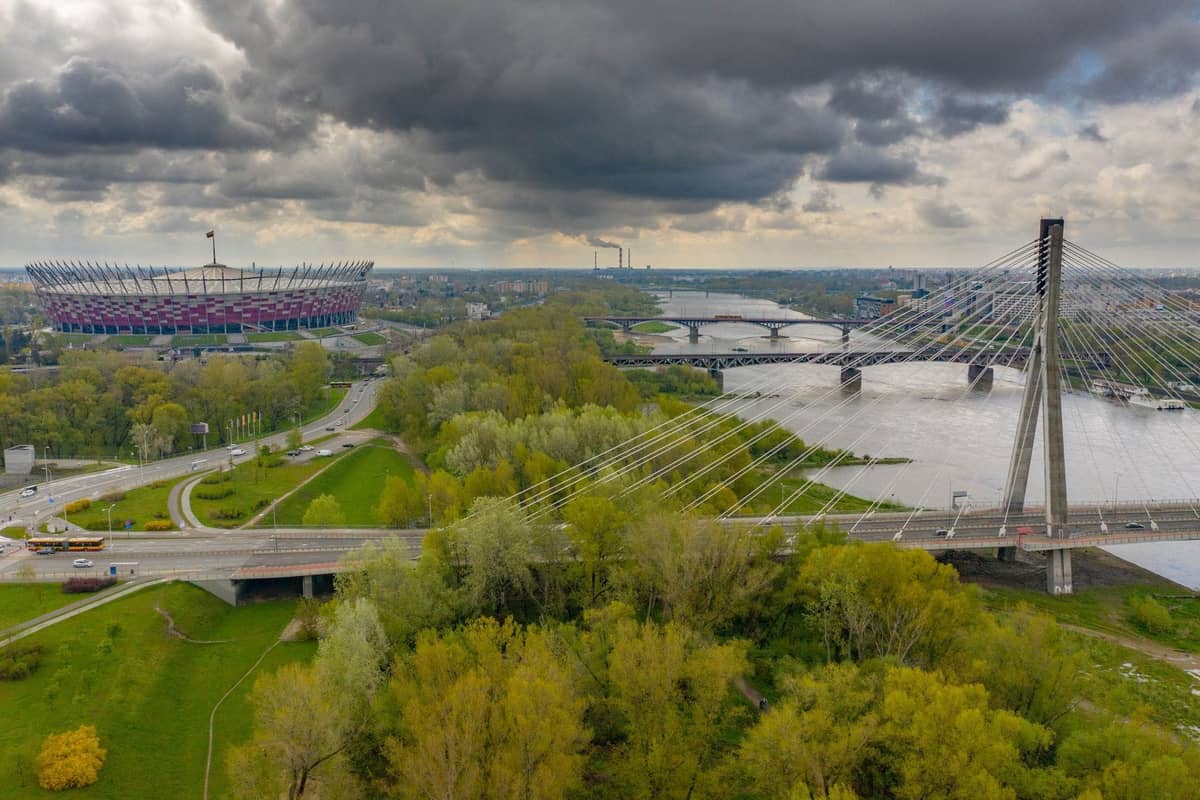
Warsaw is walkable year-round, but the experience varies significantly by season. Late spring (May to June) and early autumn (September to October) offer the best combination of mild temperatures, longer daylight, and fewer crowds than peak July and August. Summer afternoons can bring thunderstorms with little warning, so morning starts are practical as well as strategic.
Winter walking is underrated. The Old Town Market Square is decorated and lit from late November through early January, and the Warsaw Christmas markets give the route a completely different atmosphere. Pavements can be icy from December through February, so footwear with grip matters. Dress in layers: the wind off the Vistula plain has real force, and shade on the narrow Old Town streets makes it feel colder than the thermometer suggests.
For logistics: Warsaw's public transport network covers the city well. Metro Line 1 runs north-south and Line 2 runs east-west through the center, and trams cover the Royal Route corridor. If you're walking from the Old Town to Łazienki Park, the tram on Nowy Świat and Aleje Ujazdowskie is faster than walking the full distance and costs around 4.40 PLN for a 75-minute ticket. Bolt and Uber both operate in Warsaw and are useful for returning from outlying sites like Wilanów Palace or the Warsaw Uprising Museum.
⚠️ What to skip
Entry to several major sites on walking routes requires advance planning. The Royal Castle and the POLIN Museum of the History of Polish Jews both get busy in summer and may have queue times of 30 to 45 minutes at peak hours. Check current ticket availability on their official websites before your visit. The Warsaw Uprising Museum is closed on Tuesdays.
What the Guidebooks Don't Tell You
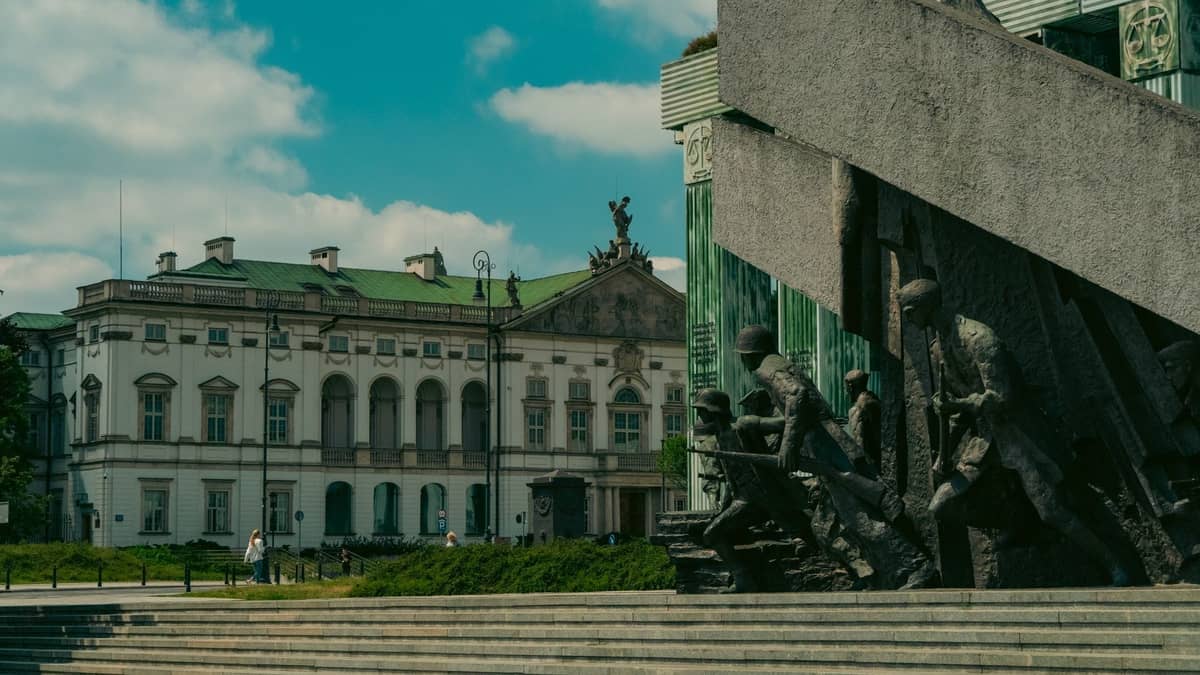
Several things about walking Warsaw catch first-time visitors off guard. The most important: the Old Town's beauty is earned context, not inherent antiquity. Once you know that around 85 to 90% of Warsaw was destroyed by the end of WWII — particularly after the Warsaw Uprising of 1944, when the German military systematically demolished what remained block by block — the reconstructed facades become far more interesting. You are looking at an act of collective will as much as an act of architecture.
The area immediately around the Old Town is heavily tourist-oriented and prices reflect it. For coffee, lunch, or a sit-down break, walk two blocks south of the Barbican or east toward the Vistula Boulevards. The Vistula Boulevards below the Old Town escarpment are a genuinely pleasant place to pause: local crowds, reasonable food stalls in summer, and a clear view across the river to the Praga skyline.
For anyone planning more than a single day, Warsaw's walking potential extends well beyond the city center. The three-day Warsaw itinerary maps out how to distribute the core routes logically, while the Warsaw hidden gems guide covers neighborhoods and stops that don't appear on the standard tourist loop.
FAQ
How long does a self-guided walking tour of Warsaw take?
The core Old Town loop takes 2 to 3 hours at a relaxed pace without entering any interiors. Add 1.5 to 2 hours for the Royal Castle, 2 to 3 hours for the POLIN Museum, and 2 hours for the Warsaw Uprising Museum if you plan to visit those. A full day walking from the Old Town to Łazienki Park along the Royal Route, with stops, is a comfortable 6 to 7 hours.
Do I need to book anything in advance for a self-guided walk?
The walking route itself requires no booking and is free. However, several sites you'll pass — the Royal Castle, POLIN Museum, and Warsaw Uprising Museum — have entry fees and can have queues in summer. Booking tickets online in advance is recommended for these if you visit July through August or on weekends in September.
Is Warsaw's Old Town actually old?
Architecturally, no. The buildings follow the original medieval and baroque street plan and facade designs, but almost all physical fabric dates from postwar reconstruction in the late 1940s and 1950s. The reconstruction used historical paintings, documents, and photographs as references and was so faithful that UNESCO recognized it as a World Heritage Site — not despite being reconstructed, but because of the exceptional quality of that reconstruction.
What is the best free app for a self-guided walking tour of Warsaw?
Miejska Ścieżka offers the best free option. It's a city-funded audio tour project with English MP3 files downloadable from miejskasciezka.pl. For a paid but low-cost option, Questo's city game tours start from around 41.99 PLN per person and add an interactive layer to the walk.
Is Warsaw a good destination for a trip to Poland focused on history?
Warsaw is arguably the most historically significant stop on any trip to Poland for 20th-century history. The WWII destruction and reconstruction, the Jewish ghetto and uprising, the 1944 Warsaw Uprising, and the communist period are all represented by world-class museums and memorials within walking distance of each other. Kraków covers medieval and Renaissance Polish history more completely; Warsaw covers the 20th century more deeply than almost any other European city.