Jewish Warsaw: A Complete Guide to the Ghetto, Memorials & Heritage Sites
Warsaw was once one of the great centers of Jewish life in Europe. This guide covers the history of the Jewish ghetto, the key memorials and museums, the only surviving prewar synagogue, and how to build a meaningful route through the Muranów district and beyond.
Plan and book this trip
Tools from our partner Travelpayouts help you compare flights and hotels. If you book through them, we may earn a commission at no extra cost to you.
Flights
Hotels map
TL;DR
- The Warsaw Ghetto was established in October 1940 and destroyed after the Uprising of April 1943. Most of what you visit today are memorials and markers, not original streets.
- The POLIN Museum of the History of Polish Jews is the essential starting point: allow at least 3 hours for the permanent exhibition.
- The Nożyk Synagogue is the only prewar Jewish house of worship still standing in Warsaw and is still an active congregation.
- April 19 marks the anniversary of the Ghetto Uprising and draws major commemorations. Plan around it or specifically for it depending on your priorities.
- A self-guided walk through Muranów, the former Jewish quarter, takes 2 to 3 hours. A guided tour adds crucial historical context that street signs alone cannot provide.
Understanding What You're Walking Through
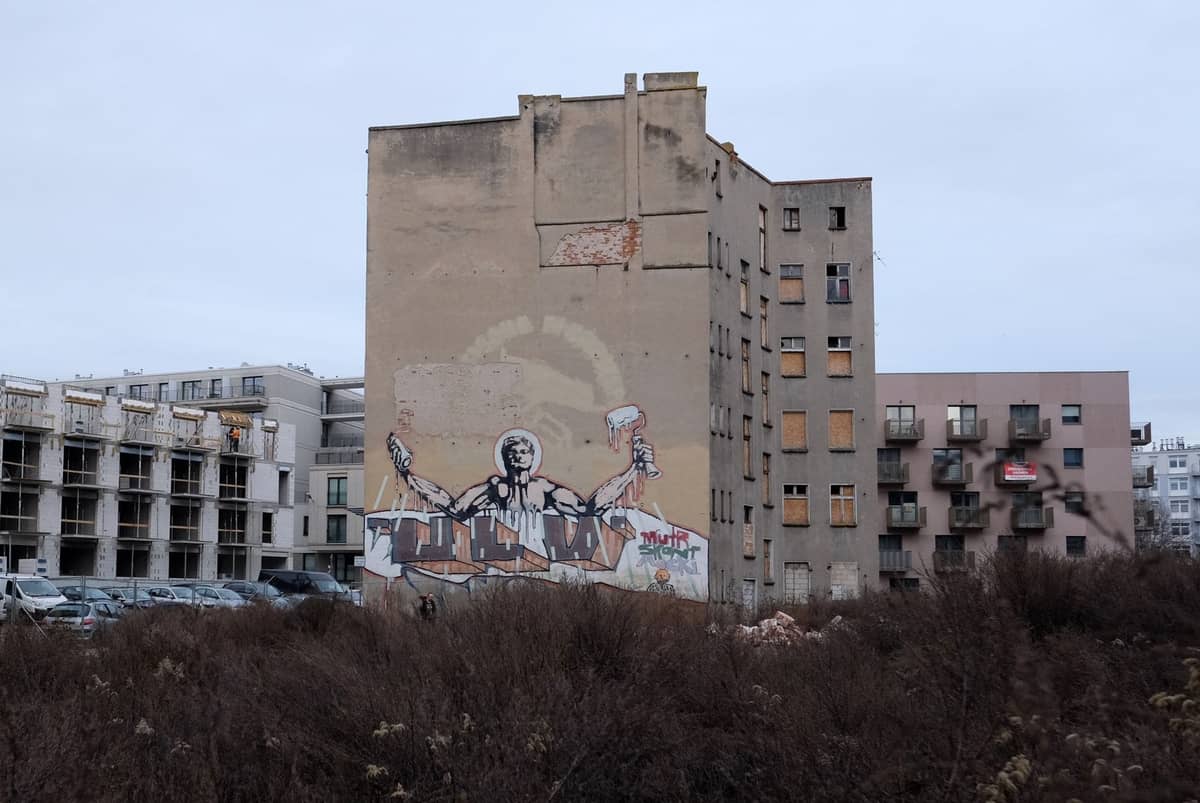
Before visiting, one fact reframes everything: the Jewish ghetto that once occupied a large section of central Warsaw was almost entirely obliterated. The Nazis established the Warsaw Ghetto on October 12, 1940, forcibly confining several hundred thousand Jewish residents behind walls in what had been a densely populated part of the city. After the Ghetto Uprising began on April 19, 1943, the SS systematically razed the area block by block. By the time the fighting ended, the ghetto was rubble.
The Muranów district that stands today was built on top of that rubble during the postwar reconstruction, often using the debris itself as foundation material. Streets were realigned, building footprints shifted, and entire neighborhoods were replaced. Walking through Muranów now means walking through a residential area where apartment blocks stand on several meters of compacted wartime remains. This is not morbid detail for its own sake. It explains why Jewish Warsaw is a landscape of memorials, markers, and carefully placed monuments rather than preserved wartime streets. The heritage here requires imagination and context, which is why a guided tour or solid background reading makes a genuine difference.
ℹ️ Good to know
The Warsaw Ghetto Uprising anniversary falls on April 19 each year. Major official commemorations take place at the Monument to the Ghetto Heroes, attended by Polish and international dignitaries. If you're visiting in mid-to-late April, check the schedule in advance. The atmosphere is solemn and significant, but crowds and road closures are real considerations.
POLIN Museum of the History of Polish Jews
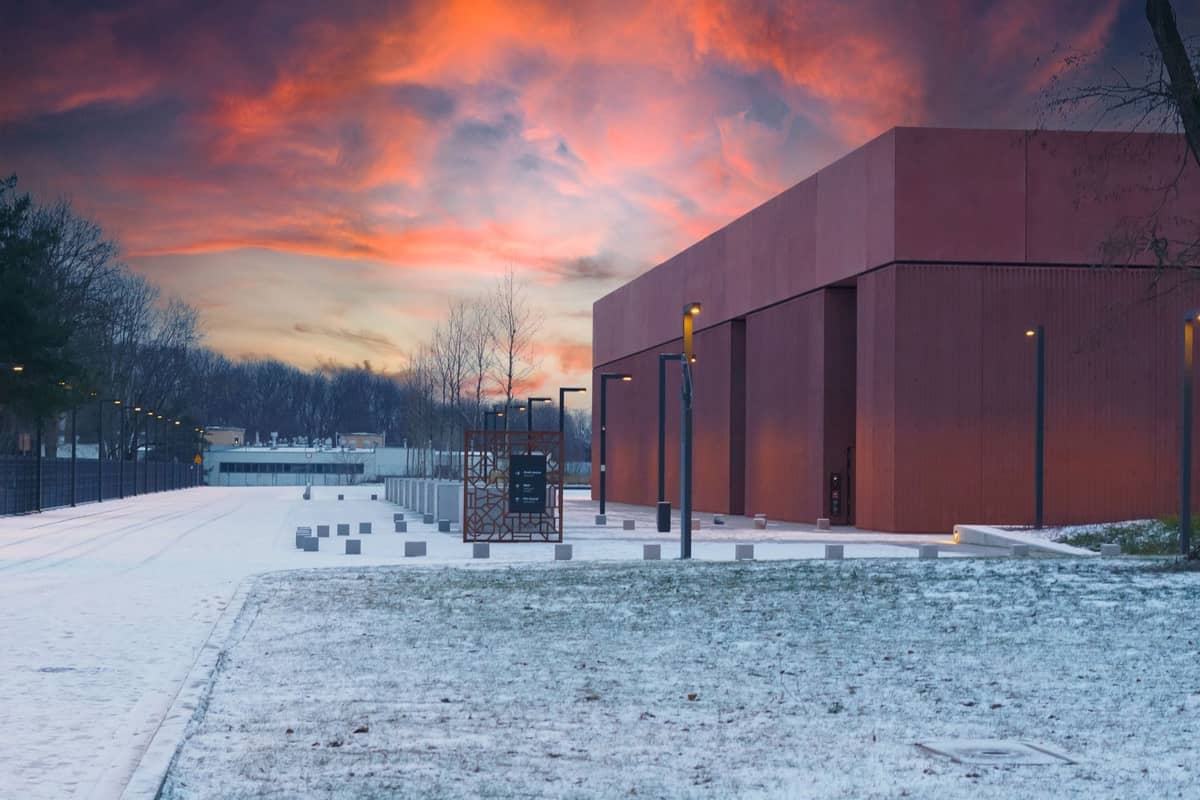
POLIN is the non-negotiable anchor of any Jewish Warsaw itinerary. Opened in 2014 and located in Muranów on the site of the former ghetto, the museum covers a thousand years of Jewish life in Poland across eight galleries. The permanent exhibition is one of the most ambitious of its kind in Europe: it traces Jewish history in Polish lands from medieval merchants through the golden age of Jewish autonomy in the Polish-Lithuanian Commonwealth, through Hasidism, Enlightenment, interwar modernity, and finally the Holocaust and its aftermath. Budget at least three hours for the permanent exhibition alone. Temporary exhibitions add more. See the full picture of Warsaw's best museums to plan your time across the city.
The building itself, designed by Finnish architect Rainer Mahlamäki, is worth pausing over. The undulating interior walls reference the parting of the Red Sea. Tickets are sold for the core and temporary exhibitions, with discounts for students, seniors, and children. The museum is closed on Tuesdays. Audio guides are available in multiple languages and are genuinely worth the additional cost if you're visiting without a guide, as the exhibition density rewards pacing and context.
💡 Local tip
Book POLIN tickets online in advance, especially on weekends and during school holidays. Walk-in availability is not guaranteed for popular time slots, and the permanent exhibition can get crowded in the late morning. Arriving when the museum opens gives you the first hour with significantly fewer visitors.
The Memorial Route: Key Sites in Muranów
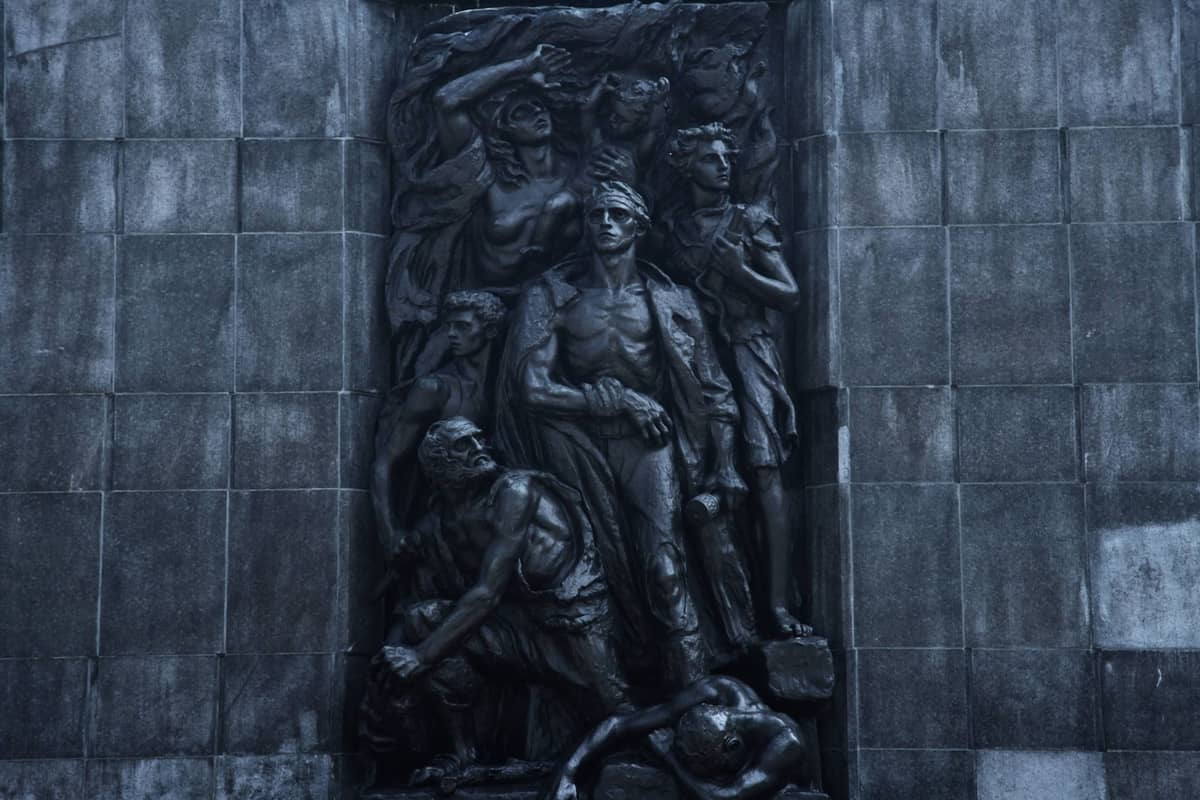
The area around POLIN holds the densest concentration of Jewish Warsaw memorial sites. The Monument to the Ghetto Heroes stands directly in front of the museum. Unveiled in 1948, it was the first major Holocaust memorial erected in Poland and predates POLIN by decades. The granite used for the monument was originally ordered by the Nazis for a planned victory arch in Berlin. The monument depicts fighters rising from the flames on one face and a procession of deportees on the other. It is the standard starting point for any memorial walk through the district.
A short walk north on Zamenhofa Street leads to the Umschlagplatz Memorial, marking the site of the railway loading platform from which around 300,000 Warsaw Jews were deported to the Treblinka extermination camp between July and September 1942. The memorial is stark and deliberate: a white stone enclosure with names carved into the walls. It is not grand or elaborate. That restraint is appropriate. Many visitors find this site more affecting than larger, more designed memorials precisely because of its simplicity.
Between these major sites, look for the remnants of the ghetto wall itself. Several short sections of the original boundary wall survive, some integrated into the sides of buildings and marked with plaques. The most accessible fragment is at Sienna Street 55 and Złota Street 62, though a short section on Waliców Street is also preserved. These are easy to miss without directions, and a guided tour will take you directly to them.
- Monument to the Ghetto Heroes The central memorial, directly in front of POLIN Museum on Zamenhofa Street. The starting point of most Jewish heritage routes.
- Umschlagplatz Memorial Marks the deportation site on Stawki Street. Understated and sobering. About a 10-minute walk north from POLIN.
- Ghetto Wall Fragments Original boundary wall sections survive at Sienna 55 and Waliców Street. Marked with plaques but easy to miss independently.
- Mordechaj Anielewicz Bunker at Miła 18 A mound and memorial marking the command bunker of the Uprising leadership. The bunker was sealed in May 1943 with fighters still inside.
- Path of Remembrance A marked walking route with 22 granite blocks connecting key ghetto sites. Plaques are in Polish and Hebrew.
Nożyk Synagogue and Plac Grzybowski
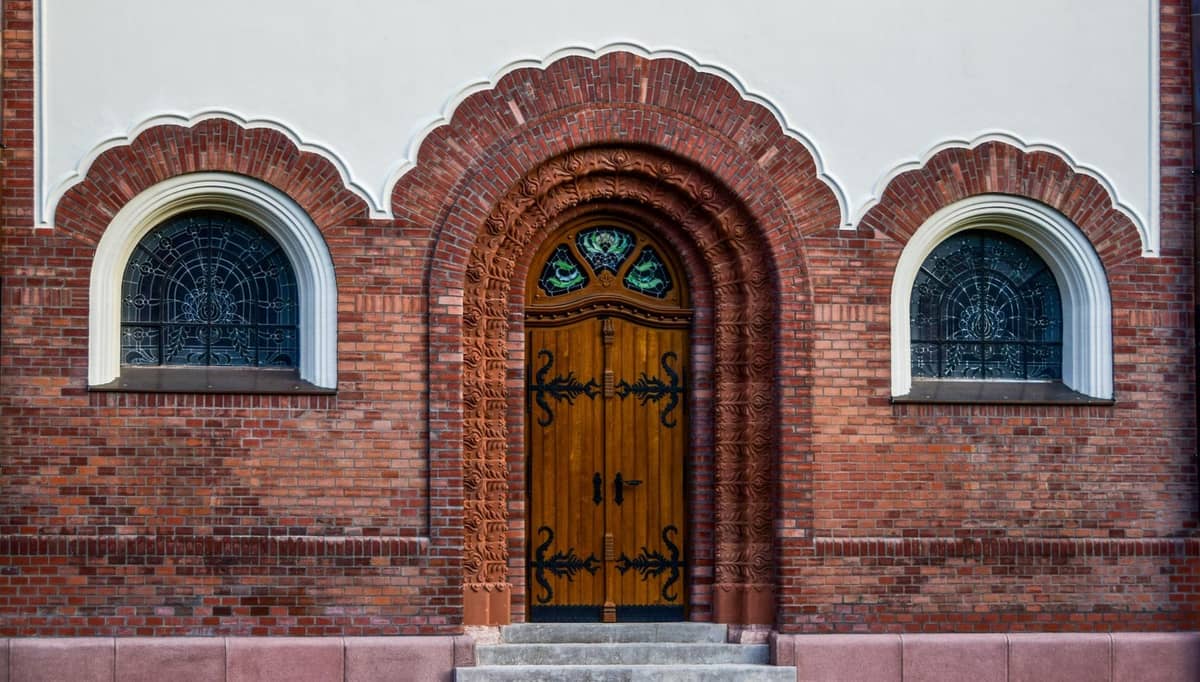
Southwest of Muranów, closer to the city centre, sits Plac Grzybowski, a square that was at the southern edge of the Jewish district before the war. The Nożyk Synagogue on Twarda Street nearby is the only prewar Jewish house of prayer that survived the war in Warsaw. Built in 1902, it was used as a stable by the Wehrmacht during the occupation. It was restored after the war and restored again in the 1980s. Today it functions as an active synagogue for Warsaw's Jewish community, which numbers only a few thousand people compared to the roughly 350,000 Jews who lived in the city before the war.
Visiting the synagogue requires some advance planning. It is not a museum and is not open to walk-in tourists at all times. Opening hours for visitors are limited, and modest dress is required. Men will be asked to cover their heads inside. Check the official schedule before visiting and be respectful of active religious services. The exterior and the small courtyard are accessible during opening hours and worth the detour even if the interior is unavailable.
⚠️ What to skip
The Nożyk Synagogue is an active place of worship, not a visitor attraction in the conventional sense. Do not attempt to enter during services without an invitation or guided group arrangement. Dress conservatively: covered shoulders and no shorts for both men and women. Entry is typically free but donations are welcomed.
The Jewish Cemetery on Okopowa Street
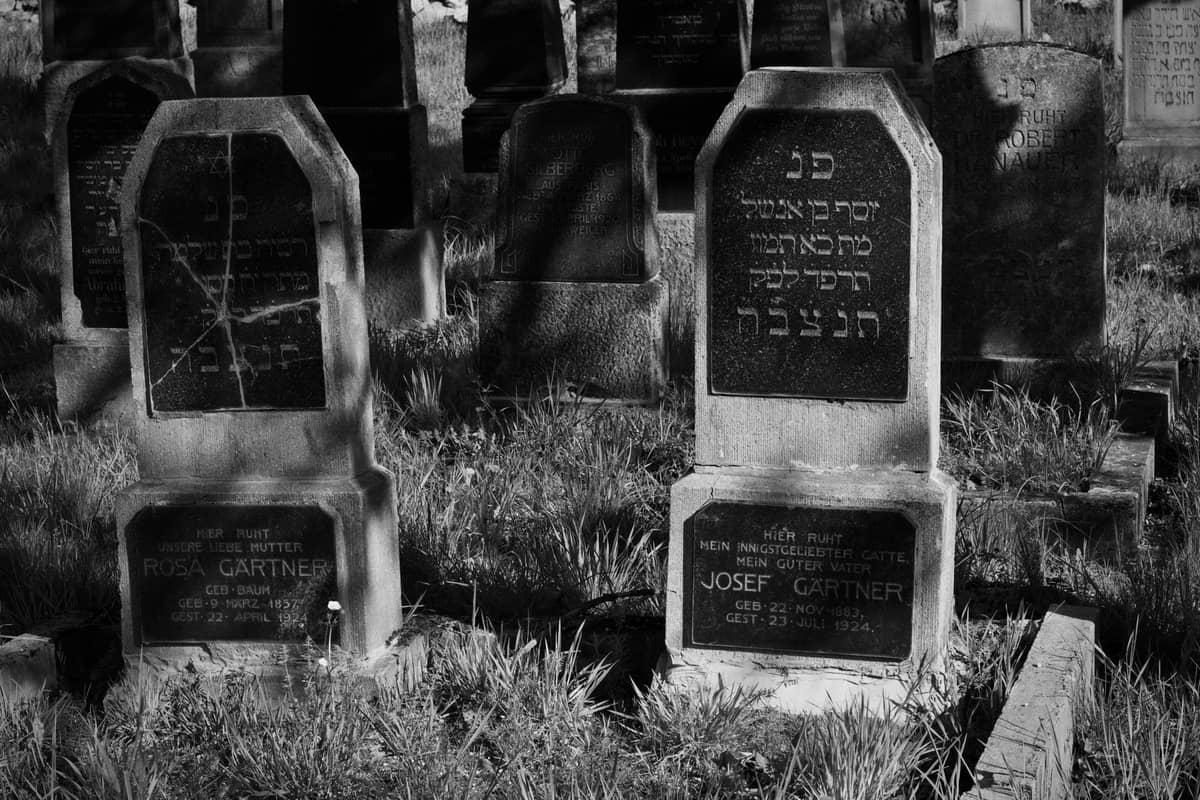
Located at the western edge of what was the ghetto boundary, the Jewish Cemetery on Okopowa Street is one of the largest Jewish cemeteries in Europe. Established in 1806, it contains over 250,000 graves spread across more than 33 hectares of overgrown, atmospheric grounds. The cemetery was not destroyed during the war because the Nazis used it as an execution site, which paradoxically preserved much of it. Walking through the cemetery is a profoundly different experience from the urban memorial sites: it is quiet, partly forested, and gives a sense of the depth and continuity of Jewish life in Warsaw across two centuries.
Notable graves include those of the writer I.L. Peretz, the historian Simon Dubnow, and Janusz Korczak's collaborator Stefania Wilczyńska. A small section near the entrance contains graves of fighters from the Ghetto Uprising. The cemetery is open to visitors on most days, with reduced hours on Fridays and Saturdays and closure on Jewish holidays. A nominal entrance fee applies. Wear comfortable shoes: the paths are uneven and the grounds are extensive.
Planning Your Visit: Practical Logistics
The core Jewish Warsaw sites concentrate in Muranów, roughly 1 to 2 kilometers northwest of the Old Town. The area is easily walkable from the city centre, and trams serve the district well. If you are combining Jewish heritage sites with Warsaw's broader WW2 history, consider pairing POLIN with the Warsaw Uprising Museum in Wola, which covers the separate 1944 Polish uprising. These are distinct events and distinct stories, but together they give a fuller picture of what the city endured.
A guided walking tour of the Jewish heritage sites typically runs 2.5 to 3 hours and covers POLIN's exterior, the Monument to the Ghetto Heroes, the Umschlagplatz, the wall fragments, and Miła 18. Free walking tours operate on tips; paid guided tours offer more depth and typically smaller groups. For context on broader Polish-Jewish history, the Warsaw WW2 history guide covers the wider wartime landscape across multiple districts.
- Visit POLIN first to build historical context before walking the outdoor memorial sites.
- Allow a full day if you plan to combine POLIN, the memorial route, Nożyk Synagogue, and Okopowa Cemetery.
- Outdoor sites are exposed: carry water in summer, and dress for rain in spring and autumn.
- April 19 commemorations are deeply meaningful but draw large crowds. Arrive early if attending.
- Many guided tours depart from Plac Grzybowski. Check start points when booking.
- The sites are in a residential neighborhood. Keep noise levels appropriate throughout.
✨ Pro tip
If you have only half a day, prioritize POLIN Museum and the Monument to the Ghetto Heroes together. They are 50 meters apart and complement each other directly. The museum gives the history; the monument gives the weight. Everything else builds on that foundation.
For a broader itinerary that incorporates Jewish heritage alongside the city's other major sights, the Warsaw 3-day itinerary allocates a full day to Muranów and Jewish Warsaw. Travelers doing a short trip should check the 2-day Warsaw guide for a compressed but meaningful version of the same route.
FAQ
Where was the Jewish ghetto in Warsaw?
The Warsaw Ghetto occupied a large section of what is now the Muranów district, roughly 1 to 2 kilometers northwest of the Old Town. The ghetto was established in October 1940 and destroyed after the Uprising of 1943. The area was subsequently rebuilt during postwar reconstruction, so the streets and buildings you see today are mostly postwar, not original. Key memorial sites including POLIN Museum, the Monument to the Ghetto Heroes, and the Umschlagplatz are all within walking distance of each other in this district.
Is POLIN Museum worth visiting?
Yes, without qualification. POLIN Museum of the History of Polish Jews is one of the most significant history museums in Central Europe. The permanent exhibition covers a thousand years of Jewish life in Poland and requires at least 3 hours to do justice to properly. It is not focused exclusively on the Holocaust; it gives equal weight to the long history of Jewish culture, learning, and community that preceded it. Even visitors with limited time in Warsaw consistently rate it among their most meaningful experiences in the city.
Can you visit the Jewish cemetery in Warsaw?
Yes. The Jewish Cemetery on Okopowa Street is open to visitors most days, with reduced hours on Fridays and Saturdays and closure on some Jewish holidays. A nominal entrance fee applies. The cemetery is large (over 33 hectares) and contains more than 250,000 graves. Wear comfortable shoes for uneven paths and allow at least 1 to 1.5 hours to walk a meaningful portion of the grounds.
What is the best guided tour for Jewish Warsaw?
A guided walking tour lasting 2.5 to 3 hours is the most practical format for first-time visitors. Reputable tours depart from Plac Grzybowski or from in front of POLIN Museum and cover the major memorial sites in Muranów. Free tours operate on tips and are a reasonable option for budget travelers; paid private or small-group tours offer deeper historical context and more flexibility. Booking in advance through a major platform is recommended, especially in spring and summer.
Is Jewish Warsaw appropriate for children?
It depends on the child's age and preparation. POLIN Museum has sections accessible to younger visitors and is thoughtfully designed to address difficult history without graphic imagery. The outdoor memorial sites, including the Monument to the Ghetto Heroes and the Umschlagplatz, are appropriate for older children who have been prepared for the subject matter. Parents visiting with children should read through the POLIN Museum's family resources in advance and be ready to answer difficult questions in a frank and age-appropriate way.