Monument to the Ghetto Heroes: Warsaw's Most Powerful Memorial
Standing on the rubble of the former Warsaw Ghetto, the Monument to the Ghetto Heroes is one of the most historically significant memorials in Europe. Unveiled in 1948, it commemorates Jewish fighters who rose up against Nazi extermination in April 1943. Entry is free and the square is open at all hours.
Quick Facts
- Location
- Square of the Ghetto Heroes, Ludwika Zamenhofa, Muranów, Warsaw
- Getting There
- Tram and bus stops on Anielewicza and Zamenhofa streets (POLIN Museum area)
- Time Needed
- 20–40 minutes for the monument; allow 2–3 hours if combining with POLIN Museum
- Cost
- Free — no ticket required, open 24/7
- Best for
- History seekers, Jewish heritage travelers, those studying WWII and the Holocaust
What the Monument Is and Why It Matters
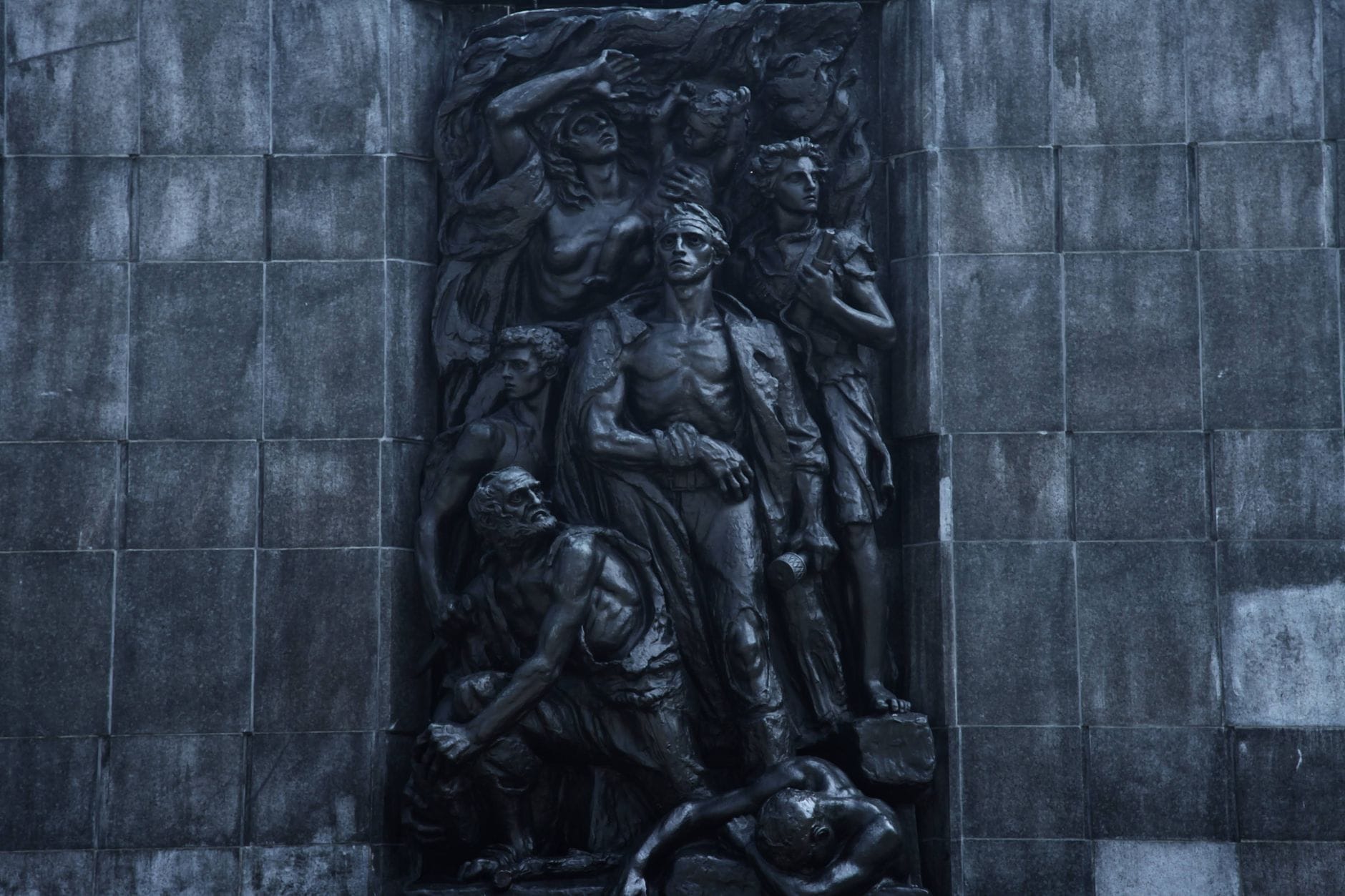
The Monument to the Ghetto Heroes — in Polish, Pomnik Bohaterów Getta — stands at the center of a wide paved square in Warsaw's Muranów district, on the exact ground where the Warsaw Ghetto once existed. This is not a decorative civic sculpture. It is a direct act of memory, built between 1946 and 1948 on the rubble of a community that Nazi Germany had systematically destroyed.
The monument commemorates the Warsaw Ghetto Uprising of April and May 1943, when Jewish fighters, starved and heavily outgunned, chose armed resistance over deportation to extermination camps. The uprising was crushed by SS forces within weeks, but its symbolic weight proved enduring. The memorial was dedicated in 1948, just three years after the war ended, making it one of the earliest Holocaust monuments in the world.
Sculptor Nathan (Natan) Rapoport and architect Leon Marek Suzin designed the work. Rapoport, himself a Jewish Polish artist who survived the war in the Soviet Union, shaped a monument that speaks directly to the tension between defiance and tragedy — the two emotional registers the uprising itself carried. The monument was reconstructed in 1959 and restored again in 1997. Today it anchors the broader Muranów Jewish Quarter, a neighborhood whose very streets are built on layers of wartime rubble.
💡 Local tip
The monument is directly opposite the main entrance of the POLIN Museum of the History of Polish Jews. If you plan to visit both, arrive at the monument first — the open square gives you space for quiet reflection before entering the exhibition.
The Sculpture: Reading the Bronze and Stone
The monument rises from a wide travertine platform approximately 30 meters wide and 16 meters deep. Central stairs — about 11 meters wide and divided into five low risers — lead up to the sculpture itself. Those five steps are modest in height but carry symbolic weight: you are literally ascending from street level, from the ordinary world, to stand before an act of exceptional human will.
The front face of the monument shows a group of fighters in active combat: figures with weapons raised, some in the act of throwing, others steadying themselves against the weight of what they are doing. The central figure is a young man whose expression is not triumphant — it is determined, aware. These are people who knew they would likely die. The bronze relief on the rear face shows an entirely different scene: a procession of hunched, exhausted figures moving toward deportation. The contrast between the two sides is deliberate and devastating. Rapoport refused to let the monument speak only to heroism. It also speaks to suffering.
The travertine stone used in construction carries its own history. The material had originally been quarried by the Nazis for monumental building projects planned for Berlin. That it now forms the base of a Jewish memorial in Warsaw is an irony the monument's designers were aware of and, according to accounts of the commissioning process, did not shy away from.
Tickets & tours
Hand-picked options from our booking partner. Prices are indicative; availability and final rates are confirmed when you complete your booking.
Museum of John Paul II and Primate Wyszyński entrance ticket
From 8 €Instant confirmationPub crawl in Warsaw
From 28 €Instant confirmationFree cancellationWarsaw Museum of Modern Art entrance ticket
From 8 €Instant confirmationSafe and Convenient Luggage Storage in Warsaw Old Town
From 6 €Instant confirmationFree cancellation
Visiting at Different Times of Day
Because the square is fully open and publicly accessible at all hours, the experience of visiting changes considerably depending on when you arrive. Mornings, particularly on weekdays, are quiet. The square is large and mostly unshaded, which means the light at midday falls hard on the bronze surfaces, flattening some of the detail in the relief work. Early morning light from the east catches the figures at an angle that reveals the texture of the casting more clearly — the individual hands, faces, and folds of clothing become more legible.
In late afternoon, school groups and organized tour parties tend to arrive, often pausing for a guide's explanation before moving on to the POLIN Museum. If you want solitude, avoid mid-afternoon on weekdays during spring and autumn, when educational visits are most frequent. Evenings are consistently quieter. The square is not heavily lit at night, so photography after dark is limited, but for those who want to stand alone with the memorial, an evening visit carries a particular weight.
On April 19th each year — the anniversary of the uprising's start — the square becomes a site of official commemoration, drawing political figures, survivors' descendants, and members of the public. Ceremonies include wreath-laying at the monument base and are often attended by representatives of the Polish and Israeli governments. If you happen to be in Warsaw around that date, attending or observing the ceremony adds a layer of direct historical connection that no guidebook can replicate.
Historical Context: The Ghetto and Its Destruction
Before the war, Warsaw had one of the largest Jewish populations of any city in the world. The Nazis established the Warsaw Ghetto in 1940, sealing approximately 400,000 people into a small area of the city under conditions of deliberate starvation and disease. Mass deportations to the Treblinka extermination camp began in 1942. By the time the uprising started in April 1943, the ghetto's population had been reduced to around 50,000–60,000 people.
The fighters of the Jewish Combat Organisation (ŻOB) and the Jewish Military Union (ŻZW) held out for several weeks before the SS suppressed the uprising and razed the ghetto entirely. The physical landscape of Muranów today — its grid of postwar apartment blocks, the slightly elevated ground level — is a direct consequence of that destruction. The entire neighborhood was built on top of rubble that, in places, raised the street level by several meters. Walking the area around the monument with this in mind transforms what looks like a standard postwar residential district into something else entirely. For more on this history, the POLIN Museum directly across the square provides the most comprehensive exhibition on Polish Jewish history in the world.
ℹ️ Good to know
The monument sits at roughly the geographic center of what was the Warsaw Ghetto. The ghetto's boundaries are marked by a trail of memorial plaques embedded in the pavement throughout Muranów — look for small brass markers at street level as you walk the surrounding blocks.
Getting There and Practical Details
The monument is located on Zamenhofa Street in Muranów, a 20-25 minute walk north from Warsaw's city centre. Tram and bus lines serve the Anielewicza and Zamenhofa street stops closest to the POLIN Museum — the museum's main entrance faces the monument directly, making it the most reliable navigation landmark. There is no metro station immediately adjacent, but the area is well-served by surface transit.
If you are approaching on foot from the Old Town, the walk north along Bonifraterska Street takes you past the Pawiak Prison Museum — another site of wartime memory worth including in the same half-day route. The walk itself covers ground that was inside the ghetto boundaries, and having that awareness as you move through the neighborhood gives the journey a different quality than a simple taxi or tram ride.
Admission to the monument is free and no booking is required at any time. The square has level paved surfaces suitable for wheelchairs, though the central stairs leading directly to the monument base may limit access for some visitors. The viewing area from the base of the stairs remains close enough to take in the full sculpture without ascending.
Photography and Visitor Conduct
Photography is permitted and widely practiced here. The best results come in the first two hours after sunrise, when directional light picks out the relief detail on the bronze panels. If you are shooting the front face, position yourself slightly to the side rather than dead center — the central figures emerge with more depth when the light falls at an angle. The rear panel, which shows the deportation scene, is often overlooked by visitors who only approach from the POLIN Museum side. Walk around the full monument to see both faces.
This is a site of ongoing grief and formal commemoration. Visitors should treat it accordingly: keep voices low, avoid eating or drinking immediately at the monument base, and be aware that people may be there in a state of genuine mourning. The monument is not roped off and there are no guards, but that openness is a mark of respect for the visitor, not an invitation to treat the space casually.
Who Will Find This Worthwhile — and Who Might Not
For travelers with an interest in Jewish history, WWII, the Holocaust, or the specific history of Warsaw, this monument is one of the most important sites in the city. It rewards slow attention and is best visited as part of a wider engagement with Muranów and the Warsaw Jewish heritage trail, rather than as a five-minute stop on a rushed itinerary.
Travelers who are primarily interested in architectural beauty, city views, or light entertainment will find the monument affecting but may struggle with its emotional weight if they have limited context for the history. Children can visit, but the subject matter requires thoughtful conversation — the Warsaw with kids guide addresses which Holocaust-related sites are appropriate for different age groups. Those who are sensitive to grief or trauma should approach with that awareness: this is not a site that softens its subject.
Insider Tips
- Walk the full perimeter of the monument — most visitors only see the front (fighters) face. The rear panel showing deportees is equally powerful and far less photographed.
- The brass memorial plaques embedded in the Muranów pavement mark the ghetto boundary trail. Pick up a map from the POLIN Museum information desk and walk sections of the route before or after visiting the monument.
- If you visit on April 19th (the anniversary of the uprising), expect a formal ceremony in the morning. Arriving by 9 AM gives you a place to stand and observe. The atmosphere is unlike any other day of the year.
- The travertine stone of the monument's platform was originally quarried for Nazi monumental construction in Berlin. Knowing this changes how you look at the base beneath the sculpture.
- Early morning on weekdays is the quietest time. By mid-afternoon, tour groups move through regularly. If you want extended, uninterrupted time at the monument, arrive before 10 AM.
Who Is Monument to the Ghetto Heroes For?
- Travelers with a serious interest in Holocaust history and Jewish Warsaw
- Those combining the monument with a full visit to the POLIN Museum next door
- History students and educators seeking primary memorial sites
- Visitors following the Warsaw Jewish heritage route through Muranów
- Anyone wanting to understand Warsaw's wartime destruction in geographic, on-the-ground terms
Nearby Attractions
Other things to see while in Muranów & the Jewish Quarter:
- Nożyk Synagogue
Built between 1898 and 1902, the Nożyk Synagogue is the only pre-war synagogue in Warsaw to have survived the Nazi occupation. Still an active house of prayer, it stands as the most tangible architectural link to a Jewish community that once numbered over 300,000 people in this city.
- Pawiak Prison Museum
Built in the 1830s and transformed into the largest political prison in Nazi-occupied Poland, Pawiak held around 100,000 prisoners during WWII, of whom tens of thousands were executed or deported. The museum, opened in 1965 on the surviving site, is a quiet, serious memorial that demands patience and emotional readiness. It is not a comfortable visit, and it is not supposed to be.
- POLIN Museum of the History of Polish Jews
POLIN Museum of the History of Polish Jews stands on the former Warsaw Ghetto site in the Muranów district, presenting 1,000 years of Polish Jewish history across the Core Exhibition’s four thousand square meters of immersive, architecturally striking galleries. It is one of the most ambitious and emotionally resonant history museums in Europe, not just a Holocaust memorial but a full chronicle of a civilization.