Pawiak Prison Museum: Warsaw's Most Sobering Historical Site
Built in the 1830s and transformed into the largest political prison in Nazi-occupied Poland, Pawiak held around 100,000 prisoners during WWII, of whom tens of thousands were executed or deported. The museum, opened in 1965 on the surviving site, is a quiet, serious memorial that demands patience and emotional readiness. It is not a comfortable visit, and it is not supposed to be.
Quick Facts
- Location
- ul. Dzielna 24/26, Muranów (former Warsaw Ghetto area), Warsaw
- Getting There
- Approx. 9–10 min walk from Ratusz Arsenał or Muranów tram stops; trams along al. Jana Pawła II; Bus 112 from Palace of Culture area
- Time Needed
- 1 to 1.5 hours
- Cost
- Pre-renovation: 20 PLN standard, 10 PLN reduced; free on Thursdays. Tickets on-site only; not included in Warsaw Pass. Verify after reopening (expected autumn 2026).
- Best for
- WWII history, Holocaust context, dark tourism, memorial visits
- Official website
- pawiak.muzn.pl
⚠️ What to skip
Pawiak Prison Museum is temporarily closed for renovation from 27 February 2026. Reopening is expected in autumn 2026. Check the official website at pawiak.muzn.pl before planning your visit, as hours and ticket prices may change after reopening.
What Pawiak Actually Is
The Pawiak Prison Museum occupies the ground of what was, during the German occupation of Warsaw, the most feared address in the city. The original prison building was constructed between 1830 and 1836 to designs by Italian-born architect Henryk Marconi, and it functioned under successive rulers, Russian, Prussian, and Polish, for over a century before the Nazis seized it in 1939. What followed was systematic terror on an almost incomprehensible scale.
During the occupation, roughly 100,000 people passed through Pawiak as political prisoners. Around 37,000 were shot, and approximately 60,000 more were deported to concentration camps or forced labour. The prison was the operational heart of Nazi repression against both the Polish underground resistance and the Jewish population in the adjacent ghetto. On 21 August 1944, as the Warsaw Uprising raged nearby, the Germans destroyed the complex. What stands today was rebuilt and opened as a museum in 1965, initiated by survivors and former prisoners themselves. Since 1990, it has been a branch of the Museum of Independence in Warsaw.
That founding history matters: this is not a museum created for tourists. It was created by people who were there, for the families of those who did not come back. That origin shapes everything about the atmosphere inside.
Walking Through the Site: What You See
The centrepiece of the outdoor area is a large elm tree, or rather its preserved remains, covered with small metal tags bearing the names, initials, and dates of prisoners. This tree stood during the occupation, and inmates left marks on its bark. The memorial tags now number in the thousands. On quiet mornings, visitors stop here before even entering the building, reading names, adjusting to what they are about to see.
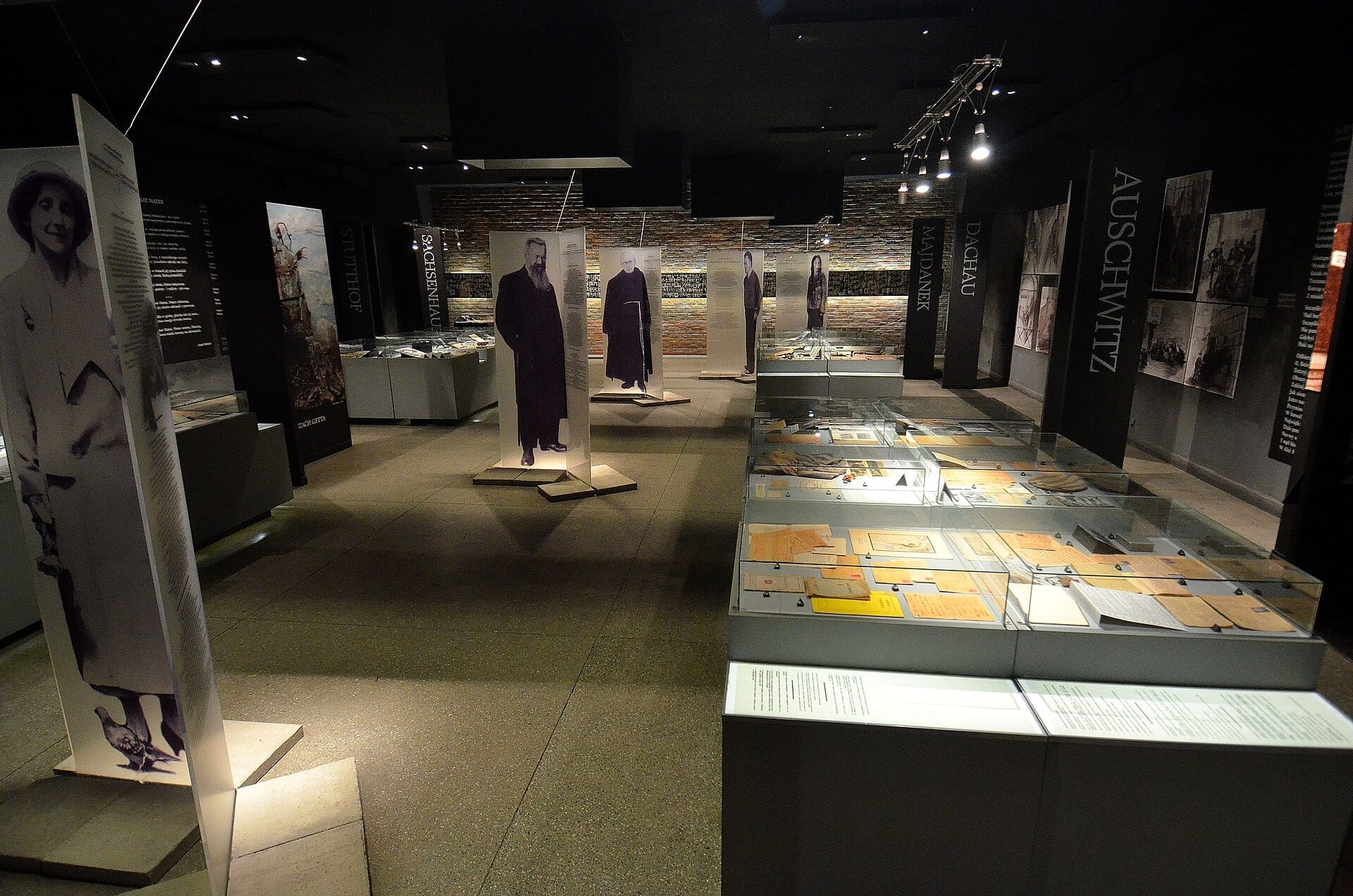
Inside, the exhibition spans reconstructed prison cells, interrogation rooms, and permanent displays covering the biography of individual prisoners, underground resistance networks, and the daily realities of life under Nazi imprisonment. Personal belongings, photographs, documents, and prisoner records form the core of the collection. The scale of individual stories, one person's jacket, a handwritten note smuggled out, a photograph, makes the statistics of 100,000 prisoners feel real in a way that numbers alone cannot.
The building is barrier-free, with step-free access throughout the main areas. Stroller access has historically been partial; if this matters to you, confirm current arrangements with the museum after reopening.
💡 Local tip
Allow at least 90 minutes. Visitors who rush through miss the detail that gives the museum its weight. Read the individual case histories, not just the overview panels.
Tickets & tours
Hand-picked options from our booking partner. Prices are indicative; availability and final rates are confirmed when you complete your booking.
Museum of John Paul II and Primate Wyszyński entrance ticket
From 8 €Instant confirmationPub crawl in Warsaw
From 28 €Instant confirmationFree cancellationWarsaw Museum of Modern Art entrance ticket
From 8 €Instant confirmationSafe and Convenient Luggage Storage in Warsaw Old Town
From 6 €Instant confirmationFree cancellation
The Historical Context You Need Before You Go
Pawiak sits in the Muranów district, adjacent to the area that was enclosed as the Warsaw Ghetto from 1940 onwards. Understanding this geography is important. The prison was not just a place of detention for the Polish underground; it also held Jewish prisoners and was deeply embedded in the machinery of the ghetto's destruction. Visiting Pawiak without that wider context can leave you with an incomplete picture.
Before or after your visit, the POLIN Museum of the History of Polish Jews is roughly fifteen minutes' walk away and provides the full context of Jewish life, the ghetto, and the Holocaust in Warsaw. The two institutions together form one of the most complete historical experiences the city offers on this period.
For a broader orientation to the neighbourhood and its layers of memory, the Muranów and the Jewish Quarter area contains the Monument to the Ghetto Heroes and multiple sites of significance within walking distance. A morning that begins at the Monument, continues to POLIN, and ends at Pawiak covers this history in a coherent sequence.
For deeper background on Warsaw's wartime history more broadly, the Warsaw Uprising Museum tells the story of the 1944 revolt that was erupting in parallel with Pawiak's final weeks of operation. The two sites are complementary rather than redundant.
How the Experience Changes by Time of Day
Pawiak does not attract the volume of visitors that the Royal Castle or the Old Town receive, and that relative quiet is part of what makes it work as a memorial space. Weekday mornings are the least crowded. You will sometimes share the rooms with school groups, which can feel jarring or can feel appropriate, depending on how you look at it. The sound of children being told what these rooms were used for is its own kind of historical transmission.
Thursday is free admission, which draws more visitors but rarely reaches the density that would dilute the experience. Weekend afternoons in summer attract the most foot traffic. In all cases, the museum's emotional weight comes from what is on display, not from crowd dynamics, and even a moderately busy Saturday visit remains a serious, reflective experience.
The outdoor area around the elm tree memorial is accessible even when the museum itself is closed, and early morning, before the doors open, is when it feels most like a place of genuine mourning rather than a tourist site.
Getting There and Practical Details
The museum is located at ul. Dzielna 24/26, in the western part of central Warsaw, off al. Jana Pawła II. Trams running along al. Jana Pawła II bring you close; the Ratusz Arsenał and Muranów stops are roughly a ten-minute walk. Bus 112 connects from the Palace of Culture and Marszałkowska corridor. If you are coming from the Old Town on foot, the walk takes around fifteen to twenty minutes and passes through streets that were part of the ghetto boundary, which provides its own layer of context.
If you are planning a day around this area, combining Pawiak with the Monument to the Ghetto Heroes and POLIN makes geographic and thematic sense. All three are within easy walking distance of each other.
Pre-renovation ticket prices were 20 PLN standard admission and 10 PLN reduced, with free entry on Thursdays. Tickets are sold on-site only; there is no online booking system. The museum is not included in the Warsaw Pass. All of these details should be verified directly with the museum after the renovation-related reopening, expected in autumn 2026, since pricing and conditions may be revised.
ℹ️ Good to know
Pre-renovation typical hours were Tuesday to Sunday, 10:00 to 17:00, with Monday closed. Confirm hours after reopening directly via pawiak.muzn.pl before making a trip.
Who This Museum Is Not For
Pawiak is genuine dark tourism in the most serious sense of the phrase. If you are looking for a diverting afternoon or a family outing with children under ten, this is the wrong choice. The exhibition does not shy away from executions, torture, or the mechanics of Nazi repression. There are photographs, documents, and physical evidence that are genuinely disturbing. That is the point, but it is worth being honest about it.
Visitors who approach it as a checkbox item on a Warsaw itinerary often find it less impactful than those who arrive prepared and give themselves time. If you are visiting Warsaw for three days and have limited capacity for emotionally demanding experiences, this competes with the Warsaw Uprising Museum and POLIN for that slot. Choose based on which thread of history you most want to follow.
For guidance on how to structure your time across Warsaw's major historical sites, the Warsaw WWII history guide provides a useful framework for prioritising.
Photography at Pawiak
Photography is generally permitted in the outdoor memorial areas. Inside the museum, check current rules after reopening, as policies at memorial museums in Poland can vary by institution and have sometimes been updated during renovations. Even where photography is technically allowed, the nature of the space calls for restraint. Many visitors put their cameras away entirely. The memorial tree with its thousands of tags is the most photographed element of the site, and early morning light from the east gives the clearest shots of the inscriptions.
Insider Tips
- The elm tree memorial in the outdoor area is accessible outside museum opening hours. If you are in the neighbourhood in the early morning or evening, it is worth stopping even without entering the building.
- Pre-renovation free Thursday admission drew a slightly larger crowd but never became crowded by Warsaw-museum standards. If Thursday remains free after the reopening, it is still a perfectly good day to visit.
- The exhibition texts are available in Polish and English. If your group includes Polish speakers, the Polish-language labels occasionally contain additional detail not carried over into the translations.
- Combine the visit with a walk along ul. Anielewicza and ul. Karmelicka, streets that trace what was once the ghetto boundary. The physical neighbourhood still carries the grid of streets that existed during the occupation, giving the walk an additional layer of orientation.
- The museum has no café or shop of significant size. Eat before you arrive, or plan a break at one of the small cafés near al. Jana Pawła II afterward. The emotional weight of the visit makes a quiet sit-down afterwards feel necessary rather than optional.
Who Is Pawiak Prison Museum For?
- Travellers with a serious interest in WWII history and the Nazi occupation of Poland
- Visitors completing a Muranów and Warsaw Ghetto heritage route alongside POLIN and the Monument to the Ghetto Heroes
- Those interested in individual human stories within large-scale historical events
- History students, educators, and researchers
- Travellers following Warsaw's Jewish heritage trail
Nearby Attractions
Other things to see while in Muranów & the Jewish Quarter:
- Monument to the Ghetto Heroes
Standing on the rubble of the former Warsaw Ghetto, the Monument to the Ghetto Heroes is one of the most historically significant memorials in Europe. Unveiled in 1948, it commemorates Jewish fighters who rose up against Nazi extermination in April 1943. Entry is free and the square is open at all hours.
- Nożyk Synagogue
Built between 1898 and 1902, the Nożyk Synagogue is the only pre-war synagogue in Warsaw to have survived the Nazi occupation. Still an active house of prayer, it stands as the most tangible architectural link to a Jewish community that once numbered over 300,000 people in this city.
- POLIN Museum of the History of Polish Jews
POLIN Museum of the History of Polish Jews stands on the former Warsaw Ghetto site in the Muranów district, presenting 1,000 years of Polish Jewish history across the Core Exhibition’s four thousand square meters of immersive, architecturally striking galleries. It is one of the most ambitious and emotionally resonant history museums in Europe, not just a Holocaust memorial but a full chronicle of a civilization.