Warsaw Uprising Museum: What to Expect Before You Go
The Warsaw Uprising Museum is one of the most emotionally powerful history museums in Europe, dedicated to the 63-day revolt of 1944 that shaped modern Poland. Spread across more than 3,000 square metres, it combines archival footage, personal testimonies, reconstructed environments, and thousands of artifacts into an experience that demands several hours and leaves a lasting impression.
Quick Facts
- Location
- ul. Grzybowska 79, Wola district, Warsaw
- Getting There
- Rondo Daszyńskiego metro station (M2 line), plus tram and bus stops nearby
- Time Needed
- 2.5 to 4 hours for the permanent exhibition
- Cost
- 35 PLN standard / 30 PLN discounted / free on Thursdays
- Best for
- History enthusiasts, WWII researchers, culturally curious travelers
- Official website
- www.1944.pl/en
Why This Museum Stands Apart
The Warsaw Uprising Museum, known in Polish as Muzeum Powstania Warszawskiego, opened on 31 July 2004, marking the 60th anniversary of the outbreak of the 1944 uprising. It was created not just as an archive but as an act of remembrance: a deliberate effort to ensure that one of World War Two's most devastating urban battles would not be forgotten or misunderstood. The museum covers the 63-day fight by the Polish Home Army against the German occupation, a revolt that ended in catastrophic defeat, the near-total destruction of Warsaw, and the death of an estimated 150,000 to 200,000 civilians.
What sets it apart from conventional war museums is its emotional architecture. The curators made a clear choice to humanise the statistics. Every room is shaped around people: their names, their photographs, their letters, and the objects they carried. The result is that you finish the visit not just informed, but genuinely moved.
💡 Local tip
Thursday admission is free, with free tickets issued at the museum ticket office on the day of your visit. If your schedule is flexible, this is the best day to visit — especially useful for budget travelers. Note that the museum is closed on Tuesdays, and last admission is 30 minutes before closing.
The Permanent Exhibition: What You Will Actually See
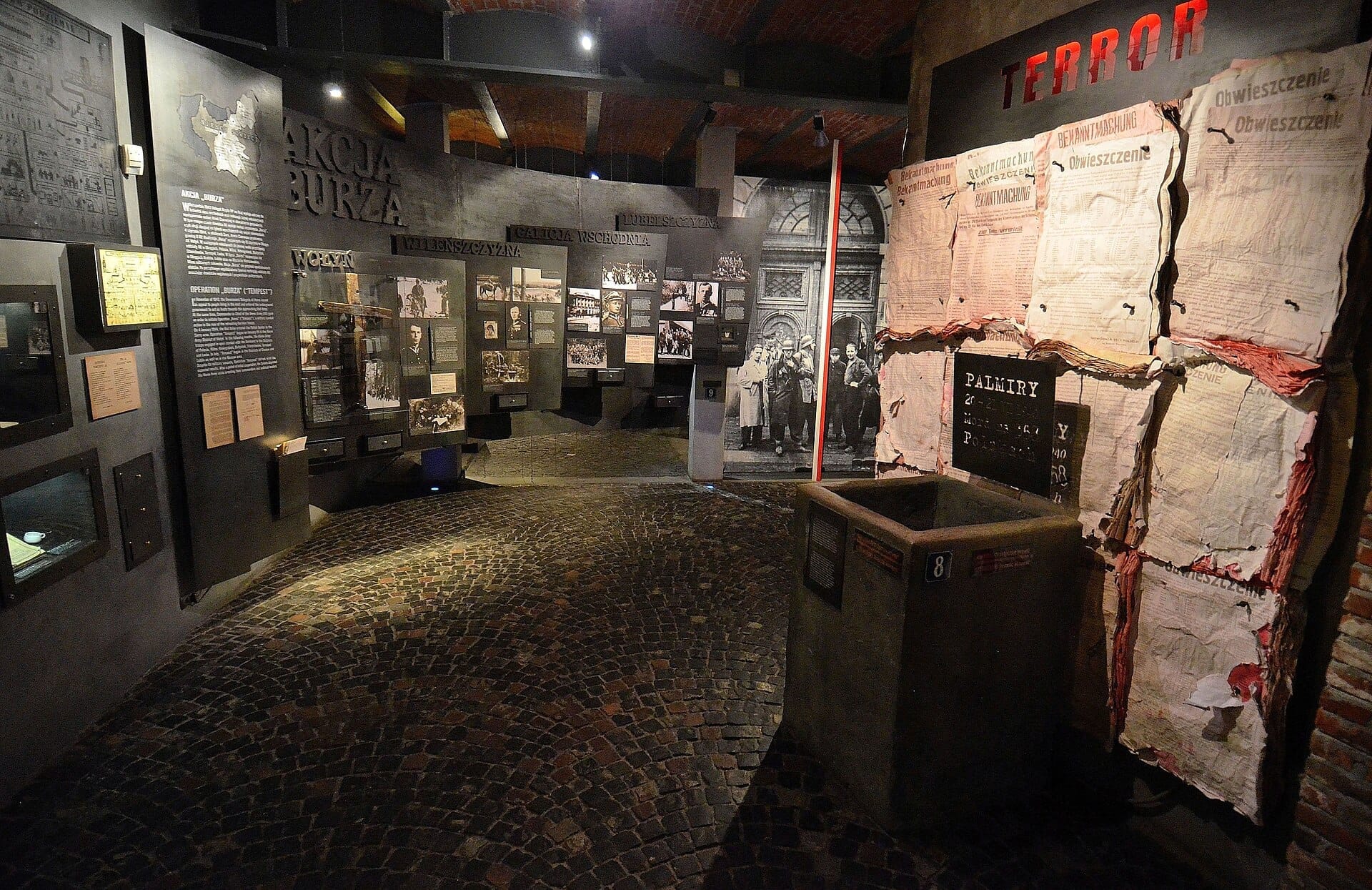
The permanent exhibition spans more than 3,000 square metres across multiple floors of a converted tram power station in the Wola district. The industrial bones of the building are still visible: exposed brick, high ceilings, raw concrete. This is not accidental. The setting reinforces the weight of what happened here. Wola itself was the site of one of the worst massacres of the uprising, when German forces killed tens of thousands of civilians in the district in the opening days of August 1944.
The exhibition moves roughly chronologically, from the context of German occupation through the outbreak of the uprising on 1 August 1944, the weeks of street fighting, the fall of successive districts, and finally the capitulation on 2 October 1944. You pass through reconstructed sewers, the kind the fighters used to move between districts when the streets became impassable. The physical scale is tight and slightly claustrophobic by design. Even for visitors who know the history, the sewers tend to produce a visceral reaction.
Archival film footage plays on screens throughout the galleries, some of it captured by German cameras and some smuggled out by Polish cameramen during the fighting. The sound design is immersive: radio broadcasts, the sound of aircraft, fragments of testimony. At certain hours, particularly in the mid-morning when school groups fill the corridors, the audio from different rooms overlaps in a way that adds to the disorienting effect. Come in the late afternoon, around 15:00 to 16:00 on weekdays, for a quieter, more reflective visit.
Tickets & tours
Hand-picked options from our booking partner. Prices are indicative; availability and final rates are confirmed when you complete your booking.
Pub crawl in Warsaw
From 28 €Instant confirmationFree cancellationWarsaw Museum of Modern Art entrance ticket
From 8 €Instant confirmationSafe and Convenient Luggage Storage in Warsaw Old Town
From 6 €Instant confirmationFree cancellationInteractive spy-themed city game with host-guide in Warsaw Old Town
From 90 €Instant confirmationFree cancellation
Highlights Not to Miss
- The B-24 Liberator aircraft suspended in the hall: a full-scale replica referencing Allied supply drops over the city.
- The Wall of Memory: thousands of names and photographs of fighters and civilians who died during the uprising.
- The sewer passage recreation: a short, darkened tunnel walk that makes the abstract suddenly concrete.
- The Freedom Park on the museum roof, which offers a quiet space and a very different perspective on the surrounding Wola district.
- The Hall of the Little Insurgent, designed specifically with younger visitors in mind.
- Archival audio testimonies from survivors, available in English via headsets in designated areas.
How the Visit Changes by Time of Day
Morning visits, especially from 10:00 to 11:30, tend to attract organised school groups, particularly in the spring and autumn academic terms. Polish secondary school students visit in large numbers, and their presence changes the atmosphere significantly: the corridors fill with noise, guides speak loudly to hold attention, and queue times at certain installations increase. If you prefer quiet contemplation, this is not your ideal window.
The museum is generally less crowded from around 14:30 onwards. Late afternoon light enters through the upper-floor skylights and creates a different quality of reflection in some of the darker gallery spaces. By 16:00, many group tours have departed, and you can spend longer in front of individual exhibits without feeling pressure to move. The Freedom Park on the roof is worth visiting in this late-afternoon window, when the Wola district skyline takes on a different character and the contrast between the modern office towers and what this area once was becomes oddly instructive.
ℹ️ Good to know
The museum is open Monday, Wednesday, Thursday, Friday, Saturday, and Sunday from 10:00 to 18:00. It is closed on Tuesdays. Admission tickets can be purchased up to 30 minutes before closing. Holiday hours may differ — check the official site before you travel.
Historical Context: Why the Uprising Matters
Understanding the Warsaw Uprising requires separating it from a separate, earlier event: the Warsaw Ghetto Uprising of April 1943. The 1944 uprising was an entirely different revolt, led by the Polish Home Army (Armia Krajowa) and intended to liberate the city from German occupation before Soviet forces arrived, thereby preserving Polish political sovereignty. The plan failed catastrophically. The Soviet advance stalled east of the Vistula, Allied air support was limited, and after 63 days the Polish commanders surrendered under negotiated terms.
In retaliation, Hitler ordered the systematic destruction of Warsaw. District by district, German forces demolished the city using explosives and flamethrowers. By January 1945, when Soviet forces finally entered, roughly 85 percent of Warsaw's buildings had been destroyed. The decision to rebuild the city and restore its historic core was itself a political and cultural act — one that continues to shape how Poles understand their capital today.
The museum complements other sites in the city that deal with this period. The POLIN Museum of the History of Polish Jews covers the parallel story of the Jewish community in Warsaw, while the Pawiak Prison Museum offers a more intimate look at German occupation-era repression. Together, these sites form a coherent picture of wartime Warsaw that no single museum can capture alone.
Getting There and Getting Around the Museum
The museum sits at ul. Grzybowska 79 in the Wola district, just west of the city centre. The most straightforward public transport option is the M2 metro line to Rondo Daszyńskiego station, from which the museum is roughly a 10-minute walk south along Towarowa or through Mirów. Multiple tram and bus lines also stop nearby at the Muzeum Powstania Warszawskiego stop on Towarowa and Okopowa streets. The walk from the Old Town or central railway station takes approximately 20 to 30 minutes through streets that pass several other sites of historical significance.
If you are visiting Warsaw for the first time and planning a broader itinerary, the Warsaw WWII history guide maps out how the Uprising Museum fits alongside other major memorial sites. For general transit advice across the city, the getting around Warsaw guide covers metro, tram, and bus options in detail.
Inside the museum, the layout is not strictly linear, and first-time visitors sometimes find themselves looping back through sections they have already seen. Pick up a floor plan at the entrance. English-language audio guides are available for rent at the ticket desk and are genuinely worth the additional cost: the labels in the exhibition are translated into English, but the audio guide provides context that the signage alone cannot. Photography is generally permitted in the exhibition areas without flash, though some archival materials and specific installations may be restricted.
⚠️ What to skip
The exhibition deals with graphic content including photographs of mass casualties, images of destruction, and audio testimonies describing extreme violence. Parents visiting with children under 10 should preview the content before deciding how much of the exhibition to explore together. The museum does have a Hall of the Little Insurgent designed for younger visitors, which provides age-appropriate engagement.
Practical Notes for Your Visit
Admission is 35 PLN for a standard ticket and 30 PLN for a discounted ticket (applicable to students, seniors, and other eligible categories). Large Family Card holders pay 10 PLN. Admission is free every Thursday, with free tickets issued at the ticket office on the day of your visit. All prices are listed in Polish złoty (PLN). Card payment is accepted at the ticket desk.
The museum has a cloakroom where bags and outerwear can be stored, which is practical given the narrow passages in some exhibition sections. There is a cafe on-site and a well-stocked museum shop with books, maps, and reproductions that go well beyond the usual souvenir fare. The shop carries serious historical texts in English and Polish and is worth time even if you are not purchasing.
Accessibility: the official site notes dedicated information for visitors with special needs. Confirm specific accessibility details directly via the museum's official visitor page before your visit, as provision for wheelchair users and other requirements is best verified in advance.
If you are planning a multi-day itinerary around Warsaw's key sites, the Warsaw 3-day itinerary suggests how to sequence the Uprising Museum alongside other major attractions without overwhelming yourself.
Insider Tips
- Thursday is free admission day, but it also tends to draw more visitors who know this. Arrive at 10:00 when it opens to avoid the midday crowd surge.
- The sewer passage section works best experienced in silence. If you are visiting with others, agree beforehand to walk it without talking. The effect is significantly stronger.
- The roof-level Freedom Park is frequently overlooked by visitors who assume the exhibition ends at the upper floor. It is worth the extra few minutes, particularly for the view over Wola toward the modern financial district — the juxtaposition is striking.
- The museum shop stocks detailed historical maps of Warsaw during the uprising showing street-by-street fighting positions. These make for excellent supplements to walking the surrounding neighbourhood afterward.
- Audio guides in English are available at the ticket desk. They are narrated clearly and add substantial depth to the labeling — budget an extra 30 to 45 minutes to your visit if you plan to use one.
Who Is Warsaw Uprising Museum For?
- Travelers with a serious interest in World War Two history and European political history
- Visitors of Polish heritage who want deeper context on the 20th-century national experience
- History students and researchers looking for primary-source exhibitions with archival depth
- Travelers pairing the museum with a broader memorial itinerary that includes POLIN or Pawiak
- Anyone visiting Warsaw for more than two days who wants to understand why the city looks the way it does
Nearby Attractions
Other things to see while in City Centre (Śródmieście):
- Fryderyk Chopin Museum
Housed inside the 17th-century Ostrogski Palace near Warsaw's Royal Route, the Fryderyk Chopin Museum holds one of the world's richest collections of Chopin memorabilia. Closed for full renovation throughout 2026; reopening is planned for 2027 — plan post-renovation visits and confirm dates on the official site.
- Grand Theatre – National Opera
The Grand Theatre – National Opera (Teatr Wielki – Opera Narodowa) is one of the largest opera houses in Europe, anchoring Theatre Square in central Warsaw with a neoclassical facade that survived war and rebuilding. Whether you attend a full opera, a ballet, or simply walk across the square to take in the architecture, this institution rewards both serious culture-seekers and curious first-time visitors.
- Hala Koszyki Food Hall
Built in 1909 and reborn in 2016, Hala Koszyki is a restored Art Nouveau market hall in central Warsaw where locals actually eat, drink, and shop. Free to enter, open daily until 1am, and genuinely good.
- Holy Cross Church (Kościół Świętego Krzyża)
One of Warsaw's most historically charged sites, Holy Cross Church on Krakowskie Przedmieście holds the preserved heart of Frédéric Chopin in a nave pillar. A Minor Basilica with a Baroque facade, 17th-century origins, and free entry, it rewards visitors who take the time to look closely.