Hala Koszyki Food Hall: Warsaw's Most Serious Eating Destination
Built in 1909 and reborn in 2016, Hala Koszyki is a restored Art Nouveau market hall in central Warsaw where locals actually eat, drink, and shop. Free to enter, open daily until 1am, and genuinely good.
Quick Facts
- Location
- ul. Koszykowa 63, Śródmieście, Warsaw
- Getting There
- Metro Politechnika (8-10 min walk); trams at Plac Politechniki & Plac Zbawiciela
- Time Needed
- 1–3 hours depending on appetite
- Cost
- Free entry; food and drinks at vendor prices
- Best for
- Food lovers, evening plans, architecture fans, local atmosphere
- Official website
- koszyki.com
What Hala Koszyki Actually Is
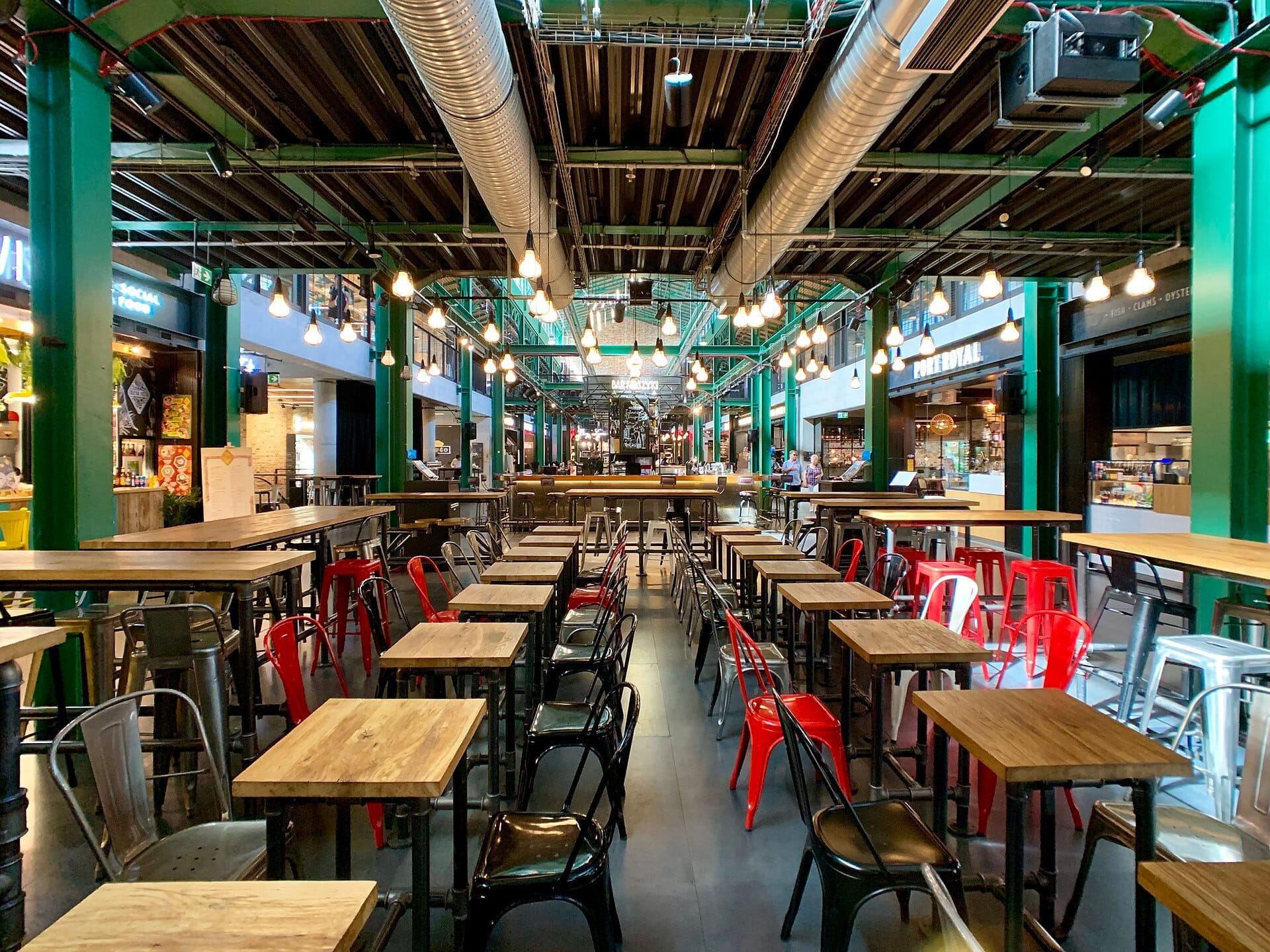
Hala Koszyki is a 22,300-square-metre food hall and market complex occupying a restored Art Nouveau building in central Warsaw. It opened in its original form in 1909, designed by architect Juliusz Dzierżanowski in the secesja style, and served as a working produce market for decades. After years of neglect and a major redevelopment between 2009 and 2016 by Warsaw practice JEMS Architekci, it reopened as a mixed-use destination that balances heritage architecture with a modern food and retail offer. Entry is free.
The comparison people reach for is a European food market, but Hala Koszyki skews more toward restaurant destination than tourist attraction. The crowd on a weekday evening leans heavily local: professionals from nearby offices, couples, groups of friends who have chosen this as the venue for the evening rather than a stop on the way somewhere else. That is worth knowing before you arrive.
ℹ️ Good to know
Hala Koszyki is open daily from 8:00 to 01:00. Individual vendors may keep shorter hours, particularly in the morning. For the widest choice, arrive after noon.
The Architecture: Why the Building Matters
The building is one of the few surviving examples of early-twentieth-century market hall architecture in Warsaw. The Art Nouveau detailing on the facade, brick piers, and cast ironwork inside survived the war with less damage than most of the surrounding city. The 2016 restoration by JEMS Architekci preserved the original structural character while inserting modern glazing and contemporary interiors that do not pretend to be period. The result is a readable conversation between 1909 and 2016 rather than a falsified replica.
Standing under the central roof span, you can trace the iron columns, the clerestory windows that flood the space with natural light in the afternoon, and the rhythm of the original arcade bays that now contain vendor counters and bar seating. The building does real work as a functional market, which makes it more interesting than a restored heritage shell that exists only to be photographed.
For architectural context, the hall sits within the broader Śródmieście district. If you are interested in Warsaw's wider built heritage, the restored Old Town Market Square shows a different approach to reconstruction, and the Palace of Culture and Science nearby represents yet another architectural era entirely.
Tickets & tours
Hand-picked options from our booking partner. Prices are indicative; availability and final rates are confirmed when you complete your booking.
Museum of John Paul II and Primate Wyszyński entrance ticket
From 8 €Instant confirmationPub crawl in Warsaw
From 28 €Instant confirmationFree cancellationWarsaw Museum of Modern Art entrance ticket
From 8 €Instant confirmationSafe and Convenient Luggage Storage in Warsaw Old Town
From 6 €Instant confirmationFree cancellation
How the Experience Changes Through the Day
Mornings at Hala Koszyki are calm. The supermarket section (Eurospar) and a handful of breakfast-oriented spots operate early, and the light through the upper windows is genuinely good at this hour. The acoustic quality of the space shifts dramatically as it fills: by noon, the hall has a low hum of activity; by 6pm on a Thursday, it can be loud enough that conversation over dinner requires a bit of effort.
Weekend afternoons bring a different crowd: families, people browsing the retail section, visitors working through a broader Warsaw itinerary. Weekend evenings are the most intense, with bar seating filling up by 7pm and some counters running waits for food. If a relaxed lunch is the goal, Tuesday through Thursday midday is the most comfortable window. If the evening energy is the draw, Friday after 7pm delivers it fully.
💡 Local tip
On warm evenings, tables spill into the outdoor courtyard area. Arrive by 6:30pm on weekends if outdoor seating matters to you — it fills fast.
Food and Drink: What to Expect Inside
The vendor mix changes over time, but Hala Koszyki has consistently housed counters covering a range that includes Polish classics, Japanese, Middle Eastern, pizza, wine bars, craft beer, specialty coffee, and dessert-focused spots. The quality across the hall is generally above average by city standards, which is why Warsaw's food-aware crowd returns regularly rather than treating it as a one-visit curiosity.
There is no single ticket system or unified menu. You order and pay at individual counters and find a table in shared seating areas. On busy evenings, table-finding requires some patience. The shared seating model means you are likely sitting near strangers, which suits some visitors and irritates others. Families with young children tend to do better at midday when the space is less chaotic.
The Eurospar supermarket occupies part of the ground floor and stocks a solid range of Polish and international products, including wine and local craft beers. For those putting together a self-catered meal or a picnic for a visit to nearby parks, this is a practical stop.
If you want a broader picture of Warsaw's food culture beyond the hall, the guide to what to eat in Warsaw covers the wider culinary landscape, from milk bars to modern Polish restaurants.
Getting There and Getting Around
The nearest metro station is Politechnika on Line M1, approximately 8 to 10 minutes on foot. Tram stops at Plac Politechniki and Nowowiejska are closer. Bus stops at Noakowskiego and Plac Konstytucji serve additional routes. The hall has an underground car park with around 200 spaces, currently priced at 10 PLN per hour, with a promotional free-parking hour available when spending at least 50 PLN with selected vendors including Eurospar. Verify current parking terms on arrival, as these conditions change.
The hall is within easy walking distance of Plac Zbawiciela, one of Warsaw's most popular neighbourhood squares. The Plac Zbawiciela area has its own cluster of cafes and bars that pair well with an early evening at Koszyki.
💡 Local tip
The building is fully wheelchair accessible. Lifts serve all levels. If you have specific accessibility needs, the official site at koszyki.com lists current venue details.
Photography and Practical Notes
The interior is well-lit for photography in the early afternoon when natural light from the clerestory is strongest and the crowd is thinner. Evening shots have more atmosphere but require adjusting for mixed artificial and neon light. The facade on Koszykowa Street photographs well in morning light from across the street. Standard indoor photography for personal use is not restricted, but check with individual vendors if you plan to photograph food stations closely.
Weather has essentially no effect on the experience, which is one of Hala Koszyki's real practical strengths in a city where rain is common. It works as a destination on cold, wet November days when outdoor Warsaw can feel punishing.
If you are planning a broader day in this part of the city, the Warsaw walking tour guide covers a route that connects several Śródmieście landmarks, and Nowy Świat Street is a 15-minute walk north for cafes and shops along Warsaw's most characterful central boulevard.
Who Should Think Twice
Hala Koszyki is worth skipping if you are expecting a traditional Polish market with stalls selling local produce, pickles, and fresh bread in the old-fashioned sense. The hall has moved firmly upmarket and toward the restaurant-bar model. If authenticity in the historical sense is the priority, a visit to a traditional Warsaw bazaar, such as Hala Mirowska a few kilometres north, would be more fitting.
Visitors who are sensitive to noise and crowd density should avoid Friday and Saturday evenings, when the hall is genuinely loud and seating is competitive. Those looking for a quiet dinner with easy conversation will find it easier at any number of Warsaw's standalone restaurants. The hall rewards those who enjoy a certain amount of energy and informality.
Insider Tips
- The upper gallery level has seating that overlooks the main hall floor. It is quieter than the ground level on busy evenings and offers a good view of the architecture.
- The parking validation deal (free first hour with 50 PLN spend at Eurospar) is genuinely useful if you are driving and doing a grocery run alongside your visit.
- Individual vendor hours vary. If you have your eye on a specific counter for breakfast or late-night eating, check their current hours on the Koszyki website before going.
- On weekday lunchtimes, many counters offer faster service than in the evening. The weekday lunch crowd moves efficiently because a significant share is on work breaks.
- The courtyard between the main hall and the adjacent office building is easy to miss from the street entrance. Walk through to check whether it is open and whether outdoor seating is available.
Who Is Hala Koszyki Food Hall For?
- Food-focused travelers who want quality and variety under one roof without a formal dining commitment
- Evening plans that want flexibility: bar, dinner, and dessert all in one location
- Rainy-day Warsaw itineraries when outdoor options are less appealing
- Architecture enthusiasts interested in early-twentieth-century Polish market hall design
- Visitors who want to eat and drink alongside Warsaw locals rather than in tourist-facing venues
Nearby Attractions
Other things to see while in City Centre (Śródmieście):
- Fryderyk Chopin Museum
Housed inside the 17th-century Ostrogski Palace near Warsaw's Royal Route, the Fryderyk Chopin Museum holds one of the world's richest collections of Chopin memorabilia. Closed for full renovation throughout 2026; reopening is planned for 2027 — plan post-renovation visits and confirm dates on the official site.
- Grand Theatre – National Opera
The Grand Theatre – National Opera (Teatr Wielki – Opera Narodowa) is one of the largest opera houses in Europe, anchoring Theatre Square in central Warsaw with a neoclassical facade that survived war and rebuilding. Whether you attend a full opera, a ballet, or simply walk across the square to take in the architecture, this institution rewards both serious culture-seekers and curious first-time visitors.
- Holy Cross Church (Kościół Świętego Krzyża)
One of Warsaw's most historically charged sites, Holy Cross Church on Krakowskie Przedmieście holds the preserved heart of Frédéric Chopin in a nave pillar. A Minor Basilica with a Baroque facade, 17th-century origins, and free entry, it rewards visitors who take the time to look closely.
- Living Under Communism Museum (Czar PRL)
Housed in a Stalinist-era building at Plac Konstytucji, the Museum of Life Under Communism (Muzeum Życia w PRL) reconstructs what it felt like to live in Poland between 1944 and 1989. Think cramped apartments, propaganda posters, and Fiat 126p interiors rather than political theory. It is a small, idiosyncratic museum that rewards curious visitors with a surprisingly emotional window into a vanished world.