Grand Theatre – National Opera: Warsaw's Monumental Stage
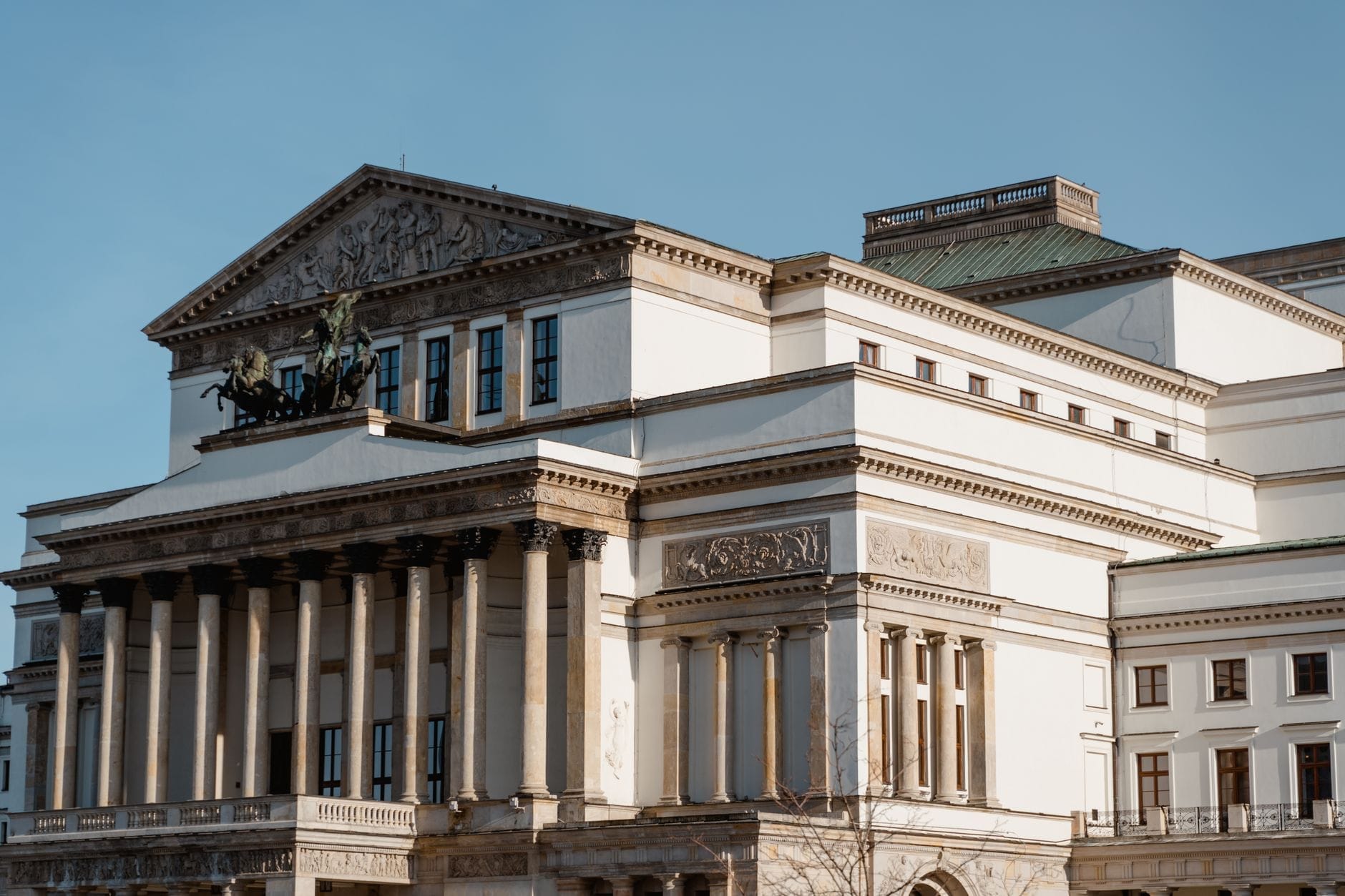
The Grand Theatre – National Opera (Teatr Wielki – Opera Narodowa) is one of the largest opera houses in Europe, anchoring Theatre Square in central Warsaw with a neoclassical facade that survived war and rebuilding. Whether you attend a full opera, a ballet, or simply walk across the square to take in the architecture, this institution rewards both serious culture-seekers and curious first-time visitors.
Quick Facts
- Location
- Plac Teatralny 1, central Warsaw (Theatre Square)
- Getting There
- Ratusz Arsenał metro station, approx. 7–8-minute walk
- Time Needed
- 2–3 hours for a performance; 20–30 min for exterior and foyer visit
- Cost
- Ticket prices vary by production and seat category; listed in PLN on the official website
- Best for
- Opera and ballet lovers, architecture enthusiasts, cultural evenings
- Official website
- teatrwielki.pl
What the Grand Theatre Actually Is
The Grand Theatre – National Opera, known in Polish as Teatr Wielki – Opera Narodowa, is not simply a performance venue. It is a civic monument, a cultural institution with nearly two centuries of interrupted history, and one of the most architecturally significant buildings in Warsaw. Located on Plac Teatralny (Theatre Square) in the heart of the city centre, it commands the square with a columned neoclassical facade designed by Italian architect Antonio Corazzi. The building's interior volume places it among the largest theatres in Europe and home to one of the biggest stages in the world.
The venue operates on a performance-based schedule rather than standard museum hours. The main season runs roughly from October through the end of June, with the programme covering full opera productions, ballet, and chamber performances in two auditoria: the approximately 1,800-seat Moniuszko Auditorium and the more intimate 250-seat Emil Młynarski Auditorium. If you are in Warsaw outside the season or simply cannot secure tickets, the exterior and Theatre Square are worth visiting on their own terms.
💡 Local tip
Tickets sell out weeks or months in advance for popular productions. Check the official ticketing section (Bilety) at teatrwielki.pl as soon as your travel dates are confirmed — the English-language version of the site is accessible from the main menu.
A Building That Survived War and Returned Larger
Construction of the Grand Theatre began in 1825 and was completed in 1833. The inauguration took place on 24 February 1833, with a performance of Rossini's The Barber of Seville. For over a century, it served as one of the defining cultural addresses in Poland. Then, during the 1939 siege of Warsaw, the theatre was bombed and largely destroyed. What survived was the classicist facade — the stone columns and pediment that still greet visitors today.
The reconstruction was not a simple restoration. The rebuilt Teatr Wielki reopened in 1965 as a significantly expanded complex. The postwar architects retained Corazzi's original facade but extended the building behind it into an enormous modernist interior that was considered technically innovative for its era. The result is an unusual architectural layering: a 19th-century neoclassical face with a mid-20th-century performance infrastructure behind it. This tension is visible once you step inside, where the scale of the lobbies and stairways exceeds anything a pre-war opera house would typically contain.
That history of destruction and reinvention is deeply tied to Warsaw's broader story. To understand how the city rebuilt itself culturally as well as physically, the Warsaw WW2 history guide provides essential context — and sites like the Warsaw Uprising Museum tell the human side of what was lost in those years.
Tickets & tours
Hand-picked options from our booking partner. Prices are indicative; availability and final rates are confirmed when you complete your booking.
Museum of John Paul II and Primate Wyszyński entrance ticket
From 8 €Instant confirmationPub crawl in Warsaw
From 28 €Instant confirmationFree cancellationWarsaw Museum of Modern Art entrance ticket
From 8 €Instant confirmationSafe and Convenient Luggage Storage in Warsaw Old Town
From 6 €Instant confirmationFree cancellation
Arriving at Theatre Square: What You'll See Before You Enter
Plac Teatralny is one of Warsaw's most formally composed public spaces. The Grand Theatre occupies the northern edge of the square, its long Ionic colonnade stretching across the full width of the facade. The proportions are deliberately imposing. At ground level, the colonnade creates a shaded portico that pedestrians use as a passageway even when no performance is scheduled, so the building stays active throughout the day.
The square itself is open and largely uncluttered, which means the facade reads clearly from across the pavement. Early evening, typically from around 6 PM onward on performance nights, the space transforms as audience members arrive in varying degrees of formality. Some visitors dress in evening wear; others come directly from work. Warsaw's opera audience is not uniform, and there is no strict dress code enforced at the door, though the atmosphere is elevated enough that smart-casual is the sensible baseline.
Mornings and weekday afternoons are when the square is quietest. The facade catches good directional light in the morning, making it a more rewarding time to photograph the architectural detail. By contrast, evenings with a full house bring a warm-lit lobby visible through the front windows and the low hum of conversation spilling out during intermissions.
ℹ️ Good to know
The Grand Theatre is located about a 10–12-minute walk from Warsaw's Old Town and roughly 7–8 minutes on foot from Ratusz Arsenał metro station on Line M1. Trams also stop nearby on Senatorska and Miodowa streets.
Inside the Building: Scale, Auditoria, and Atmosphere
First-time visitors are frequently caught off guard by the interior scale. The entrance lobbies and grand stairways are not incidental spaces; they are part of the experience, and arriving 30 to 40 minutes before curtain gives you time to absorb them without rushing. The building contains multiple lifts and stairways, which helps with circulation across its vertical spread, and accessibility provisions are detailed on the official website for visitors with reduced mobility.
The main Moniuszko Auditorium, with around 1,800 seats, is the venue for full-scale operas and large ballet productions. The sightlines and acoustics are the product of the postwar redesign, and while the hall lacks the ornate gilded interior of older European opera houses like Vienna or Paris, it compensates with clarity of sound and functional sightlines across most seat categories. The Emil Młynarski Auditorium, seating 248, hosts chamber operas, recitals, and more experimental programming — often at lower ticket prices and with a noticeably different, more focused energy.
During intermissions, the lobby bars open. Coffee, wine, and small plates are available, and this is when the social dimension of a Warsaw opera evening becomes apparent. Intermissions tend to run 20 to 30 minutes, long enough to step outside onto the portico if the weather permits.
⚠️ What to skip
Latecomers are generally not admitted to the auditorium until a suitable break in the performance. Warsaw audiences take punctuality seriously, and the front-of-house staff enforce this without exception.
Programming: What to Expect Through the Season
The National Opera's repertoire covers the full canon of European opera, from Baroque to 20th-century works, alongside an extensive ballet programme that draws on the company's own corps de ballet. Polish opera, particularly works by Stanisław Moniuszko — the 19th-century composer whose name the main auditorium bears — features prominently, and productions of his Halka or The Haunted Manor are culturally significant in a way that goes beyond typical repertory programming. Attending one of these productions gives you access to a piece of Polish cultural identity that has no real equivalent elsewhere.
The season runs from October through June, with a summer break in July and August, and opera and ballet performances generally take place from Tuesday to Sunday during the season. The calendar for the coming season is published on the official website, and the English-language section of the site makes it straightforward to browse and book without Polish. Discounts and special pricing for students, seniors, and last-minute tickets may be available — check the site's ticketing section for current conditions, as these change.
If Chopin's music is part of your Warsaw itinerary, note that this venue leans toward opera and ballet rather than solo piano repertoire. For deeper engagement with Chopin's work in Warsaw, the Fryderyk Chopin Museum and the Chopin in Warsaw guide point you toward the right venues.
Practical Notes for Planning Your Visit
The Grand Theatre does not have a conventional museum or tourist visiting schedule. There are no regular backstage tours listed at a fixed time on most travel platforms; access to the building outside performances is limited. The best way to experience the interior is to attend a performance, even a shorter or less expensive one in the Młynarski Auditorium. If a full opera feels like too long a commitment for a first visit, a one-act ballet or a chamber programme can run under two hours and still gives you access to the building and atmosphere.
Coat check is available and worth using, particularly in winter when heavy coats are impractical in the auditorium. Cloakroom queues can be slow immediately after a performance, so arriving early to check coats before the show saves time. Photography inside the auditorium is not permitted during performances; the lobby and exterior are generally fine.
Warsaw's city centre is well-served for dining before a performance. Nowy Świat and the surrounding streets have a range of restaurants at different price points that are close enough to reach on foot from Theatre Square without time pressure.
For a broader overview of what the city centre contains alongside the Grand Theatre, the city centre Warsaw area guide covers the surrounding streets and institutions. The best museums in Warsaw guide also highlights cultural venues that complement a Grand Theatre visit if you are building a full cultural day.
Who This Attraction Is Not Right For
If you are looking for an interactive, self-paced attraction that can be dropped into an afternoon itinerary without pre-booking, the Grand Theatre is not a good match. It rewards planning, and without a ticket to a performance, you will not get past the lobby on most visits. Families with young children should assess honestly whether a two-to-three-hour opera performance is manageable; the younger programmes and shorter productions in the Młynarski Auditorium are more forgiving, but even those require sustained quiet.
Budget travelers should note that while ticket prices are generally lower than comparable venues in Vienna, London, or Paris, the cost is not trivial. The exterior and square are entirely free to visit, and if the programme or pricing does not align, the architectural experience of Plac Teatralny alone takes less than half an hour and costs nothing.
Insider Tips
- The Młynarski Auditorium's smaller productions often have better ticket availability and lower prices than the main stage — and the acoustic intimacy is worth the trade-off in scale.
- Book tickets directly through teatrwielki.pl rather than through reseller platforms. The official site offers the full seat map and the most up-to-date availability, and prices are the same without a reseller markup.
- If you arrive early, the main lobby stairways provide some of the best views of the building's postwar interior architecture. Most visitors walk straight through — slowing down and looking up reveals the real scale of the 1965 reconstruction.
- For photography of the facade, mornings on weekdays offer clean sightlines across Plac Teatralny without crowds or parked vehicles cluttering the foreground. Evening light on performance nights is atmospheric but the square fills quickly.
- Dress code is unenforced but the audience skews relatively formal by Warsaw standards. Smart-casual is comfortable and appropriate; you will not feel underdressed in clean trousers and a shirt, but trainers and heavy streetwear do stand out.
Who Is Grand Theatre – National Opera For?
- Opera and ballet enthusiasts looking for a world-class European stage at accessible prices
- Architecture and history travelers interested in Warsaw's wartime destruction and postwar reconstruction
- Cultural travelers building a full evening programme in the city centre
- Visitors who want to experience Polish cultural identity through a Moniuszko opera or national ballet production
- Travelers who appreciate the contrast between 19th-century neoclassical facades and mid-20th-century modernist interiors
Nearby Attractions
Other things to see while in City Centre (Śródmieście):
- Fryderyk Chopin Museum
Housed inside the 17th-century Ostrogski Palace near Warsaw's Royal Route, the Fryderyk Chopin Museum holds one of the world's richest collections of Chopin memorabilia. Closed for full renovation throughout 2026; reopening is planned for 2027 — plan post-renovation visits and confirm dates on the official site.
- Hala Koszyki Food Hall
Built in 1909 and reborn in 2016, Hala Koszyki is a restored Art Nouveau market hall in central Warsaw where locals actually eat, drink, and shop. Free to enter, open daily until 1am, and genuinely good.
- Holy Cross Church (Kościół Świętego Krzyża)
One of Warsaw's most historically charged sites, Holy Cross Church on Krakowskie Przedmieście holds the preserved heart of Frédéric Chopin in a nave pillar. A Minor Basilica with a Baroque facade, 17th-century origins, and free entry, it rewards visitors who take the time to look closely.
- Living Under Communism Museum (Czar PRL)
Housed in a Stalinist-era building at Plac Konstytucji, the Museum of Life Under Communism (Muzeum Życia w PRL) reconstructs what it felt like to live in Poland between 1944 and 1989. Think cramped apartments, propaganda posters, and Fiat 126p interiors rather than political theory. It is a small, idiosyncratic museum that rewards curious visitors with a surprisingly emotional window into a vanished world.