Vistula Boulevards (Bulwary Wiślane): Warsaw's Riverfront Reinvented
The Vistula Boulevards stretch along the left bank of the Vistula River in central Warsaw, offering a free, open promenade lined with outdoor cafés, sandy beaches, cycling paths, and sweeping views of the eastern bank. Opened in phases from 2015, 2017, and 2019, they transformed a neglected riverfront into the city's most relaxed gathering space. This guide covers what to expect by season and time of day, how to get there, and what to do along the way.
Quick Facts
- Location
- Left (west) bank of the Vistula River, Powiśle, Warsaw (ul. Generała George'a Smitha Pattona, 00-401 Warszawa)
- Getting There
- Metro M2 to Centrum Nauki Kopernik station; the riverfront is a short walk from the station
- Time Needed
- 1–3 hours for a leisurely walk; longer if you stop at cafés, beaches, or the Copernicus Science Centre
- Cost
- Free to enter and walk. Individual venues, food stalls, and kayak rentals charge separately
- Best for
- Evening strolls, cycling, summer beach days, people-watching, and riverfront dining
What the Vistula Boulevards Actually Are
The Vistula Boulevards (Bulwary Wiślane) are a continuous public promenade running along the left bank of the Vistula River through central Warsaw. They stretch between major bridges, offering an uninterrupted path of paved walkways, cycling lanes, grassy terraces, sandy beach strips, and a string of seasonal pavilions that house cafés, bars, food trucks, and rental kiosks. The Vistula Boulevards (Bulwary Wiślane) are a continuous public promenade running along the left bank of the Vistula River through central Warsaw. They stretch between major bridges, offering paved walkways, cycling lanes, grassy terraces, sandy beach strips, and a string of seasonal pavilions that house cafés, bars, food trucks, and rental kiosks. Access is free, and the promenade is open year-round.
Before 2013, this stretch of riverbank was largely inaccessible to the public. Before 2013, this stretch of riverbank was largely inaccessible to the public. Redevelopment began in 2008, the first segment opened on 2 August 2015, an additional 800-metre section followed in June 2017, and phased expansions continued afterward., the first segment opened on 2 August 2015, an additional 800-metre section followed in June 2017, and phased expansions continued afterward. The result is one of the most significant urban renewal projects in Warsaw's recent history, returning the city to its own river after decades of neglect.
The boulevards sit between two major Warsaw landmarks: the Copernicus Science Centre at the southern end and the historic escarpment below Old Town at the northern end, with the Royal Castle cliff visible from the water. The promenade is managed by Zarząd Zieleni m.st. Warszawy, the city's green space authority.
💡 Local tip
The fastest way to reach the boulevards from the city centre is Metro Line M2 to Centrum Nauki Kopernik. The exit drops you almost directly onto the riverfront path, with no hills or stairs involved.
The Walk: What You See and Where to Go
Walking north from the Copernicus Science Centre, the promenade widens into its most active section. This is where seasonal beach bars set up deck chairs beside the river, where kayak and paddleboard rentals operate in summer, and where food trucks park in clusters on weekends. The river here is broad and slow-moving, and on clear days the flat eastern bank stretches out with no buildings in the immediate foreground, giving the view an unexpectedly open, almost rural feel despite being in the heart of a city of nearly two million people.
Continuing north, the path narrows slightly and rises toward the base of the escarpment. Stone retaining walls and green terracing replace the beach zones, and the atmosphere shifts from social to contemplative. You can see the outline of Old Town above, including the silhouette of St. John's Archcathedral tower and fragments of the old city walls. The path eventually connects via staircases and ramps to the streets above, allowing you to loop back into the historic centre without retracing your steps.
The promenade also serves as a key section of Warsaw's longer riverside cycling route. If you are planning a bike ride along the Vistula, the boulevards are the smoothest and most social stretch of that corridor. For more options along this waterfront, the Vistula River beaches extend the experience further in both directions.
Tickets & tours
Hand-picked options from our booking partner. Prices are indicative; availability and final rates are confirmed when you complete your booking.
Public panoramic cruise of Warsaw on the Vistula River
From 21 €Instant confirmationPublic panoramic cruise of Warsaw on a traditional wooden boat
From 14 €Instant confirmationVistula River private scenic cruise along Warsaw's top landmarks
From 219 €Instant confirmationFree cancellationScenic Vistula River Cruise in Warsaw
From 12 €Instant confirmationFree cancellation
How the Experience Changes by Time of Day
Mornings on the boulevards belong to joggers, dog walkers, and cyclists. The food stalls are mostly closed or just opening, the river surface catches a soft light from the east, and the crowds are thin enough that you can hear the water. This is the best time for photography: long shadows, reflective water, and none of the weekend afternoon chaos.
By early afternoon in summer, the beach areas fill quickly. Locals spread out on the sand and grass, children wade at the river's edge in designated spots, and the music from bar terraces starts to overlap. The smell of grilled food drifts across the path from food trucks. It is genuinely lively, and on a warm Saturday it can feel crowded in the beach zones, though the northern sections of the promenade stay quieter.
Evenings are the most atmospheric time to visit. As the heat drops, the promenade fills with a different crowd: couples, groups of friends at outdoor tables, and people watching the sunset reflect off the water. The eastern bank, largely undeveloped and dark, makes the sky look enormous. Warm summer evenings on the boulevards are when Warsaw feels most like a river city. In autumn, mist often settles over the water after dark, and the lit bridges create long reflections that photographers come specifically to capture.
ℹ️ Good to know
Sunset here faces west-northwest from the river's perspective, meaning you watch the light fall on the escarpment and Old Town silhouette, not over open water. Position yourself on the main promenade looking north for the best evening light on the historic skyline.
Seasonal Variation: When to Come and What Changes
Summer (roughly June through August) is when the boulevards are at their most active. Beach bars and food kiosks operate along most of the promenade, river tours depart from the pier near the Copernicus Science Centre, and outdoor events including concerts, film screenings, and markets are staged here regularly. This is also when the atmosphere becomes festival-like on weekends, which is either appealing or a reason to visit on a weekday morning, depending on your preferences.
Spring and autumn offer a quieter and arguably more honest version of the promenade. The seasonal vendors thin out, the crowds reduce, and the riverbanks take on a different character. In April and May, the willows along the river edge are green, the air is cool, and the walk has a serene quality that summer loses. October brings amber light and near-empty terraces. A few year-round cafés and food spots remain open, so you are not left without options.
Winter visits are possible and occasionally striking, particularly if ice forms on the river surface or snow coats the stone embankments. However, the boulevard in winter is essentially a cold riverside walk with most amenities closed. It suits people who enjoy off-season atmosphere or who are already nearby. For those prioritising the social and food aspects of the promenade, winter is simply not the right season.
⚠️ What to skip
After heavy rain, sections of the lower embankment near the water's edge can flood briefly. The main paved promenade at the higher level remains passable, but low-lying beach and grass areas may be waterlogged for a day or two after significant rainfall.
Practical Walkthrough: Getting There and Getting Around
The most direct route is Metro Line M2 to Centrum Nauki Kopernik. The exit brings you out near the riverfront at the Copernicus Science Centre end of the boulevard section, close to the centre's riverside entrance. From here you can walk north along the promenade in either direction without needing to cross any major roads.
From Old Town, the approach is a pleasant downhill walk through the historic escarpment area. Descend from Old Town Market Square toward the river via the lanes below the castle walls, and you will reach the upper embankment within about ten minutes. From Nowy Świat or the main south-north axis, trams and buses stop within a five-minute walk of the riverside.
The promenade itself is entirely paved at the main level, flat, and suitable for wheelchairs, pushchairs, and rollerblades. Cycling is permitted on the designated lane that runs parallel to the walking path. The two are usually well-separated but worth being aware of, particularly if you are walking with small children. Bike rentals are available along the route in summer, and Warsaw's city bike scheme (Veturilo) has docking stations nearby.
Honest Assessment: Who Will Love It and Who Might Not
For most visitors, the Vistula Boulevards offer something that Warsaw's dense urban core does not: open sky, moving water, and a relaxed pace. They are particularly effective as an evening destination after a day of indoor sightseeing, whether that means the Warsaw Uprising Museum or a morning at the POLIN Museum. The emotional weight of Warsaw's wartime history makes the easy, unhurried atmosphere of the river feel like a genuine counterpoint.
The boulevards are not a heritage attraction. There is no single focal point, no queue to join, no ticket desk. Some visitors expecting a curated experience with clear highlights find them slightly underwhelming as a standalone destination. The promenade works best when treated as part of a wider day rather than a primary goal. If your time in Warsaw is very limited and you are choosing between this and a major museum or historic site, the museum will yield more concentrated experience per hour.
That said, for travellers staying in Warsaw for several days, or those who enjoy city parks and riverside walking in other destinations, the boulevards are well worth an evening or a slow morning. They also connect naturally into a Warsaw walking tour that moves from Old Town down to the river, making them easy to combine with the historic centre without backtracking.
Insider Tips
- The northern stretch of the promenade, below the Old Town escarpment, is significantly less crowded than the main central section even on busy summer weekends. Walk past the main cluster of beach bars and the path opens up considerably within five minutes.
- River tour boats depart from the pier near the Copernicus Science Centre in summer. A short cruise gives you a completely different perspective on Warsaw's skyline that is impossible to replicate on foot, and tickets are inexpensive. Check departure boards at the pier for current schedules and prices.
- If you are visiting in summer and want a table at one of the more popular terrace bars on a Friday or Saturday evening, arrive before 7pm. After that, seating fills quickly and queues form. Mid-week evenings are almost always relaxed.
- The stone steps and terracing between the upper embankment road and the lower promenade create good natural seating. Locals frequently bring food or drinks and sit on the steps rather than at formal venues, particularly at the section just south of the Śląsko-Dąbrowski Bridge.
- Photography of the Old Town skyline and the Sigismund's Column silhouette is best from the middle of the promenade at dusk, when the limestone cliff face catches the last warm light. A 50mm or short telephoto focal length compresses the escarpment nicely against the sky.
Who Is Vistula Boulevards (Bulwary Wiślane) For?
- Travellers who need a slow, unstructured break between intensive sightseeing days
- Cyclists looking for a smooth, well-maintained riverside route through the city centre
- Visitors in summer who want an outdoor evening with food, drinks, and a view without a reservation
- Families with young children, who benefit from the flat, car-free promenade and the beach areas in warm weather
- Photography enthusiasts looking for wide-sky river shots and the Old Town silhouette at golden hour
Nearby Attractions
Other things to see while in Vistula Riverfront (Bulwary Wiślane):
- Copernicus Science Centre
The Copernicus Science Centre on the Vistula riverfront is Warsaw's flagship interactive science museum, with over 450 hands-on exhibits spread across 15,000 m², a digital planetarium, and a seasonal rooftop garden. It draws children and adults equally, though it demands at least half a day to do it justice.
- National Stadium (PGE Narodowy)
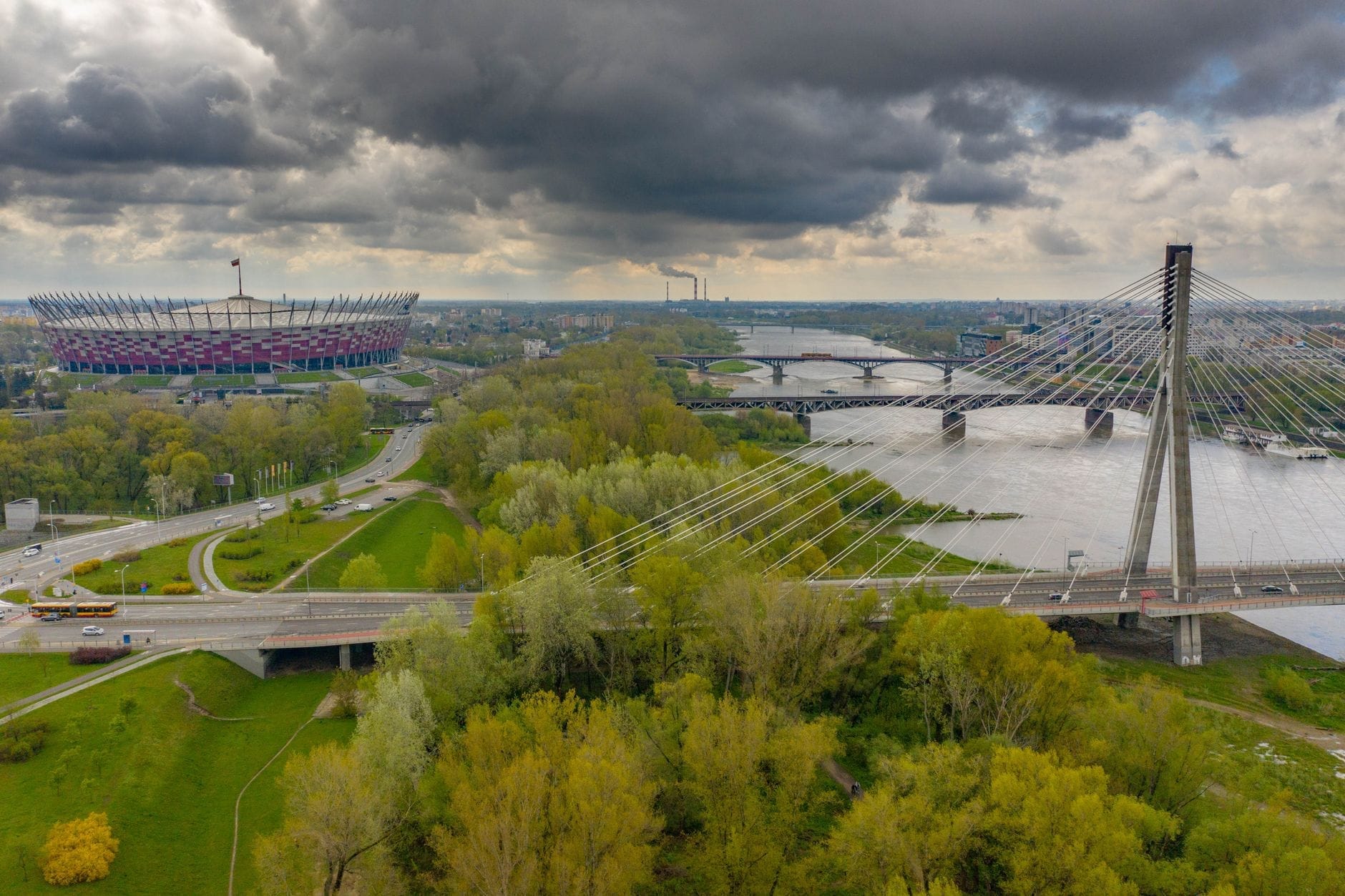
The PGE National Stadium (officially PGE Narodowy im. Kazimierza Górskiego) is Warsaw's largest venue and one of Central Europe's most recognizable modern structures. Built on the east bank of the Vistula and completed in 2011, it hosts Poland's national football matches, major concerts, and year-round public tours with a rooftop viewing point over the city.
- University of Warsaw Library Garden (Ogrody BUW)
Perched 16 meters above the Powiśle campus, the University of Warsaw Library Garden (Ogrody BUW) is one of Europe's largest roof gardens, covering about 10,000 square meters of planted terraces, color-themed beds, and pedestrian bridges. Admission is free, the views toward the Vistula are genuine, and the atmosphere is calm enough to make most of Warsaw's tourist attractions feel very far away.
- Vistula River Beaches
Every summer, sandy beaches emerge along Poland's longest river right in the heart of Warsaw. Free to access, strung with pop-up bars and volleyball nets, and backed by one of Europe's more dramatic city skylines, the Vistula River Beaches are genuinely worth an afternoon of your time.