Vistula River Beaches: Warsaw's Surprisingly Good Urban Escape
Every summer, sandy beaches emerge along Poland's longest river right in the heart of Warsaw. Free to access, strung with pop-up bars and volleyball nets, and backed by one of Europe's more dramatic city skylines, the Vistula River Beaches are genuinely worth an afternoon of your time.
Quick Facts
- Location
- Both banks of the Vistula River, central Warsaw (Vistula Riverfront)
- Getting There
- Metro line M2 to Stadion Narodowy (Poniatówka Beach); Trams 7, 9, 22, 24 to Rondo Waszyngtona
- Time Needed
- 2–4 hours for a relaxed afternoon; full day if you bring food and cycle the boulevard
- Cost
- Free entry; food, drinks, and rentals priced by private operators in PLN
- Best for
- Summer relaxation, cyclists, families, sunset watchers, locals watching
What the Vistula River Beaches Actually Are
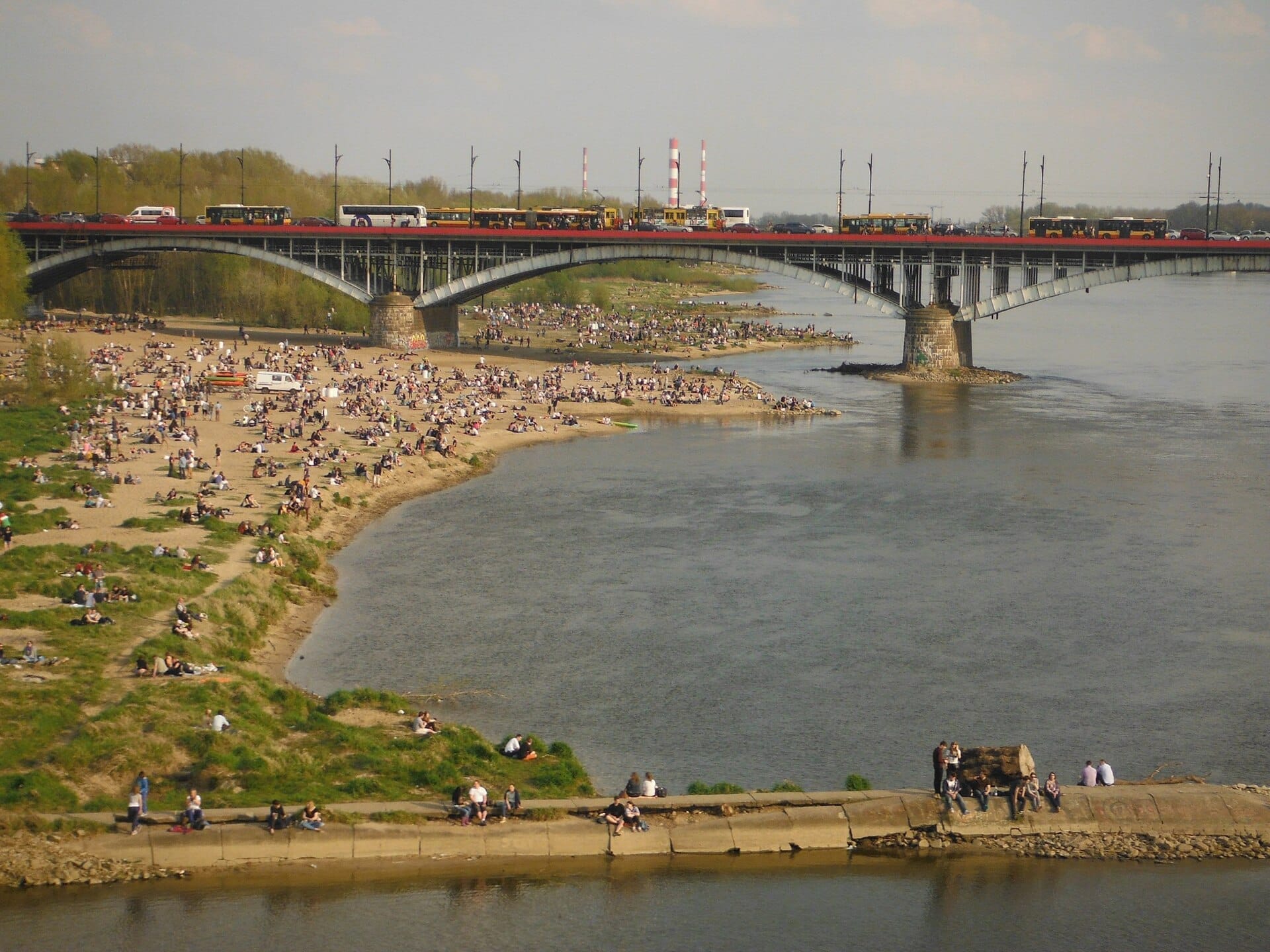
The Vistula River Beaches in Warsaw are not a single attraction but a loose chain of sandy riverbank stretches that come to life between late spring and early autumn on both sides of the Wisła River as it cuts through the city. Some have names you'll see on maps — Poniatówka, Praska, Saska, La Playa, Romantyczna, Zawady — others are barely more than a natural sandbar with a few deck chairs dragged down from the embankment above. What unites them is their informality: access is free, the atmosphere is deliberately unhurried, and the backdrop is a working Central European city.
The Vistula itself is Poland's longest river, running roughly 1,047 kilometers from the Carpathian Mountains to the Baltic Sea. In Warsaw it remains relatively wide and semi-wild by the standards of European capital rivers. The banks are not heavily engineered; sections of tall reed grass, poplar groves, and raw sand alternate with the more developed left-bank boulevards. That contrast — urban density directly above, something approaching a natural floodplain below — is the defining quality of the experience.
⚠️ What to skip
Swimming in the Vistula River around Warsaw is not recommended and is formally prohibited in many sections due to unpredictable currents and water quality concerns; municipal regulations treat most stretches as no-swimming zones for safety reasons. The beaches are for sunbathing, socializing, and recreation — not river swimming.
The Main Beaches: What Sets Each One Apart
Poniatówka Beach (Right Bank)
Poniatówka sits under the Poniatowski Bridge on the right (Praga) bank, near the National Stadium. It is one of the most accessible and most visited beaches. In summer, a free municipal ferry called "Pliszka" runs across to the left-bank boulevards, making it easy to cross without backtracking to a bridge. The sand here is coarser and more natural than anything manufactured, and the mood on a weekday afternoon is genuinely relaxed: locals spreading towels, dogs cooling off at the water's edge, children running between groups of teenagers with portable speakers.
Getting here is straightforward. From the city center, the Metro M2 to Stadion Narodowy puts you a short walk from the riverbank. Trams 7, 9, 22, and 24 stop at Rondo Waszyngtona, also within easy walking distance. The path down to the beach involves some sandy terrain and natural surfaces — manageable on foot but not ideal for wheelchair users.
Left-Bank Boulevards and Mini-Beaches
The redesigned Vistula Boulevards on the left bank offer a more curated but still casual experience. The promenade is wide, paved, and cyclist-friendly, with ramps improving access to the smaller sandy pockets along this side. Pop-up bars, food trucks, and a few more permanent pavilions operate here through summer. On a warm evening the boulevard fills with inline skaters, joggers, couples, and families eating ice cream with a view of the Old Town skyline rising on the escarpment above.
The left-bank beaches sit directly below the historic escarpment, meaning you get one of the better views of Warsaw's rebuilt historic core without paying for a tour. It is worth combining a visit here with a walk along the full Vistula Boulevards route to appreciate the scale of the riverfront redevelopment.
Tickets & tours
Hand-picked options from our booking partner. Prices are indicative; availability and final rates are confirmed when you complete your booking.
Public panoramic cruise of Warsaw on the Vistula River
From 21 €Instant confirmationPublic panoramic cruise of Warsaw on a traditional wooden boat
From 14 €Instant confirmationVistula River private scenic cruise along Warsaw's top landmarks
From 219 €Instant confirmationFree cancellationScenic Vistula River Cruise in Warsaw
From 12 €Instant confirmationFree cancellation
How the Experience Changes Through the Day
Early mornings on the Vistula beaches are quiet enough to feel private. By 9am on a clear summer day you will find a handful of regulars, some doing yoga on the sand, others walking dogs along the waterline. The light is soft and angled, hitting the water from the east, and the city noise overhead has not yet reached its midday pitch. This is the best window for photography — the skyline is clean, crowds are thin, and the sand still holds the cool of the night.
By noon the beaches fill steadily. Weekend afternoons in July and August can bring genuinely large crowds to the more established spots like Poniatówka and the left-bank sections near the Old Town. Towels are placed close together, bar queues stretch into the sand, and the atmosphere tilts toward festival-adjacent. It is not unpleasant, but it is a different experience than the morning quiet.
Sunset is the most atmospheric window. From roughly 8pm onward in midsummer, the light turns golden over the river, the heat drops, and groups gather to watch the sky change above the waterline. Bars stay open late into the evening. The crowd at this hour is a mix of office workers stopping after their commute, tourists who have done the main sights and wandered down, and locals who treat the riverbank as an extension of their living room.
💡 Local tip
Arrive on a weekday if possible. Warsaw's Vistula beaches on a Wednesday afternoon are a very different — and more comfortable — experience than on a Saturday in peak summer.
Historical and Cultural Context
Warsaw's relationship with the Vistula has historically been complicated. For much of the city's postwar decades, the riverbanks were neglected, partly industrialized, and largely inaccessible to ordinary Varsovians. The development of the Vistula Boulevards and the designation of parts of the river corridor as a public recreational zone represent a significant shift in how the city relates to its own waterway — one that has been recognized internationally, with outlets such as National Geographic and The Guardian noting Warsaw's urban river beaches as an interesting example of a European city reclaiming its waterfronts.
That reclamation is still a work in progress. The right bank retains a rawer, less developed character consistent with the broader character of the Praga district, while the left bank has received more investment and draws a broader mix of visitors. Neither side feels finished, which is part of what makes the beaches feel genuinely local rather than designed for tourist consumption.
Practical Walkthrough: Getting There and Getting Around
Warsaw's public transport system connects well to the main beach access points. For the right-bank beaches, Metro line M2 to Stadion Narodowy is the fastest option from the city center. For the left-bank boulevards, the Old Town area is reachable on foot from the Ratusz Arsenal metro station, or trams connect from multiple central stops. Cycling is an excellent option: the riverfront cycle path runs the length of the boulevard and connects to the wider city bike network.
The free "Pliszka" ferry service operates in summer and connects the two banks near Poniatówka, which is useful if you want to explore both sides without a long detour. Ferry schedules vary by season; check current timetables locally or via the city’s parks authority. If you are combining the beach with other riverfront sights, the National Stadium is within easy walking distance of Poniatówka Beach.
What to bring: sunscreen, as there is limited shade on the natural beaches. A towel or mat for sitting, since the sand is not always clean and chairs are not guaranteed. Cash in PLN for food and drinks at smaller bars. Water, especially on hot days when queues at bars can be long.
ℹ️ Good to know
The beaches are public spaces open around the clock, but seasonal facilities — bars, pavilions, ferries, and organized activities — operate only in summer, typically from late May or June through September, depending on the year and weather. Outside those months, the riverbanks are accessible but largely bare.
Photography Tips and Sensory Notes
For photography, the left-bank beaches offer the better compositional opportunity: you can frame the sweep of the river with the Old Town skyline and Sigismund's Column visible on the escarpment above. A wide angle works well here. On the right bank, the Poniatowski Bridge makes a useful leading line toward the city, particularly in the morning when the light comes from behind you as you face west.
Sensory details that are harder to convey in photographs: the particular sound of Warsaw traffic muffled by the embankment above, which creates a strange relative quiet at river level even in the middle of the day. The smell of river air, slightly mineral and cool even in August heat. The texture of the Vistula sand, which is finer and paler than coastal beach sand, with an occasional small stone mixed in. These are the details that make the place feel distinctly inland and distinctly Eastern European, in the best possible way.
For visitors who want to extend their time in the area, the Copernicus Science Centre is located close to the left-bank boulevard and makes a natural pairing, particularly for families with children.
Who Should Know Before They Go
Visitors expecting a polished resort beach with lifeguards, changing facilities, and clean water for swimming will be disappointed. These are urban riverbanks, not beach resorts. Facilities vary greatly by location and can be basic. The Vistula's currents make swimming genuinely dangerous, and the prohibition exists for good reason.
Visitors with mobility limitations will find the left-bank boulevard significantly more accessible than the right-bank natural beaches. Sand, uneven terrain, and the absence of formal ramps at some beach access points make parts of the right bank difficult for wheelchair users and those with pushchairs. The paved boulevard itself is well-maintained.
Travelers visiting in winter or during cold spells will find the beaches effectively empty and the seasonal facilities closed. For year-round riverside atmosphere, the Vistula Boulevards remain walkable in any weather, though the beach experience is strictly a summer proposition. For a broader sense of how Warsaw uses its outdoor spaces across the seasons, see our guide to Warsaw parks and green spaces.
Insider Tips
- The free Pliszka ferry near Poniatówka Beach crosses the river in summer and is one of the most pleasant ways to see the river from the water without any cost. Timings can be irregular, so ask locally or check the city's parks authority website before planning around it.
- Weekday mornings before 11am offer the cleanest, quietest beach experience. The sand is freshest and the bars are just setting up, meaning you can claim a good spot without navigating weekend crowds.
- The right-bank beaches (Poniatówka, Praska, Saska) tend to draw more locals and fewer tourists than the left-bank boulevard spots. If you want to observe Warsaw rather than be observed as a tourist, the right bank is the more interesting choice.
- Bring insect repellent for evening sessions, particularly near the reed grass sections of the right bank. Mosquitoes can be active after dusk, especially earlier and later in the season.
- Food and drink prices at beach bar operators vary considerably. Spots closer to the boulevard entrances and near the Old Town tend to charge more than those further along toward less-visited stretches.
Who Is Vistula River Beaches For?
- Travelers visiting Warsaw in July or August who want an afternoon away from museums and monuments
- Cyclists looking to combine the riverfront cycle path with a break at the water's edge
- Families with children who need open, unstructured outdoor space in the city
- Photographers seeking the classic left-bank framing of the Old Town above the river at golden hour
- Anyone curious about how Warsaw's residents actually spend their leisure time in summer
Nearby Attractions
Other things to see while in Vistula Riverfront (Bulwary Wiślane):
- Copernicus Science Centre
The Copernicus Science Centre on the Vistula riverfront is Warsaw's flagship interactive science museum, with over 450 hands-on exhibits spread across 15,000 m², a digital planetarium, and a seasonal rooftop garden. It draws children and adults equally, though it demands at least half a day to do it justice.
- National Stadium (PGE Narodowy)
The PGE National Stadium (officially PGE Narodowy im. Kazimierza Górskiego) is Warsaw's largest venue and one of Central Europe's most recognizable modern structures. Built on the east bank of the Vistula and completed in 2011, it hosts Poland's national football matches, major concerts, and year-round public tours with a rooftop viewing point over the city.
- University of Warsaw Library Garden (Ogrody BUW)
Perched 16 meters above the Powiśle campus, the University of Warsaw Library Garden (Ogrody BUW) is one of Europe's largest roof gardens, covering about 10,000 square meters of planted terraces, color-themed beds, and pedestrian bridges. Admission is free, the views toward the Vistula are genuine, and the atmosphere is calm enough to make most of Warsaw's tourist attractions feel very far away.
- Vistula Boulevards (Bulwary Wiślane)
The Vistula Boulevards stretch along the left bank of the Vistula River in central Warsaw, offering a free, open promenade lined with outdoor cafés, sandy beaches, cycling paths, and sweeping views of the eastern bank. Opened in phases from 2015, 2017, and 2019, they transformed a neglected riverfront into the city's most relaxed gathering space. This guide covers what to expect by season and time of day, how to get there, and what to do along the way.