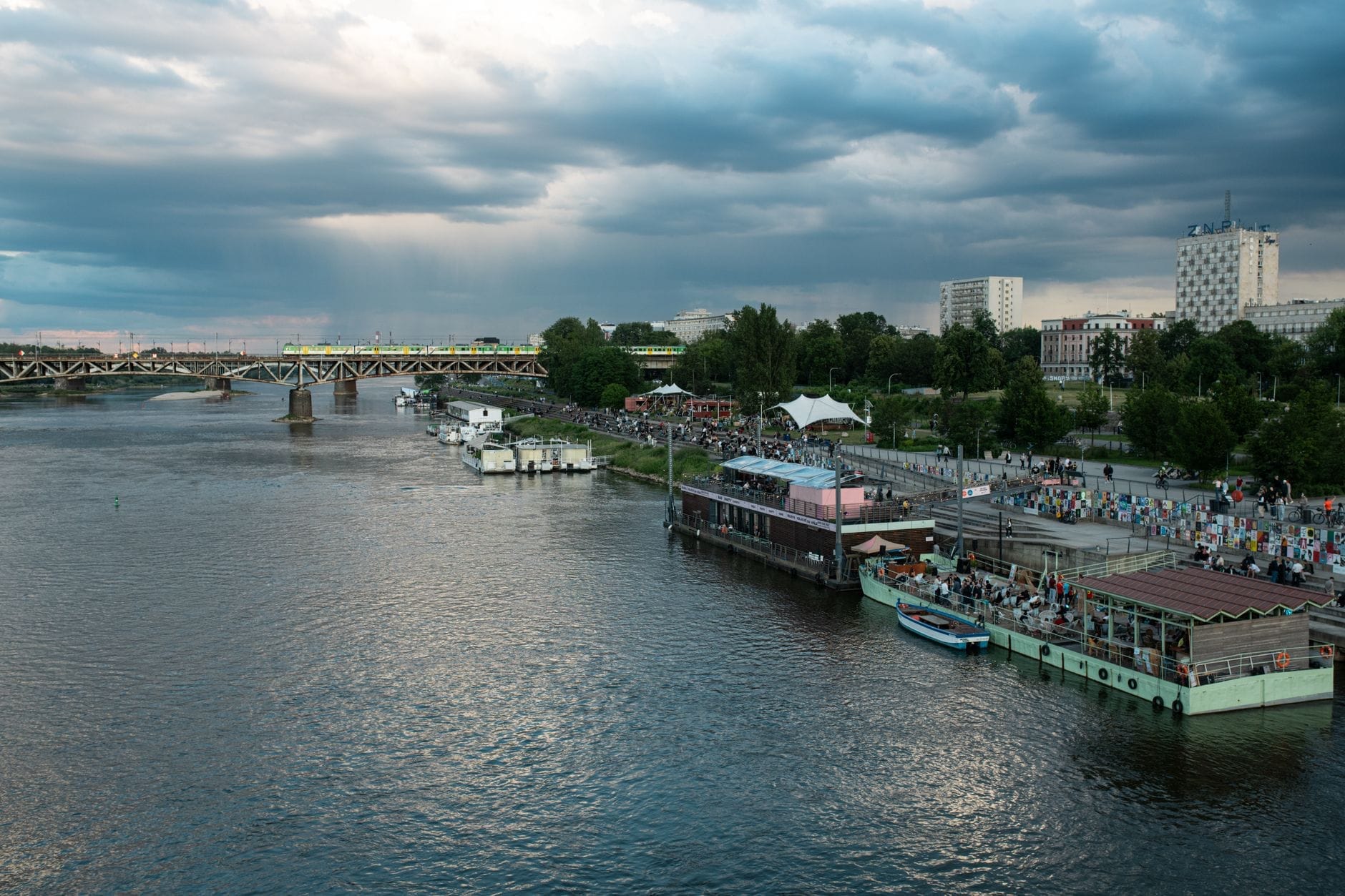
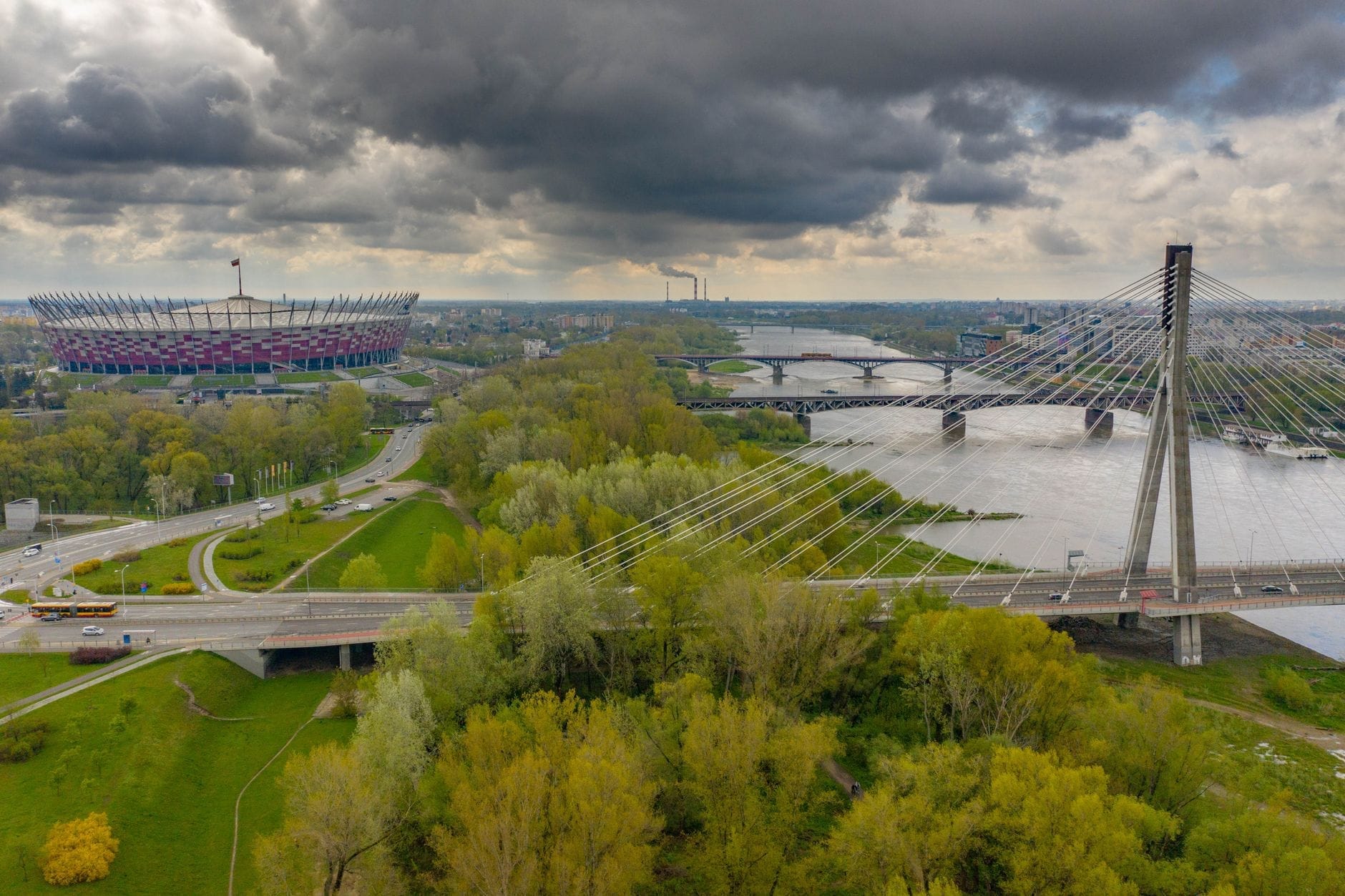
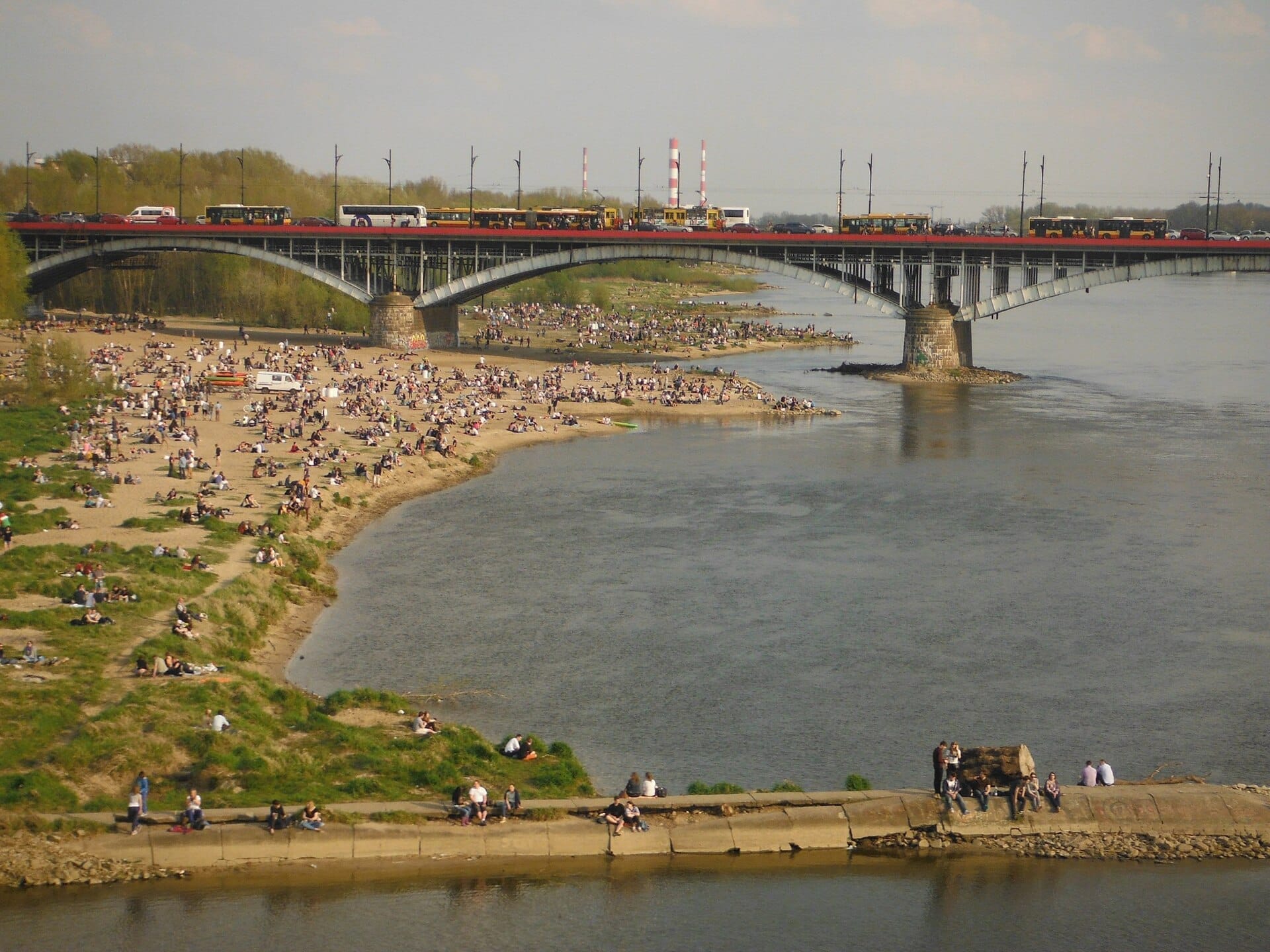
The Vistula Riverfront, known locally as Bulwary Wiślane, is Warsaw's most animated public promenade, stretching along the left bank of the Vistula through the heart of the city. From the edge of the Old Town south through Powiśle, it combines serious cultural institutions, open-air bars, cycling paths, and sweeping views of the wild, undeveloped right bank. This is where Warsaw exhales.
The Vistula Riverfront (Bulwary Wiślane) is the stretch of redesigned left-bank promenade that transformed Warsaw's relationship with its own river, turning a largely industrial and underused embankment into the city's most democratic public space. On warm evenings it fills with cyclists, runners, families, and anyone looking for a drink with a view of the wild green bank across the water. It is at once a leisure corridor, a cultural axis, and the clearest sign that Warsaw has fully reinvented itself.
Orientation
The Vistula Riverfront runs along Wybrzeże Kościuszkowskie, the main riverside road on the left (west) bank of the Vistula, through the central districts of Śródmieście and Powiśle. The designed promenade section begins near Boleść Street, just below the Old Town escarpment, and extends south past the Świętokrzyski Bridge to roughly Tamka Street in Powiśle. That core stretch is about one and a half kilometres on foot, though the broader riverside atmosphere continues further in both directions.
To the north, the riverfront connects visually and physically to the base of the Old Town walls. To the south, it dissolves into the quieter Powiśle neighbourhood, with the Copernicus Science Centre marking the cultural anchor of that end. The escarpment above the riverfront is one of Warsaw's defining geographical features: the city sits on a natural terrace that rises sharply from the water, and the Old Town, the Royal Route, and the university campus all look down from that higher level. Understanding this split between the upper city and the lower riverfront is the key to navigating this part of Warsaw.
The right bank opposite the promenade is strikingly undeveloped, mostly sandy beaches, willows, and the wild green margin of Praga's Skaryszewski Park and the nature reserves that line the eastern shore. That contrast, a fully redesigned urban promenade facing a barely touched flood plain, is one of the most unusual and photogenic aspects of this stretch of river.
ℹ️ Good to know
The Vistula Riverfront is not a formal administrative district. It sits within the Śródmieście and Powiśle zones of the central Śródmieście district. When booking accommodation, search for Powiśle or City Centre Warsaw for the closest options.
Character & Atmosphere
Early morning on the boulevards is quiet and purposeful. Runners use the dedicated path before the heat builds, cyclists commute south toward Mokotów, and the vendors at the small kiosks are just setting up. The river is often misty in spring and autumn, and the light comes in low from the east, catching the surface of the water and the pale stone of the escarpment above. It feels nothing like the dense urban grid just a few hundred metres uphill.
By midday in summer the energy shifts completely. The open-air bars and food trucks that line the central section between the Śląsko-Dąbrowski Bridge and the Świętokrzyski Bridge are already filling up. The path is shared by cyclists ringing their bells, inline skaters, children on scooters, and slow-walking couples. The noise is relaxed rather than pressured: music from bar terraces, the low hum of the river, the occasional horn from a tourist boat. On weekdays this is still largely a local crowd of office workers on lunch breaks and university students from the nearby campus.
Weekends, especially from May through September, are the boulevards at full intensity. The bars run continuous events, the grassy banks fill with picnic blankets, and the promenade becomes genuinely difficult to cycle through at peak hours. This is not a problem if you're here to sit, watch, and eat. It is a mild frustration if you're trying to cover distance on a bike. After dark, the string lights along the bar terraces and the reflection of the city in the water create a mood that feels distinctly more Mediterranean than Central European. Warsaw's summers are warm enough to sustain this, and locals take full advantage of every hour of them.
Outside summer, the riverfront quiets down significantly but never disappears entirely. In autumn it is genuinely beautiful, with golden light on the escarpment and the right bank trees turning. Winter reduces activity to the hardiest runners and the occasional riverside walk, though some permanent venues stay open year-round.
What to See & Do
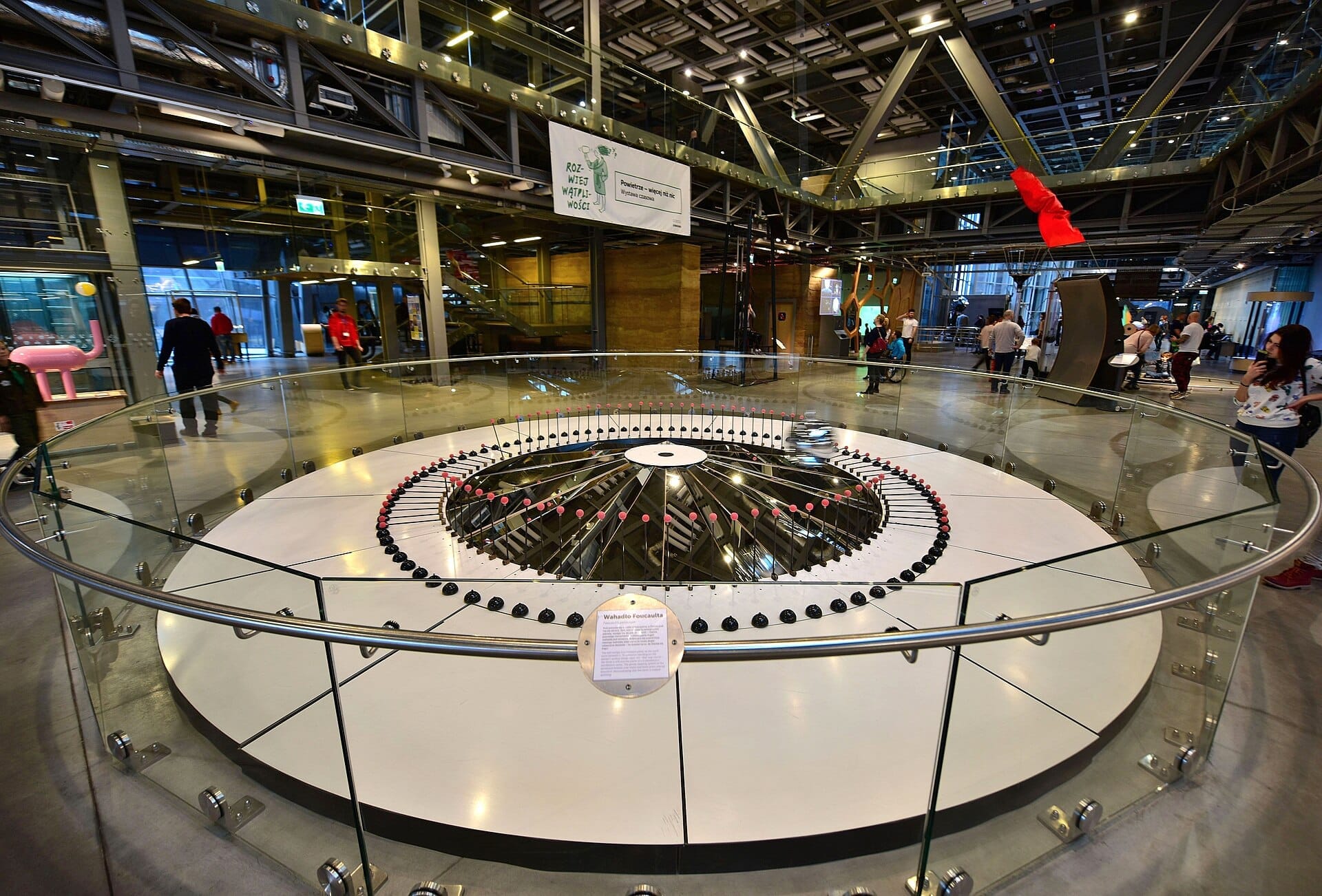
The single most important cultural institution on the riverfront is the Copernicus Science Centre, which sits at the southern end of the designed promenade near Wybrzeże Kościuszkowskie 20. It is one of the best science museums in Europe and draws visitors of all ages. The outdoor Discovery Park in front of the building extends to the riverbank and is free to enter, with large-scale interactive installations that work even on a brief visit.
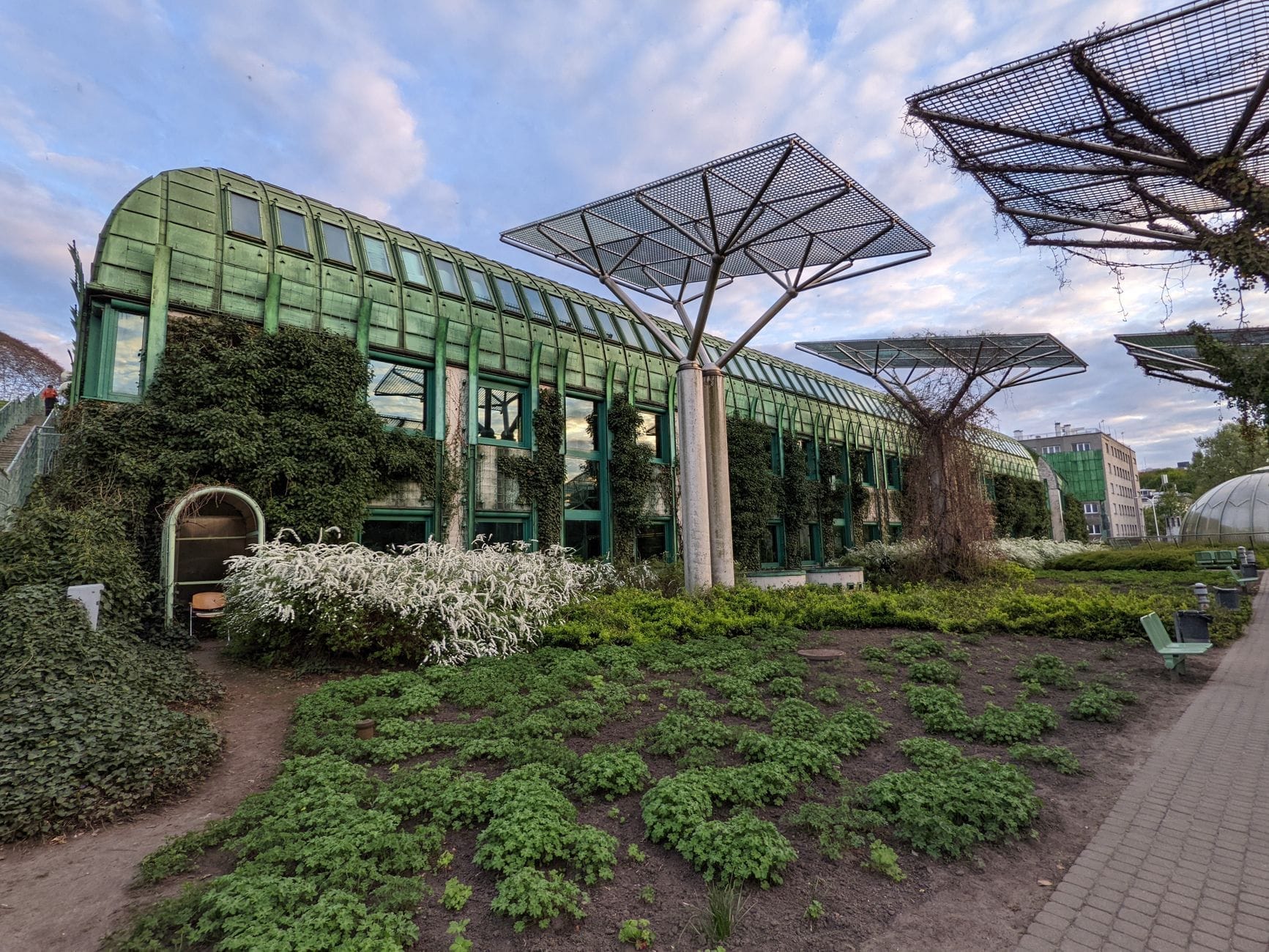
North of the Copernicus Centre, the University of Warsaw Library Garden sits on the rooftop terrace of the university library building, accessible from above via the campus. It is one of Warsaw's less-obvious green spaces, and the elevated view from the upper terrace out over the river and the Praga side is genuinely worth the detour.
The natural activity on the riverfront itself is simply walking or cycling the length of the promenade, then crossing to the right bank via the Świętokrzyski Bridge to explore the Vistula River beaches and the wild eastern shore. The contrast between the two banks makes the round trip feel like two completely different cities. In summer the sandy right-bank beaches attract locals for swimming, though conditions should be checked before entering the water.
The Multimedia Fountain Park, located just north of the Old Town riverfront near the Gdański Bridge, runs seasonal evening shows with choreographed water and light displays. These are free and very popular with families on summer evenings. The nearby Boleść Street area, at the northern end of the promenade, also marks the transition point to the Old Town embankment, and it is worth climbing the steps up the escarpment to see how dramatically the topography changes.
Cycling or inline skating the full length of the promenade, roughly 4 km with extensions
Riverside bar hopping along the central section between the two main bridges
Visiting the Copernicus Science Centre and its free outdoor Discovery Park
Crossing to the right bank for the river beaches and wild-bank walking
Evening walks during summer for the illuminated skyline and terrace atmosphere
Watching the sun set from the escarpment above Powiśle with the river below
💡 Local tip
Bike rental stations from Warsaw's Veturilo city bike scheme are located at several points along the riverfront. Download the Veturilo app before you arrive to avoid queuing at the docking stations on busy summer weekends.
Eating & Drinking
The food and drink scene along the Vistula Riverfront is seasonal by nature, concentrated in the warm months and significantly reduced from October through April. That said, what exists in summer is genuinely good and ranges from quick street food to serious sit-down restaurants with river views.
The central section of the promenade, running along the embankment between the Śląsko-Dąbrowski and Świętokrzyski bridges, concentrates the densest collection of outdoor bars and food trucks. These vary from simple beer gardens with plastic seating and cheap local beers to more designed spaces serving cocktails and grilled food. Prices are generally reasonable by Western European standards, though premium riverside spots charge accordingly. Expect to pay 15 to 25 PLN for a craft beer and 30 to 60 PLN for a main course at the better riverside restaurants.
The Powiśle end of the riverfront, south toward the Copernicus Centre, has a slightly calmer, more local character. The streets immediately behind the embankment, climbing back up into Powiśle proper, contain a good selection of independent cafés, wine bars, and restaurants that serve the neighbourhood's student and young professional population year-round. This area is worth exploring if you want to eat well without the full summer crowds of the main promenade.
For context on Warsaw's broader food scene before visiting, the guide to what to eat in Warsaw covers local specialities worth looking out for, many of which appear on riverside menus: żurek (sour rye soup), pierogi with seasonal fillings, and the increasingly common craft Polish breweries whose beers are well represented in the riverfront bars.
⚠️ What to skip
Many of the open-air riverfront bars are entirely seasonal and only operate from roughly May through September. If you visit in spring or autumn, confirm that specific venues are open before making plans around them. The permanent restaurant and café options on the embankment itself are limited outside summer.
Getting There & Around
The most useful metro station for the riverfront is Centrum Nauki Kopernik on Metro Line M2 (the east-west line). This station sits directly adjacent to the Copernicus Science Centre at the Powiśle end of the promenade and puts you on the riverbank in under a minute from the exit. From here you can walk north along the promenade toward the Old Town, covering the full designed section in about 25 to 30 minutes at a relaxed pace.
From the Old Town, the northern end of the riverfront is a 10 to 15 minute walk downhill from the Royal Castle, passing through the Mariensztat area and descending the escarpment via stairs and ramps near Boleść Street. This approach is one of the best ways to arrive: you get a sweeping view of the river and the right bank as soon as you clear the escarpment, and the contrast with the dense historic streets above is immediate.
Trams run along Wybrzeże Kościuszkowskie (the riverside road) and connect the riverfront to the wider city network, including routes toward Warsaw's City Centre. Bus routes also serve the embankment road. For a full overview of how to navigate Warsaw using public transit, the guide to getting around Warsaw covers metro lines, tram routes, and ticketing in detail.
Cycling is an excellent way to cover the full length of the riverfront and connect it to other parts of the city. The riverside cycle path is mostly flat, well-maintained, and separated from pedestrian traffic along the central section. Veturilo city bikes are available at multiple docking points. Note that on summer weekend afternoons the path can become crowded enough that cycling at speed is not practical in the busiest sections.
Ride-hailing apps including Bolt and Uber operate in Warsaw and can drop you at points along Wybrzeże Kościuszkowskie, though traffic along the riverside road can be slow during peak summer evenings. Walking or cycling from central accommodation is almost always faster than driving in these conditions.
Where to Stay
There are no major hotels directly on the promenade itself, but the Powiśle neighbourhood immediately behind the southern section of the riverfront is one of Warsaw's best-located places to base yourself. It is quiet, residential, and well-connected by metro, while remaining a short walk from both the riverfront and the upper-city attractions on Nowy Świat and Krakowskie Przedmieście. For a full picture of accommodation options across the city, see the where to stay in Warsaw guide.
Staying in Powiśle suits travellers who want to walk to the river in five minutes, have easy metro access to the rest of the city, and prefer a neighbourhood with actual residents over a purely tourist zone. It is not the cheapest area, but mid-range and boutique options exist. The trade-off is that some of Powiśle's streets are on the steep escarpment, which can be tiring if you're carrying luggage or have mobility considerations.
The Old Town is the other natural base for riverfront access, offering easy downhill walks to the northern end of the promenade. It is a more overtly tourist-facing neighbourhood and correspondingly more expensive, but the convenience for first-time visitors to Warsaw is real. Business travellers and those who want the full range of city options are better served by City Centre hotels along Aleje Jerozolimskie, from which the riverfront is easily reachable by metro or tram.
Practical Considerations
The Vistula is a working river in a flood-prone plain, and the water level varies considerably across the year. In high-water periods, usually spring snowmelt in April and May or after heavy summer rainfall, sections of the lower riverside path can be closed or flooded temporarily. This is a normal part of life on the Vistula and is managed by the city, but it is worth checking local conditions if you are visiting in spring or after significant rain. The upper embankment road stays open regardless.
The riverfront is safe to walk at any hour, and its open, well-lit character on summer nights means it attracts a broad cross-section of the city's population. Standard urban common sense applies, as it does anywhere in a capital city. For context on Warsaw's broader safety and practical logistics, the overview of Warsaw as a destination covers this and other practical questions.
Summer is the undisputed best season for the riverfront, but spring and autumn visits can be genuinely rewarding for anyone who doesn't require an open-air bar. The best time to visit Warsaw guide goes into seasonal detail across the whole city, including when the Vistula beaches and promenade are at their best.
💡 Local tip
If you are in Warsaw for at least two days, pair a morning along the riverfront with an afternoon in the nearby cultural corridor: the Copernicus Science Centre, the University of Warsaw Library Garden, and the climb back up to Nowy Świat for dinner. It makes for a logical, largely walkable day that covers very different sides of the city.
TL;DR
The Vistula Riverfront (Bulwary Wiślane) is Warsaw's main outdoor public promenade, running along the left bank of the Vistula between the Old Town and Powiśle.
Best in summer (May to September), when open-air bars, food trucks, and cycling paths are fully active; significantly quieter and partially closed in winter.
Key cultural anchors include the Copernicus Science Centre and the University of Warsaw Library Garden at the Powiśle end.
Easily reached by Metro Line M2 (Centrum Nauki Kopernik station), on foot from the Old Town in 10 to 15 minutes, or by Veturilo city bike.
Best suited to travellers who want outdoor space, river views, and a local rather than tourist atmosphere. Not ideal as a primary base in winter or for those focused exclusively on museum-heavy itineraries.
Top Attractions in Vistula Riverfront (Bulwary Wiślane)
Warsaw rewards a focused two-day visit more than most European capitals. This itinerary moves logically through the city's historic core, its most important museums, and its green escapes, so you leave with a real sense of the place rather than a blur of landmarks.
Warsaw's churches survived destruction, occupation, and reconstruction to remain among the most compelling religious buildings in Central Europe. This guide covers the best churches in Warsaw, from the Baroque grandeur of Holy Cross to the Gothic revival of St. John's Archcathedral and the military heritage of the Field Cathedral.
Warsaw is one of Central Europe's strongest museum cities. From world-class history museums built on the sites of WWII atrocities to interactive science centers and glowing neon archives, these are the best museums in Warsaw worth your time and zloty.
Warsaw rewards visitors year-round, but the experience shifts dramatically depending on when you arrive. This guide breaks down every season, from sun-drenched summer riverfront life to snow-dusted Christmas markets, helping you choose the right moment for your priorities and budget.
Warsaw is the beating heart of Chopin's world. This guide covers the key sites, live concert options, musical benches, and practical tips for tracing Fryderyk Chopin's legacy across the Polish capital, from the world's largest Chopin collection to free Sunday recitals in a royal park.
Warsaw preserves one of Central Europe's most complete collections of Stalinist and socialist realist architecture. This guide covers the key landmarks, the history behind them, practical visiting tips, and the common myths that distort what communist-era Warsaw actually looks like.
Warsaw has one of Central Europe's most integrated public transport networks, covering the entire city with metro, trams, buses, and suburban trains on a single ticket system. This guide breaks down every option, from Warsaw Chopin Airport transfers to night buses, with current fares and practical advice.
Warsaw divides opinion more than almost any European capital. This guide cuts through the noise with an honest look at what the city does well, where it falls short, how much it costs, and what kind of traveler will love it most.
Warsaw rewards visitors who look beyond its postwar facade. This guide covers the best things to do in Warsaw, Poland, from UNESCO-listed Old Town and world-class history museums to riverfront beaches and the city's creative Praga district, with clear advice on what's worth your time and money.
Three days is the sweet spot for Warsaw: enough time to walk the Royal Route, absorb the city's layered wartime history, cross the river into Praga, and still catch a sunset from the Vistula Boulevards. This itinerary structures the city's best attractions into three logical days so you don't waste a single hour backtracking.
Warsaw transforms each November into one of Central Europe's most atmospheric Christmas destinations, with free outdoor markets, a stunning Old Town backdrop, mulled wine, and festive activities spread across multiple city locations. This guide covers the best market spots, seasonal attractions, and everything you need to plan a perfect winter visit.
Warsaw rewards those who look past the postcard attractions. From a glowing neon archive in Praga to a rooftop garden above the Vistula, these lesser-known spots reveal the city's real character. This guide covers the neighborhoods, history sites, and local haunts that most visitors walk straight past.
Summer transforms Warsaw into an outdoor city, with free concerts in royal parks, sandy riverfront beaches, and long evenings spent at café terraces. This guide covers the best attractions and experiences across June, July, and August, from cultural landmarks to the places where locals actually spend their warmest months.
Winter in Warsaw generally runs from December through February, with temperatures hovering around freezing and short days that rarely exceed eight hours of daylight. But the city rewards cold-weather visitors with fewer crowds, atmospheric snowy streets, a thriving indoor cultural scene, and festive seasonal traditions that locals genuinely love.
Warsaw was once one of the great centers of Jewish life in Europe. This guide covers the history of the Jewish ghetto, the key memorials and museums, the only surviving prewar synagogue, and how to build a meaningful route through the Muranów district and beyond.
Warsaw's nightlife compares well with other European capitals. From Soviet-era neon-lit bars in Praga to rooftop cocktail lounges above the city skyline, the Polish capital offers a diverse after-dark scene that rewards those willing to explore beyond the Old Town.
Warsaw costs 30-50% less than most Western European capitals, yet delivers world-class museums, remarkable history, and excellent food. This guide breaks down exactly what to spend, where to save, and how to avoid the tourist-price traps that inflate budgets unnecessarily.
Warsaw is one of the greenest capital cities in Europe, with parks ranging from 18th-century royal landscapes to sandy Vistula riverbanks. This guide covers the best parks and green spaces in Warsaw, whether you want Chopin concerts on a Sunday afternoon, a long cycle through meadows, or a rooftop garden with river views.
Warsaw's shopping scene is far more interesting than a row of international malls. The city mixes beautifully restored market halls, independent boutique streets, flea markets, and food halls into a retail landscape that rewards explorers. This guide covers the best places to shop, browse, and eat your way through Warsaw.
The Warsaw to Kraków corridor is one of Poland's most traveled routes. This guide covers every realistic option, from PKP Intercity high-speed trains to FlixBus overnight departures, with clear price comparisons, booking strategy, and timing advice.
Warsaw rewards walkers more than almost any European capital. This guide covers the best self-guided walking routes, the apps that make them better, seasonal timing, and the context you need to actually understand what you're looking at.
Warsaw surprises families with a wide range of activities beyond its famous museums. From interactive science centers and a storied zoo to royal parks and riverside beaches, here is a practical guide to the best family experiences the Polish capital offers.
Warsaw suffered one of the most devastating urban destructions of the Second World War. This guide covers every major WW2 site and museum in the city, explains the crucial difference between the two Warsaw uprisings, and gives you practical logistics for visiting each location.
Warsaw's food scene runs deeper than Old Town tourist menus. This guide covers the essential Polish dishes to try, where to find them, how much to pay, and which spots locals rate over the obvious tourist traps — from budget milk bars to modern bistros.
Warsaw's food scene runs deeper than pierogi and bigos. With about 10 Bib Gourmand restaurants in Warsaw in the 2026 MICHELIN Guide Poland and a growing wave of creative chefs redefining Polish cuisine, the city rewards anyone willing to eat beyond the Old Town tourist strip. This guide covers where to eat in Warsaw at every budget, neighborhood, and time of day.
Choosing where to stay in Warsaw shapes your entire trip. This guide breaks down every major neighborhood by atmosphere, transport links, price level, and who it suits best — so you can book with confidence.