Museum of Warsaw: Where the City Tells Its Own Story
Spread across a row of reconstructed tenement houses on the UNESCO-listed Old Town Market Square, the Museum of Warsaw (Muzeum Warszawy) traces the capital's history from medieval origins to the present day. It is a serious, carefully curated institution that rewards visitors who want context, not just sightseeing.
Quick Facts
- Location
- Rynek Starego Miasta 28–42, Old Town, Warsaw
- Getting There
- Bus/tram to Plac Zamkowy (Castle Square), then 5-min walk
- Time Needed
- 2–3 hours for the core collection
- Cost
- Full 20 PLN / Reduced 15 PLN
- Best for
- History lovers, architecture buffs, first-time Warsaw visitors
- Official website
- muzeumwarszawy.pl/en
What the Museum of Warsaw Actually Is
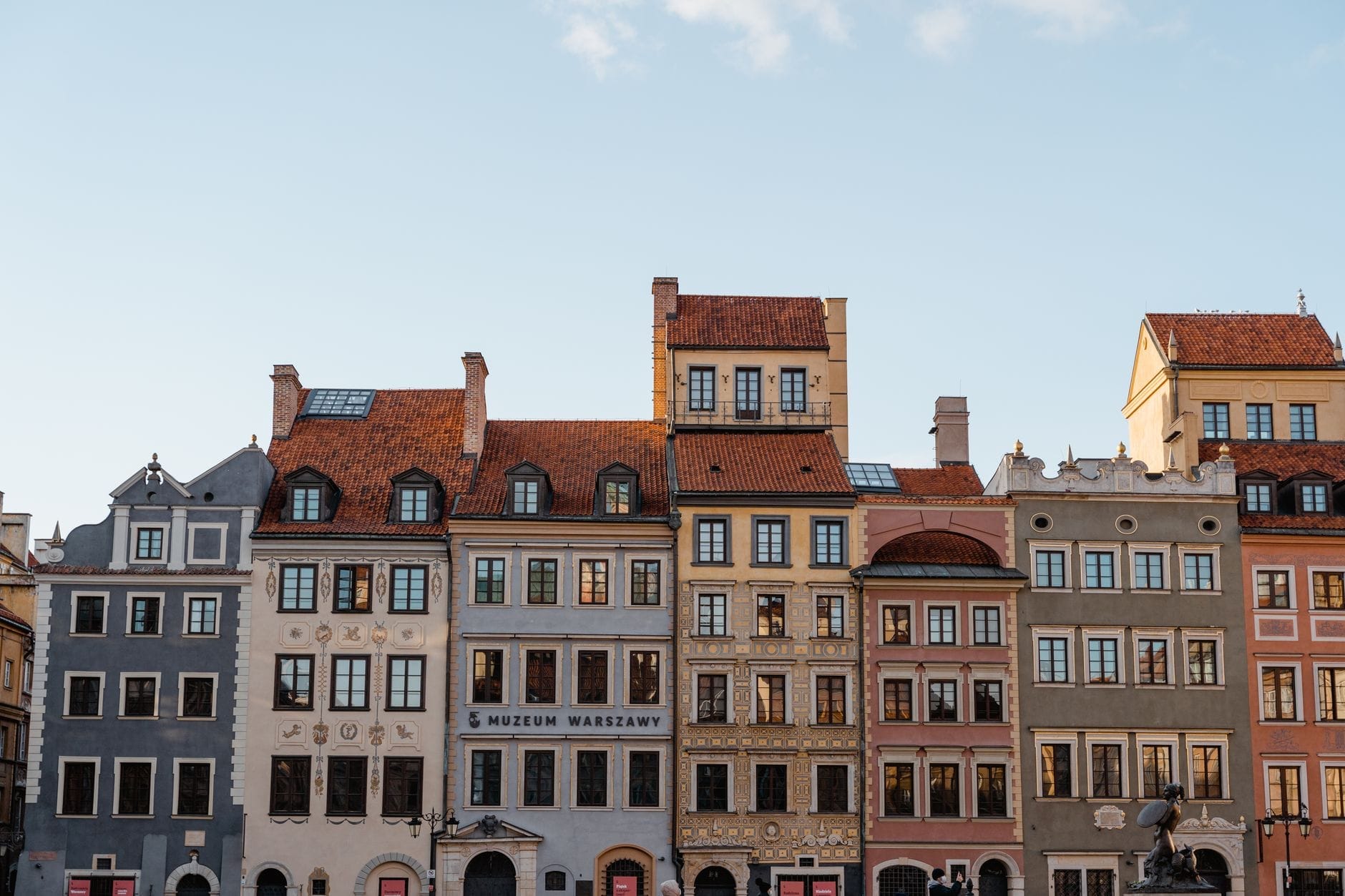
The Museum of Warsaw, known in Polish as Muzeum Warszawy, is not a single building. It is a complex of eleven interconnected historic tenement houses lining the south and west sides of the Old Town Market Square (Rynek Starego Miasta), numbered 28 through 42. Each house has its own architectural personality, and walking through the galleries means crossing thresholds between buildings, ascending narrow staircases, and occasionally catching glimpses of the square below through period windows. The experience is part exhibition, part architectural tour.
The collection covers the city's development from its medieval foundations through the destruction of World War II and into the postwar reconstruction period that shaped modern Warsaw. Exhibits include maps, documents, photographs, urban objects, and fine art, with recurring attention to what the city looked like before 1939 and how Varsovians rebuilt their identity from rubble. Signage is available in Polish and English throughout the main permanent galleries.
ℹ️ Good to know
The museum is closed on Mondays. Permanent exhibition hours vary by day: generally from late morning to early evening on weekdays, with later hours on Thursdays and Saturdays. Check the official website for current opening times and arrive at least two hours before closing to see the core collection without rushing.
The Setting: Tenement Houses on a UNESCO Square
The Old Town Market Square is the visual and symbolic heart of Warsaw's historic district. The square and the surrounding streets are part of the Historic Centre of Warsaw, inscribed on the UNESCO World Heritage List in 1980, recognized not just for their beauty but for the extraordinary act of reconstruction that created them. After World War II, the Old Town had been reduced to roughly 85 percent rubble. What stands today was rebuilt almost entirely between the late 1940s and the 1950s, using historical records, paintings, and photographs to reconstruct each facade in detail. For more on the area, see the Old Town Warsaw neighborhood guide.
The tenements housing the museum are themselves part of that reconstruction story. Several date in their foundations to the 15th and 16th centuries, though what visitors see from the street is the carefully restored postwar exterior. Inside, the interiors have been adapted for museum use while preserving where possible original elements: vaulted cellars, timber beams, and uneven stone floors that remind you these are not purpose-built museum halls.
Standing in the square on a clear morning, with the museum's pale facades catching early light and the market square still quiet before tour groups arrive, is one of the better introductions Warsaw offers to its own complicated relationship with the past.
Tickets & tours
Hand-picked options from our booking partner. Prices are indicative; availability and final rates are confirmed when you complete your booking.
Pub crawl in Warsaw
From 28 €Instant confirmationFree cancellationWarsaw Museum of Modern Art entrance ticket
From 8 €Instant confirmationSafe and Convenient Luggage Storage in Warsaw Old Town
From 6 €Instant confirmationFree cancellationInteractive spy-themed city game with host-guide in Warsaw Old Town
From 90 €Instant confirmationFree cancellation
Inside the Galleries: What You Will Actually See
The permanent exhibition, titled 'Things of Warsaw', is organized thematically rather than strictly chronologically. Rooms are dedicated to subjects like trade, religion, urban planning, daily life, and the physical materials of the city. The approach suits the building: instead of a linear march through time, you move between topics and periods as you move between rooms and staircases. Some visitors find this disorientating at first; others find it more honest to the way a city actually accumulates meaning.
Among the most striking objects in the collection is a large-scale model of prewar Warsaw, which gives visitors a concrete sense of the density and character of a city that no longer exists in that form. Photographs from the early 20th century hang alongside contemporary documentation of postwar rebuilding, making the before-and-after quality of Warsaw's history unusually visible. There is also a significant collection of Warsaw-specific crafts, trade signs, and everyday objects that ground the larger historical narrative in material detail.
The basement levels in some of the tenements contain older architectural fabric, including sections of medieval wall and vaulted storage spaces. These lower floors are worth seeking out and tend to be less crowded than the upper galleries.
💡 Local tip
Pick up a free floor plan at the entrance desk. The layout across multiple interconnected buildings can be confusing without it, and it is easy to miss entire sections if you follow only the most obvious route.
Time of Day and Crowd Patterns
The museum attracts a steady but not overwhelming flow of visitors, concentrated between roughly 11:00 and 15:00 when tour groups pass through the Old Town. If you arrive when the museum opens at 10:00, you will often have the quieter upper galleries largely to yourself for the first hour. The light inside varies considerably by room: some spaces are dim by design, preserving documents and textiles, while others face the square and receive strong morning or afternoon light.
Late afternoon visits, from around 16:00 onward, tend to see fewer organized groups and more individual visitors and locals. The square outside quiets slightly after the main tourist rush, and the combination of lower gallery crowds and softer exterior light makes this a good window for photography both inside and on the square itself.
In winter, the museum is a genuinely welcome refuge. The Old Town is cold and often wet between November and February, and spending two hours inside the galleries is a practical pleasure rather than a cultural obligation. In summer, the upper floors can become warm in the afternoon, so morning visits are preferable for comfort as well as crowds.
Getting There and Practical Logistics
The museum's address, Rynek Starego Miasta 28–42, places it directly on the Old Town Market Square, with the main entrance at no. 42. The closest transit stop is Plac Zamkowy (Castle Square), served by multiple bus and tram lines from the city centre. From Castle Square, the walk into the Old Town and across to the market square takes about five minutes on foot along Świętojańska Street, passing the St. John's Archcathedral on the right.
There is no parking inside the Old Town pedestrian zone. Visitors arriving by car should use the parking areas near Castle Square or further along the Royal Route and walk in. The entire Old Town is a pedestrian area, so all approaches on foot are straightforward once you reach the district boundary.
Admission is ticketed: full price is 20 PLN and reduced price is 15 PLN at the time of writing, though prices should be confirmed on the official website before your visit. Lifts and adapted entrances are available in parts of the complex; the official site's 'Visit' section lists current accessibility details, which are worth checking in advance if this matters for your group.
⚠️ What to skip
Not all galleries are accessible by wheelchair or pushchair due to the building's historic staircase layout. Check the museum's official accessibility page before visiting with mobility requirements.
Historical and Cultural Weight
The Museum of Warsaw sits at the intersection of two major themes that define the city: its prewar cosmopolitan identity and its postwar reconstruction from almost total destruction. Understanding either theme makes the other more legible. Visitors who have already read something about Warsaw's wartime history, or who have visited the Warsaw Uprising Museum, will find the collections here provide a useful complement, focusing more on urban continuity and everyday culture than on military or political history.
The tenement houses themselves carry the weight of the reconstruction narrative in a way that no single explanatory panel can fully convey. You are standing inside buildings that had to be re-imagined and rebuilt by a generation of Varsovians working under Soviet-era political constraints and severe material shortages. The fact that the result was accurate enough to earn UNESCO recognition decades later says something specific about the city's relationship to its own past.
For visitors interested in the broader Jewish history of Warsaw before the war, the museum touches on this but does not cover it in depth. The POLIN Museum of the History of Polish Jews provides a far more comprehensive treatment of that subject and is a natural companion visit.
Who Should Skip This Museum
The Museum of Warsaw rewards patience and prior curiosity. Visitors expecting a visually spectacular or fast-moving experience may find the pace slow and the displays text-heavy in places. Children without a specific interest in city history are likely to lose engagement fairly quickly, though the building's spatial complexity and the basement vaults can sustain some interest for a while.
If your time in Warsaw is limited to a single day and you are choosing between major institutions, consider your priorities carefully. The Warsaw Uprising Museum and the POLIN Museum are both larger, more immersive, and cover subjects with broader international recognition. The Museum of Warsaw is the right choice if you want to understand the city itself, its texture and identity over time, rather than a single dramatic chapter of its history.
Insider Tips
- The basement vaults in the older tenements are easy to miss if you follow only the main staircase route. Ask at the entrance desk which sections include the cellar levels, and make a point of going down.
- The museum also operates several branch locations across the city, including thematic museums covering subjects like printing history and pharmacy history. Your main ticket may grant access to these; check the current terms on the official site.
- Photography is generally permitted in the permanent galleries without flash. The light in the rooms facing the market square is best in the morning for interior shots.
- The museum shop near the entrance stocks Polish-language books on Warsaw's history and architecture that are not easily found elsewhere; even if you do not read Polish, some titles have bilingual sections worth browsing.
- Combine your visit with a circuit of the Old Town Market Square before the museum opens: the square at 9:30 on a weekday morning, before the tour coaches arrive, is a different experience entirely from midday.
Who Is Museum of Warsaw For?
- First-time visitors to Warsaw who want historical grounding before exploring the rest of the city
- Architecture and urban history enthusiasts interested in postwar reconstruction
- Travelers who have already seen the major WWII museums and want to understand prewar Warsaw
- Rainy or cold-day visitors looking for a substantive indoor option in the Old Town
- Anyone interested in how cities construct and preserve their own identity
Nearby Attractions
Other things to see while in Old Town (Stare Miasto):
- Field Cathedral of the Polish Army
The Field Cathedral of the Polish Army (Katedra Polowa Wojska Polskiego) stands on Długa Street just north of the Old Town, opposite the Warsaw Uprising Monument. It is simultaneously a functioning place of worship, the official church of the Polish military, and a layered historical document stretching from a 17th-century wooden chapel to a Katyn memorial added decades after the Second World War.
- Krakowskie Przedmieście
Krakowskie Przedmieście is Warsaw's most storied street, a just-over-1km boulevard connecting Castle Square to Nowy Świat along the historic Royal Route. Lined with baroque churches, neoclassical palaces, statues of Poland's greatest figures, and pavement cafés, it is the spine of the city's public life and the best single walk for understanding Warsaw's history and character.
- Krasiński Palace & Garden
Krasiński Palace, also known as the Palace of the Commonwealth, is a late 17th-century Baroque masterpiece designed by Tylman van Gameren. After decades as a closed National Library repository, it reopened to the public in May 2024 with free admission. Behind the palace, the 11.8-hectare Krasiński Garden offers a welcome green escape just north of the Old Town.
- Little Insurgent Monument
Standing roughly 1.5 metres tall against Warsaw's ancient red brick city walls, the Little Insurgent Monument is a bronze statue of a child soldier that carries the weight of an entire generation. Free to visit at any hour, it is one of the most emotionally affecting stops in the Old Town.