Field Cathedral of the Polish Army: Warsaw's Military Church With a Complicated History
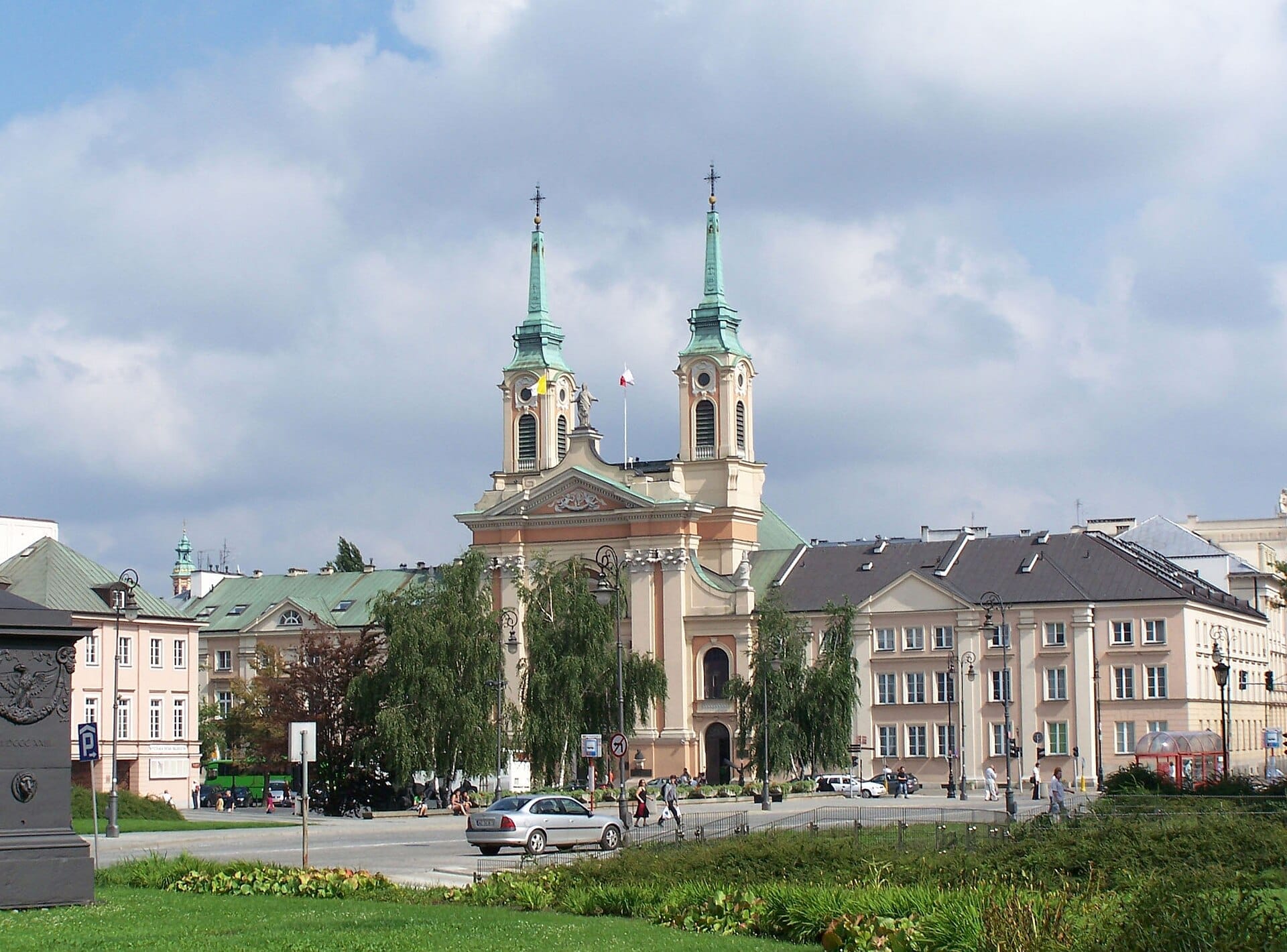
The Field Cathedral of the Polish Army (Katedra Polowa Wojska Polskiego) stands on Długa Street just north of the Old Town, opposite the Warsaw Uprising Monument. It is simultaneously a functioning place of worship, the official church of the Polish military, and a layered historical document stretching from a 17th-century wooden chapel to a Katyn memorial added decades after the Second World War.
Quick Facts
- Location
- Długa 13/15, near Krasiński Square, Old Town edge, Warsaw
- Getting There
- City buses and trams to Plac Krasińskich (Krasiński Square); 10-minute walk from Old Town Market Square
- Time Needed
- 30–60 minutes for the church; allow extra time for the basement museum
- Cost
- Main church entry is free; a small ticket is usually required for the basement Museum of Field Ordinance, so confirm the current fee on-site.
- Best for
- History enthusiasts, military history buffs, those tracing WWII and Katyn massacre memorials
What You Are Actually Visiting
The Field Cathedral of the Polish Army is not a typical church visit. From the outside, the pale baroque facade on Długa Street reads as a dignified but understated building, easy to walk past if you are hurrying toward the Old Town. Step inside and the atmosphere shifts. The interior is quiet, cool even in summer, and carries the particular weight of a place that has served simultaneously as a house of worship and a site of national mourning. The official Polish name, Kościół Najświętszej Maryi Panny Królowej Korony Polskiej, translates to the Church of the Blessed Virgin Mary, Queen of the Crown of Poland, but most visitors and Varsovians know it simply as the Katedra Polowa.
Its position on the map is significant. The cathedral sits directly opposite the Warsaw Uprising Monument, on the northern edge of the Old Town's tourist zone. That proximity is not accidental. This stretch of Długa Street connects several of Warsaw's most emotionally charged sites, and the cathedral anchors the western end of that corridor.
💡 Local tip
The cathedral is a functioning military church and hosts services regularly, including Sundays and religious holidays. Arrive on a weekday morning for the quietest conditions and the most uninterrupted access to the interior.
A History That Keeps Getting Rewritten
Few churches in Warsaw have changed identity as many times as this one. A wooden church was first built on this site in the mid-17th century, and a stone baroque church, constructed by the Piarist friars, was completed between 1662 and 1663.
The most jarring chapter came in 1834, when Russian imperial authorities transferred the church to the Russian Orthodox Church. Between 1835 and 1837 it was rebuilt in Neo-Classical style, a deliberate architectural shift away from its original Catholic and Polish character during a period of tight Russian control over the region. That transformation lasted until 1916, when the church was returned to the Catholic Church and assigned to the Polish military.
The interwar restoration, undertaken in the 1930s under a Polish architect, stripped away the Neoclassical additions and returned the building to something close to its pre-1834 appearance. Then came 1944. The Warsaw Uprising reduced much of this neighborhood to rubble, and the cathedral was heavily damaged. Reconstruction after the wartime damage stretched from 1946 to 1960 under architect Stanisław Marzyński, producing the building visitors see today.
That sequence of construction, destruction, ideological repurposing, and rebuilding makes this church a compressed version of Warsaw's broader story. For context on how the city was rebuilt after near-total wartime destruction, the Warsaw WWII history guide provides essential background before your visit.
Tickets & tours
Hand-picked options from our booking partner. Prices are indicative; availability and final rates are confirmed when you complete your booking.
Palace of Culture and Science skip-the-line ticket and tour in Polish
From 19 €Instant confirmationFree cancellationMuseum of John Paul II and Primate Wyszyński entrance ticket
From 8 €Instant confirmationPub crawl in Warsaw
From 28 €Instant confirmationFree cancellationWarsaw Museum of Modern Art entrance ticket
From 8 €Instant confirmation
The Katyn Memorial: The Most Significant Interior Element
In the right wing of the cathedral, reached through the right entrance from the street, there is a memorial to the officers and soldiers murdered at Katyn in 1940. Soviet forces executed over 21,000 Polish military officers, police, intellectuals, and civilians in the Katyn massacre, a crime the Soviet government denied for decades. The memorial inside the cathedral is modest in scale but carries enormous weight for Polish visitors, particularly those with family connections to the officer corps of the prewar Polish Army.
If you visit during a weekday morning, you may find individual visitors standing at the memorial in silence for extended periods. This is not unusual. For many Polish families, this space functions more like a tomb than a tourist attraction. Dress accordingly and keep noise to a minimum in this section of the building.
The Katyn memorial in the cathedral pairs naturally with a visit to the Katyn Museum, which provides the full historical and documentary context for the massacre and its long political aftermath.
The Basement Military Museum
Below the main church level, a small museum documents the history of the Field Ordinariate of the Polish Army, the ecclesiastical structure that oversees military chaplaincy in Poland. The collection includes military chaplain uniforms, religious objects used in field conditions, documents, photographs, and artifacts from both World Wars and later periods of Polish military history. It is a specialist collection, not a broad military history survey, and visitors who come without any background knowledge of Polish military chaplaincy may find it somewhat dense.
Access to the basement is via stairs only. There is no lift, which means the museum is not accessible to visitors with mobility impairments or those using wheelchairs. The main church level is accessible at ground floor via gentle ramps at the entrances. If the basement is a specific priority for your visit, confirm it is open before making the trip, as opening arrangements may vary.
⚠️ What to skip
The basement museum has no lift access. Visitors with mobility impairments can access the main church level but will not be able to reach the underground exhibition.
The Atmosphere at Different Times of Day
On weekday mornings, the cathedral is genuinely quiet. Light enters from the upper windows at an angle that makes the interior feel larger than it is, and the stone floor keeps temperatures noticeably cooler than the street outside. The smell is the standard one of older Catholic churches: candle wax, stone, and a faint trace of incense from recent services. This is the best time to examine the interior details without distraction.
Midday on weekends brings a different scene. Tour groups from the Old Town sometimes extend their walks up Długa Street and pause at the cathedral. The Warsaw Uprising Monument directly opposite also draws visitors throughout the day, so the pavement outside can feel quite active by early afternoon. Photography around the exterior is straightforward at any hour, but interior photography should be done respectfully and with attention to whether services are in progress.
On major Polish national holidays and military commemorations, the cathedral serves as an active venue for official ceremonies. On these days, access for casual visitors may be restricted or the atmosphere will be very different from a standard visit. Check the calendar before planning around a public holiday.
Getting Here and What to Combine It With
The cathedral is a ten-minute walk north from the Old Town Market Square. From the market square, walk through the New Town gate area and follow Długa Street westward. The building is on the right side before you reach Krasiński Square. City buses and trams serve Plac Krasińskich, which is the nearest transit stop; check the Warsaw public transport planner for current route numbers as these change periodically.
The neighborhood rewards a longer walk. Directly across the street is the Warsaw Uprising Monument, one of the city's most powerful pieces of commemorative sculpture. A few minutes further west, Krasiński Palace and Garden offers a quiet baroque garden that most tourists miss entirely. Combining all three in a single morning walk is straightforward and takes two to three hours at a relaxed pace.
If your interest is in Warsaw's layered religious and architectural history, the guide to the best churches in Warsaw will help you build a logical route that connects the cathedral with other significant religious sites across the city.
ℹ️ Good to know
The cathedral is located at Długa 13/15, Warsaw. It is within easy walking distance of the Old Town but slightly off the main tourist circuit, which keeps it calmer than sites inside the historic core.
Who Will Get the Most From This Visit
Visitors with a specific interest in Polish military history, the Warsaw Uprising, or the Katyn massacre will find this one of the more affecting stops in the city. The combination of a working military church with genuine historical depth and a dedicated memorial to a 20th-century atrocity is unusual anywhere in Europe. For those following a WWII or Cold War history itinerary through Warsaw, this belongs on the route.
Travelers looking primarily for grand church interiors may find the cathedral relatively modest compared to, say, the Royal Castle area churches. The architectural interest here comes from the history behind the walls rather than the decorative program inside. First-time visitors to Warsaw who have only a day or two and want to cover essential highlights will probably use their limited time better elsewhere. But for anyone returning to Warsaw or following a thematic historical itinerary, the Field Cathedral rewards the detour.
Insider Tips
- The Warsaw Uprising Monument directly across the street is one of Warsaw's most powerful sculptures. Budget time to read the relief panels at the base, which depict both the fighters descending into the sewers and the civilian population caught in the uprising. Most people photograph it quickly and move on, but the details repay slower attention.
- If you want to photograph the baroque facade without tour groups or buses in the foreground, arrive before 9am on a weekday. By mid-morning, Długa Street picks up pedestrian traffic from Old Town visitors.
- The basement museum is genuinely specialist material. If Polish military chaplaincy history is not already on your radar, read something about the Field Ordinariate before visiting or the exhibits will feel opaque. A short online search before your trip makes a significant difference.
- Sunday Masses attract a military congregation on some occasions, including uniformed officers. If that is the kind of local, lived-in church experience you value, a Sunday visit has a different quality than a weekday cultural visit.
- Confirm basement museum access by checking the cathedral's current website or calling ahead. Small specialist collections like this sometimes have irregular hours or seasonal closures that are not reflected in general travel listings.
Who Is Field Cathedral of the Polish Army For?
- Travelers tracing Warsaw's Second World War history in sequence
- Visitors researching the Katyn massacre and its memorial culture in Poland
- Architecture historians interested in buildings that have changed religious and political identity multiple times
- Those combining an Old Town walk with the quieter northern neighborhoods around Krasiński Square
- Repeat visitors to Warsaw who have covered the main sites and want to go deeper
Nearby Attractions
Other things to see while in Old Town (Stare Miasto):
- Krakowskie Przedmieście
Krakowskie Przedmieście is Warsaw's most storied street, a just-over-1km boulevard connecting Castle Square to Nowy Świat along the historic Royal Route. Lined with baroque churches, neoclassical palaces, statues of Poland's greatest figures, and pavement cafés, it is the spine of the city's public life and the best single walk for understanding Warsaw's history and character.
- Krasiński Palace & Garden
Krasiński Palace, also known as the Palace of the Commonwealth, is a late 17th-century Baroque masterpiece designed by Tylman van Gameren. After decades as a closed National Library repository, it reopened to the public in May 2024 with free admission. Behind the palace, the 11.8-hectare Krasiński Garden offers a welcome green escape just north of the Old Town.
- Little Insurgent Monument
Standing roughly 1.5 metres tall against Warsaw's ancient red brick city walls, the Little Insurgent Monument is a bronze statue of a child soldier that carries the weight of an entire generation. Free to visit at any hour, it is one of the most emotionally affecting stops in the Old Town.
- Museum of Warsaw
Spread across a row of reconstructed tenement houses on the UNESCO-listed Old Town Market Square, the Museum of Warsaw (Muzeum Warszawy) traces the capital's history from medieval origins to the present day. It is a serious, carefully curated institution that rewards visitors who want context, not just sightseeing.