Katyń Museum Warsaw: A Sobering Memorial Inside the Citadel Fortress
The Katyń Museum in Warsaw confronts one of World War II's darkest chapters: the Soviet massacre of over 22,000 Polish officers, intellectuals, and civilians in 1940. Housed since 2015 within the historic Warsaw Citadel, the museum is free to enter and demands at least two hours of genuine attention.
Quick Facts
- Location
- ul. Jana Jeziorańskiego 4, Warsaw Citadel, 01-783 Warszawa
- Getting There
- Dworzec Gdański (metro/rail, ~10-min walk); trams 1, 4, 6, 18, 28, 41 to Park Traugutta stop
- Time Needed
- 2–3 hours
- Cost
- Free admission; English audioguide 10 PLN
- Best for
- History buffs, Polish heritage travelers, WWII researchers
- Official website
- muzeumkatynskie.pl/en/home-english-2
What Is the Katyń Museum and Why Does It Matter?
The Katyń Museum (Muzeum Katyńskie w Warszawie) commemorates the Katyn massacre: the systematic execution of approximately 22,000 Polish military officers, police, and members of the intelligentsia by the Soviet NKVD in the spring of 1940. For decades, the Soviet Union blamed Nazi Germany for the killings. The truth was suppressed under communist rule in Poland and was only formally acknowledged by the Soviet government in 1990. That half-century of enforced silence is woven into the very fabric of this museum, making it not just a memorial to victims, but a document of how state terror and propaganda can erase a crime from official history.
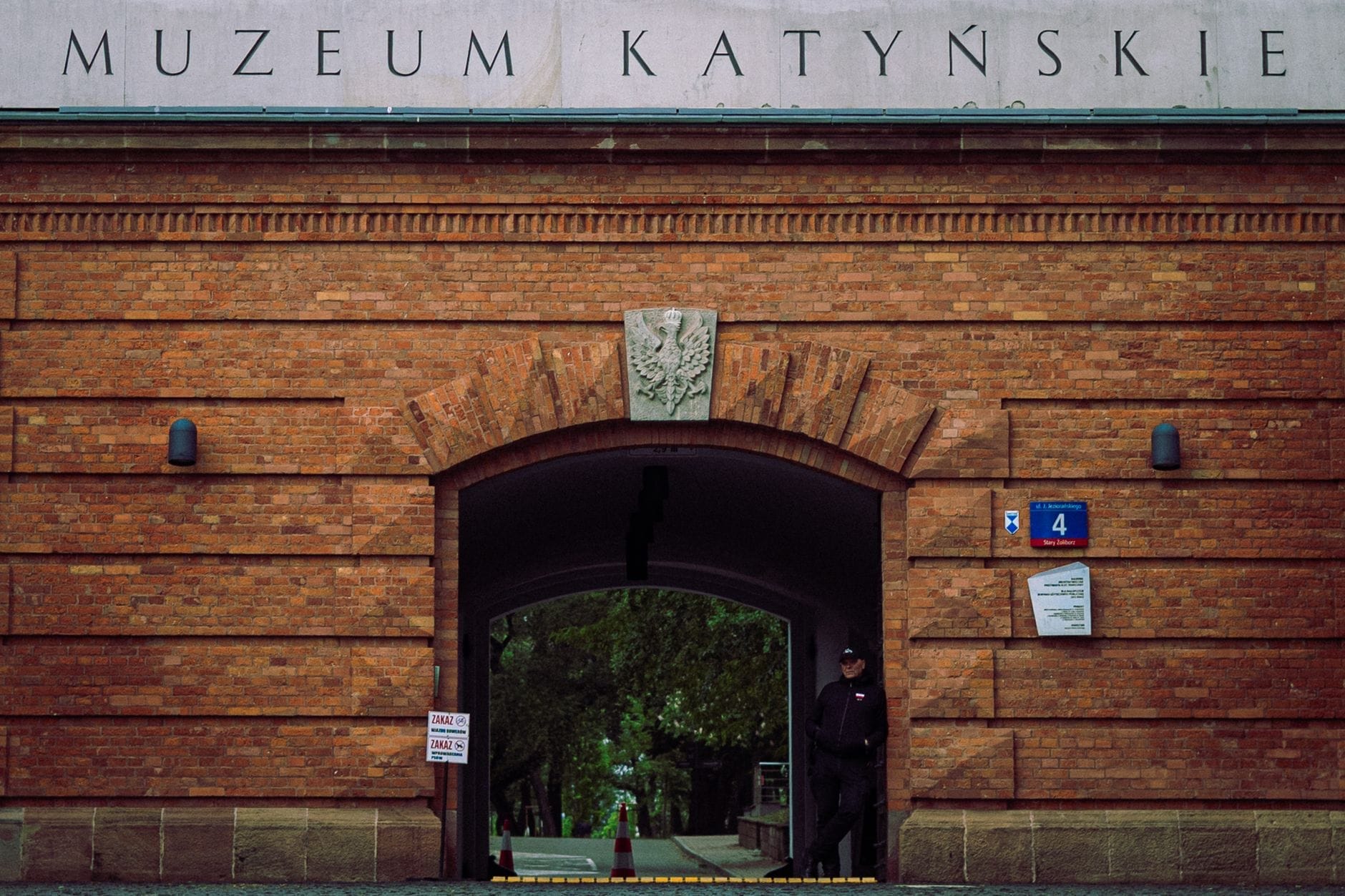
The museum was founded in 1993, but its current incarnation in the Warsaw Citadel, opened in 2015, is a different proposition entirely. Designed by BBGK Architekci, the exhibition occupies the southern sector of the 19th-century Warsaw Citadel, integrating the fortress's original brick casemates and vaulted corridors with contemporary display architecture. The result is a space where the physical weight of the building reinforces the weight of what it contains.
For travelers already engaging with Warsaw's difficult past, the Katyń Museum sits alongside the Warsaw Uprising Museum and POLIN Museum of the History of Polish Jews as one of the city's most serious and significant historical institutions. It is not a tourist attraction in a casual sense. It is an act of collective remembrance.
The Setting: Inside the Warsaw Citadel
The Warsaw Citadel was built by the Russian Empire in the 1830s following the failed November Uprising of 1830, as a garrison to suppress further Polish resistance. The irony of housing a museum about Soviet-perpetrated atrocities inside a fortress built by Tsarist Russia to intimidate Poles is not coincidental. It is part of the curatorial logic.
Arriving at the museum, you approach through the Citadel's earthwork fortifications. The grounds are largely open and quiet, with a sense of controlled silence that begins before you enter any building. The fortress walls are thick 19th-century brick, darkened with age and partially covered by creeping vegetation in warmer months. In winter, the bare masonry and frost-hardened paths create a starkness that feels appropriate to the subject matter.
💡 Local tip
The museum is about 1.5 km north of Warsaw's Old Town, roughly a 20-minute walk along the Vistula escarpment. If you are combining it with a visit to the Old Town, walking north along the river bluff is a pleasant approach and avoids retracing your steps.
The museum sits within the southern section of the Citadel complex, which also contains the Warsaw Citadel historical site itself. Visitors who arrive with extra time can walk the wider fortress grounds, though the Citadel's full visitor infrastructure is separate from the museum.
Tickets & tours
Hand-picked options from our booking partner. Prices are indicative; availability and final rates are confirmed when you complete your booking.
Museum of John Paul II and Primate Wyszyński entrance ticket
From 8 €Instant confirmationPub crawl in Warsaw
From 28 €Instant confirmationFree cancellationWarsaw Museum of Modern Art entrance ticket
From 8 €Instant confirmationSafe and Convenient Luggage Storage in Warsaw Old Town
From 6 €Instant confirmationFree cancellation
The Exhibition: What You Will Actually See
The permanent exhibition moves through the events of 1939 to 1940 chronologically, then pivots to the decades of cover-up and the eventual uncovering of mass graves. The display architecture uses original Citadel casemates extensively: low brick ceilings, narrow corridors, and the occasional shaft of natural light from ground-level windows. The spatial experience is deliberately claustrophobic in places, not for dramatic effect, but because the vaulted underground rooms are original fortress infrastructure repurposed as gallery space.
The core of the exhibition is personal objects recovered from the burial sites at Katyn, Kharkiv, and Mednoe, the three primary massacre locations. Eyeglasses. A pocket diary with entries that stop abruptly in April 1940. Photographs carried by officers who never came home. Personal letters never sent. Military decorations. Rosaries. These objects are displayed in a way that prioritizes individual identity over collective statistics, and it is here that the museum achieves its emotional power. You are not reading about 22,000 deaths. You are looking at the belongings of specific people.
The section covering the Soviet cover-up and the complicity of the post-war Polish communist government is handled with scholarly rigor. Documents, fabricated evidence, and propaganda materials from the period are displayed alongside the real evidence that contradicted them. For visitors unfamiliar with this chapter of Cold War history, it is genuinely revelatory.
Labels are primarily in Polish, and the exhibition's full depth requires either the English audioguide (available to rent for approximately 10 PLN) or a pre-booked guided tour. If you are traveling as part of a wider engagement with Warsaw's WWII history, the audioguide is strongly recommended. Without it, English-speaking visitors will miss significant interpretive content.
How the Experience Changes by Time of Day
The museum currently opens Wednesday 10:00–17:00 and Thursday through Sunday at 10:00 (typically closing at 16:00); it is closed on Mondays and Tuesdays. Arriving shortly after opening is advisable. The rooms are not large, and by midday during peak tourist season, the most resonant spaces near the personal objects displays can feel uncomfortably crowded for what is, functionally, a site of mourning. Polish school groups visit frequently, particularly in spring and autumn, which can shift the atmosphere considerably.
Midweek mornings, particularly Tuesday and Wednesday, tend to offer the quietest conditions. Late afternoon, around 16:00 to 17:00, sees a second wave of visitors but thins out as closing time approaches. The underground casemate sections are artificially lit throughout, so natural light is not a significant factor inside. On overcast autumn or winter days, the exterior Citadel grounds take on a particularly fitting atmosphere that aligns with the museum's tone.
⚠️ What to skip
The exhibition deals with graphic historical content including mass execution documentation, photographs of exhumations, and personal testimony of extreme suffering. The museum is not suitable for young children, and even older teenagers should be prepared for material that is genuinely difficult.
Getting There and Getting Around
The most convenient public transport option is Dworzec Gdański station, served by metro line M1 and commuter rail, about a 10-minute walk from the museum. Trams 1, 4, 6, 18, 28, and 41, as well as night buses N12 and N62, stop at Park Traugutta, which is very close to the Citadel entrance. From the city centre or Old Town, trams along the western riverbank route are reliable and run frequently.
On foot from the Old Town Market Square, head north along Freta Street into the New Town, then continue north past the New Town parish church and down toward the Vistula embankment. The walk takes around 20 minutes and passes through areas worth seeing in their own right.
Parking is limited near the Citadel, and the area's street layout makes driving unnecessarily complicated. Public transport or walking are the practical choices.
The Architecture: A Brief Note
The 2015 renovation by BBGK Architekci received significant attention in architectural circles for its approach to adaptive reuse. The design inserts contemporary steel, glass, and concrete elements into the 19th-century brick casemates without erasing the original fabric. Exposed structural steel contrasts with the rough brick vaulting; modern lighting systems are threaded through spaces that predate electricity by nearly a century. The overall effect is respectful rather than dominant, which is the correct choice for this type of commission.
The architectural intervention is worth noticing as you move through the space, particularly in the transition zones between the original fortress rooms and the newly built exhibition halls. The contrast between rough, aged masonry and precisely fabricated contemporary detailing functions as a kind of visual metaphor for the encounter between suppressed history and newly recovered truth.
Who Should Skip This Museum
Visitors looking for an overview of Warsaw's history should be aware that the Katyń Museum covers one specific, deeply traumatic chapter rather than a broad survey of Polish or Warsaw history. If your time in Warsaw is limited and you want historical breadth, the Museum of Warsaw in the Old Town Market Square or the Royal Castle offer more general context. The Katyń Museum rewards focused attention and some prior knowledge; arriving without any background on the Katyn massacre and the Soviet cover-up significantly diminishes the experience.
Similarly, if museum fatigue is already setting in after visits to major Warsaw institutions, give this one space rather than rushing through it as an afterthought. The broader context of communist-era Warsaw can help frame the museum's second half, which deals extensively with how the Polish communist government suppressed knowledge of the massacre for decades.
Insider Tips
- Rent the English audioguide immediately upon entering (10 PLN). Exhibition labels are predominantly in Polish, and without interpretation, English-speaking visitors lose a substantial portion of the narrative depth, particularly in the cover-up section.
- Visit on a Tuesday or Wednesday morning to avoid school groups. Spring and autumn are peak seasons for educational visits, and the personal objects gallery in particular becomes difficult to experience reflectively when crowded.
- Combine the visit with a walk through the wider Warsaw Citadel grounds before or after the museum. The fortress earthworks and brick bastions are open to walk and provide physical context for understanding the building's original military purpose.
- If you want a guided tour in English, contact the museum in advance to arrange it. On-demand English-language guiding is not reliably available without prior booking.
- Allow at least 2 hours and ideally 2.5 hours. The exhibition is denser than its footprint suggests, and the personal objects sections in particular require slow, attentive viewing rather than a quick pass.
Who Is Katyń Museum For?
- Travelers with a serious interest in 20th-century Polish and Soviet history
- Visitors tracing Polish national identity and wartime memory across Warsaw's memorial sites
- History researchers and students studying Cold War Soviet crimes and propaganda
- Travelers of Polish heritage seeking to understand formative national traumas
- Architecture enthusiasts interested in how contemporary design engages with historic military structures
Nearby Attractions
Combine your visit with:
- Pole Mokotowskie Park
Sprawling across roughly 68 hectares between Mokotów, Ochota, and the city centre, Pole Mokotowskie is one of Warsaw's most-used everyday parks. Free to enter, easy to reach by metro, and layered with unexpected history, it rewards visitors who want to see Warsaw as residents actually live it.
- Warsaw Citadel
Built by Tsar Nicholas I after the failed 1830 uprising, the Warsaw Citadel is a 36-hectare pentagonal fortress on the Vistula escarpment that once symbolized Russian domination. Today it houses the relocated Polish Army Museum and the haunting Museum of the Tenth Pavilion, where political prisoners were held before execution. Few sites in Warsaw pack this much layered history into one visit.