Warsaw Citadel: Tsarist Fortress, Political Prison, and Poland's Newest Museum Complex
Built by Tsar Nicholas I after the failed 1830 uprising, the Warsaw Citadel is a 36-hectare pentagonal fortress on the Vistula escarpment that once symbolized Russian domination. Today it houses the relocated Polish Army Museum and the haunting Museum of the Tenth Pavilion, where political prisoners were held before execution. Few sites in Warsaw pack this much layered history into one visit.
Quick Facts
- Location
- North of Warsaw's Old Town, along the Vistula escarpment; key museum address ul. Gwardii 4, 01-519 Warszawa
- Getting There
- Bus lines 157, 116, 178, 503 and tram lines 1, 3, 4, 6, 15, 28, 78 toward the Warsaw Citadel; short walk from Dworzec Gdański metro and Wybrzeże Gdyńskie/Wisłostrada-side stops. Check ZTM Warsaw for current routes.
- Time Needed
- 2–4 hours for both museums; add 30–45 min to walk the fortress grounds
- Cost
- Polish Army Museum: 40 PLN regular / 30 PLN concession / free Thursdays. Museum of the Tenth Pavilion: free admission.
- Best for
- History enthusiasts, WW2 and Cold War buffs, architecture lovers, visitors wanting depth beyond the Old Town
- Official website
- muzeumwp.pl/en/home
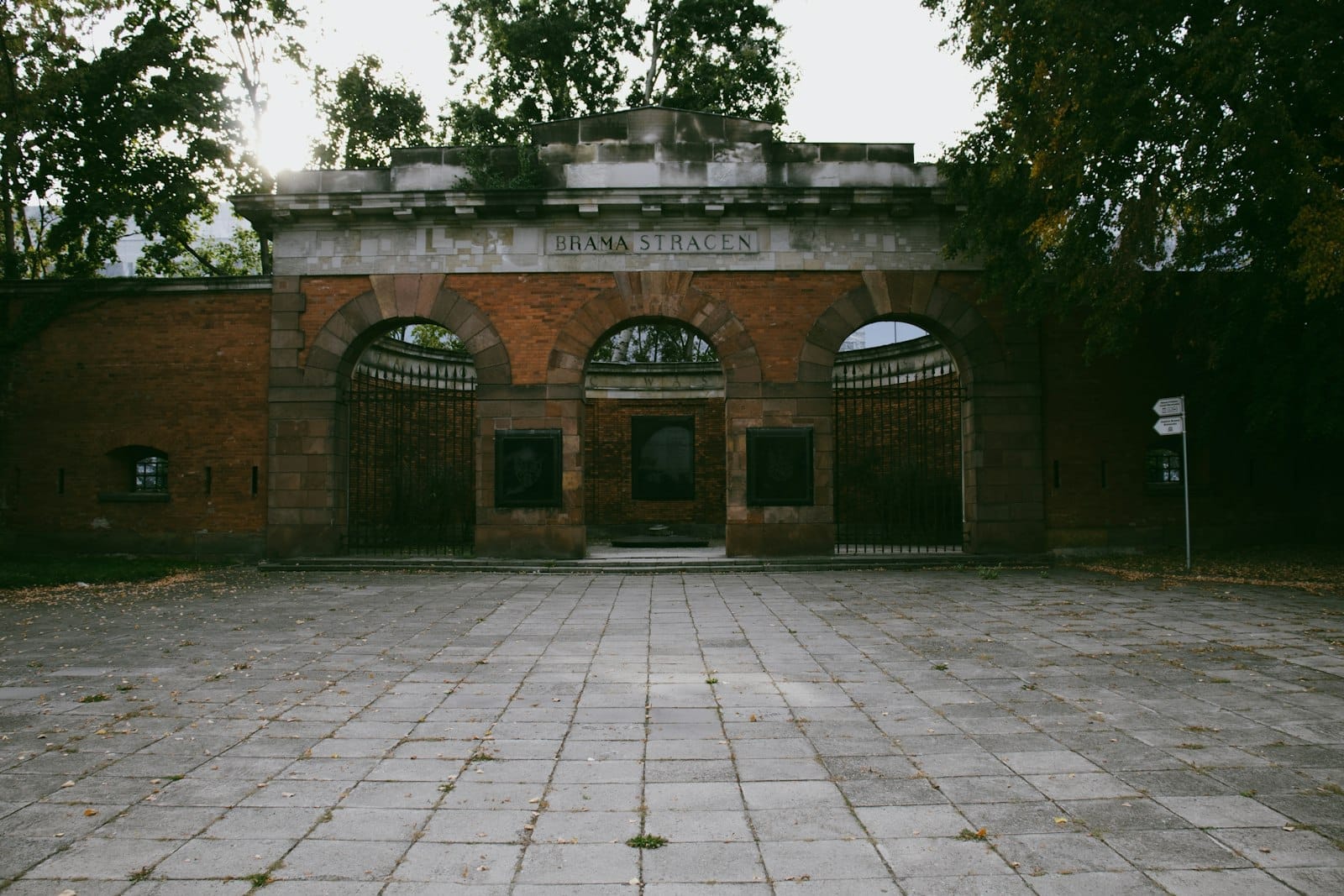
What the Warsaw Citadel Actually Is
The Warsaw Citadel (Polish: Cytadela Warszawska) is a massive 19th-century military fortress sitting on a bluff above the Vistula River, roughly a kilometer north of the Old Town. Its pentagonal walls enclose about 36 hectares, and even from the outside, the scale of the place imposes. These are not decorative ramparts. They were built to suppress a population.
Construction began immediately after the November Uprising of 1830, when Polish forces rose against Russian rule and were crushed. Tsar Nicholas I ordered the fortress built not to defend Warsaw from foreign enemies, but to garrison Russian troops in a position from which they could dominate the city itself. It was largely completed in the mid-1830s at a cost of 11 million roubles, financed in a particularly bitter irony through the Bank of Poland and contributions levied from the city of Warsaw. The people paid for their own cage.
For over a century, the Citadel functioned as a detention and execution site for Polish patriots, revolutionaries, and political prisoners. After Russian withdrawal in World War I and eventual Polish independence, the complex passed through German and Soviet control before becoming part of the postwar Polish state. Today the grounds are open to visitors, and two distinct museums operate within the walls, each tackling a different chapter of the site's history.
The Polish Army Museum: A Major New Institution Inside Old Walls
In 2023, the Polish Army Museum relocated its main collection to purpose-built pavilions on the Citadel grounds, creating one of the most significant new cultural institutions in Warsaw. The modern buildings are deliberately understated in form, sitting within the fortress perimeter without competing with the 19th-century brick architecture around them. Inside, the contrast is sharp: clean, well-lit contemporary galleries displaying military artifacts spanning from medieval arms through to 20th-century conflicts.
💡 Local tip
Thursday is free admission day at the Polish Army Museum. It draws larger crowds, especially in summer, so arrive before 11:00 for the best experience. On other days, the museum is notably uncrowded compared to the Royal Castle or POLIN.
The collection is substantial: tens of thousands of objects covering Polish military history, with particular depth on the Napoleonic era, both World Wars, and the September Campaign of 1939. The new facility allows proper display of large items that were previously cramped in the museum's former location on Aleje Jerozolimskie. Armored vehicles, artillery pieces, aircraft, and naval equipment fill dedicated spaces without the warehouse feel that plagues many military museums.
The Polish Army Museum is open Tuesday through Sunday, 10:00 to 18:00, with last admission at 17:20. It is closed on Mondays. Regular tickets cost 40 PLN; concession tickets (students, seniors) are 30 PLN. Thursdays are free. The modern pavilions are designed with level access and contemporary infrastructure, though visitors with specific accessibility needs should contact the museum directly to confirm exact services.
For context on how this museum fits into Warsaw's broader cultural landscape, the best museums in Warsaw guide covers the full picture, including how to sequence visits if you're planning multiple sites in a day.
Tickets & tours
Hand-picked options from our booking partner. Prices are indicative; availability and final rates are confirmed when you complete your booking.
Pub crawl in Warsaw
From 28 €Instant confirmationFree cancellationWarsaw Museum of Modern Art entrance ticket
From 8 €Instant confirmationSafe and Convenient Luggage Storage in Warsaw Old Town
From 6 €Instant confirmationFree cancellationInteractive spy-themed city game with host-guide in Warsaw Old Town
From 90 €Instant confirmationFree cancellation
The Museum of the Tenth Pavilion: Where History Gets Personal
The Tenth Pavilion is the emotional core of the Citadel. Built as a political prison within the fortress, it held thousands of Polish insurgents, activists, and intellectuals throughout the 19th and early 20th centuries. Many were executed in the courtyard or sent to Siberia. The pavilion has operated as a museum since 1963, and the decision to preserve the original cells and corridors rather than renovate them is what makes the visit work. You walk through actual spaces where people were confined and condemned.
The museum is a branch of the Museum of Independence (Muzeum Niepodległości) and admission is free. It is open Wednesday through Sunday, 09:00 to 16:00, with last admission at 15:30. The building is a 19th-century prison structure with narrow corridors, low ceilings, and uneven floors, which is part of what makes the atmosphere so effective. However, visitors with mobility limitations should contact the museum before going, as the historic building may have limited accessible routes.
The exhibitions inside document the biographies of specific prisoners, the mechanics of the Tsarist judicial process, and the physical conditions of detention. The cell doors, the courtyard, the scale of confinement: none of it requires dramatic presentation. The place does the work on its own. Plan at least an hour here, and expect the experience to be sobering rather than entertaining.
ℹ️ Good to know
The Tenth Pavilion closes at 16:00, two hours earlier than the Polish Army Museum. Plan your visit accordingly: start at the Tenth Pavilion in the morning, then move to the Army Museum for the afternoon.
Walking the Fortress Grounds
The grounds between and around the museum buildings are worth exploring on their own. The outer walls, the moat areas, and the surviving 19th-century brick structures give the Citadel a different character than any other site in Warsaw. Early morning is the best time to walk the perimeter: the scale of the fortifications reads more clearly before tour groups arrive, the light hits the brick walls at an angle that emphasizes the texture and thickness of the construction, and the surrounding area is quiet.
From the elevated grounds near the walls, there are views toward the Vistula and across to the Praga district on the eastern bank. These are not manicured viewpoint terraces, but the outlook is genuine and largely unphotographed compared to the standard Warsaw skyline views. In summer, the grass areas within the complex fill with locals taking short cuts or sitting in the sun, giving the fortress an oddly peaceful atmosphere that contrasts with its history.
If the outdoor exploration appeals to you, the nearby Vistula Boulevards continue south along the river and connect the Citadel area to the Old Town on foot within about 20 minutes.
Historical Weight: Why This Place Matters
Warsaw has no shortage of sites connected to suffering and resistance. What distinguishes the Citadel from, say, the Warsaw Uprising Museum or POLIN is the timeline: the Citadel predates all of the 20th-century catastrophes that tend to dominate Warsaw's historical narrative. It represents the 19th-century struggle for Polish statehood, the era of partitions, and the long generational effort to preserve national identity under Russian occupation.
For visitors already familiar with Warsaw's World War II sites, the Citadel offers a different and necessary layer. The WW2 history guide for Warsaw covers the 20th-century sites in depth, but the Citadel reminds you that Warsaw's history of resistance goes back much further. The two experiences complement each other rather than overlap.
The choice to build a cultural complex here, rather than leave the fortress as a passive historical monument or convert it entirely to other uses, reflects a deliberate decision about how Warsaw wants to engage with its most difficult architecture. The fortress built to humiliate Polish national ambition now houses the national military collection. That reversal is not accidental.
Practical Walkthrough: Getting There and Planning Your Visit
The Citadel sits north of the Old Town, accessible from the riverside via Wybrzeże Gdańskie. Bus and tram lines serving the area stop within walking distance; use the ZTM Warsaw journey planner for current routes, as service configurations change. The walk south from the Citadel toward the Old Town along the Vistula escarpment is pleasant and takes around 15 minutes, making a combined visit to both areas straightforward.
There is no single main entrance that covers both museums: the Polish Army Museum address is ul. Gwardii 4, while the Museum of the Tenth Pavilion is at ul. Skazańców 25. Both are within the Citadel complex but accessed separately. Allow time to orient yourself when you arrive, as the grounds are large and signage between the different areas can be sparse.
Weather genuinely affects how enjoyable the outdoor sections are. In rain, the grounds become muddy in places, and the outdoor exhibits at the Army Museum are less pleasant to explore. Waterproof footwear is worth considering in spring and autumn. Summer afternoons can be warm on the exposed grounds with little shade near the walls, so carrying water is sensible.
⚠️ What to skip
The Polish Army Museum is closed on Mondays. The Museum of the Tenth Pavilion is closed on Mondays and Tuesdays. If you are visiting Warsaw only on a Monday, neither museum inside the Citadel will be open.
If you are building a multi-day itinerary, the Citadel pairs well with Old Town sites in the same half-day. The Warsaw Barbican and the Royal Castle are within walking distance to the south and cover a different era of Warsaw's built history.
Who Should Consider Skipping
The Citadel is not an attraction built around spectacle or immediate visual payoff. If you are visiting Warsaw for a single day and prioritizing the most photogenic or emotionally immediate experiences, the Warsaw Uprising Museum or a walk through the reconstructed Old Town may serve you better. The Citadel rewards visitors who are willing to read, slow down, and engage with context.
Families with young children will find the Tenth Pavilion difficult to engage with productively: the content is heavy, the space is confined, and there are no child-oriented installations. The Polish Army Museum's large military hardware may interest older children, but the new facility is not specifically designed for family programming. Visitors who are already museum-fatigued after several days in Warsaw may also find the combination of two substantial collections in one visit difficult to absorb.
Insider Tips
- Thursday free admission at the Polish Army Museum can feel like a deal, but Tuesday and Wednesday mornings are significantly quieter if you want the galleries largely to yourself.
- Start at the Tenth Pavilion when it opens at 09:00, before the Army Museum opens at 10:00. This lets you sequence both museums in a single morning without backtracking.
- The outer walls of the Citadel can be walked partially along the riverside side, giving a sense of the fortress scale that you do not get from inside the grounds. Walk the perimeter before entering the museums.
- Photography inside the Tenth Pavilion is possible but the lighting in the original cells is low and atmospheric rather than bright. Bring a camera that handles low light, or accept that phone photos will be grainy — which, honestly, suits the mood.
- If you are visiting in winter, the Citadel grounds are largely deserted on weekdays and the brick walls under grey skies read almost exactly as they would have in the 19th century. It is a genuinely different atmosphere from the summer visit.
Who Is Warsaw Citadel For?
- History enthusiasts who want Warsaw beyond the World War II narrative
- Military history and arms collectors interested in the Polish Army Museum's extensive collection
- Visitors drawn to dark history and preserved prison sites
- Architecture lovers interested in large-scale 19th-century military fortification
- Travelers who prefer depth over volume and are happy spending a half-day at a single complex
Nearby Attractions
Combine your visit with:
- Katyń Museum
The Katyń Museum in Warsaw confronts one of World War II's darkest chapters: the Soviet massacre of over 22,000 Polish officers, intellectuals, and civilians in 1940. Housed since 2015 within the historic Warsaw Citadel, the museum is free to enter and demands at least two hours of genuine attention.
- Pole Mokotowskie Park
Sprawling across roughly 68 hectares between Mokotów, Ochota, and the city centre, Pole Mokotowskie is one of Warsaw's most-used everyday parks. Free to enter, easy to reach by metro, and layered with unexpected history, it rewards visitors who want to see Warsaw as residents actually live it.