Royal Castle Warsaw: History, Highlights, and What to Expect
The Royal Castle in Warsaw is part of the UNESCO-listed Historic Centre of Warsaw, rebuilt from rubble after WWII and now one of Poland's most visited museums. Standing at Castle Square on the edge of the Old Town, it offers a rare window into the grandeur of the Polish-Lithuanian Commonwealth alongside a sobering story of destruction and reconstruction.
Quick Facts
- Location
- Plac Zamkowy 4, Old Town, Warsaw
- Getting There
- Tram or bus to Plac Zamkowy / Castle Square stop; walkable from Śródmieście
- Time Needed
- 2 to 3 hours for the main route; longer if using audioguide
- Cost
- Castle Tour from 30 PLN regular / 20 PLN reduced; children under 16 pay 1 PLN
- Best for
- History lovers, architecture enthusiasts, and anyone tracing Poland's royal heritage
- Official website
- www.zamek-krolewski.pl
What the Royal Castle Actually Is
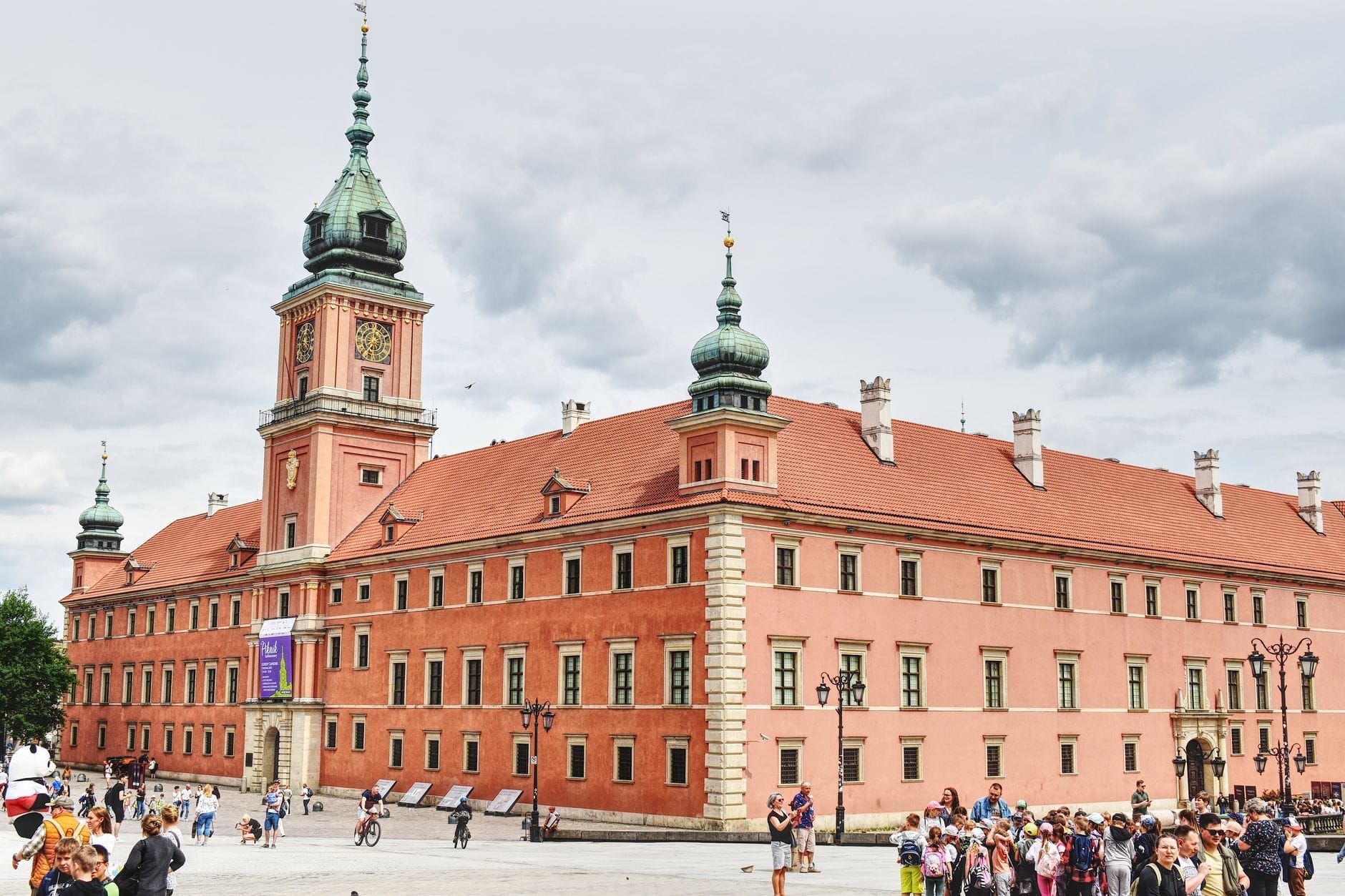
The Zamek Królewski w Warszawie, or Royal Castle in Warsaw – Museum, is far more than a grand building with furnished rooms. It is the main royal residence and political centre of the Polish-Lithuanian Commonwealth from the early 17th century, a place where the Constitution of 3 May 1791 — one of the first modern constitutions in Europe — was adopted, and a structure that was deliberately demolished by German forces in 1944, then painstakingly rebuilt brick by brick between 1971 and 1984. That layered history gives a visit here a weight that purely intact royal palaces rarely achieve.
The castle's origins go back to the late 13th and early 14th century, when the first Great Tower was built as a residence for the Masovian dukes. When Warsaw became the capital of the Polish-Lithuanian Commonwealth in the early 1600s, the castle expanded into the pentagonal baroque and early-modern complex visible today. By 1980, it and the surrounding Old Town had earned UNESCO World Heritage status, recognised not just for their architectural value but for the extraordinary act of civic reconstruction that brought them back to life.
💡 Local tip
Book tickets online in advance through the castle's official system, especially in summer when group tours fill morning slots quickly. Walking in on a weekday afternoon is usually fine outside peak season.
The Experience: Moving Through the Rooms
You enter from Castle Square, the wide open plaza dominated by Sigismund's Column, Warsaw's oldest secular monument. The square itself sets the tone: pigeons, tour groups, ice cream sellers in summer, and quiet in early morning. The castle exterior reads as solid and purposeful rather than theatrical, its red-brick walls rising without the showiness of, say, a Loire Valley château. Inside, the scale shifts dramatically.
The main castle route passes through the Royal Apartments on the upper floor, including the Throne Room, the Marble Room with portraits of Polish rulers, the Canaletto Room containing Bernardo Bellotto's famous 18th-century paintings of Warsaw (which proved invaluable to postwar reconstruction efforts), and the King's Bedroom. The interiors are rich without being overwrought — gilded but precise, with silk wall hangings, crystal chandeliers, and painted ceilings that reflect the taste of Stanisław August Poniatowski, Poland's last king. The audioguide (17 PLN regular, 12 PLN reduced) adds meaningful context to rooms that could otherwise feel like a succession of furniture.
Allow extra time at the Canaletto Room. The paintings hang in a dedicated chamber and show 18th-century Warsaw in remarkable detail. Because Bellotto painted the city so precisely, these canvases were used as reference documents during reconstruction. Standing in front of them, you are looking at both an artwork and a blueprint.
Tickets & tours
Hand-picked options from our booking partner. Prices are indicative; availability and final rates are confirmed when you complete your booking.
Pub crawl in Warsaw
From 28 €Instant confirmationFree cancellationWarsaw Museum of Modern Art entrance ticket
From 8 €Instant confirmationSafe and Convenient Luggage Storage in Warsaw Old Town
From 6 €Instant confirmationFree cancellationInteractive spy-themed city game with host-guide in Warsaw Old Town
From 90 €Instant confirmationFree cancellation
How the Experience Changes by Time of Day
The castle opens Tuesday through Sunday at 10:00, with closing times varying seasonally (often around 17:00); the first hour, from 10:00 to 11:00, is usually the quietest. Rooms feel spacious, lighting is controlled, and you can actually stand still in front of paintings without someone's elbow in your field of view. Group tours from cruise-style visits to Warsaw tend to arrive between 11:00 and 13:00, and the main route can feel compressed during that window — narrow corridors become slow-moving queues.
Late afternoon visits carry a different mood. Crowd levels thin again after 15:00, and the lower autumn or winter light entering through castle windows gives the gilded interiors a warmer quality than midday. If you are visiting in summer, note that last admission is generally about 60 minutes before closing time, so check the official schedule before planning a late arrival. Monday closures apply year-round.
⚠️ What to skip
The castle is occasionally closed or partially restricted for state ceremonies and official events. Check the website before visiting, particularly on national holidays or during diplomatic visits.
The Reconstruction Story: Why This Building Matters
In September 1939, Nazi forces looted the castle's furnishings and artworks. In 1944, after the Warsaw Uprising was suppressed, German demolition teams methodically reduced the structure to rubble. It was not an act of war damage — it was a deliberate attempt to erase the symbolic heart of the Polish state. Many pieces of the original décor had been hidden by museum staff before the destruction, and those salvaged elements were incorporated into the reconstruction.
Rebuilding began in 1971, funded in large part by private donations from Polish citizens and the Polish diaspora abroad. The project was completed in 1984, when the castle reopened as a museum. Walking through rooms that look identical to 18th-century engravings, knowing they were reconstructed from photographs, archival drawings, and hidden fragments, changes what you see. The plasterwork and marble are not ancient — they are testimony to collective determination.
For deeper context on how this history connects to the rest of Warsaw's wartime story, the Warsaw Uprising Museum provides the military and civilian narrative of 1944. Together, the two sites cover what was lost and how Warsaw chose to respond.
Getting There and Navigating the Surroundings
The castle sits at the top of Krakowskie Przedmieście and the entrance to the Old Town, which makes it easy to combine with a half-day in the surrounding area. Several bus and tram lines stop near Stare Miasto and Castle Square. The walk from Warsaw Central Station takes roughly 20 to 25 minutes on foot via Krakowskie Przedmieście toward the castle, or you can take a tram north along Marszałkowska and then walk across. Ride-hailing via Bolt or Uber is practical if you are arriving from elsewhere in the city.
The Old Town Market Square is a five-minute walk from the castle entrance, and Sigismund's Column stands directly outside the main gate. The Warsaw Barbican is another ten minutes north. This triangle of sites forms a natural walking loop that works well in either direction.
Accessibility details including lift availability and wheelchair routes should be confirmed directly with the museum at +48 22 35 55 170 or informacja@zamek-krolewski.pl before your visit, as the castle's historic structure creates limitations that vary by section.
Photography and What to Bring
Photography for personal use is generally permitted in most rooms without a tripod. Flash is typically prohibited. The Canaletto paintings and the Throne Room ceiling are the two most photographed subjects, and for good reason — both reward close inspection. If you want controlled shots without strangers in frame, arrive at opening time on a weekday.
Wear comfortable flat shoes. The route covers multiple floors connected by staircases, and some sections have uneven historical flooring. In winter, the building is heated, so a packable layer is enough — you will not need heavy coats inside. Coat check facilities are available.
The Royal Castle fits naturally into a broader Old Town walk. After your visit, the St. John's Archcathedral is immediately adjacent, and the Old Town route connects onward through the Barbican toward the New Town. A full morning covering all three areas is realistic without rushing.
Is It Worth the Time?
For most visitors, yes — with one honest qualification. The interiors are historically and visually significant, but the fact of reconstruction means you are not experiencing original materials the way you would in, say, Wawel Castle in Kraków or Versailles. If authenticity of fabric matters to you above all else, that is worth knowing upfront. What Warsaw's Royal Castle offers instead is a different kind of significance: a place rebuilt because people decided that memory and continuity mattered enough to rebuild it. That argument lands differently for different visitors.
Travellers with limited time who must choose between this and the POLIN Museum of the History of Polish Jews should know that the two sites are not interchangeable. The Royal Castle is about royal and political history; POLIN covers an equally essential but entirely different chapter of Warsaw's past. Ideally, you do both.
For a broader picture of how the castle fits into Warsaw's historic centre, the Warsaw walking tour guide maps a route that connects the main Old Town sites efficiently.
Insider Tips
- The audioguide (available in multiple languages including English) is genuinely worth the extra cost for the Royal Apartments — without it, many rooms offer minimal English signage and the context is lost.
- Tickets for the family rate work out to 15 PLN per person for families with children under 17, making it meaningfully cheaper for groups of four or more. Confirm current rates on the official site before visiting.
- Castle Square is at its most atmospheric in early morning before tour groups arrive — the column, the castle façade, and the Old Town gate are all photographable without crowds between roughly 8:00 and 9:30, even though the castle itself does not open until 10:00.
- Bellotto's paintings in the Canaletto Room were used as reconstruction guides for the entire Old Town — ask about this in the museum shop, where reproductions and books on the postwar rebuilding are available and make for more meaningful souvenirs than standard magnets.
- If you are visiting with children, the 1 PLN children's ticket makes this one of the most affordable cultural visits in Warsaw for families. Pair it with a walk along the Old Town walls for a half-day that does not require expensive entry fees.
Who Is Royal Castle For?
- History and architecture enthusiasts who want to understand Poland's royal and political past
- Travellers interested in WWII history and postwar reconstruction stories
- Families with school-age children looking for an educational but visually engaging museum
- First-time visitors to Warsaw covering the Old Town as a priority
- Anyone with an interest in 18th-century painting, particularly the Bellotto/Canaletto Warsaw series
Nearby Attractions
Other things to see while in Old Town (Stare Miasto):
- Field Cathedral of the Polish Army
The Field Cathedral of the Polish Army (Katedra Polowa Wojska Polskiego) stands on Długa Street just north of the Old Town, opposite the Warsaw Uprising Monument. It is simultaneously a functioning place of worship, the official church of the Polish military, and a layered historical document stretching from a 17th-century wooden chapel to a Katyn memorial added decades after the Second World War.
- Krakowskie Przedmieście
Krakowskie Przedmieście is Warsaw's most storied street, a just-over-1km boulevard connecting Castle Square to Nowy Świat along the historic Royal Route. Lined with baroque churches, neoclassical palaces, statues of Poland's greatest figures, and pavement cafés, it is the spine of the city's public life and the best single walk for understanding Warsaw's history and character.
- Krasiński Palace & Garden
Krasiński Palace, also known as the Palace of the Commonwealth, is a late 17th-century Baroque masterpiece designed by Tylman van Gameren. After decades as a closed National Library repository, it reopened to the public in May 2024 with free admission. Behind the palace, the 11.8-hectare Krasiński Garden offers a welcome green escape just north of the Old Town.
- Little Insurgent Monument
Standing roughly 1.5 metres tall against Warsaw's ancient red brick city walls, the Little Insurgent Monument is a bronze statue of a child soldier that carries the weight of an entire generation. Free to visit at any hour, it is one of the most emotionally affecting stops in the Old Town.