Sigismund's Column: Warsaw's Oldest Secular Monument
Rising 22 metres above Castle Square, Sigismund's Column (Kolumna Zygmunta) has marked the symbolic heart of Warsaw since 1644. Free to visit at any hour, it commemorates the king who moved Poland's capital from Kraków to Warsaw and stands as one of the city's most recognisable landmarks.
Quick Facts
- Location
- Plac Zamkowy (Castle Square), Old Town, Warsaw
- Getting There
- Bus/tram stop 'Stare Miasto / Old Town' below the square; tourist line 180 stops at 'Plac Zamkowy'; metro 'Ratusz Arsenal' approx. 1 km away
- Time Needed
- 10–20 minutes at the column; allow 1–2 hours if combining with the Royal Castle and Old Town Market Square
- Cost
- Free — no ticket required, open 24/7
- Best for
- History lovers, photographers, first-time visitors orienting themselves in the city
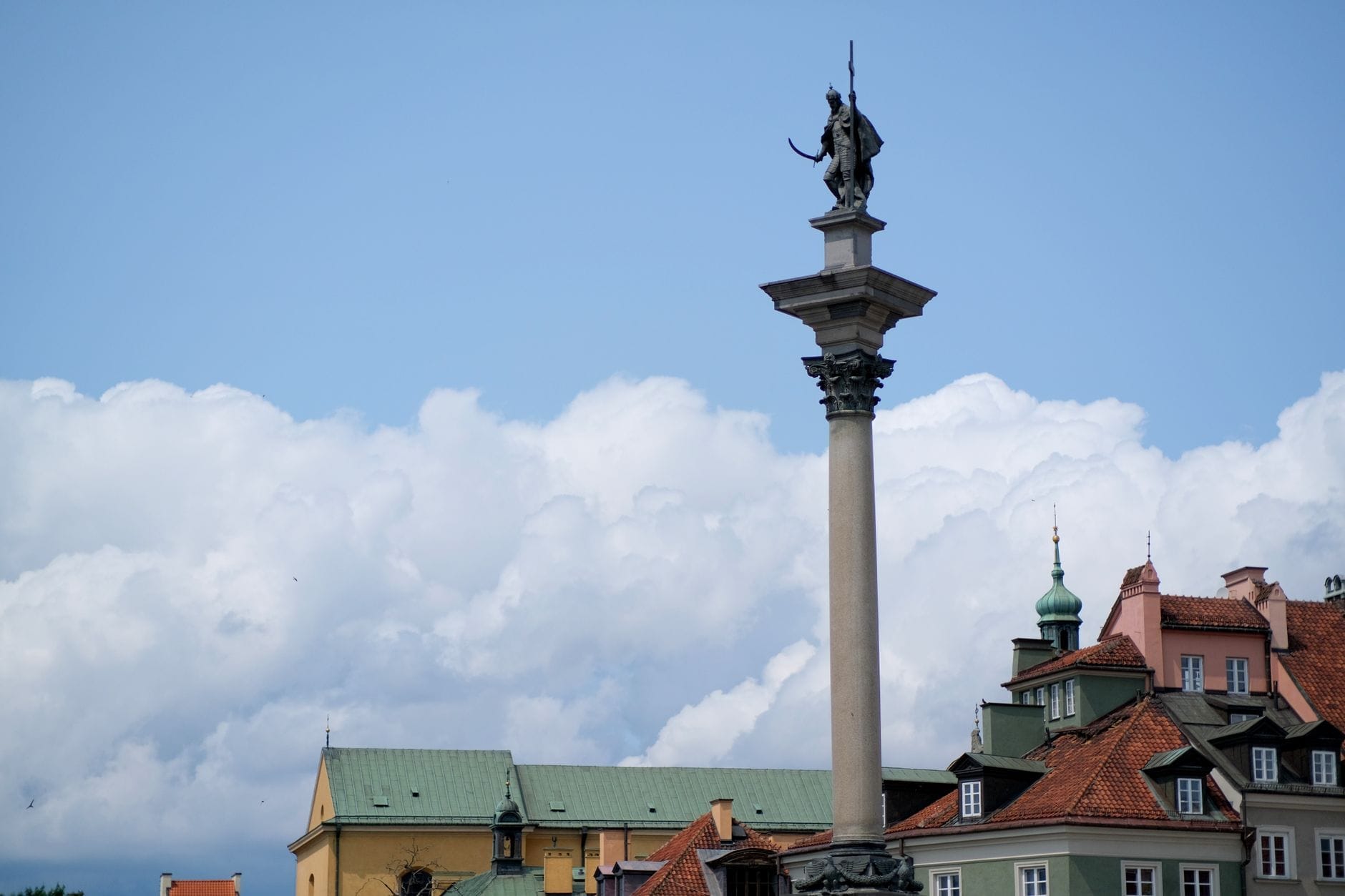
What Sigismund's Column Actually Is
Sigismund's Column, known in Polish as Kolumna Zygmunta, is a 22-metre-tall monument that has anchored Castle Square at the gateway of Warsaw's Old Town since its inauguration in 1644. It depicts King Sigismund III Vasa, the ruler who in 1596 transferred Poland's royal capital from Kraków to Warsaw, a decision that shaped the modern city's entire identity. The king stands atop a granite column, clad in armour and holding a cross and a sword, gazing out over the square that still bears his symbolic weight.
This is not just another royal monument. It holds the distinction of being Warsaw's oldest secular monument, and arguably Poland's first, erected in a European era when columns of this kind were almost exclusively reserved for religious figures. Commissioning a column for a king rather than a saint was a deliberate political statement by Władysław IV Vasa, who ordered it built to honour his father. That combination of dynastic pride and civic symbolism gives the column a meaning that goes well beyond its bronze figure.
ℹ️ Good to know
The column is visible from Castle Square at all hours and free to visit. No tickets, no opening times, no barriers. It is simply there, in the open air, as it has been for nearly four centuries.
A Monument That Has Died and Come Back
The column you see today is not the one raised in 1644. The original shaft was replaced in 1877 and the whole structure underwent renovation in 1929 to 1931. Then came 1944. During the Warsaw Uprising, German artillery fire destroyed the column. The bronze figure of Sigismund survived, but the shaft was shattered. For a city that was systematically erased in the final months of World War II, the fall of this monument carried enormous symbolic weight.
The column was re-erected in 1949, one of the early gestures of post-war reconstruction that would eventually restore the entire Old Town from rubble. What makes this history tangible for visitors is that fragments of the original 17th-century shaft were preserved and can still be seen displayed near the Royal Castle. Standing at the base of the current column and then walking a few metres to look at those cracked stone sections puts the destruction and resilience of Warsaw into direct physical contact.
The story of the column mirrors the story of the city. Warsaw was virtually erased in 1944 and rebuilt over the following decades, a history explored in detail at the Warsaw Uprising Museum, which is one of the most significant historical museums in Central Europe. If the column's wartime history interests you, that museum belongs on the same itinerary.
Tickets & tours
Hand-picked options from our booking partner. Prices are indicative; availability and final rates are confirmed when you complete your booking.
Museum of John Paul II and Primate Wyszyński entrance ticket
From 8 €Instant confirmationPub crawl in Warsaw
From 28 €Instant confirmationFree cancellationWarsaw Museum of Modern Art entrance ticket
From 8 €Instant confirmationSafe and Convenient Luggage Storage in Warsaw Old Town
From 6 €Instant confirmationFree cancellation
Castle Square: The Stage Around the Column
The column does not stand in isolation. Castle Square (Plac Zamkowy) is one of Warsaw's great open public spaces, flanked on one side by the deep-red facade of the Royal Castle and opening toward the Old Town's medieval street network on the other. The square functions as a natural gathering point: tour groups assemble here, locals cut through it, street musicians occasionally set up near the edges, and the steady flow of visitors from the castle entrance creates a low-grade hum of activity through most of the day.
In the morning, particularly before 9 a.m., the square has a completely different character. The cobblestones are quiet, pigeons hold the space, and the column catches the early light from the east at an angle that emphasises the texture of the granite shaft and the green patina of the bronze figure above. This is the best window for photographs without crowds or scaffolding from passing tour groups filling the frame.
By midday in summer the square fills considerably. Tour buses deposit groups who photograph the column and move on within fifteen minutes. If a long visit is what you are after, the surrounding Old Town Market Square offers more space to linger, with cafe seating and the full sweep of the reconstructed merchant facades.
💡 Local tip
Arrive before 9 a.m. for the cleanest photographs and the most peaceful experience of the square. Midday in summer is crowded and the light is harsh. Late afternoon in autumn or winter, with long shadows and fewer visitors, is also excellent.
Getting There and Moving Around the Square
Castle Square is at the top of a natural escarpment above the Vistula River, which means there is a physical rise between the lower city and the square. From the 'Stare Miasto / Old Town' tram and bus stop below the hill, a flight of stairs leads up to the square level. Tourist line 180 stops directly at 'Plac Zamkowy', which makes it the most convenient public transport option. The nearest metro station, Ratusz Arsenal on Line 1, is approximately one kilometre away, a ten to fifteen minute walk through the New Town area.
Tram number 4 from the city centre stops at 'Stare Miasto', and from there the stairs to the square take about two minutes. Ridesharing apps including Bolt and Uber serve Warsaw, and Castle Square is a standard destination in both. Drivers typically drop off on Krakowskie Przedmieście, the street running along the western edge of the square.
Accessibility around the square is uneven. Only approximately half of Castle Square has surfaces accessible for visitors with mobility difficulties. The cobblestone areas, which surround the column itself, present a challenge for wheelchairs and pushchairs. The column is visible from the accessible portions of the square, but close approach to the base requires crossing the cobblestones.
What to Combine With a Visit
The column sits at the logical starting point of any walk through the Old Town, which makes it easy to integrate into a longer itinerary without any detours. The Royal Castle entrance is less than fifty metres from the column's base, and its collections cover the history of the Polish monarchy and the republic in considerable depth. The castle was also destroyed in World War II and meticulously reconstructed, making its own story a continuation of the theme the column introduces.
Heading north from the square takes you directly into the lanes of the Old Town, toward St. John's Archcathedral and eventually out to the Old Town Market Square. Heading south along Krakowskie Przedmieście leads to a long stretch of palaces, churches, and the university district, one of Warsaw's most rewarding walking routes.
If you are building a broader Old Town itinerary, the Warsaw Barbican at the northern edge of the Old Town closes out the historic circuit neatly. Together with Castle Square, these three points cover the full perimeter of the reconstructed medieval core.
💡 Local tip
The column appears on the 100 PLN note, which is a minor but satisfying detail to notice if you have Polish cash in your wallet. Hold the banknote up against the view from the square for a direct comparison.
Photography and Practical Details
At 22 metres, the column is tall enough that a wide-angle lens or a phone camera with an ultra-wide mode is useful for capturing the full monument without stepping too far back into the square. The castle facade directly behind the column creates a strong compositional frame in late afternoon light, when the warm tones of the red brick read well against the grey granite of the shaft.
Winter visits have a particular quality. Snow on the cobblestones, the quieter crowds, and the early-evening darkness that falls by 4 p.m. in December and January turn the square into something closer to its historical atmosphere than the busy summer version. The column is lit at night, which makes it photogenic after dark, though the surrounding square loses some of its colour in artificial light.
Warsaw in winter is genuinely worth considering as a travel window, and the guide to visiting Warsaw in winter covers the practical considerations in full, including what the Old Town looks like during the Christmas market period.
Honest Assessment: Is It Worth Your Time?
Sigismund's Column is not an experience that takes an hour. It is a ten-minute stop that earns its place in an itinerary because of what it represents and where it stands. The monument itself, a bronze king on a granite column, is impressive in scale but not visually complex. The surrounding square and the Royal Castle are the real draw, and the column is the natural anchor point around which all of that organises itself.
Visitors who want interior experiences, artworks to examine, or interactive displays will not find them here. The column is an outdoor monument in a public square, full stop. Its value is historical and symbolic: understanding why it exists, what was destroyed and rebuilt around it, and how it fits into the larger story of a city that was levelled and reconstructed. For that kind of meaning, the twenty minutes spent here are well used.
Those who are pressed for time and choosing between the column and the Royal Castle or the Warsaw Uprising Museum should prioritise the indoor attractions, which carry far more depth. The column is worth pausing at on the way to or from those places. It does not need to be the destination.
Insider Tips
- Fragments of the original 17th-century column shaft destroyed in 1944 are displayed near the Royal Castle entrance. They are easy to miss but add a direct physical connection to the monument's wartime history.
- The column appears on the 100 PLN banknote. If you have one in your wallet, the Castle Square view is an exact match for the image on the note.
- Arrive before 9 a.m. to photograph the column without tour groups in the frame. The eastern morning light hits the bronze figure at a flattering angle in spring and summer.
- Tourist bus line 180 stops directly at Plac Zamkowy, making it the easiest public transport approach. Most transit maps do not emphasise this line, but it runs regularly from the city centre.
- The square's cobblestones are uneven and can be slippery after rain or snow. Flat, grip-soled shoes are a practical choice if you plan to walk the Old Town streets extending from the square.
Who Is Sigismund's Column For?
- First-time visitors to Warsaw wanting a geographical and historical orientation point for the Old Town
- History and architecture enthusiasts interested in post-war reconstruction and Polish royal history
- Photographers looking for a landmark backdrop, especially at golden hour or in winter light
- Travellers building a walking itinerary through the Old Town and Royal Castle area
- Anyone spending time in the Old Town who wants a central meeting point or orientation anchor
Nearby Attractions
Other things to see while in Old Town (Stare Miasto):
- Field Cathedral of the Polish Army
The Field Cathedral of the Polish Army (Katedra Polowa Wojska Polskiego) stands on Długa Street just north of the Old Town, opposite the Warsaw Uprising Monument. It is simultaneously a functioning place of worship, the official church of the Polish military, and a layered historical document stretching from a 17th-century wooden chapel to a Katyn memorial added decades after the Second World War.
- Krakowskie Przedmieście
Krakowskie Przedmieście is Warsaw's most storied street, a just-over-1km boulevard connecting Castle Square to Nowy Świat along the historic Royal Route. Lined with baroque churches, neoclassical palaces, statues of Poland's greatest figures, and pavement cafés, it is the spine of the city's public life and the best single walk for understanding Warsaw's history and character.
- Krasiński Palace & Garden
Krasiński Palace, also known as the Palace of the Commonwealth, is a late 17th-century Baroque masterpiece designed by Tylman van Gameren. After decades as a closed National Library repository, it reopened to the public in May 2024 with free admission. Behind the palace, the 11.8-hectare Krasiński Garden offers a welcome green escape just north of the Old Town.
- Little Insurgent Monument
Standing roughly 1.5 metres tall against Warsaw's ancient red brick city walls, the Little Insurgent Monument is a bronze statue of a child soldier that carries the weight of an entire generation. Free to visit at any hour, it is one of the most emotionally affecting stops in the Old Town.