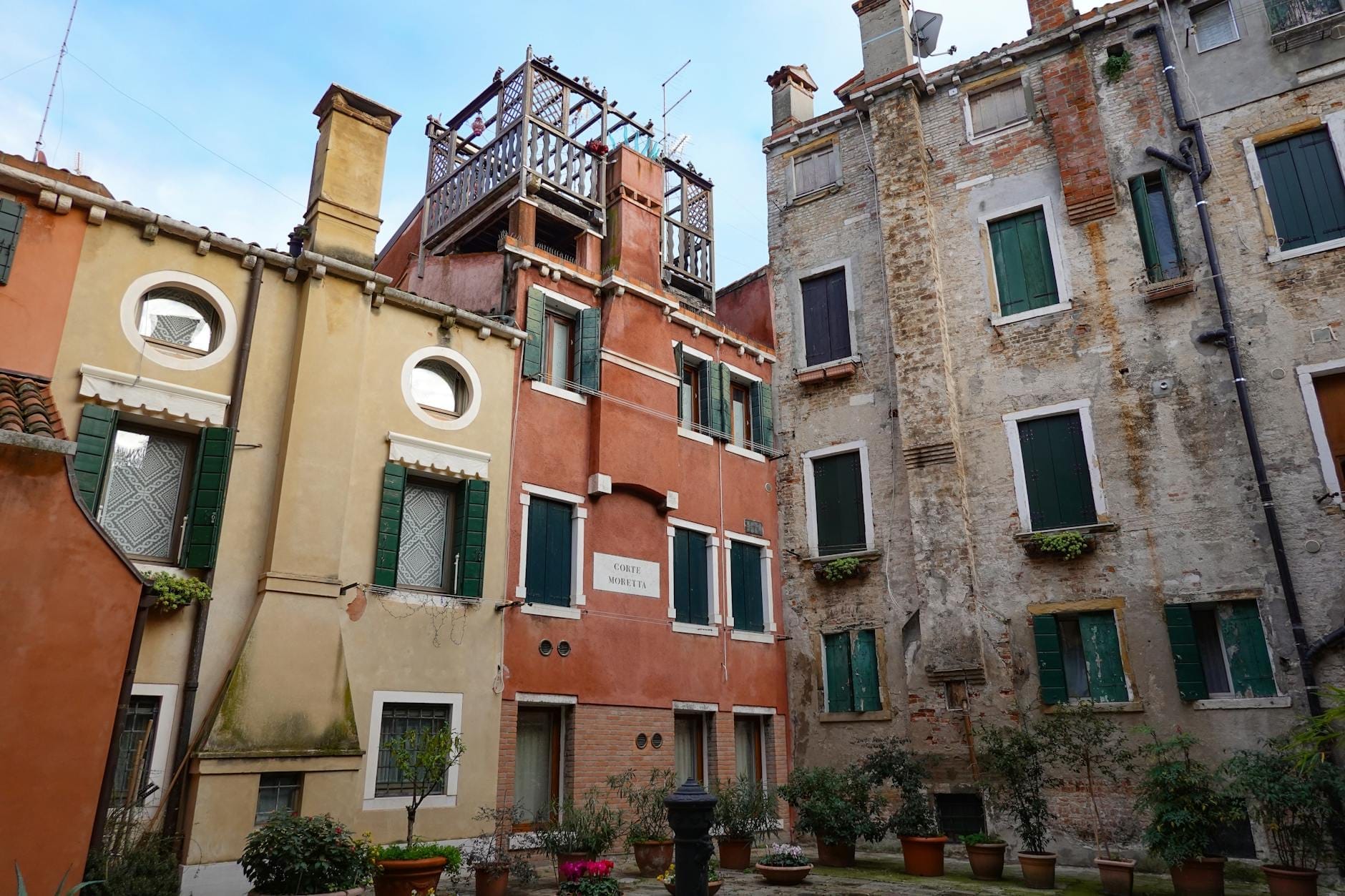
The Jewish Ghetto and Aventine Hill sit on opposite sides of the Circus Maximus valley, each offering a radically different Rome from the tourist-heavy center. The Ghetto is compact, history-dense, and still a living community; the Aventine is one of the city's quietest residential heights, with rose gardens and one of its most surprising viewpoints.
Rome's Jewish Ghetto is one of the oldest continuously inhabited Jewish communities in Europe, compressed into a few narrow streets between the Tiber and Largo di Torre Argentina, where Roman ruins push up through the pavement and a neighborhood grocery might stand against a wall from the second century BC. A short walk south, the Aventine Hill offers a different tempo entirely: terraced gardens, early Christian basilicas, and a famous keyhole view of St. Peter's dome that stops people mid-sentence.
Orientation: Two Neighborhoods, One District
Geographically, these two areas feel like separate worlds, but they are linked by proximity and by the fact that most travelers who visit one tend to explore the other on the same day. The Jewish Ghetto occupies the ancient Rione Sant'Angelo, wedged between the Tiber to the west, Largo di Torre Argentina to the north, and the base of the Capitoline Hill to the east. Its core streets, including Via del Portico d'Ottavia, Piazza delle Cinque Scole, and the lanes fanning out toward Lungotevere de' Cenci, cover about 0.28 square kilometers.
The Aventine Hill rises immediately south of the Circus Maximus valley, about 1 kilometer from the Ghetto's southern edge at the Teatro di Marcello. It is one of Rome's original seven hills, and today it functions as one of the city's most quietly upscale residential zones. The hill's main sites, the Aventine Keyhole at the Knights of Malta and the orange garden at Giardino degli Aranci, sit near the crest of the hill, accessible by walking uphill from Circo Massimo metro station on Line B.
Together, these two areas make an ideal full-day itinerary. Start at the Ghetto in the morning when the produce vendors are out and the synagogue square is quiet, then walk south past the Circus Maximus to the Aventine for the afternoon, when the light over the city turns warm and the orange garden terrace is at its most atmospheric.
ℹ️ Good to know
The Jewish Ghetto has no dedicated metro station. The closest options are the bus stops at Largo di Torre Argentina (several lines) or a 15-20 minute walk from the Colosseo stop on Line B. For the Aventine, use Circo Massimo on Line B, then walk uphill about 10 minutes.
Character and Atmosphere
The Jewish Ghetto is one of those neighborhoods where history does not feel archived. It feels inhabited. The community here traces its roots to well before the papal confinement that began in 1555, when Pope Paul IV issued the bull Cum Nimis Absurdum and ordered Rome's Jewish population into a walled enclosure of barely four hectares along the Tiber. The walls came down after Italian Unification in 1870, but the neighborhood retained its character: the synagogue, the food traditions, the tight street pattern, the mix of Jewish-owned shops and cafes alongside Roman ruins that predate Christianity entirely.
On a weekday morning, Via del Portico d'Ottavia has a genuine neighborhood feel. Locals stop to talk outside the bakeries, elderly residents cross the square slowly, and the ruins of the Portico d'Ottavia itself frame the street in a way that is completely matter-of-fact. By midday, the tourist traffic increases noticeably, particularly around the synagogue and the ancient gate structure. Afternoons in summer can feel crowded on the main street, but step one block in either direction and the pace drops immediately.
The Aventine Hill has almost no tourist infrastructure to speak of, which is exactly what makes it worth the climb. The streets here are wide, lined with umbrella pines and walled villa gardens. On weekday afternoons you may walk for ten minutes without passing another tourist. The main sound is birdsong from the Giardino degli Aranci. After dark, both neighborhoods are very safe; the Ghetto has a steady restaurant crowd on weekend evenings, while the Aventine is almost entirely residential by nightfall.
What to See and Do
In the Jewish Ghetto
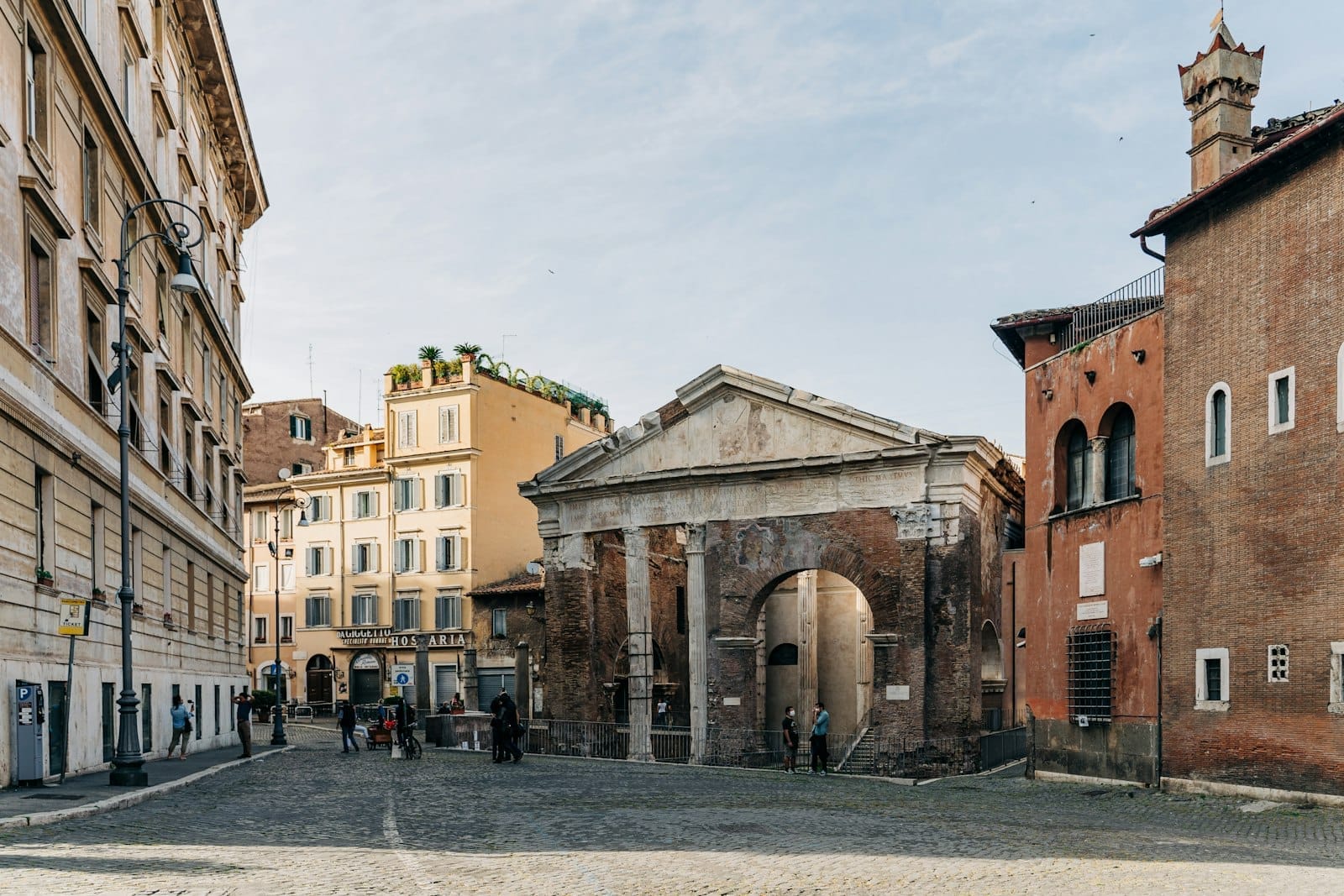
The Portico d'Ottavia is the neighborhood's defining monument: a colossal Roman gateway complex built in the first century BC, partially ruined, and partially absorbed into the medieval church of Sant'Angelo in Pescheria. You walk through it rather than around it, which gives it an intimacy that larger ruins rarely have. Just to the south, the Jewish Ghetto contains the Museo Ebraico di Roma, attached to the Great Synagogue on Lungotevere de' Cenci. The synagogue itself, completed in 1904, has a distinctive square dome visible from across the river. Museum entry includes a guided tour of the building's interior, which is genuinely impressive.
Ponte Fabricio, built in 62 BC and still carrying foot traffic today, connects the Ghetto to Tiber Island at the northern end of the neighborhood. It is the oldest bridge in Rome still in its original form. Crossing it and spending ten minutes on Tiber Island, one of the city's strangest and most serene spots, requires almost no effort and rewards it considerably. The island has been associated with medicine since antiquity and today still houses a hospital.
The Teatro di Marcello, just beyond the southern edge of the Ghetto proper, is one of Rome's underappreciated ancient structures. Built under Augustus, it served as the architectural model for the Colosseum and was later converted into a Renaissance palazzo. Its curved facade, with stacked arches still intact, is best seen from Via del Teatro di Marcello in the early morning before the street fills with traffic.
Portico d'Ottavia: walk through the ancient gate, free to view from the street
Great Synagogue and Museo Ebraico di Roma: history of Rome's Jewish community across two millennia
Ponte Fabricio: oldest bridge in Rome still in use, cross to Tiber Island
Teatro di Marcello: Augustus-era theater that predated and influenced the Colosseum
Sant'Omobono Archaeological Area: archaic temple remains near the Ghetto's edge
Piazza delle Cinque Scole: the neighborhood's main gathering square, quieter and less visited than it deserves
On the Aventine Hill
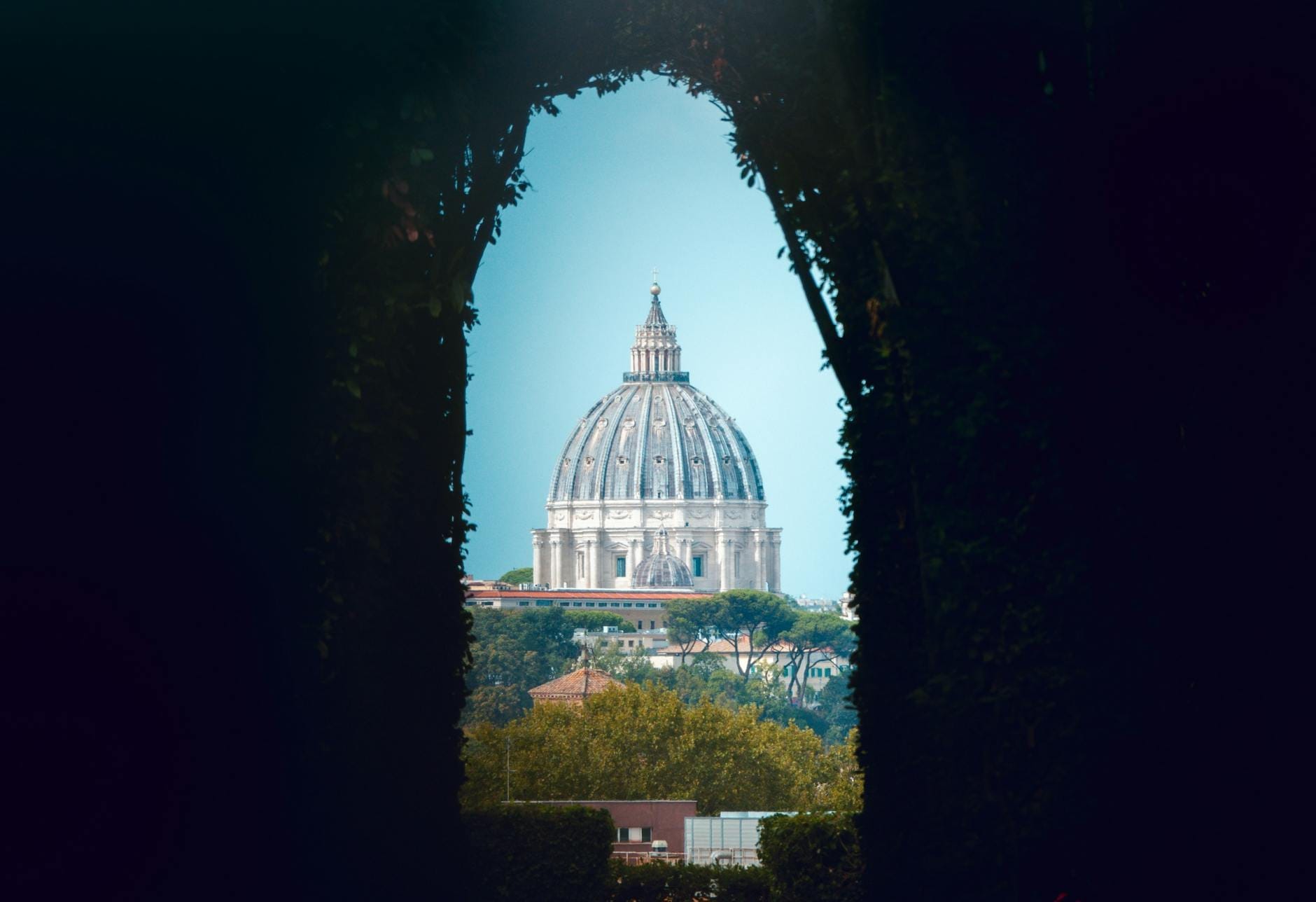
The Knights of Malta keyhole on Piazza dei Cavalieri di Malta is one of those sights that works exactly as described and still somehow exceeds expectations. Through a small keyhole in a heavy wooden door, you see a perfectly framed view of St. Peter's Basilica dome at the end of a long garden corridor. The alignment is deliberate. There is usually a short queue; it moves quickly. The square itself, designed by Piranesi in the 18th century, is worth a few minutes of attention on its own.
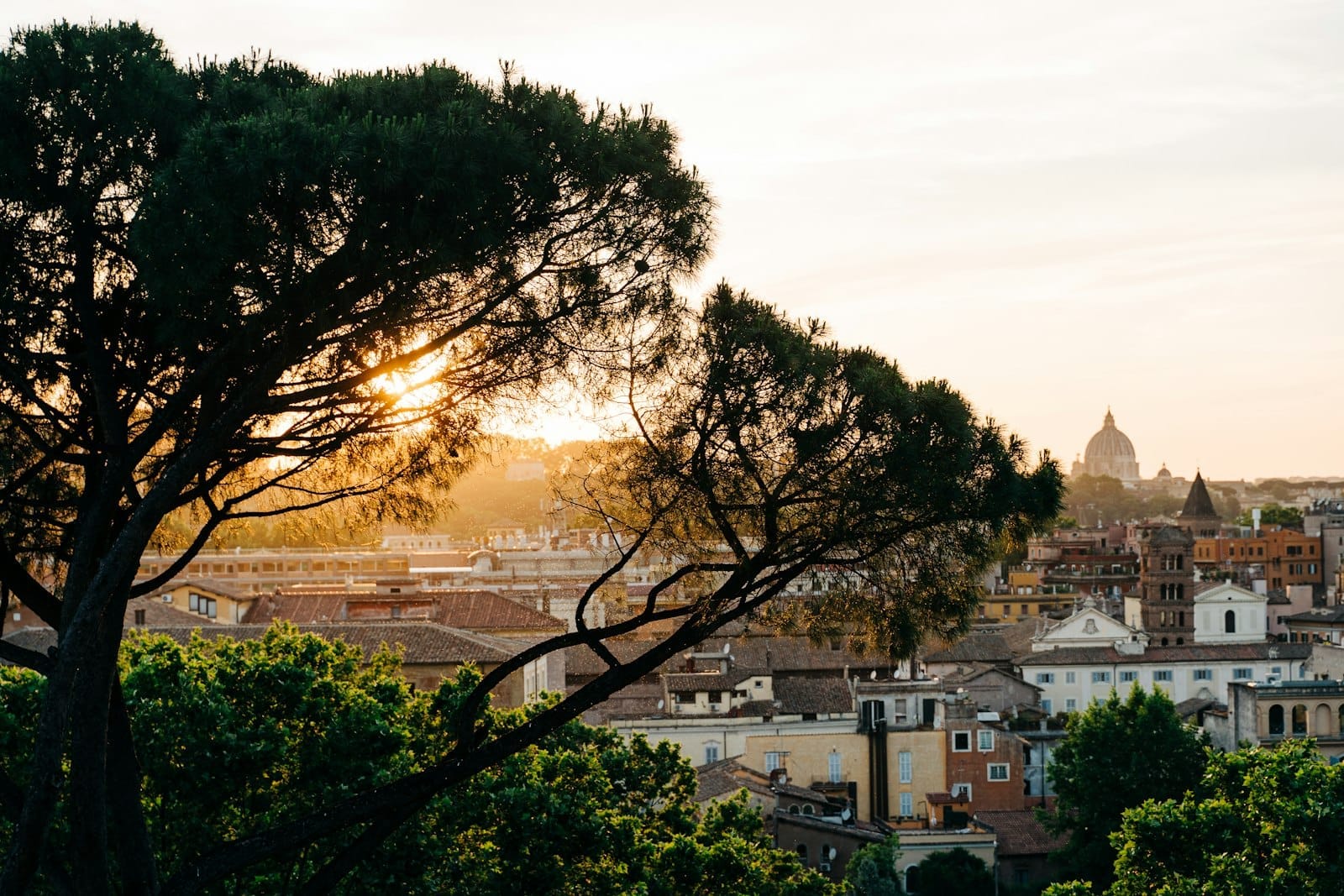
A short walk from the keyhole brings you to the Giardino degli Aranci, a terrace garden planted with bitter orange trees. The view from the garden's belvedere over the Tiber, the dome of St. Peter's, and the tiled rooftops of Trastevere is one of the better panoramas in Rome, and it requires no ticket and almost no effort. Come in the late afternoon when the light comes from the west and falls directly on the domes across the river. The basilica of Santa Sabina, one of Rome's best-preserved early Christian churches, stands directly adjacent to the garden; its 5th-century wooden doors and column-lined nave are extraordinary and almost always empty.
💡 Local tip
The Giardino degli Aranci closes at sunset. If you want the best light over the city, arrive about 45 minutes before official closing time and stay until the garden staff politely moves you along.
Eating and Drinking
The Jewish Ghetto has one of Rome's most distinctive food identities, rooted in the cucina ebraico-romanesca tradition that developed over centuries in this neighborhood. The signature dishes are not what you find in a standard Roman trattoria. Carciofi alla giudia (artichokes deep-fried until crisp and golden), filetti di baccalà (battered salt cod, served hot from the fryer), and torta di ricotta e visciole (a ricotta and sour cherry tart) are Ghetto staples that travelers specifically come for.
Several of the restaurants along Via del Portico d'Ottavia are kosher-certified and close on Friday evening and Saturday for Shabbat. This is worth noting if you plan a Saturday lunch in the neighborhood. Non-kosher Roman trattorias operate on normal hours in the surrounding streets. Prices in the Ghetto skew slightly higher than comparable neighborhoods because of the tourist draw and the kosher certification overhead, but the food quality at the established spots tends to justify it.
Coffee options in the Ghetto are good. The neighborhood has several traditional bars where a standing espresso costs standard Roman prices. For pastries, the Jewish bakeries produce ricotta-based sweets and almond cookies that differ noticeably from the cornetti you find everywhere else in Rome. On Friday mornings before Shabbat, some bakeries sell out of their best products by mid-morning.
The Aventine has almost no food infrastructure for visitors. It is a residential hill without cafes or restaurants on its main walking circuit. Eat in the Ghetto or in the Testaccio market area before climbing the Aventine, and consider packing something for the garden.
⚠️ What to skip
Several restaurants in the Jewish Ghetto are closed on Saturday (Shabbat) and on Jewish holidays. If you plan to eat in the neighborhood on a Saturday, check ahead or have a backup option nearby in the centro storico.
Getting There and Around
The Jewish Ghetto is best reached on foot from several central areas. From the Campo de' Fiori, it is about a 5-minute walk east across Via Arenula. From the Capitoline Museums on the Capitoline Hill, walk down the southern slope and you arrive at the Teatro di Marcello in under 10 minutes. From Piazza Venezia, it is roughly the same distance heading southwest. Bus lines along Via Arenula and Lungotevere de' Cenci serve the area. The nearest significant bus hub is Largo di Torre Argentina, about 5 minutes north on foot.
There is no metro station directly serving the Ghetto. The Colosseo station on Line B is a 15-20 minute walk via the Capitoline Hill, which is actually a reasonable and scenic route. Taxis and ride-sharing apps can drop you on Via Arenula or Lungotevere de' Cenci, both of which border the neighborhood.
For the Aventine Hill, take Metro Line B to Circo Massimo. From the station, walk south past the Circus Maximus and then uphill along Via del Circo Massimo or Via di Santa Sabina. The walk from the metro to the keyhole takes about 12-15 minutes depending on your pace and how many times you stop to look at the view opening up behind you. The hill is entirely walkable but the streets are steep in places; comfortable shoes matter.
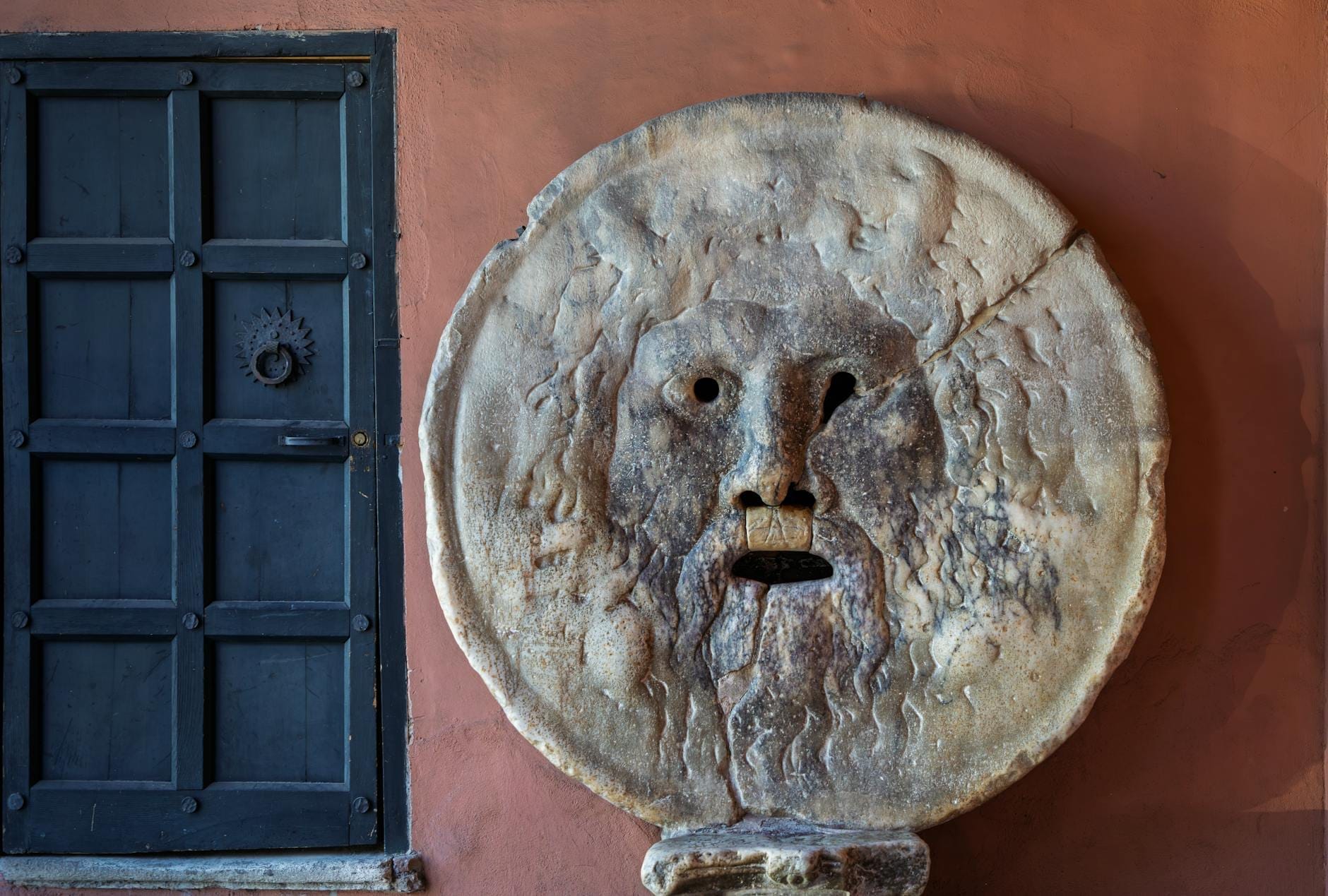
If you are combining both areas in one day, the most logical route runs: Ghetto in the morning, south along Via del Teatro di Marcello, past the Bocca della Verità in the Forum Boarium, then up the Aventine. This keeps you on foot the entire time across about 3 kilometers, which is manageable in 2-3 hours of walking.
ℹ️ Good to know
Rome's ATAC bus network covers the Ghetto area well but routes change periodically. Check the ATAC website or the Moovit app for current routes before your visit. Single tickets cost €1.50 and are valid for 100 minutes.
Where to Stay
The Jewish Ghetto is a genuinely good base for exploring central Rome, underrated compared to Trastevere and the centro storico. Accommodation in the Ghetto itself is limited. A handful of small hotels and B&Bs operate on the quieter internal streets, offering the advantage of a neighborhood that feels local even to repeat Rome visitors. Noise is minimal compared to the area around Campo de' Fiori or the Spanish Steps, and the central location means most major sites are reachable on foot.
For wider hotel choice, the area just north of the Ghetto toward Largo di Torre Argentina and Via del Corso has more options at various price points. Staying anywhere in this corridor puts you within 15 minutes of the Ghetto, Trastevere, Capitoline Hill, and Pantheon simultaneously, which is as central as Rome gets.
The Aventine is a residential neighborhood with very limited tourist accommodation. It suits travelers who prioritize quiet over convenience and do not mind being a short metro ride from the main attractions. For a fuller picture of where to base yourself in Rome, the where to stay in Rome guide covers all the main options across the city with honest assessments of who each area suits.
Connecting to the Rest of Rome
These two neighborhoods sit at the intersection of several of Rome's most historically significant areas. The Ghetto's northern edge touches Largo di Torre Argentina, one of Rome's most important Republican-era temple complexes (and the site where Julius Caesar was assassinated). Walk east from the Ghetto and within minutes you are climbing the Capitoline Hill toward the museums and the Forum view. Walk north and you reach the Pantheon district in under 15 minutes.
South of the Aventine, the neighborhood of Testaccio offers one of Rome's most authentic market and food scenes at the Mercato di Testaccio, plus nightlife, the Non-Catholic Cemetery, and the Baths of Caracalla just beyond. This whole southern arc of Rome, from the Ghetto through the Aventine to Testaccio and the Baths, can be covered in a long day and provides a very different picture of the city from the Colosseum-and-Vatican circuit that most itineraries default to.
For travelers building a longer Rome itinerary, this area pairs well with the ancient core. A morning at the Roman Forum and Palatine Hill followed by an afternoon in the Ghetto and Aventine covers both the archaeological Rome and the living, layered city in a single day without excessive backtracking.
TL;DR
The Jewish Ghetto is one of Rome's oldest communities, packed with ancient ruins, a distinctive culinary tradition, and genuine neighborhood life alongside the tourist traffic on its main street.
The Aventine Hill offers quiet streets, rose gardens, an extraordinary viewpoint over the city, and almost no crowds, making it ideal for travelers who want to step away from the main circuits.
Both areas are best visited together in a single day, walking south from the Ghetto to the Aventine, with optional extensions into Testaccio for food and the Capitoline for ancient history.
Best suited to travelers with at least 3 days in Rome who want depth and variety beyond the Forum-Colosseum-Vatican triangle.
Saturday visitors to the Ghetto should note that many restaurants and shops are closed for Shabbat; plan accordingly or explore the area's ancient monuments instead.
Rome has more churches per square kilometer than almost any city on earth, and the finest contain some of the greatest art ever made. This guide cuts through the noise to bring you the 15 churches that genuinely deserve your time, from world-famous papal basilicas to overlooked medieval gems.
Rome holds one of the densest concentrations of great museums anywhere on earth, from ancient sculpture collections to Baroque art palaces and cutting-edge contemporary spaces. This guide covers the 18 best, organized by type, with practical advice on what to prioritize and when to book.
Rome rewards visitors year-round, but the experience varies dramatically by season. This guide breaks down crowds, temperatures, costs, and local events to help you pick the right time for your trip.
Rome rewards those who look up, climb higher, and peer through keyholes. This guide covers the city's finest viewpoints, from sweeping 360-degree rooftop panoramas to perfectly framed peepholes, with tips on when to go and what you'll see.
Rome rewards budget travelers more than almost any major European capital. From Baroque piazzas and ancient hilltops to world-class churches and sprawling parks, a huge portion of the city's best experiences cost absolutely nothing. This guide covers the 20 best free things to do in Rome, organized so you can plan a full day without opening your wallet.
Rome's transport network is more complex than most first-time visitors expect. This guide breaks down every option for getting around Rome, from the limited metro to the best bus routes, airport transfers, taxis, and when walking beats everything else.
Rome rewards those who look past the Colosseum queue and the Trevi selfie crowd. These are the churches, viewpoints, markets, and underground worlds that most visitors walk right past, where the real texture of the city lives.
Ostia Antica is Rome's best-kept archaeological secret: a sprawling ancient city just 30 minutes from the capital, better preserved than most sites and far less crowded than the Forum or Colosseum. This guide covers everything from tickets and transport to the top ruins worth your time.
Rome transforms after sunset. Ancient ruins glow under floodlights, piazzas fill with locals rather than tour groups, and the city's food and nightlife scenes come alive. This guide covers the best nocturnal experiences in Rome, from free evening strolls to exclusive night tours of the Colosseum and Vatican.
Rome rewards those who venture beyond the city walls. Within an hour or two of the capital, you can walk through a remarkably intact Roman port city, stroll Renaissance water gardens, sip Frascati wine above a volcanic crater lake, or explore an Etruscan cliff town. These are the day trips that make a Rome visit feel genuinely complete.
Roman cuisine is one of the most specific, opinionated, and deeply satisfying in Italy. This guide covers the essential dishes, the rules locals follow, the best neighborhoods to eat in, and how to avoid the tourist traps that pass for Italian food in Rome.
Three days is enough to see Rome's greatest hits — if you plan smart. This itinerary covers the Colosseum, Vatican, Pantheon, and beyond, with the right order, practical timing tips, and a few stops that most visitors miss.
Rome is one of Europe's most rewarding cities to explore on a tight budget. This guide breaks down real costs, free attractions, transport options, and smart strategies so you can see the best of the city without draining your account.
Rome rewards families who come prepared. From gladiator stories at the Colosseum to gelato breaks in Villa Borghese, this guide covers every practical detail: advance tickets, stroller logistics, the best neighborhoods to base yourself, and how to keep kids engaged without burning everyone out.
Rome's top attractions can swallow hours in queue time alone. This guide breaks down exactly which sites demand advance booking, which platforms to trust, what skip-the-line actually means in practice, and where you can honestly walk straight in.
Rome rewards those who plan smart. This guide covers the essential things to do in Rome, from ancient ruins and world-class museums to neighborhood food markets and rooftop views, with honest advice on what to skip and how to book the rest.
Rome's food scene rewards the curious and punishes the complacent. This guide cuts through the tourist-trap noise to give you honest, neighborhood-by-neighborhood restaurant picks, dish-by-dish ordering advice, and practical tips on reservations, pricing, and when to skip the menu entirely.
Choosing where to stay in Rome shapes your entire trip. This guide breaks down every major neighborhood honestly, covering walkability, noise, price, and who each area suits best, so you can book with confidence.