Rome's Jewish Ghetto: A 22-Century Community You Can Walk Through
The Ghetto Ebraico di Roma is the historic heart of one of the world's oldest continuous Jewish communities, predating the destruction of the Temple in Jerusalem. Today it functions as a living neighborhood layered with Roman ruins, Baroque synagogues, and some of the best Jewish-Roman food in the city.
Quick Facts
- Location
- Via del Portico d'Ottavia, Jewish Ghetto, Rome 00186
- Getting There
- Tram 8 (Piazza Cairoli); buses 40, 46, 62, 64; 15-min walk from Piazza Venezia
- Time Needed
- 2–3 hours for the neighborhood; add 1.5 hours for Jewish Museum visit
- Cost
- Neighborhood free; Jewish Museum €12 (includes audio guide, Tempio Maggiore, guided tour); reduced €10 for students/children 6-17; free for under 6
- Best for
- History lovers, food seekers, architecture enthusiasts, first-time Rome visitors wanting depth over landmarks
- Official website
- museoebraico.roma.it/en
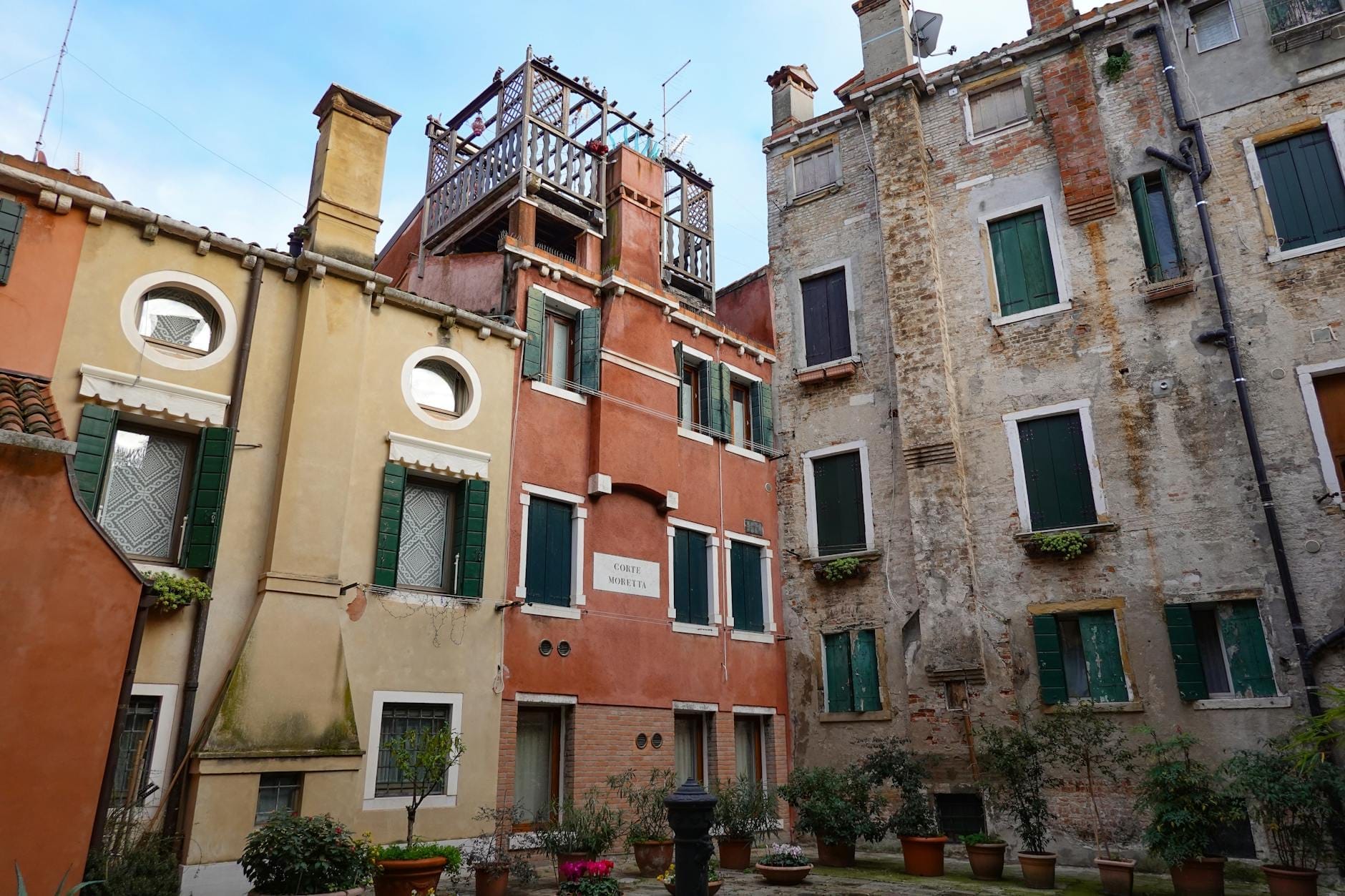
What the Ghetto Ebraico Actually Is
The Ghetto Ebraico di Roma is not a ruin or a museum district. It is a living neighborhood on the left bank of the Tiber that has housed Rome's Jewish community for over 22 centuries, a presence that predates the city's most famous Christian monuments by hundreds of years. The community was here before the Diaspora, before the destruction of the Temple, and long before the Roman popes decided, in 1555, to confine them behind locked walls.
Pope Paul IV issued the papal bull Cum nimis absurdum in 1555, ordering Rome's Jewish population, then around 2,000 people, into a walled enclosure on the damp flood plain of the Tiber. The area was prone to annual flooding, deliberately chosen for its unhealthy conditions. Jews were required to wear identifying badges, forbidden from owning property, and locked inside the gates each night. Those walls came down in 1870 with Italian unification, but the community remained, rebuilding its institutions, its synagogues, and its culinary traditions on the same streets.
ℹ️ Good to know
The neighborhood is open 24/7 as a public pedestrian area at no cost. The Jewish Museum (Museo Ebraico di Roma) is the main ticketed site: €13 for adults (includes audio guide, entry to Tempio Maggiore, and a guided tour). Closed Saturdays and Jewish holidays. Always verify hours before visiting at museoebraico.roma.it.
The Portico d'Ottavia: Where Ancient Rome Meets the Ghetto
The most immediately striking feature of the Ghetto is the Portico d'Ottavia, a 2nd-century BC Roman gateway originally part of a large temple complex dedicated to Jupiter and Juno. Augustus rebuilt and renamed it in honor of his sister Octavia around 27 BC. What survives today is the pronaos, the colonnaded entrance porch, now fused into the facade of the medieval church of Sant'Angelo in Pescheria. The columns are thick, their capitals worn to a soft blur, and chunks of the original architrave lie scattered at ground level where they fell centuries ago.
For much of the medieval period, a fish market operated inside the portico itself, which explains the church's name and the carved inscription on-site specifying that the heads of fish longer than the stone marker's length had to be donated to the city's magistrates. This market lasted into the 19th century. Standing here at 8am, before tour groups arrive, the layering of Roman, medieval, and early modern Rome is more tangible than at many more celebrated monuments.
The Portico d'Ottavia sits at the southeastern edge of the neighborhood. If you are combining this with a morning visit to the Campo de' Fiori market a few streets north, the walk takes about seven minutes through Via dei Giubbonari.
Tickets & tours
Live prices and dates from our booking partner. If you book, we may earn a commission at no extra cost to you.
Food and wine tasting, Trastevere plus Jewish Ghetto guided tour
From 98 €Instant confirmationFree cancellationRome food tour in Campo de Fiori, Jewish Ghetto and Trastevere
From 109 €Instant confirmationFree cancellationTraditional tasting dinner with locals in Rome's Jewish Quarter
From 89 €Instant confirmationFree cancellationSunset cooking class in the Jewish Ghetto
From 75 €Instant confirmationFree cancellation
The Jewish Museum and Tempio Maggiore
The Museo Ebraico di Roma sits inside the Tempio Maggiore, Rome's Great Synagogue, completed in 1904 on the banks of the Tiber. The building is impossible to miss: an aluminum dome, unusual in a skyline of terracotta and stone, rises 37 meters above the river. The architectural language is Assyrian-Babylonian revival, a deliberate choice to signal both antiquity and freedom after centuries of restriction. The interior is ornate, its ceiling coffered in gold and blue, its columns clad in polychrome marble.
The museum traces 22 centuries of Jewish life in Rome through textiles, silver Torah cases, documents, and artifacts spanning multiple rites, including the distinctive Roman Rite, one of the oldest Jewish liturgical traditions in the world. Rotating exhibitions frequently address the Nazi occupation of Rome in 1943, when over a thousand Roman Jews were deported to Auschwitz in a single day on October 16th. This is not comfortable history, and the museum does not soften it.
Museum opening hours vary by season. Winter (October to February): Sunday-Thursday 10am-4pm (last entry 3:15pm), Friday 10am-2pm (last entry 1:15pm). Summer (March-September): Sunday-Thursday 10am-7pm (last entry 6pm), Friday 10am-4pm (last entry 3:15pm). The museum is closed every Saturday and on Jewish holidays. Confirm current hours at museoebraico.roma.it before your visit, as holiday closures are not always predictable for travelers unfamiliar with the Jewish calendar.
⚠️ What to skip
The Tempio Maggiore remains an active place of worship and security is in place at the entrance. Bag checks and ID may be required. Photography inside the synagogue may be restricted depending on the day. Dress modestly: covered shoulders and knees are expected.
Walking the Streets: What You Actually See
The Ghetto occupies a compact grid of streets between the Portico d'Ottavia and Lungotevere de' Cenci. The main pedestrian spine is Via del Portico d'Ottavia, lined with bakeries selling carciofi alla giudia (whole artichokes fried flat until their outer leaves crisp like chips), supplì fritti, and ricotta-and-pine-nut tarts. The smell of frying oil and fresh bread in the late morning is particular to this block and distinguishable from any other part of Rome.
Side streets like Via della Reginella are narrow enough that neighbors on opposite sides can almost pass objects between windows. The buildings are irregular, the result of continuous rebuilding over centuries. Plaques mark the homes of deported families. On Via del Tempio, the Fontana delle Tartarughe, a delicate late Renaissance fountain with four bronze youths lifting tortoises toward the upper basin, anchors the small Piazza Mattei. The tortoises are thought to be later additions, possibly by Bernini, though this attribution is debated by historians.
The Ghetto's position between the Centro Storico and the Jewish Ghetto neighborhood makes it a natural connector on any walking itinerary. From the Portico d'Ottavia, it is a 10-minute walk to the Theater of Marcellus, and another 15 minutes to the Capitoline Hill.
Best Time to Visit and How the Neighborhood Changes by Hour
The neighborhood changes significantly depending on when you arrive. Before 9am on weekdays, the streets are nearly empty. Shopkeepers drag out chairs, and delivery trucks reverse carefully through lanes barely wide enough for them. By 10am, small queues form outside the most popular restaurants and bakeries. By noon on a Saturday, every table at the outdoor trattorie is occupied and you will need a reservation. On Friday afternoons, the area quiets early as observant families prepare for Shabbat, and many businesses close by 2pm.
Sunday mornings are a sweet spot: the Portico d'Ottavia is photogenic before the light gets harsh, the restaurants are open (unlike in many Rome neighborhoods), and the crowds are present but not overwhelming. Avoid the two-hour window from noon to 2pm if you dislike crowds at outdoor tables. Saturdays are quiet in a different way: the museum is closed, several businesses are shut, and the neighborhood takes on a more residential, local character that is worth experiencing if you are not specifically there for the museum.
Summer heat above 32°C makes midday walks through the area uncomfortable. The streets are mostly unshaded, and the Tiber proximity does not provide meaningful cooling. April through June and September through October are noticeably more pleasant for extended exploration.
How to Get There and Getting Around
There is no metro station directly serving the Ghetto. The most practical options are Tram 8, which stops at Piazza Cairoli (a short walk from the Portico d'Ottavia), or buses 40, 46, 62, and 64, which pass along Largo di Torre Argentina, about five minutes on foot. From Piazza Venezia, the walk takes 10 to 15 minutes on flat ground. From Campo de' Fiori, it is under 10 minutes.
If you are planning a broader walking day through central Rome, this neighborhood pairs naturally with Capitoline Hill and the Roman Forum, both within a 15-minute walk. The getting around Rome guide covers public transport options in full.
The streets within the Ghetto are pedestrianized and largely flat, which makes wheelchair and stroller navigation straightforward. The Jewish Museum and Tempio Maggiore are reported to have wheelchair-accessible tour routes, though it is worth confirming specific access details directly with the museum before your visit.
Who Should Manage Their Expectations
Visitors expecting a preserved historic quarter in the style of Prague's Josefov or Kraków's Kazimierz may find the Ghetto's streetscape more fragmentary. The area was substantially rebuilt after the ghetto walls came down in the 19th century, and further disrupted by demolitions under Mussolini's urban renewal program in the 1930s, which cleared large sections to build the Via del Teatro Marcello. The surviving medieval fabric is real but not continuous. The Portico d'Ottavia and the Fontana delle Tartarughe are genuine highlights; the surrounding streets are pleasant but not dramatically preserved.
Those primarily interested in the Holocaust and 20th-century history will find the museum worthwhile but modest in scale. The deportation of Rome's Jews in 1943 is covered with appropriate gravity, but travelers who have visited Yad Vashem or the POLIN Museum in Warsaw will find this a smaller, more intimate treatment of the subject rather than a comprehensive one.
Insider Tips
- Visit the Fontana delle Tartarughe on Piazza Mattei before 9am. It is one of Rome's most refined Renaissance fountains and sees almost no one at that hour, despite being a short walk from the Portico d'Ottavia.
- Book the Jewish Museum's guided tour in advance online, especially between April and October. The ticket includes the tour, but slots fill and entry without a reserved time can mean waiting 30 to 45 minutes.
- For Jewish-Roman food, Nonna Betta and Boccione (the historic bakery on Via del Portico d'Ottavia) are the most referenced names. Boccione in particular closes early and runs out of ricotta tarts by early afternoon. Arrive before noon.
- Friday afternoons between October and March are unexpectedly good for photography: the light is soft, the crowds thin as businesses close for Shabbat, and the streets take on a quieter character that mid-week visits rarely provide.
- The theater of Marcellus, immediately south of the Portico d'Ottavia, is visible from the street and free to view externally. Its semicircular shell, converted into a Renaissance palazzo, is one of the strangest architectural hybrids in Rome and is often overlooked by visitors focused on the Jewish Museum.
Who Is Jewish Ghetto For?
- History travelers who want to understand Rome beyond the obvious imperial and Catholic narrative
- Food-focused visitors seeking Jewish-Roman cuisine: carciofi alla giudia, ricotta tarts, and fried salt cod
- Architecture enthusiasts interested in the collision of Roman, Renaissance, and 19th-century urban design
- First-time Rome visitors who want to balance famous landmarks with a neighborhood that still functions as a real community
- Travelers with a specific interest in Jewish history and heritage across different periods and cultures
Nearby Attractions
Other things to see while in Jewish Ghetto & Aventine:
- Aventine Keyhole
Through a simple iron gate on the Aventine Hill, one small keyhole frames St. Peter's Basilica with uncanny precision, the dome centered in a tunnel of manicured hedgerow. It takes ten seconds to look through, but the image stays with you far longer. Free to visit, open around the clock, and still underused by most Roman itineraries.
- Bocca della Verità
The Bocca della Verità is a 1st-century Roman marble disc set into the portico of the church of Santa Maria in Cosmedin. Free to visit and steeped in medieval legend, it draws long queues of curious travelers who dare to test the myth. Here is what you actually need to know before you go.
- Giardino degli Aranci (Orange Garden)
Perched on Aventine Hill, the Giardino degli Aranci (also known as Parco Savello) is a free public garden offering one of Rome's most rewarding views across the Tiber toward St. Peter's Basilica. Shaded by rows of bitter-orange trees and largely overlooked by mass tourism, it rewards those who make the uphill walk with calm, fragrance, and perspective.
Planning a trip? Discover personalized activities with the Nomado app.