Riga's Centrs district is the sprawling urban core that surrounds the Old Town, containing the city's grandest Art Nouveau boulevards, four major parks, the central railway station, and a concentration of cultural institutions unmatched anywhere else in the Latvian capital. It is where locals actually live and work alongside the city's major sights, giving it a more everyday texture than the tourist-polished streets of Vecrīga.
Centrs is where Riga reveals its full scale. Beyond the cobblestones of the Old Town lies a neighbourhood of wide tree-lined boulevards, ornate Art Nouveau apartment facades, sprawling parks, and a daily rhythm driven by commuters, students, and residents rather than tour groups. This is the working heart of the Latvian capital, and staying here puts almost everything within walking distance.
Orientation: Where Centrs Sits in Riga
Centrs occupies the broad central band of Riga on the right bank of the Daugava river. It wraps around the Old Town (Vecrīga) on three sides — north, east, and partially south — and extends outward to a rough perimeter defined by Hanzas iela in the north, Eksporta iela and the Daugava riverbank to the west, Krišjāņa Valdemāra iela, Zigfrīda Annas Meierovica bulvāris and Aspazijas bulvāris towards the southwest, and by streets including Aleksandra Čaka iela, Tallinas iela, Miera iela, Alojas iela, Tomsona iela, Jāņa Daliņa iela, Vesetas iela as well as the railway line near Stacijas laukums (Station Square) to the east and south. The Daugava riverbank forms its western edge, with the Vanšu bridge connecting across to Ķīpsala.
The neighbourhood borders several other distinct Riga districts: Skanste and Brasa to the north, Grīziņkalns and Avoti to the east, and Maskavas forštate to the southeast. This positioning means Centrs functions as a geographic connector — wherever you are heading in Riga, you are probably passing through some part of it. The Old Town sits like an island at its southwestern corner, reachable in minutes on foot from almost any point within Centrs.
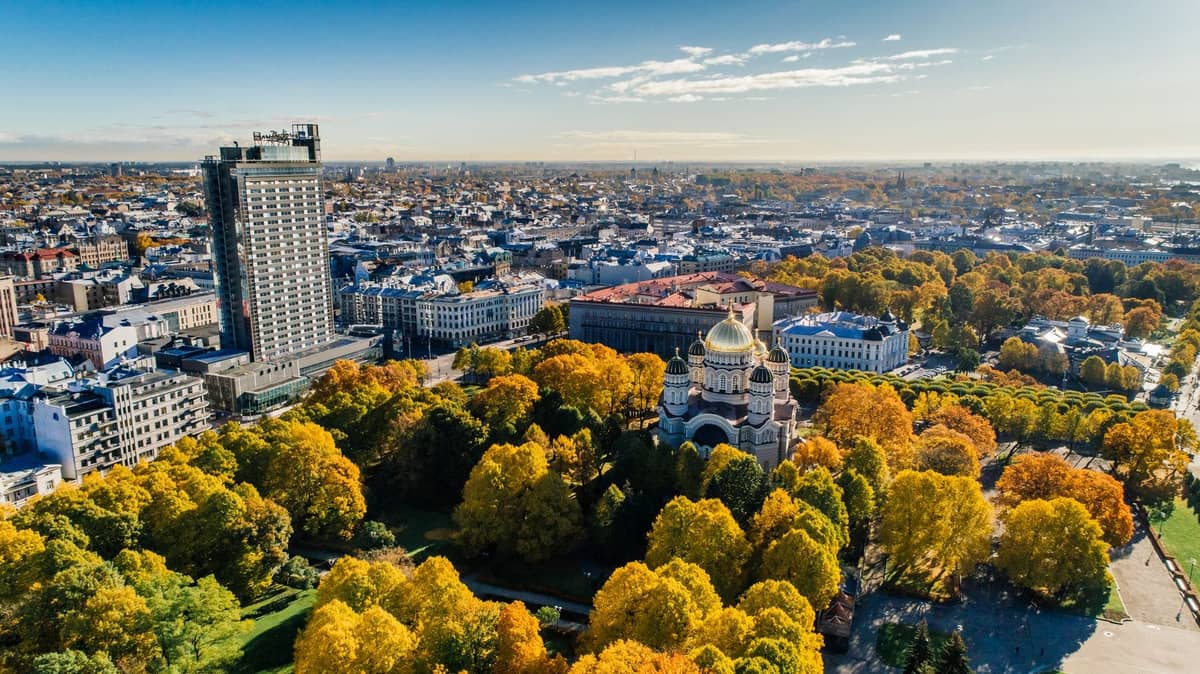
A useful mental map: the city's grand Art Nouveau corridor runs roughly along Elizabetes iela and Alberta iela in the north of the district, while the southern edge anchors around Riga Central Market and the railway station hub. The four central parks — Kronvalda parks, Bastejkalns, Esplanāde, and Vērmanes garden — form a green crescent between these two zones and are impossible to miss once you start walking.
Character & Atmosphere
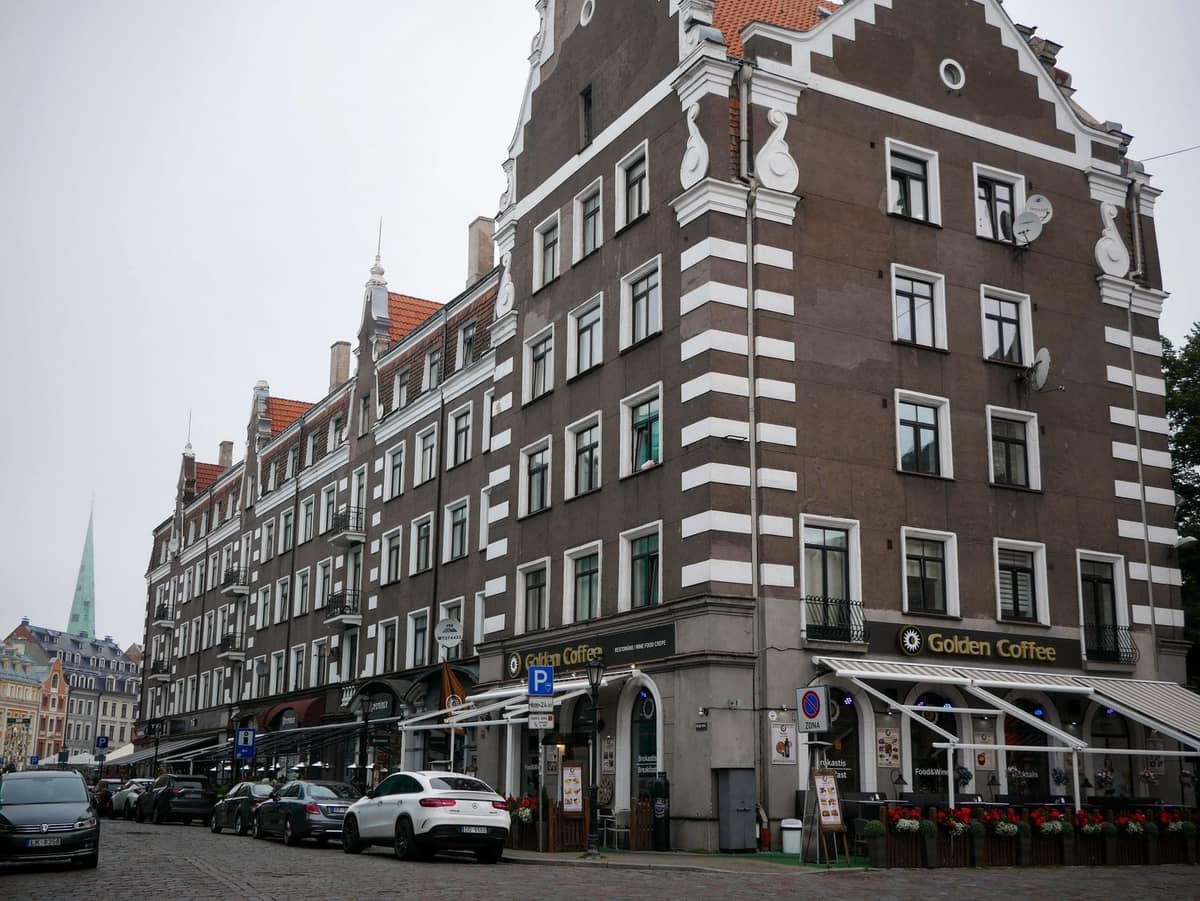
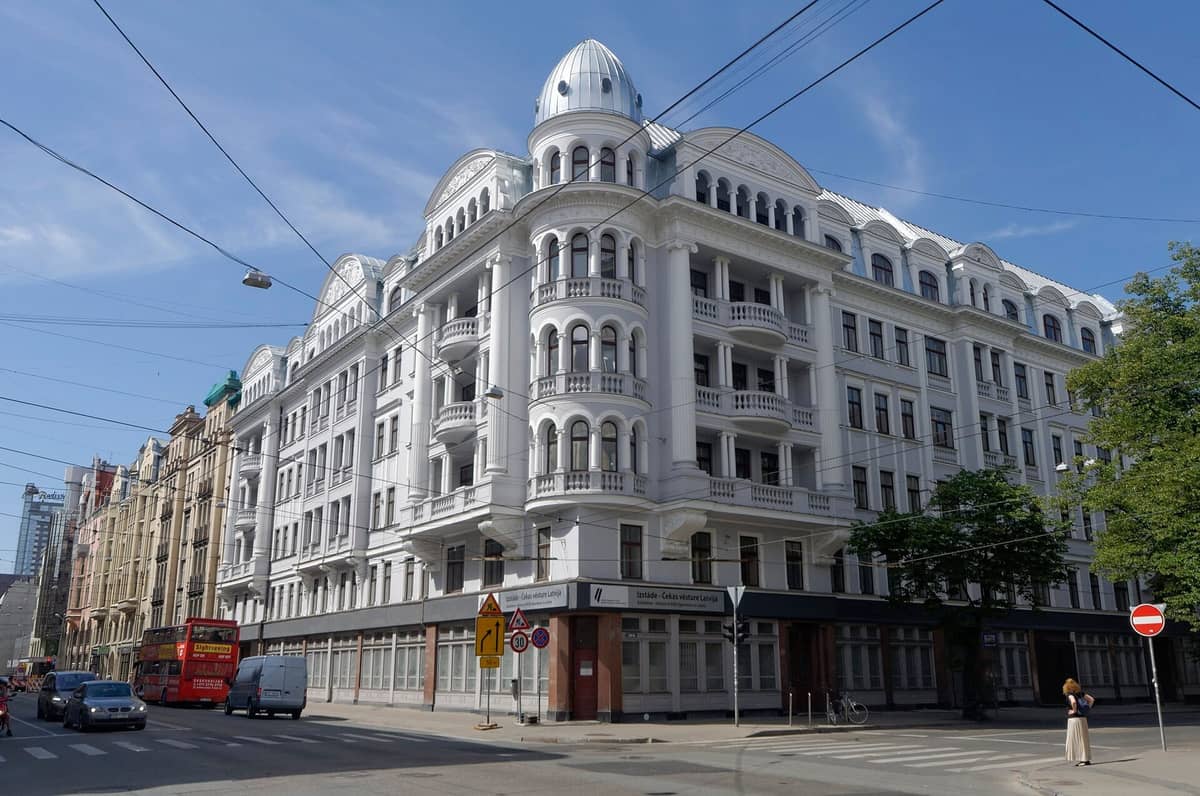
The first thing most visitors notice about Centrs is the scale of its architecture. The late 19th and early 20th century building boom left behind apartment blocks of extraordinary ornamental ambition: facades covered in stucco figures, floral reliefs, elongated faces, and geometric motifs that shift from Jugendstil to National Romantic to Eclecticism within the space of a single block. Walking up Elizabetes iela or Strēlnieku iela on a clear morning, when low northern light hits the upper stories, is one of those experiences that makes Riga's reputation as a centre of Art Nouveau architecture feel entirely justified.
The neighbourhood operates on several overlapping rhythms. Early morning belongs to commuters moving through Stacijas laukums and Krišjāņa Barona iela, residents walking dogs through the park chains, and market traders setting up at the Central Market. By mid-morning the cultural strip along Krišjāņa Valdemāra iela wakes up, with the Latvian National Museum of Art and the National Theatre drawing visitors. Afternoons in Centrs have a genuinely local feel that the Old Town rarely achieves: students on café terraces along Dzirnavu iela, elderly residents occupying benches in Esplanāde, cyclists cutting between the park paths.
After dark, the character splits by zone. The streets immediately adjacent to the Old Town, particularly around Kalku iela and the western edge of Centrs, take on some of the tourist-bar energy that spills out of Vecrīga. Move further east toward Čaka iela or north toward the Art Nouveau quarter and the atmosphere becomes noticeably quieter and more residential, punctuated by local bars and the odd late-night food spot. The parks are reasonably well-lit on main paths but worth avoiding entirely in the smaller hours.
ℹ️ Good to know
Much of Centrs falls within the UNESCO-listed Historic Centre of Riga, recognised for its urban fabric and the density of Art Nouveau, Eclecticist, and Wooden Architecture styles. This heritage designation covers streets including K. Valdemāra iela and Lāčplēša iela — areas that look unremarkable on a map but reward slow walking.
What to See & Do
The concentration of things to do in Centrs is genuinely high, and the neighbourhood rewards both focused cultural visits and aimless walking in equal measure. The Art Nouveau architecture is the headline draw, and Alberta iela is the single most impressive street for it — a short stretch between Strēlnieku iela and Antonijas iela where eight consecutive buildings represent the work of Mikhail Eisenstein and his contemporaries at the peak of the movement around 1903 to 1908.
For a deeper understanding of the style, the Riga Art Nouveau Museum on Alberta iela reconstructs a period apartment interior with extraordinary detail. It is small but dense with information and provides context that transforms the rest of the neighbourhood into an outdoor extension of the exhibit. Combine it with the broader Art Nouveau district walk for a half-day that will reshape how you read Riga's streetscapes.
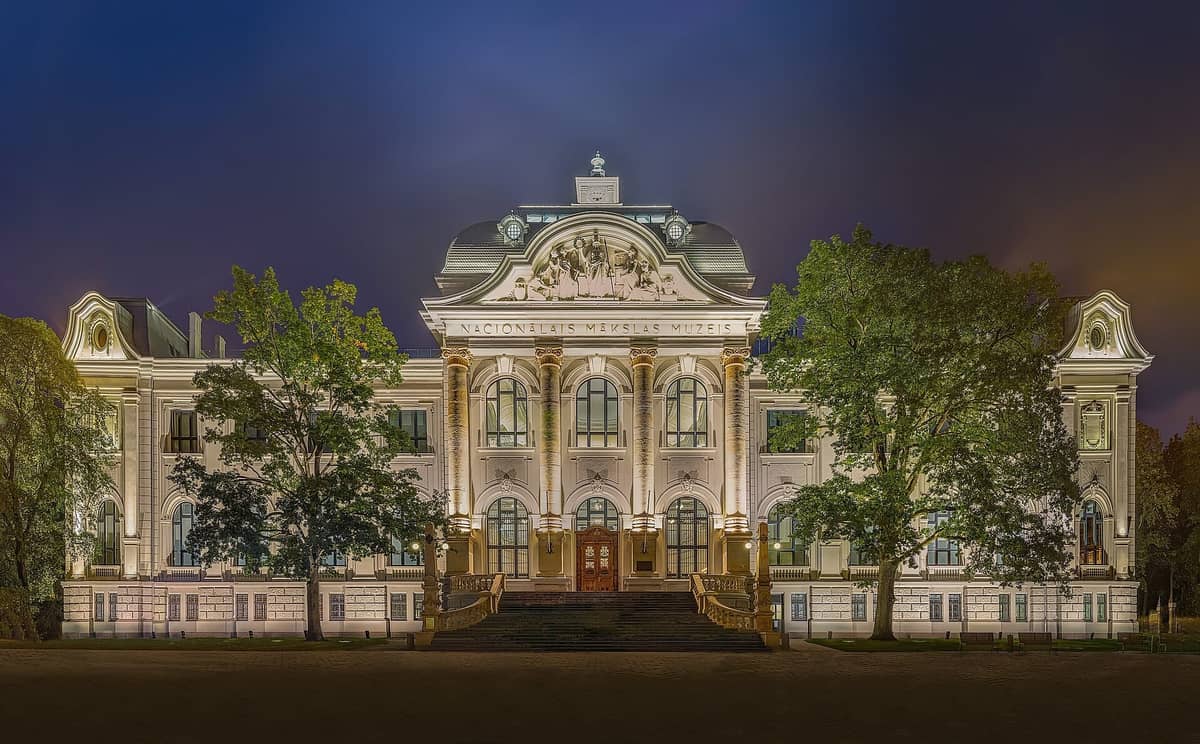
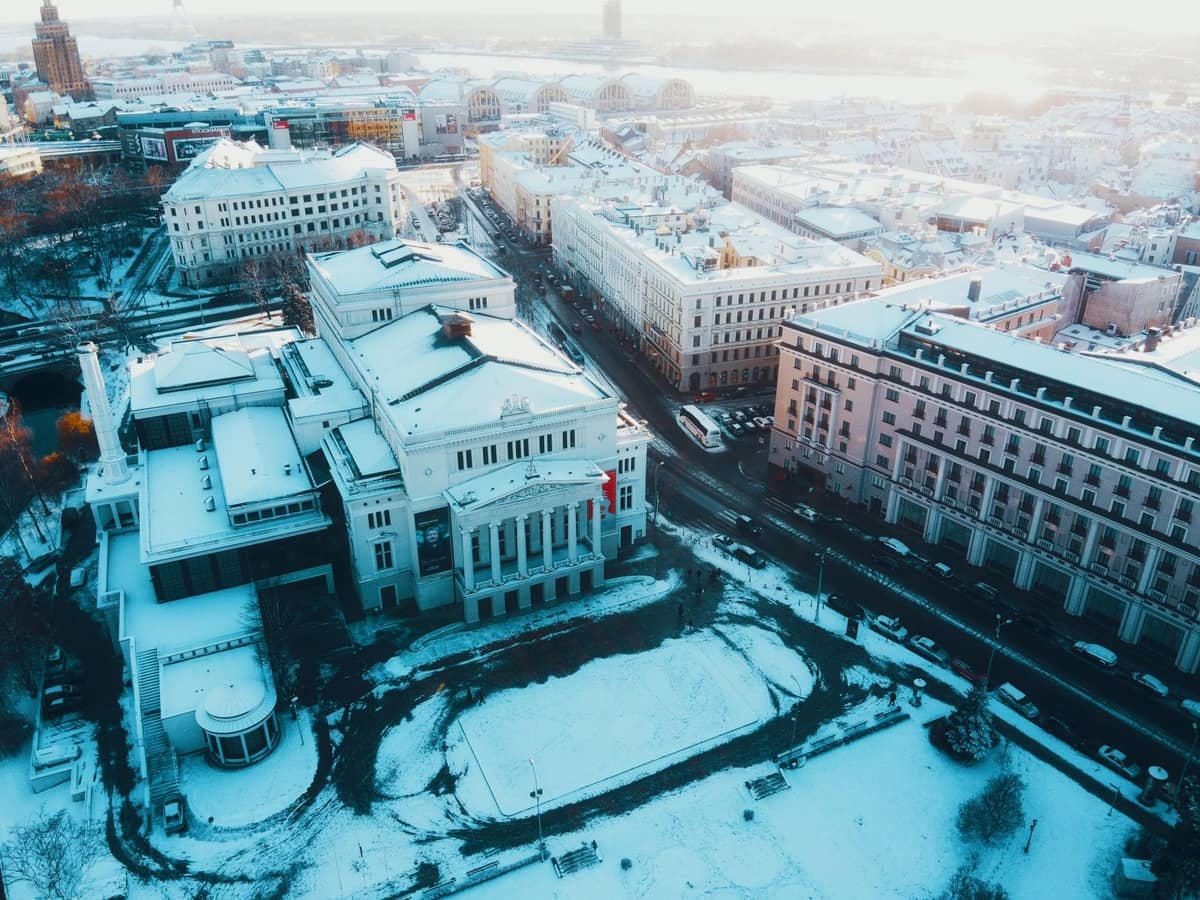
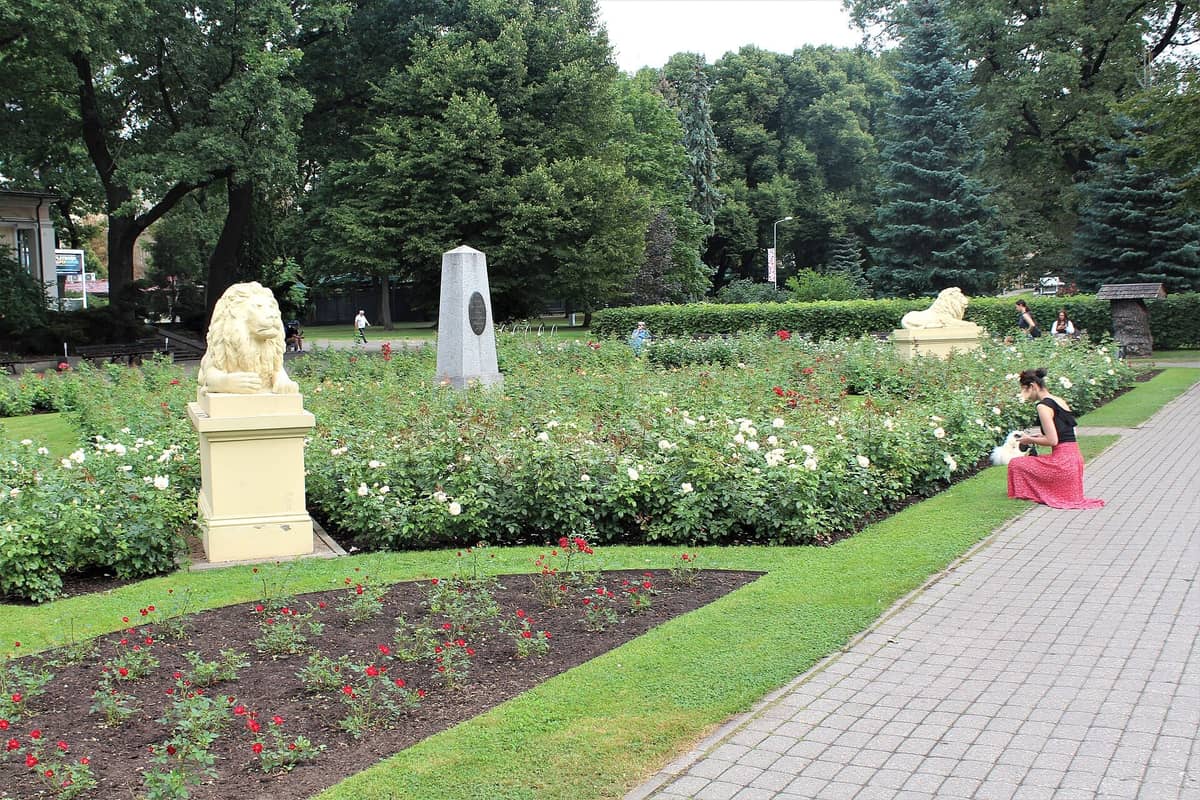
The cultural axis along Krišjāņa Valdemāra iela carries the Latvian National Museum of Art, housed in a grand Neoclassical building facing Esplanāde park. The park itself is one of the best places in the city to absorb Riga's daily life — families, joggers, chess players, and occasional open-air events occupy its paths throughout the year. Immediately south, the Latvian National Opera sits on Aspazijas bulvāris at the boundary between Centrs and the Old Town, with productions that attract both local audiences and visitors.
Alberta iela: the densest concentration of Eisenstein-era Art Nouveau facades in the city
Riga Art Nouveau Museum: best interior reconstruction of the period anywhere in Latvia
Latvian National Museum of Art: permanent collection spans Latvian Romanticism to 20th century
Esplanāde park: central green space ideal for pausing between sights
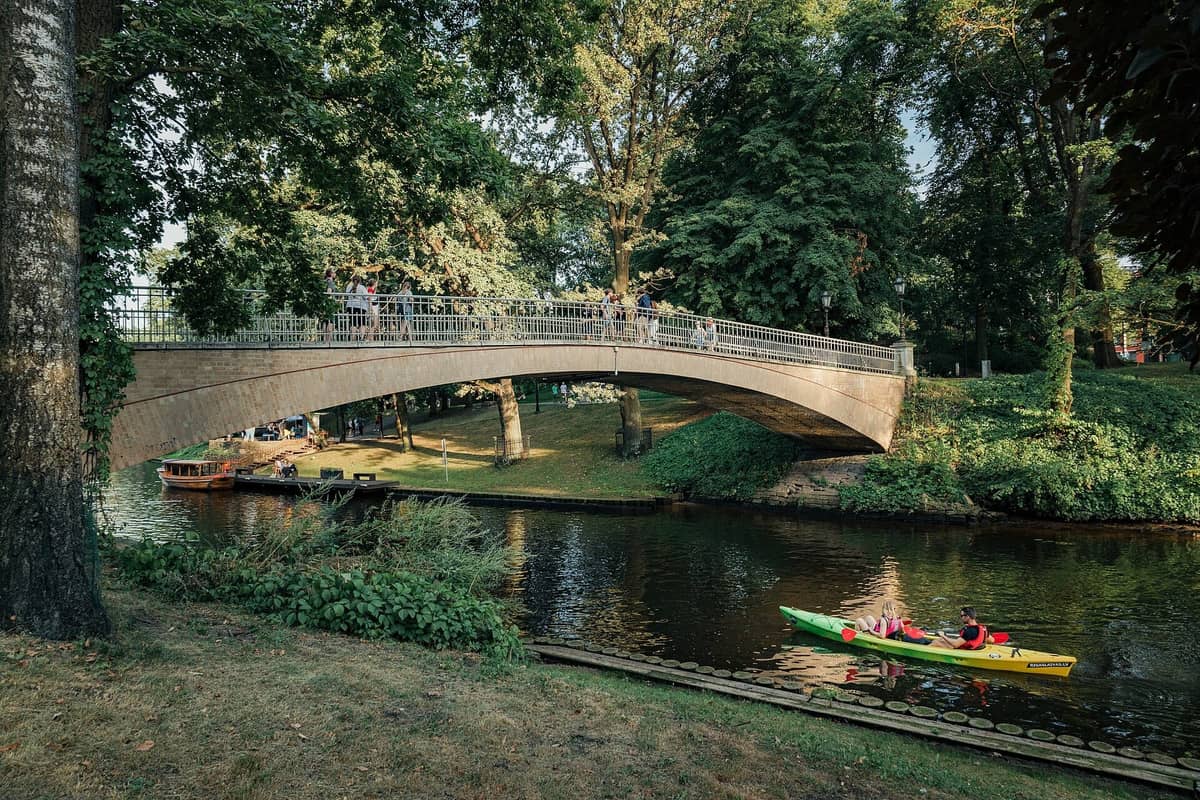
Bastejkalns park: landscaped hillocks along the old city canal, good for an early morning walk
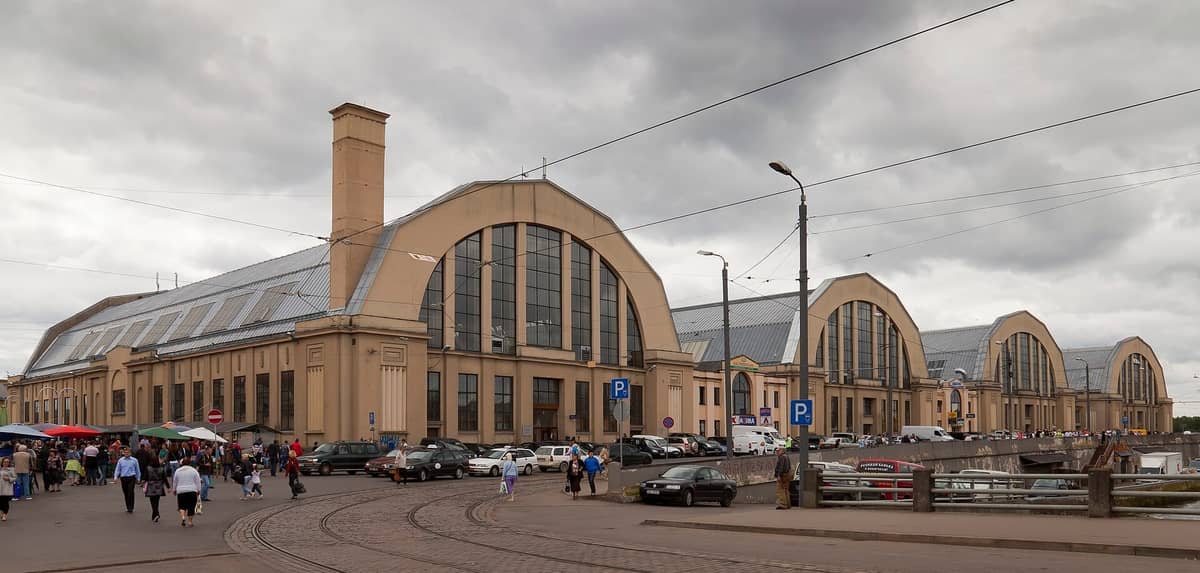
Riga Central Market: five enormous former Zeppelin hangars converted into market halls — produce, meat, fish, dairy, and a sea of street food outside
Vērmanes garden: the oldest public park in Riga, compact and central
Latvian National Opera: book tickets in advance, even midweek performances often sell well
Riga Central Market deserves its own paragraph. The five converted Zeppelin hangars at the southeastern edge of Centrs near the railway station constitute one of the largest market complexes in Europe. Each pavilion specialises in a different category — produce, meat, fish, dairy, and a general goods hall — and the outdoor sections expand the offer considerably with vendors selling pickled vegetables, smoked fish, fresh bread, and seasonal items. Go before noon on a weekday for the most authentic experience. If you are planning a day around the city's food culture, the dedicated Riga food guide maps out how the market fits into the wider picture.
Eating & Drinking
Centrs has the most diverse and geographically spread eating and drinking scene in Riga outside the Old Town, and considerably more of it is aimed at locals than at tourists. The price range runs from market stall lunches under a few euros to formal restaurant dinners, and the range of cuisine has expanded noticeably over recent years.
Krišjāņa Barona iela and the streets running east from it, particularly Dzirnavu iela and Lāčplēša iela, form the main corridor for independent cafés and mid-range restaurants. This is where a lot of Riga's working professionals eat lunch and where the café culture is most developed. Expect Latvian-European hybrid menus, good coffee, and dining rooms that feel designed for regulars rather than one-off tourists. The food at the Central Market stalls, particularly the smoked fish and dark rye bread, is worth building into any itinerary regardless of where you are eating proper meals.
The bar scene in the northern part of Centrs, particularly around Elizabetes iela and the streets behind the Opera, skews younger and more design-conscious than the Old Town's offerings. There are craft beer bars, wine bars with natural wine lists, and cocktail spots that stay open past midnight on weekends. The area around Čaka iela has a more mixed character — some cheap and cheerful local spots sitting alongside newer openings.
💡 Local tip
For a fast and genuinely good lunch, the food court sections outside the Central Market pavilions offer smoked fish rolls, pīrāgi (bacon-filled pastries), and hot soups at prices well below any nearby restaurant. Arrive between 11am and 1pm when the selection is freshest.
Getting There & Around
Centrs is the hub of Riga's entire public transport network, which means getting here is straightforward from every direction. The main railway station, Rīga pasažieru stacija, sits at Stacijas laukums on the southern edge of the neighbourhood and serves both commuter rail lines and regional trains to destinations including Jūrmala. The station square is also a major interchange for trams, trolleybuses, and buses, with routes fanning out to all parts of the city.
Tram lines cross Centrs along several key axes — Aspazijas bulvāris along the southern edge and routes along Krišjāņa Valdemāra iela are particularly useful for moving between the Art Nouveau quarter, the parks, and the Old Town fringe. Tickets can be purchased from the driver or via validators on board with a transport card. For orientation on how to navigate the city beyond Centrs, the getting around Riga guide covers the full network in detail.
Within Centrs itself, walking is almost always the right choice. The neighbourhood is flat — Riga sits at roughly 10 metres above sea level with very little grade change in the central area — and the distances are manageable. From the railway station to Alberta iela takes about 20 minutes on foot via the park chain route, passing through Bastejkalns and the canal. From the Central Market to the Art Nouveau Museum is under 25 minutes walking north through the boulevard grid. The park paths between Bastejkalns and Esplanāde offer a pedestrian-friendly route that avoids most traffic.
Riga International Airport (RIX) connects to the city centre by bus, with routes terminating near the railway station and Stacijas laukums. Journey time is typically around 30 minutes depending on traffic. Taxis and ride-hailing apps are also available at the airport and throughout the city. Cycling infrastructure has improved in recent years, with dedicated lanes on several of the main boulevards.
⚠️ What to skip
Car traffic in Centrs is heavy during weekday rush hours, particularly on Krišjāņa Barona iela and the roads feeding Stacijas laukums. If you are arriving by car, factor in significant congestion between 7:30 and 9:00am and 4:30 and 6:30pm. Street parking in the core of the neighbourhood is metered and limited.
Where to Stay
Centrs is the most practical base for first-time visitors to Riga. Staying here puts you within walking distance of the Old Town, the Art Nouveau district, the main parks, and the Central Market, without being priced into the premium accommodation tier that Old Town hotels often demand. For a thorough breakdown of how accommodation zones compare across the whole city, see the where to stay in Riga guide.
The most desirable part of Centrs for accommodation is the triangle bounded by Elizabetes iela, Krišjāņa Valdemāra iela, and Brīvības iela. This zone sits close to the Art Nouveau sights, faces Esplanāde and Kronvalda parks, and is within a 10 to 15 minute walk of both the Old Town and the railway station. Hotels here tend to be boutique-sized or mid-range international brands occupying restored period buildings.
The area around the railway station and Stacijas laukums offers budget hotels and hostels at lower price points, with the obvious advantage of transport connectivity and proximity to the Central Market. The trade-off is a slightly harder-edged street environment — the blocks immediately around the station are functional rather than atmospheric, and some streets in that zone feel better avoided late at night.
The stretch along Brīvības iela heading northeast offers a middle ground: well-connected, close to the parks and the main boulevard, and with a mix of apartment rentals and small hotels in Art Nouveau-era buildings. This part of Centrs suits travellers who want to feel embedded in local Riga rather than staying in a hotel enclave.
Practical Notes & Safety
Centrs is a safe neighbourhood by any reasonable standard and functions as Riga's everyday city centre. Standard city precautions apply: keep an eye on belongings in crowded spaces like the Central Market and around the railway station, and be aware that the areas closest to the Old Town fringe can attract pickpockets during peak tourist season. The Riga safety tips guide covers the full picture, but Centrs does not present any particular risk beyond what you would expect in any major European city centre.
Latvia uses the Euro (EUR) and is part of the Schengen Area, so EU nationals enter without visa formalities. The local emergency number is 112. Riga operates on Eastern European Time (UTC+2 in winter, UTC+3 during summer daylight saving). English is widely understood in hotels, restaurants, and shops throughout Centrs; Latvian is the official language and Russian is also widely spoken among older residents.
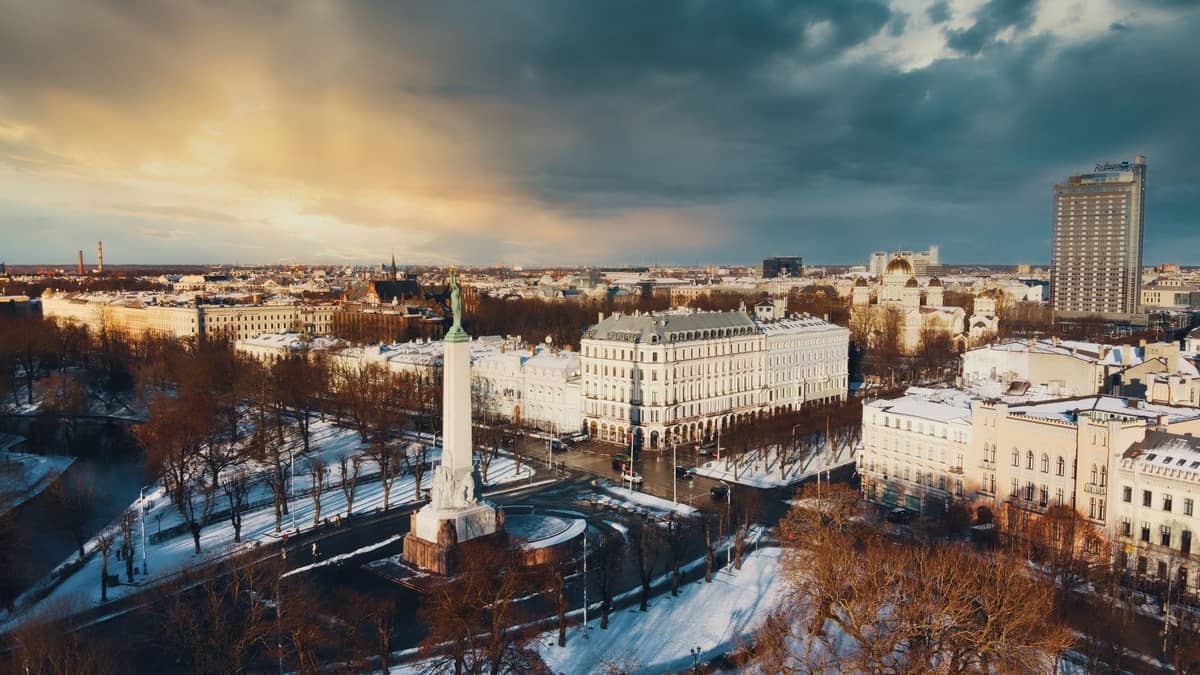
For travellers combining Centrs with wider Riga exploration, note that several important sights sit just across the boundary into the Old Town — including the Freedom Monument at the edge of Bastejkalns park, which technically marks the transition zone between Centrs and Vecrīga. Day trips to Jūrmala depart from the railway station at Stacijas laukums, making this an easy add-on from a Centrs base.
TL;DR
Centrs is Riga's primary city centre district, wrapping around the Old Town with the widest range of accommodation, restaurants, parks, and cultural institutions in the city.
The Art Nouveau architecture along Alberta iela and Elizabetes iela is the neighbourhood's defining visual feature and one of the main reasons to visit Riga at all.
The neighbourhood suits travellers who want walkable access to both the historic core and everyday Latvian city life, without being confined to the tourist bubble of the Old Town.
The area around the railway station is convenient for transport but less appealing as a base; the northern zone near the parks and the Art Nouveau quarter is the most atmospheric place to stay.
Not ideal for travellers seeking a quiet, low-key experience: Centrs is a working city centre with traffic, noise, and all the energy that entails — which is precisely what makes it the right choice for most visitors.
Two days in Riga is genuinely enough to cover the city's best sights, from the medieval lanes of Vecrīga to the extraordinary Art Nouveau district and the sprawling Central Market. This itinerary is built for efficiency, not rushing — with practical advice on where to linger and what to skip.
Three days is the sweet spot for Riga. Enough time to cover the medieval Old Town, the Art Nouveau district, and the Central Market properly, with a full day left for a train ride to Jūrmala's Baltic coast or Sigulda's castle valley. This guide breaks it all down day by day, with transport logistics, honest priorities, and seasonal advice.
Riga holds the world's largest concentration of Art Nouveau architecture, with over 700 buildings spanning four distinct style variants. This guide covers where to find the best façades, how to read the architecture, what to skip, and how to plan a half-day or full-day exploration of the Quiet Centre and beyond.
Riga stands out for a city of its size for museums. Whether you want medieval history, Soviet-era chills, or Latvia's finest art, the city has a museum for it. This guide covers the 12 best, with practical advice on what to prioritise and what to expect.
Riga rewards visitors differently depending on when you arrive. This guide breaks down every season's weather, crowd levels, pricing patterns, and key events so you can make an informed decision about when to go.
Riga is an outstanding base for exploring Latvia. Within an hour or two by train or car, you can walk a medieval castle tower, swim in the Baltic Sea, or wander through a surreal peat bog. These are the best day trips from Riga, with practical transport details for each.
Riga rewards budget-conscious travellers more than almost any other European capital. From medieval Old Town lanes and Art Nouveau facades to riverside promenades and free museum days, here are the best free experiences the city has to offer.
Riga has no metro, but its tram, trolleybus, and bus network covers almost every corner of the city for around €1.50 a ride when bought in advance. This guide breaks down every transport option, from airport bus 22 to night routes, e-tickets, and when it actually makes sense to take a taxi.
Riga is one of Northern Europe's most underestimated capitals: a UNESCO-listed Old Town, over 300 Art Nouveau buildings, a serious food scene, and prices that undercut most Western European cities. But it's not perfect. Here's an honest look at whether Riga deserves a place on your itinerary.
Riga International Airport (RIX) is the Baltic states' largest airport, just about 10–13 km from the city centre. This guide covers the arrivals process, terminal layout, immigration tips, and every realistic option for reaching central Riga quickly and affordably.
Latvian cuisine is built on rye, pork, fish, and preserved foods shaped by centuries of cold-climate cooking. This guide covers the essential dishes, drinks, and food spots to know before you eat your way through Riga — from Central Market stalls to traditional cafeterias and beyond.
Riga rewards couples with medieval cobblestone streets, a gorgeous Art Nouveau district, waterfront promenades, and a food scene serious enough to anchor multiple evenings. This guide covers the best romantic experiences across every season, from free sunset walks to private boat cruises on the Daugava.
Riga transforms in winter into one of Northern Europe's most atmospheric cold-season destinations. This guide covers the Old Town Christmas Market, seasonal ice rinks, what the weather actually feels like, and how to get the most out of a visit between November and January.
Riga's nightlife has more range than many visitors expect. Old Town's medieval streets fill with cocktail bars and live music venues, while the creative quarter around Tallinas iela draws a more local crowd. This guide breaks down where to drink, dance, and explore after dark — by neighborhood, budget, and time of year.
Walk the medieval streets of Riga's Old Town (Vecrīga) without a guide. This route covers every major landmark from the Freedom Monument to the House of the Blackheads, with practical advice on what costs money, what to skip, and how to time your visit.
Riga is one of Europe's most affordable capital cities, with a realistic daily budget of €35–55 covering accommodation, food, transport, and sightseeing. This guide breaks down exactly where your money goes, what to skip, and how to stretch every euro further.
Riga is one of the safer European capitals, but certain scams and situations catch tourists off guard every year. This guide breaks down real risks, the scams most likely to hit you, and practical steps to avoid them — from Old Town bar traps to taxi overcharging.
Riga rewards shoppers with one of Europe's great food markets, a lively craft scene, and local design studios that go well beyond fridge magnets. This guide covers where to shop, what to buy, what to skip, and how to do it without overpaying.
Riga carries more than 50 years of Soviet history in its streets, buildings, and museums. This guide covers the key Cold War sites, occupation memorials, Soviet-era architecture, and the historical context you need to make sense of what you're seeing.
Riga is a genuinely rewarding family destination, but it works best when you know where to focus. From Mežaparks forest trails and canal boat tours to the Ethnographic Open-Air Museum and a Jūrmala beach day, this guide covers the top family activities in Riga with practical details on what to do by season, how to get around, and what to avoid.
Riga packs medieval churches, extraordinary Art Nouveau architecture, Soviet-era landmarks, and one of Europe's great markets into a walkable city centre. This guide covers the best things to do across the Old Town, Centrs, and beyond, including day trips to Sigulda and Jūrmala.
Choosing where to stay in Riga shapes your entire trip. This guide breaks down every major neighbourhood, from the UNESCO-listed Old Town to the Art Nouveau streets of Centrs, with practical advice on what each area costs, who it suits, and what you'll give up.