Riga Central Market (Rīgas Centrāltirgus): What to Expect, Buy, and Eat
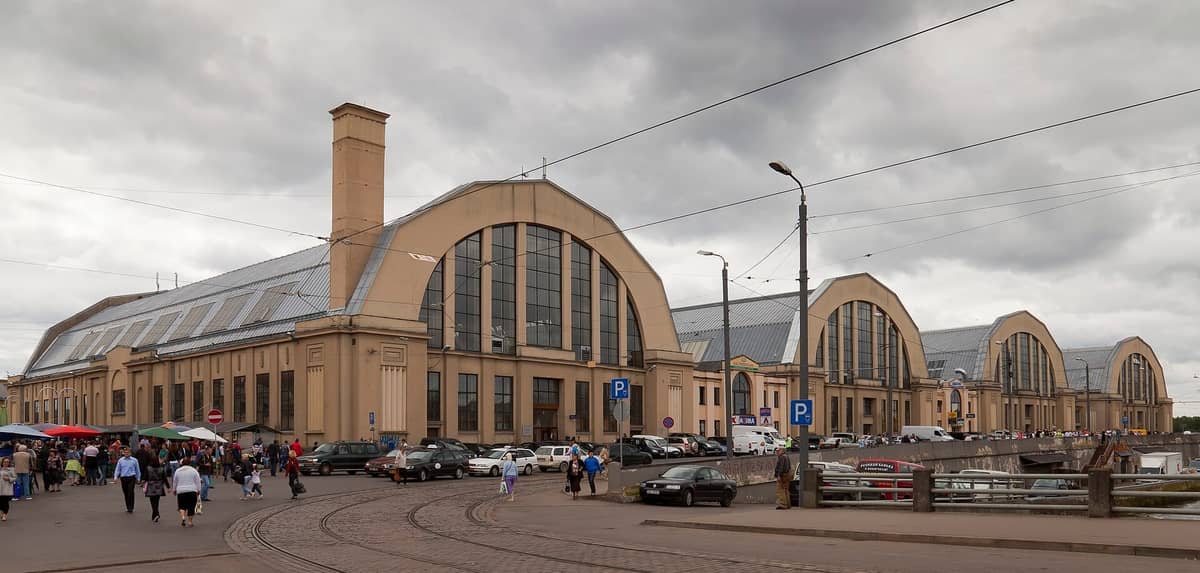
Riga Central Market is one of the largest markets in Eastern Europe, spread across five converted Zeppelin hangars on the banks of the Daugava. Part of the UNESCO-listed Historic Centre of Riga, it is a working food market first and a sightseeing stop second — which is precisely what makes it worth your time.
Quick Facts
- Location
- Nēģu iela 7, Rīga, LV-1050 — city centre, south edge of Old Town
- Getting There
- 5-min walk from Riga Central Railway Station; 10-20 min walk from Old Town centre
- Time Needed
- 1 to 2 hours for a proper wander; 30 min if you have a shopping list
- Cost
- Free entry. Prices inside are local market rates — budget-friendly
- Best for
- Food lovers, photographers, budget travellers, anyone curious about everyday Latvian life
- Official website
- centraltirgus.lv/en
What Riga Central Market Actually Is
Riga Central Market, known locally as Rīgas Centrāltirgus, opened in 1930 and has been feeding the city every day since. It is consistently listed among one of Europe’s largest marketss by floor area, operating out of five enormous pavilions originally built as German military airship (Zeppelin) hangars during the First World War. Those structures were dismantled and relocated to Riga, then repurposed into market halls — a piece of engineering history you can still see in the barrel-vaulted steel ceilings above the cheese and vegetable stalls.
The entire complex sits within the Historic Centre of Riga, a UNESCO World Heritage Site. That designation covers the architecture, not the produce, but it signals something important: this is not a tourist-facing craft market. It is a serious, high-volume food and goods market where Riga's residents shop. The mix of elderly women sorting rye bread loaves, restaurant chefs inspecting fish, and tourists wandering with cameras is part of the texture of the place.
ℹ️ Good to know
Opening hours: market area 07:00–18:00 daily; pavilions typically 07:30–17:00. Individual vendors may close earlier, especially on weekdays. A Farmers' Night Market runs 17:30–07:30. Check centraltirgus.lv/en/ for current times before your visit.
The Five Pavilions: What's Inside Each One
Each of the five main pavilions is dedicated to a specific category of goods, and the divisions are maintained with surprising discipline for a market this size. The meat pavilion is the most atmospheric, low-lit with refrigerated counters lined with cuts you won't find pre-packaged elsewhere — blood sausages, smoked ribs, whole rabbit, and offal alongside familiar pork and chicken. The smell is sharp and mineral, and the vendors are not shy about making suggestions.
The fish pavilion is where Riga's Baltic geography makes itself known. Smoked sprats, whole pike-perch, freshwater eel, and crates of marinated herring sit beside the counters. The cold, slightly briny air in here is distinctive. If you are buying smoked fish to take home, this is the right place and the right price. The dairy pavilion is softer in atmosphere: cream cheeses, fresh cottage cheese sold loose, caraway-seeded Latvian hard cheese, and rows of amber-coloured butter.
The fruit and vegetable pavilion expands seasonally onto the outdoor rows beyond the hangars. In summer, the outdoor sections carry berries — strawberries in June, wild blueberries and chanterelles in July and August — that local foragers bring in from the countryside. In winter, the outdoor stalls thin out and the indoor area concentrates on root vegetables, preserved goods, and dried herbs. The fifth pavilion covers dry goods, household items, and lower-cost clothing — less photogenic, but worth a pass-through for local context.
💡 Local tip
Bring cash. While some stalls now accept card payments, many vendors — especially older ones at outdoor stalls — operate cash only. Euros are the currency. Small denominations are appreciated.
Tickets & tours
Hand-picked options from our booking partner. Prices are indicative; availability and final rates are confirmed when you complete your booking.
Canal boat sightseeing tour in Riga
From 13 €Instant confirmationArt and culture walking tour of Riga with a local
From 66 €Instant confirmationFree cancellationSelf-guided discovery walk in Riga - the essential old town and its secrets
From 30 €Instant confirmationFree cancellationExclusive private guided tour of Riga's architecture with a local
From 175 €Instant confirmationFree cancellation
When to Go: How the Market Changes by Time and Season
Arriving at 07:30 on a weekday puts you in the market at its most functional. Vendors are stacking produce, the light through the hangar windows is clean and direct, and the foot traffic is almost entirely local. You will see restaurant buyers moving quickly with handwritten lists, and retirees taking their time at the cheese counters. This is the best hour for photography: the overhead industrial lighting has not yet been overwhelmed by the midday crowd, and the market has a focused, purposeful energy.
By 10:00 on weekends the market becomes significantly busier. Families arrive, the outdoor sections fill up, and queues form at the most popular fish and meat counters. Navigating with a large bag becomes slower work. Saturday mornings in summer are the peak of peaks: expect a full, occasionally shoulder-to-shoulder experience in the narrow lanes between outdoor stalls. If you want atmosphere over efficiency, this is actually a good time. If you want to shop without frustration, midweek mornings are better.
Seasonally, the market is at its most photogenic from late June through September, when the outdoor produce stalls carry the full range of Latvian summer produce. Winter visits have their own character: fewer stalls, more focus on preserved and smoked goods, and the contrast between the cold grey exterior and the warm food smells inside the pavilions is pronounced. December brings some seasonal food stalls and a different mood — quieter but still worth the visit.
Historical and Architectural Context
The decision to build the market in decommissioned Zeppelin airship hangars was pragmatic: the hangar structures were large, already fabricated, and available for relocation after the war. Latvian engineers and architects adapted them between the late 1920s and 1930, and the complex opened in 1930 as one of the most modern food markets in Europe at the time. The scale of the hangars allowed for the kind of covered market space that most European cities could not provide under a single roof.
The market's location, between the edge of Old Town and the Daugava riverbank, was deliberate. It placed the food supply hub at a point where river transport and the adjacent railway station could feed goods directly into the market with minimal handling. That logic still holds: the Daugava riverfront is visible just beyond the southern edge of the complex, and the railway station is a five-minute walk north.
UNESCO listed the Historic Centre of Riga, which includes the market buildings, in 1997. The citation recognized both the quality of the Art Nouveau architecture concentrated in the centre and the industrial heritage represented by structures like the market hangars. If you are building a broader picture of Riga's architectural layers, the market pairs well with a walk through the Alberta iela Art Nouveau streetscape and a stop at the Riga Art Nouveau Museum.
What to Buy and Eat Here
Smoked and preserved fish is the single best food purchase at the market. The quality is high, the prices are considerably lower than supermarkets, and the selection of smoked sprats alone runs to half a dozen preparation styles. Vacuum-sealed packages travel well and make genuinely useful souvenirs. Latvian rye bread, dense and slightly sour, is sold by several bakery vendors in the pavilions — the caraway-seeded loaves in particular are worth buying even if you eat them the same day.
For eating at the market, look for the small food counters tucked inside and around the pavilions. Kvass, the fermented rye drink, is sold cold by the cup in summer. Pirāgi, small pastries filled with bacon and onion, appear at several stalls and are the easiest on-the-go market food. There are a handful of small sit-down counters where you can get Latvian soups, particularly cold beetroot soup in summer. These are not tourist-oriented; the menus may be in Latvian only, but pointing at what someone else is eating works fine.
💡 Local tip
The covered area directly behind the main pavilions, sometimes called the back market, has the lowest prices for fresh produce. Vendors here are often the ones selling directly from their own farms or gardens. It is less organized and less photogenic, but better value.
Practical Information and Getting There
The market is at Nēģu iela 7, a five-minute walk from Riga Central Railway Station. From the Old Town, the walk takes ten to twenty minutes depending on your starting point, following Aspazijas Boulevard south past the National Opera and continuing toward the station. Trams and buses stop near the station for connections from other parts of the city.
Entry is free. There is no admission charge for any part of the market. The main pavilions open at 07:30 and the broader market area from 07:00; most vendors close by 17:00–18:00. The market operates daily throughout the year. For current pavilion hours and the Farmers' Night Market schedule, the official site at centraltirgus.lv is the most reliable source. If you are planning a full day in the centre, the market works well as a morning start before heading into Riga's Old Town.
The ground level layout of the pavilions and the wide lanes between them make the space broadly accessible to visitors using prams or wheeled carts. The outdoor sections include some uneven paving. There is no detailed official accessibility statement publicly available; visitors with specific requirements should contact the market administration via the official website before visiting.
The market sits in Riga's city centre district, making it easy to combine with other nearby stops. The Latvian Academy of Sciences observation deck is a short walk east, and the Museum of the Occupation of Latvia is around fifteen minutes on foot through the Old Town.
Who Will Enjoy This, and Who Probably Won't
Travellers who prefer curated, calm experiences may find the busier hours overwhelming. The market is not organized for browsing in the way a food hall or covered market in a Western European capital might be. Signage is often in Latvian only, vendors are focused on serving regulars, and the pace during busy periods is fast. If you need everything translated and explained, it can feel slightly impenetrable.
Visitors who are not buying anything and simply want to look around will find the experience thinner than expected after about thirty minutes. The market's value is primarily experiential: it rewards those who engage by tasting, asking prices, and actually purchasing. Purely as a sightseeing stop, the architectural interest is real but limited to the hangar structures. For a richer architectural and cultural experience in the same half-day, pair the market with a walk up to Kalnciema Quarter on a weekend.
Insider Tips
- The fish pavilion is coldest inside even in summer — bring a layer if you plan to spend time there examining the counters.
- Wild mushroom and berry sellers appear at the outdoor stalls from mid-July onward. These are often individuals who have foraged that morning. Prices are not fixed; a polite exchange is normal.
- The Farmers' Night Market, running from 17:30 to 07:30, attracts a different mix of vendors and a younger crowd in summer evenings. It is a genuinely different atmosphere from the daytime market.
- If you are buying smoked fish to take home, ask the vendor to double-wrap it. The smell is persistent and will work its way through a single plastic bag in a warm backpack.
- Wednesday and Thursday mornings are the quietest weekday windows. Monday mornings can be slightly understocked after the weekend rush.
Who Is Riga Central Market For?
- Food travellers who want to eat and shop like a local rather than at a restaurant
- Photographers looking for industrial architecture paired with human-scale market activity
- Budget travellers: the market offers some of the cheapest fresh food and hot snacks in the city centre
- Visitors building a picture of everyday Latvian life beyond the tourist corridors
- Foodies seeking regional specialities: smoked fish, rye bread, caraway cheese, and pirāgi pastries in one place
Nearby Attractions
Other things to see while in City Centre (Centrs):
- Bastejkalns Park & City Canal
Bastejkalns Park, also known as Bastion Hill Park, wraps around the edge of Riga's Old Town along the historic City Canal. Formed on the site of demolished 19th-century fortifications, it offers terraced lawns, stone cascades, canal-side paths, and a rare pocket of calm within easy walking distance of the Freedom Monument and the Art Nouveau district.
- Esplanade Park
Stretching across 8.75 hectares in the heart of Riga, the Esplanāde is the city's most centrally located public park. Framed by grand streets and a cluster of significant landmarks, it offers a quiet, unhurried counterpoint to Old Town's crowds — and it's completely free.
- Freedom Monument
The Freedom Monument is the symbolic heart of Riga, a 42.7-metre granite and travertine column that has stood at the intersection of the Old Town and the main boulevard since 1935. Entry is free, access is around the clock, and the hourly changing of the guard adds a living ritual to what might otherwise be a static landmark.
- KGB Building (Corner House)
At the corner of Brīvības iela and Stabu iela stands a building that once made Riga's residents cross to the other side of the street. The Corner House served as the KGB's Latvian headquarters from 1940 to 1991, housing interrogation rooms, cells, and a bureaucracy of fear. Today it functions as a museum that documents Soviet occupation with unflinching honesty.