Daugava River Promenade: Riga's Riverside Walk Worth Taking
The Daugava River Promenade stretches along the right bank of the Daugava from the edge of Old Town southward through the Ķengarags suburb. It is free, open around the clock, and offers some of the most unobstructed views of Riga's skyline, the wide river, and the left bank's quieter residential district. Whether you walk it at sunrise or cycle it on a summer evening, the promenade gives the city a different scale entirely.
Quick Facts
- Location
- Right bank of the Daugava River, from Riga Old Town southward to Ķengarags, Riga
- Getting There
- Trams and buses from central Riga toward Krasta iela / Maskavas iela; multiple stops along the riverfront
- Time Needed
- 45 minutes (Spīķeri section only) to 2–3 hours (full promenade walk or cycle)
- Cost
- Free; individual cafés and bike rentals along the route charge separately
- Best for
- Walkers, cyclists, photography, sunset views, families with prams
- Official website
- www.liveriga.com/en/9411-daugava-promenade
What the Daugava River Promenade Actually Is
The Daugava River Promenade, which includes the Ķengaraga promenāde also known as Daugavas promenāde in its southern section, is a continuous riverside path running along the right bank of the Daugava River. It begins close to the Spīķeri Quarter just southeast of Riga's Old Town and extends southward through the Latgale suburb into the Ķengarags district. The path also connects to a cycling corridor informally named the Centrs–Dārziņi route, making it one of the longest continuous riverside recreational corridors in the city.
This is not a manicured city park with trimmed hedges and entry gates. It is a working urban waterfront that has been progressively upgraded since the 2010s, when the revitalisation of Spīķeri Square and adjacent embankments brought paved paths, lighting, and seating to stretches that were previously inaccessible or neglected. The result is a walk that feels genuinely urban: you get wide river views, the smell of the water, the distant sound of trams on nearby streets, and occasional bursts of café noise from the terrace bars near the Spīķeri warehouses.
💡 Local tip
Start your walk at the Spīķeri Quarter end (nearest to Old Town) if you are short on time. This section offers the best views of the Daugava's breadth and the most developed infrastructure: benches, paved surfaces, and food options.
What You See: The River, the Skyline, and the Left Bank
The Daugava is wide here, wider than most first-time visitors expect. At the northern end of the promenade, near the Akmens Bridge and the Spīķeri warehouses, you look directly across at the Pārdaugava district on the left bank: a low residential landscape punctuated by church spires and Soviet-era apartment blocks that contrast sharply with the Old Town's rooftops visible to your north. The view is not picture-postcard in a conventional sense, but it is honest and photogenic in a different way — the scale of the river gives Riga an almost coastal feeling.
Moving south along the promenade, the views shift. The historic skyline recedes and you enter a more residential, green stretch where the river's right bank slopes gently down to the water. In summer, the vegetation along the banks is thick enough that you occasionally lose sight of the water altogether, then the path opens again onto wide gravel flats or reinforced embankment edges. Fishermen appear at these points, casting into the Daugava with the casual patience of people who come here every week.
The Daugava itself is a significant river historically. It forms the central geographic and commercial artery of Riga: the city grew on its right bank precisely because the river provided both a trading route and a defensive barrier. The warehouses of the Riga Central Market, which sits just inland from the promenade's northern end, were once served by river barges unloading goods onto these very embankments. Walking the promenade, you are tracing what was once a working industrial waterfront.
Tickets & tours
Hand-picked options from our booking partner. Prices are indicative; availability and final rates are confirmed when you complete your booking.
Canal boat sightseeing tour in Riga
From 13 €Instant confirmationArt and culture walking tour of Riga with a local
From 66 €Instant confirmationFree cancellationSelf-guided discovery walk in Riga - the essential old town and its secrets
From 30 €Instant confirmationFree cancellationExclusive private guided tour of Riga's architecture with a local
From 175 €Instant confirmationFree cancellation
How the Experience Changes by Time of Day
Early morning, roughly 6:00 to 8:00, the promenade belongs to runners and dog walkers. The light at this hour, particularly in spring and autumn, is low and soft, cutting across the river in long horizontal bands. Mist sometimes sits on the water in cooler months. There is almost no foot traffic at the southern sections, and even the Spīķeri end is quiet enough that you can hear the water lapping at the embankment.
Midday brings families, casual walkers, and cyclists. The path near Spīķeri sees the most use at this time, with café terraces filling up on warm days. The southern stretch stays quieter. In summer, the paved surfaces near the waterfront can become quite warm underfoot if there is no shade, so bring water and wear sun protection if you plan to walk more than the northern section.
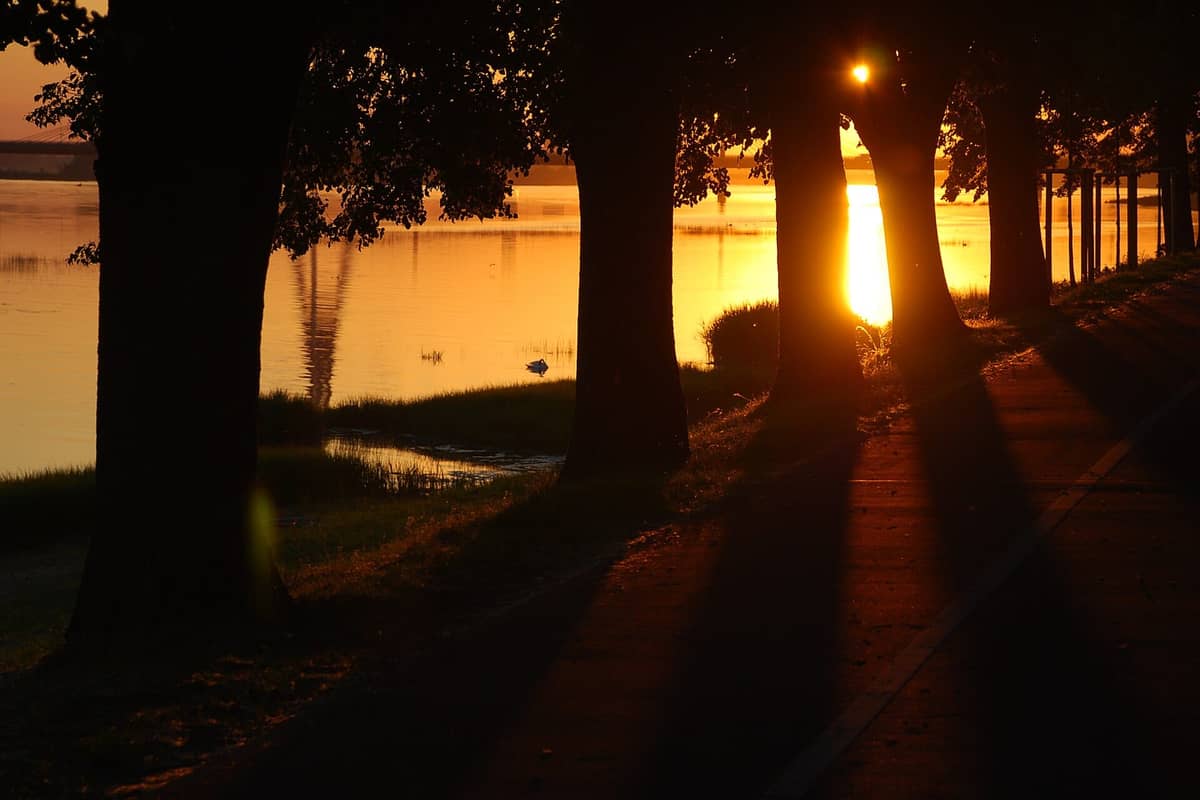
Sunset is the most rewarding time visually. The sun sets roughly to the northwest in Riga, and from the right bank of the Daugava you face southwest, which means the light catches the water and the left bank buildings in warm tones for the last hour before dark. This is particularly striking in late May through late July, when the northern latitude extends the golden hour significantly. Locals know this, and the benches along the Spīķeri stretch fill up from around 8:00 PM onward on clear evenings.
ℹ️ Good to know
In winter, the promenade is largely quiet but not unpleasant on clear days. The river occasionally carries ice floes in January and February, which is a striking sight. Dress for wind: the wide river corridor channels cold air efficiently.
Walking and Cycling the Route: Practical Details
The promenade is a public space, accessible 24 hours a day, every day of the year. There are no gates, no tickets, and no formal entry points. You can join the path at multiple points: directly from the Spīķeri Quarter at the northern end, from crossings near the Akmens Bridge, or from Krasta iela and Maskavas iela at various points further south.
For walkers, the northern section from Spīķeri to roughly the midpoint of Krasta iela is the most developed and easiest to navigate. The surface is paved, lighting is in place for evening walks, and the distance is manageable for a casual 45-minute stroll. The southern sections toward Ķengarags are less manicured in places but perfectly walkable; plan for 2 to 3 hours if you want to cover the full length.
Cycling is well-supported along the promenade, which forms part of the Centrs–Dārziņi cycle corridor. Bike rental options are available in the city centre, and the path is wide enough to accommodate both cyclists and pedestrians without significant conflict. If you are cycling the full route, the path connects you to suburban green areas and the Ķengarags district, which has its own small riverside park. Note that some sections, particularly near older embankment structures, may have uneven pavement or short stepped sections, so cycling with a child seat or a cargo bike requires care.
⚠️ What to skip
Accessibility varies significantly by section. The Spīķeri end has level paved surfaces and ramps, but portions of the southern embankment include stairs and uneven ground. Visitors with pushchairs or mobility aids should confirm specific access points before committing to the full route.
The Spīķeri Quarter Connection
The most polished section of the promenade is the stretch adjacent to the Spīķeri Quarter: a complex of 19th-century red-brick warehouse buildings that were revitalised as an events and cultural space in the 2010s as part of the same urban regeneration project that upgraded the waterfront itself. The square between the warehouses and the river was repaved, new lighting was installed, and the embankment edge was reinforced and made accessible.
This is where the promenade most closely resembles a proper riverfront destination rather than just a path. On weekends, there are occasional markets and food stalls near the Spīķeri warehouses. The adjacent Riga Central Market is a short walk inland from here, making a logical combination: start at the market, cut through to the waterfront, and follow the promenade south for as long as your legs allow.
Getting Here and Getting Around
From the city centre, multiple tram and bus routes run along or close to the right bank of the Daugava, with stops on Krasta iela and Maskavas iela giving access to various points along the promenade. The Spīķeri end is also walkable from Riga's Old Town in around 10 to 15 minutes on foot, crossing through the area just south of the Central Market. If you are using public transport, check current Riga city bus and tram maps for the most direct route from your accommodation, as specific route numbers and stop names change periodically.
For those using ride-hailing or taxis, the Spīķeri Quarter is a useful drop-off reference point for the northern end, while the Ķengarags district is the landmark for the southern end. The promenade is linear rather than looped, so consider how you will return: either walk back, cycle back, or plan a one-way route and take public transport from a nearby stop at the far end.
If you are planning a broader walking day in the city, the promenade pairs naturally with a circuit through the Town Hall Square area and the Old Town, adding the riverside as a quieter, more open-air counterpart to the medieval lanes just a few minutes' walk to the north. For a fuller itinerary, the Riga Old Town walking tour guide covers the logical connectors between these areas.
Who Will Enjoy This, and Who Might Not
The Daugava River Promenade is ideal for people who want space, air, and a different perspective on Riga than the compact medieval centre provides. It rewards walkers, cyclists, photographers working with wide-angle natural light, and anyone travelling with children or dogs who need room to move. The free access and no-ticket format make it particularly useful for budget travellers or those on a long visit who want low-key daily exercise without committing to a specific attraction.
It is less suitable for visitors on a short trip who are prioritising Riga's interior architecture, museums, or the concentrated density of the Art Nouveau district. The promenade does not compete with those experiences on cultural depth. If you have only one day in Riga, the promenade is a pleasant addition but not the first call on your time. For those with two days or more, it fits naturally as a morning or evening walk between other stops.
Travellers expecting the polished, café-lined waterfront of a Western European city may find the southern sections underwhelming: they are greener, quieter, and more authentically suburban than scenic. That is part of the appeal for some visitors, and not for others.
Insider Tips
- The stretch directly in front of the Spīķeri warehouses is the best photography position for wide shots of the Daugava with the Old Town spires in the background. Come in the late afternoon when the light hits from the northwest.
- On clear winter days when the river carries ice, the northern embankment near Akmens Bridge offers an unusual view that most visitors never see. The ice floes can be substantial in cold January and February years.
- If you are cycling the full Centrs–Dārziņi corridor, the southern end at Ķengarags has a small riverside park where you can rest before returning. It is almost entirely local, with none of the tourist infrastructure of the northern end.
- The Spīķeri section gets noticeably crowded on warm summer weekend evenings after 7:00 PM. If you want the benches and river views to yourself, come on a weekday morning or during the off-season.
- Combine the northern promenade end with a visit to the Riga Central Market, which is a five-minute walk inland. The market opens early and closes in the afternoon, so a morning sequence of market then promenade makes an efficient half-day.
Who Is Daugava River Promenade For?
- Cyclists looking for a long urban route with river views
- Photographers chasing wide-river skyline shots at golden hour
- Families with prams or young children needing open, flat space
- Budget travellers wanting a rewarding free activity
- Visitors on multi-day trips seeking a quieter, local-feeling break from Old Town crowds
Nearby Attractions
Combine your visit with:
- Āgenskalns Market
Āgenskalns Market (Āgenskalna tirgus) has anchored the left bank of the Daugava since 1898. Its architect-designed red-brick pavilion, restored in 2022, now blends a working food market with cafés, a bar, and a regular vintage and design market — all free to enter.
- Ethnographic Open-Air Museum of Latvia
Spread across 87 hectares of pine forest on the shore of Lake Jugla, the Ethnographic Open-Air Museum of Latvia preserves rural Latvian building traditions in one walkable landscape. Founded in 1924 and open to the public since 1932, it is one of the oldest open-air museums in Europe. Allow at least half a day.
- Kalnciema Quarter
A restored complex of 18th and 19th-century wooden buildings on the left bank of the Daugava, Kalnciema Quarter hosts a popular Saturday market, summer concerts, and independent cafés. It offers a quieter, residential counterweight to Old Town's stone and crowds.
- Mežaparks Forest Park
Mežaparks Forest Park is Riga's most expansive urban green space, stretching across a former garden city neighbourhood on the western shore of Lake Ķīšezers. Free to enter and open year-round, it combines dense pine forest, a landmark concert stage, and lakeside cycling paths within around 20–30 minutes of the city centre by tram.