Āgenskalns Market: Riga's Oldest Left-Bank Market Reborn
Āgenskalns Market (Āgenskalna tirgus) has anchored the left bank of the Daugava since 1898. Its architect-designed red-brick pavilion, restored in 2022, now blends a working food market with cafés, a bar, and a regular vintage and design market — all free to enter.
Quick Facts
- Location
- Nometņu iela 64, Āgenskalns, Riga, LV-1002
- Getting There
- ~10-minute tram or trolleybus ride from Old Town; walkable via Akmens or Vanšu bridges
- Time Needed
- 1–2 hours (longer on weekend flea market days)
- Cost
- Free entry; spending depends on purchases
- Best for
- Local food, architecture lovers, weekend wanderers, budget travelers
- Official website
- www.agenskalnatirgus.lv
What Is Āgenskalns Market?
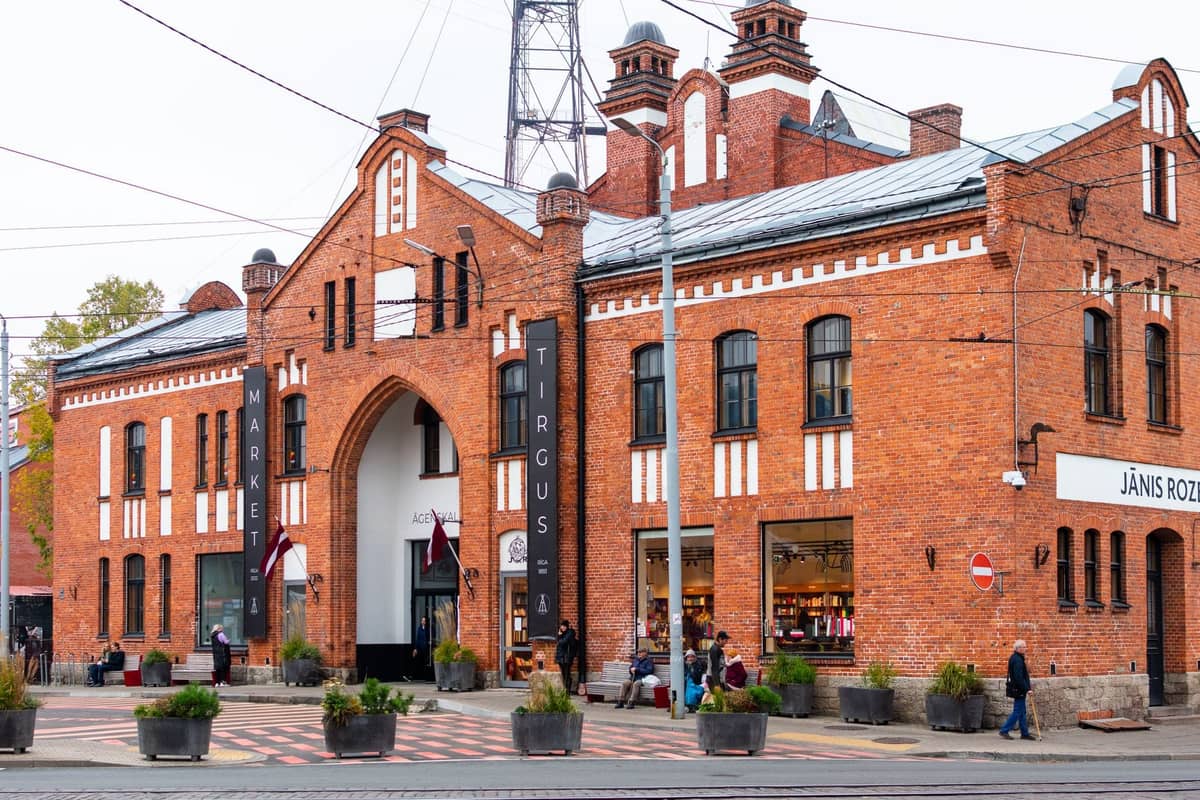
Āgenskalns Market — known locally as Āgenskalna tirgus — is the largest and oldest market on the left bank of the Daugava River, with roots going back to 1898. It is classified as a national cultural monument, and the red-brick pavilion at its centre was designed by architect Reinhold Schmaeling and built between 1911 and 1914 as part of an Art Nouveau complex. The building covers about 8,000 m² and underwent a full revitalization completed in 2022, emerging not just as a freshened-up market hall but as a genuine community anchor for the Āgenskalns neighbourhood.
If you have spent time around Riga Central Market on the right bank, Āgenskalns offers a deliberate contrast: fewer tourists, a tighter neighbourhood feel, and a building that rewards looking up at its brickwork and proportions rather than rushing through stalls. Both markets are worth your time, but they serve different moods.
The Building: Architecture Worth Pausing For
Schmaeling's pavilion is a measured, confident piece of early 20th-century civic architecture. The exterior is warm red brick with arched windows and careful ornamental detail — restrained by Art Nouveau standards but clearly a cut above a utilitarian shed. From the street, the building reads as serious civic infrastructure, the kind of structure a growing city builds when it wants to signal that a neighbourhood market deserves permanence.
The 2022 restoration preserved the original fabric while opening up the interior for modern use. The ground floor retains the market function — produce, dairy, meat, bread, flowers — while the second floor has been converted into a food and drink destination with cafés and a bar. For context on how Riga's architects were working in this same era across the river, the Art Nouveau district guide covers the broader movement in detail.
💡 Local tip
Stand on the pavement opposite the main entrance on Nometņu iela for the best view of the full facade. The proportions read better from a distance than from directly in front.
Tickets & tours
Hand-picked options from our booking partner. Prices are indicative; availability and final rates are confirmed when you complete your booking.
Canal boat sightseeing tour in Riga
From 13 €Instant confirmationArt and culture walking tour of Riga with a local
From 66 €Instant confirmationFree cancellationSelf-guided discovery walk in Riga - the essential old town and its secrets
From 30 €Instant confirmationFree cancellationExclusive private guided tour of Riga's architecture with a local
From 175 €Instant confirmationFree cancellation
What You'll Find Inside: Ground Floor and Outdoor Stalls
The ground floor functions as a working food market Tuesday through Sunday, opening at 09:00. Vendors sell fresh vegetables and fruit, dairy products, bread from local bakeries, meat and fish, honey, and preserved goods. The produce skews local and seasonal — in late summer the stalls carry berries, wild mushrooms, and early root vegetables; in winter the mix shifts toward cabbages, dried herbs, and preserves.
The outdoor marketplace and flower market are open daily from 08:00 to 19:00 and ring the pavilion on the courtyard side. Flower vendors occupy a consistent position and are busy on Friday and Saturday mornings, when Riga locals tend to buy for the weekend. The smell of cut flowers near these stalls is one of the more distinctive sensory details of an early visit.
The indoor market closes at 19:00 Tuesday through Saturday and at 17:00 on Sundays and Mondays. If you arrive after 17:00 on a weekday, expect a thinning selection and vendors starting to pack up. Mid-morning on a weekday gives you the fullest stalls and the quietest aisles.
ℹ️ Good to know
Ground floor hours: Tue–Sat 09:00–19:00, Sun–Mon 09:00–17:00. Outdoor market and flowers: daily 08:00–19:00. Flea market: every weekend in the outdoor marketplace, 08:00–15:00.
The Second Floor: Cafés, Bar, and Monthly Design Market
The upper level is where the 2022 renovation makes its biggest statement. Several café operators occupy the space, running from 11:00 on weekdays and serving food and drinks until 21:00 Sunday through Thursday and 22:00 Friday and Saturday. The bar opens earlier — at 10:00 daily — and runs until 22:00 Sunday through Tuesday and 23:00 Wednesday through Saturday.
By early evening the second floor shifts from a lunch-and-coffee crowd to something closer to a neighbourhood bar scene. It is not loud or particularly polished — the atmosphere is relaxed and local rather than curated for Instagram. Tables fill up on Friday and Saturday evenings, so arriving just after 18:00 tends to give you better seat options than showing up at 20:00.
On the last Sunday of each month, the second floor hosts the Turbo Vintage fashion and design market from 10:00 to 17:00. This is worth planning around if you are in Riga that weekend: the vendors lean toward independent Latvian designers, small-batch textiles, ceramics, and jewellery. The quality is uneven but the range is interesting and the prices are typically lower than in Old Town boutiques.
Weekend Flea Market: The Courtyard on Saturdays and Sundays
Every Saturday and Sunday morning the outdoor marketplace fills with a flea market running 08:00 to 15:00. The mix leans toward second-hand household items, Soviet-era objects, vintage clothing, books in Latvian and Russian, old postcards, and tools. It is not a curated antique fair — expect to sort through genuine junk alongside the occasional find — but for anyone who enjoys that kind of searching, it is one of the more authentic versions of this experience in Riga.
Arrive before 10:00 if you want to look through the better items before the crowd arrives. By noon the space is considerably busier and sellers are less flexible on price. The flea market is free to browse.
💡 Local tip
Cash is useful at the flea market. While the indoor vendors increasingly accept card payments, many courtyard flea market sellers work in cash only.
Getting There and the Neighbourhood Around It
Āgenskalns sits on the left bank of the Daugava, roughly a 10-minute tram or trolleybus ride from Old Town. The trip itself is part of the value: crossing the river by foot via the Akmens (Stone) Bridge takes about 15 minutes from Old Town and gives you a clear view back toward the city skyline. The route through Āgenskalns passes wooden residential buildings that represent a very different architectural register from the Art Nouveau blocks across the river.
The neighbourhood around the market rewards a short walk after your visit. The streets near Nometņu iela are lined with early 20th-century timber houses and quieter apartment blocks, and the area feels genuinely residential rather than tourist-oriented. If you want to extend the outing, the Kalnciema Quarter — a preserved cluster of wooden architecture about 10 minutes on foot from the market — hosts its own Saturday market and is one of the more distinctive corners of the left bank.
The market aims to be inclusive and welcoming, with nearby tram and trolleybus stops serving the area directly on Nometņu iela.
How Āgenskalns Fits Into a Riga Itinerary
Āgenskalns Market works especially well as a morning stop before exploring the wider city. A visit pairs naturally with a walk back across the river into Old Town, where landmarks like the House of the Blackheads and the Riga Dome Cathedral are within easy reach. Budget-conscious travellers will find it one of the most cost-effective ways to eat well in the city — picking up bread, cheese, and produce from the ground floor stalls costs very little and lets you put together a proper meal.
For a fuller picture of Riga's market culture and food scene, the Riga food guide covers both the market options and the broader restaurant landscape across the city.
Travellers who prefer polished retail experiences or are short on time may find the market too uneven to justify the trip across the river. The flea market in particular requires patience and tolerance for disorder. But for anyone willing to engage with the city as locals actually use it, Āgenskalns is one of the more grounding experiences Riga offers.
Insider Tips
- The second-floor bar opens at 10:00, earlier than the cafés — if you want coffee and a quiet seat before the lunch crowd arrives, this is your best option on a weekday morning.
- The last-Sunday-of-the-month design and fashion market on the second floor is not widely advertised in tourist channels. Check the official Āgenskalns Market website before your visit to confirm the date.
- For the flea market, bring small euro coins and bills. Prices are negotiable but sellers respond better if you can pay exactly rather than asking for change from a large note.
- The flower stalls on the outdoor market side are busiest Friday and Saturday mornings. If you want to buy flowers without the crowd, Tuesday or Wednesday mornings are noticeably calmer.
- Walking across the Akmens Bridge from Old Town rather than taking the tram adds about 10 minutes but gives you an unobstructed view of the Daugava and the city skyline — more rewarding on a clear day than a winter fog.
Who Is Āgenskalns Market For?
- Food lovers wanting to eat and shop like a local rather than a tourist
- Architecture enthusiasts interested in early 20th-century civic buildings outside the Old Town circuit
- Budget travellers looking for affordable fresh food and free entertainment
- Weekend visitors who enjoy flea markets and the particular rhythm of a working neighbourhood market
- Travellers curious about the left bank and the Āgenskalns neighbourhood beyond the river
Nearby Attractions
Combine your visit with:
- Daugava River Promenade
The Daugava River Promenade stretches along the right bank of the Daugava from the edge of Old Town southward through the Ķengarags suburb. It is free, open around the clock, and offers some of the most unobstructed views of Riga's skyline, the wide river, and the left bank's quieter residential district. Whether you walk it at sunrise or cycle it on a summer evening, the promenade gives the city a different scale entirely.
- Ethnographic Open-Air Museum of Latvia
Spread across 87 hectares of pine forest on the shore of Lake Jugla, the Ethnographic Open-Air Museum of Latvia preserves rural Latvian building traditions in one walkable landscape. Founded in 1924 and open to the public since 1932, it is one of the oldest open-air museums in Europe. Allow at least half a day.
- Kalnciema Quarter
A restored complex of 18th and 19th-century wooden buildings on the left bank of the Daugava, Kalnciema Quarter hosts a popular Saturday market, summer concerts, and independent cafés. It offers a quieter, residential counterweight to Old Town's stone and crowds.
- Mežaparks Forest Park
Mežaparks Forest Park is Riga's most expansive urban green space, stretching across a former garden city neighbourhood on the western shore of Lake Ķīšezers. Free to enter and open year-round, it combines dense pine forest, a landmark concert stage, and lakeside cycling paths within around 20–30 minutes of the city centre by tram.