Riga Dome Cathedral: Eight Centuries at the Heart of Old Town
Founded in 1211, the Riga Dome Cathedral (Rīgas Doms) is the largest medieval church in the Baltic States and the spiritual anchor of Riga's Old Town. Beyond its architectural scale, the cathedral is a living concert hall, a repository of Latvian Lutheran history, and one of the few places in the city where the weight of eight centuries genuinely settles on you.
Quick Facts
- Location
- Herdera laukums 6, Old Town (Vecrīga), Riga, LV-1050
- Getting There
- Tram/bus stops on Aspazijas bulvāris or 13. janvāra iela; 5-10 min walk into Old Town
- Time Needed
- 45–90 minutes for a thorough visit; longer if attending an organ concert
- Cost
- Adults €5 / Pupils & students €1.50 / Children up to 7 free / Family ticket €6
- Best for
- History, architecture, organ music, Old Town walkers
- Official website
- doms.lv/en/pages/47
What Riga Cathedral Actually Is
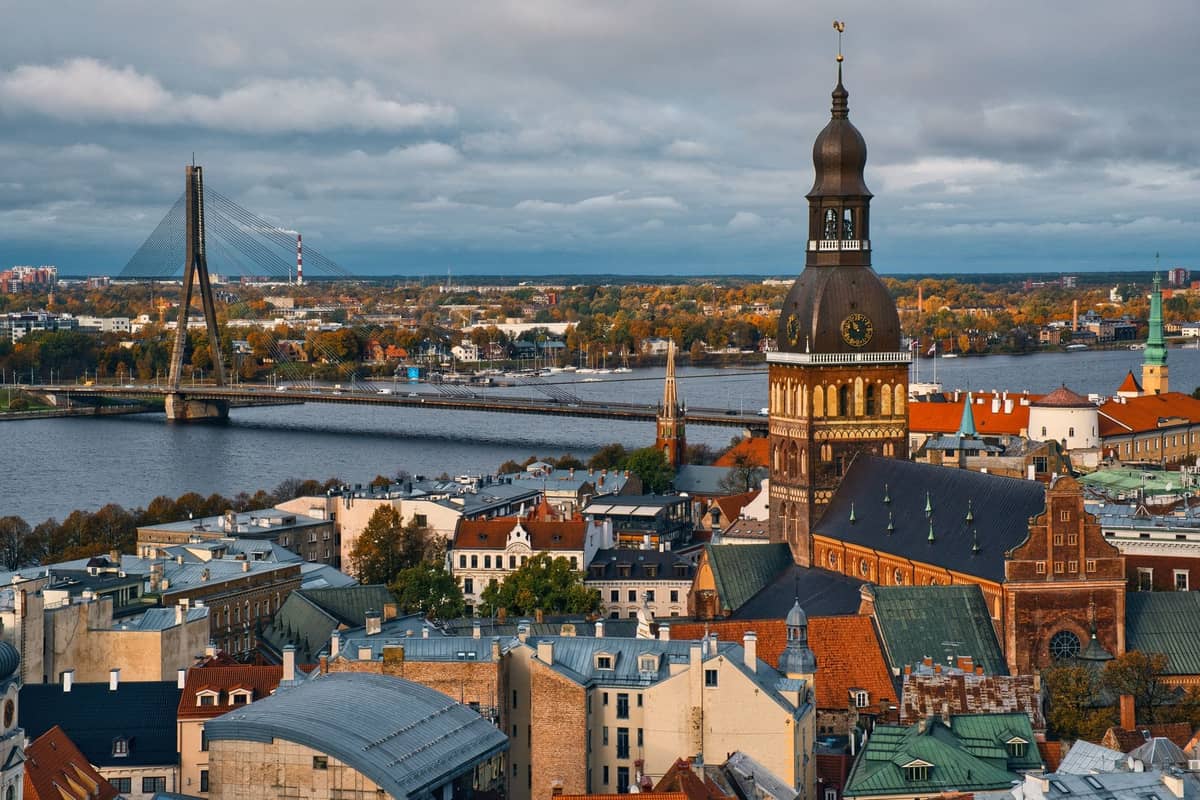
The Riga Dome Cathedral, officially the Cathedral Church of Saint Mary, is an Evangelical Lutheran cathedral and the seat of the Archbishop of the Evangelical Lutheran Church of Latvia. Construction began in 1211, making it one of the oldest standing religious buildings in the country. Today it carries a dual identity: active place of worship and one of the finest concert venues in the Baltics, anchored by one of the most celebrated pipe organs in Northern Europe.
It sits on Herdera laukums (Herder Square) in the heart of Old Town Riga, a broad cobblestone space that gives the cathedral's western facade enough room to breathe. Walking across that square for the first time, the sheer horizontal spread of the building registers before the height does. This is not a cathedral that reaches desperately upward. It spreads, accumulates, and absorbs centuries of addition and renovation in a way that feels geological rather than designed.
ℹ️ Good to know
Opening hours: Monday–Saturday 10:00–17:00, Sunday 14:00–18:00. These hours apply to visitor access. Concert schedules follow a separate programme. Verify both before your visit at doms.lv.
Architecture: Eight Centuries of Accumulation
The cathedral began as a Romanesque structure initiated by Bishop Albert of Buxhoeveden, the German cleric who founded Riga itself. Over the following centuries, Gothic vaulting was added, the cloister was extended, and the tower was raised and rebuilt multiple times. The present tower, topped with a distinctive weathercock, dates from the 18th century. The result is a building that refuses clean classification: Romanesque arches sit alongside Gothic nave vaulting, and Renaissance elements appear where you least expect them.
Inside, the nave is broad and relatively bare by Central European cathedral standards. The whitewashed walls and simple pews reflect Lutheran theology, which stripped the space of Catholic iconography during the Reformation in the 16th century. What remains is a collection of memorial stones set into the floor and walls, coats of arms of Livonian noble families, and fragments of medieval carved stonework. The floor alone is worth examining slowly: centuries of inscribed gravestones form a continuous, uneven carpet of names and dates beneath your feet.
The cloister, accessible from the main nave, is one of the best-preserved medieval architectural spaces in Riga. Its low Gothic arcades surround a small courtyard and connect to rooms that house a modest lapidarium of stone fragments salvaged from the building over time. For travelers working through the city's layered past, this pairs naturally with a visit to the Riga Museum of History and Navigation, which occupies the former convent buildings just a short walk away.
Tickets & tours
Hand-picked options from our booking partner. Prices are indicative; availability and final rates are confirmed when you complete your booking.
Canal boat sightseeing tour in Riga
From 13 €Instant confirmationArt and culture walking tour of Riga with a local
From 66 €Instant confirmationFree cancellationSelf-guided discovery walk in Riga - the essential old town and its secrets
From 30 €Instant confirmationFree cancellationExclusive private guided tour of Riga's architecture with a local
From 175 €Instant confirmationFree cancellation
The Organ: Why Musicians Know This Place
The cathedral's pipe organ is the primary reason many visitors come here who might otherwise skip a Lutheran church. The current instrument dates from 1884, built by the E.F. Walcker & Co. firm from Ludwigsburg, Germany. At the time of its completion, it was the largest organ in the world. That record has long since passed to other instruments, but the Walcker organ remains one of the great organs of the 19th century, with more than 6,700 pipes spread across four manuals and pedal.
Organ concerts are held regularly and draw a crowd that is noticeably different from the daytime tourist flow: serious listeners, local music students, and international visitors who planned the trip around the concert schedule. The acoustic behavior of the space rewards the instrument well. Sound blooms under the Gothic vaults without turning muddy, and the bass registers carry a physical weight that you feel rather than just hear. If you have any interest in classical music, check the concert calendar on the official site before booking accommodation.
💡 Local tip
For concerts, arrive 10–15 minutes early to choose your seat. The nave fills from the middle outward. The central pews offer the most balanced acoustic experience. Tickets for concerts are sold separately from general admission.
Visiting: How the Experience Changes by Time of Day
Morning visits, particularly on weekdays, offer something close to solitude. The Herder Square is quiet before 10:00, and the cathedral opens at 10:00 Monday through Saturday. In the first hour, you may find yourself almost alone among the memorial stones and vaulted ceilings, with light filtering through the windows in long, low angles that shift as the morning progresses. This is the best time to examine the floor inscriptions and architectural details without navigating around tour groups.
By midday, guided tour groups arrive in steady rotation, and the atmosphere shifts. The cloister becomes a natural bottleneck. If you are visiting independently, use the first half of your visit to cover the cloister and lapidarium before the tour groups cycle through. Sunday access is limited to afternoons only (from 14:00), reflecting the morning's use for worship services. Attending or observing a Sunday service is possible but requires awareness that you are entering an active congregation, not a museum.
The square outside the cathedral is worth arriving at early for another reason. Herdera laukums frames the building's exterior without the clutter of souvenir stalls that crowd other parts of Old Town. It connects naturally into the broader Old Town walking circuit, and the surrounding streets within a few minutes' walk include the Three Brothers (the oldest surviving residential buildings in Riga) and the medieval Swedish Gate.
Cultural and Religious Context
The cathedral's shift from Catholic to Lutheran in the 16th century mirrors Riga's position as a trading city tied to the German Hanseatic League. German merchants and Baltic nobility shaped both the city's commerce and its religious identity for centuries. The memorial stones inside reflect this: many inscriptions are in German, and the names on the floor represent Livonian, German, and Latvian elites across several centuries.
Under Soviet rule, the cathedral was converted into a concert hall, which paradoxically preserved the building and its organ while stripping it of religious function. Services resumed after Latvian independence in 1991. This history connects to a darker strand of the city's 20th-century experience, which is documented in detail at the Museum of the Occupation of Latvia and the KGB Building (Corner House), both within walking distance of Old Town.
The cathedral's status as the largest medieval church in the Baltic States is not an empty superlative. The nave's proportions genuinely exceed what most visitors expect, and the building's footprint becomes clearer when you walk around it rather than simply entering from the square. Allow time to circle the exterior before going in.
Practical Notes for Visitors
Getting there requires no special navigation. Public trams and buses serve stops along Aspazijas bulvāris and 13. janvāra iela, both within a 5 to 10 minute walk through Old Town's pedestrian streets. Riga's Old Town is compact and largely car-free, so almost any accommodation in the city center places the cathedral within a 15-minute walk.
Photography is generally permitted inside the cathedral, though it is worth checking notices at the entrance. The interior lighting is subdued, so a phone camera with a capable low-light mode or a camera with a wide aperture lens will serve you better than a flash. The cloister courtyard, when the light is favorable, photographs well from the corner arches.
Dress code is not rigidly enforced for tourists, but shoulders covered and no shorts is a reasonable baseline for a working cathedral. Temperatures inside stay cool even in summer, so a light layer is useful. In winter, the stone interior holds the cold: a warm coat is not excessive.
⚠️ What to skip
Specific wheelchair accessibility details are not published on the official site. Visitors with mobility requirements should contact the cathedral directly before visiting, as the historic cobblestone square and stone floor interior present potential challenges.
If the cathedral forms part of a longer Old Town day, consider pairing it with the nearby Riga Town Hall Square and the House of the Blackheads to the south. The full Old Town walking tour covers all three without significant backtracking.
Is It Worth Your Time?
For travelers with a broad historical or architectural interest, yes, clearly. The building earns its place on any serious Riga itinerary through its age, scale, and the rare quality of its organ. It is not a showy cathedral. There are no gilded altars, no dramatic frescoes, and the interior can feel spare to visitors expecting the grandeur of Central European Gothic churches. If you are arriving from Vienna, Prague, or Cologne, adjust expectations: Lutheran austerity is the point, not a deficiency.
Travelers with little patience for ecclesiastical history or those primarily interested in contemporary Riga culture may find 30 minutes here is sufficient. The concert schedule, however, changes the calculation entirely. An organ concert in this space is a qualitatively different experience from a daytime museum-style visit, and if the timing aligns, it is one of the more memorable things you can do in the city for a modest ticket price.
Insider Tips
- Check the official concert calendar at doms.lv before your trip. Organ concerts sell out for popular programmes, especially in summer. Booking in advance is strongly recommended.
- Walk around the entire exterior before entering. The northern and eastern facades reveal the building's true scale and the layered additions across different centuries far better than the main square view.
- The cloister lapidarium is often overlooked by visitors who head straight for the nave. It contains medieval stone carvings and architectural fragments removed during restoration work, with almost no crowds even at peak times.
- Sunday morning access is closed to tourists because of services. If your schedule is flexible, a Sunday afternoon visit (from 14:00) often has lighter tourist traffic than Saturday midday.
- If you want a photograph of the Herder Square facade with minimal people, aim for just after 10:00 on a weekday. By 11:30, tour groups have typically arrived and the square becomes congested.
Who Is Riga Cathedral (Dome Cathedral) For?
- Architecture and history enthusiasts who want to engage with one of the oldest buildings in Latvia
- Classical music lovers, particularly those with an interest in pipe organs and acoustic concert spaces
- First-time visitors to Riga building a foundational understanding of the city's medieval and Lutheran heritage
- Photographers seeking interior stonework and cloister arcades in natural light
- Travelers on a cultural Old Town circuit who want more than surface-level sightseeing
Nearby Attractions
Other things to see while in Old Town (Vecrīga):
- Bremen Town Musicians Sculpture
Standing on Skārņu iela in Riga's medieval Old Town, this bronze sculpture of four stacked animals tells a Brothers Grimm story while carrying a quietly powerful political message about the end of the Iron Curtain. Cast in 1990 and gifted by the city of Bremen, it's free to visit, open around the clock, and one of the most photographed corners of Vecrīga.
- House of the Blackheads
Standing on Town Hall Square in Riga's Old Town, the House of the Blackheads is a reconstructed 14th-century guild hall with an ornate Dutch Renaissance facade that stops pedestrians cold. Behind the stone and gilded detail lies a layered story of medieval merchant culture, wartime destruction, and Latvian national pride.
- Museum of the Occupation of Latvia
Housed in the heart of Riga Old Town, the Museum of the Occupation of Latvia documents 51 years of Soviet and Nazi rule from 1940 to 1991. It is one of the most carefully assembled historical museums in the Baltic states, and a visit here fundamentally changes how you understand the country around you.
- Powder Tower & Latvian War Museum
The Powder Tower (Pulvertornis) is the sole surviving tower from Riga's medieval city walls, first recorded in 1330. Today it houses the Latvian War Museum, a free, well-curated institution spanning centuries of Baltic military history. It stands at the northern edge of Old Town, easy to find and easier to underestimate.