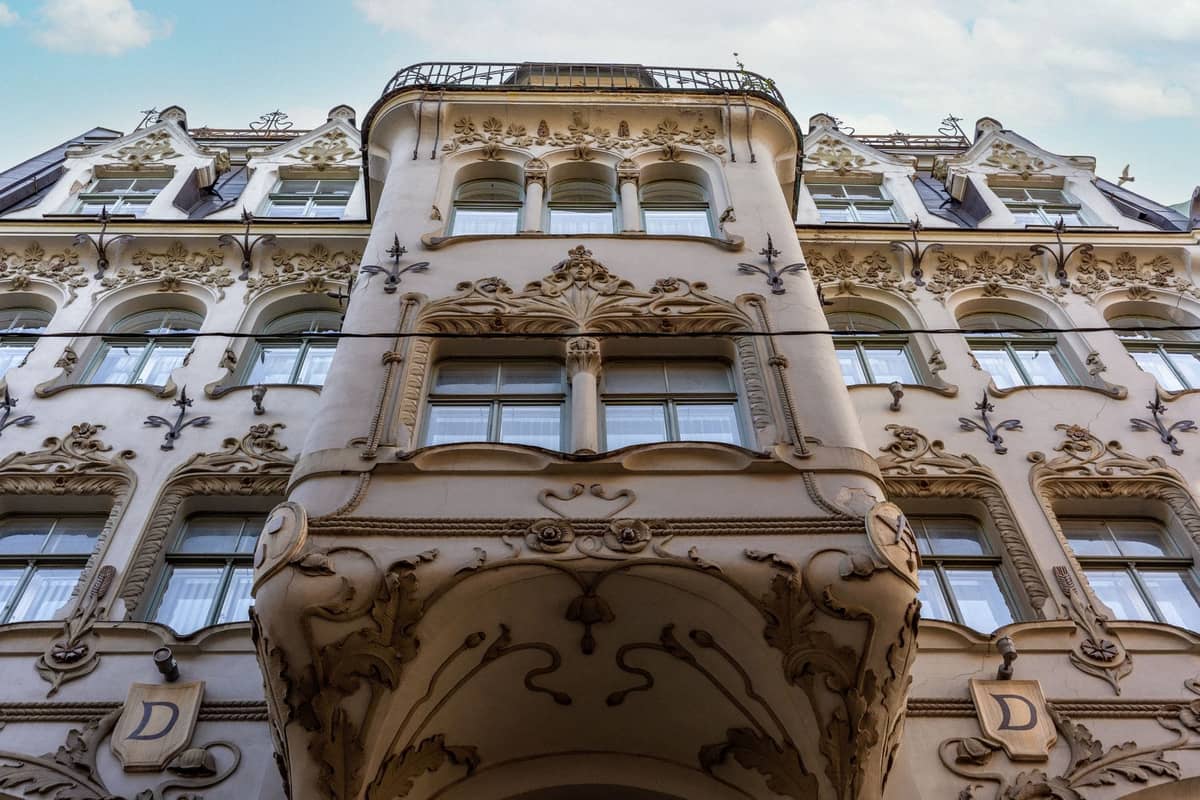
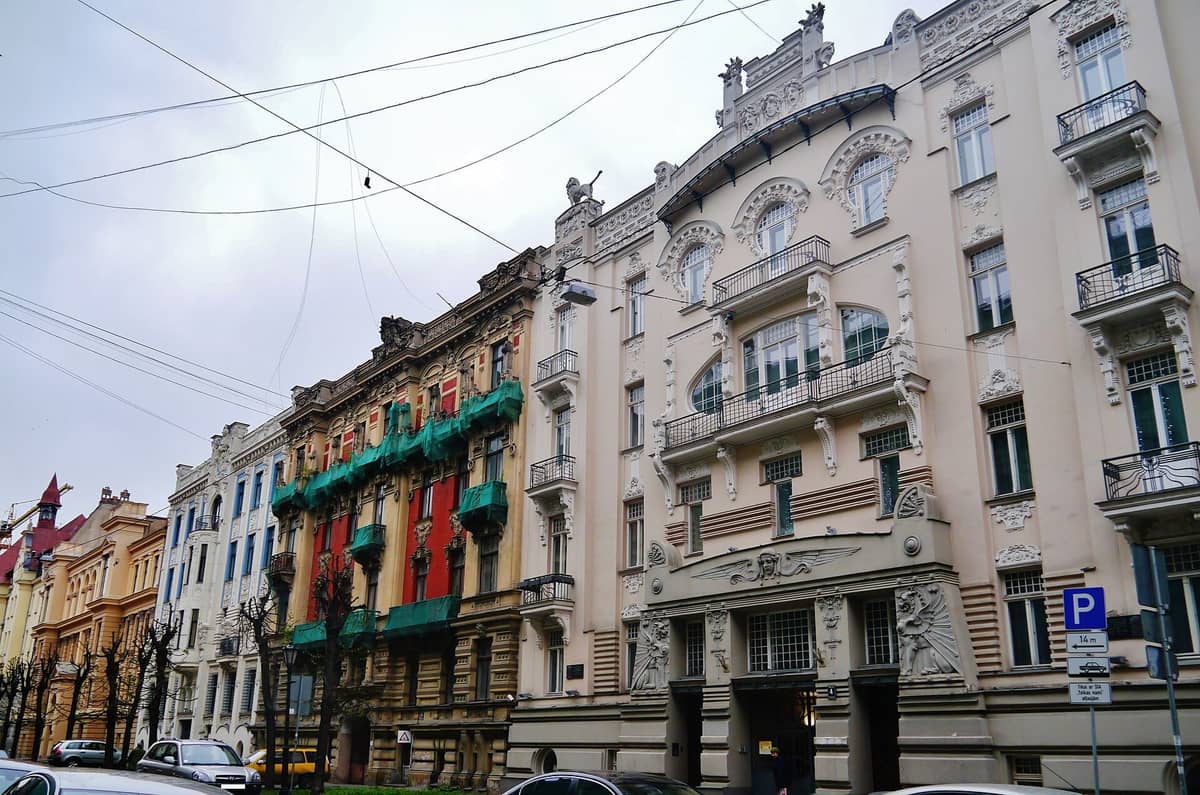
Riga's Art Nouveau District, known locally as the Quiet Centre, is a residential neighborhood north of the Old Town where early 20th-century architecture reaches one of its most concentrated and theatrical expressions in Europe. Alberta iela and Elizabetes iela are lined with facades decorated with grotesque masks, nymphs, and geometric ornament that give the streets a quality unlike anywhere else in northern Europe. It is quieter and more residential than the Old Town, which is precisely what makes it worth a half-day or longer.
Riga holds one of the largest collections of Art Nouveau architecture in Europe, and the neighborhood known as the Quiet Centre is where that claim becomes something you can stand in front of and believe. Stretching north from the canal boulevards toward K. Valdemāra iela, with Alberta iela as its defining spine, this is a district of ornate early 20th-century facades on streets that still function as a normal residential neighborhood. There are no carnival crowds here, no souvenir kiosks, just extraordinary buildings and the occasional tourist craning their neck to look up.
Orientation
The Art Nouveau District sits directly north of the Old Town and the canal ring that separates Vecriga from the rest of the city. In Riga's geography it forms the northern portion of what locals call the Centre, a broader arc of late 19th and early 20th-century urban fabric that curves around the medieval core. The Quiet Centre label distinguishes it from the more commercially active streets around the central train station and the central market to the southeast.
The district's loosest boundaries run from the Esplanade park and the Riga Nativity of Christ Cathedral in the south, up toward Krisjana Valdemara iela in the north, and between Brivibas bulvaris to the east and Elizabetes iela to the west. Alberta iela, a single short street running parallel to Strelnieku iela, is the epicenter: a tightly packed stretch of facades that architecture historians regularly cite as among the finest examples of National Romantic and Eclectic Art Nouveau in the world.
Walking distances are short. From the edge of the Old Town near the Freedom Monument, Alberta iela is roughly a 10 to 15 minute walk north through the boulevard ring. The neighborhood connects naturally to the Esplanade and then southward into Vecriga, so it slots easily into a broader day of exploring central Riga without requiring any transit at all.
ℹ️ Good to know
Alberta iela is only about 250 meters long, but the surrounding streets — Elizabetes iela, Strelnieku iela, Antonijas iela — extend the architectural tour considerably. Plan at least 90 minutes if you want to do the area justice on foot.
Character and Atmosphere
The Quiet Centre earns its name. Come here on a weekday morning and the streets feel genuinely residential: children heading to school, dog walkers, the sound of a tram on a parallel boulevard. The architecture is extraordinary but the neighborhood does not perform for tourists. Buildings that would be headline attractions in other cities are simply the backdrop for daily life here, which gives the whole area a slightly surreal quality.
In the early morning, the light in summer falls along Alberta iela from the east, catching the relief sculpture on the facades in ways that shift minute by minute. The ornamental details — the grimacing masks above windows, the female figures flanking doorways, the geometric friezes at roofline level — become three-dimensional when the sun is low. Afternoon light flattens everything and the facades read better in photographs from the shaded side of the street. Late afternoon on a clear day, when Elizabetes iela is mostly in shadow, the upper floors catch warm golden light.
After dark the neighborhood is quiet in a way that surprises visitors used to the Old Town. Most of the street-level activity is residential. There are cafes and restaurants on the connecting boulevards, but Alberta iela itself is tranquil, well-lit, and safe. The absence of late-night bar culture is part of the character here rather than a deficiency.
Tourist activity is concentrated but thin. You will share Alberta iela with other visitors, particularly on summer weekends, but there is no congestion and no queuing. The Riga Art Nouveau Museum attracts a steady stream of visitors through the day but it never creates the crowds that gather outside the House of the Blackheads or St. Peter's Church in Vecriga.
What to See and Do
The single best starting point is Alberta iela, where the facades designed primarily by Mikhail Eisenstein in the early 1900s represent the most concentrated and theatrical stretch of Art Nouveau architecture in Riga. Eisenstein's buildings favor heavily ornamented Eclectic Art Nouveau, layering mythological figures, floral motifs, and expressive faces across the entire facade surface. Walk the full length of the street on both sides slowly, looking at the upper floors rather than the ground level.
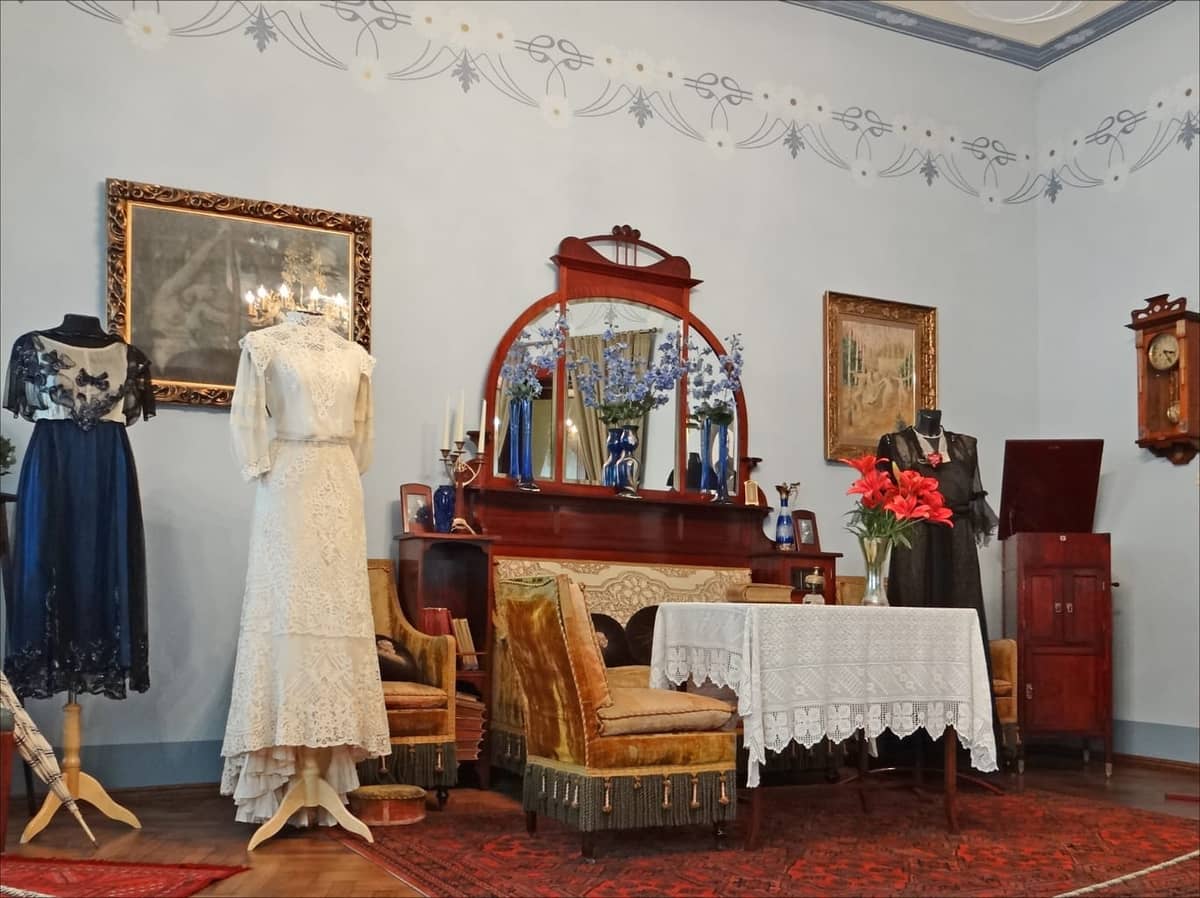
At Alberta iela 12, the Riga Art Nouveau Museum occupies an apartment that has been preserved and reconstructed to show how a wealthy Riga family would have lived in the early 20th century. The interiors, furniture, and decorative objects are consistent with the architectural period outside. It is one of the few opportunities in the city to see Art Nouveau as a complete interior environment rather than just a facade treatment, and the scale is domestic enough to feel genuinely intimate.
Beyond Alberta iela, Elizabetes iela rewards slower walking. The street mixes Art Nouveau with other early 20th-century styles, giving a sense of the broader architectural period rather than a single concentrated style. The Latvian National Museum of Art sits on K. Valdemara iela at the northern edge of the district and is one of the main art institutions in the country, with a collection that covers Latvian painting and sculpture from the 19th century to the present.
For travelers who want a structured introduction to the architectural context, the Art Nouveau Riga guide covers the history of the style in the city, the key architects, and the best walking routes connecting the Quiet Centre to other Art Nouveau clusters in the broader Centre district.
Alberta iela: full street walk on both sides, focus on upper floor ornamentation
Riga Art Nouveau Museum at Alberta iela 12: preserved period apartment interiors
Elizabetes iela: broader architectural survey beyond the Eisenstein buildings
Strelnieku iela: National Romantic style buildings as contrast to Eclectic Art Nouveau
Latvian National Museum of Art on K. Valdemara iela: major art collection at the district's northern edge
Esplanade park: green open space at the southern boundary, useful for orientation
💡 Local tip
Look up, not down. The ground floors of most Art Nouveau buildings have been converted to shops, offices, or modern entrances and tell you very little. Everything interesting is at the first floor and above. A camera with a zoom lens or a phone with a portrait mode makes the detail readable from street level.
Eating and Drinking
The Quiet Centre is not a dining destination in the way that the Old Town or the central market area is. Alberta iela itself has almost no restaurants or cafes at street level; the residential character of the street means food and drink are found on the surrounding boulevards rather than on the architectural centerpiece itself.
Elizabetes iela and the cross streets connecting toward Brivibas bulvaris have a reasonable spread of cafes, bakeries, and mid-range restaurants that serve the local professional and residential population rather than a tourist audience. Prices are noticeably lower than in the Old Town for equivalent quality, and the atmosphere in most places leans toward the everyday rather than the curated.
For coffee and a break from walking, small Latvian-style cafes on side streets typically offer good espresso, rye bread open sandwiches, and local pastries at prices well under what you would pay in Vecriga. The neighborhood supports a number of independent spots rather than international chains, which makes foraging for food here more interesting than following a specific list.
Travelers looking for a fuller picture of what and where to eat across Riga should read the Riga food guide, which covers the city's food culture by area and type. The central market, about 20 minutes south on foot, is the best place for cheap and authentic Latvian food and is worth combining with a visit to the Art Nouveau District in a single morning.
Getting There and Around
Walking from the Old Town is the most natural approach. From the Freedom Monument on Brivibas bulvaris, walk north along the boulevard or cut through the Esplanade park and you reach the southern end of the Art Nouveau District in around 10 to 15 minutes. The route is flat, the streets are wide, and there is nothing confusing about the navigation.
Trams run along several of the major arteries bordering the district. Lines running along Brivibas iela and K. Valdemara iela connect the area to the central train station and other parts of the city. Trolleybuses also cover Elizabetes iela and the surrounding boulevards. Riga's public transport uses a unified ticketing system and tickets can be purchased from the driver or validated using contactless payment on newer vehicles.
For a fuller picture of moving around the city, the getting around Riga guide explains the tram, trolleybus, and bus network, ticket pricing, and how the system connects the main neighborhoods.
The Art Nouveau District is entirely walkable internally. Alberta iela is a 250-meter street; the wider neighborhood covering Elizabetes iela, Strelnieku iela, and Antonijas iela can be covered on foot in an unhurried 90 minutes to two hours. There is no reason to take transit within the neighborhood itself.
💡 Local tip
The Art Nouveau District pairs well with the Esplanade and the Riga Nativity of Christ Cathedral at its southern edge. Starting at the cathedral, walking up through the Esplanade, and then heading north to Alberta iela gives the walk a natural shape and avoids doubling back.
Where to Stay
The Quiet Centre is a genuinely good base for exploring Riga, particularly for travelers who find the Old Town too noisy or too hotel-dense. Accommodation here tends toward boutique hotels, apartment rentals, and smaller guesthouses in converted Art Nouveau buildings, which is a meaningful difference from the chain hotels and larger properties that dominate Vecriga. For a full comparison of accommodation zones in the city, the where to stay in Riga guide covers the trade-offs between staying here versus the Old Town or the central station area.
Staying in the Art Nouveau District means walking distance to Vecriga without being inside its noise radius. The streets here are quiet after 10pm, which suits travelers who are done for the day rather than heading out. The trade-off is that nightlife, late-night food, and the main tourist infrastructure of bars and souvenir shops require a short walk south. For couples, architecture enthusiasts, or anyone who finds the Old Town's summer crowds draining, the Quiet Centre is the more comfortable option.
The best-positioned accommodation sits in the streets immediately around Alberta iela and Elizabetes iela, within easy reach of both the architectural core and the tram connections on the surrounding boulevards. Avoid the fringes of the neighbourhood toward the train station area, which has a different and less pleasant character.
Practical Assessment: What the District Is and Isn't
The Art Nouveau District is an outdoor architectural experience, not a conventional tourist zone. If your primary interest is museums, nightlife, dining, or shopping, this neighborhood serves those purposes only in a secondary way. What it does offer, which almost nowhere else in Europe does, is a street-level experience of an entire residential district built at a single architectural moment, still largely intact, and still functioning as a place where people live.
The interiors of the buildings are private apartments for the most part; the Riga Art Nouveau Museum is the one exception that lets you inside. The experience is therefore primarily visual and requires some architectural interest to sustain it. Visitors who find themselves unmoved by facades after the first block should know that honest answer before committing a half-day here.
For those who do respond to the architecture, the district is one of the most rewarding parts of Riga and one of the city's strongest arguments for the case that Riga is worth visiting as a European city break. Nothing about it feels generic or interchangeable with another city, which is a rarer quality than it should be.
⚠️ What to skip
Alberta iela is a real street with residents and ground-floor businesses. Do not enter building lobbies or courtyards without an invitation or a ticket to the museum. Some buildings have their entry doors unlocked during the day and it is easy to drift inside, but this is private property.
TL;DR
Riga's Art Nouveau District, the Quiet Centre, holds one of the densest concentrations of early 20th-century Art Nouveau architecture in Europe, centered on Alberta iela and Elizabetes iela.
It is 10 to 15 minutes on foot from the Old Town: easy to reach, easy to combine with a broader day of sightseeing, and genuinely distinct in character from Vecriga.
Best for: architecture enthusiasts, travelers who find the Old Town too crowded, couples looking for a quieter base, anyone spending more than two days in Riga.
Not ideal for: travelers focused on nightlife, shopping, or indoor museum-heavy itineraries — the experience is primarily visual and street-level.
Visit in the morning for the best light on the facades; allow 90 minutes to two hours on foot; anchor the visit at the Riga Art Nouveau Museum at Alberta iela 12.
Top Attractions in Art Nouveau District (Quiet Centre)
Two days in Riga is genuinely enough to cover the city's best sights, from the medieval lanes of Vecrīga to the extraordinary Art Nouveau district and the sprawling Central Market. This itinerary is built for efficiency, not rushing — with practical advice on where to linger and what to skip.
Three days is the sweet spot for Riga. Enough time to cover the medieval Old Town, the Art Nouveau district, and the Central Market properly, with a full day left for a train ride to Jūrmala's Baltic coast or Sigulda's castle valley. This guide breaks it all down day by day, with transport logistics, honest priorities, and seasonal advice.
Riga holds the world's largest concentration of Art Nouveau architecture, with over 700 buildings spanning four distinct style variants. This guide covers where to find the best façades, how to read the architecture, what to skip, and how to plan a half-day or full-day exploration of the Quiet Centre and beyond.
Riga stands out for a city of its size for museums. Whether you want medieval history, Soviet-era chills, or Latvia's finest art, the city has a museum for it. This guide covers the 12 best, with practical advice on what to prioritise and what to expect.
Riga rewards visitors differently depending on when you arrive. This guide breaks down every season's weather, crowd levels, pricing patterns, and key events so you can make an informed decision about when to go.
Riga is an outstanding base for exploring Latvia. Within an hour or two by train or car, you can walk a medieval castle tower, swim in the Baltic Sea, or wander through a surreal peat bog. These are the best day trips from Riga, with practical transport details for each.
Riga rewards budget-conscious travellers more than almost any other European capital. From medieval Old Town lanes and Art Nouveau facades to riverside promenades and free museum days, here are the best free experiences the city has to offer.
Riga has no metro, but its tram, trolleybus, and bus network covers almost every corner of the city for around €1.50 a ride when bought in advance. This guide breaks down every transport option, from airport bus 22 to night routes, e-tickets, and when it actually makes sense to take a taxi.
Riga is one of Northern Europe's most underestimated capitals: a UNESCO-listed Old Town, over 300 Art Nouveau buildings, a serious food scene, and prices that undercut most Western European cities. But it's not perfect. Here's an honest look at whether Riga deserves a place on your itinerary.
Riga International Airport (RIX) is the Baltic states' largest airport, just about 10–13 km from the city centre. This guide covers the arrivals process, terminal layout, immigration tips, and every realistic option for reaching central Riga quickly and affordably.
Latvian cuisine is built on rye, pork, fish, and preserved foods shaped by centuries of cold-climate cooking. This guide covers the essential dishes, drinks, and food spots to know before you eat your way through Riga — from Central Market stalls to traditional cafeterias and beyond.
Riga rewards couples with medieval cobblestone streets, a gorgeous Art Nouveau district, waterfront promenades, and a food scene serious enough to anchor multiple evenings. This guide covers the best romantic experiences across every season, from free sunset walks to private boat cruises on the Daugava.
Riga transforms in winter into one of Northern Europe's most atmospheric cold-season destinations. This guide covers the Old Town Christmas Market, seasonal ice rinks, what the weather actually feels like, and how to get the most out of a visit between November and January.
Riga's nightlife has more range than many visitors expect. Old Town's medieval streets fill with cocktail bars and live music venues, while the creative quarter around Tallinas iela draws a more local crowd. This guide breaks down where to drink, dance, and explore after dark — by neighborhood, budget, and time of year.
Walk the medieval streets of Riga's Old Town (Vecrīga) without a guide. This route covers every major landmark from the Freedom Monument to the House of the Blackheads, with practical advice on what costs money, what to skip, and how to time your visit.
Riga is one of Europe's most affordable capital cities, with a realistic daily budget of €35–55 covering accommodation, food, transport, and sightseeing. This guide breaks down exactly where your money goes, what to skip, and how to stretch every euro further.
Riga is one of the safer European capitals, but certain scams and situations catch tourists off guard every year. This guide breaks down real risks, the scams most likely to hit you, and practical steps to avoid them — from Old Town bar traps to taxi overcharging.
Riga rewards shoppers with one of Europe's great food markets, a lively craft scene, and local design studios that go well beyond fridge magnets. This guide covers where to shop, what to buy, what to skip, and how to do it without overpaying.
Riga carries more than 50 years of Soviet history in its streets, buildings, and museums. This guide covers the key Cold War sites, occupation memorials, Soviet-era architecture, and the historical context you need to make sense of what you're seeing.
Riga is a genuinely rewarding family destination, but it works best when you know where to focus. From Mežaparks forest trails and canal boat tours to the Ethnographic Open-Air Museum and a Jūrmala beach day, this guide covers the top family activities in Riga with practical details on what to do by season, how to get around, and what to avoid.
Riga packs medieval churches, extraordinary Art Nouveau architecture, Soviet-era landmarks, and one of Europe's great markets into a walkable city centre. This guide covers the best things to do across the Old Town, Centrs, and beyond, including day trips to Sigulda and Jūrmala.
Choosing where to stay in Riga shapes your entire trip. This guide breaks down every major neighbourhood, from the UNESCO-listed Old Town to the Art Nouveau streets of Centrs, with practical advice on what each area costs, who it suits, and what you'll give up.