Riga in Winter: Christmas Markets, Ice Skating & Cold-Weather Travel
Riga transforms in winter into one of Northern Europe's most atmospheric cold-season destinations. This guide covers the Old Town Christmas Market, seasonal ice rinks, what the weather actually feels like, and how to get the most out of a visit between November and January.
Plan and book this trip
Tools from our partner Travelpayouts help you compare flights and hotels. If you book through them, we may earn a commission at no extra cost to you.
Flights
Hotels map
TL;DR
- The main Old Town Christmas Market runs on Doma laukums (Cathedral Square) from late November to early January, with free entry. See the Old Town Riga guide for the full neighbourhood rundown.
- Winter temperatures typically hover between about -5°C and 3°C (23–37°F); pack for damp cold, not dry cold.
- Outdoor ice rinks appear seasonally across the city, but locations change year to year — verify via LiveRiga before you travel.
- Crowds peak on weekend evenings and around December 24–26 and New Year's Eve. Weekday mornings are significantly quieter. Check the best time to visit Riga for a full seasonal breakdown.
- Not all markets run every day — the Ķīpsala Christmas Market, for example, operates only one mid-December weekend.
What Winter in Riga Actually Feels Like
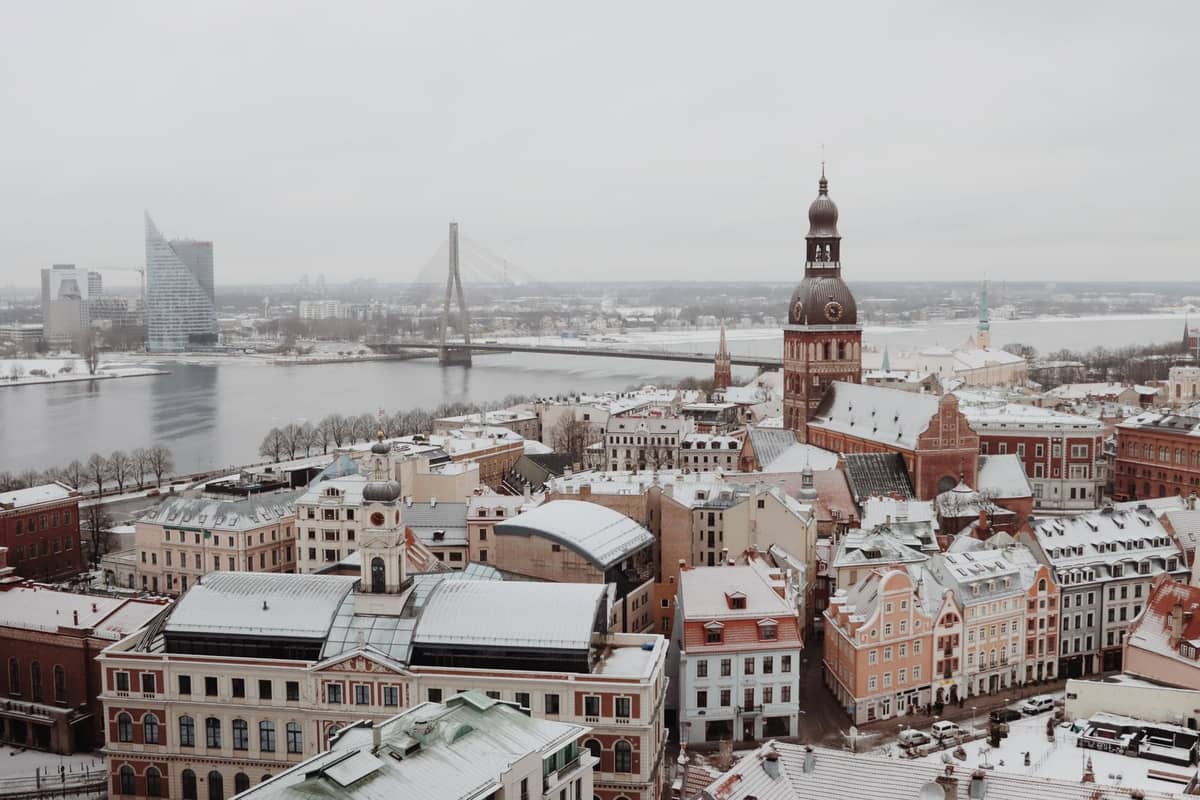
Riga sits at 57°N latitude, roughly the same as Edinburgh and slightly north of Copenhagen. Its humid continental climate with Baltic Sea influence means winters are grey and damp rather than crisp and alpine. Temperatures from late November through January typically range from about -5°C to 3°C (23–37°F), with occasional drops below -10°C during cold snaps. Snow is common but not guaranteed, especially in December, which makes January and February the more reliably snowy months.
Daylight is short and precious. By mid-December, Riga sees around seven hours of daylight, with sunrise after 9:00am and sunset around 3:45pm. This is not a deterrent for the right traveller, but it does mean you should plan outdoor sightseeing for the middle of the day and lean into the evening atmosphere that the Christmas markets provide naturally. The low light actually works in Riga's favour: the amber glow of lanterns against snow-dusted medieval spires is genuinely striking.
💡 Local tip
Dress in waterproof layers rather than just a heavy coat. Riga's winter cold is moist — wool-lined boots and windproof outer layers outperform a single bulky parka. The cobblestones in Old Town get slippery when icy, so footwear with grip is not optional.
The Old Town Christmas Market: What to Know Before You Go
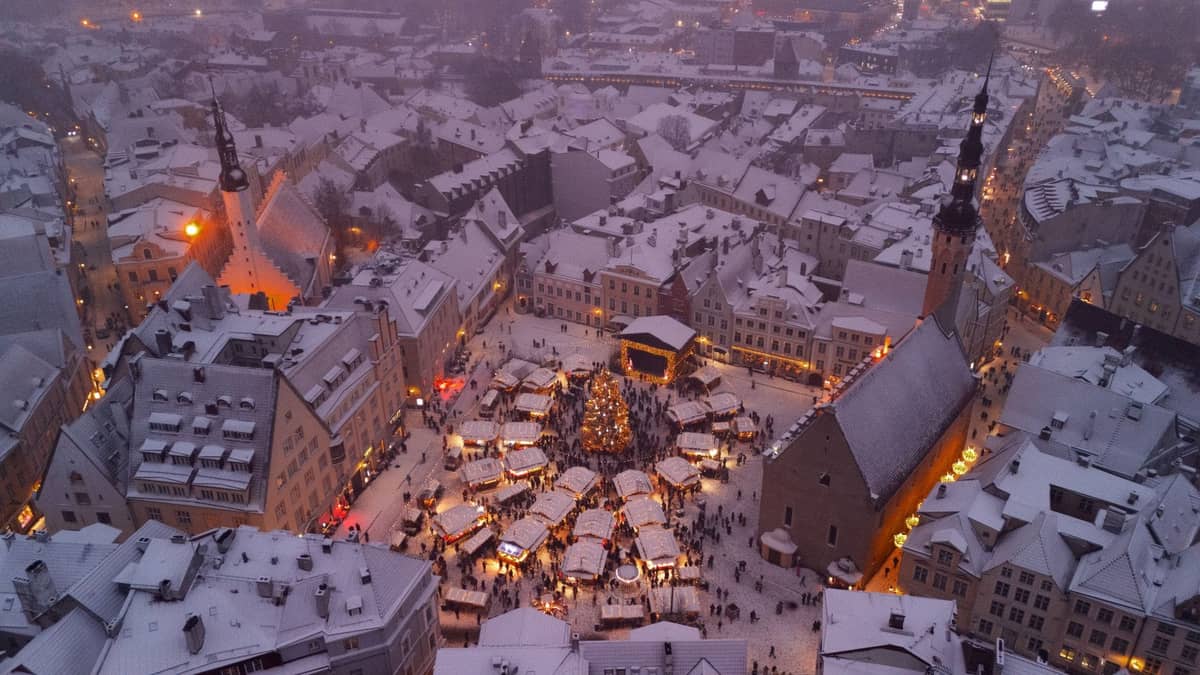
The centrepiece of Riga's winter calendar is the Old Town Christmas Market on Doma laukums (Cathedral Square) in Vecrīga. The market typically opens in late November and runs through the first days of January. The 2025–26 edition, for reference, was scheduled from 28 November 2025 to 4 January 2026. Exact dates shift slightly each year, so always confirm on the official Riga municipality site (riga.lv) or LiveRiga before booking flights.
- Entry Free of charge, open to all. No tickets, no registration.
- Typical opening hours Monday to Thursday 11:00–21:00; Friday and Saturday 10:00–22:00; Sunday 10:00–20:00/21:00. Hours extend on New Year's Eve (10:00–02:00) and adjust over Christmas (typically 10:00–20:00 on Dec 24–26). January 1st usually opens at 12:00.
- What's on sale Latvian craft goods, amber jewellery, hand-knitted woolens, mulled wine (karstvīns), piparkūkas (gingerbread), and smoked meats. Quality varies significantly by stall.
- Getting there on foot About 15 minutes' walk from Riga Central Station through the Old Town. Tram lines 5, 7, and 9 stop near the Old Town perimeter; confirm current routes via Rīgas Satiksme, the city's public transport operator.
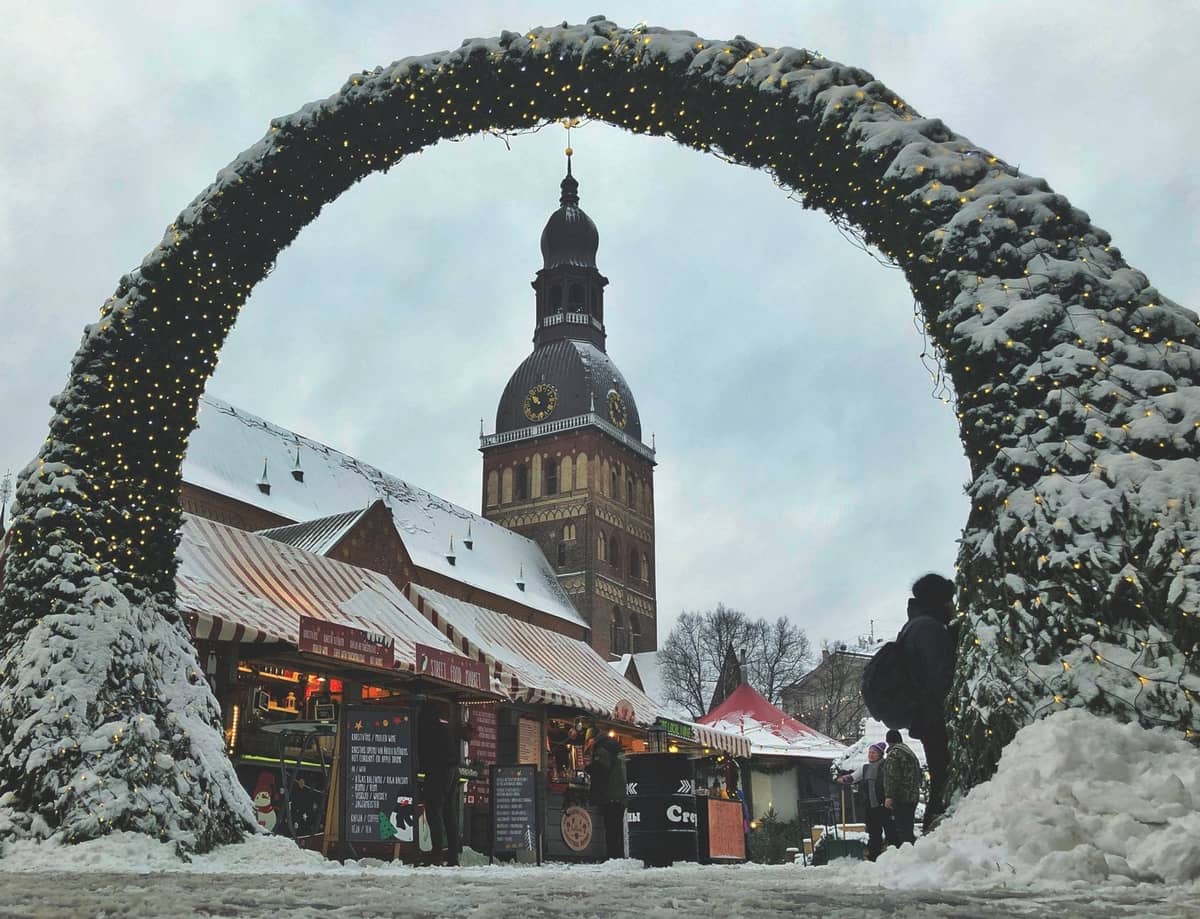
The market's location on Cathedral Square is one of its strongest points. The Riga Dome Cathedral forms the backdrop on one side, and the medieval streetscape surrounds it on the others. It's a more compact and architecturally coherent setting than many of the larger Central European markets. That said, the selection of goods is smaller than, say, Vienna or Cologne — this is a medium-sized Baltic capital, not a mega-event. Expect a genuine local atmosphere rather than a sprawling festival.
⚠️ What to skip
Avoid arriving on the evenings of December 24–26, December 31, and the first weekend of the market's run — these are the most congested periods by a significant margin. Weekday mornings (11:00–14:00) offer the same stalls at a fraction of the crowd density.
Beyond Doma Square: Other Winter Markets and Events
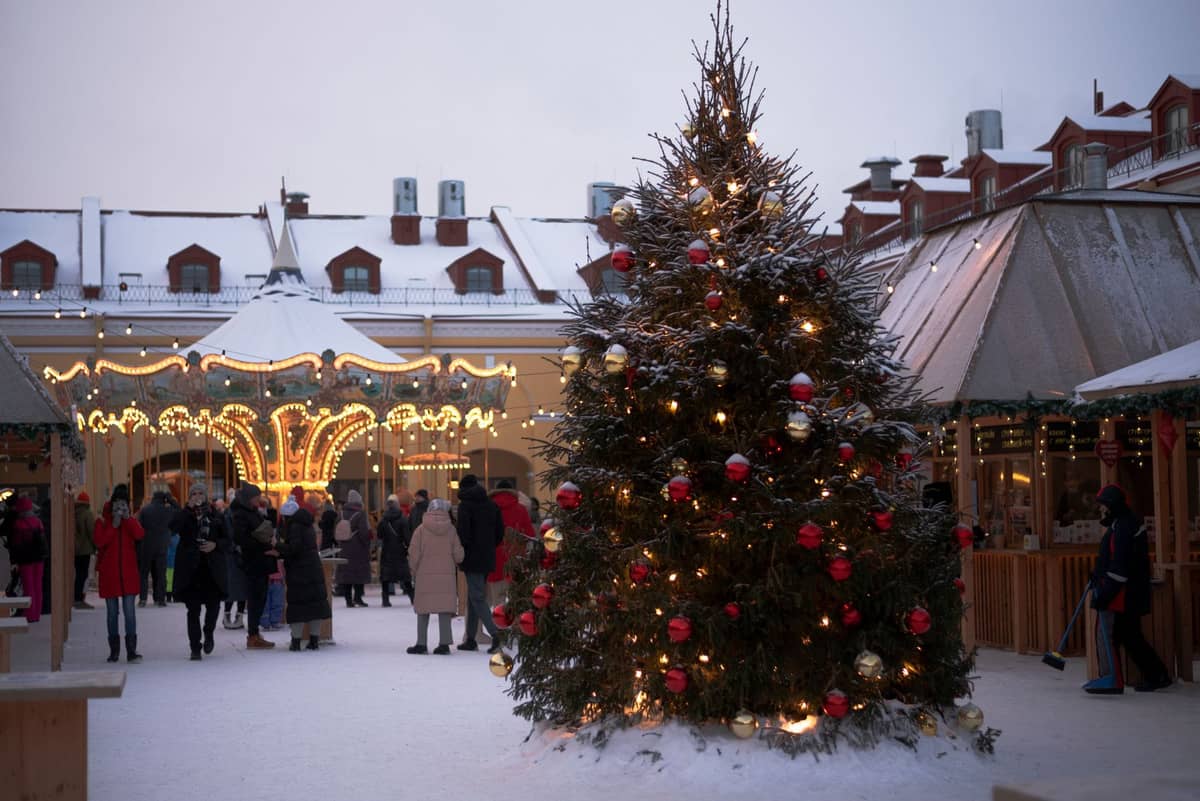
The Old Town market is not the only option. The Esplanade Park hosts a separate Christmas market that runs a similar late November to early January schedule, with a different selection of vendors and a slightly more local, less tourist-facing crowd. It's worth combining both on the same afternoon walk.
The Ķīpsala Christmas Market, held at the International Exhibition Centre on Ķīpsala island, operates on a completely different schedule: typically just one weekend in mid-December, with free entry. It skews towards household goods, food producers, and craft sellers rather than tourist souvenirs. If you happen to be in Riga that specific weekend, it's a worthwhile detour. If your trip doesn't overlap, don't reroute to catch it.
For everyday winter atmosphere outside the markets, Riga Central Market remains one of the best places in the city regardless of season. The five pavilions housed in repurposed Zeppelin hangars are busier in summer but deeply atmospheric in winter. Note that opening hours adjust over the Christmas and New Year period — December 25–26 and December 31 often see reduced hours (around 07:00–18:00 for outdoor sections, some pavilions closing at 17:00), and January 1 may see partial or full closures. Check the Central Market's official site before visiting on a public holiday.
Ice Skating in Riga: The Honest Picture
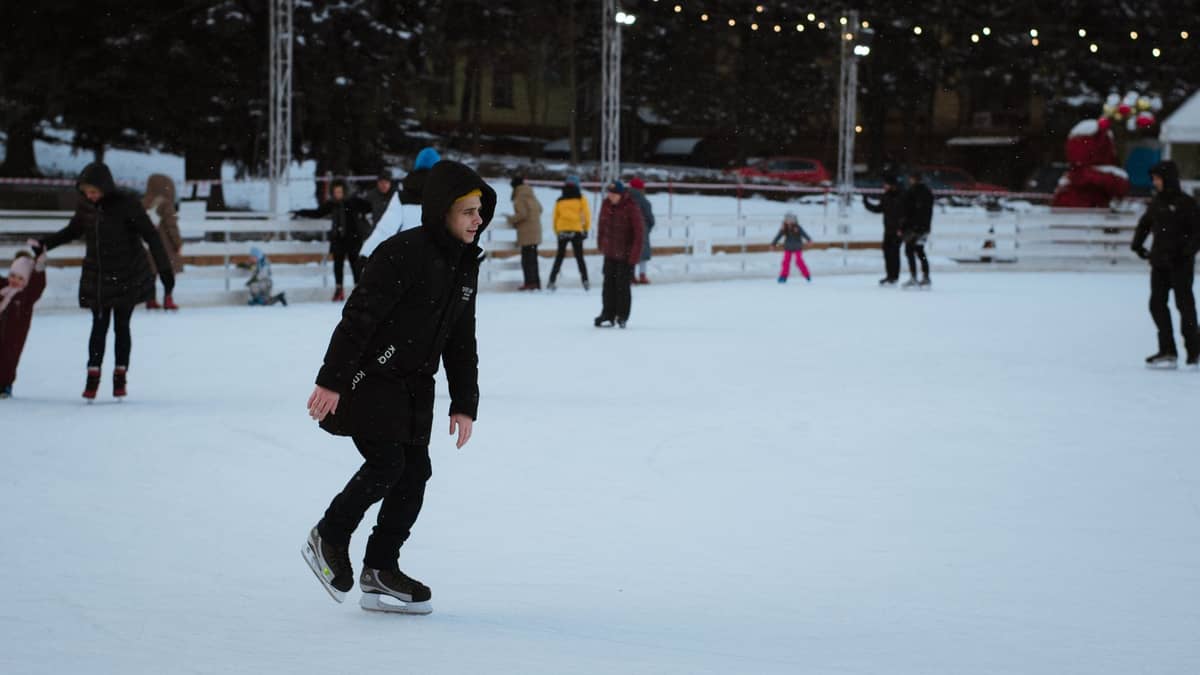
Riga does set up seasonal outdoor ice rinks in winter, typically in December and into January. In recent years, rinks have appeared near the Old Town and in other central locations, sometimes with skate rental available on-site. However, the specific locations, operators, and pricing change from season to season, and not every year guarantees a rink in the same spot.
✨ Pro tip
Don't plan your entire trip around outdoor ice skating in Riga without checking current-year information first. Visit LiveRiga (liveriga.com) or the Riga municipality events calendar (riga.lv) in the weeks before your trip to confirm what's operating, where, and at what cost.
If ice skating is a high priority and you want certainty, Riga has indoor ice halls that operate year-round for hockey and recreational skating. These lack the scenic backdrop of an outdoor rink but are a reliable fallback. Prices for indoor rink sessions typically run in the range of a few euros, with separate skate rental fees.
Winter Sightseeing Beyond the Markets
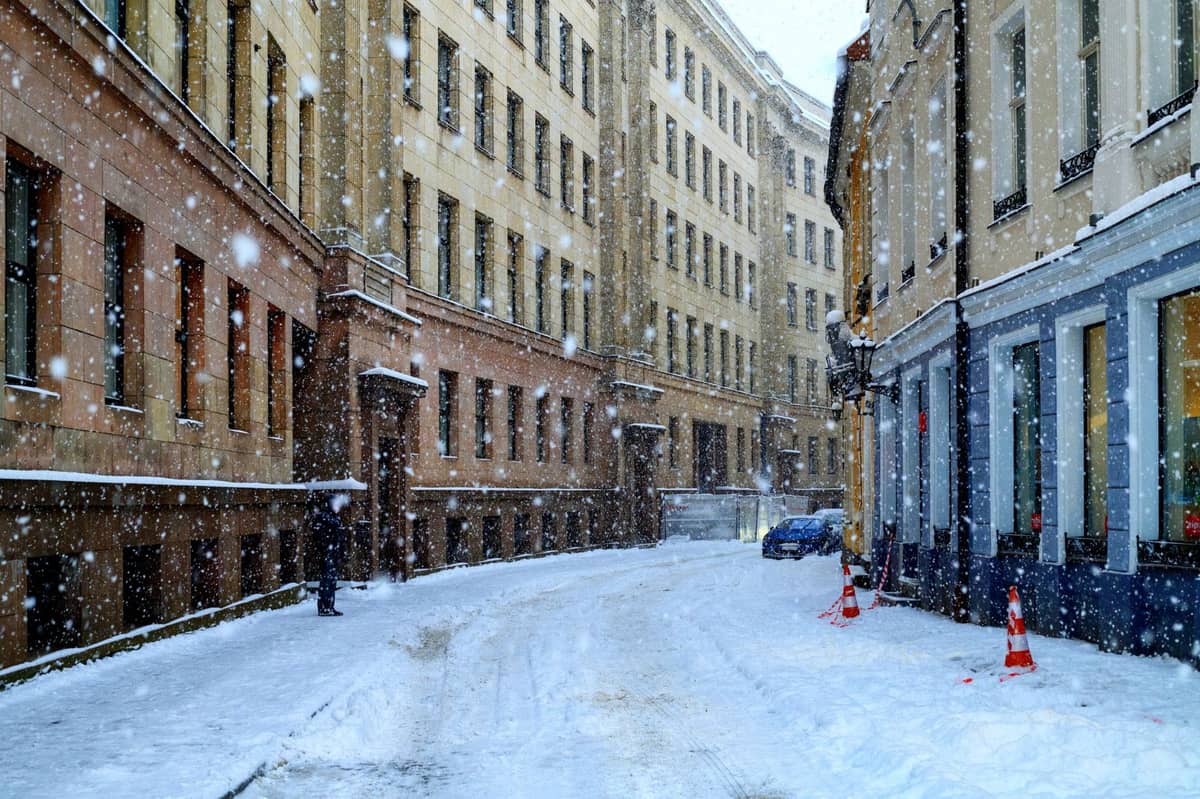
Riga's architectural richness is not seasonal. The Art Nouveau district, which contains one of the highest concentrations of Jugendstil buildings in Europe, is entirely walkable and free to explore year-round. Alberta iela is the centrepiece street: Alberta iela's facades read differently in winter light, with the pale grey sky amplifying the detail in the decorative stonework. Combine this with a visit to the Riga Art Nouveau Museum for interior context — it's a fully preserved apartment that demonstrates how these buildings were actually lived in.
Indoor museums are obviously better suited to winter visits than summer, when outdoor time is at a premium. The Museum of the Occupation of Latvia covers the Soviet and Nazi occupation periods in considerable depth and is one of the most sobering and well-curated museums in the Baltics. The KGB Building (Corner House) offers guided tours of the former secret police headquarters — a genuinely affecting experience that pairs well with the occupation museum for anyone interested in Riga's Soviet history.
- Riga Dome Cathedral: worth entering for the organ and medieval interior; check concert schedules for winter performances.
- St. Peter's Church: the tower observation deck is open in winter (weather permitting) and gives a panoramic view of snow-covered rooftops — one of the best views in the city.
- National Library of Latvia: modern architecture with a public reading room and occasional exhibitions; free to enter the main hall.
- Latvian National Opera: winter is high season for productions. Book tickets at least a few weeks in advance for weekend performances.
- Bastejkalns Park: the canal that runs through this park sometimes partially freezes in deep winter, creating an atmospheric backdrop within walking distance of the Old Town.
For a full day-by-day framework, the 2 days in Riga itinerary adapts well to winter travel with minor adjustments for daylight hours. If you have more time, the 3-day Riga itinerary adds the Central Market, Art Nouveau district, and a museum day.
Practical Winter Travel: Logistics and Costs
Riga International Airport (RIX) handles flights from most major European hubs, with good connectivity through airBaltic, Ryanair, and Wizz Air. The airport is west of the city centre. Public transport connects the airport to the city centre via bus (notably route 22); the journey takes around 30 minutes depending on traffic. For current fares and routes, check Rīgas Satiksme directly. The Riga airport guide covers transfer options in detail.
Accommodation prices in Riga are noticeably lower than in Tallinn or Vilnius, particularly in winter outside the Christmas market peak (roughly December 20 to January 2). Budget options start around €30–50 per night for a decent guesthouse; mid-range hotels in or near the Old Town run €70–130. For neighbourhood recommendations, the where to stay in Riga guide breaks down the tradeoffs between Old Town and Centre locations.
- Currency Latvia uses the Euro (EUR). ATMs are widely available; card payments are accepted almost everywhere in the city centre.
- Getting around Trams, trolleybuses, and buses cover the city well. A single ticket costs around €1.50; day passes offer better value for multiple trips. Validate tickets on board.
- Language Latvian is the official language. English is widely spoken in tourist areas, restaurants, and hotels. Signage in the Old Town and markets is typically in Latvian and English.
- Emergency number 112 for all emergencies in Latvia.
ℹ️ Good to know
Latvia is in the EU and Schengen Area. Visa requirements depend on your nationality and can change — check the official Latvian Ministry of Foreign Affairs site before travel rather than relying on third-party sources.
FAQ
When exactly does the Riga Christmas Market open and close?
The Old Town Christmas Market on Doma laukums (Cathedral Square) typically runs from late November to the first days of January. The 2025–26 market was scheduled 28 November 2025 to 4 January 2026. Dates shift slightly year to year, so confirm the specific season on riga.lv or liveriga.com before you book.
Is entry to the Riga Christmas Market free?
Yes, entry to the main Old Town Christmas Market is free of charge. The Ķīpsala market (held one mid-December weekend at the Exhibition Centre) is also free. You pay only for what you buy from stalls.
Does Riga get snow for Christmas?
Not reliably. Riga's December weather is often overcast and damp rather than snowy. Snow is more likely in January and February. Don't book expecting a white Christmas — think atmospheric grey skies and lantern-lit cobblestones instead.
What is there to do in Riga in winter besides the Christmas market?
Quite a lot. Indoor options include the Museum of the Occupation of Latvia, the KGB Corner House, the Riga Art Nouveau Museum, and the Latvian National Opera. Outdoor options include the Art Nouveau district walk, St. Peter's Church tower, and the Central Market pavilions. The city's cafe and restaurant scene is strong year-round.
Is Riga worth visiting in January after the Christmas markets close?
Yes, for the right traveller. January is the quietest and cheapest month. You get lower hotel rates, no queues at museums, and a genuine look at the city without the tourist overlay. The cold is real (expect around -5°C to 1°C) but the compact centre means you're never far from a warm cafe. It's not a beach holiday, but it's a rewarding city break.