2 Days in Riga: The Perfect Weekend Itinerary
Two days in Riga is genuinely enough to cover the city's best sights, from the medieval lanes of Vecrīga to the extraordinary Art Nouveau district and the sprawling Central Market. This itinerary is built for efficiency, not rushing — with practical advice on where to linger and what to skip.
Plan and book this trip
Tools from our partner Travelpayouts help you compare flights and hotels. If you book through them, we may earn a commission at no extra cost to you.
Flights
Hotels map
TL;DR
- 2 days in Riga is enough to cover Old Town (Vecrīga), the Art Nouveau district, Central Market, and a major viewpoint or museum.
- Day 1 focuses on Riga's Old Town — Town Hall Square, St. Peter's Church tower, the Dome Cathedral, and the Freedom Monument.
- Day 2 covers the Art Nouveau district and the Central Market, with an optional afternoon day trip to Jūrmala or Sigulda.
- You do not need a car — the core attractions are walkable, and trains cover day trip destinations.
- Summer and early autumn offer the best experience; winter is viable but shorter days limit outdoor time.
Why Riga Works as a Weekend Destination
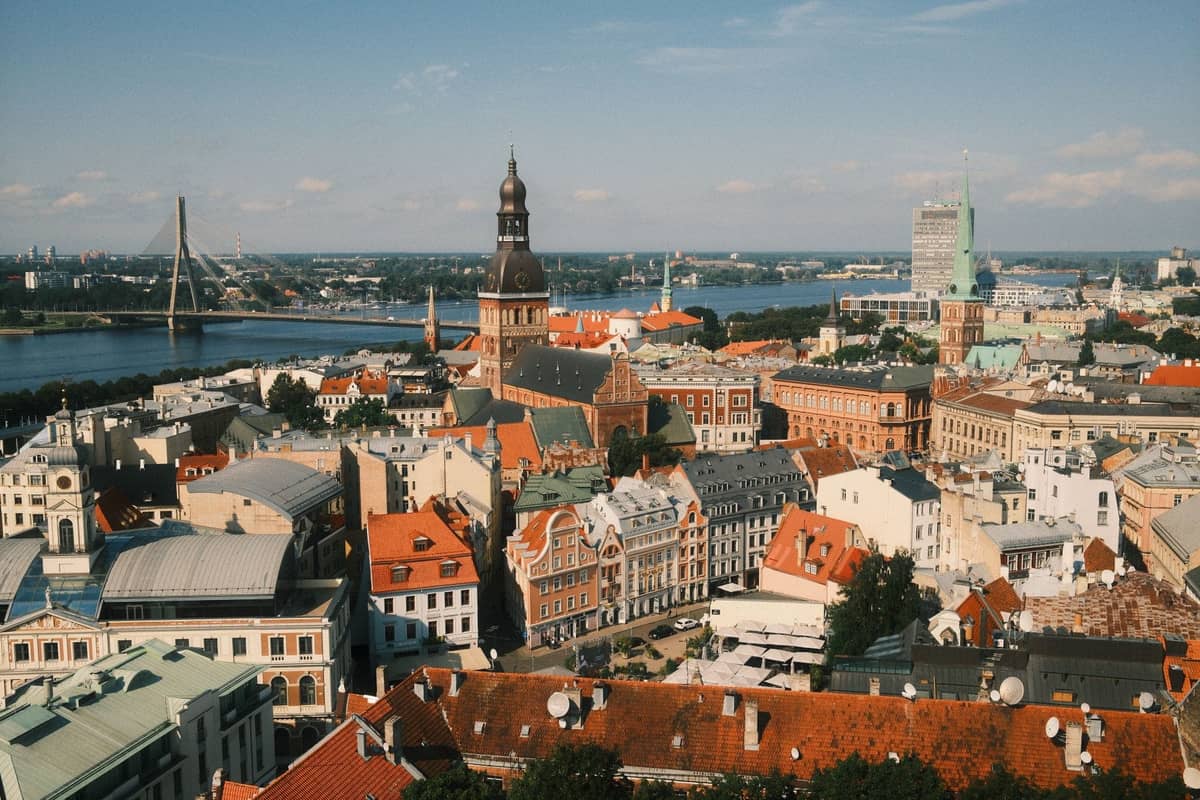
Riga is Latvia's capital and largest city, home to around 605,000 people across 304 km². What makes it ideal for a 2-day visit is its compact geography: the Old Town, Art Nouveau streets, Central Market, and the main parks all sit within walking distance of each other. You won't spend your weekend stuck in transit. For a fuller sense of what the city offers before you arrive, this overview of whether Riga is worth visiting covers the honest case for and against.
Riga also stands out for a city of its size architecturally. It holds one of Europe's largest concentrations of Art Nouveau buildings, a well-preserved medieval core that earned UNESCO World Heritage status, and a Central Market that occupies five former Zeppelin hangars — all within a roughly 2 km radius. Two days lets you move through this without feeling like you're sprinting.
ℹ️ Good to know
Riga uses the Euro (EUR) and sits in the EET/EEST timezone (UTC+2 in winter, UTC+3 in summer). The official language is Latvian, but English is widely spoken in hotels, restaurants, and tourist areas. Emergency services: dial 112.
Day 1: Old Town, Viewpoints, and the River
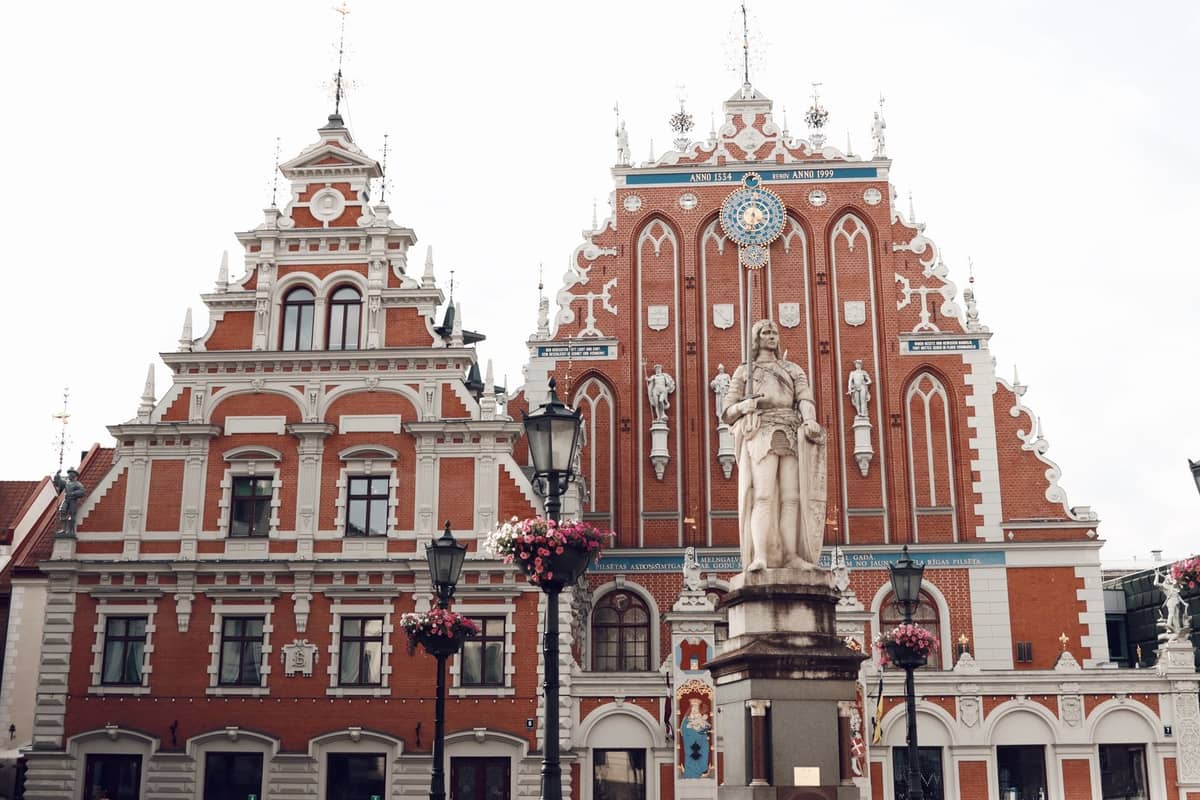
Start the morning at Town Hall Square, the geographic and social heart of Vecrīga. The square is anchored by the House of the Blackheads, a reconstructed 14th-century merchants' guild hall with a striking Gothic-Renaissance facade. Get there before 10am to photograph it without tour groups filling the frame.
From the square, walk five minutes to St. Peter's Church, where a lift takes you to the observation gallery at around 72 metres. The views over the Old Town's red-tiled rooftops and across the Daugava River are the best in the city. Budget 45-60 minutes here including the queue. Check the church's official site for current ticket prices before visiting, as these are updated seasonally.
The afternoon belongs to the medieval streets north of the square. Walk through the Three Brothers — three adjoining houses representing Riga's architectural evolution from the 15th to 17th centuries — then pass through the Swedish Gate, the only remaining city gate from Riga's fortification wall. Neither requires a ticket; both take about 15 minutes combined. End the afternoon at the Riga Dome Cathedral, which houses one of Europe's larger pipe organs and worth entering even briefly.
Finish Day 1 with a walk along the Daugava River promenade and a stop at the Freedom Monument. The monument is free to view and carries genuine historical weight as Latvia's central symbol of independence. In the evenings, the area around Bastejkalns Park is calm and photogenic, especially in summer when the canal reflects the trees.
💡 Local tip
The Old Town is at its most atmospheric early morning and after 6pm. Midday between June and August brings the densest tourist crowds, particularly around the House of the Blackheads. If you want good photos without other visitors in them, plan your Town Hall Square visit before 9am.
Day 2: Art Nouveau, Central Market, and Going Further
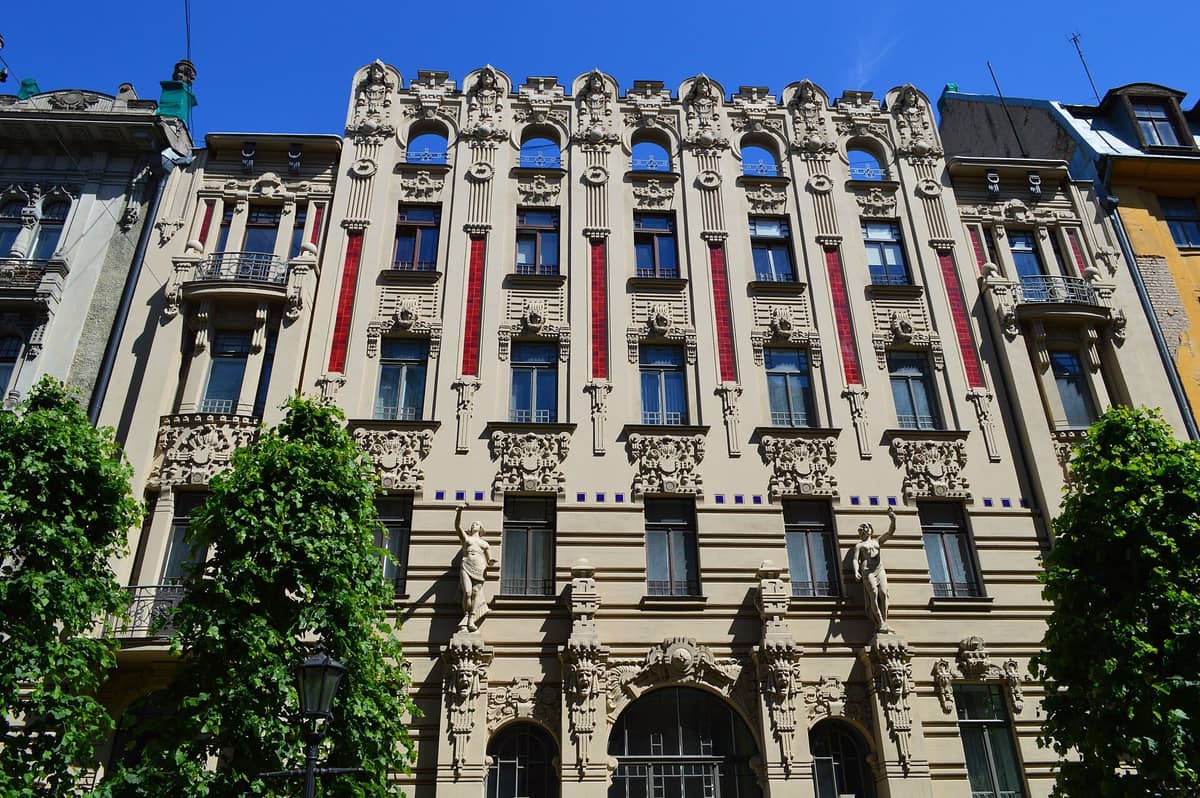
Day 2 starts in the Art Nouveau district, roughly a 15-minute walk from Old Town. Alberta iela is the showpiece street: the facades at numbers 2, 4, 6, 8, and 13 are among the most ornate in the city, featuring sculpted faces, sphinxes, and floral reliefs. The Riga Art Nouveau Museum at Alberta iela 12 is worth an hour of your time — it recreates an early 20th-century apartment interior with period furnishings and explains the architectural movement in its Baltic context. For a deeper dive, this Art Nouveau walking guide maps out the key streets systematically.
By mid-morning, head to the Riga Central Market. It occupies five former German Zeppelin hangars near the bus station, making it one of the largest market complexes in Europe. Each hangar specialises in different goods: meat, dairy, fish, vegetables, and dry goods. Arrive between 9am and 11am for the best selection and fewest crowds. This is the practical place to try Latvian rye bread, smoked fish, and grey peas — staple foods that are far better here than in any restaurant.
⚠️ What to skip
The Central Market area around the bus station has a higher rate of petty theft than the Old Town, particularly around the outdoor stalls and transit corridors. Keep bags zipped and in front of you. It is not dangerous, but it rewards basic awareness.
If you have a full Day 2 and want to leave the city, the most accessible day trip is Jūrmala, a Baltic seaside resort town about 25 km west of Riga. Trains from Riga Central Station run regularly and take around 30-40 minutes to Majori, the most popular stop. The Majori beach is long, wide, and clean, backed by wooden resort villas that date from the 19th century. In summer this is a genuinely good half-day. In winter, it's quiet to the point of being empty — which has its own appeal. Alternatively, Sigulda in the Gauja River valley offers medieval castle ruins and forest trails about an hour by train, better suited to those who want nature over beaches.
Where to Fit Museums Into the Schedule
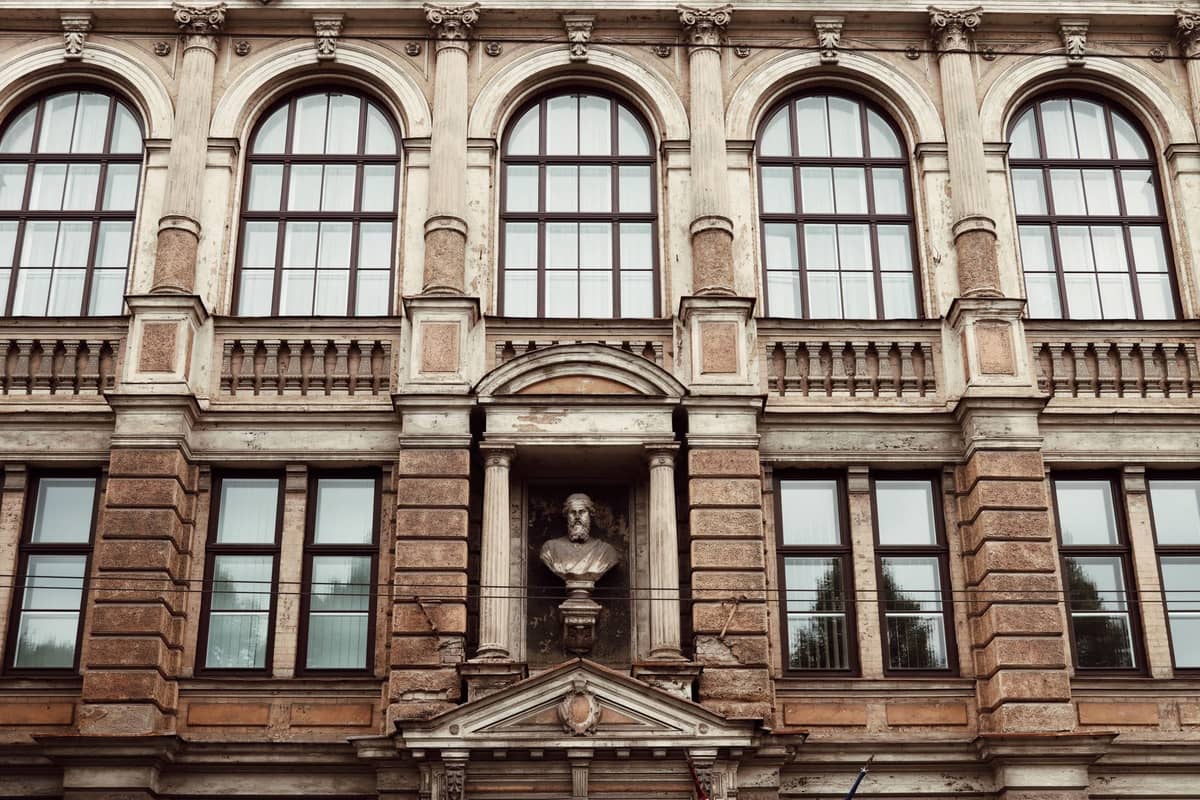
Two days doesn't leave room for every museum, so pick one that matches your interests rather than trying to cram in three. The Museum of the Occupation of Latvia is the most significant historically — it covers Soviet and Nazi occupations between 1940 and 1991 in serious, well-documented detail. It's not a light visit, but it provides context that makes everything else in Riga more legible. Located at Latviešu strēlnieku laukums 1, near Town Hall Square; check opening hours directly before visiting.
For art, the Latvian National Museum of Art near Esplanade Park holds the strongest collection of Baltic painting from the 19th and 20th centuries. It's a better choice than trying to visit multiple smaller galleries in a limited time. If you want an aerial perspective without climbing St. Peter's tower, the Latvian Academy of Sciences viewing platform offers a different angle over the Soviet-era architecture and the city beyond.
- Museum of the Occupation of Latvia Best for: understanding Latvian 20th-century history. Dense and serious. Budget 1.5-2 hours.
- Riga Art Nouveau Museum Best for: visual learners and architecture enthusiasts. Compact and well-curated. Budget 45-60 minutes.
- Latvian National Museum of Art Best for: those interested in Baltic painting and sculpture. Less visited than the major Old Town sights. Budget 1-2 hours.
- KGB Building (Corner House) Best for: Soviet-era history, particularly the mechanisms of surveillance and repression. Guided tours add significant value here.
Practical Logistics for a 2-Day Visit
Riga International Airport (RIX) sits southwest of the city centre. Public buses connect the airport to the centre in around 30-40 minutes depending on traffic; taxis and ride-hailing apps are also available. For full logistics on transfers, routes, and fares, the Riga airport guide covers current options. Once in the city, you will not need a car or taxi for the itinerary described above. The Old Town, Art Nouveau district, and Central Market are all within a 20-minute walk of each other.
Riga has trams, trolleybuses, and buses operated by the city's municipal transport network. For a 2-day visit focused on the centre, you may use public transport only for the Art Nouveau district if your accommodation is in the Old Town, or not at all. Day trip trains to Jūrmala and Sigulda depart from Riga Central Station; schedules and fares are on the Latvian Railways site. For more on getting around, see how to get around Riga.
- Book accommodation in or adjacent to the Old Town to minimise transit time — you'll walk to almost everything on Day 1.
- Carry a physical or downloaded offline map; phone signal is good but some Old Town lanes confuse GPS routing.
- Most Old Town restaurants are tourist-priced. For better value, eat lunch at or near the Central Market on Day 2.
- Latvia is in the Schengen Area — EU and many other nationals enter visa-free, but verify current requirements for your nationality before travel.
- Dial 112 for any emergency in Latvia.
Seasonal Considerations: When to Go
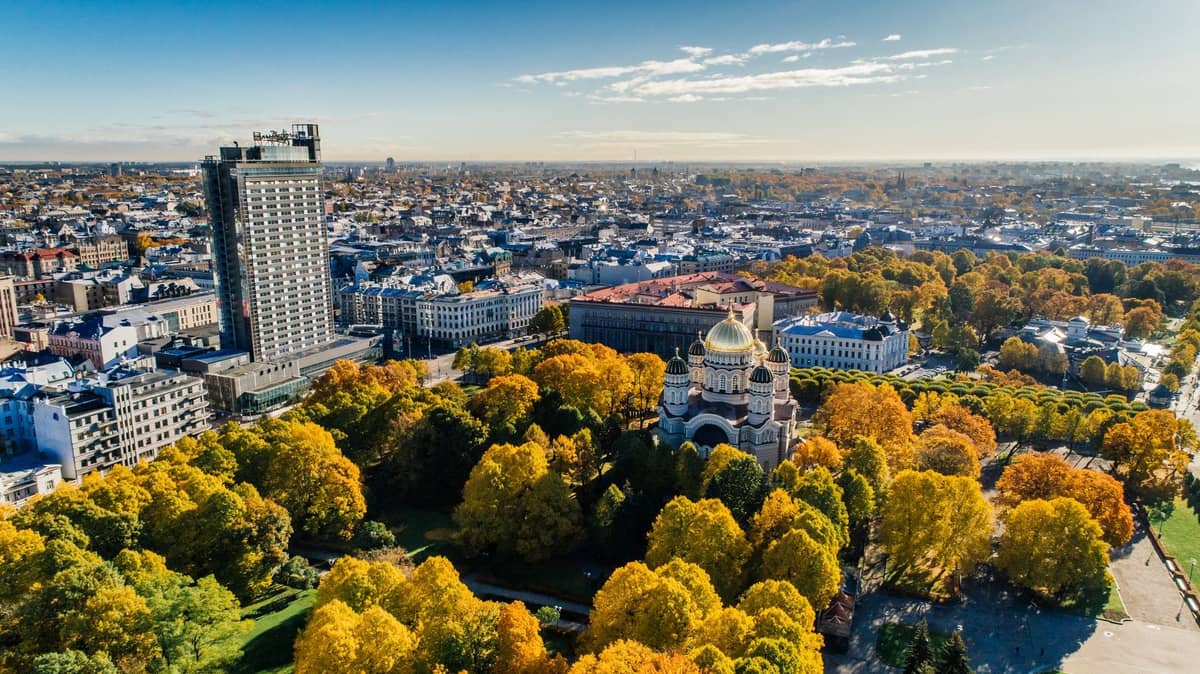
The honest answer is that Riga rewards visits in June through September most obviously, when daylight runs long and outdoor spaces like Esplanade Park and the river promenade are at their best. But summer also means peak prices and the most concentrated tourist presence in the Old Town. For a full seasonal breakdown, including what each month actually looks like on the ground, the detailed guide covers temperature ranges, crowd levels, and event calendars.
Winter in Riga is cold, dark, and underrated by many visitors. If you're coming between November and February, lean into it: the Christmas market in the Old Town is one of the better ones in Northern Europe, the museums are less crowded, and a winter visit to Riga has a specific atmosphere that summer travel doesn't replicate. Days are short (around 6-7 hours of usable light in December), so front-load your outdoor sights and plan museums for the afternoon.
✨ Pro tip
If you're visiting in summer and want to add a beach day, go to Jūrmala on Day 2 afternoon rather than making it a full-day trip. Take a morning train, spend 3-4 hours at Majori beach and the wooden villa streets, and return to Riga for dinner. This preserves most of your city time while still getting the coastal experience.
FAQ
Is 2 days enough for Riga?
Yes — two days is genuinely sufficient to cover Riga's main highlights: the Old Town, Art Nouveau district, Central Market, a viewpoint, and at least one major museum. The city is compact and walkable, which makes a 2-day schedule realistic rather than rushed. If you want to add a day trip to Jūrmala or Sigulda, you'll need to trim one or two secondary city sights.
What is the best area to stay in Riga for a weekend?
For a 2-day visit, staying in or immediately adjacent to Vecrīga (Old Town) puts you within walking distance of almost everything on Day 1. The Centre district, just outside the Old Town, offers a broader range of accommodation at somewhat lower prices while still being 10-15 minutes on foot from the main sights.
Do I need a car in Riga for a 2-day visit?
No. The core city itinerary is entirely walkable, and day trips to Jūrmala and Sigulda are served by regular trains from Riga Central Station. A car adds complexity in the city centre and is unnecessary for the standard 2-day itinerary.
What is the best day trip from Riga for a 2-day trip?
Jūrmala is the easiest: 30-40 minutes by train, suited to summer beach visits or a walk among the historic wooden villas. Sigulda is better for nature and castle ruins, around 60 minutes by train. Both work as half-day additions rather than full-day commitments, leaving you time to return to Riga for the evening.
How much does a weekend in Riga cost?
Riga sits in a mid-range budget bracket for European capitals. Budget travellers can manage on around €60-80 per day including a hostel, meals at the Central Market, and free or low-cost sights. Mid-range visitors spending on a hotel, sit-down meals, and entry fees should expect €120-180 per day per person. The Old Town's tourist-facing restaurants are the main budget pressure point — eating one meal per day near the Central Market keeps costs down significantly.