Majori Beach: Jūrmala's Baltic Shore, 20–30 Minutes from Riga
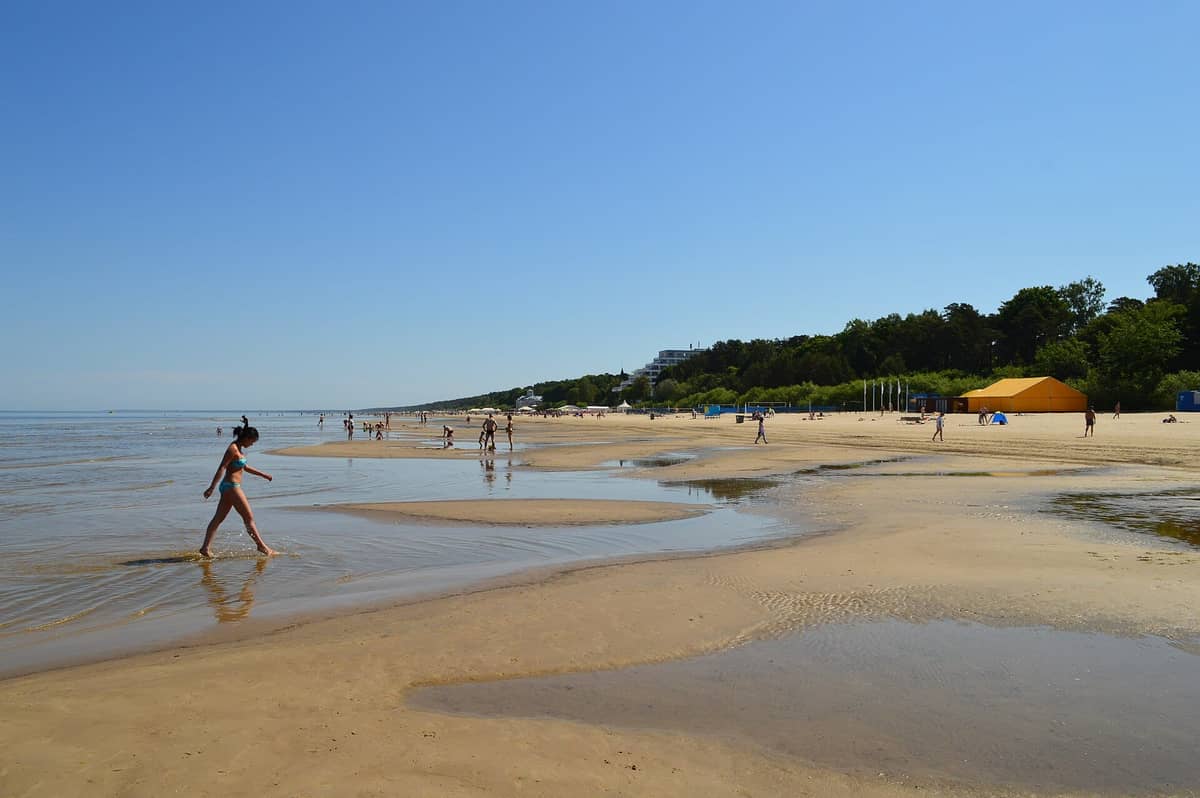
Majori Beach is the central beach of Jūrmala, a long-established Baltic resort town a short train ride from Riga. With fine white sand stretching roughly 25–50 metres wide, lifeguard supervision in summer, and a lively pedestrian street connecting the station to the shore, it offers a complete seaside escape without a car or complicated logistics.
Quick Facts
- Location
- Majori, Jūrmala, Latvia (approx. 24–25 km west of Riga)
- Getting There
- Majori train station (Pasažieru Vilciens suburban rail from Riga Central, ~20–30 min, ~€2 each way)
- Time Needed
- 3–6 hours for a half-day beach visit; full day if combining with Jomas iela and the town
- Cost
- Free entry; train fare approx. €2 each way from Riga
- Best for
- Summer day trips, families, couples, budget travellers, outdoor swimmers
- Official website
- www.visitjurmala.lv/en/see-and-do/beach-guide
What Majori Beach Actually Is
Majori Beach sits at the heart of Jūrmala, the long coastal resort municipality that stretches along the Gulf of Riga. It is the most central and best-serviced stretch of sand in the area, and functions as the de facto gathering point for day-trippers from the capital. The beach itself is wide by Baltic standards, reported at around 25 to 50 metres from the dune line to the waterline at low activity periods, with pale, fine-grained sand and shallow water that warms considerably during the summer months.
Jūrmala as a resort destination dates to the late 19th century, when Russian imperial nobility and Riga's merchant class began building wooden summer villas along this coastline. Majori developed as the tourist centre of that resort belt, and the character of the surrounding streets still reflects that era. Ornate wooden villas with carved gables and painted porches line the side roads between the train station and the shore, giving the walk to the beach an architectural interest that most seaside destinations cannot match.
ℹ️ Good to know
Lifeguard supervision on Majori Beach runs approximately mid-June through August 31. Outside that window, the beach is open but unguarded. The Gulf of Riga is generally calmer than open Atlantic coasts, but swimmers should exercise caution in early or late season.
Getting There: The Train Is the Right Choice
The most practical way to reach Majori Beach from Riga is by Pasažieru Vilciens suburban rail. Trains depart from Riga Central Station on the Sloka and Tukums lines and stop at Majori station, approximately 20 to 30 minutes into the journey. In summer, services run roughly every 20 to 30 minutes. The fare is around €2 each way. For full route planning and current timetables, the getting around Riga guide covers suburban rail logistics in detail.
From Majori station, the route to the beach is straightforward. You exit onto Jomas iela, the main pedestrian street of Jūrmala, and walk toward the sea. The street is lined with cafes, ice cream vendors, and shops, and the walk takes around five to ten minutes. If you are arriving by car, the A10 motorway connects Riga to Jūrmala in about 30 minutes, with parking available near the beach, though spaces fill quickly on hot weekends in July and August.
💡 Local tip
On summer weekends, the train is genuinely more convenient than driving. Parking near the beach fills by mid-morning on busy days, and the train drops you a short, flat walk from the shore. Buy your return ticket before you leave the station.
Tickets & tours
Hand-picked options from our booking partner. Prices are indicative; availability and final rates are confirmed when you complete your booking.
Canal boat sightseeing tour in Riga
From 13 €Instant confirmationArt and culture walking tour of Riga with a local
From 66 €Instant confirmationFree cancellationSelf-guided discovery walk in Riga - the essential old town and its secrets
From 30 €Instant confirmationFree cancellationExclusive private guided tour of Riga's architecture with a local
From 175 €Instant confirmationFree cancellation
The Beach Experience by Time of Day
Mornings at Majori Beach are quiet and worth experiencing for their own sake. Before 10:00, the sand is largely empty, the light is soft and low across the water, and the smell of pine from the dunes behind the beach mixes with salt air. The water is cold even in peak summer, typically ranging from around 18 to 20 degrees Celsius in July and August, so early swimmers are a self-selecting, determined group. The Gulf of Riga is shallow and calm by the standards of open sea coasts, which makes it particularly suitable for children and inexperienced swimmers.
By midday in July and August, the beach fills considerably. Families cluster near the main beach access points, volleyball nets attract groups of younger visitors, and the waterfront cafes and kiosk vendors become busy. This is peak Jūrmala: beach chairs, sunscreen, and the low sound of Baltic pop drifting from somewhere down the shore. It is a genuinely popular local resort scene, not a tourist spectacle, which gives it an authentic quality that sanitised beach resorts often lack.
Late afternoons, especially on weekdays, bring a more relaxed crowd. The light turns golden and rakes across the sand at a low angle, which is the best time for photography. The water retains the day's warmth better than the air, and many visitors swim in the early evening. If you want the beach at its most photogenic and least crowded, aim for a weekday arrival between 16:00 and 18:00 in July.
Jomas iela: The Street You Walk Through to Get There
Most visitors treat Jomas iela as a corridor between the station and the sand, which undersells it. The pedestrian street is one of the most pleasant in Latvia outside Riga's Old Town, lined with amber shops, linen boutiques, and cafes that spill chairs onto the pavement in summer. The wooden villa architecture along the side streets is a reminder of Jūrmala's late imperial-era past.
Jomas iela also connects Majori to the wider Jūrmala resort belt. The full resort area covers multiple named districts, each with its own stretch of beach and character. If you have more than a day in the region, the Jūrmala area guide covers the different districts and what each offers beyond Majori itself.
What to Bring and What to Expect
Facilities at the main Majori beach section include lifeguard towers during the supervised season, toilets, and beach rental operators offering chairs and umbrellas. The water is clean; the Gulf of Riga has no significant jellyfish problem and the waves are gentle. The sand is pale and fine, comfortable to walk on barefoot.
Weather is the variable that shapes every visit. Jūrmala sits in a humid continental climate with maritime influence from the Baltic. Summers are warm rather than hot, with July averaging temperatures in the low to mid-twenties Celsius, but the Baltic coast is subject to abrupt changes. A clear morning can give way to a cool onshore wind by afternoon. Bringing a light layer is sensible even on forecasted sunny days. If the weather turns, the cafes on Jomas iela and the covered sections of the beachfront are genuinely pleasant places to wait it out.
⚠️ What to skip
Outside June to August, the beach experience changes dramatically. The cafes thin out, the water becomes very cold, and the lifeguards are absent. Early May and late September can still be rewarding for coastal walks and photography, but the swimming and resort atmosphere are essentially gone.
For photography, the wide sandy beach and low-angle Baltic light create strong conditions in the morning and late afternoon. The wooden villa streets near the station are worth a detour with a camera. Avoid midday light in summer for landscape shots; the flat overhead light flattens the dunes and water.
Practical Assessment: Who This Is For and Who Should Skip It
Majori Beach is the right choice for travellers who want a genuine day out of Riga without complex logistics. The train ride is easy, the beach is free, and the surrounding town adds cultural interest that pure beach destinations often lack. It fits naturally into a two-day Riga itinerary as a half-day excursion, or can serve as the anchor of a longer stay in Jūrmala.
For travellers focused on Riga's architectural and cultural heritage, the beach is a pleasant counterpoint rather than a substitute. If you are travelling in winter or outside the summer season, Jūrmala still has the wooden villa architecture and the stark beauty of an empty Baltic shoreline, but it is not a beach destination in any meaningful sense. The guide to Riga in winter addresses this more directly.
Visitors expecting a Mediterranean resort experience, warm water, or a developed beach club scene will likely find Majori understated. The water is cold by southern European standards, the infrastructure is functional rather than luxurious, and the season is short. That clear framing is not a criticism: Majori is a Baltic beach, and it does that specific thing well. The combination of wide clean sand, a walkable resort town, and a 30-minute train ride from a major capital is genuinely difficult to beat in the region.
Families with children will find the shallow, calm water and flat sandy beach well-suited to young swimmers. The same applies to visitors planning a full day combining the beach with Jomas iela, lunch at one of the outdoor cafes, and an afternoon swim. For context on how Majori fits into a broader Riga trip, the day trips from Riga guide covers it alongside other excursion options like Sigulda and the Kemeri wetlands.
Insider Tips
- Trains on the Majori line can be crowded on Saturday and Sunday mornings in July and August. Take the first departure before 09:00 to get an uncrowded beach and easy return capacity.
- The wooden villa side streets between Majori station and the beach, particularly Mellužu prospekts and the lanes running parallel to Jomas iela, are worth walking slowly. They are quieter than the main pedestrian street and show Jūrmala's 19th-century resort character most clearly.
- If the main Majori beach section feels too crowded, walk 10 to 15 minutes east or west along the shoreline. The beach continues in both directions and thins out quickly past the main access points.
- The return train from Majori to Riga fills up fast on summer evenings. Check the timetable before you go in the water for your last swim so you are not running wet and sandy to catch the last convenient service.
- Amber vendors on Jomas iela vary considerably in quality and price. For verified quality pieces, look for shops displaying Baltic amber certification marks rather than the cheapest open-air stalls.
Who Is Majori Beach For?
- Day-trippers from Riga wanting a full seaside half-day without renting a car
- Families with young children: shallow calm water and flat sand are ideal for small swimmers
- Architecture and photography enthusiasts combining the beach with Jūrmala's wooden villa streetscapes
- Budget travellers: free beach, cheap train fare, no admission costs
- Couples looking for an easy summer day out of the city with a walkable town centre
Nearby Attractions
Other things to see while in Jūrmala:
- Dzintari Forest Park
Dzintari Forest Park is a free-entry woodland park in the heart of Jūrmala, set among fragrant Scots pine trees just steps from the Gulf of Riga coast. Open daily from 09:00 to 22:00 all year round, it combines quiet forest paths, a famous open-air concert venue, and a rope adventure course — making it one of the most complete day-trip destinations within easy reach of Riga.
- Kemeri National Park & Bog Boardwalk
Ķemeri National Park protects one of Latvia's largest raised peat bogs, formed over 10,000 years since the last Ice Age. A free wooden boardwalk loops through open bog pools, twisted pine islands, and vast silence just an hour from central Riga. Entry to the trails costs nothing and the park is open year-round, though seasonal parking fees apply at the main bog car park.