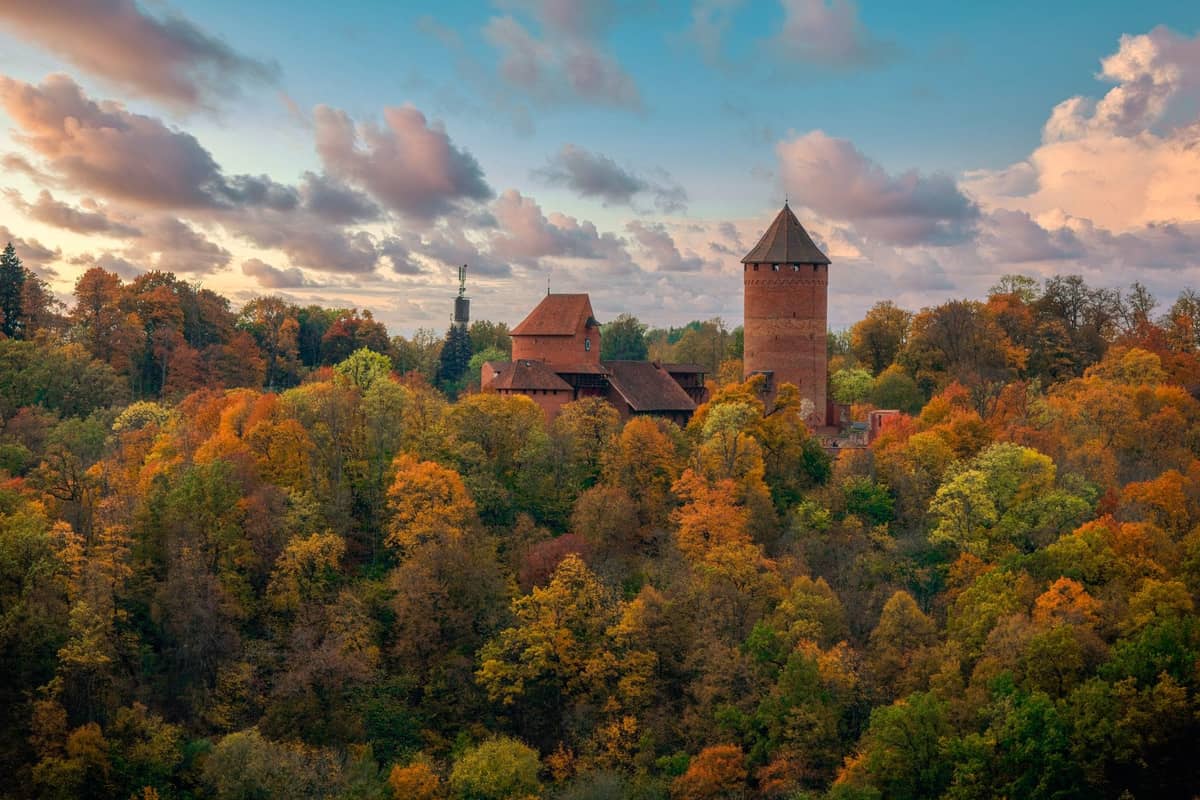
Sigulda is a small town in the Gauja River valley, 53 km northeast of Riga, and the main gateway to Gauja National Park. Known for medieval castle ruins, forested hiking trails, and adrenaline activities like bobsleigh and zip-lining, it draws both nature lovers and history enthusiasts on a day trip or short stay from Riga.
Sigulda earns its nickname, the Switzerland of Latvia, not through alpine peaks but through something rarer in the Baltics: a deeply carved river valley, sandstone cliffs, dense pine forest, and a medieval skyline that somehow still stands above it all. Just 53 km from central Riga by direct train, it is the city's most rewarding day trip, combining castles, canyon-scale walks, and genuine outdoor adventure in a compact area that takes less than a day to crack open.
Orientation
Sigulda sits in the Vidzeme region of Latvia, on the south bank of the Gauja River valley. The town is officially the administrative centre of Sigulda Municipality and covers roughly 22.88 km², though the urban core is compact enough to walk across in under thirty minutes. Think of Sigulda not as a single town but as three historic centres folded into one destination: the main town of Sigulda on the valley's south bank, Turaida to the northeast across the valley, and Krimulda on the opposite ridge. Each has its own character, and exploring all three requires either a cable car ride across the gorge or a scenic valley hike.
The town's urban spine runs along Pils iela (Castle Street), which connects the railway and bus station area to the castle ruins and forest trails. Raiņa iela and Ausekļa iela form the small commercial heart, with the few cafes, shops, and local services that a town of this size sustains. Gaujas iela and Šveices iela lead down toward the valley floor, where the river and its sandstone banks wait. The A2 highway (European route E77) passes near town, linking Riga to the northeast and making Sigulda just as accessible by car as by rail.
ℹ️ Good to know
Sigulda is not a Riga neighborhood in the administrative sense. It is a separate town in the Riga planning region, 53 km from the capital. Think of it as Riga's most accessible and rewarding excursion rather than a city district.
Character and Atmosphere
Sigulda operates at a pace that Riga rarely permits. On weekday mornings, the streets around the station are genuinely quiet: a few locals cycling toward the market, the smell of pine resin drifting up from the valley, birdsong carrying further than it should. The light in early morning falls at a low angle through the forest canopy along Šveices iela, and the air has the cool dampness of a river valley even in midsummer. It does not feel like a tourist town until you arrive at the castle grounds.
By midday on weekends and throughout the summer high season, the area around Sigulda Castle ruins and the path down toward the cable car fills steadily with day-trippers from Riga, school groups, and domestic tourists. The town handles this reasonably well because most visitors spread across a large geographic area rather than crowding a single street. The Turaida Museum Reserve, the valley trails, and the adventure facilities each absorb their share of visitors, leaving the town centre feeling less overwhelmed than you might expect.
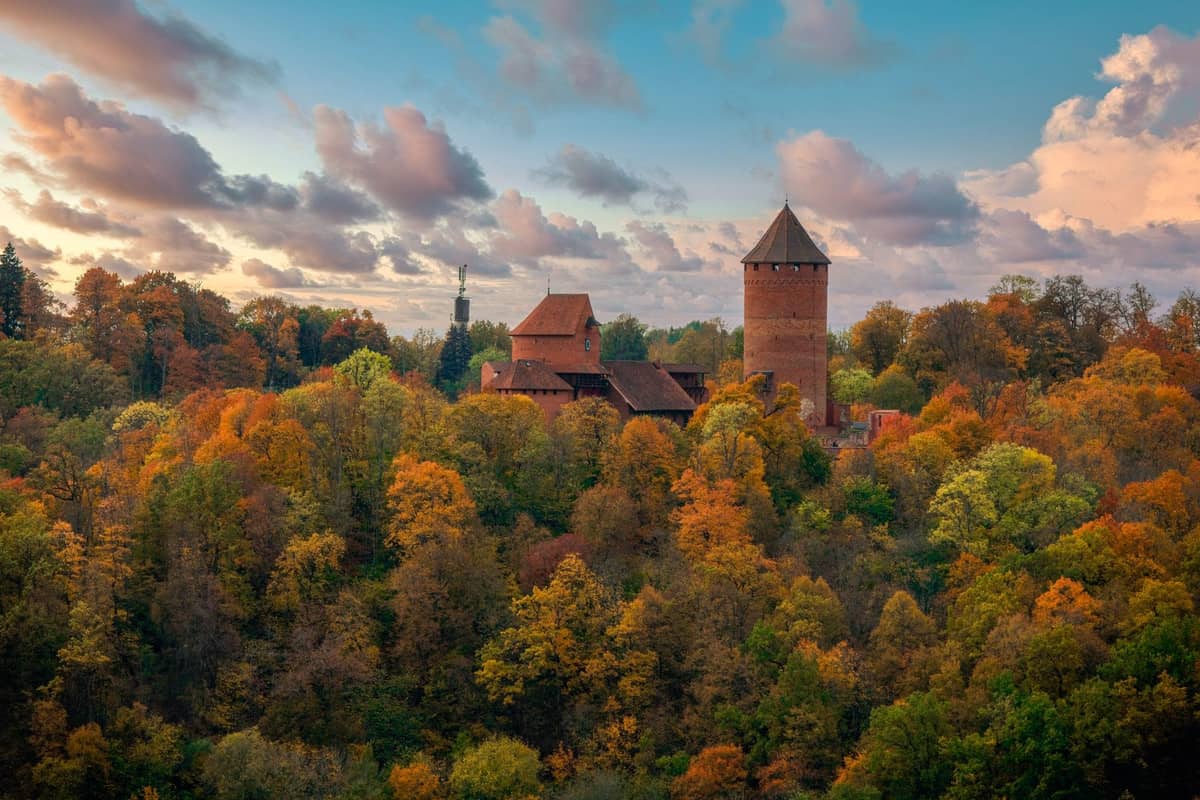
Autumn is arguably when Sigulda makes its strongest argument. The Gauja valley turns through amber, copper, and deep rust across October, and the combination of sandstone cliffs and coloured forest is genuinely striking. Winter brings a different energy entirely: the bobsleigh and luge track becomes a focal point, and the castle ruins look their most dramatic under snow against a grey Baltic sky. Spring is quieter and wetter but has its own appeal, especially for hikers who want the trails without the crowds.
What to See and Do
The medieval ruins of Sigulda Castle on Pils iela anchor the town's history. Built by the Livonian Brothers of the Sword in the 13th century, the castle was partially destroyed in the Great Northern War and has remained a ruin since. The adjacent Sigulda New Castle, a 19th-century manor house, is now used as the local government building but the grounds and exterior are freely visible. Standing on the castle mound gives the first proper view down into the Gauja valley, and it sets the tone for everything else.
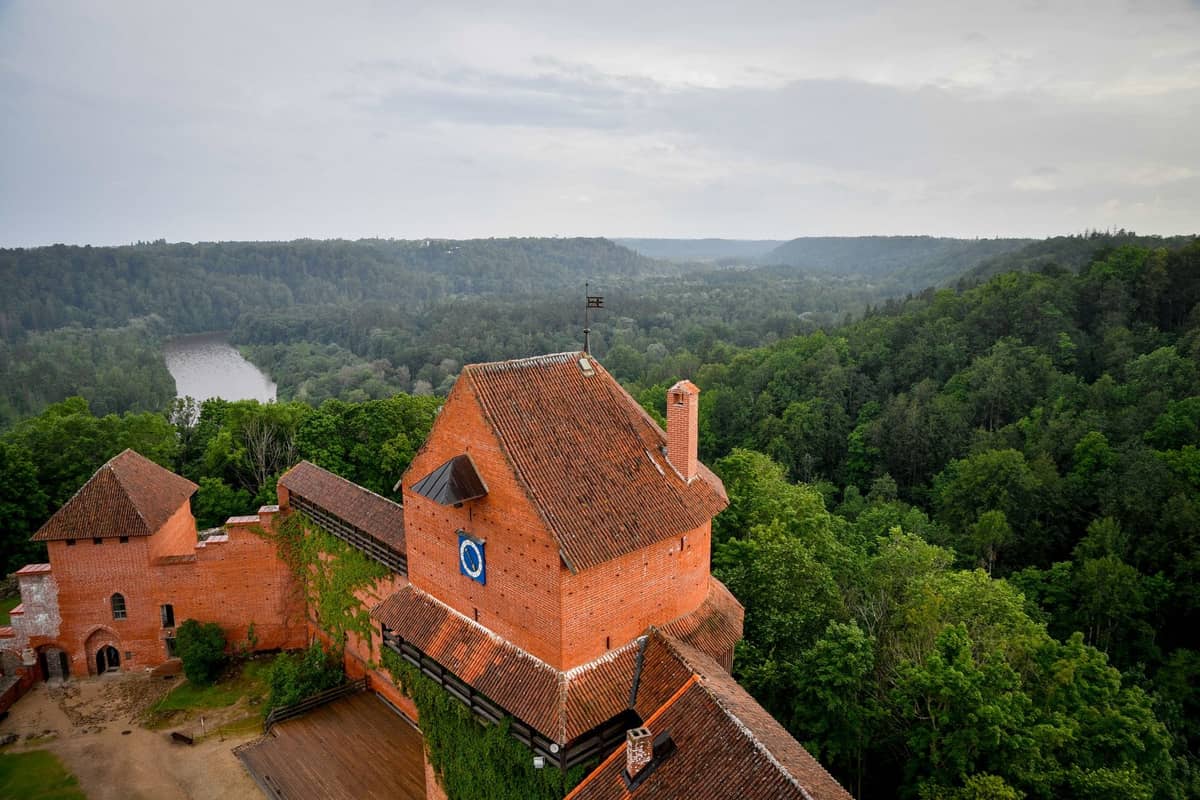
Across the valley, the Turaida Castle is the visual centrepiece of the area. The reconstructed red-brick tower of the Turaida Museum Reserve rises above the treeline and is visible from several points along the valley. The reserve itself is substantial, covering the castle complex, a sculpture garden, and the surrounding landscape. Allow two to three hours if you want to explore it properly rather than just photograph the exterior.
The hiking network through Gauja National Park is what sets Sigulda apart from most day-trip destinations. Sigulda's hiking trails range from short valley-floor walks along the river to longer ridge routes connecting the three historic centres. The trail from Sigulda town down to the Gauja and across to Krimulda via the cable car is a classic half-day loop. The sandstone cave formations along the valley banks, including Gutmanis Cave to the north, reward the longer walk with some of the most distinctive geology in the Baltic region.
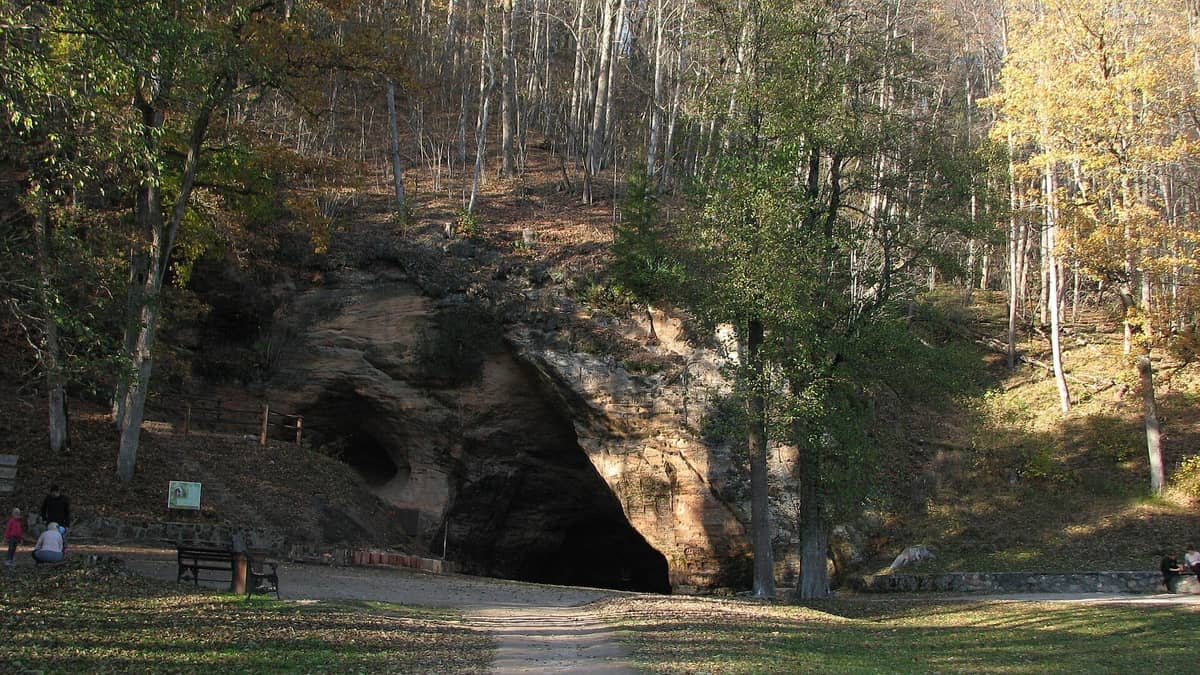
Gutmana ala, better known as Gutmanis Cave, is the largest known cave in the Baltic states, carved into red sandstone by the river over millennia. Centuries of visitors have carved inscriptions into its walls, creating an accidental archive of human presence that stretches back hundreds of years. It sits a few kilometres north of the Sigulda cable car station, accessible by trail along the valley floor.
Sigulda Castle ruins and New Castle grounds on Pils iela: free to enter the grounds, nominal fee for the tower viewpoint
Turaida Museum Reserve: the full complex including the castle tower, sculptures, and landscape
Cable car across the Gauja valley: a short but memorable crossing between Sigulda and Krimulda
Krimulda Manor: a neoclassical building on the northern ridge, historically used as a rehabilitation hospital
Sigulda Bobsleigh and Luge Track: open for public rides in winter, and summer bob rides on the track in the warmer months
Adventure Park Tarzans at Peldu iela 1: rope courses, zip lines, and climbing structures in a forest setting
Valley hiking trails through Gauja National Park, ranging from 2 km to full-day routes
💡 Local tip
The cable car (gaisa trošu ceļš) runs seasonally and can close in high winds. Check operating hours before planning your valley crossing, especially in spring and autumn. The walk down into the valley and back up is steep but manageable and takes about 40 minutes each way.
Eating and Drinking
Sigulda is a small town, and its food scene reflects that honestly. The cluster of cafes and restaurants near the castle grounds and along Pils iela caters primarily to day-trippers, which means the menus lean toward Latvian comfort food: thick soups, pork dishes, dark rye bread, and pastries. The quality is generally decent rather than remarkable, and prices are lower than Riga equivalents for similar food. There is no shortage of options for lunch, but options thin out considerably by early evening.
The area around the castle and tourist trail has the densest concentration of eateries. Expect traditional Latvian dishes like grey peas with bacon, smoked fish, and cold beet salads. Several spots offer outdoor seating with forest or valley views, which improves the experience significantly on a clear day. For a quick, cheap bite, the small kiosks and bakeries near the train station handle the morning and midday crowd efficiently.
If you are staying overnight or exploring the Turaida side of the valley, there are a handful of guesthouses and small hotels that also serve food, sometimes the best meals in the area simply because they are cooking for guests rather than rushing through a tourist lunch queue. A small tip: pack snacks or a picnic if you plan a full day of hiking. The valley trails take you well away from any services for several hours, and the food options inside the national park itself are limited to seasonal kiosks.
⚠️ What to skip
Most restaurants and cafes in Sigulda reduce their hours or close entirely on weekday evenings outside the summer season. If you are arriving on a late afternoon train in October through April, eat before you leave Riga or confirm hours in advance.
Getting There and Around
The train is the simplest and most pleasant way to reach Sigulda from Riga. Direct trains on the Riga–Valga line run regularly throughout the day, with the journey taking approximately 60 to 70 minutes depending on the service. The train departs from Riga Central Station (Centrālā stacija), which sits adjacent to the Central Market on the southern edge of Old Town. Sigulda's railway station is a short walk from the castle grounds, making the arrival immediate and useful.
Intercity buses also serve the Sigulda bus station, which is located directly next to the railway station, making either option equally convenient for arrival. By car, Sigulda is about 53 km northeast of Riga via the A2 highway, a drive of roughly 45 minutes to one hour depending on traffic. Driving gives you flexibility to reach the Turaida side of the valley without depending on the cable car, but parking near the castle and the Turaida Reserve can fill up on summer weekends. For a broader picture of how Sigulda fits into a multi-day itinerary from Riga, the day trips from Riga guide covers the logistics and context in detail.
Within Sigulda itself, most visitors navigate on foot. The town centre, the castle ruins, and the valley access points are all within a comfortable walking radius of the station, provided you are prepared for some elevation change. The descent into the Gauja valley and the climb back up are the most demanding sections of any standard route. Between the different historic centres, the cable car handles the cross-valley link, and local taxi services are available for those who prefer not to walk the longer trails between Turaida and the main town.
For visitors combining Sigulda with other Gauja valley destinations or planning multiple days in the region, it pairs naturally with a visit to Cesis or the broader national park network. If you are planning two or more days and want to understand how the whole region fits together, see the 3 days in Riga itinerary which includes a day in the Gauja valley as a core recommendation.
Where to Stay
Most visitors treat Sigulda as a day trip and return to Riga in the evening, which is a completely reasonable approach given the train frequency. However, staying overnight opens the destination considerably. The valley trails are best in early morning light, the castle ruins are quietest before 9 am, and the Turaida area in particular feels entirely different when the day-trip crowds have departed.
Accommodation options in Sigulda range from small guesthouses and rural homesteads to a few mid-range hotels within the town or in the valley. Staying near the town centre keeps you close to the station and the main trail access points. Staying in the Turaida area or in the valley gives a more immersive forest setting at the cost of convenience. For context on the full accommodation landscape across the Riga region, the where to stay in Riga guide covers the city districts and can help you decide whether a night in Sigulda is worth the trade-off against a central Riga hotel.
Sigulda suits solo travellers and couples who want a quieter base with access to outdoor activities, and families travelling with children who want more space than a city hotel provides. It is not the right choice if your priority is nightlife, restaurant variety, or easy access to Riga's urban attractions.
Sigulda in Context: How It Fits the Wider Riga Trip
Riga holds its own as a destination across multiple days, with its medieval Old Town, the extraordinary Riga Central Market, and one of Europe's most concentrated collections of Art Nouveau architecture. But the city is compact, and most visitors exhaust the core attractions within two or three days. Sigulda is the natural extension: it offers something Riga cannot, which is a landscape of genuine wildness within an hour of the city centre.
If you are working through the things to do in Riga and find yourself looking beyond the obvious city stops, Sigulda should be the first name on your list. It is farther than Jūrmala but well worth the trip for walkers and hikers, and it has considerably more historical and geographical depth than a beach town. For visitors who want to understand the rural and natural side of Latvia, the Gauja valley around Sigulda is the most accessible and rewarding introduction the country offers.
💡 Local tip
Combine Sigulda with the Ethnographic Open Air Museum on the return route to Riga if you have a car. The two complement each other well: Sigulda covers the medieval and natural history of Latvia, while the open-air museum brings the rural vernacular tradition to life.
TL;DR
Sigulda is 53 km northeast of Riga, reachable in 60–70 minutes by direct train from Riga Central Station, making it the city's most accessible full-day excursion.
The combination of medieval castle ruins, the Turaida Museum Reserve, Gauja National Park hiking trails, and adventure activities makes it genuinely multi-layered rather than a single-attraction stop.
Best visited in autumn for the valley foliage, in winter for the bobsleigh track and snow-covered ruins, or in early summer for hiking without peak crowds.
Main drawback: the town centre itself is small and the food and evening scene thin out quickly outside summer. It rewards early arrivals and active itineraries, not leisurely wandering.
Ideal for: hikers, history enthusiasts, families with children, couples looking for a nature escape, and any traveller who wants to see Latvia beyond the capital.
Two days in Riga is genuinely enough to cover the city's best sights, from the medieval lanes of Vecrīga to the extraordinary Art Nouveau district and the sprawling Central Market. This itinerary is built for efficiency, not rushing — with practical advice on where to linger and what to skip.
Three days is the sweet spot for Riga. Enough time to cover the medieval Old Town, the Art Nouveau district, and the Central Market properly, with a full day left for a train ride to Jūrmala's Baltic coast or Sigulda's castle valley. This guide breaks it all down day by day, with transport logistics, honest priorities, and seasonal advice.
Riga holds the world's largest concentration of Art Nouveau architecture, with over 700 buildings spanning four distinct style variants. This guide covers where to find the best façades, how to read the architecture, what to skip, and how to plan a half-day or full-day exploration of the Quiet Centre and beyond.
Riga stands out for a city of its size for museums. Whether you want medieval history, Soviet-era chills, or Latvia's finest art, the city has a museum for it. This guide covers the 12 best, with practical advice on what to prioritise and what to expect.
Riga rewards visitors differently depending on when you arrive. This guide breaks down every season's weather, crowd levels, pricing patterns, and key events so you can make an informed decision about when to go.
Riga is an outstanding base for exploring Latvia. Within an hour or two by train or car, you can walk a medieval castle tower, swim in the Baltic Sea, or wander through a surreal peat bog. These are the best day trips from Riga, with practical transport details for each.
Riga rewards budget-conscious travellers more than almost any other European capital. From medieval Old Town lanes and Art Nouveau facades to riverside promenades and free museum days, here are the best free experiences the city has to offer.
Riga has no metro, but its tram, trolleybus, and bus network covers almost every corner of the city for around €1.50 a ride when bought in advance. This guide breaks down every transport option, from airport bus 22 to night routes, e-tickets, and when it actually makes sense to take a taxi.
Riga is one of Northern Europe's most underestimated capitals: a UNESCO-listed Old Town, over 300 Art Nouveau buildings, a serious food scene, and prices that undercut most Western European cities. But it's not perfect. Here's an honest look at whether Riga deserves a place on your itinerary.
Riga International Airport (RIX) is the Baltic states' largest airport, just about 10–13 km from the city centre. This guide covers the arrivals process, terminal layout, immigration tips, and every realistic option for reaching central Riga quickly and affordably.
Latvian cuisine is built on rye, pork, fish, and preserved foods shaped by centuries of cold-climate cooking. This guide covers the essential dishes, drinks, and food spots to know before you eat your way through Riga — from Central Market stalls to traditional cafeterias and beyond.
Riga rewards couples with medieval cobblestone streets, a gorgeous Art Nouveau district, waterfront promenades, and a food scene serious enough to anchor multiple evenings. This guide covers the best romantic experiences across every season, from free sunset walks to private boat cruises on the Daugava.
Riga transforms in winter into one of Northern Europe's most atmospheric cold-season destinations. This guide covers the Old Town Christmas Market, seasonal ice rinks, what the weather actually feels like, and how to get the most out of a visit between November and January.
Riga's nightlife has more range than many visitors expect. Old Town's medieval streets fill with cocktail bars and live music venues, while the creative quarter around Tallinas iela draws a more local crowd. This guide breaks down where to drink, dance, and explore after dark — by neighborhood, budget, and time of year.
Walk the medieval streets of Riga's Old Town (Vecrīga) without a guide. This route covers every major landmark from the Freedom Monument to the House of the Blackheads, with practical advice on what costs money, what to skip, and how to time your visit.
Riga is one of Europe's most affordable capital cities, with a realistic daily budget of €35–55 covering accommodation, food, transport, and sightseeing. This guide breaks down exactly where your money goes, what to skip, and how to stretch every euro further.
Riga is one of the safer European capitals, but certain scams and situations catch tourists off guard every year. This guide breaks down real risks, the scams most likely to hit you, and practical steps to avoid them — from Old Town bar traps to taxi overcharging.
Riga rewards shoppers with one of Europe's great food markets, a lively craft scene, and local design studios that go well beyond fridge magnets. This guide covers where to shop, what to buy, what to skip, and how to do it without overpaying.
Riga carries more than 50 years of Soviet history in its streets, buildings, and museums. This guide covers the key Cold War sites, occupation memorials, Soviet-era architecture, and the historical context you need to make sense of what you're seeing.
Riga is a genuinely rewarding family destination, but it works best when you know where to focus. From Mežaparks forest trails and canal boat tours to the Ethnographic Open-Air Museum and a Jūrmala beach day, this guide covers the top family activities in Riga with practical details on what to do by season, how to get around, and what to avoid.
Riga packs medieval churches, extraordinary Art Nouveau architecture, Soviet-era landmarks, and one of Europe's great markets into a walkable city centre. This guide covers the best things to do across the Old Town, Centrs, and beyond, including day trips to Sigulda and Jūrmala.
Choosing where to stay in Riga shapes your entire trip. This guide breaks down every major neighbourhood, from the UNESCO-listed Old Town to the Art Nouveau streets of Centrs, with practical advice on what each area costs, who it suits, and what you'll give up.