Secret Soviet Bunker in Līgatne: Inside Latvia's Cold War Underground
Hidden beneath a Soviet-era rehabilitation centre near Līgatne, the Secret Soviet Bunker in Līgatne is a preserved Cold War command complex built in the 1980s for Latvia's political elite. Spanning 2,000 square metres and sitting 9 metres underground, it remained classified until 2003 and is now one of the most genuinely surprising historical sites in the Baltics.
Quick Facts
- Location
- Skaļupes, Līgatne, Cēsis Municipality — approx. 2 km east of Līgatne village centre
- Getting There
- No direct train. Car recommended from Riga (~80 km, ~1 hr). Local bus to Skaļupe stop beside the rehabilitation centre car park.
- Time Needed
- 1–1.5 hours for the guided tour, plus extra time to explore the grounds
- Cost
- Approx. €13.20 per person (English tour incl. lunch); discounted rates for pre-booked groups of 10+ people. Verify current prices at bunkurs.lv before booking.
- Best for
- Cold War history, Soviet-era architecture, day trips from Riga or Sigulda
- Official website
- www.bunkurs.lv/en
What Is the Līgatne Bunker, and Why Does It Matter?
The Secret Soviet Bunker in Līgatne is not a reconstruction or a theme park. It is the real thing: a classified nuclear-war command facility built in the 1980s beneath the grounds of the Līgatne Rehabilitation Centre near the village of Skaļupes, camouflaged so effectively that even local residents had no idea what lay beneath their feet. The bunker was designed to shelter Latvia's Soviet-era political and military leadership in the event of a nuclear strike, providing a fully operational underground government with its own communications equipment, ventilation systems, dormitories, and canteen. It remained officially secret until 2003.
The 2,000-square-metre complex sits 9 metres below ground, accessed through a staircase that descends from what looks, from the surface, like an unremarkable building within an ordinary rehabilitation facility. That contrast between the mundane exterior and the preserved world below is a large part of what makes the visit so striking. Nothing about the approach gives the site away, which was precisely the point.
ℹ️ Good to know
Guided tours only, on a fixed schedule. In the summer season, weekday tours typically depart at 15:00, and weekend tours at 12:00, 14:00, and 16:00. In the winter season, tours run on Saturdays and Sundays at 12:00 and 14:00. Always pre-book your tour, especially for English-language sessions. Check bunkurs.lv for current scheduling.
Getting There: Plan This as a Day Trip
The bunker is about 80 kilometres northeast of Riga, making it a natural add-on to a day in the Sigulda area. By car, the drive from Riga takes roughly 90 minutes. The route through the Gauja National Park valley is genuinely scenic, especially in autumn when the forest canopy turns amber and copper above the sandstone ravines.
Public transport is possible but requires patience. There is no direct bus from Sigulda town to Līgatne; connections exist but typically involve a bus to Līgatne (Augšlīgatne) and then a local bus. The closest stop to the bunker is Skaļupe, in front of the rehabilitation centre car park, about 2 kilometres east of Līgatne centre. If you are visiting without a car, research bus schedules carefully in advance, as services are infrequent and the last connection back may be earlier than your tour ends.
If you are building a multi-day itinerary, the bunker pairs well with an overnight in Sigulda. See our day trips from Riga guide for transport options and how to combine the bunker with other sites in Cēsis Municipality.
💡 Local tip
Free parking is available at the rehabilitation centre. Card payment is accepted at the bunker entrance. The site is noted as accessible for visitors with disabilities, though the underground passages are narrow in places — contact the venue directly to confirm what is accessible for your needs.
Tickets & tours
Hand-picked options from our booking partner. Prices are indicative; availability and final rates are confirmed when you complete your booking.
Self-guided discovery walk in Riga - the essential old town and its secrets
From 30 €Instant confirmationFree cancellationCanal boat sightseeing tour in Riga
From 13 €Instant confirmationArt and culture walking tour of Riga with a local
From 66 €Instant confirmationFree cancellationExclusive private guided tour of Riga's architecture with a local
From 175 €Instant confirmationFree cancellation
The Tour Experience: What You Actually See
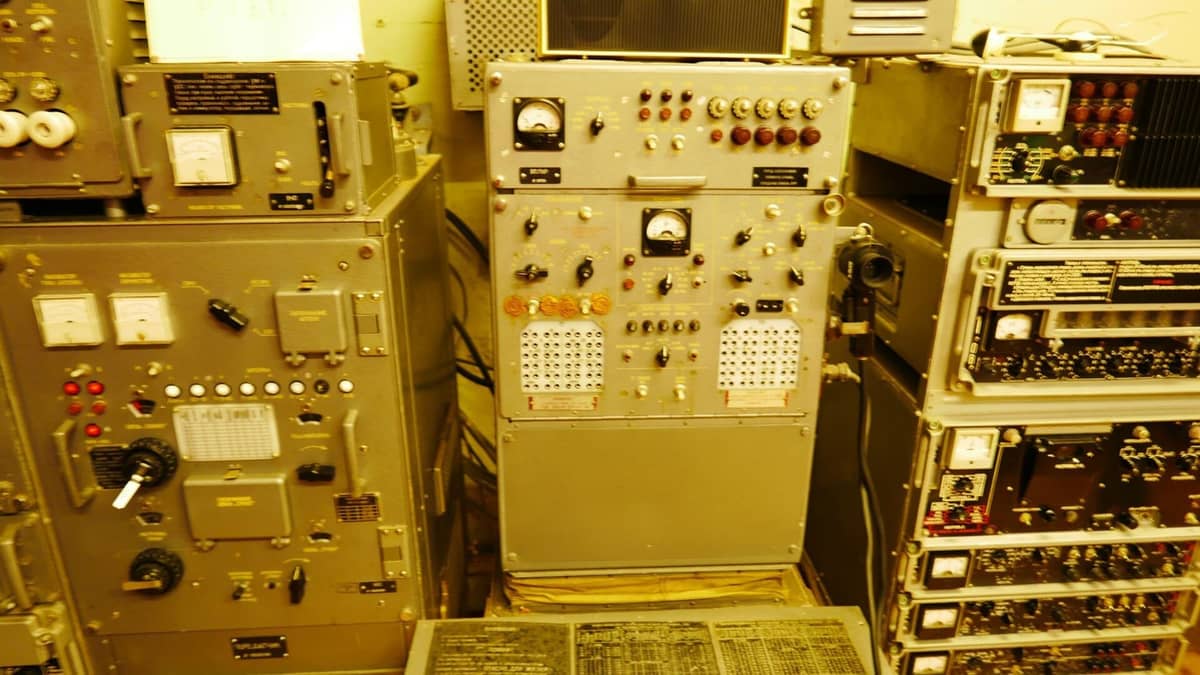
The guided tour is the only way to see the bunker, and that structure serves the experience well. A guide walks you through the preserved corridors and rooms in sequence, explaining the function of each space within the Soviet command hierarchy. The tour covers dormitories assigned to specific officials, a communications room still equipped with original Soviet-era radio and telephone hardware, a dining room, and the ventilation and power systems that would have kept the complex operational for weeks after a nuclear strike.
The air underground is noticeably cooler and carries a faint metallic quality, a combination of the concrete walls, the original equipment, and the filtered ventilation system. The lighting is deliberately kept at period-appropriate levels in parts of the complex, which creates an atmosphere that is matter-of-fact rather than theatrical. The Soviet aesthetic here is not dramatic: it is bureaucratic, beige, and oddly mundane, which makes the underlying purpose of the place feel more unsettling than any dramatised presentation would.
The English-language tour includes lunch in the bunker canteen, which serves food prepared to Soviet-era recipes. This is either a highlight or a curiosity depending on your expectations, but it adds a practical dimension to the visit and pleasantly extends the 1–1.5 hour tour. For weekday tours, a minimum group size of 10 people applies, so check the current pricing structure before organising a small party visit.
💡 Local tip
Wear a layer you can add underground. The temperature below ground stays consistently cool regardless of the season above, and you will be stationary for portions of the tour. A light jacket or sweater is practical even in July.
Historical Context: The Logic of Secrecy
To understand why this bunker exists where it does, it helps to understand how Soviet civil defence worked. The concept of placing strategic facilities beneath civilian infrastructure was deliberate: a rehabilitation centre provided legitimate reason for a restricted perimeter, regular deliveries, and official vehicles, without attracting attention. Similar bunkers were constructed across Soviet republics during the 1970s and 1980s, typically beneath medical, scientific, or administrative buildings.
The Līgatne bunker was built to house Latvia's top Soviet officials, Communist Party leadership, and key military and KGB figures in the event of nuclear war. It was designed for operational continuity, not just survival: the communications equipment was meant to allow the Latvian Soviet leadership to remain in contact with Moscow and coordinate a response to a NATO strike. The detail that stays with many visitors is the assigned dormitories: specific rooms were allocated to specific named individuals, with their roles and ranks noted, making the abstract reality of Cold War nuclear planning suddenly personal.
For broader context on Latvia's Soviet history, the Museum of the Occupation of Latvia in Riga covers the full arc of the Soviet period and pairs well with a bunker visit as a before-or-after counterpart. The Riga Soviet history guide also maps out the key sites across both the city and the wider region.
Photography and Practical Logistics
Photography is permitted during the tour, but the low-light conditions underground require a camera or phone that handles available light reasonably well. The corridors are narrow and the lighting is functional rather than bright, so wide-aperture lenses or a steady hand for slower exposures will serve you better than flash, which tends to flatten the atmosphere. The communications room and the canteen are the most photogenic spaces, largely because the period hardware and the institutional colour palette photograph with strong graphic contrast.
The tour itself runs at a moderate walking pace with stops at each room. There is no rush, but there is also no ability to linger independently: the group moves together with the guide. If your priority is spending extra time in a particular room, let your guide know at the start. Most guides are knowledgeable and engaged, and English-language tours are available specifically because the site draws a significant proportion of international visitors.
⚠️ What to skip
Do not arrive without a pre-booked tour and expect to be admitted. Tour slots fill quickly in summer, particularly on weekends. The bunker does not operate as a drop-in attraction.
Who Will Get the Most From This Visit
The Secret Soviet Bunker rewards visitors who arrive with some background in Cold War history. The more context you bring, the more the specific details of the site will resonate: the named dormitories, the communication protocols, the logic of the camouflage. If you have already visited the KGB building in Riga, this site will feel like a natural extension of that story.
Visitors travelling with children should consider age and attention span carefully. The tour involves extended periods of walking through similar-looking corridors with a lot of historical explanation. Teenagers with an interest in history will likely find it compelling; younger children may struggle with the pace. For family trips to the broader region, the Turaida Castle nearby provides a more visually varied and child-friendly alternative.
Visitors who primarily want a scenic outdoor experience rather than a historical one may find the 2-3 hours invested here better spent walking the Gauja valley trails. The bunker is not a visually stimulating environment in the conventional sense: it is deliberately stark. Those who appreciate exactly that quality, the authentic texture of Cold War austerity, will leave satisfied.
Insider Tips
- Book the English-language tour that includes lunch in the bunker canteen. The Soviet-recipe meal is not particularly remarkable on its own, but eating underground in a preserved Cold War facility adds a layer to the experience that the tour alone does not provide.
- Arrive at least 15 minutes before your scheduled tour time. The site is within a working rehabilitation centre and the entrance is not immediately obvious from the car park. Allow time to find the correct building.
- Combine the bunker with a stop in Līgatne town on the way back. The town has a small nature trail and is known for its wooden architecture, providing a complete contrast to the underground experience.
- If you are a group of fewer than 10 people visiting on a weekday, check whether the per-group minimum fee makes booking a weekend tour more cost-effective per person.
- The site has no gift shop in the conventional sense, but the tour itself is the souvenir. Photographs of the original Soviet equipment and the dormitory placards make for more meaningful mementos than any postcard.
Who Is Secret Soviet Bunker (Līgatne) For?
- Cold War and Soviet history enthusiasts who want to see preserved infrastructure rather than exhibitions about it
- Day-trippers from Riga or Sigulda looking for a half-day activity with genuine historical depth
- Photographers interested in brutalist interiors, period technology, and institutional colour palettes
- Travellers who have already visited the KGB Corner House in Riga and want to extend that narrative into the countryside
- Anyone with a serious interest in 20th-century European history who wants to move beyond the standard museum format
Nearby Attractions
Other things to see while in Sigulda:
- Gutmanis Cave
Carved into red sandstone cliffs above the Gauja River, Gutmanis Cave is the largest cave in the Baltic states and one of the most visited natural landmarks in Latvia. Its walls carry inscriptions dating to 1667, and the site sits at the heart of Gauja National Park's most rewarding trail network.
- Sigulda Hiking Trails & Gauja Valley Viewpoints
The Sigulda hiking trails cut through the Gauja River Valley, one of Latvia's most dramatic natural landscapes. Sandstone bluffs rise above pine forest, medieval castles crown opposite ridges, and the classic loop from Sigulda town covers 10 to 12 km with around 80 metres of elevation change. This is the most complete day hike accessible by direct train from Riga.
- Turaida Castle
Standing on a forested ridge above the Gauja River, Turaida Castle is Latvia's most photogenic medieval fortress. Founded in 1214 by the Bishop of Riga, the reconstructed red-brick keep anchors a sprawling open-air museum reserve where eight centuries of Baltic history feel tangible.