Sigulda Hiking Trails & Gauja Valley Viewpoints: Latvia's Most Rewarding Day Hike
The Sigulda hiking trails cut through the Gauja River Valley, one of Latvia's most dramatic natural landscapes. Sandstone bluffs rise above pine forest, medieval castles crown opposite ridges, and the classic loop from Sigulda town covers 10 to 12 km with around 80 metres of elevation change. This is the most complete day hike accessible by direct train from Riga.
Quick Facts
- Location
- Sigulda, Gauja National Park, Latvia (approx. 50 km northeast of Riga)
- Getting There
- Direct train from Riga Central Station to Sigulda; journey approx. 1 hour. Trailhead starts near Sigulda train station (Stacijas laukums 1) and the Tourism Information Centre at Ausekļa iela 6.
- Time Needed
- 3 to 5 hours for the classic Sigulda–Gūtmaņala–Turaida loop (10–13 km)
- Cost
- Trails are free to access; some facilities around Gūtmanis Cave may charge a small fee. Verify on-site.
- Best for
- Day hikers, nature photography, autumn foliage, castle views, escaping Riga for a full day
- Official website
- old.tourism.sigulda.lv/routes-and-trails-en
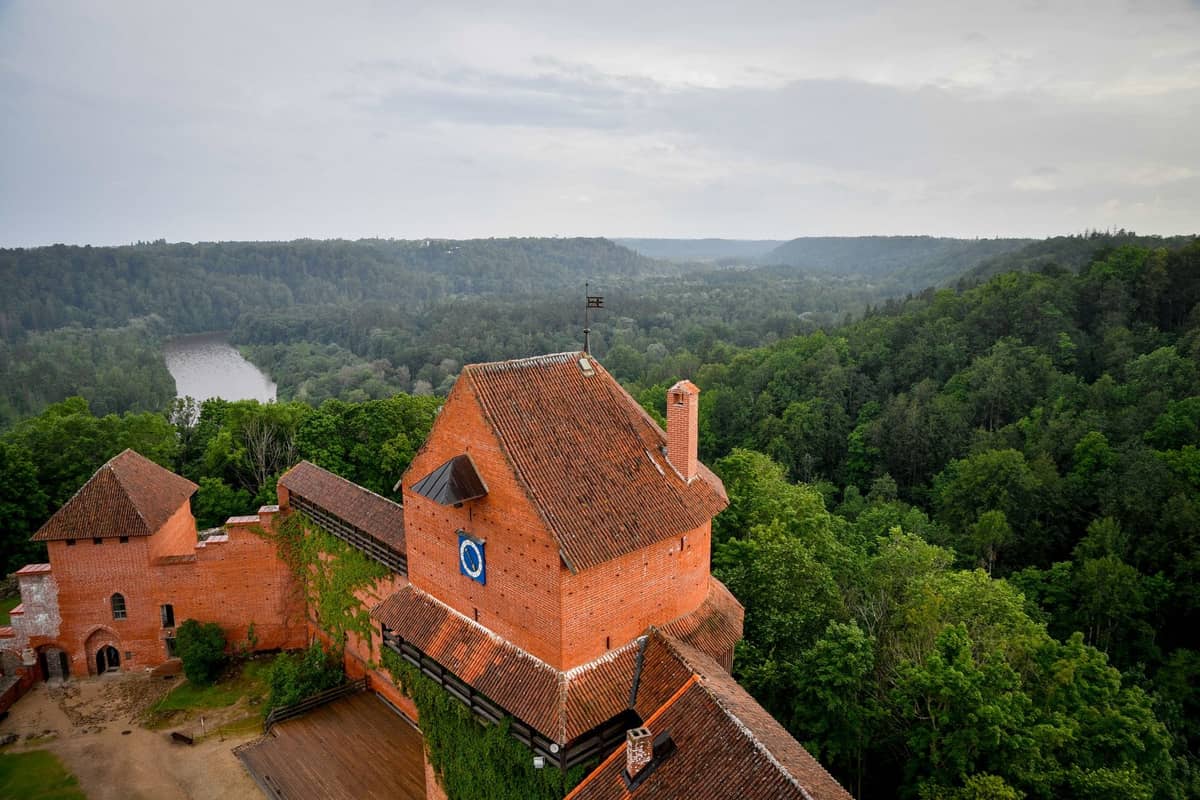
What the Gauja Valley Actually Looks Like
The Gauja River valley cuts 40 to 80 metres deep through Latvia's central lowlands, creating a landscape that surprises most visitors who expect the country to be entirely flat. Sandstone cliff faces, stained orange and ochre by mineral seepage, line the valley walls. Scots pine and silver birch grow from the sandy bluffs. The river itself moves slowly at the bottom, wide and clear in dry periods, coffee-brown after rain. From the top of any major viewpoint, the medieval silhouette of Turaida Castle on the far ridge reads clearly above the treetops.
This is not alpine terrain. The Sigulda hiking trails are Latvia's answer to dramatic walking, and by the country's standards they deliver. The elevation changes of 80 to 100 metres feel significant in a landscape where the highest point in the whole country sits at 311.5 metres. The trails work precisely because the valley is deep and narrow, concentrating those modest height differences into steep wooded slopes that feel genuinely physical.
The Classic Route: Sigulda to Gūtmanis Cave to Turaida
The most-walked route begins at Sigulda town centre, close to the train station on Ausekļa iela. From here the path descends steeply through forest into the valley floor, crosses a wooden footbridge over the Gauja, and follows the river north to Gūtmanis Cave, the largest sandstone cave in the Baltic states. The cave itself is around 19 metres deep and around 10 metres high, its walls carved over centuries with inscriptions left by visitors dating back to the 17th century. Access to the cave itself is free; any charges for nearby facilities should be verified at the site.
💡 Local tip
The Sigulda Tourism Information Centre at Ausekļa iela 6 (at the railway station) distributes free paper trail maps and can advise on current path conditions. Worth stopping in before you descend into the valley, especially in wet seasons.
From Gūtmanis Cave, the route continues uphill to Turaida, where the medieval brick tower of Turaida Castle stands on a promontory above the valley. The castle itself charges a separate admission fee and deserves at least 30 to 45 minutes. The return leg from Turaida back to Sigulda involves another valley descent and ascent, completing the loop. Total distance depending on the variant taken runs from 10 to 12 kilometres, with sources varying slightly on exact figures.
The route is marked and signposted throughout. For those wanting context on Turaida Castle before visiting, the Turaida Castle guide covers the fortress in detail, including its museum and opening hours.
Tickets & tours
Hand-picked options from our booking partner. Prices are indicative; availability and final rates are confirmed when you complete your booking.
Canal boat sightseeing tour in Riga
From 13 €Instant confirmationArt and culture walking tour of Riga with a local
From 66 €Instant confirmationFree cancellationSelf-guided discovery walk in Riga - the essential old town and its secrets
From 30 €Instant confirmationFree cancellationExclusive private guided tour of Riga's architecture with a local
From 175 €Instant confirmationFree cancellation
Viewpoints Worth Slowing Down For
The main viewpoints in the Sigulda area each reward a deliberate pause. The Sigulda New Castle terrace, the Velnala hillfort area, and several unmarked ledges along the valley rim all deliver views across the river and the opposite wooded ridge. None of them require extra walking beyond the main route. What changes the experience is time of day and season.
In early morning, particularly between May and September, mist settles into the valley floor and the treetops emerge above it in silhouette. By midday the light is flat and the views are clear but ordinary. Late afternoon in autumn, when the birch and aspen across the valley have turned yellow and orange, is when the viewpoints justify the trip on their own. Photographers will want to arrive at the top ridge lookouts roughly 90 minutes before sunset in October and November.
ℹ️ Good to know
Sigulda is often called the 'Switzerland of Latvia', a local comparison that overstates the drama but captures the spirit. Manage expectations accordingly: this is a beautiful river valley with real forest walking, not mountain scenery.
Trail Conditions, Difficulty, and What to Wear
The Sigulda hiking trails are classified as moderate. The main challenge is not distance but the repeated descent and re-ascent of the valley walls, which involves around 80 to 100 metres of height gain on slopes with exposed tree roots and sandy soil. Sections after rain become slick. In winter, ice forms on the steeper shaded descents into the valley.
Sturdy ankle-supporting footwear is the single most important gear choice. Trainers are technically passable in dry summer conditions but will cause problems in spring mud or after any rain. The trails are marked and maintained within Gauja National Park, but the surface is natural throughout: no boardwalks, no paved sections. Trekking poles make the steep descents significantly more comfortable for anyone carrying a pack.
- Spring (April–May): paths are often muddy from snowmelt; forest is fresh and green, birds are active.
- Summer (June–August): most crowded on weekends; shade from full canopy is welcome in heat; good swimming in the Gauja at certain points.
- Autumn (September–November): peak season for colour; cooler temperatures mean comfortable walking; crowds thin significantly on weekdays.
- Winter (December–March): trails open year-round; icy sections require caution; the valley takes on a stark quality that serious walkers find worthwhile.
⚠️ What to skip
After heavy rain the footbridge over the Gauja can occasionally be impassable, and some riverbank sections flood. Check conditions with the Sigulda Tourism Information Centre before descending into the valley if recent weather has been wet.
Getting There from Riga and Planning Your Day
Sigulda is approximately 50 kilometres northeast of Riga. Direct trains run from Riga Central Station several times daily; the journey typically takes between 50 minutes and 1 hour. The train is the practical choice: it is cheap, reliable, and drops you within easy walking distance of the trailhead. Driving is possible but adds the complication of returning to your car after a loop walk.
Sigulda works well as a full-day trip from Riga, ideally combined with the castle visit. The day trips from Riga guide gives a full rundown of timing and what to combine. If you plan to spend more time in the area, Sigulda as a place has accommodation, restaurants, and enough to fill two days.
For the hiking day itself: take an early train (aim to be walking by 9:00), complete the loop including Turaida Castle by early afternoon, and take a later train back. Sigulda town has a few cafes near the station for a meal before the return. The Sigulda Tourism Information Centre at Ausekļa iela 6 can provide up-to-date route maps and highlight any closed sections.
The Broader Trail Network Beyond the Classic Loop
The classic route is the most popular, but the Sigulda municipality publishes a wider network of marked trails that extend along the Gauja valley in both directions. Longer routes reach 15 kilometres or more and take in additional viewpoints, smaller cave formations, and sections of the Gauja National Park's interior forest. The Outdooractive platform lists the full trail inventory for Sigulda municipality if you want to plan a more extended itinerary.
Gutmanis Cave, which sits along the classic route, has its own history and detail worth understanding before you arrive. The Gutmanis Cave guide covers its geological and cultural background in full.
For those interested in combining the hiking with Latvia's broader landscape, the Gauja valley connects culturally and geographically to the wider Vidzeme region. The cave, the medieval castles, the river landscape, and the forest walking form a coherent whole that makes Sigulda one of the most complete single-destination day trips available from Riga.
Who Should Skip This Attraction
Visitors with significant mobility limitations will find the valley trails genuinely inaccessible: steep root-covered descents and natural surfaces cannot be navigated by wheelchair and are difficult for anyone with joint or balance issues. The views from the Sigulda town rim are accessible without descending into the valley, but the full experience requires the descent. Families with very young children in pushchairs should also reconsider the full loop; day carriers for toddlers work, but it is a physical outing.
If your time in Latvia is limited to a day or two and you have not yet covered Riga's own major sites, those should take priority. The Sigulda trails are rewarding precisely because they take a full day. Trying to compress them into a half-day alongside other Riga commitments produces a rushed experience that does not do the valley justice.
Insider Tips
- Take the first train of the day from Riga Central Station. You will reach the valley before the tour groups arrive, and the morning light on the sandstone cliffs is better than at any other point in the day.
- The wooden footbridge over the Gauja can be slippery in any damp condition. The wooden planks develop algae growth. Step carefully even when it looks dry.
- Gūtmanis Cave faces north-northeast, which means it sits in shadow for most of the day. Bring a small torch or use your phone light to read the historic inscriptions on the cave walls, which are otherwise easy to miss.
- On summer weekends the trail between Gūtmanis Cave and Turaida becomes congested with slow-moving groups. Visiting on a weekday transforms the experience: sections of forest path that feel crowded in July are largely empty on a Tuesday in September.
- The return leg from Turaida back towards Sigulda passes a secondary viewpoint above the valley that most walkers miss because they are focused on the ascent. Pause on the ridge before the final descent into town and look back across the valley for the clearest view of the whole route you have just completed.
Who Is Sigulda Hiking Trails & Gauja Valley Viewpoints For?
- Day hikers based in Riga looking for Latvia's best single-day outdoor excursion
- Photographers, especially in October and November when autumn colour peaks across the valley
- History-minded walkers who want to combine medieval castles with forest trails in a single day
- Couples looking for a scenic day out with clear transport links and no need for a car
- Travellers who want to experience Gauja National Park without committing to multi-day hiking
Nearby Attractions
Other things to see while in Sigulda:
- Gutmanis Cave
Carved into red sandstone cliffs above the Gauja River, Gutmanis Cave is the largest cave in the Baltic states and one of the most visited natural landmarks in Latvia. Its walls carry inscriptions dating to 1667, and the site sits at the heart of Gauja National Park's most rewarding trail network.
- Secret Soviet Bunker (Līgatne)
Hidden beneath a Soviet-era rehabilitation centre near Līgatne, the Secret Soviet Bunker in Līgatne is a preserved Cold War command complex built in the 1980s for Latvia's political elite. Spanning 2,000 square metres and sitting 9 metres underground, it remained classified until 2003 and is now one of the most genuinely surprising historical sites in the Baltics.
- Turaida Castle
Standing on a forested ridge above the Gauja River, Turaida Castle is Latvia's most photogenic medieval fortress. Founded in 1214 by the Bishop of Riga, the reconstructed red-brick keep anchors a sprawling open-air museum reserve where eight centuries of Baltic history feel tangible.