3 Days in Riga: The Complete Itinerary with Day Trips
Three days is the sweet spot for Riga. Enough time to cover the medieval Old Town, the Art Nouveau district, and the Central Market properly, with a full day left for a train ride to Jūrmala's Baltic coast or Sigulda's castle valley. This guide breaks it all down day by day, with transport logistics, honest priorities, and seasonal advice.
Plan and book this trip
Tools from our partner Travelpayouts help you compare flights and hotels. If you book through them, we may earn a commission at no extra cost to you.
Flights
Hotels map
TL;DR
- Three days covers Riga's Old Town, Art Nouveau district, and Central Market without rushing, leaving one day free for a day trip.
- Jūrmala (beach, 30-40 min by train) suits summer visits; Sigulda (castles, hiking, ~53 km) works year-round.
- All major day trips — Jūrmala, Sigulda, Cēsis — are easy DIY excursions by train. No organized tour required.
- Book accommodation in or near Old Town (Vecrīga) or the Centre to keep transit time to zero on city days.
- Riga uses the Euro. Emergency number: 112. Official language: Latvian, though English is widely spoken in tourist areas.
Day 1: Old Town (Vecrīga) and the City's Medieval Core
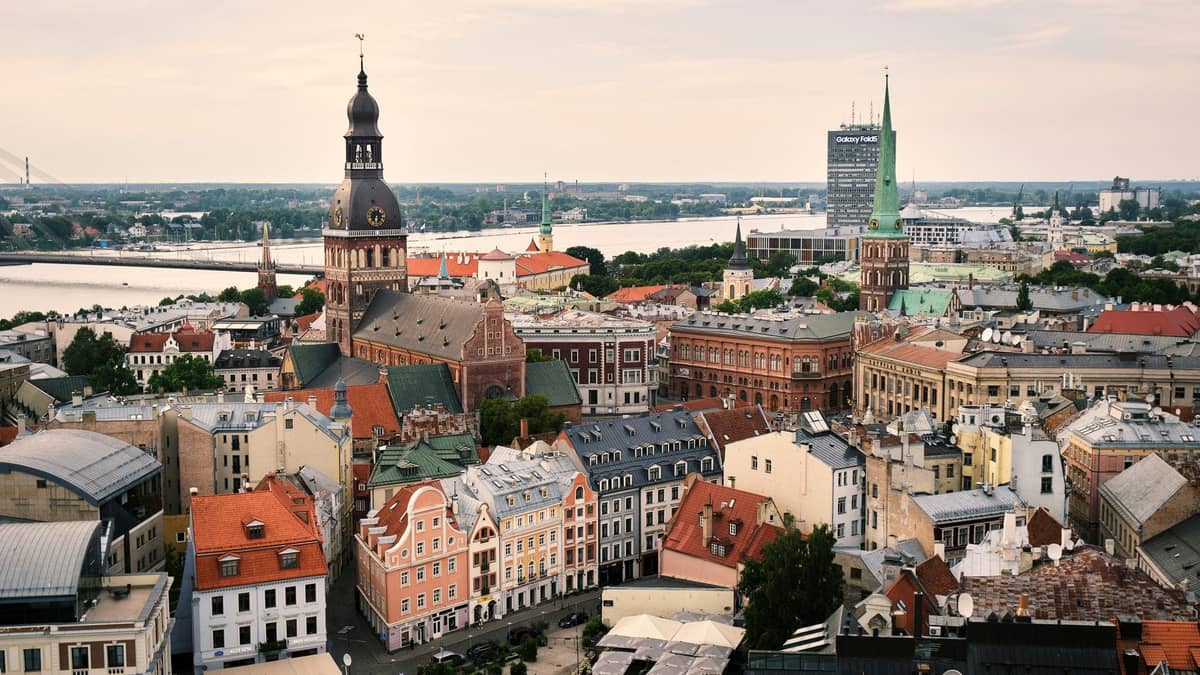
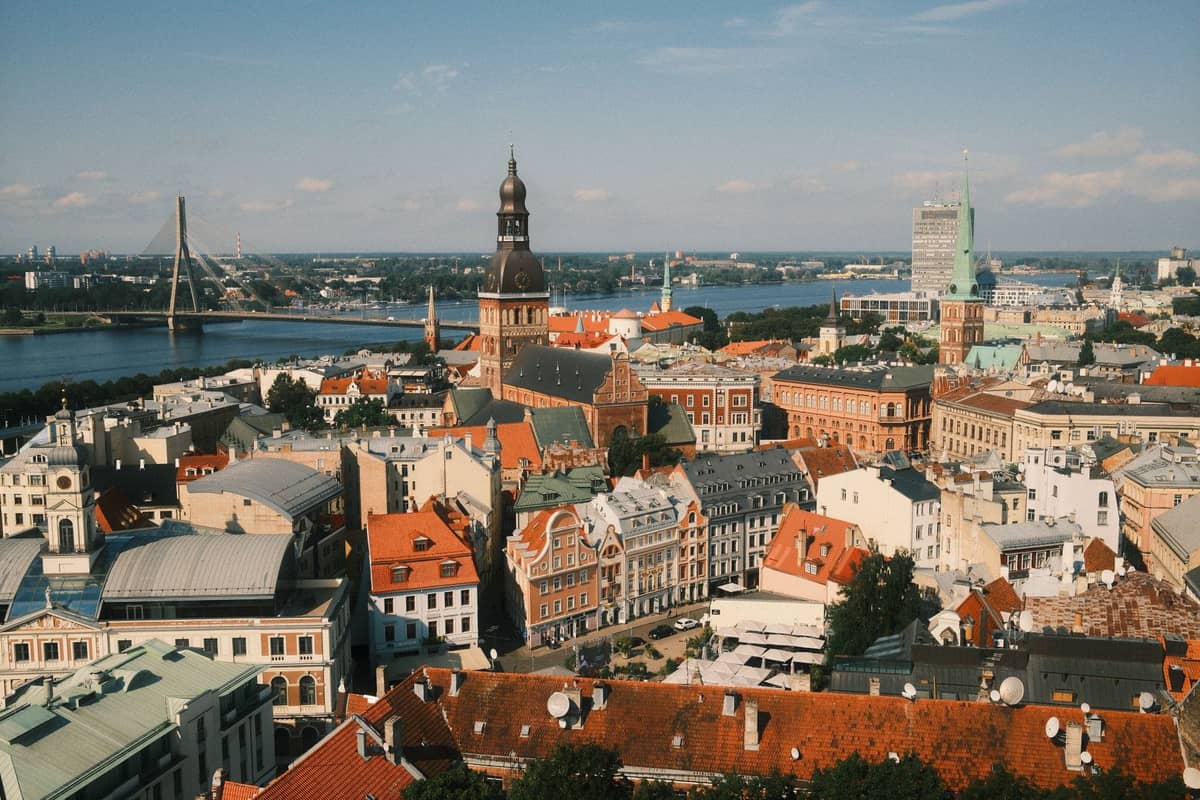
Start in Old Town, Riga's UNESCO-listed historic core, where most first-timers spend the bulk of their first day. The streets are compact enough to cover on foot, but there's more depth here than a quick lap suggests.
The House of the Blackheads on Rātslaukums (Town Hall Square) is the obvious starting point — a restored 14th-century merchants' guild hall with a Gothic and Dutch Renaissance facade that photographs better in morning light before the tour groups arrive. Directly opposite, the Town Hall Square gives you a sense of the civic scale of medieval Riga.
Walk north to the Riga Dome Cathedral (Rīgas Doms), the largest church in the Baltic states, dating to 1211. The interior houses one of Europe's largest pipe organs and a small cloister museum. Then continue to the Three Brothers — a row of three stone houses representing Riga's architectural evolution from the 15th to 17th centuries — and the Swedish Gate, the only surviving city gate from the Swedish era.
💡 Local tip
Climb the tower of St. Peter's Church (Sv. Pētera baznīca) for the best panoramic view of Old Town rooftops and the Daugava River. The lift runs to around 72 metres. Go early — by mid-morning the queue builds quickly in summer. The Latvian Academy of Sciences observation deck, east of the Old Town, offers a wider city view and is often less crowded.
In the afternoon, walk along the Daugava River promenade and cross to the Riga Castle, which dates to 1330 and now serves as the official residence of Latvia's president. The exterior is worth seeing; interior access is limited to guided tours of specific museums within. End the day at the Freedom Monument, a 42-metre granite landmark at the junction of Old Town and the Centre, with the changing of the guard on the hour during daytime.
Day 2: Art Nouveau District and Riga Central Market
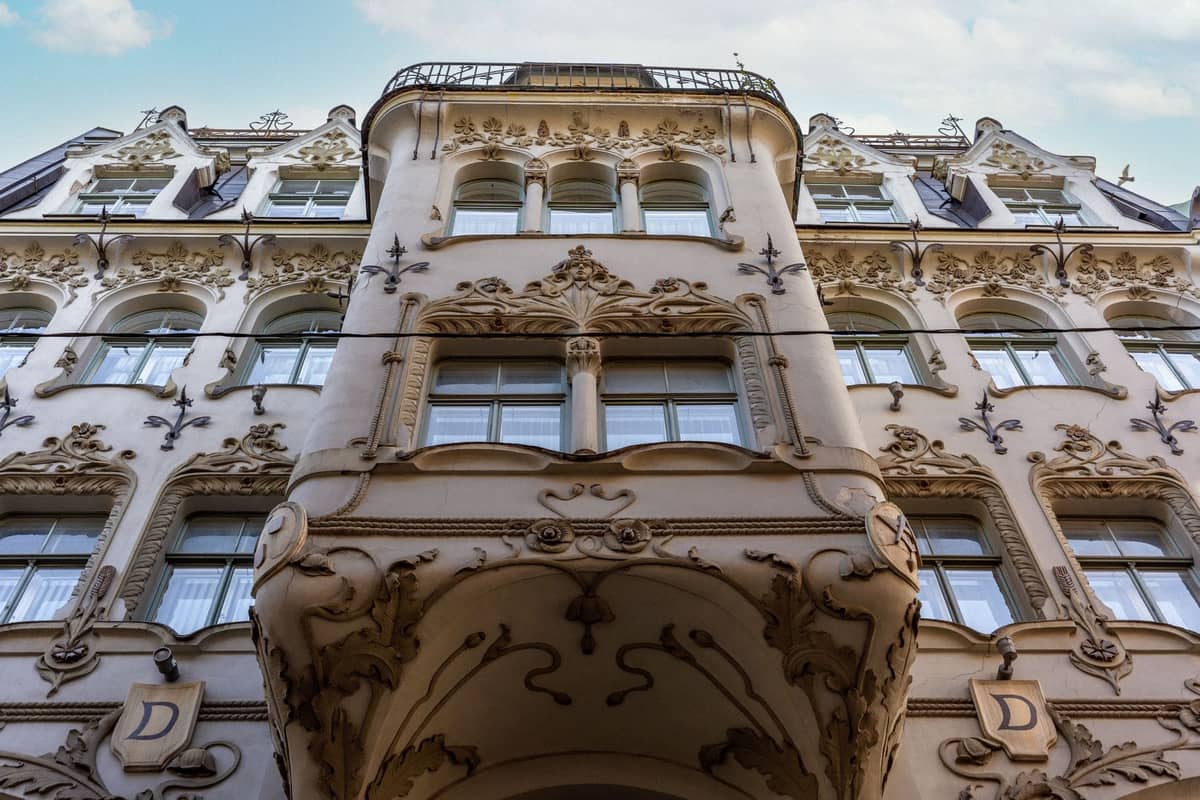
Riga has the largest concentration of Art Nouveau architecture in Europe — roughly one third of all buildings in the Centre district fall under this category. Dedicate your second morning to the Art Nouveau district, centered on Alberta iela and Elizabetes iela, a short walk north of the Old Town canal.
Alberta iela is the street most guides prioritize, and rightly so — nearly every building on this short stretch carries elaborate facade work: screaming masks, sphinxes, and floral reliefs designed mainly by Mikhail Eisenstein (father of the filmmaker) between 1901 and 1908. No. 12 houses the Riga Art Nouveau Museum, which reconstructs an early 20th-century bourgeois apartment and gives real context to what you've been looking at on the street. Budget 45-60 minutes inside.
✨ Pro tip
Most visitors only walk Alberta iela and miss the equally impressive facades on Elizabetes iela and Strēlnieku iela nearby. The full Art Nouveau walking circuit covers about 2 km and can be done in 2 hours at a comfortable pace. For a structured route with architectural commentary, the dedicated Art Nouveau walking tour guide covers every key building.
After the Art Nouveau district, head south to the Riga Central Market (Rīgas Centrāltirgus). Built inside five repurposed World War One German Zeppelin hangars, this is one of the largest markets in Europe by floor area. Each hangar has a specialty: fish, meat, dairy, vegetables, and dry goods. Arrive before noon for the best selection and a genuinely local atmosphere. Street food stalls outside the hangars sell cheap Latvian rye bread, smoked fish, and seasonal produce.
- Bastejkalns Park A canal-side park running along the old city moat, ideal for a 30-minute afternoon walk between the Art Nouveau district and Old Town. The park connects directly to the Freedom Monument.
- Museum of the Occupation of Latvia Located in Old Town, this covers the Soviet and Nazi occupations of Latvia between 1940 and 1991. Dense, serious, and important — plan at least 90 minutes. Adult admission is €8 (free on designated days).
- KGB Building (Corner House) The former KGB headquarters on Brīvības iela, now a memorial museum with original interrogation cells. Guided tours only — book in advance as slots fill quickly.
- Latvian National Museum of Art Houses the largest collection of Latvian fine art, including significant works from the 19th and early 20th centuries. Located on Esplanāde park, a 10-minute walk from Alberta iela.
Day 3: Choosing Your Day Trip
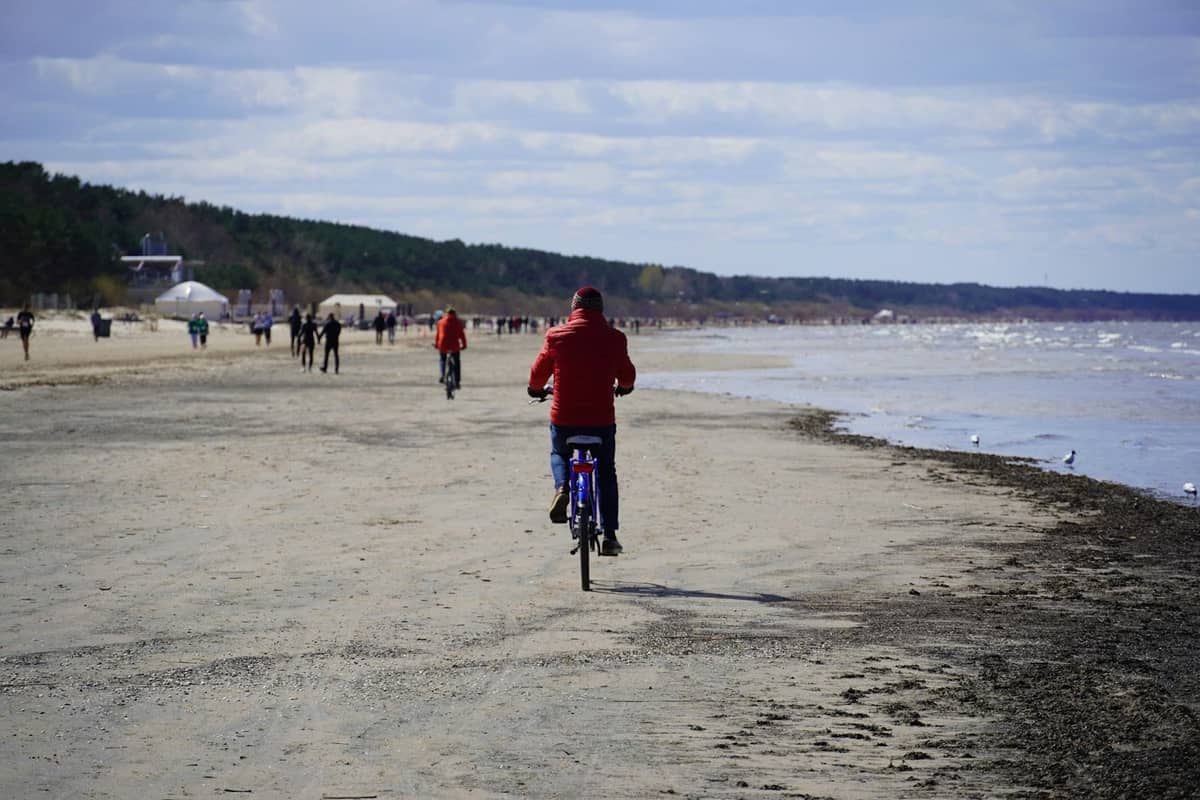
Your third day is when Riga stops being just a city break and becomes a base for exploring Latvia. The choice of day trip depends entirely on the season and what you value: beach and relaxation, medieval history and hiking, or remote Soviet-era history. All three main options depart from Riga Central Station by train.
For summer visits (June through August), Jūrmala is the default choice. This 32-kilometre coastal resort town sits on a narrow strip between the Baltic Sea and the Lielupe River, about 25 km from Riga. Trains from Riga Central Station reach Majori or Dzintari stations in 30-40 minutes, running every 20-30 minutes through the day. The beach itself is wide, sandy, and backed by wooden 19th-century resort villas. Majori's pedestrian main street (Jomas iela) has cafes and restaurants. The Majori beach area is the most popular stretch, while the Dzintari Forest Park behind the beach offers a quieter alternative for walking.
⚠️ What to skip
Jūrmala charges a small resort fee for day visitors arriving by car, but train passengers are not subject to this. In peak July and August, Majori beach gets genuinely crowded on weekends — consider arriving before 11:00 or visiting on a weekday for a calmer experience.
For year-round appeal, Sigulda is the stronger option. About 53 km northeast of Riga and roughly an hour by train, the town sits at the edge of the Gauja River valley, Latvia's answer to Switzerland in local parlance. The main draws are Turaida Castle (a red-brick medieval fortress with excellent valley views), the ruins of Sigulda Medieval Castle, and the Sigulda hiking trails through Gauja National Park. In autumn, the valley turns spectacular shades of orange and red. In winter, Sigulda has Latvia's only bobsled track and a small ski hill.
A third option worth considering, especially for those interested in Soviet history, is the Secret Soviet Bunker in Līgatne near Līgatne. This underground command bunker, built in the 1980s as a classified evacuation site for Soviet-era Latvian officials, is now open for guided tours. It requires more planning than the other day trips (book tours in advance, access is by organized tour from the site), but it is one of the most genuinely unusual Soviet-era sites in the entire Baltic region.
Getting Around: Transport Logistics for 3 Days
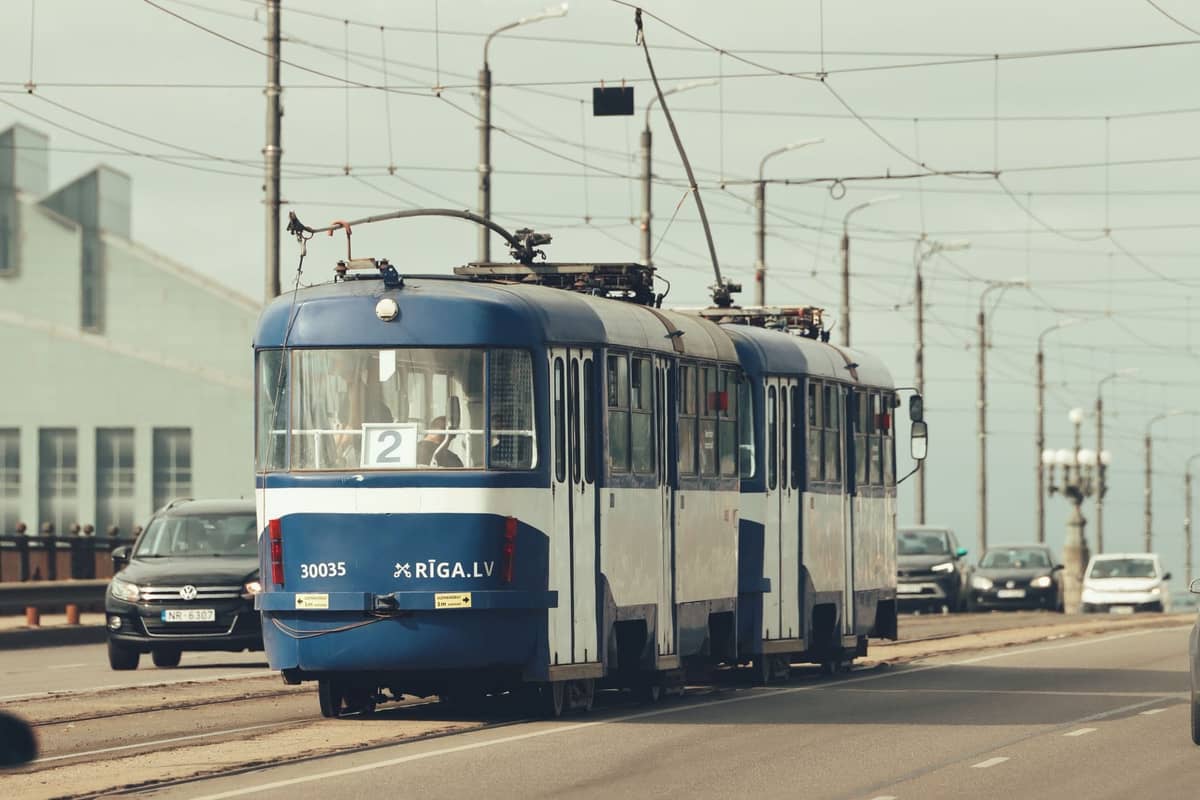
Riga's city centre is walkable for days one and two. Old Town to the Art Nouveau district is about 1.5 km; the Central Market is about 1 km southeast of Old Town. For longer distances within the city, Riga operates a network of trams, trolleybuses, and buses. The getting around Riga options are straightforward once you have a rechargeable e-ticket card, available at major stops and the central station.
- Trains to Jūrmala: depart from Riga Central Station roughly every 20–40 minutes in summer. Journey time to Majori: around 30 minutes. Tickets via Latvian Railways (pv.lv).
- Trains to Sigulda: roughly hourly from Riga Central Station. Journey time: approximately 1 hour. Check current schedules at pv.lv or the national journey planner at 1188.lv.
- Trains to Cēsis: continue past Sigulda by train, adding around 25-30 minutes. Cēsis town centre is a short walk from the station.
- Taxis and ride-hailing within the city: available but rarely necessary for the main tourist circuit. Useful late at night or for luggage transfers.
- Riga International Airport (RIX) is served by bus routes connecting to the city centre. Journey time is approximately 30 minutes depending on traffic.
ℹ️ Good to know
All prices for trains, museum entry, and public transport change periodically. Always verify current fares at pv.lv (Latvian Railways) for intercity trains and the Rīgas Satiksme website for city transport. The LiveRiga tourism portal (liveriga.com) is the most reliable single source for current opening hours across major attractions.
When to Go: Seasonal Differences
Riga's climate is humid continental with a Baltic maritime influence, which means cold winters, mild springs, warm summers, and colourful autumns. For a 3-day city itinerary without a beach day trip, the shoulder seasons of May and September offer good conditions: fewer crowds, reasonable prices, and comfortable temperatures for walking. For the best time to visit Riga in detail, the trade-offs between seasons go deeper than just weather.
Summer (late June to August) is peak season. Jūrmala is at its best, Old Town fills with outdoor terraces and evening events, and daylight hours extend past 10pm near the summer solstice. The downside: accommodation prices rise, popular attractions queue up, and some of the more atmospheric corners of Old Town feel overrun. Riga in winter is a genuinely different experience — Christmas markets in December, frost on the Old Town cobblestones, and a crowd-free Art Nouveau district that many visitors find more atmospheric than the summer version.
Practical Notes Before You Go
Riga uses the Euro (EUR). Latvia is in the EU and Schengen area — check current visa requirements for your nationality before travelling, as eligibility varies. The official language is Latvian (Latviešu valoda), though English is widely spoken in hotels, restaurants, and tourist areas throughout the Centre and Old Town. The country dialing code is +371, and the general emergency number is 112.
For accommodation, staying in or immediately adjacent to Old Town or the Centre district eliminates any transit overhead on city days. Budget travellers should read through the Riga on a budget guide before booking — there are significant price differences between hotels inside the Old Town walls and equally well-located options just outside. For food, the Riga food guide covers everything from Central Market street food to sit-down Latvian restaurants.
FAQ
Is 3 days enough time for Riga?
Three days is genuinely well-suited to Riga. Two days covers the main city sights comfortably — Old Town, the Art Nouveau district, Central Market, and key museums — without rushing. The third day is best used for a day trip to Jūrmala or Sigulda. If you only have two days, you will need to prioritise and skip some museums.
Do I need an organized tour for day trips from Riga?
No. Jūrmala, Sigulda, and Cēsis are all straightforward by train from Riga Central Station. Trains run frequently and the journey times are short (30-40 minutes to Jūrmala, around 1 hour to Sigulda). Organized tours add cost without meaningful benefit for these destinations. The exception is the Secret Soviet Bunker in Līgatne, which requires a booked guided tour to access.
What is the best day trip from Riga?
In summer, Jūrmala wins for beach days and the relaxed resort town atmosphere. Year-round, Sigulda is the stronger choice for scenery, hiking, and medieval castles in the Gauja Valley. Both are under an hour by train. If you have specific interest in Soviet history, the Līgatne bunker near Līgatne is one of the most unusual sites in the whole Baltic region.
How do I get from Riga Airport to the city centre?
Bus routes connect Riga International Airport (RIX) to the city centre, with a journey time of around 30 minutes depending on traffic. Taxis are also available from the airport. Check current routes and fares with Rīgas Satiksme (the city transport operator) before you travel, as schedules and prices are updated periodically.
When is the worst time to visit Riga?
Riga does not have a truly bad time to visit, but late November and February can feel bleak — short daylight hours, cold temperatures, and limited outdoor appeal. That said, hotel rates drop significantly in winter, and if your itinerary is museum-heavy, it is perfectly viable. The Christmas market period in December redeems the shoulder-winter timing considerably.