Latvian National Opera and Ballet: Riga's Grand Stage on Aspazijas Boulevard
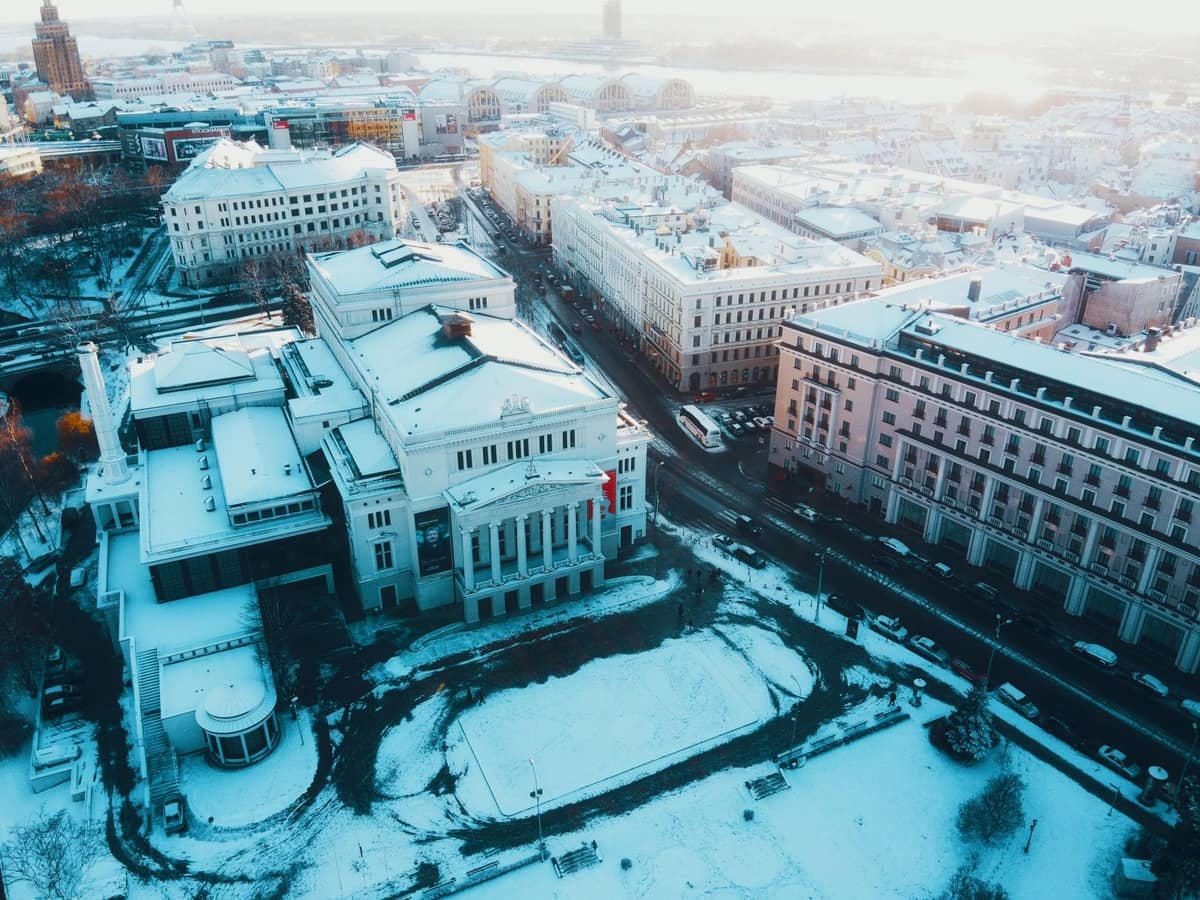
The Latvian National Opera and Ballet occupies a neoclassical building on Aspazijas Boulevard, steps from the Freedom Monument and the edge of Old Town. It is the country's premier venue for opera and ballet, running a full repertoire season from autumn through spring, with occasional summer events. For travellers who appreciate live performance, it is one of the most rewarding evenings Riga can offer.
Quick Facts
- Location
- Aspazijas bulvāris 3, Rīga, LV-1050 — city centre, near the Freedom Monument
- Getting There
- Short walk from Old Town and the Freedom Monument; served by multiple tram, trolleybus, and bus lines in the city centre
- Time Needed
- 2.5 to 3.5 hours for a full opera or ballet performance, plus time before curtain to explore the foyer
- Cost
- Ticket prices vary by performance and seat category; check the official site for current pricing in EUR
- Best for
- Culture lovers, couples, architecture enthusiasts, solo travellers seeking a memorable evening
- Official website
- www.opera.lv/en/home
What the Latvian National Opera and Ballet Actually Is
The Latvian National Opera and Ballet is the country's principal performing arts institution, housed in a restored neoclassical building at Aspazijas bulvāris 3 in central Riga. The venue stages opera, ballet, and orchestral concerts across a season that runs primarily from autumn through spring. It is not a museum or a sightseeing stop in the conventional sense. You come here to attend a performance, and the building itself becomes part of the experience.
For travellers spending two or three days in Riga, booking an evening here sets the trip apart from another night of bar-hopping or restaurant browsing. The standard of performance is consistently high, the repertoire spans classical and contemporary productions, and ticket prices are significantly lower than comparable houses in Western Europe.
💡 Local tip
Book tickets through the official website (opera.lv) at least a week in advance for popular productions. The best mid-range seats sell out quickly, especially on weekends during the main season.
The Building: A History of Fire, Rebuilding, and National Identity
The structure that stands today began as the German Theatre, built in 1863 to a design by German architect Ludwig Bohnstedt. The Latvian capital at that time was still part of the Russian Empire, and the city's Baltic German community funded and attended its own cultural institutions. A fire in 1882 gutted the building, and it was rebuilt, reopening in 1887 with the neoclassical proportions that define its exterior today.
The institution's transformation into a Latvian cultural anchor came after independence in 1918, when the Latvian National Opera was founded. By 1923 the company was based in the Aspazijas Boulevard building as the national opera house. The name today reflects the equal standing of the ballet company within the institution.
Standing in front of the building before a performance, the facade reads as restrained and formal rather than ornate. The proportions are classical European, with a colonnaded entrance and symmetrical wings. It does not compete for attention the way some Central European opera houses do. Inside, the contrast is sharper: the main auditorium is tiered, gilded, and properly theatrical. The foyer spaces are wide enough to move through comfortably without the crush you get at more famous venues on a sold-out night.
Tickets & tours
Hand-picked options from our booking partner. Prices are indicative; availability and final rates are confirmed when you complete your booking.
Canal boat sightseeing tour in Riga
From 13 €Instant confirmationArt and culture walking tour of Riga with a local
From 66 €Instant confirmationFree cancellationSelf-guided discovery walk in Riga - the essential old town and its secrets
From 30 €Instant confirmationFree cancellationExclusive private guided tour of Riga's architecture with a local
From 175 €Instant confirmationFree cancellation
What to Expect on a Performance Night
Arriving thirty to forty minutes before curtain gives you time to collect tickets from the box office if you booked online, check coats at the cloakroom, and examine the auditorium at your own pace. The foyer fills progressively, and by ten minutes before start it is noticeably quieter as the audience moves to seats. The crowd on a typical weeknight leans local: Riga residents rather than tourist groups, which changes the atmosphere in a positive way.
Dress code is smart casual at minimum, with a noticeable proportion of the audience choosing more formal attire, particularly for premieres and gala events. You will not be turned away in clean trousers and a collared shirt, but showing up in sports shoes and a backpack will feel out of place. This is not a venue that enforces strict rules, but it is one where the audience takes the occasion seriously.
The acoustics in the main auditorium reward seats in the stalls and the lower tier of the balcony. Upper gallery seats are cheaper and still serviceable, but the sound is noticeably different from the floor level. If your budget allows, mid-stalls or lower balcony front rows are worth the extra spend for a first visit.
ℹ️ Good to know
The venue does not operate on a fixed daily schedule. Check opera.lv for the current repertoire calendar before planning your trip dates around a specific performance.
Location and Getting There
The opera house sits on Aspazijas Boulevard, the tree-lined avenue that borders Riga's Old Town to the north. The Freedom Monument is a five-minute walk east along the same boulevard. From most accommodation in the historic centre or the adjacent Art Nouveau district, the building is reachable on foot in under fifteen minutes.
Multiple tram and trolleybus lines serve the city centre stops along Brīvības iela and the surrounding streets. If you are arriving from further afield, the central tram network drops you within easy walking distance. Taxis and ride-hailing services are also straightforward, and the boulevard itself is pedestrian-friendly at night, well lit, and generally safe.
After the performance, the area around Aspazijas Boulevard and the adjacent Bastejkalns Park is pleasant for a short walk before heading back. Several restaurants and bars along the Old Town edge are open late enough to suit post-curtain dinner plans.
Tickets, Pricing, and the Season
Ticket prices are set per production and per seat category, with no single admission rate. The pricing structure runs from affordable seats in the upper gallery to premium stalls positions, all listed in euros. The official website (opera.lv) runs the ticketing system directly, with availability updated in real time. A physical box office at the venue handles same-day and walk-up purchases, but relying on this for high-demand performances is a gamble.
The main season runs roughly from September through late spring or early summer, depending on the year. Summer programming is lighter: the venue stages some concerts and special events, but the full opera and ballet repertoire is not active. Travellers visiting between June and August should check the calendar carefully. An empty schedule on a specific date does not mean the house is closed indefinitely, but it does mean planning around a performance requires more flexibility in summer.
Visitors travelling on a tight budget can still plan around the opera. Riga's budget travel options are strong enough that splurging on one cultural evening remains feasible without breaking the trip's finances. Upper gallery tickets at the National Opera are often priced significantly below what a similar experience costs in Tallinn, Warsaw, or Vienna.
⚠️ What to skip
Accessibility arrangements for mobility-impaired visitors require advance contact with the box office. Do not assume standard wheelchair access without confirming directly with the venue via the contact details on opera.lv.
Photography and Practical Logistics
Photography inside the auditorium during performances is not permitted. The foyer and exterior provide better opportunities anyway: the building's facade at dusk, when the lights come on and the pre-show crowd gathers on the steps, photographs well with a standard wide lens. The colonnaded entrance and the surrounding boulevard trees give the building a frame that pure frontal shots miss.
For visitors with limited mobility, the recommendation is to contact the venue directly before booking. The building dates to the nineteenth century in its structural form, and while accommodations exist, they are not uniformly signposted. Confirming specific needs via phone or the email on the official site ensures the right arrangements are in place.
If this is your first time in Riga and you are still mapping out what the city offers culturally, the best museums in Riga and the Old Town walking tour pair well with an opera evening — covering different hours of the day and different registers of the city's identity.
Who Will Not Enjoy This
If live classical performance is not your interest, the Latvian National Opera and Ballet offers little as a standalone sightseeing attraction. The building exterior can be appreciated in a few minutes as part of a walk along Aspazijas Boulevard, but there are no public museum spaces or behind-the-scenes tours listed in general visitor information. The value here is entirely in attending a performance. Travellers looking for interactive or family-oriented experiences will find better options elsewhere in the city.
Families with young children may want to check whether the current programme includes any child-appropriate productions before booking. The venue occasionally stages shorter or family-friendly performances, but the standard repertoire is adult-oriented and runs long. For family-specific activities in Riga, the Riga with kids guide covers more suitable alternatives.
Insider Tips
- Check the opera.lv calendar for 'premiere' nights early in a new production run — the house is at its most electric, and the audience dresses up noticeably more than on regular repertoire evenings.
- The bar in the foyer serves drinks during intervals. Arriving early enough to get a drink before the performance avoids the interval queue, which moves slowly when the house is full.
- Seat category names can be misleading if you are not familiar with the auditorium layout. The official site includes a seating plan — study it before purchasing, since some 'category B' seats in the side balcony have partially obstructed sightlines.
- If you are visiting in winter, the walk from Old Town along Aspazijas Boulevard to the opera house is short but exposed to cold wind off the canal. Bring a coat you are comfortable checking, since the cloakroom handles this efficiently and coat-checking is the norm rather than the exception.
- Guest performers and touring productions occasionally appear in the schedule alongside resident company performances — these can represent particularly good value for a single-evening visit, so filter the calendar by event type when planning.
Who Is Latvian National Opera and Ballet For?
- Couples looking for a genuinely memorable evening in Riga beyond restaurant dining
- Solo travellers with an interest in classical music or ballet who want a local, non-tourist-dominated experience
- Architecture enthusiasts who appreciate neoclassical European theatre design and its post-independence Latvian context
- Visitors who want to engage with Latvian cultural identity beyond folk museums and amber shops
- Travellers with flexible itineraries who can plan a trip date around a specific production
Nearby Attractions
Other things to see while in City Centre (Centrs):
- Bastejkalns Park & City Canal
Bastejkalns Park, also known as Bastion Hill Park, wraps around the edge of Riga's Old Town along the historic City Canal. Formed on the site of demolished 19th-century fortifications, it offers terraced lawns, stone cascades, canal-side paths, and a rare pocket of calm within easy walking distance of the Freedom Monument and the Art Nouveau district.
- Esplanade Park
Stretching across 8.75 hectares in the heart of Riga, the Esplanāde is the city's most centrally located public park. Framed by grand streets and a cluster of significant landmarks, it offers a quiet, unhurried counterpoint to Old Town's crowds — and it's completely free.
- Freedom Monument
The Freedom Monument is the symbolic heart of Riga, a 42.7-metre granite and travertine column that has stood at the intersection of the Old Town and the main boulevard since 1935. Entry is free, access is around the clock, and the hourly changing of the guard adds a living ritual to what might otherwise be a static landmark.
- KGB Building (Corner House)
At the corner of Brīvības iela and Stabu iela stands a building that once made Riga's residents cross to the other side of the street. The Corner House served as the KGB's Latvian headquarters from 1940 to 1991, housing interrogation rooms, cells, and a bureaucracy of fear. Today it functions as a museum that documents Soviet occupation with unflinching honesty.