Vērmane Garden: Riga's Second-Oldest Urban Park and Its Surprisingly Layered History
A roughly 5-hectare public garden in the heart of central Riga, Vērmane Garden has been a meeting place for city residents since its opening to the public in 1817. Free to enter, flat and accessible, it rewards those who look beyond the benches and flower beds to find two centuries of social history beneath its canopy.
Quick Facts
- Location
- Tērbatas iela 2D, Centra rajons, Rīga — bordered by Tērbatas, Elizabetes, Krišjāņa Barona, and Merķeļa streets
- Getting There
- Multiple tram and bus lines along Krišjāņa Barona and Merķeļa streets; around 10 minutes’ walk from Riga Central Station and 10–15 minutes from Old Town
- Time Needed
- 30–60 minutes for a relaxed walk; longer if attending an event or using the playground
- Cost
- Free entry, year-round, generally accessible at all hours
- Best for
- Locals-watching, a mid-sightseeing break, families, photography, and understanding Riga's social history
- Official website
- www.riga.lv
What Vērmane Garden Actually Is
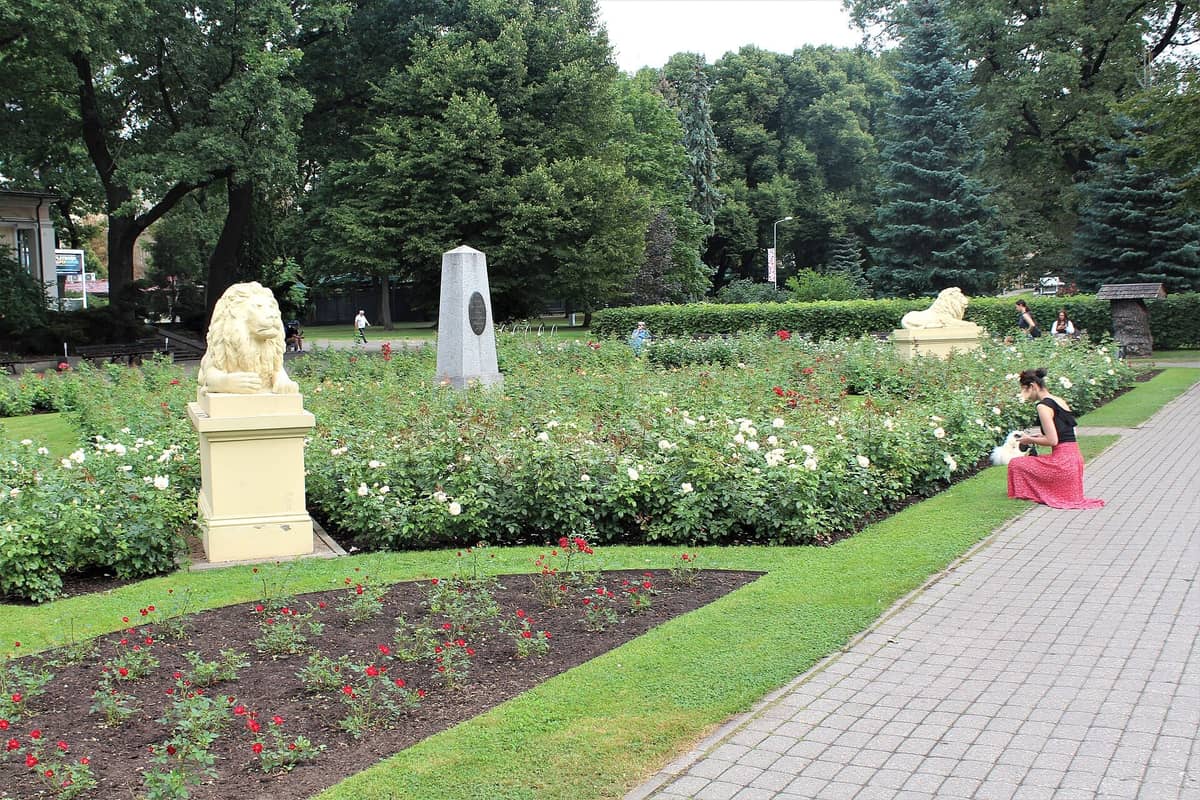
Vērmane Garden (Latvian: Vērmanes dārzs) is a roughly 5-hectare municipal park in central Riga, generally recognised as one of the oldest public gardens in the city. It sits in a rough rectangle bounded by four streets — Tērbatas, Elizabetes, Krišjāņa Barona, and Merķeļa — which makes it easy to cross and almost impossible to get lost in. Those qualities make it sound modest, and in physical scale it is. But for anyone interested in how a European city breathes and rests, a half-hour here tells you more about everyday Riga than almost any museum.
This is not a grand formal garden in the Versailles mould, nor a wild green escape. It is an orderly, well-maintained urban park with paved paths, seasonal flower beds, large mature trees, a fountain, a playground, and an outdoor stage area used for concerts and events. In summer the grass fills with office workers eating lunch. In late autumn it goes quieter, the chestnut and lime trees dropping leaves onto benches where retired residents read newspapers and feed pigeons. Both versions are genuine.
💡 Local tip
The park is free and open 24 hours, but the best experience is between 7am and 9am on a weekday, when the morning crowd of dog-walkers, joggers, and elderly regulars creates a calm, very Latvian atmosphere before the tourist day begins.
History: From Private Donation to Soviet Rename
The garden's origins trace to the early 19th century. The park was founded around 1813–1814 and opened to the public on 8 June 1817. Financing and land were provided by Johann Christoph Wöhrmann and his mother Anna Gertrud Wöhrmann, whose generosity led to the garden bearing the Vērmane/Wöhrmann name. That timing matters: this was not a garden created for the aristocracy and later opened up — it was conceived from relatively early on as a public space, which was progressive for its era.
Under German influence the space was known as Wöhrmanns Garten (or Wöhrmann Park), reflecting the Baltic German community that dominated Riga's civic life for much of the 19th century. The park became a fashionable social venue, with concerts and promenades that would have been recognisable to anyone familiar with similar spaces across Central Europe at the time.
The Soviet period brought a rename: the park was called Kirov Park from around 1950 until 1990, and in 1991 the historical name Vērmanes dārzs was reinstated. That shift from Kirov to Vērmane is a small but pointed symbol of Latvia's broader process of reclaiming its pre-Soviet identity after independence. That shift from Kirov to Vērmane is a small but pointed symbol of Latvia's broader process of reclaiming its pre-Soviet identity after 1991. If you are tracing Riga's layered political history, this park fits into that story alongside weightier sites.
For a deeper look at that Soviet-era history across the city, the Riga Soviet history guide provides essential context on how Soviet renaming and urban reshaping played out across the capital.
Tickets & tours
Hand-picked options from our booking partner. Prices are indicative; availability and final rates are confirmed when you complete your booking.
Canal boat sightseeing tour in Riga
From 13 €Instant confirmationArt and culture walking tour of Riga with a local
From 66 €Instant confirmationFree cancellationSelf-guided discovery walk in Riga - the essential old town and its secrets
From 30 €Instant confirmationFree cancellationExclusive private guided tour of Riga's architecture with a local
From 175 €Instant confirmationFree cancellation
How the Park Changes Through the Day
Mornings are the park at its most local. By 7am the main diagonal paths already have foot traffic: pensioners on measured walks, a few runners, and dog owners whose animals are clearly on first-name terms with each other. The light through the mature tree canopy is good at this hour, especially in late spring and early autumn when the foliage is dense and the sun angle is low.
Midday in summer shifts the tone entirely. The park sits within easy reach of several major office streets and the central shopping district along Krišjāņa Barona, so from roughly 12pm to 2pm benches and grass patches fill with lunch crowds. The outdoor café areas, when operating, draw a steady queue. This is not a quiet hour for the garden, but it is an interesting one — the mix of tourists crossing through en route to Old Town and locals treating the space as their canteen captures something true about how Riga's centre functions.
Evenings in summer, particularly when there is a free concert at the outdoor stage, draw a cross-section of the city that you would not find in a bar or restaurant. Older residents, young families, couples, and students all occupy the same space without friction. If you are visiting Riga in June or July, checking whether there is a performance scheduled on any given evening is worth the small effort.
What You Actually See: A Practical Walkthrough
The park is compact enough to walk every path in twenty minutes. The main entrance area facing Krišjāņa Barona is the most used and the most photogenic in terms of formal garden layout, with a central fountain that is operational in warmer months. The flower beds here are changed seasonally and are genuinely well-kept — the city invests visible effort in their maintenance.
Moving inward, the tree cover becomes denser and the paths quieter. The mature linden (lime) trees along several interior routes are a notable sensory detail in mid-June, when they flower and produce one of the more distinctive smells in any European city: a heavy, sweet fragrance that you notice before you see the blossoms. If you are in Riga in that narrow window, the linden scent in Vērmane Garden in the early morning is genuinely memorable.
The playground area draws families with young children throughout the day. The terrain across the entire park is flat and the paths are paved, making it fully accessible for pushchairs and wheelchair users. Parking is available nearby on the surrounding streets.
ℹ️ Good to know
Photography tip: the best light for shooting the fountain and formal entrance beds is from the east in the morning. By midday the overhead light is flat. The tree interior sections photograph better on overcast days when the contrast between canopy and ground is less extreme.
Vērmane Garden in the Wider City Context
The garden sits in central Riga, which means it is surrounded by some of the city's most interesting architecture. A five-minute walk north along Elizabetes or Alberta streets puts you in the middle of the Art Nouveau district, where the density of Jugendstil facades is unlike anywhere else in Northern Europe. The garden itself does not have significant architectural monuments, but it acts as a useful orienting point between Old Town and the Art Nouveau quarter.
The Alberta iela — arguably the single most concentrated stretch of Art Nouveau architecture in Riga — is walkable from the park's northern edge. Planning a route that uses Vērmane Garden as a rest stop between Old Town and the Art Nouveau district is a logical and comfortable way to structure a half-day in central Riga.
If you want green space on a larger scale, Esplanade Park is a short walk to the northeast and offers a different character: more monumental, with the National Museum of Art on its edge. The two parks complement each other well on the same walk.
Practical Assessment: Is It Worth Your Time?
Vērmane Garden will not compete with Riga's heavyweight attractions for a visitor with limited days. It has no major monuments, no must-see exhibitions, and no views. If your itinerary is tight and focused on history and architecture, it is easy to skip.
Where it earns its place is as a breathing space and a transition point. Central Riga's streets are interesting but hard on the feet, and the park gives you a place to sit without being inside a café. It is also one of those spaces where the city's everyday life is on display rather than its tourist surface, which has its own value for travellers who want to understand a place rather than just photograph it.
Travellers who actively dislike urban parks, who are visiting Riga in the depths of winter with limited time, or who are specifically focused on museums and heritage buildings will likely find the ten minutes it takes to cross it is enough. That is a fair position. The park rewards slowness, and not every itinerary has room for that.
For a full picture of how to allocate time across the city's attractions, the complete guide to things to do in Riga helps set priorities, and the free things to do in Riga guide lists the garden alongside other no-cost options.
Getting There
The park is in central Riga at Tērbatas iela 2D, Centra rajons, LV-1050. Multiple tram and bus lines serve the streets immediately bordering the park, particularly Krišjāņa Barona and Merķeļa streets. From Riga Central Station the walk takes around 10 minutes on foot heading northwest, while from the Old Town (Vecrīga) it is roughly 10–15 minutes, making it a natural midpoint between the two areas.
The park is fully accessible, with flat paved paths throughout and parking on surrounding streets. No tickets, no entry requirements, and it is generally open for walks at all hours.
Insider Tips
- Visit on a weekday morning between 7am and 9am if you want the park at its most peaceful and genuinely local. Weekend afternoons in summer are noticeably more crowded.
- In mid-June, the linden trees along the interior paths come into flower. The scent is intense and unmistakable — plan an early morning visit during this window if you are in Riga at that time.
- Check the Riga city events calendar before your visit: the park's outdoor stage hosts free concerts in summer, some of which are genuinely good, and they are rarely mentioned in standard tourist materials.
- The park is a logical rest stop between a walk through Old Town and a visit to the Art Nouveau district on Alberta iela. Treat it as a built-in pause rather than a destination in itself and it fits naturally into a half-day itinerary.
- In winter the park is nearly empty and somewhat stark, but the bare tree canopy and the fountain (switched off) against grey Baltic light has a particular quality that appeals to photographers working in monochrome.
Who Is Vērmane Garden For?
- Travellers building a walking route between Old Town and the Art Nouveau district who want a natural rest point
- Families with young children who need a free, accessible outdoor space with a playground
- Visitors interested in Riga's social history, including how Soviet-era renaming and post-independence identity reclamation played out in everyday spaces
- Early risers who want to see the city before the tourist day starts
- Photographers looking for everyday Riga rather than landmark shots
Nearby Attractions
Other things to see while in City Centre (Centrs):
- Bastejkalns Park & City Canal
Bastejkalns Park, also known as Bastion Hill Park, wraps around the edge of Riga's Old Town along the historic City Canal. Formed on the site of demolished 19th-century fortifications, it offers terraced lawns, stone cascades, canal-side paths, and a rare pocket of calm within easy walking distance of the Freedom Monument and the Art Nouveau district.
- Esplanade Park
Stretching across 8.75 hectares in the heart of Riga, the Esplanāde is the city's most centrally located public park. Framed by grand streets and a cluster of significant landmarks, it offers a quiet, unhurried counterpoint to Old Town's crowds — and it's completely free.
- Freedom Monument
The Freedom Monument is the symbolic heart of Riga, a 42.7-metre granite and travertine column that has stood at the intersection of the Old Town and the main boulevard since 1935. Entry is free, access is around the clock, and the hourly changing of the guard adds a living ritual to what might otherwise be a static landmark.
- KGB Building (Corner House)
At the corner of Brīvības iela and Stabu iela stands a building that once made Riga's residents cross to the other side of the street. The Corner House served as the KGB's Latvian headquarters from 1940 to 1991, housing interrogation rooms, cells, and a bureaucracy of fear. Today it functions as a museum that documents Soviet occupation with unflinching honesty.