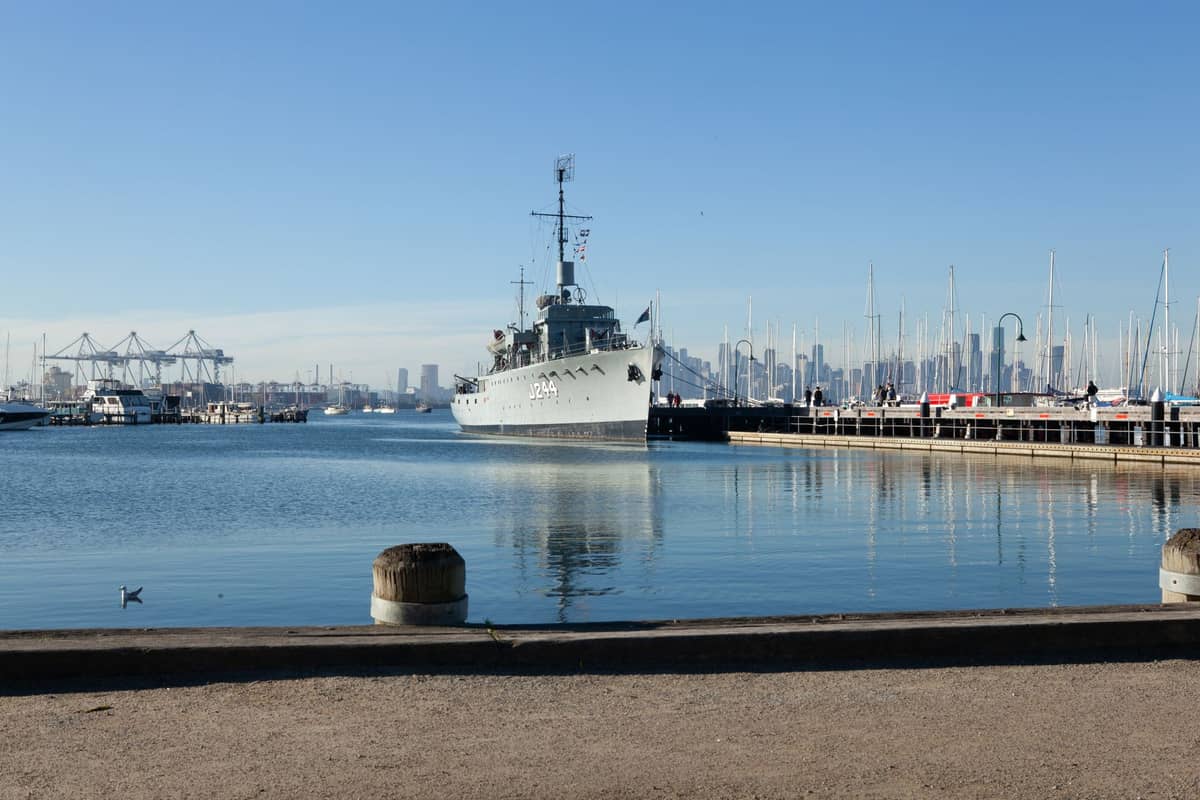
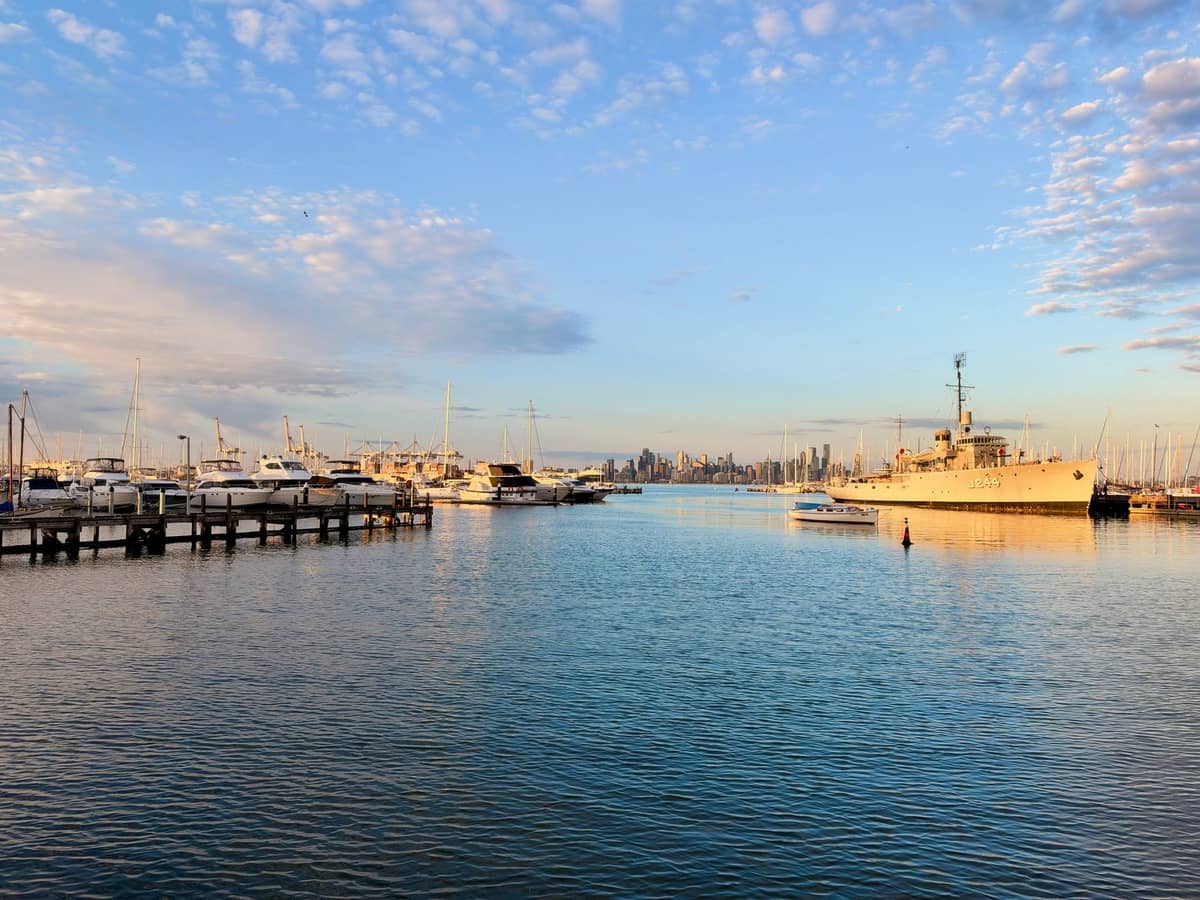
Williamstown is a peninsula suburb roughly 12 kilometres southwest of central Melbourne, surrounded by water on three sides and shaped by two centuries of maritime history. Its sandstone streetscapes, working heritage vessels, and waterfront cafés sit in sharp contrast to inner-city density, making it one of Melbourne's most distinctive day-trip destinations.
Williamstown feels like a different city from the Melbourne most visitors know. Its compact peninsula, ringed by Port Phillip Bay, preserves the bones of a nineteenth-century port town: bluestone streets, a functioning pier, heritage-listed buildings, and bay views that stretch back toward the CBD skyline on clear days. It rewards slow walking and long lunches far more than it rewards ticking off attractions.
Orientation
Williamstown sits at the tip of a peninsula in Hobsons Bay, bounded by Hobsons Bay to the south and east, the Yarra River to the north, and the Maribyrnong River to the west. It belongs to the City of Hobsons Bay, not the City of Melbourne, which explains why it has retained a distinct small-town character despite sitting well within the metropolitan footprint.
The suburb divides into a few distinct zones. Nelson Place runs along the historic waterfront and is where you will find Gem Pier, Commonwealth Reserve, and a row of nineteenth-century commercial buildings now occupied by cafés and restaurants. A short walk inland, Ferguson Street and Douglas Parade form the main commercial spine where locals shop, eat, and run errands. Point Gellibrand, at the southeastern tip of the peninsula, is the most historically significant headland and the site of the Timeball Tower.
Williamstown is roughly 12 kilometres from central Melbourne by road. It connects to the broader metropolitan network through three train stations: Williamstown, Williamstown Beach, and North Williamstown. A seasonal ferry service also operates between Gem Pier and Southbank's waterfront via Docklands, making the water crossing one of the more enjoyable ways to arrive. For context on how Williamstown fits into Melbourne's wider geography, the Docklands precinct sits directly across the bay and is visible from the foreshore on clear days.
Character & Atmosphere
Williamstown has the cadence of a town that knows it doesn't need to try hard. On weekday mornings, the foreshore along Nelson Place is mostly locals: dog walkers crossing Commonwealth Reserve, the occasional jogger, and café owners stacking chairs outside heritage shopfronts. The light at this hour, low and angled across the bay, turns the sandstone and bluestone buildings a warm amber that photographs well but looks even better in person.
By late morning on weekends, the character shifts. Families arrive from across Melbourne's western suburbs, couples make the ferry crossing from the CBD, and the waterfront restaurants fill up. This is still a neighbourhood rather than a tourist precinct, and the crowds rarely reach overwhelming levels except on summer public holidays, when parking around Nelson Place becomes its own ordeal.
Afternoons are when the views become the main event. Sitting along the foreshore looking northeast across the bay, the Melbourne CBD skyline rises low on the horizon, close enough to feel connected but far enough to feel genuinely removed. Late-afternoon light behind you means the city catches the sun directly, and on warm evenings the sight is genuinely striking. After dark, Williamstown quiets considerably. This is not a nightlife destination: most restaurants wind down by 9 or 10 pm, and the waterfront feels calm rather than active late at night.
ℹ️ Good to know
Williamstown is primarily a daytime destination. Visitors arriving after 7 pm on weeknights will find limited dining options open and very little street activity. Plan accordingly.
History & Heritage
Williamstown was one of the earliest European settlements in the Port Phillip region, named on 10 April 1837 and initially an important port before Melbourne's position on the Yarra won out. The town's early importance as a naval and commercial port shaped everything about its built environment. The bluestone warehouses and customs buildings along Nelson Place date from an era when Williamstown was a serious maritime hub, not a pleasant suburb.
The Timeball Tower at Point Gellibrand is one of the suburb's most photographed structures. Built in 1849, it was used to signal the correct time to ships in the bay so navigators could calibrate their chronometers. Point Gellibrand itself is the site of the original lighthouse and was the landing place of Victoria’s first European settlers. Walking around the headland reveals some of the area's oldest remaining infrastructure, including the original stone fortifications that date from Victorian-era anxieties about Russian naval incursion.
Williamstown is on the traditional lands of the Bunurong people of the Kulin Nation. The bay and the peninsula's rich shellfish and fish resources made this coastline an important site long before European settlement. Recognition of this history is part of the broader Hobsons Bay City Council's heritage interpretation work at sites around the foreshore.
What to See & Do
Gem Pier, at the end of Nelson Place, is the hub of the waterfront. Heritage vessels are moored here, and the pier itself offers good views back along the foreshore. The pier is also the departure point for ferry services to Docklands and Southbank, and for the occasional charter cruise into the bay.
Seaworks, the maritime heritage precinct on Esplanade North at the northern end of the waterfront, houses a collection of historic vessels and maritime artefacts. The site operates as both a working heritage facility and a public museum space, with open days that allow visitors aboard some of the restored vessels. Check the Seaworks website for current opening hours and event schedules, as these change seasonally.
Williamstown Botanic Gardens, on Osborne Street, is a compact but well-maintained historic garden that officially opened in 1860. It lacks the scale of the Royal Botanic Gardens in the city but has genuine heritage value and a peaceful quality that makes it worth a half-hour detour, especially in spring when the established trees are in full form.
Williamstown Beach, along The Strand south of the town centre, is a family-oriented swimming beach with a lifesaving club and basic facilities. The water is calm compared to open-ocean beaches, and the swimming season runs roughly from November through April. The beach is popular with locals from the western suburbs and gets genuinely busy on summer weekends.
Walk Nelson Place end to end for the densest concentration of heritage buildings
Visit Point Gellibrand and the Timeball Tower in the morning before crowds arrive
Check Seaworks for open-vessel days if you want to go aboard historic ships
Spend time at Commonwealth Reserve for foreshore picnics and CBD skyline views
Visit Williamstown Botanic Gardens for a quiet break from the waterfront strip
💡 Local tip
The best views of the Melbourne CBD skyline from Williamstown are from Commonwealth Reserve and the foreshore east of Gem Pier. Clear days in autumn and spring offer the sharpest light. Bring a camera with some reach if you want the skyline to fill the frame.
Eating & Drinking
The food scene in Williamstown is concentrated in two areas: the waterfront strip along Nelson Place, and the more local-oriented stretch of Ferguson Street and Douglas Parade. Nelson Place skews toward casual dining, with cafés and restaurants that lean into the harbour-town setting. Expect fresh seafood, standard café menus, and a few places with outdoor seating directly facing the water. Prices here reflect the tourist-facing location, so don't expect bargain meals.
Ferguson Street has more variety in both cuisine and price. This is where locals eat on weeknights: Italian, Thai, and general-purpose café culture sit alongside each other without much fanfare. The strip is shorter and lower-key than comparable eating streets in Melbourne's inner suburbs, which is part of its appeal if you want to avoid paying waterfront premiums for a bowl of pasta.
For coffee, Williamstown has benefited from the same specialty coffee culture that transformed cafés across Melbourne. Several spots around the town centre and foreshore serve genuinely good espresso and filter coffee. If the coffee scene matters to you, the Melbourne coffee guide provides useful context for what to expect across the city's suburban café culture.
Williamstown is not a late-night drinking destination. There are a small number of pubs and wine bars, but the area winds down early compared to inner-city neighbourhoods. If you are looking for a long evening out, plan to finish dinner here and head back into the city. The ferry makes this transition reasonably easy in the warmer months when evening services run.
⚠️ What to skip
Many cafés and restaurants on Nelson Place reduce hours or close entirely on weekday evenings, particularly outside summer. If you are visiting on a Tuesday or Wednesday night, call ahead before expecting a full dinner service.
Getting There & Around
The most practical public transport option is the Williamstown train line, which runs from Flinders Street Station to Williamstown. The journey takes approximately 35 to 40 minutes and runs directly without changes during standard service hours, though some peak services require a change at Newport. There are three stations in the suburb: North Williamstown at the northern end near Seaworks, Williamstown Beach on The Strand, and Williamstown station near the town centre and Nelson Place. Check the guide to getting around Melbourne for Myki card information and fare details, as these are updated periodically.
The ferry is the most atmospheric option. Seasonal services operate between Gem Pier and the CBD waterfront, typically calling at Docklands before continuing to Southbank or St Kilda Pier, depending on the operator and season. Schedules are limited and change between summer and winter timetables, so check the current operator's schedule before building your day around it. The crossing takes roughly an hour from Southgate to Gem Pier and is genuinely pleasant on a clear day.
Driving from the CBD takes 25 to 40 minutes depending on traffic, using the Westgate Freeway or Williamstown Road. Parking is available along the foreshore and on side streets near the town centre, but spots along Nelson Place fill early on weekend mornings. If you arrive by car after 10 am on a summer Saturday, expect to park several blocks from the waterfront.
Within Williamstown, walking is the primary way to get around. The core area, from Gem Pier to the Botanic Gardens to Williamstown Beach, can be covered comfortably on foot in an hour without stopping. The terrain is flat throughout, which makes it accessible for most visitors. Bus services run through the suburb, with stops near Williamstown Beach and the town centre, but the local network is designed for residents rather than tourists and won't be necessary for most day-trippers.
Where to Stay
Williamstown has very limited purpose-built accommodation. There are a small number of bed-and-breakfast properties and short-stay apartments available, primarily through booking platforms, but the suburb functions primarily as a day-trip destination rather than an overnight base. Visitors wanting to stay in this part of Melbourne are generally better served by hotels in the city centre or nearby inner suburbs. For a broader overview of accommodation options across Melbourne, the guide to where to stay in Melbourne covers price ranges and neighbourhood trade-offs in detail.
That said, staying in Williamstown has a specific appeal for visitors who want to experience a quiet, residential pace and use day trips into the city rather than the reverse. If you can find a well-located short-stay apartment near Nelson Place or the Botanic Gardens, the trade-off of a 35-minute train commute into central Melbourne may be worth the calm and the bay views. This approach suits travellers who have already seen the major city-centre sites and want something quieter for the back half of a longer trip.
Honest Assessment: Who Williamstown Is For
Williamstown works best as a half-day or full-day excursion from central Melbourne. Its pace is deliberate, its pleasures are mostly visual and gastronomic, and it delivers something genuinely different from the laneway culture and density of the inner city. If you are interested in Melbourne's maritime and colonial history, the heritage streetscape here is more intact and legible than almost anywhere else in the metropolitan area. For context on other historic sites worth combining with a Williamstown visit, see the Williamstown foreshore and consider pairing it with a broader look at Melbourne's historic architecture.
It is not for visitors who prioritise nightlife, shopping beyond the basics, or neighbourhoods with a dense concentration of major attractions. First-time visitors to Melbourne on a short itinerary should see the city centre and its core neighbourhoods first. Williamstown rewards return visitors and travellers who have already satisfied the obvious boxes and want to find out what Melbourne looks like when it forgets to perform.
The ferry crossing is worth factoring into your planning if you have the flexibility. Arriving by water via the Yarra River and Hobsons Bay, with the skyline receding behind you and the historic foreshore approaching, gives you the suburb in exactly the right sequence. Coming by train is more reliable but misses that spatial drama entirely.
TL;DR
Williamstown is Melbourne's most intact nineteenth-century maritime precinct, best experienced as a half-day or full-day trip from the CBD.
Key draws: the Nelson Place foreshore, Gem Pier, Timeball Tower, Seaworks heritage vessels, and bay views back toward the city skyline.
Getting here: 35-40 minutes by train from Flinders Street Station, or by seasonal ferry from Southbank or Docklands.
Best for: history and heritage enthusiasts, couples wanting a low-key waterfront day, families with children who enjoy open foreshore spaces.
Not ideal for: nightlife seekers, shoppers expecting boutique retail, or first-time visitors with only a day or two in Melbourne who should prioritise inner-city neighbourhoods first.
Three days in Melbourne is enough to move past the obvious tourist circuit and get a real sense of the city. This itinerary covers the CBD laneways, inner-north neighbourhoods, bayside suburbs, and cultural institutions, with practical transport advice, realistic crowd warnings, and enough flexibility to make it your own.
The Australian Open is one of the four Grand Slam tennis tournaments and the biggest annual sporting event in Melbourne. This guide covers tickets, getting to Melbourne Park, navigating the grounds, and how to make the most of your visit whether you're going for a single session or the full fortnight.
Melbourne sits on Port Phillip Bay, giving the city access to calm bay beaches within 30 minutes of the CBD, and wilder ocean surf beaches a 90-minute drive south. This guide covers the best beaches near Melbourne by type, with frank notes on safety, crowds, and what each beach actually delivers.
Melbourne is a stronger museum city than many visitors expect. Whether you're drawn to world-class art collections, colonial history, hands-on science, or Australia's sporting obsession, these are the museums worth your time.
Melbourne's weather is notoriously unpredictable, but the city rewards visitors year-round. This guide breaks down every season by weather, events, crowds, and value so you can pick the right time for your trip.
Melbourne rewards those who look up, look out, and look across. Whether you want 360-degree city panoramas from 285 metres up, golden-hour shots of the skyline from the bay, or dramatic coastal cliffs an hour from the CBD, this guide covers every angle worth seeking out.
Melbourne is one of Australia's great base cities, with extraordinary landscapes, wildlife, history, and wine country within a two-hour drive. This guide covers the best day trips from Melbourne, from dramatic ocean coastlines to misty mountain ranges, with realistic travel times and what to prioritise.
Melbourne rewards curious visitors with an impressive range of genuinely free experiences. From world-class art galleries and heritage reading rooms to wild penguin encounters and the city's famous laneway culture, these are the best free things to do in Melbourne.
From the Free Tram Zone to airport transfers, myki cards to rideshare, this guide covers every practical detail you need to navigate Melbourne's transport network confidently. No fluff, just the information that actually matters.
A Great Ocean Road day trip from Melbourne is one of the most iconic outings in Australia, but it requires serious planning. This guide covers the full route, realistic timelines, tour options with price ranges, the best stops beyond the Twelve Apostles, and clear warnings about what most visitors get wrong.
Melbourne Airport (MEL) sits 23 km northwest of the city centre at Tullamarine. This guide covers every transfer option — SkyBus, taxi, rideshare, and public bus — with current pricing, journey times, and the insider details that save you time and money on arrival.
Melbourne's built environment tells the story of a city that went from a colonial outpost to a gold rush boomtown to a modern metropolis in under two centuries. This guide covers the key buildings, neighbourhoods, and walking routes to understand how it all fits together.
Melbourne's coffee culture is serious business. This guide breaks down the best café neighbourhoods, what drinks to order, what to pay, and how to navigate the city's specialty scene like a local. Whether you're landing at Tullamarine or already in the CBD, here's what you need to know.
The Melbourne Cup is Australia's most famous horse race, held annually at Flemington Racecourse each November. This guide covers everything from buying tickets and getting to the track to dress codes, the full Carnival schedule, and a clear picture of what to expect on race day.
Melbourne runs one of the most packed event calendars in the Southern Hemisphere, with major festivals, sporting events, and cultural programs spread across every season. This guide breaks down what's on, when to go, and how to plan around it without getting caught out by full hotels or sold-out tickets.
Melbourne rewards couples who slow down and look beyond the obvious. This guide covers the city's most genuinely romantic experiences, from sunrise walks through the Royal Botanic Gardens to candlelit laneway dinners and scenic day trips, with candid notes on what's worth it and what to skip.
Melbourne takes its parks seriously. From UNESCO-listed formal gardens to wild river corridors just minutes from the CBD, the city's green spaces range from manicured and historic to untamed and surprising. This guide covers the best of them, with practical advice on what to expect at each.
Melbourne rewards those who look beyond the obvious. This guide uncovers the city's overlooked art museums, geological surprises, historic estates, and quiet urban escapes that most visitors walk straight past.
Melbourne's laneways are the city's most distinctive feature: a network of narrow alleys, covered arcades, and public art corridors threading through the CBD grid. This guide covers the essential stops, practical logistics, and what most visitors get wrong about the street art scene.
Melbourne's live music scene spans everything from intimate 80-person rooms above pubs to ornate theatres holding thousands. This guide breaks down the best venues by style and suburb, explains how to find and book gigs, and covers the practical details that most listings skip.
Melbourne's market scene goes well beyond tourist postcards. This guide covers the city's best permanent and weekly markets, with verified opening hours, what each one does best, candid assessments of which are worth your time, and practical tips for getting the most out of each visit.
Melbourne, Australia is home to one of the world's most diverse urban food cultures, shaped by over 200 years of immigration waves. This guide breaks down the city's key multicultural food neighbourhoods, what to eat in each, when to go, and how to navigate them like a local.
Melbourne's nightlife scene runs deep, from laneway cocktail bars to legendary live music rooms that shaped Australian rock. This guide breaks down the best neighbourhoods, venues, and practical logistics so you can navigate it like a local.
Melbourne, Australia rewards budget travellers more than most major cities. From free tram rides and world-class free museums to cheap market food and no-cost beaches, this guide covers every practical angle for spending less without missing out.
Seven days is enough time to get well beyond Melbourne's postcard highlights. This itinerary balances the CBD's iconic landmarks, inner-suburb character, a coastal day trip, and the regional Victorian countryside — with practical logistics for every step.
Melbourne rewards shoppers who look beyond the chain stores. This guide covers the city's best shopping precincts, heritage arcades, weekend markets, and neighbourhood strips — with practical notes on what's worth your time and what to skip.
Melbourne's street art scene is one of the most concentrated and celebrated in the world. This guide covers the essential laneways, the City of Melbourne's official self-guided walk, neighbourhood murals beyond the CBD, and practical advice for getting the most out of every visit.
Melbourne rewards walkers like few other cities. From the iconic laneways of the CBD to the bayside foreshore of St Kilda, this guide covers the best guided tours, official self-guided routes, and neighbourhood walks, with straightforward notes on what's worth your time and what to skip.
Melbourne is one of Australia's most family-friendly cities, with a range of attractions spread across the inner city and beyond. This guide covers the best things to do with kids in Melbourne, from free rainy-day museums to weekend wildlife encounters, with practical notes on costs, transport, and what's actually worth your time.
Melbourne rewards visitors who look beyond the obvious. This guide covers the city's best experiences across culture, food, sport, nature, and neighbourhoods — with practical details on getting around, what to skip, and how to make the most of every day in Melbourne, Australia.
Melbourne is one of the world's great sporting cities, hosting world-class events across football, cricket, tennis, and more. This guide covers every major venue, how to get tickets, the best seasons to visit, and the practical details that actually matter.
Melbourne's food scene is one of the most diverse and serious in the Southern Hemisphere. This guide covers the dishes, neighbourhoods, markets, and cultural context you need to eat well in Melbourne — whether you have three days or three weeks.
Choosing where to stay in Melbourne shapes your entire trip. This guide breaks down every major neighbourhood by location, transport access, price range, atmosphere, and who it suits best, so you can book with confidence.
The Yarra Valley is one of Australia's most accessible cool-climate wine regions, sitting about 65 km from central Melbourne. This guide covers how to get there, which cellar doors are worth your time, tour vs. self-drive decisions, and how to plan around the seasons.