The Souq Waqif area is Doha's most atmospheric historic district, centered on a restored traditional marketplace of narrow alleys, spice merchants, and open-air restaurants just steps from the Corniche. It sits at the geographical and cultural heart of the city, within walking distance of the Museum of Islamic Art and the Msheireb Downtown development, making it the natural base for anyone wanting to understand Doha at street level.
Souq Waqif is where Doha's past and present collide most visibly: a genuinely historic marketplace, carefully restored but still alive with traders, incense smoke, and the call to prayer echoing off mud-rendered walls. Few places in the Gulf manage to feel both authentically local and genuinely welcoming to outsiders at the same time, and Souq Waqif pulls it off.
Orientation
The Souq Waqif area occupies a compact section of central Doha, positioned in the Al Souq and Al Jasra district at approximately 25.287°N, 51.533°E. It sits just inland from Doha Bay, roughly 500 metres west of the Corniche promenade and about 1 kilometre south of the West Bay skyline. This placement puts it at the functional hinge between old Doha and the modern city.
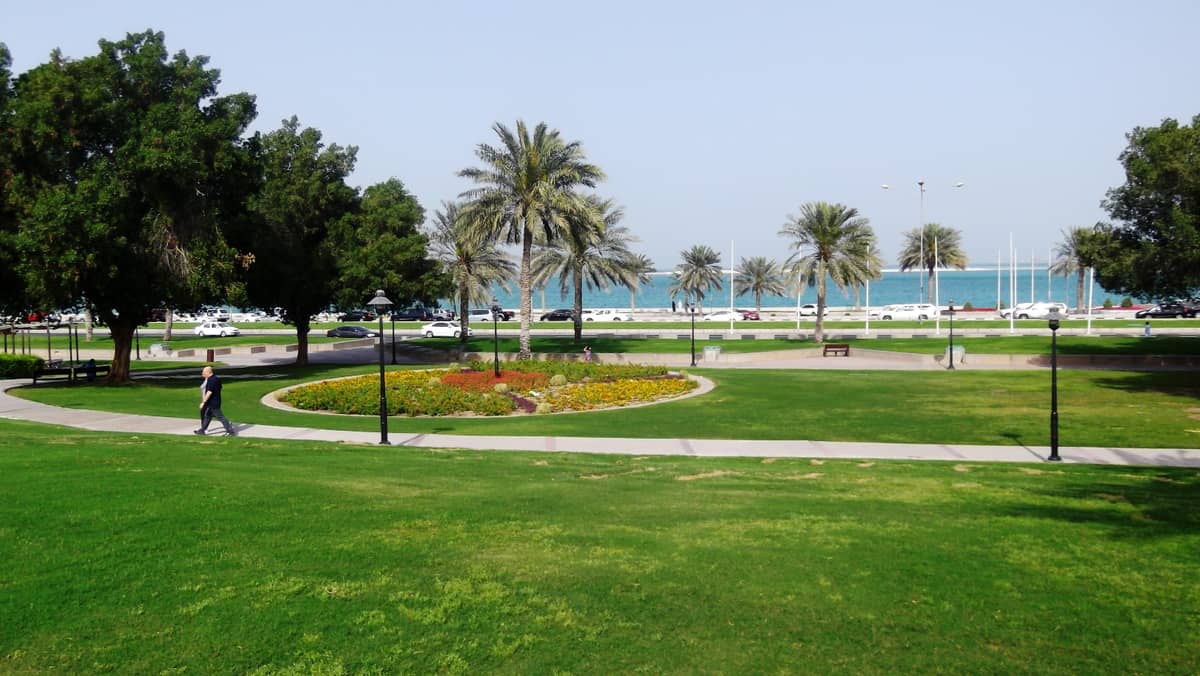
The souq's main entrance faces east toward Grand Hamad Street, one of the city's principal north-south arterials. Wadi Msheireb Street runs along its western edge, connecting directly to the Msheireb Downtown Doha development. To the south, the district opens toward the Corniche waterfront and the Museum of Islamic Art. These are not abstract directions: you can walk from the souq's southern gate to the Museum of Islamic Art in under fifteen minutes on flat ground.
The boundaries of the area proper are loosely defined by Al Souq Street at its core, with the Dhow Harbour and Doha Corniche promenade forming the eastern and southeastern edge. To the north, the character shifts quickly as you cross into the financial district. The Souq Waqif area is small enough to walk end to end in twenty minutes, but dense enough to occupy an entire day.
Character and Atmosphere
Early morning at Souq Waqif belongs to the traders. The spice stalls are restocked before 8 a.m., sacks of dried lemon, cardamom, and saffron arranged in careful rows while shopkeepers share tea. The light at this hour comes in low and warm from the east, catching the dust in the air above the covered alleys. The crowds are thin, the lanes are quiet, and it is the best time to browse without pressure.
By late afternoon, the souq transforms. Families arrive from across Doha, the restaurant terraces fill up, and the alley between the spice section and the textile stalls becomes genuinely difficult to move through quickly. The smell shifts too: the dry spice scent of the morning gives way to grilling meat and shisha smoke as evening vendors set up. This is the version of Souq Waqif that most visitors see, and it is lively without being chaotic.
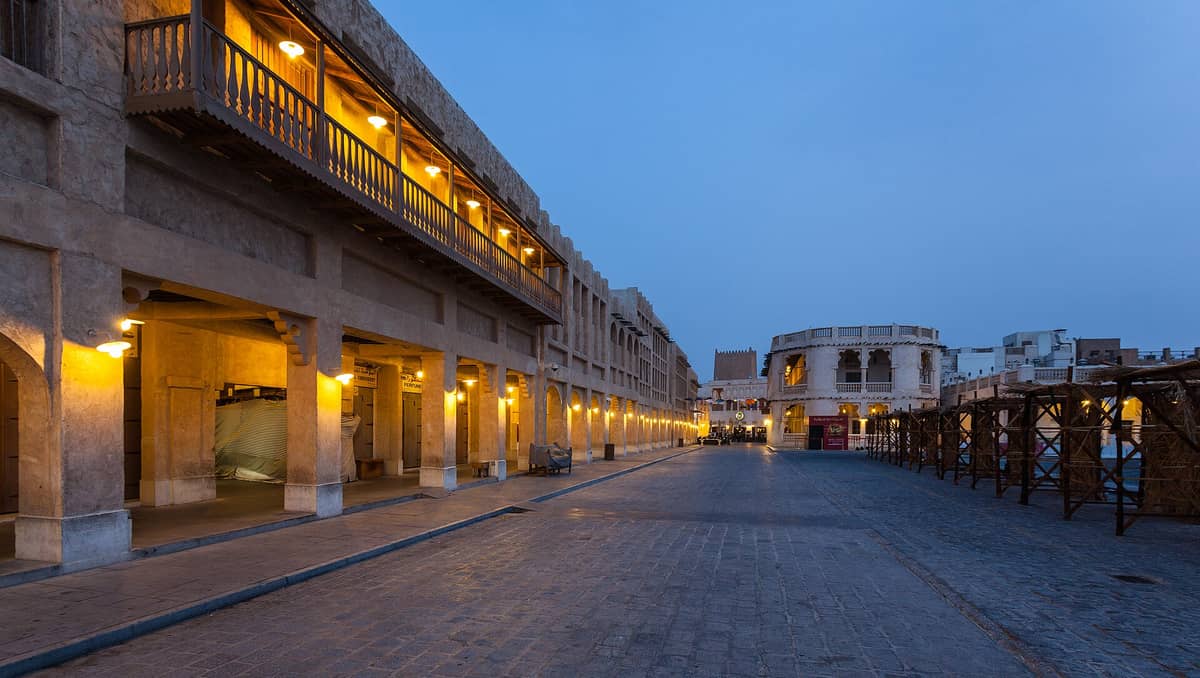
After 10 p.m. on weekends, the restaurant terraces remain packed well past midnight, particularly in the cooler months between October and April. The deeper residential alleys quiet down earlier, and some of the darker side lanes behind the main food strip see very little foot traffic after the shops close. The souq is safe by any reasonable standard, with a visible tourist police presence, but the contrast between the lit restaurant zone and the unlit back lanes is stark enough to notice.
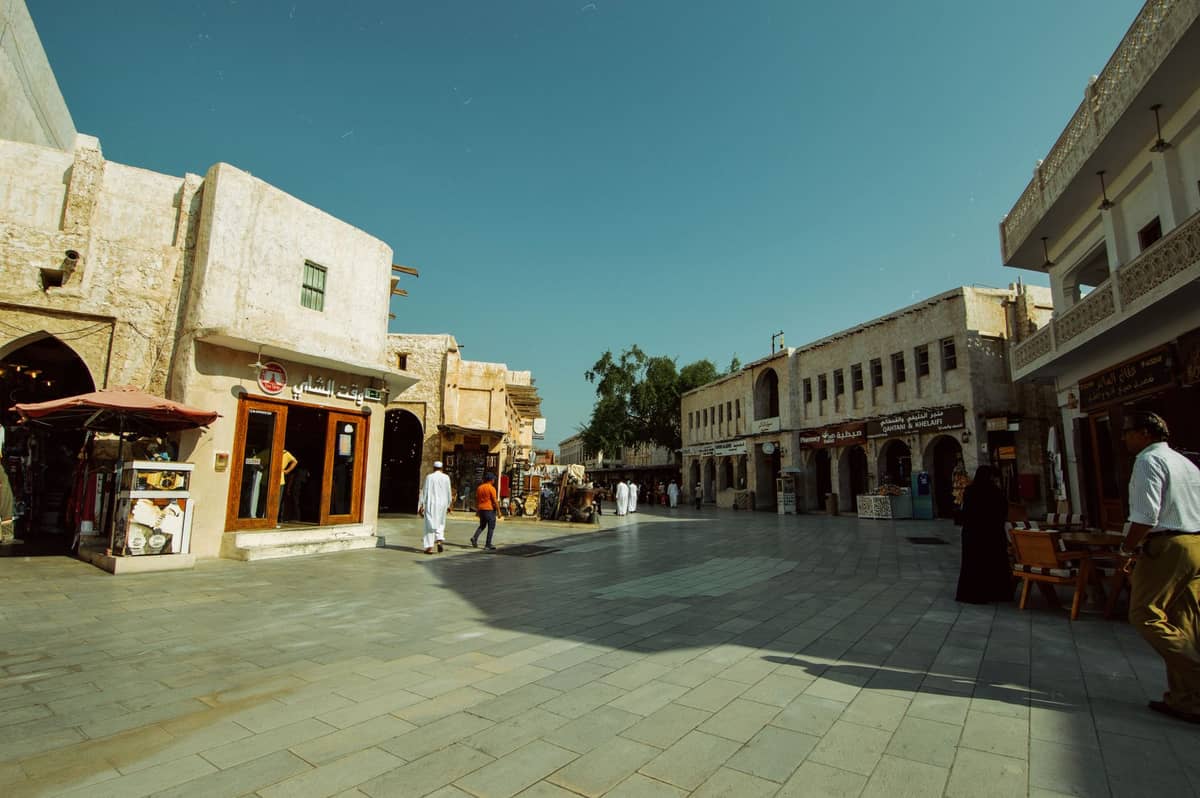
What makes the atmosphere here distinct from other Gulf market restorations is that the souq retains working commercial life. The fabric merchants, the birdcage sellers, the tailors in tiny stalls: these are not theatrical recreations. They are actual businesses serving local customers. Tourists and Doha residents share the same lanes, and neither group overwhelms the other on most days.
💡 Local tip
Visit on a weekday morning for the calmest experience. Friday evenings and public holidays bring the largest crowds and can make the central food alleys very slow to navigate.
What to See and Do
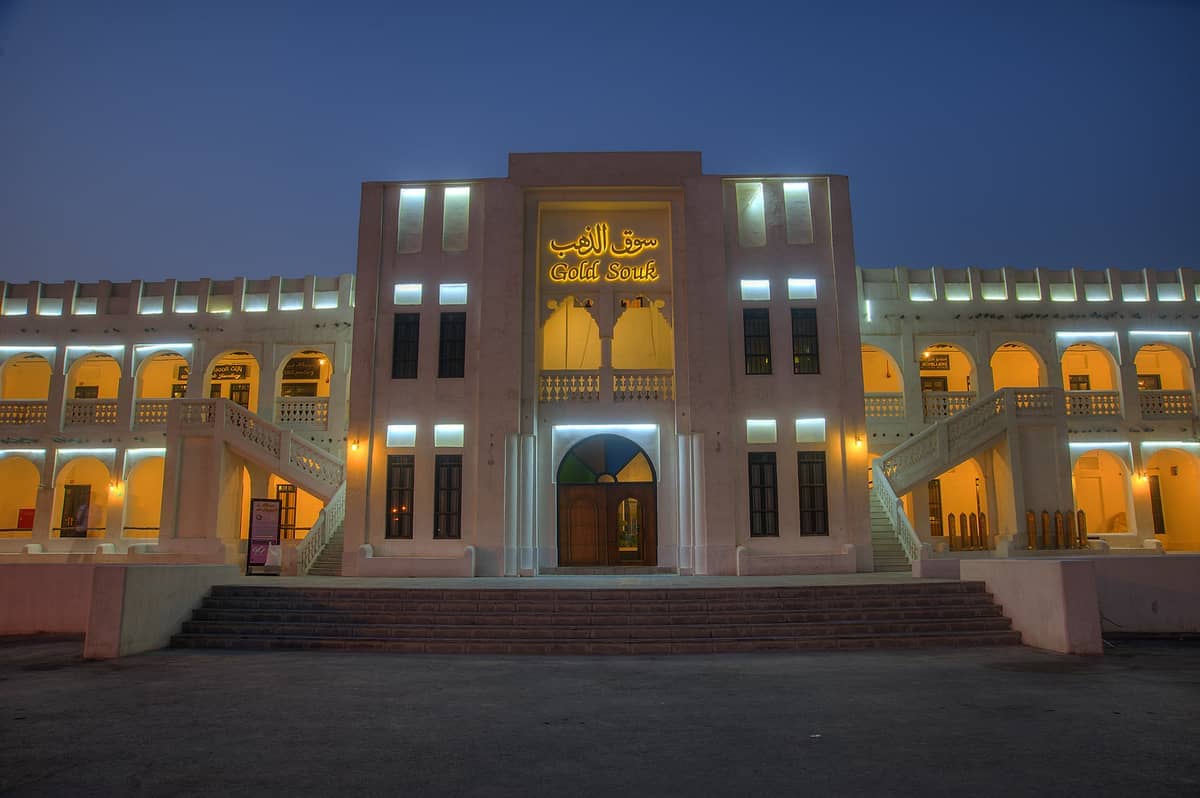
The market itself is the primary draw. Souq Waqif translates loosely as 'the standing market,' a reference to merchants who historically traded here on foot rather than from fixed premises. The restored version maintains the traditional mud-render and timber architectural style, and the layout of covered and open-air sections corresponds roughly to old trade categories: spices in one quarter, textiles in another, animals and birds in a third.
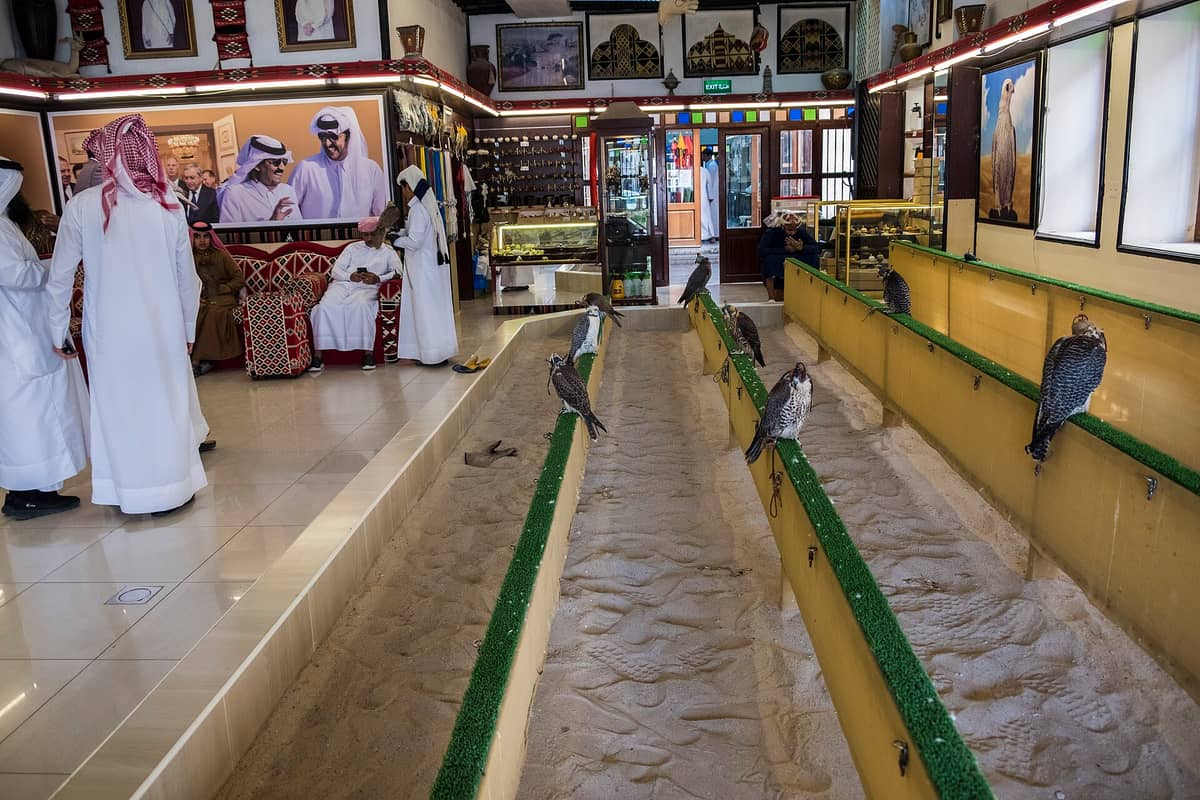
The Falcon Souq sits at the western end of the complex and is one of the most singular places in Qatar. Falconry is not a heritage performance here; it is an active practice with significant cultural weight. The souq sells birds, hoods, perches, and accessories to serious buyers. Even as a casual visitor, watching a transaction between a falconer and a specialist trader gives a clear sense of what remains important in Qatari society.
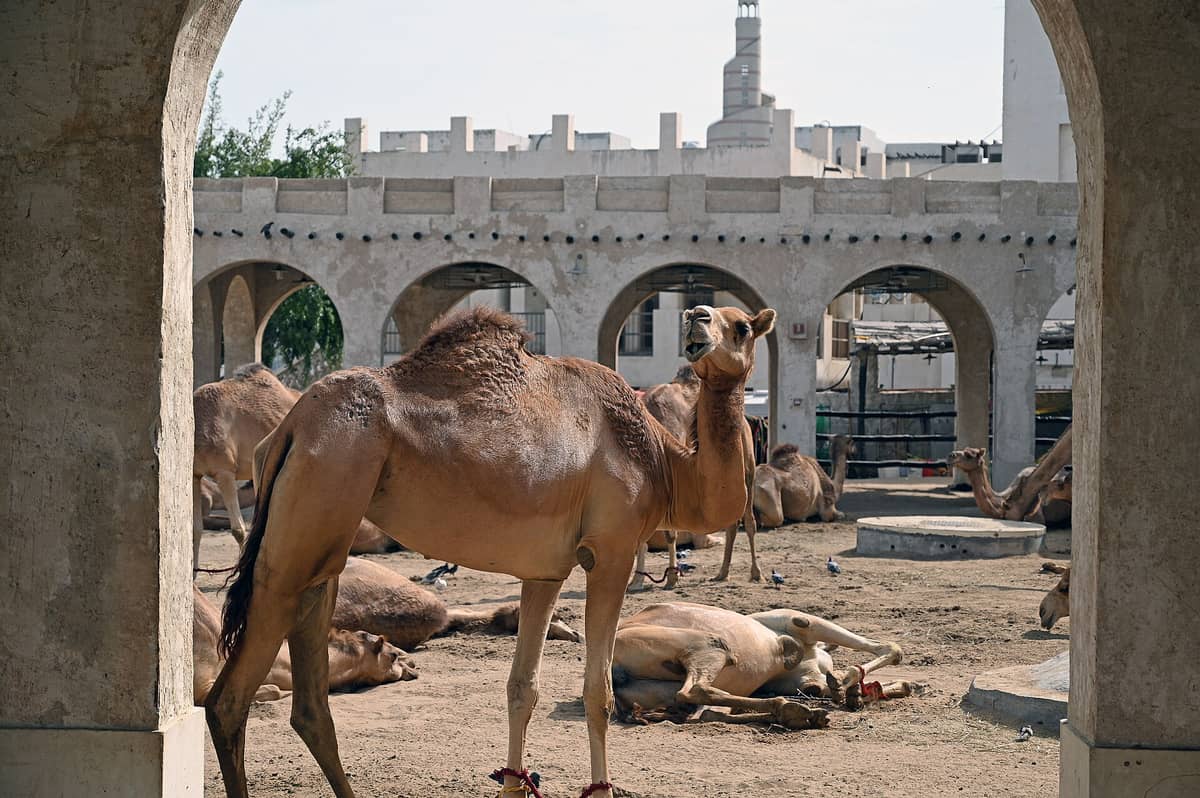
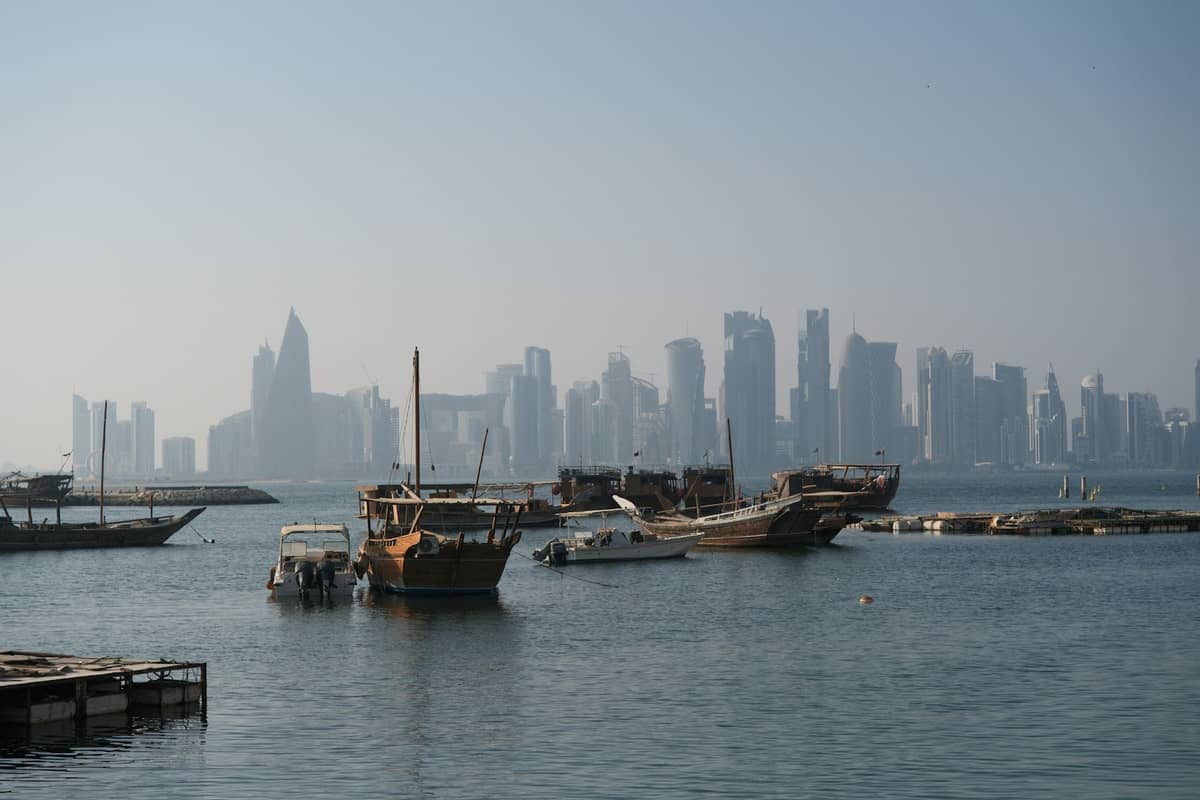
The camel pen at Souq Waqif is a small but memorable stop, tucked into the southwestern corner of the complex. The area around the Dhow Harbour is a short walk east toward the water, where traditional wooden vessels moor along the quayside. The harbour is best seen in the late afternoon when the light is softer and the boats are visible against the modern West Bay skyline in the background.
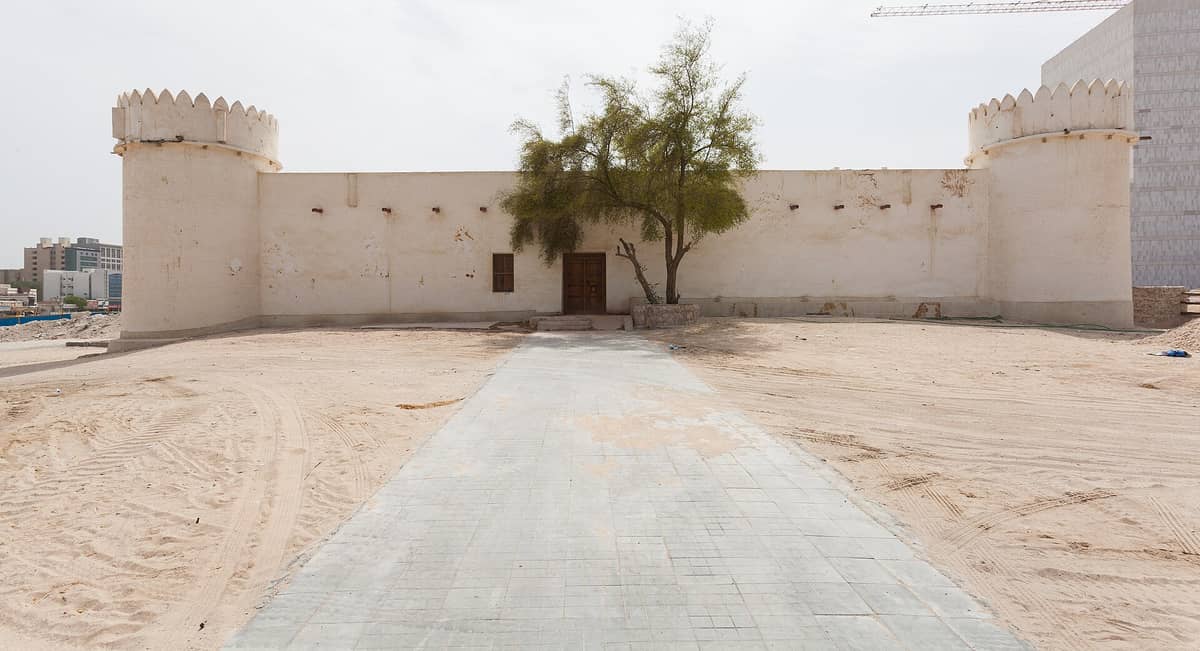
Within walking distance to the south, the Museum of Islamic Art is one of the finest museums in the Middle East and should not be treated as an optional side trip. The Al Koot Fort stands just outside the northern entrance to the souq and provides a grounding historical reference point for the area, even if the interior access is limited.
Souq Waqif spice and textile alleys: best explored on foot, ideally without a fixed agenda
Falcon Souq: observe or purchase, depending on your interests; the birds themselves are worth seeing up close
Camel pen: a five-minute detour with genuine local character
Dhow Harbour: a short walk east for waterfront atmosphere and photography
Museum of Islamic Art: plan at least two hours; the permanent collection is exceptional
Al Koot Fort: worth a look from the outside even if interior access is restricted
ℹ️ Good to know
The Souq Waqif area connects directly to the broader Doha photography circuit. Early morning light, the falconry market, and the dhow harbour are all considered among the best photography subjects in the city. Check the Doha photography guide for timing and composition notes.
Eating and Drinking
The food scene around Souq Waqif is the most concentrated in Doha, covering everything from Qatari home cooking to Lebanese grills, Iranian restaurants, Indian street food, and upscale international dining. The main restaurant strip runs through the eastern section of the souq, where terraced seating spills into the alleys and kitchens run until well past midnight. Prices are broad: a simple machboos or grilled meat platter at a casual Qatari restaurant will cost around 40 to 70 QAR, while a full dinner at one of the more established restaurants can run 150 to 300 QAR per person.
Qatari cuisine is worth seeking out specifically rather than defaulting to the Lebanese and international options that dominate many menus. Look for machboos (slow-cooked spiced rice with meat or fish), harees (a wheat and meat porridge served especially during Ramadan), and luqaimat (small fried dough balls with date syrup). Several restaurants in the souq list these as house specialties, and the quality varies significantly between venues.
Shisha cafés occupy a significant portion of the outdoor seating area, particularly toward the central and northern alleys. These are social anchors for the local male population and are genuinely pleasant to sit in during cooler evenings, with tea and coffee available at low prices. Alcohol is not served in the souq area itself; visitors looking for licensed venues need to go to hotels elsewhere in the city, most of which are in West Bay or along the Corniche.
⚠️ What to skip
Alcohol is not available at Souq Waqif restaurants or cafés. Qatar law restricts alcohol service to licensed hotel venues. If this is important to your evening plans, book at a hotel restaurant in West Bay rather than eating at the souq.
Getting There and Around
The Doha Metro is the most reliable way to reach Souq Waqif. The closest major interchange is Msheireb station, served by both the Red Line (M1) and the Gold Line (M3). From the station's eastern exits, the walk to the souq's western entrance via Wadi Msheireb Street takes four to eight minutes on flat ground. A dedicated Souq Waqif metro stop is also mapped just east of the market complex. Check current fare tables with Qatar Rail before your visit, as pricing is structured by zone and ticket type.
Several bus routes serve the Grand Hamad Street and Wadi Msheireb Street stops adjacent to the souq, including current services such as T601, T602, and T603 among others. Bus schedules are operated by Mowasalat (Karwa) and subject to change; the current network map is available on their official platform. Buses are inexpensive but can be slow in peak traffic.
Karwa taxis and app-based ride-hailing services drop off on Grand Hamad Street and along the northern edge of the souq. The souq's interior lanes are pedestrian only, so all vehicles stop at the perimeter. Walking is the only way to navigate within the market itself, and the entire complex is compact enough that you will not need transport again until you leave the area.
From Hamad International Airport, the Red Line metro runs directly to Msheireb, with a transfer to the Gold Line for one stop to Souq Waqif, making the area accessible by public transport in roughly 25 to 35 minutes from the terminal without a taxi. For practical guidance on navigating the city more broadly, the getting around Doha guide covers fares, apps, and transit tips in detail.
Where to Stay
The Souq Waqif area has a small but distinctive accommodation scene. Several boutique hotels have been built within or directly adjacent to the souq complex, occupying restored traditional buildings with wind-tower architecture, courtyard layouts, and interiors that lean into the heritage character of the surroundings. These properties tend to be mid-to-upper range in price but offer a genuinely different experience from the glass-tower hotels of West Bay.
Staying in this area suits travelers who want to walk to the market, the Corniche, and the Museum of Islamic Art without getting in a car. It is less well suited to those attending business meetings in the financial district, where West Bay hotels are more practical, or to those who prioritize access to beaches and resort facilities, which are concentrated further north toward Katara and The Pearl.
For a full comparison of where to base yourself in Doha, including price ranges and neighborhood trade-offs, the where to stay in Doha guide maps out the main options across the city. The Souq Waqif area is consistently recommended for first-time visitors and those on culturally focused itineraries.
Practical Notes
Dress conservatively when visiting the souq and surrounding area. This is not a tourist-only zone: it is an active commercial and religious district. Shoulders and knees covered is the standard guideline. The souq itself is relatively tolerant of modest Western dress, but the Al Koot Fort area and the mosques nearby are more formal environments.
Pickpocketing risk is described as moderate in crowded sections during peak hours, which is worth noting even if violent crime is genuinely rare. Tourist police maintain a presence throughout the souq, particularly on the main food terrace strip and near the souq entrances. The deeper residential alleys behind the main restaurant zone quiet down significantly after midnight and are poorly lit in places, so there is no particular reason to be in those sections late at night.
Doha's best months for visiting this area on foot are November through March, when daytime temperatures are generally in the low‑ to high‑20s°C and evenings are comfortable. Summer months (June through September) push temperatures well above 40°C, making extended outdoor time in the souq lanes unpleasant by midday. The best time to visit Doha guide covers seasonal considerations in more detail, including how Ramadan affects trading hours and the atmosphere across the city.
💡 Local tip
The souq's trading hours are loosely structured but most shops open late morning and run until about 10 p.m., while many restaurants and cafés stay open until around midnight or slightly later. Do not plan a shopping visit for early morning: the restaurant and café scene is most active between 4 p.m. and midnight, and many shops follow similar rhythms.
TL;DR
Souq Waqif is the single most important neighborhood in Doha for first-time visitors: it concentrates traditional market culture, the city's best street-level food scene, and proximity to major cultural institutions in one walkable area.
The area is genuinely safe with good tourist police presence, though the usual urban precautions apply in crowded sections.
No alcohol is available in the souq; those prioritizing licensed venues should plan evenings at hotel restaurants in West Bay or elsewhere.
Best reached by the Doha Metro to Msheireb station, then a short walk; the souq itself is pedestrian-only and easy to navigate on foot.
Ideal for: first-time visitors to Doha, culturally focused travelers, food explorers, and anyone with a layover of six hours or more. Less suited to: beach vacationers, business travelers based in West Bay, or those who find busy market environments uncomfortable.
Two full days is genuinely enough to cover Doha's best sights — if you plan smart. This itinerary routes you through the Museum of Islamic Art, Souq Waqif, the National Museum of Qatar, Katara Cultural Village, and the Corniche using the metro and short taxi rides, with honest advice on timing, heat, and what to skip.
Qatar's coastline stretches far beyond its skyline. This guide covers the best beaches in Doha and across Qatar, from calm urban shores perfect for families to wild dune-backed stretches only reachable by 4WD. Whether you want a free afternoon by the sea or a full resort day-pass experience, here is where to go.
Doha has become a serious museum city. From a landmark of Islamic art to a converted fire station showing cutting-edge contemporary work, these are the museums that make Doha worth visiting for culture alone.
Doha's extreme desert climate makes timing your visit critical. This guide breaks down every season honestly, covering temperatures, humidity, hotel prices, and the events calendar so you can pick the right window for your trip.
Doha is unusually rich in visual drama. Between the glittering West Bay skyline reflected across the bay, dhow boats bobbing in the foreground, and architecturally ambitious stadiums rising from the desert, the city rewards anyone who knows where to look. This guide covers the best viewpoints in Doha, from free waterfront promenades to photogenic canal districts and iconic landmark angles.
Doha rewards exploration beyond its skyline. Whether you want towering sand dunes, a UNESCO World Heritage fort, mangrove kayaking, or a quieter coastal town, Qatar packs a surprising range of day-trip experiences into a small country. This guide covers the best escapes within reach of the capital.
Hamad International Airport is one of the world's major transit hubs, and a Doha airport layover can be far more than a waiting game. This guide covers visa rules, sleep options, lounge access, and how to squeeze the best of the city into a short stopover.
Doha's waterfront is best explored from the water. Whether you want a traditional dhow cruise past the West Bay skyline, a kayak through coastal mangroves, or a catamaran ride to a private island, this guide covers every boat ride and water experience worth booking in Qatar's capital.
Doha is a surprisingly compelling destination for couples, blending waterfront promenades, heritage markets, world-class museums, and desert escapes into a genuinely romantic itinerary. This guide covers the best experiences for couples in Qatar's capital, with honest takes on what's worth your time and what to skip.
Qatar's desert safari scene centers on the Sealine dunes and the UNESCO-listed Tentative Site of Khor Al Adaid Inland Sea, just 60-75 minutes from Doha. This guide covers tour types, honest price breakdowns, the best time to go, and what the brochures don't tell you.
Falconry sits at the heart of Qatari identity, and Doha makes it surprisingly accessible to visitors. From the Falcon Souq at Souq Waqif to the world-class falcon hospital and the annual S'hail exhibition at Katara, this guide covers everything you need to experience Qatar's most distinctive cultural tradition.
Doha rewards first-timers who arrive prepared. This guide covers the essentials: how to get from the airport, which neighborhoods to prioritize, what the climate actually feels like, and the cultural norms that matter most. No fluff, just practical knowledge.
The Doha Fish Market at Old Doha Port is one of the city's most authentic local experiences. This guide covers opening hours, what species to look for, how to negotiate, how to get there, and what to do with your catch once you have it.
Winter is Doha's golden season, with mild temperatures, clear skies, and a packed events calendar. This guide covers everything you need to know about visiting Doha from November through March, from what to pack to when to book.
Doha has quietly become one of the world's most compelling destinations for Islamic art and architecture. This guide covers the essential museums, mosques, historic forts, and cultural districts where centuries of Islamic heritage come alive.
Qatar criminalizes same-sex sexual activity, and Doha has no LGBTQ+ venues or legal protections. This guide gives LGBTQ+ travelers an honest, practical breakdown of the legal situation, safety considerations, and what visiting the city actually looks like in practice.
Doha's after-dark scene is more diverse than most visitors expect. From rooftop hotel bars in West Bay to stargazing desert safaris at the Inland Sea, this guide covers everything you need to know about Doha nightlife, including alcohol rules, the best venues by district, and evening alternatives for non-drinkers.
Qatar's capital has a reputation for luxury, but Doha on a budget is genuinely achievable. Free museums, a QAR 6 metro day cap, and no-cost attractions like the Corniche make it possible to see the city without spending a fortune. Here's how to do it smartly.
Doha rewards photographers at every turn, from I.M. Pei's waterfront masterpiece to golden-tiled mosques and shipping-container stadiums. This guide covers the city's 20 most photogenic locations, with advice on the best times to shoot and what to look for at each spot.
Doha is one of the safest cities in the Middle East, with low crime rates and well-monitored public spaces. But safety here is as much about understanding local laws as it is about personal security. This guide covers everything from terrorism advisories and alcohol rules to dress codes, transport safety, and seasonal health risks.
Planning a trip to Doha, Qatar? This guide breaks down exactly who needs a visa, how to get one, what documents to carry, and the common mistakes that trip up first-time visitors at the border.
Doha is a genuinely family-friendly city, with options spanning free waterfront parks, world-class children's museums, indoor adventure parks, and beach day trips. This guide breaks down the best activities by budget, age group, and season so you can plan a practical, stress-free trip with kids.
Qatar's 2022 FIFA World Cup left behind eight architecturally extraordinary stadiums scattered across Doha and its surroundings. This guide covers every venue, how to visit each one, and what to see nearby to make the most of your trip.
Doha is far more affordable than its gleaming skyline suggests. From the 7-kilometre Corniche promenade to free heritage museums and public beaches, this guide covers the best free things to do in Doha — for first-timers and residents alike.
Doha is surprisingly easy to navigate if you know which transport option suits your route. This guide covers the Doha Metro, Karwa taxis, public buses, and airport transfers, with current fares, operating hours, and honest advice on what works and what doesn't.
Doha divides opinion. Some travelers find a world-class city of museums, architecture, and Gulf culture. Others leave underwhelmed. This guide breaks down exactly what Doha offers, what it doesn't, and who should make the trip.
Doha has quietly become one of the world's most ambitious luxury destinations. This guide covers the best 5 star hotels, high-end dining, designer shopping, and cultural experiences, with honest advice on what lives up to the price tag and what doesn't.
Doha delivers one of the Gulf's most complete shopping experiences, from air-conditioned mega-malls with international luxury brands to the spice-scented alleys of Souq Waqif where bargaining is still the norm. This guide covers every major venue, realistic prices, opening hours, seasonal quirks, and the souvenirs actually worth buying.
From the Museum of Islamic Art to the Inland Sea desert, Doha packs serious variety into a compact city. This guide covers the top things to do in Doha with real admission prices, opening hours, seasonal tips, and honest takes on what's worth your time.
Doha's food scene goes far deeper than shawarma and hummus. This guide covers the essential Qatari dishes every visitor should try, from the national dish machboos to the street-side sweet luqaimat, with honest price breakdowns and the best places to eat them.
Doha's food scene spans centuries-old Arab hospitality traditions and some of the most international dining in the Gulf. This guide covers the best areas to eat, what to order, how much to spend, and when to go — with practical details on hours, booking, and seasonal dining patterns.
Doha's neighbourhoods are more distinct than most Gulf cities. This guide breaks down the five key areas to stay, who each suits best, what you'll actually pay, and how to time your booking around weather and events.