2 Days in Doha: The Perfect Itinerary
Two full days is genuinely enough to cover Doha's best sights — if you plan smart. This itinerary routes you through the Museum of Islamic Art, Souq Waqif, the National Museum of Qatar, Katara Cultural Village, and the Corniche using the metro and short taxi rides, with honest advice on timing, heat, and what to skip.
TL;DR
- Two days covers Doha's core tourist corridor: Msheireb, Souq Waqif, the Museum of Islamic Art, the National Museum of Qatar, Katara, and the Corniche.
- The Doha Metro (Red, Gold, and Green lines) handles most inter-district travel; a day pass costs around QAR 6. See our guide to getting around Doha for full transport details.
- November through March is the best window for this itinerary — summer heat (regularly above 40°C) makes outdoor sections genuinely unpleasant between 10am and 5pm.
- Museum hours differ significantly on Fridays; always check each site individually before finalising your schedule.
- Doha is not just a layover city. Two focused days produce a credible, unhurried experience. If you only have a few hours at the airport, consult our Doha airport layover guide instead.
Before You Go: Timing, Transport, and Practical Setup
The single biggest variable in a 2-day Doha itinerary is the season. Between November and March, daytime highs sit in the mid‑20s°C (often reaching the high‑20s°C), and the city is genuinely walkable. From May through September, temperatures routinely exceed 40°C with high humidity — outdoor attractions like the Corniche or MIA Park become uncomfortable by mid-morning. If you're visiting in summer, structure your days around indoor museums from 10am to 5pm and shift outdoor time to before 9am or after 6pm. For deeper seasonal planning, the best time to visit Doha guide breaks this down month by month.
Getting around is straightforward. The Doha Metro runs Saturday through Thursday from around 5:00 AM to 1:00 AM, and on Fridays from approximately 9:00 AM to 1:00 AM. A single journey currently costs QAR 2 and a day pass or daily cap QAR 6 — figures from 2026 transport guides, but worth verifying on the official Doha Metro app before travel. The Red Line is the workhorse for this itinerary: it connects Hamad International Airport, West Bay, Katara, and onward to Lusail, while the Gold Line serves Souq Waqif (Souq Waqif station) and the National Museum area (National Museum station). For short gaps the metro doesn't cover, Karwa taxis and ride-hailing apps fill in reliably.
⚠️ What to skip
Friday hours catch visitors off guard constantly. The Museum of Islamic Art, National Museum of Qatar, and Souq Waqif all operate on different Friday schedules — some open late morning, some close early afternoon for prayers. Check each attraction's official website the day before. Do not assume standard weekday hours apply.
A few practical notes before you leave the hotel: Qatar uses the Qatari riyal (QAR), pegged to the US dollar at 3.64 QAR per USD. English is widely spoken at hotels, museums, and restaurants. Dress codes are moderate — shoulders and knees covered in souqs and religious sites, resort-style attire is fine at The Pearl or beach areas. The emergency number is 999. Qatar dialing code is +974.
Day 1: The Cultural Core — MIA, Souq Waqif, and Msheireb
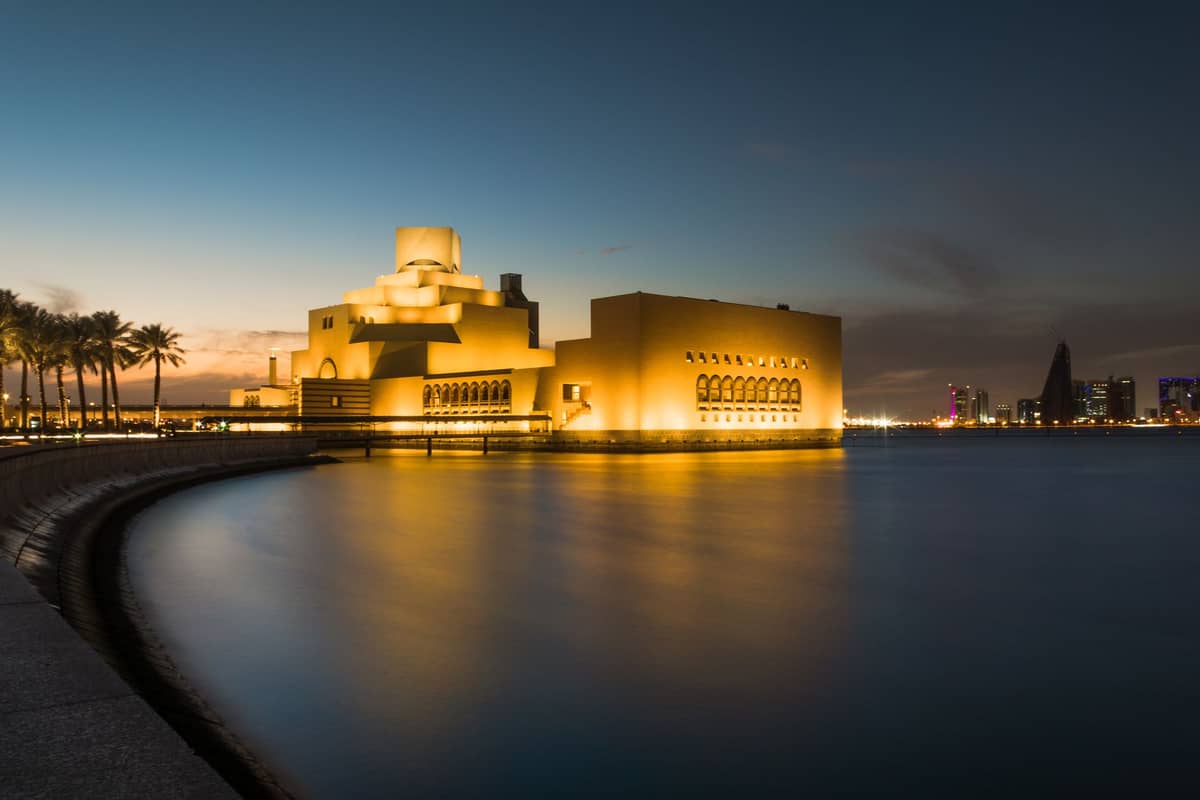
Start at the Museum of Islamic Art, which sits on its own small peninsula at the southern end of the Corniche. This is the most architecturally significant building in Doha — I.M. Pei's geometric limestone exterior is as deliberate and spare outside as the collection is rich inside. Allow two to two-and-a-half hours for the permanent collection: the 7th-to-19th century Islamic manuscripts, metalwork, ceramics, and textiles represent acquisitions from three continents. The gift shop has some of the best design-forward souvenirs in the city. Admission fees and hours change seasonally, so confirm on the MIA official site.
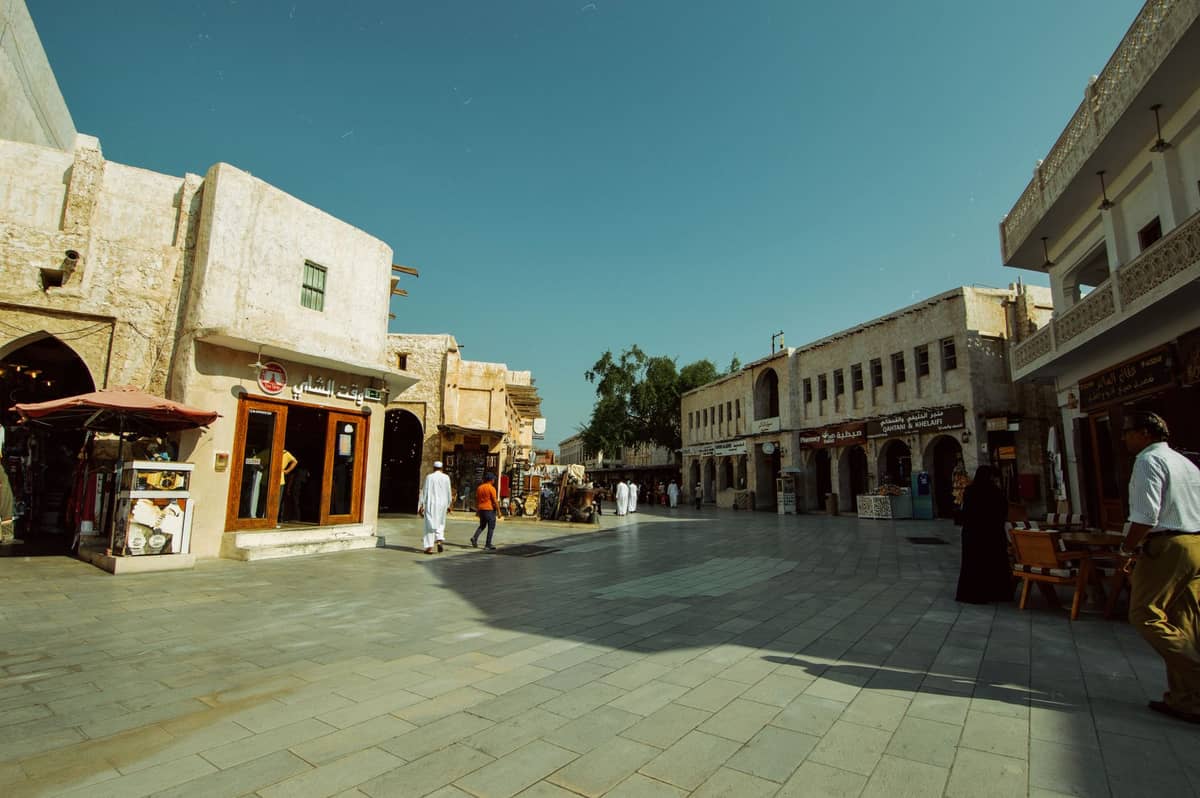
From MIA, walk or take a short taxi to Souq Waqif — the historic market district a few minutes north along the waterfront. The current souq is a late-2000s restoration of an earlier market, rebuilt with mud-rendered walls and exposed timber beams to approximate the original aesthetic. Purists note that it's a reconstruction, but that doesn't diminish its practical appeal: the spice section is genuine and fragrant, the falconry stalls are worth a look even if you're not buying, and the labyrinthine lanes repay slow exploration. Come here for lunch — there are Yemeni, Lebanese, and Qatari restaurants at every price point, with street-level shawarma from around QAR 10-15 and sit-down Qatari meals for QAR 50-120 per person.
💡 Local tip
The Falcon Souq, adjacent to Souq Waqif, is one of the few places in the world where you can watch falcons being traded, hood-fitted, and assessed by specialists. You don't need to buy anything — it's a genuine working market and one of Doha's most specific cultural experiences. Allow 20-30 minutes and go in the morning when activity is highest.
After lunch, walk ten minutes southwest to Msheireb Downtown Doha, the regenerated urban quarter built on the footprint of the old city center. The architecture here is deliberately low-rise and walkable, a counterpoint to West Bay's tower district. The Msheireb Museums complex contains four interconnected heritage houses that trace Doha's transformation from a pearl-fishing settlement to a modern capital — the Bin Jelmood House, in particular, is an unexpectedly serious and thoughtful exhibit on the history of slavery and forced labour in the Gulf. It's not light viewing, but it's honest and worth two hours of your afternoon.
End Day 1 with a walk along the Doha Corniche promenade. The 7km crescent-shaped waterfront is best in the early evening when the West Bay skyline lights up across the bay and the temperature drops to something comfortable. The promenade is flat, well-lit, and popular with local families on weekends. You can walk the full stretch or cover a section and catch a taxi back. If you want to extend the evening, Souq Waqif's restaurants are lively until late.
Day 2: National Museum, Katara, and The Pearl
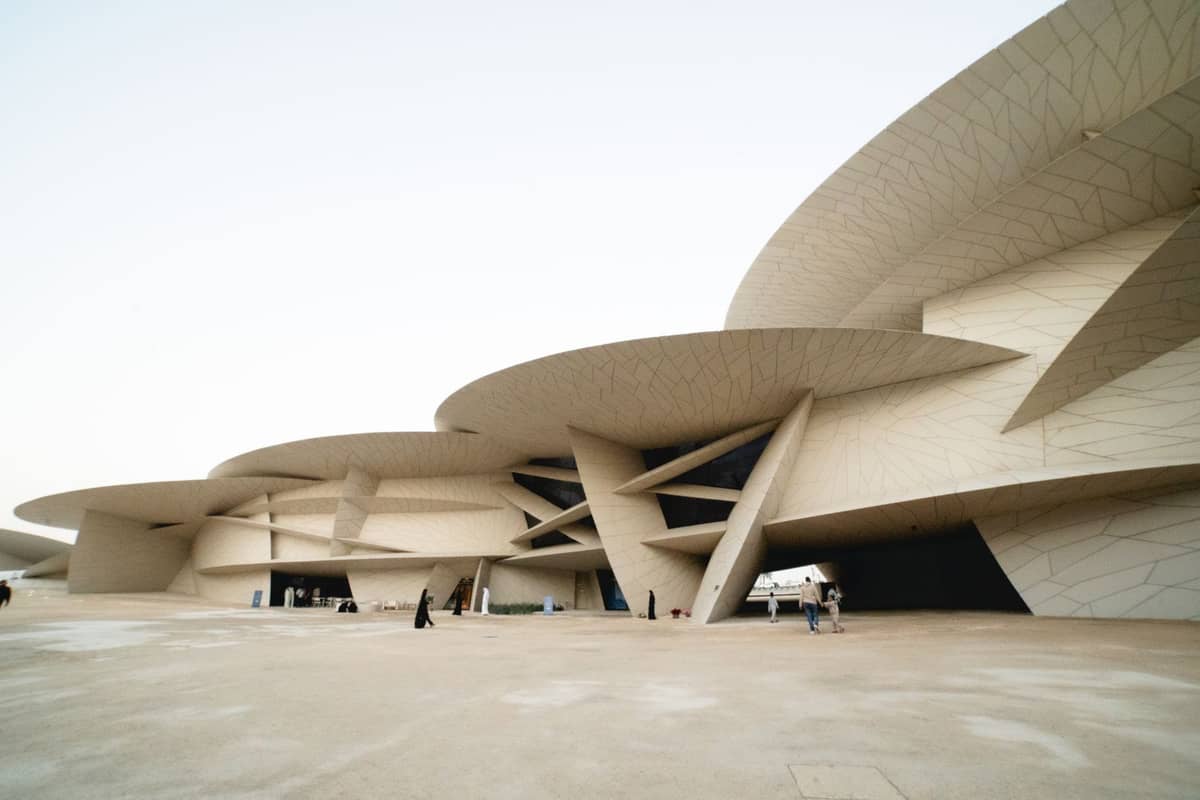
The National Museum of Qatar opens Day 2. Jean Nouvel's building — a series of interlocking discs inspired by the desert rose crystal formation — is one of the most photographed structures in Doha, and for good reason. The permanent exhibition inside covers Qatar's geology, nomadic history, pearl-diving economy, and rapid modernisation across a long immersive route. Budget at least two hours; three if you're genuinely engaged with Gulf history. The museum sits directly behind MIA, accessible on foot from the previous day's route or by Gold Line metro to National Museum station.
From the National Museum, take the metro Red Line north to the Katara station and walk into Katara Cultural Village. This is Doha's purpose-built arts and culture district, spread along a stretch of beachfront north of West Bay. It's a mix of galleries, performance venues, restaurants, a mosque, an amphitheatre, and a public beach. The Katara Golden Mosque with its tiled dome is the most photographed element; the Katara Amphitheatre hosts international events throughout the winter season. At midday, Katara's restaurants are a solid lunch option — there's a cluster of international cuisines around the main plaza.
- Katara Beach A calm, family-oriented beach with sunbeds and light facilities. Worth a short visit if the weather is right, but not Doha's most impressive beach option.
- Katara Galleries Rotating contemporary art exhibitions — quality varies, admission is usually free. Worth checking what's on before your visit.
- Fire Station Artist in Residence A few minutes by taxi south of Katara, this converted fire station hosts Qatar's most interesting contemporary art programme. Often overlooked by short itineraries but genuinely worthwhile.
In the afternoon, head to The Pearl-Qatar — the man-made island development off West Bay. The main draws are Porto Arabia's marina, the Qanat Quartier's Venice-inspired canal district, and the retail strip along the waterfront. It's undeniably polished and feels more like an international resort enclave than anything distinctly Qatari, which is either a relaxing change of pace or a disappointment depending on your expectations. The waterfront walk around Porto Arabia is pleasant in the evening, and there are dozens of cafe and restaurant options for a late afternoon break.
✨ Pro tip
The Pearl works best as a late-afternoon-into-evening destination. The crowds thin out from the tourist peak around 3-4pm, and the marina area looks considerably better under evening light. If you want a sunset drink with a Gulf view, the waterfront bars and hotel terraces here are the most permissible options in the city — Qatar allows alcohol in licensed hotel venues.
Optional Additions and What to Skip
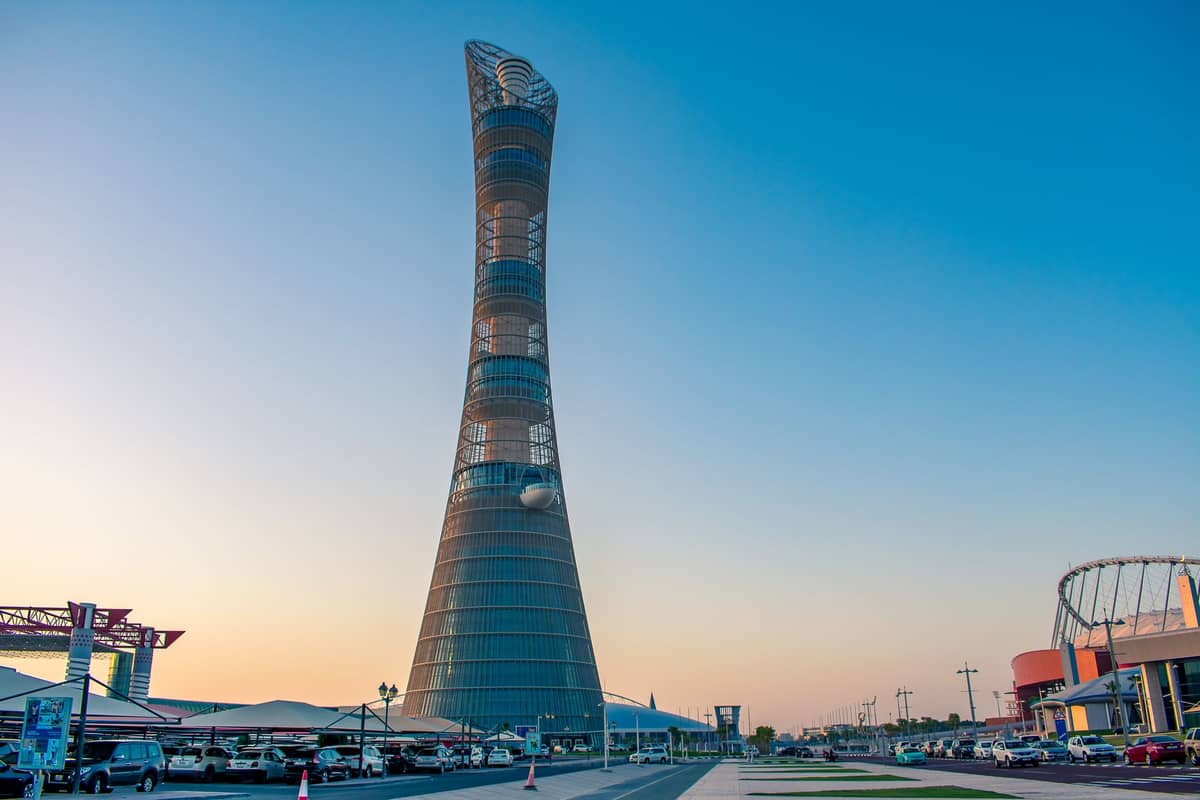
Two days is enough for Doha's core, but a few additions are worth considering if your timing allows. The Aspire Zone in the southwest hosts Aspire Park, the Aspire Tower, and the Khalifa International Stadium — a walkable cluster that suits sports fans or families. It's about 20-25 minutes by taxi from the city centre and works as an add-on if you have a free morning before a late flight.
The Al Zubarah Fort and Qatar's northwest coast are UNESCO-listed and historically fascinating, but the ~100 km drive each way makes it a full day trip rather than a 2-day itinerary addition. File it under future visits or a dedicated day trips from Doha plan. Similarly, the Khor Al Adaid inland sea in the south requires a 4WD desert crossing and is best done as a structured desert safari — not a DIY afternoon.
- Skip: Villaggio Mall — a Vegas-style themed shopping centre with a fake canal and gondolas. It's a curiosity but thin on actual value for a short visit.
- Skip: Generic 'Doha city tour' packages sold at hotel desks — they cover the same ground as this itinerary but with significantly less time at each site and a bus window between you and everything.
- Consider: The Dhow Harbour near Souq Waqif — traditional wooden dhows are repaired and docked here, and a 15-minute walk gives genuine visual interest with no entrance fee.
- Consider: An evening boat ride on Doha Bay — short cruises depart from near the Corniche and MIA, offering the West Bay skyline from the water at dusk.
Where to Eat and Where to Stay for a 2-Day Trip
For food, the most efficient strategy on a short trip is to anchor meals near your day's sightseeing. Souq Waqif covers lunch on Day 1 with genuine variety from budget to mid-range. For dinner, the Corniche-adjacent restaurants or the West Bay hotel dining scene are the two reliable clusters. Katara's restaurant plaza handles Day 2 lunch comfortably. For a deeper guide to where and what to eat, see where to eat in Doha and what to eat in Doha.
For accommodation, staying in or near West Bay or the Corniche puts you within 10-15 minutes of both days' main sites. The Pearl is quieter and more resort-like but adds transit time. Budget options are limited in the city centre — Doha skews toward 4-star and above in its hotel stock. The where to stay in Doha guide covers neighbourhoods and specific price tiers with current context.
ℹ️ Good to know
Doha is a conservative city with an open international tourism layer on top. Alcohol is available in licensed hotel venues and some restaurants, but not in souqs, public areas, or most standalone restaurants. Public displays of affection are discouraged. Dress modestly in Souq Waqif and at mosques — shoulders and knees covered. These norms are straightforward and rarely cause issues for respectful visitors.
Sample 2-Day Schedule at a Glance
- Day 1 Morning (9am–12pm) Museum of Islamic Art — allow 2 to 2.5 hours for the collection and building exterior. Walk or taxi to Souq Waqif.
- Day 1 Midday (12pm–2pm) Lunch in Souq Waqif. Explore the spice section, Falcon Souq, and the Dhow Harbour nearby.
- Day 1 Afternoon (2pm–5pm) Msheireb Museums — Bin Jelmood House and heritage houses. Short walk between sites.
- Day 1 Evening (6pm–9pm) Doha Corniche promenade walk. Dinner back at Souq Waqif or West Bay restaurants.
- Day 2 Morning (9am–12pm) National Museum of Qatar — allow at least 2 hours. Metro or taxi from hotel.
- Day 2 Midday (12pm–3pm) Metro to Katara Cultural Village. Lunch at Katara plaza restaurants. Walk the amphitheatre and mosque area.
- Day 2 Afternoon/Evening (4pm–8pm) The Pearl-Qatar — Porto Arabia marina walk, Qanat Quartier, sunset drinks or dinner at a waterfront venue.
FAQ
Is 2 days enough to see Doha?
Yes, two full days is a practical timeframe for Doha's main sights. The city's top attractions — the Museum of Islamic Art, National Museum of Qatar, Souq Waqif, Msheireb, Katara, and The Pearl — are geographically concentrated and connected by metro and short taxi rides. You won't see everything, but you'll cover the core without feeling rushed.
What is the best time of year for a 2-day Doha trip?
November through March gives the most comfortable conditions, with daytime highs typically in the low-to-mid 20s°C. December and January are peak season — expect more crowds at major museums and higher hotel rates. April and October are shoulder months with warmer temperatures but fewer crowds. Summer (June–September) is feasible but demanding: outdoor sections should be avoided during midday heat, and the itinerary needs to be restructured around indoor attractions.
How do I get between Doha's main sights without a car?
The Doha Metro covers the main tourist corridor efficiently. The Red Line connects the airport, West Bay, Katara, and Lusail. For Souq Waqif and the Museum of Islamic Art, use the Gold Line (Souq Waqif or National Museum stations). A day pass costs around QAR 6 (verify current fares before travel). Karwa taxis and ride-hailing apps cover the gaps — the 10-20 minute taxi rides between major sites typically cost QAR 15-40 depending on distance and time of day.
Do Doha museums open on Fridays?
Most do, but with modified hours. Friday morning is typically reduced or closed for prayers, with several major museums opening in the afternoon (MIA and the National Museum typically from 13:30). Always check official websites before planning. Assume nothing about Friday hours and always verify individually.
Is Doha safe for tourists on a short visit?
Doha is consistently rated among the safest cities in the region for tourists. Violent crime is rare and tourist infrastructure is well-developed. The main practical cautions are heat-related in summer, conservative dress norms in traditional areas, and the standard advice around alcohol being restricted to licensed hotel venues. For a current safety overview, national foreign ministry travel advisories are the most reliable reference.