Katara Cultural Village is Doha's dedicated arts and culture district, occupying a coastal strip on the city's northeastern shore between West Bay and The Pearl-Qatar. The complex blends traditional Qatari architectural motifs with modern performance spaces, galleries, mosques, and waterfront dining, making it one of the few places in Doha where cultural programming, beach leisure, and heritage aesthetics coexist in a single walkable setting.
Katara Cultural Village is where Doha chose to put its cultural ambitions on public display. Positioned on the northeastern waterfront between the glass towers of West Bay and the marina apartments of The Pearl-Qatar, it feels deliberately composed: wide pedestrian plazas, low-rise heritage-style facades, a gilded mosque dome visible from the water, and a public beach where families spread out on cooler evenings. It is neither a souq nor a mall, but something Qatar designed specifically to host the arts, and the result is unlike anywhere else in the city.
Orientation: Where Katara Sits in the City
Katara Cultural Village occupies a narrow coastal strip on Doha's eastern shore, roughly at coordinates 25.36°N, 51.53°E, in the Al Qassar area. The address is technically along Katara Street, and the geography is easy to anchor: West Bay's skyscraper skyline rises to the south, while The Pearl-Qatar's artificial island begins immediately to the north. The two districts feel entirely different from each other, and Katara acts as a transitional zone with a personality of its own.
The Doha Corniche promenade is roughly 4 to 5 kilometres to the south, and Souq Waqif is perhaps a 15-minute drive from Katara's main entrance under normal traffic conditions. Visitors staying in West Bay hotels often find Katara the most walkable cultural destination from their base, though the walk along the coastal road takes around 25 to 30 minutes on foot. For most practical purposes, people arrive by metro, taxi, or ride-hailing app.
The complex is self-contained and clearly bounded: the Gulf coastline defines its eastern edge, a beach and promenade stretch along the waterfront, and the main vehicular entrance gates mark its northern and southern limits. Inside, the layout is navigable on foot within about 20 to 25 minutes at a relaxed pace. Unlike sprawling districts such as Lusail City to the north or Education City to the west, Katara is compact enough that you can cover most of it in a single afternoon.
Character and Atmosphere
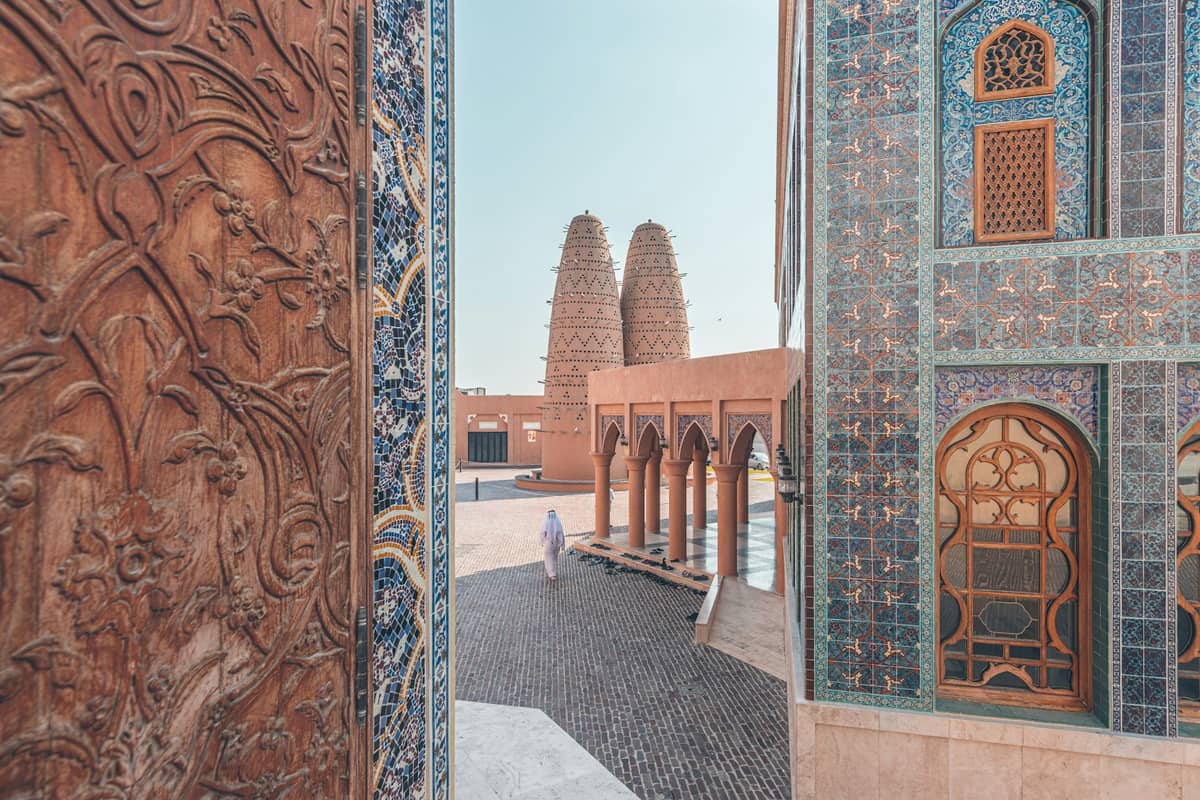
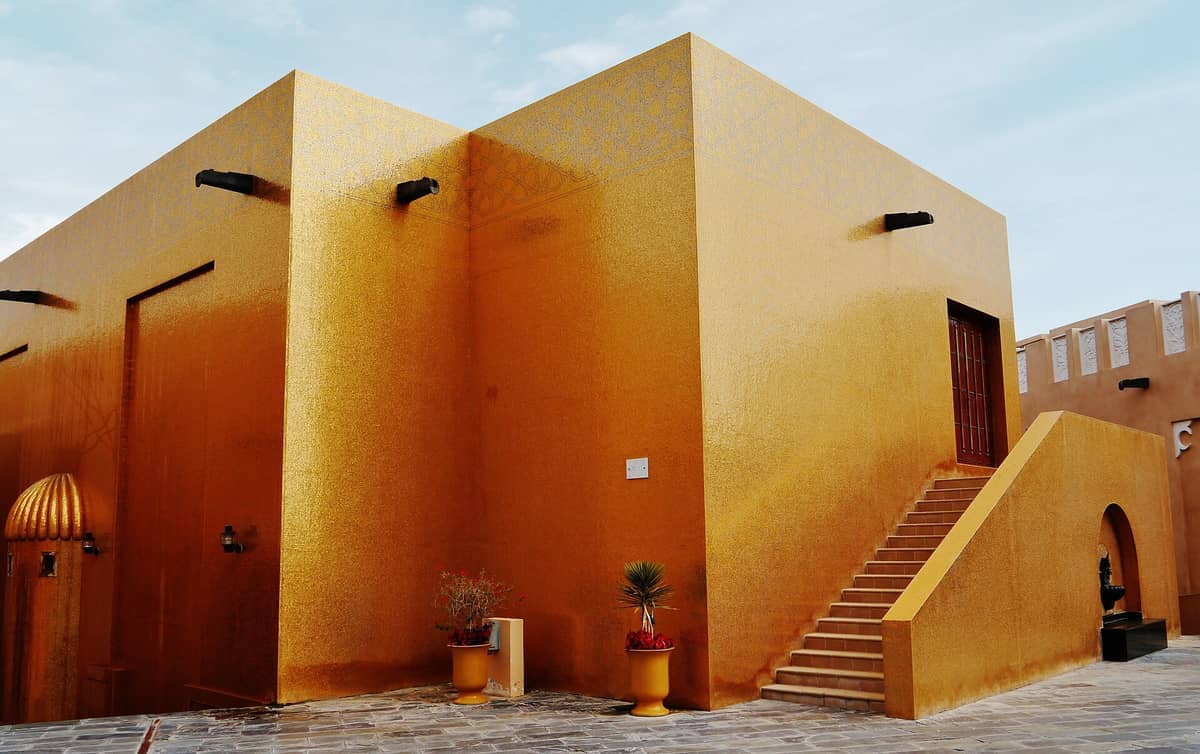
Katara was purpose-built as a cultural district, and that planning intention is visible in every design decision. The architecture draws on traditional Qatari and Islamic motifs: arched colonnades, intricate tilework, earthen plaster tones, carved wooden screens, and a prominent golden-domed mosque that anchors the central plaza visually. Walking through the main pedestrian spine during the day, you pass galleries displaying regional artwork, small artisan workshops, and open plazas that host outdoor performances during cooler months.
In the morning, particularly on weekdays, Katara is quiet. The light falls at a low angle across the pale stone facades, the beach is largely empty, and the cafes along the promenade are the main source of activity. This is the best time for photography and for walking the complex without crowds. The amphitheatre sits silent, the galleries open gradually from mid-morning, and there is a stillness to the place that feels almost meditative.
Evenings and weekends shift the register entirely. From roughly 4pm onward in the cooler months, families arrive in numbers, the waterfront fills up, and the Katara Amphitheatre becomes a performance venue for concerts, film screenings, and cultural events. The outdoor restaurants fill up fast. Street performers occasionally appear in the plaza. On event nights during major festivals, the complex becomes genuinely crowded, with queues at popular dining spots and limited parking. Ramadan evenings bring a particularly different atmosphere: Katara hosts iftar tents and extended late-night programming that keeps the complex busy past midnight.
The audience at Katara is a mixture of Doha residents and tourists, with a noticeable proportion of families and couples rather than solo backpackers. The crowd skews toward Qatari nationals and long-term residents on weekends, and toward organized tour groups from hotels on weekday afternoons. This is not a neighbourhood in the residential sense: nobody lives in the village itself, and there are no corner shops or local services. It functions as a cultural and leisure destination, which means its rhythms are event-driven rather than driven by the routines of daily life.
💡 Local tip
Visit on a Thursday or Friday evening during October through March for the most animated atmosphere. The plaza fills with families, outdoor dining is at full capacity, and occasional live performances take place without needing a ticket. Arrive before 6pm to secure a table at the better waterfront restaurants.
What to See and Do
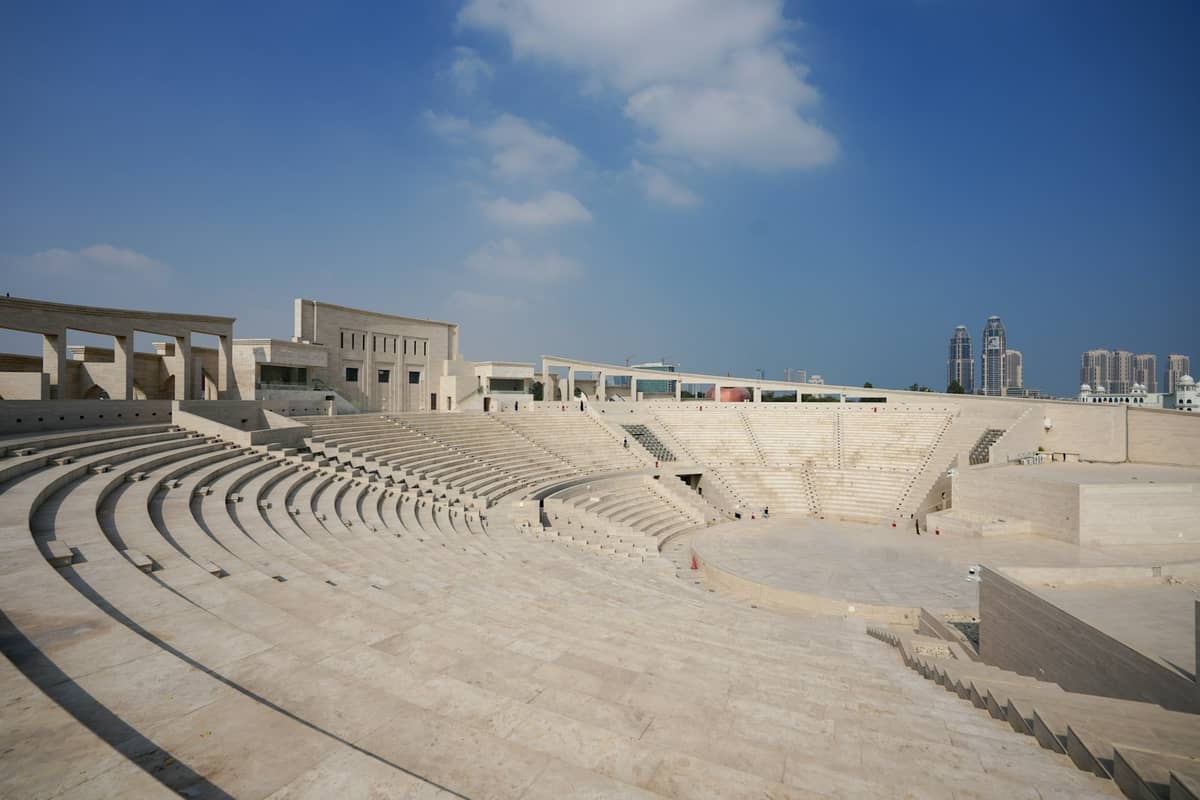
The Katara Amphitheatre is the complex's most striking space: a large open-air venue modelled loosely on Greco-Roman amphitheatre design, with tiered seating facing a performance stage and the sea beyond. It hosts everything from opera and classical concerts to football celebrations and cultural ceremonies. Ticket events are well-advertised through Qatar Tourism channels, but even without a ticket, visiting the space during the day to appreciate the architecture and setting is worthwhile.
The Katara Golden Mosque is the complex's most photographed structure. The gold dome and blue-tile minarets make it visually distinct from most mosques elsewhere in Doha. Non-Muslim visitors are not permitted inside during prayer times, but the exterior can be viewed and photographed from the surrounding plaza at any hour. It is one of the most distinctive pieces of architecture in the city.
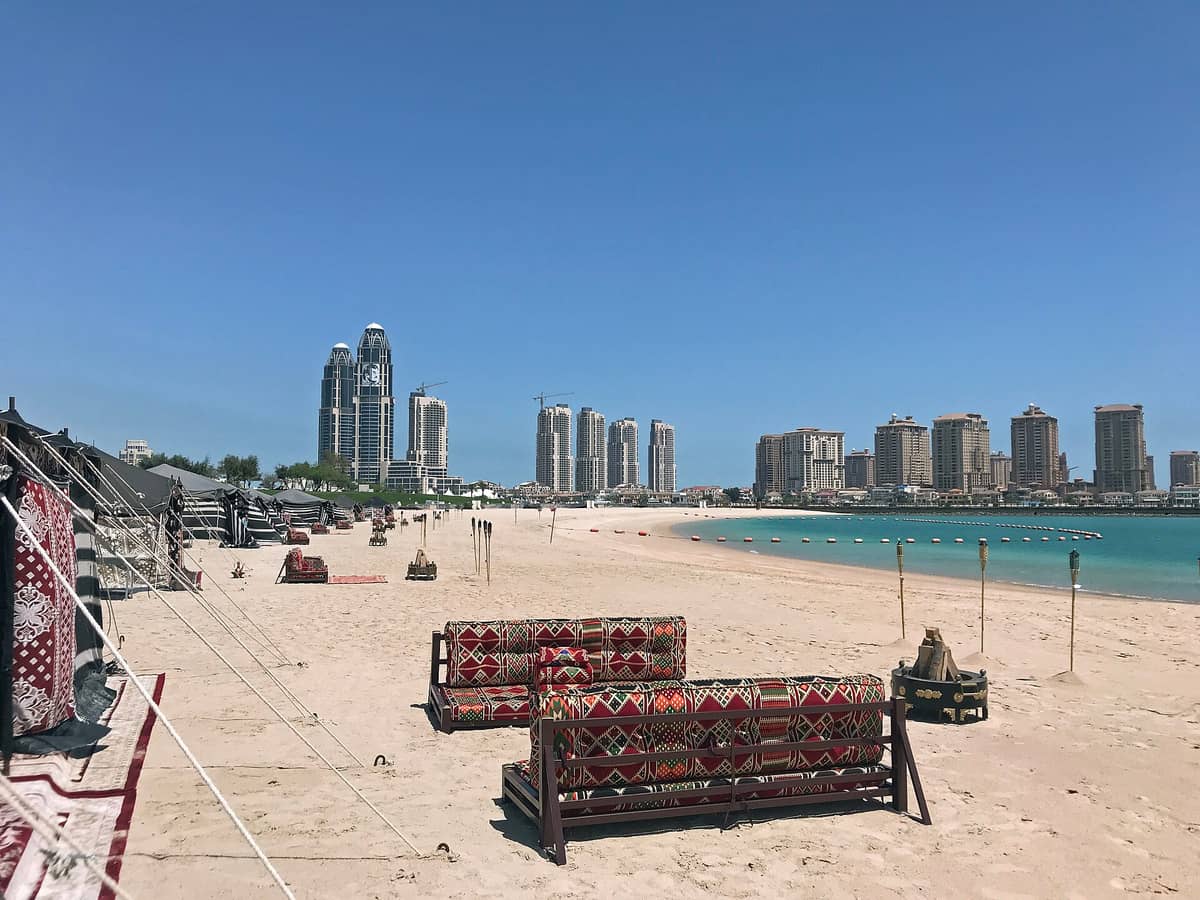
Art galleries are distributed throughout the village, with rotating exhibitions covering contemporary Arab art, photography, and international cultural exchanges. The programme changes frequently, so checking Katara's official website before visiting is advisable. The Katara Beach provides a rare public beach option in this part of Doha, with calm Gulf waters, sun loungers, and facilities. It is not the most expansive beach in Qatar, but its central location makes it convenient for visitors staying in West Bay or along the Corniche.
Katara Amphitheatre: major concerts, film festivals, and cultural events
Katara Golden Mosque: distinctive gold dome, best photographed from the plaza
Public art galleries with rotating exhibitions of Arab and international work
Katara Beach: public access, sun loungers, calm Gulf waters
Opera House and smaller performance halls hosting indoor events year-round
Artisan workshops and studios along the main pedestrian corridors
Katara Hills: landscaped elevated areas with views over the waterfront
ℹ️ Good to know
Katara hosts several major annual events including the Doha Film Institute screenings, the Katara International Hunting and Falconry Festival, and Ramadan cultural programming. Event schedules shift each year, so check the official Katara website for current listings before planning around a specific event.
Eating and Drinking
The food scene at Katara covers significant range in both cuisine and price point. The waterfront promenade is lined with restaurants in a purpose-built strip, and the pedestrian plazas have additional cafes and casual dining options embedded in the colonnades. The overall quality is above average by Doha standards, partly because the premium setting attracts operators willing to invest in the experience. Expect to pay more here than at equivalent restaurants in older commercial districts.
The mix of cuisines reflects Qatar's international resident population: you will find Lebanese and broader Levantine kitchens alongside South Asian operators, Turkish grills, Iranian options, and several European-style cafes. Seafood restaurants facing the Gulf are among the most popular and tend to have the longest waits on weekend evenings. Some restaurants in Katara hold licences permitting alcohol service, which is relatively unusual in Qatar outside hotel settings. Verify current licensing status directly with individual restaurants, as this changes.
For more casual eating, the plaza areas have shwarma counters, juice bars, and coffee kiosks that operate at much lower price points than the waterfront dining strip. These are the better option for a quick lunch or mid-afternoon snack without committing to a sit-down meal. During major festivals, temporary food stalls are often set up in the open plazas, serving street-style food from multiple cuisines.
⚠️ What to skip
Waterfront restaurant tables facing the sea are in extremely high demand on Thursday and Friday evenings from October through March. Walk-in tables are rarely available after 7pm during this period. Call ahead or use a reservation platform if you have a specific restaurant in mind.
Getting There and Around
The Doha Metro is the most practical way to reach Katara without a car. The Red Line runs directly to Katara Station, which is a short walk of approximately 4 to 10 minutes from the village's main entrances depending on which part of the complex you are heading to. Al Qassar station on the same Red Line is also usable and adds roughly 13 minutes of walking. The Red Line connects Hamad International Airport Terminal 1 to the city centre, with interchange stations such as Msheireb and Al Bidda allowing straightforward metro journeys to Katara Station from most visitor accommodation in the city.
Mowasalat public buses serve the area, with routes including connections toward Al Qassar. Bus transport is inexpensive but slower, and schedules should be verified on the Mowasalat website before relying on them. Karwa taxis and ride-hailing apps are the most common choice among tourists and provide door-to-door service. Fares from West Bay hotels to Katara are modest given the short distance. From Souq Waqif, a ride typically takes 10 to 15 minutes in normal traffic. For full transit context across the city, the getting around Doha guide covers all transport modes in detail.
Within Katara itself, the only practical mode of transport is walking. The complex is flat and compact, and everything is accessible on foot. The beach, amphitheatre, mosque, galleries, and restaurants are all within a 15-minute walk of each other. There is a car park for visitors arriving by vehicle, and this fills up quickly during weekend evenings and events. The Pearl-Qatar is close enough to reach on foot in about 15 to 20 minutes by walking north along the coastal road, making a combined visit straightforward during cooler weather.
Where to Stay
Katara does not have accommodation within the village complex itself. The nearest hotel options are clustered in West Bay to the south, which is Doha's primary business and luxury hotel district. Staying in West Bay puts Katara within a 10 to 15-minute taxi ride or a single metro stop, which is convenient without requiring any tradeoffs in terms of central location.
Visitors whose primary reason for visiting Doha is cultural programming, art, or beach access might consider looking at accommodation closer to The Pearl-Qatar to the north, which has its own set of serviced apartments and hotels and places Katara within even shorter reach. For a full breakdown of hotel options across different neighbourhoods, the where to stay in Doha guide covers the tradeoffs between West Bay, The Pearl, and other areas in detail.
Katara is better suited as a day or evening destination rather than a base, given the absence of everyday neighbourhood infrastructure. There are no supermarkets, pharmacies, or residential services within the complex. First-time visitors to Doha are generally better served by anchoring in West Bay or near Souq Waqif and making Katara a planned excursion of two to four hours.
Practical Considerations
Katara is open to the public daily, with the main plaza and beach accessible at all hours, while individual venues and galleries maintain their own opening hours. Qatar's conservative dress norms apply throughout the complex, and visitors should avoid revealing clothing in the public areas, particularly near the mosque. For more general guidance on navigating Doha as a visitor, the Doha first-timer guide covers dress, customs, and practical expectations in detail.
Katara is genuinely photogenic and functions well as a stop on a broader photography itinerary of the city. The golden mosque, the amphitheatre at dusk, and the Gulf-facing promenade at sunset are among the more compelling compositions available. The Doha photography guide includes advice on the best times and positions for shooting the complex and nearby coastal areas.
Summer months from June through September bring temperatures well above 40°C with high humidity, and spending extended time outdoors becomes uncomfortable for most visitors. The beach and outdoor plaza areas are significantly less pleasant in this period. The entire visitor experience at Katara is materially better from November through March, when daytime highs sit in the low-to-mid twenties and evenings are genuinely comfortable.
TL;DR
Katara Cultural Village is Doha's dedicated arts district, positioned on the northeastern waterfront between West Bay and The Pearl-Qatar, accessible via the Red Line metro at Katara Station.
Best visited in the cooler months from November to March; the outdoor experience in summer heat is significantly diminished.
Evening and weekend visits offer the most atmosphere, with the amphitheatre, waterfront restaurants, and public plazas all at their most active.
Strong fit for travelers interested in architecture, contemporary Arab art, cultural events, or a public beach alternative to hotel-only options.
Not a residential neighbourhood and not ideal as a base: use it as a planned half-day or evening excursion from a West Bay or Pearl-adjacent hotel.
Two full days is genuinely enough to cover Doha's best sights — if you plan smart. This itinerary routes you through the Museum of Islamic Art, Souq Waqif, the National Museum of Qatar, Katara Cultural Village, and the Corniche using the metro and short taxi rides, with honest advice on timing, heat, and what to skip.
Qatar's coastline stretches far beyond its skyline. This guide covers the best beaches in Doha and across Qatar, from calm urban shores perfect for families to wild dune-backed stretches only reachable by 4WD. Whether you want a free afternoon by the sea or a full resort day-pass experience, here is where to go.
Doha has become a serious museum city. From a landmark of Islamic art to a converted fire station showing cutting-edge contemporary work, these are the museums that make Doha worth visiting for culture alone.
Doha's extreme desert climate makes timing your visit critical. This guide breaks down every season honestly, covering temperatures, humidity, hotel prices, and the events calendar so you can pick the right window for your trip.
Doha is unusually rich in visual drama. Between the glittering West Bay skyline reflected across the bay, dhow boats bobbing in the foreground, and architecturally ambitious stadiums rising from the desert, the city rewards anyone who knows where to look. This guide covers the best viewpoints in Doha, from free waterfront promenades to photogenic canal districts and iconic landmark angles.
Doha rewards exploration beyond its skyline. Whether you want towering sand dunes, a UNESCO World Heritage fort, mangrove kayaking, or a quieter coastal town, Qatar packs a surprising range of day-trip experiences into a small country. This guide covers the best escapes within reach of the capital.
Hamad International Airport is one of the world's major transit hubs, and a Doha airport layover can be far more than a waiting game. This guide covers visa rules, sleep options, lounge access, and how to squeeze the best of the city into a short stopover.
Doha's waterfront is best explored from the water. Whether you want a traditional dhow cruise past the West Bay skyline, a kayak through coastal mangroves, or a catamaran ride to a private island, this guide covers every boat ride and water experience worth booking in Qatar's capital.
Doha is a surprisingly compelling destination for couples, blending waterfront promenades, heritage markets, world-class museums, and desert escapes into a genuinely romantic itinerary. This guide covers the best experiences for couples in Qatar's capital, with honest takes on what's worth your time and what to skip.
Qatar's desert safari scene centers on the Sealine dunes and the UNESCO-listed Tentative Site of Khor Al Adaid Inland Sea, just 60-75 minutes from Doha. This guide covers tour types, honest price breakdowns, the best time to go, and what the brochures don't tell you.
Falconry sits at the heart of Qatari identity, and Doha makes it surprisingly accessible to visitors. From the Falcon Souq at Souq Waqif to the world-class falcon hospital and the annual S'hail exhibition at Katara, this guide covers everything you need to experience Qatar's most distinctive cultural tradition.
Doha rewards first-timers who arrive prepared. This guide covers the essentials: how to get from the airport, which neighborhoods to prioritize, what the climate actually feels like, and the cultural norms that matter most. No fluff, just practical knowledge.
The Doha Fish Market at Old Doha Port is one of the city's most authentic local experiences. This guide covers opening hours, what species to look for, how to negotiate, how to get there, and what to do with your catch once you have it.
Winter is Doha's golden season, with mild temperatures, clear skies, and a packed events calendar. This guide covers everything you need to know about visiting Doha from November through March, from what to pack to when to book.
Doha has quietly become one of the world's most compelling destinations for Islamic art and architecture. This guide covers the essential museums, mosques, historic forts, and cultural districts where centuries of Islamic heritage come alive.
Qatar criminalizes same-sex sexual activity, and Doha has no LGBTQ+ venues or legal protections. This guide gives LGBTQ+ travelers an honest, practical breakdown of the legal situation, safety considerations, and what visiting the city actually looks like in practice.
Doha's after-dark scene is more diverse than most visitors expect. From rooftop hotel bars in West Bay to stargazing desert safaris at the Inland Sea, this guide covers everything you need to know about Doha nightlife, including alcohol rules, the best venues by district, and evening alternatives for non-drinkers.
Qatar's capital has a reputation for luxury, but Doha on a budget is genuinely achievable. Free museums, a QAR 6 metro day cap, and no-cost attractions like the Corniche make it possible to see the city without spending a fortune. Here's how to do it smartly.
Doha rewards photographers at every turn, from I.M. Pei's waterfront masterpiece to golden-tiled mosques and shipping-container stadiums. This guide covers the city's 20 most photogenic locations, with advice on the best times to shoot and what to look for at each spot.
Doha is one of the safest cities in the Middle East, with low crime rates and well-monitored public spaces. But safety here is as much about understanding local laws as it is about personal security. This guide covers everything from terrorism advisories and alcohol rules to dress codes, transport safety, and seasonal health risks.
Planning a trip to Doha, Qatar? This guide breaks down exactly who needs a visa, how to get one, what documents to carry, and the common mistakes that trip up first-time visitors at the border.
Doha is a genuinely family-friendly city, with options spanning free waterfront parks, world-class children's museums, indoor adventure parks, and beach day trips. This guide breaks down the best activities by budget, age group, and season so you can plan a practical, stress-free trip with kids.
Qatar's 2022 FIFA World Cup left behind eight architecturally extraordinary stadiums scattered across Doha and its surroundings. This guide covers every venue, how to visit each one, and what to see nearby to make the most of your trip.
Doha is far more affordable than its gleaming skyline suggests. From the 7-kilometre Corniche promenade to free heritage museums and public beaches, this guide covers the best free things to do in Doha — for first-timers and residents alike.
Doha is surprisingly easy to navigate if you know which transport option suits your route. This guide covers the Doha Metro, Karwa taxis, public buses, and airport transfers, with current fares, operating hours, and honest advice on what works and what doesn't.
Doha divides opinion. Some travelers find a world-class city of museums, architecture, and Gulf culture. Others leave underwhelmed. This guide breaks down exactly what Doha offers, what it doesn't, and who should make the trip.
Doha has quietly become one of the world's most ambitious luxury destinations. This guide covers the best 5 star hotels, high-end dining, designer shopping, and cultural experiences, with honest advice on what lives up to the price tag and what doesn't.
Doha delivers one of the Gulf's most complete shopping experiences, from air-conditioned mega-malls with international luxury brands to the spice-scented alleys of Souq Waqif where bargaining is still the norm. This guide covers every major venue, realistic prices, opening hours, seasonal quirks, and the souvenirs actually worth buying.
From the Museum of Islamic Art to the Inland Sea desert, Doha packs serious variety into a compact city. This guide covers the top things to do in Doha with real admission prices, opening hours, seasonal tips, and honest takes on what's worth your time.
Doha's food scene goes far deeper than shawarma and hummus. This guide covers the essential Qatari dishes every visitor should try, from the national dish machboos to the street-side sweet luqaimat, with honest price breakdowns and the best places to eat them.
Doha's food scene spans centuries-old Arab hospitality traditions and some of the most international dining in the Gulf. This guide covers the best areas to eat, what to order, how much to spend, and when to go — with practical details on hours, booking, and seasonal dining patterns.
Doha's neighbourhoods are more distinct than most Gulf cities. This guide breaks down the five key areas to stay, who each suits best, what you'll actually pay, and how to time your booking around weather and events.