Where to Eat in Doha: Best Restaurants & Food Areas
Doha's food scene spans centuries-old Arab hospitality traditions and some of the most international dining in the Gulf. This guide covers the best areas to eat, what to order, how much to spend, and when to go — with practical details on hours, booking, and seasonal dining patterns.
TL;DR
- Souq Waqif is the city's most atmospheric dining district — restaurants there range from budget cafés under QAR 15 to upscale Persian and Moroccan tables. Check our Souq Waqif area guide for the full picture.
- Outdoor dining is best from November to March — the rest of the year, rely on air-conditioned interiors.
- West Bay and The Pearl-Qatar are the go-to areas for international fine dining and waterfront restaurants.
- Msheireb Downtown Doha offers a newer, walkable dining scene mixing local concepts and specialty coffee. See Msheireb Downtown Doha for context.
- Book ahead for weekends (Thursday and Friday nights) — Doha fills up fast at popular mid-range and fine dining spots.
Understanding Doha's Food Geography
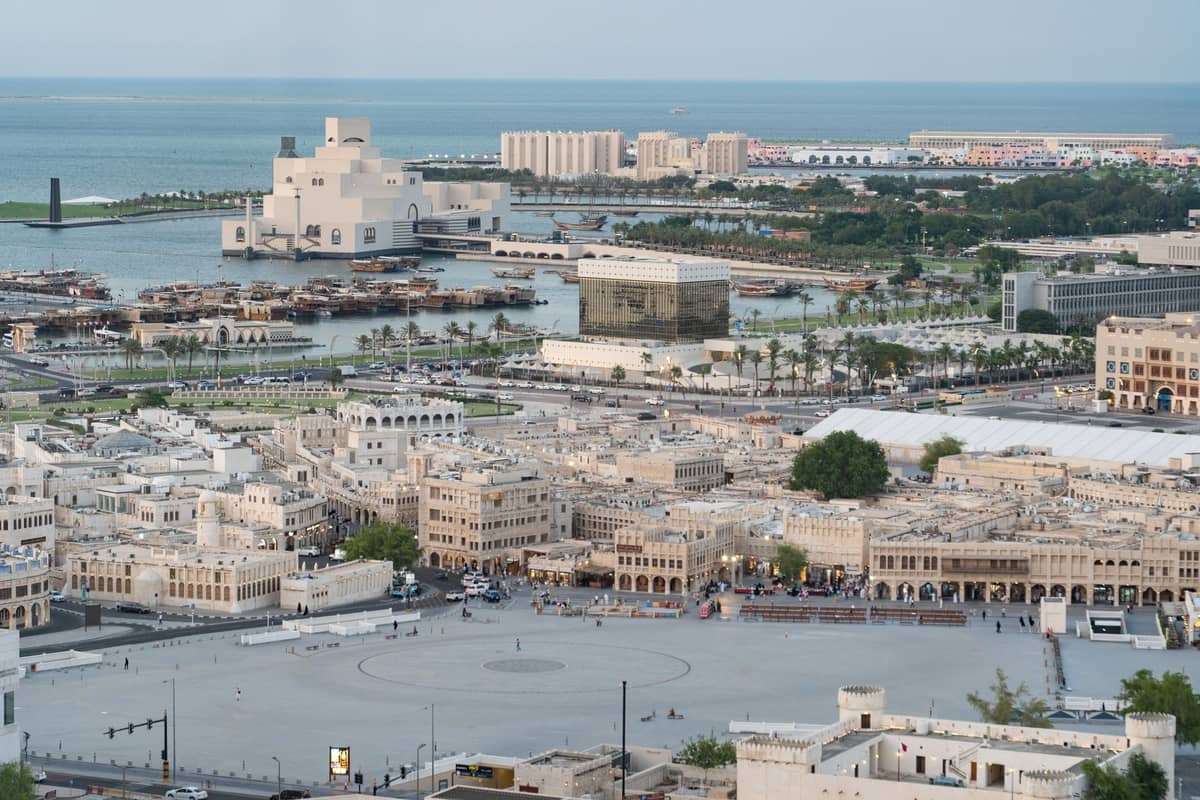
Doha is a city of distinct dining zones, each with a different character, price point, and crowd. Knowing which area suits your mood and budget will save you more time than any single restaurant recommendation. The city is compact enough — 132 km² — that you can move between districts quickly by metro or taxi, but the experience of eating in Souq Waqif is fundamentally different from eating in Lusail or on The Pearl.
The five areas that matter most for food are: Souq Waqif (traditional and atmospheric), West Bay (business hotels and fine dining), The Pearl-Qatar (waterfront cafés and international chains), Msheireb Downtown Doha (emerging local scene), and Lusail City (newer malls and casual dining). Each one draws a different crowd and operates at a different pace.
ℹ️ Good to know
Qatar uses the Qatari riyal (QAR). As a rough guide: QAR 1 is approximately USD 0.27. Budget meals in Doha run QAR 10-40, mid-range restaurants QAR 80-200 per person, and fine dining QAR 250-600+. Always confirm current prices on the restaurant's official listing before visiting, as they change frequently.
Souq Waqif: The Essential Doha Dining Experience
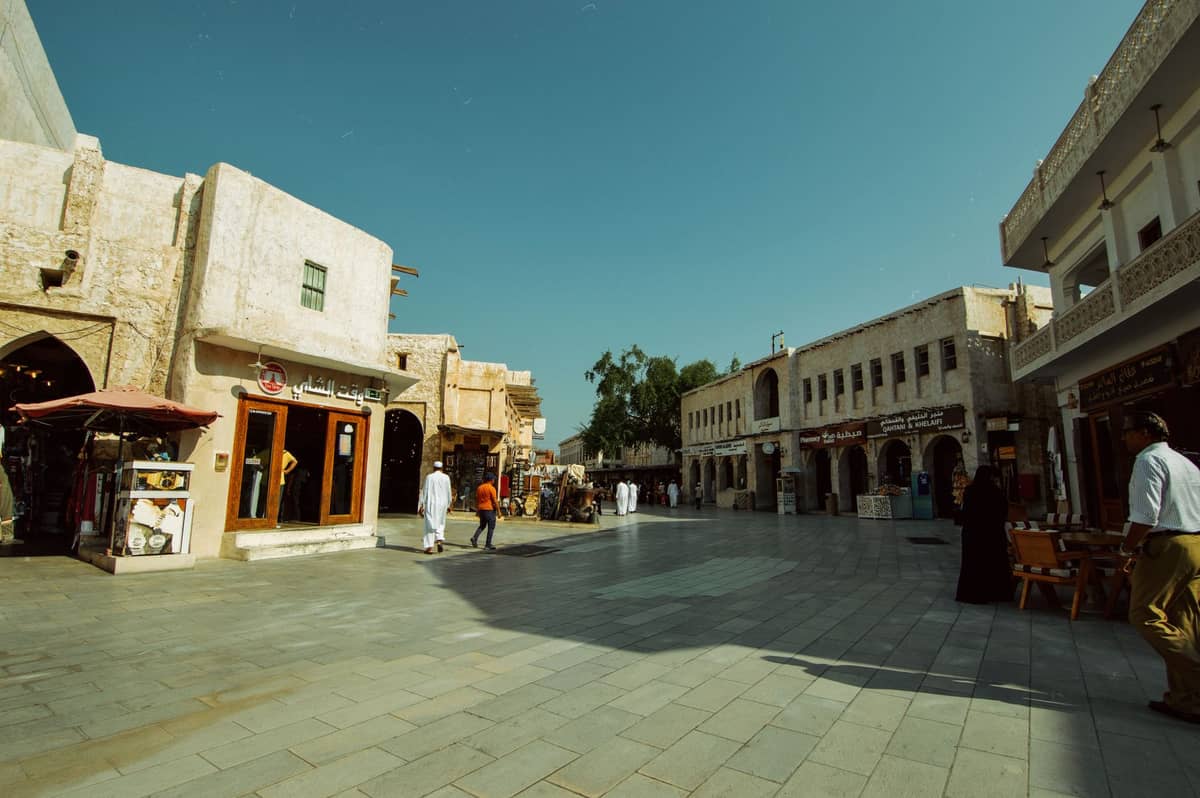
If you only eat in one area of Doha, make it Souq Waqif. The historic market district near the Corniche is open around the clock — the precinct itself runs 00:00 to 23:59 daily, and a significant number of its restaurants and cafés operate late into the night or near-continuously. This is not a place that shuts down after dinner. On weekend evenings, the alleyways are packed with Qataris, South Asian expat families, and tourists all eating within metres of each other, which tells you something important about how the space works.
The range of cuisine here is broader than the traditional architecture suggests. You'll find Qatari and Khaleeji food, Persian grills, Moroccan tagines, Indian curries, and everything in between. Many of the most-visited restaurants sit inside or adjacent to the Souq Waqif Boutique Hotels, which are managed by Tivoli. Their dining lineup includes Argan (Moroccan, with daily lunch and dinner service), Al Shurfa Arabic Lounge (typically open from early afternoon until late night), La Piazza Italian (open across lunch and dinner hours), and Al Terrace serving Qatari and Indian food (with late-afternoon and evening service). These are reliable options with consistent quality, though prices sit firmly in the mid-range bracket.
Parisa is the standout Persian restaurant in the souq — it's been popular for years and draws a loyal crowd for its lamb dishes and atmospheric interior. Current hours are 13:00-16:00 and 18:00-23:00 daily. Reservations are recommended on Thursday and Friday evenings. At the other end of the budget spectrum, TeaTime is a near-24-hour café where most items cost under USD 4 — it's basic, reliable, and one of the few places in Doha where you can get a decent cup of tea at 3am.
⚠️ What to skip
One persistent myth: that Souq Waqif closes at night. It does not. However, individual restaurant hours vary significantly — some are daytime-only, others are evening-focused. Confirm hours before making a trip, especially outside the November-March peak season when some venues adjust their schedules.
- Parisa Persian cuisine in an ornate interior. Open daily 13:00-16:00 and 18:00-22:30. Book ahead for weekends.
- Argan (Souq Waqif Boutique Hotels) Moroccan food with tagines and couscous. Open daily 12:30-23:30.
- Al Shurfa Arabic Lounge Arabic-style mezze and shisha lounge. Open daily 12:30-midnight.
- Al Terrace Qatari and Indian dishes on an open-air terrace (ideal Oct-Apr). Open daily 15:30-23:30.
- TeaTime Budget café running near-24 hours. Meals and drinks mostly under USD 4. No ambience, maximum value.
West Bay and the Corniche: Hotels, High-Rises, and Fine Dining
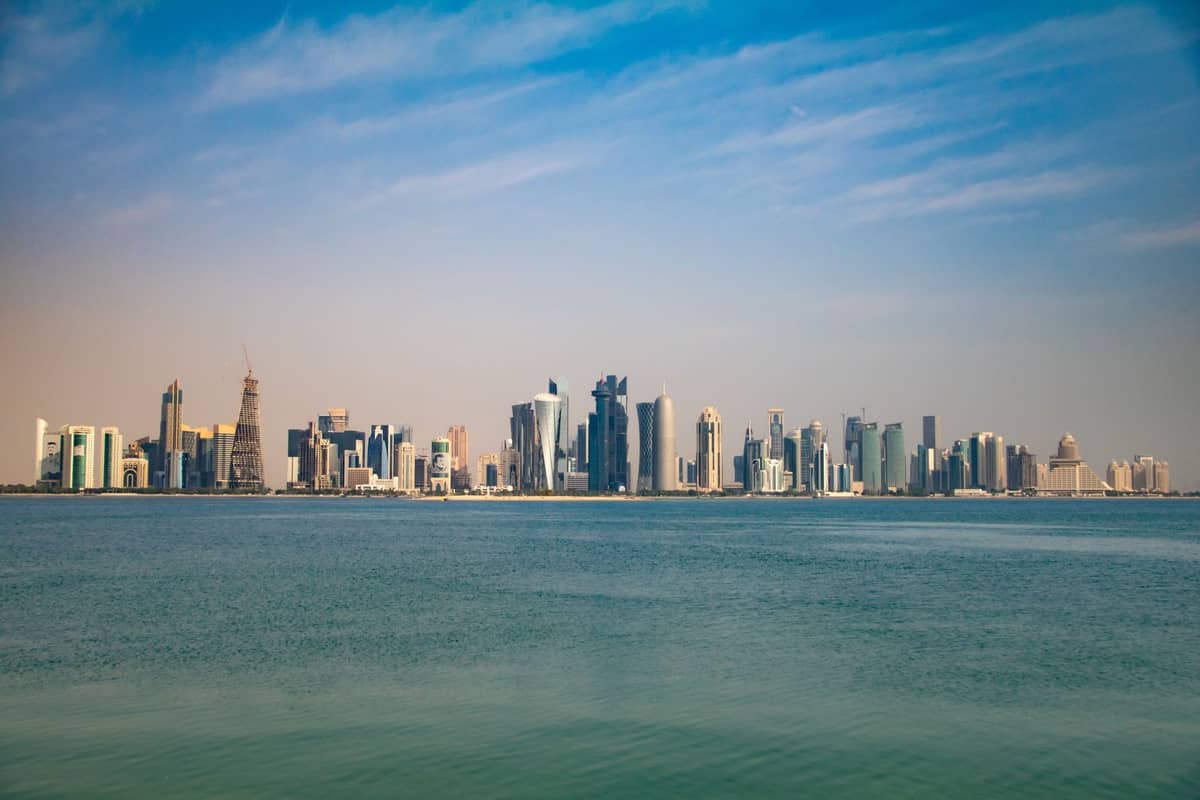
West Bay, Doha's central business district, is where you'll find the largest concentration of international hotel restaurants. The Doha Corniche runs along the bay edge and several venues on or near the waterfront offer good views of the West Bay skyline — particularly photogenic at dusk. This is the area to target if you want a formal dinner at a recognisable international brand restaurant, or if you're using a hotel concierge service that can handle bookings.
The trade-off is that West Bay hotel dining is predictable and expensive. You're paying partly for the setting and service standards. For a purely local or regional food experience, this is not the right area — most hotel menus skew toward pan-international options designed for corporate guests. That said, for a special occasion or business dinner where reliability matters more than authenticity, it's where most long-stay visitors end up.
✨ Pro tip
For the best views over Doha Bay while eating, look for restaurants with west-facing terraces in West Bay or along the Corniche promenade. Arrive before sunset and you'll have the best of both lighting and temperature, particularly between October and April.
The Pearl-Qatar and Porto Arabia: Waterfront Casual
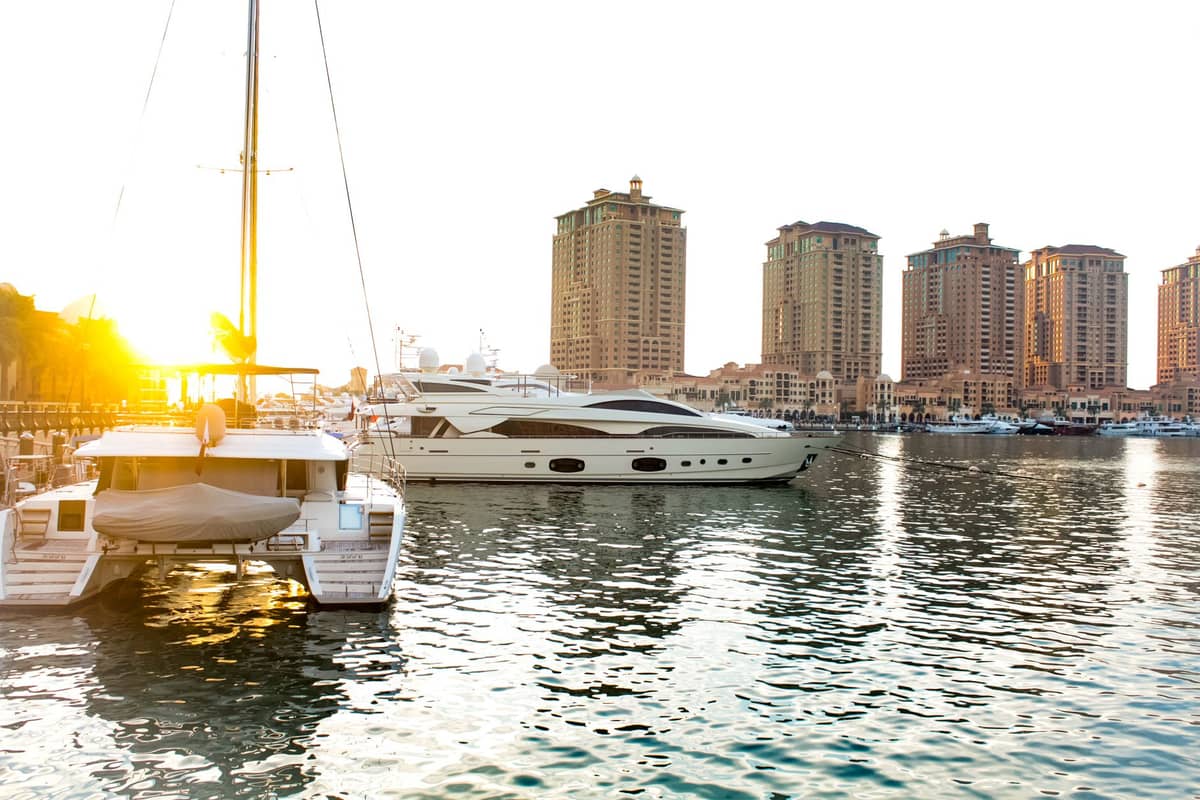
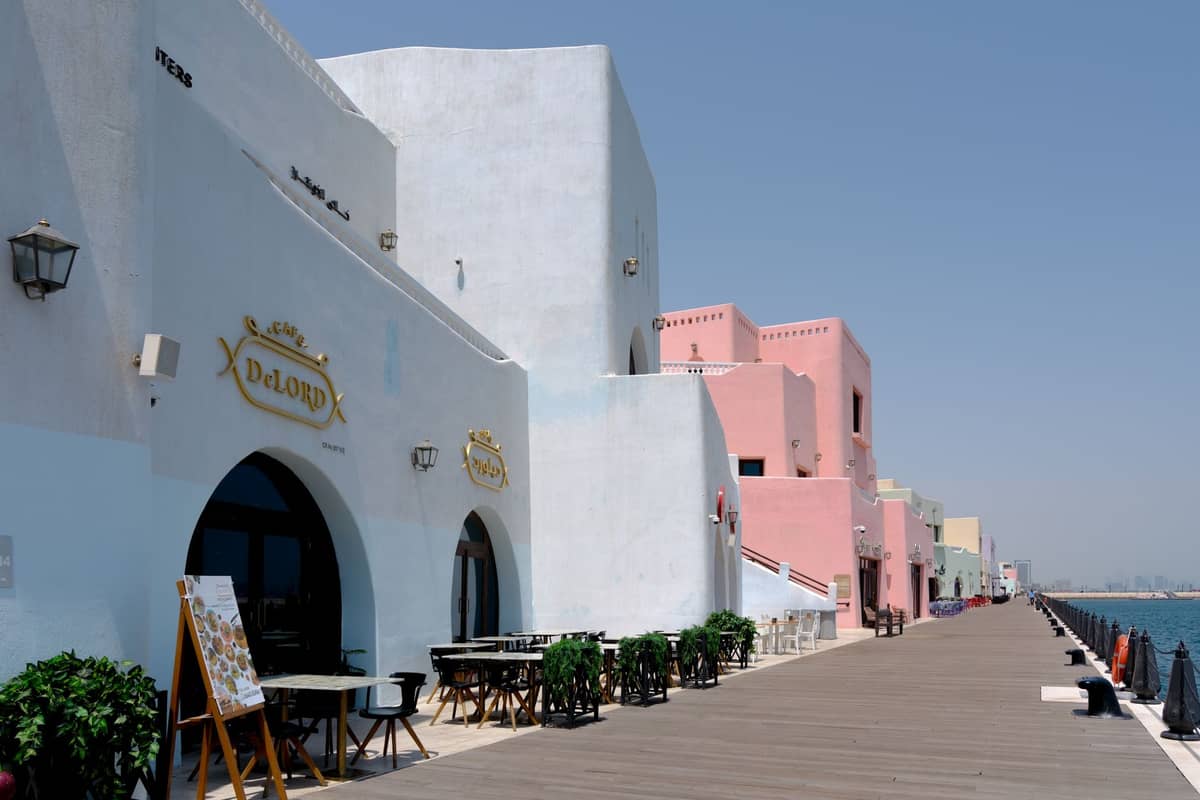
The Pearl is a man-made island development north of West Bay, and its Porto Arabia marina is where a lot of Doha's casual waterfront dining happens. Porto Arabia and the adjoining Qanat Quartier have a concentration of cafés, casual Italian and seafood restaurants, and international chains arranged around the marina. The setting is attractive, particularly in the cooler months when terrace seating is comfortable.
The Pearl's dining scene is more chain-heavy than it might first appear. Several international brands operate here, and prices run slightly higher than equivalent venues in other parts of the city, partly because of the address. It works well for a relaxed lunch or an early dinner with a stroll along the marina. For a truly local food experience, this is not the priority — but for families, couples, or anyone who wants a pleasant setting without navigating the souq's crowds, it delivers consistently.
Msheireb and Katara: Newer Scenes Worth Knowing
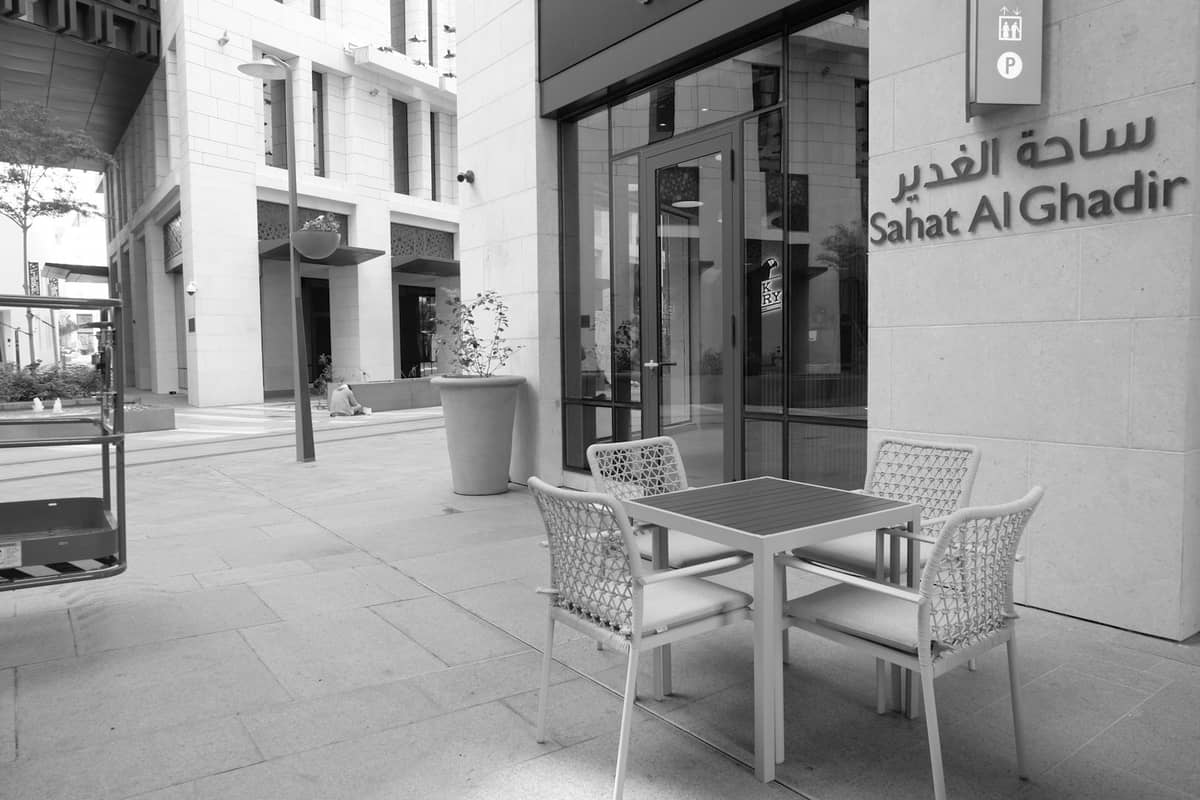
Msheireb Downtown Doha is the city's regenerated urban core, immediately south of Souq Waqif. It's newer, quieter, and increasingly home to specialty coffee shops and local dining concepts that cater to younger Qataris and expats. The architecture is modern but draws on traditional Qatari design, and the walkability here is the best in the city. If you want to experience what Doha's food scene looks like when it's not performing for tourists, spend a weekday afternoon in Msheireb. For the cultural background, the Msheireb Museums sit at the heart of the district and are worth combining with a meal nearby.
Katara Cultural Village on the northeastern waterfront has its own cluster of restaurants, most of them tied to the cultural centre's events programming. The Katara Beach area means this district gets busy on weekends, and several restaurants here serve good Lebanese and Mediterranean food. It's a pleasant option, though not the most convenient location if you're staying in central Doha, as it requires a taxi or metro connection.
What to Order: Qatari and Gulf Food Worth Seeking Out
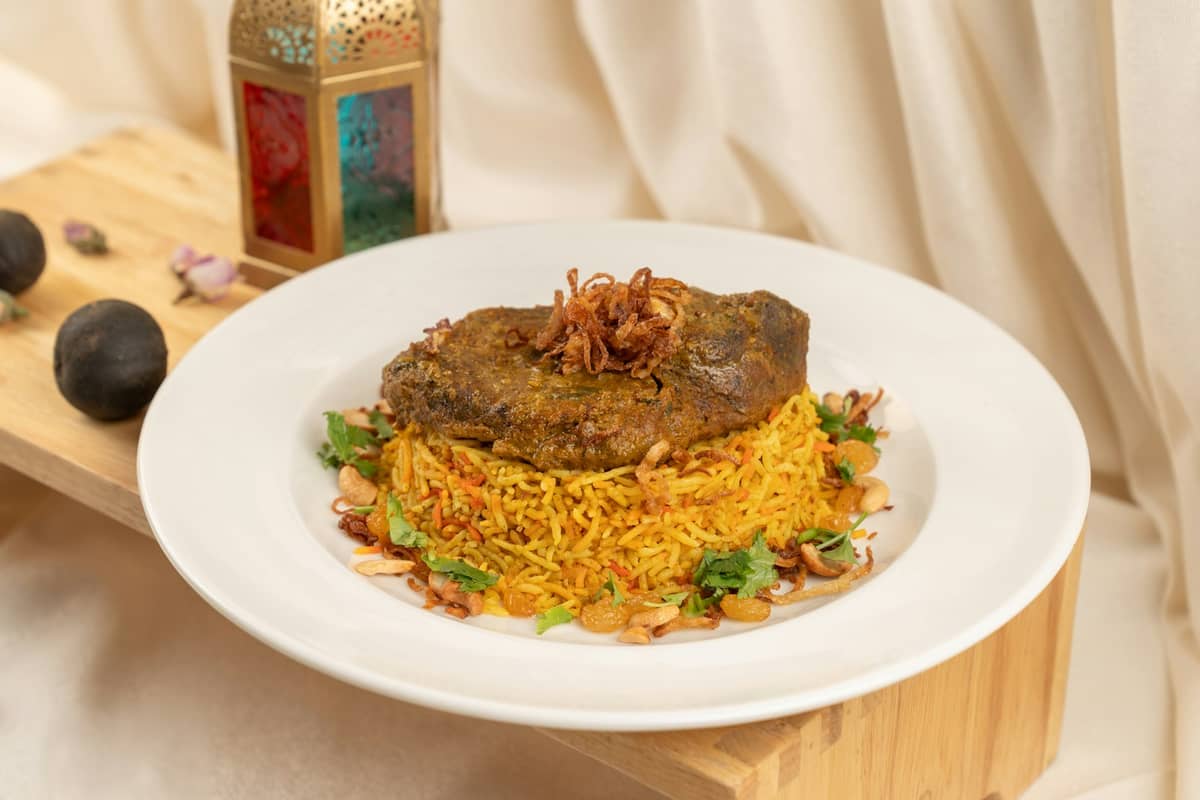
The top things to do in Doha almost always include eating local food, but finding genuinely Qatari dishes rather than pan-Arab or generic Gulf cuisine requires some intention. Machboos (slow-cooked spiced rice with meat or fish) is the national dish and a good benchmark for any Qatari restaurant — the version with seafood, particularly hammour (a local grouper), is especially good. Harees (a slow-cooked wheat and meat porridge) appears during Ramadan and religious celebrations but is sometimes available outside those periods. Luqaimat, small deep-fried dumplings soaked in date syrup, are a common street snack around Souq Waqif.
Beyond local dishes, Doha's South Asian expat community — which makes up a large proportion of the city's population — supports a strong subcontinental food scene. Indian, Pakistani, Sri Lankan, and Bangladeshi restaurants are well-distributed across the city and represent the best value for money in the QAR 20-60 per person range. For a broader look at what and where to eat across different budgets and occasions, see our guide to what to eat in Doha.
- Machboos: spiced rice with meat or fish — the Qatari national dish. Order the seafood version if available.
- Hammour: a Gulf grouper fish, typically grilled or served in a rice dish. Best at Souq Waqif seafood restaurants.
- Harees: slow-cooked wheat and meat porridge — available during Ramadan and sometimes year-round at traditional Qatari spots.
- Luqaimat: fried dough balls with date syrup, common as a street snack around Souq Waqif evenings.
- Karak chai: the Gulf-style spiced tea with condensed milk. Available at nearly every café and budget tea shop in Doha, often for QAR 2-5.
Practical Details: Hours, Booking, and Seasonal Eating
Doha's restaurant culture runs late by European standards. Dinner service at mid-range and upscale venues typically starts around 19:30 and the peak rush hits between 21:00 and 23:00, especially Thursday and Friday nights (the Gulf weekend). Lunch is generally 12:00-15:00 with a gap in service at many traditional restaurants in the mid-afternoon. Some Souq Waqif venues close between the afternoon and evening shifts, so if you arrive between 15:30 and 17:00 you may find limited options.
Reservations are increasingly standard at fine dining venues and popular mid-range spots. Most accept bookings via phone, official website forms, or third-party platforms like TripAdvisor and OpenTable. Walk-ins are generally fine at budget venues and souq cafés. During Ramadan, many restaurants adjust to evening-only service starting after Iftar (sunset), and some non-Muslim-facing venues close during daylight hours. If you're visiting during Ramadan, confirm hours directly with the restaurant.
Seasonally, outdoor dining is viable from roughly November through March, when evening temperatures drop to a comfortable 18-25°C. From May to September, temperatures regularly exceed 40°C and humidity is high — outdoor seating becomes impractical, and most venues switch entirely to air-conditioned interiors. This matters particularly for Souq Waqif, where the atmosphere is defined by its outdoor alleyways. If a terrace experience matters to you, plan accordingly. For a full picture of when to visit, read our guide to the best time to visit Doha.
💡 Local tip
Alcohol is available in Doha but only in licensed venues, which in practice means most service is in hotel restaurants and bars, with a few licensed standalone venues and private clubs. Souq Waqif restaurants are alcohol-free, as are most non-hotel venues. If having wine or beer with dinner is important to you, plan to eat at a hotel restaurant or another licensed venue in West Bay or The Pearl. This is not a limitation unique to tourist areas — it applies citywide outside licensed premises.
Tipping is appreciated but not mandatory. A service charge is sometimes included in the bill — check before adding extra. For budget cafés and street-food spots, rounding up is sufficient. At mid-range and fine dining venues, 10% is a reasonable guideline if service charge is not already included. For more budget-conscious dining strategies across the city, see our Doha on a budget guide.
FAQ
Where is the best area to eat in Doha?
Souq Waqif is the most atmospheric and diverse dining district, with options ranging from budget tea shops to upscale Persian and Moroccan restaurants. For fine dining, West Bay's hotel restaurants are reliable. For waterfront casual dining, The Pearl-Qatar's Porto Arabia marina has the widest range of international cafés and restaurants.
What is the local food to try in Doha?
Machboos (slow-cooked spiced rice with meat or fish) is the national dish and the best single thing to order at a Qatari restaurant. Hammour fish, harees, and luqaimat (fried dough with date syrup) are also distinctly local. Karak chai — spiced tea with condensed milk — is the everyday drink and costs QAR 2-5 almost anywhere.
Can you drink alcohol at restaurants in Doha?
Alcohol is only served at licensed hotel restaurants and bars. Most standalone restaurants, all venues in Souq Waqif, and budget eateries are alcohol-free. If you want wine or beer with your meal, book a hotel restaurant in West Bay or a licensed venue on The Pearl-Qatar.
How much does a meal cost in Doha?
Budget meals at cafés and South Asian restaurants cost QAR 15-40 per person. Mid-range sit-down restaurants run QAR 80-180 per person. Fine dining at hotel restaurants typically starts at QAR 250 per person and goes significantly higher. TeaTime at Souq Waqif is one of the cheapest options, with most items under QAR 15 (around USD 4).
Do restaurants in Doha require reservations?
Fine dining and popular mid-range restaurants, especially in Souq Waqif and West Bay, benefit from advance reservations — particularly on Thursday and Friday evenings, which are the Gulf weekend. Most accept bookings by phone or through their official websites. Budget venues and cafés are generally walk-in only.